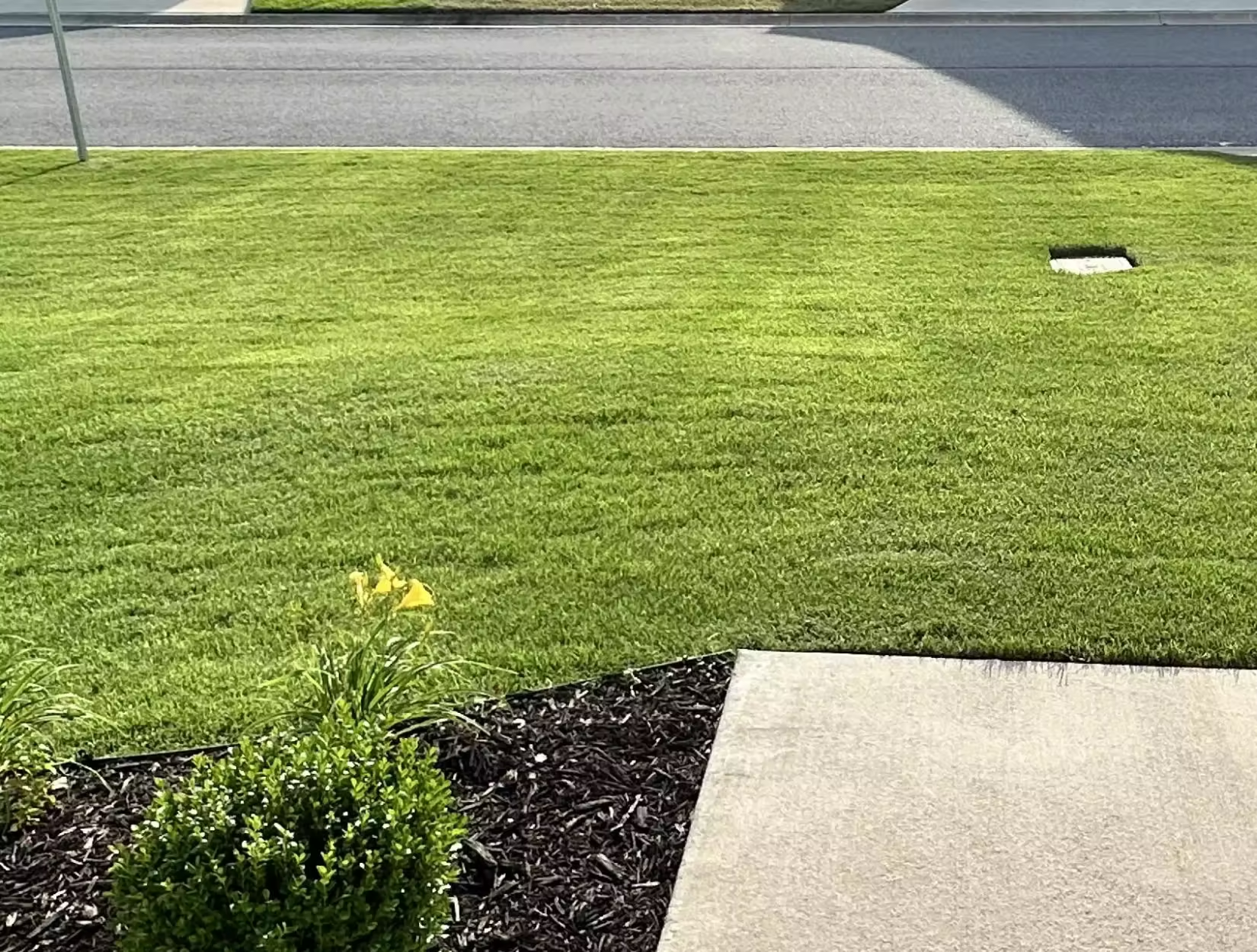
Growth Rate: Slow

We use your zip code exclusively to calculate your USDA Hardiness Zone via the PHZMAP API. We do not store your location data or share it with third parties. This step is essential to ensure we don't recommend grass types, products or timing that wouldn't work for your specific regional weather patterns.
Sunlight is your lawn's only non-negotiable biological fuel. Unlike soil nutrients or moisture levels, a lack of light is a fixed constraint that cannot be remedied once your grass is planted.
By identifying your specific light windows, we can calculate your Daily Light Integral (DLI)—the total "dose" of phototherapy your grass receives each day. This step serves as a critical reality check, ensuring you don’t invest time and money into a grass species that is biologically destined to fail in your specific environment.
We ask these questions to sync your grass biology with your yard's physical reality:
By matching your soil's "tank size" to your watering habits, we ensure professional results with maximum efficiency.
We ask these questions to align your grass with your daily life:
By matching the grass to your personal goals, we ensure your yard stays beautiful and functional with the least amount of effort.
We ask these final questions to calibrate the "human" side of your project:
By defining these goals, we can provide a personalized plan that makes lawn care feel like a rewarding part of your lifestyle.
We ask for your pH level because it is a critical filter for long-term grass health. Every grass species has a specific "comfort zone"—typically between 6.0 and 7.0—where it can efficiently absorb nutrients.
If the pH is outside this range, it causes "nutrient lockout," where essential minerals stay in the soil but remain chemically unreachable by the roots. By identifying your pH state now, we can:
While you can purchase professional testing kits at local garden centers or online for higher precision, you can get a reliable estimate right now without leaving your house.
We’ve refined a Kitchen Chemistry guide that uses white vinegar and baking soda to identify your soil’s state in under 10 minutes. This result is more than enough for our "Turf Match" calculation. Once you identify if your soil is acidic, alkaline, or neutral, we will assign a "Safe Zone" pH factor to your profile to ensure your grass seed selection is biologically compatible with your soil.
If you have 10 minutes and some vinegar and soda, you can get your answer right now and finish your calibration.
View the Kitchen Chemistry GuideBased on your location and soil type, MFY has identified your soil state as:
The Acid Leacher
pH 5.4
Buffered Acidic
pH 6.2
The Sweet Spot
pH 7.4
The Alkaline Buffer
pH 8.0
Critical Alert
Your 'Acid Leacher' soil is a death zone for some grasses. We will automatically eliminate sensitive species. If you have treated your soil with lime, you may manually select 'Buffered Acidic' above.
Soil texture is the physical foundation of your yard. By understanding the ratio of sand, silt, and clay, we can determine your soil's "holding capacity"—how well it retains water and allows oxygen to reach the roots. This data is essential for calculating your ideal watering schedule and determining if your lawn is prone to compaction or rapid nutrient leaching.
Think of pH as the "key" that unlocks nutrients. Even if your soil is full of fertilizer, grass cannot "digest" those nutrients if the pH is too high or too low. We ask for this value—whether from a lab or a home test—to identify if your soil chemistry is blocking your lawn’s growth and to provide specific recommendations for balancing it.
Soil color is a natural indicator of biological health and carbon content. Darker soils typically contain more organic matter, which acts like a sponge to hold moisture and support beneficial microbes. We use this information to assess your soil’s natural fertility and resilience, helping us suggest the right organic amendments to improve your yard’s long-term sustainability.