
Test scientific
Common Names: grass, grassses, alias
Test Grass
This is a tagline
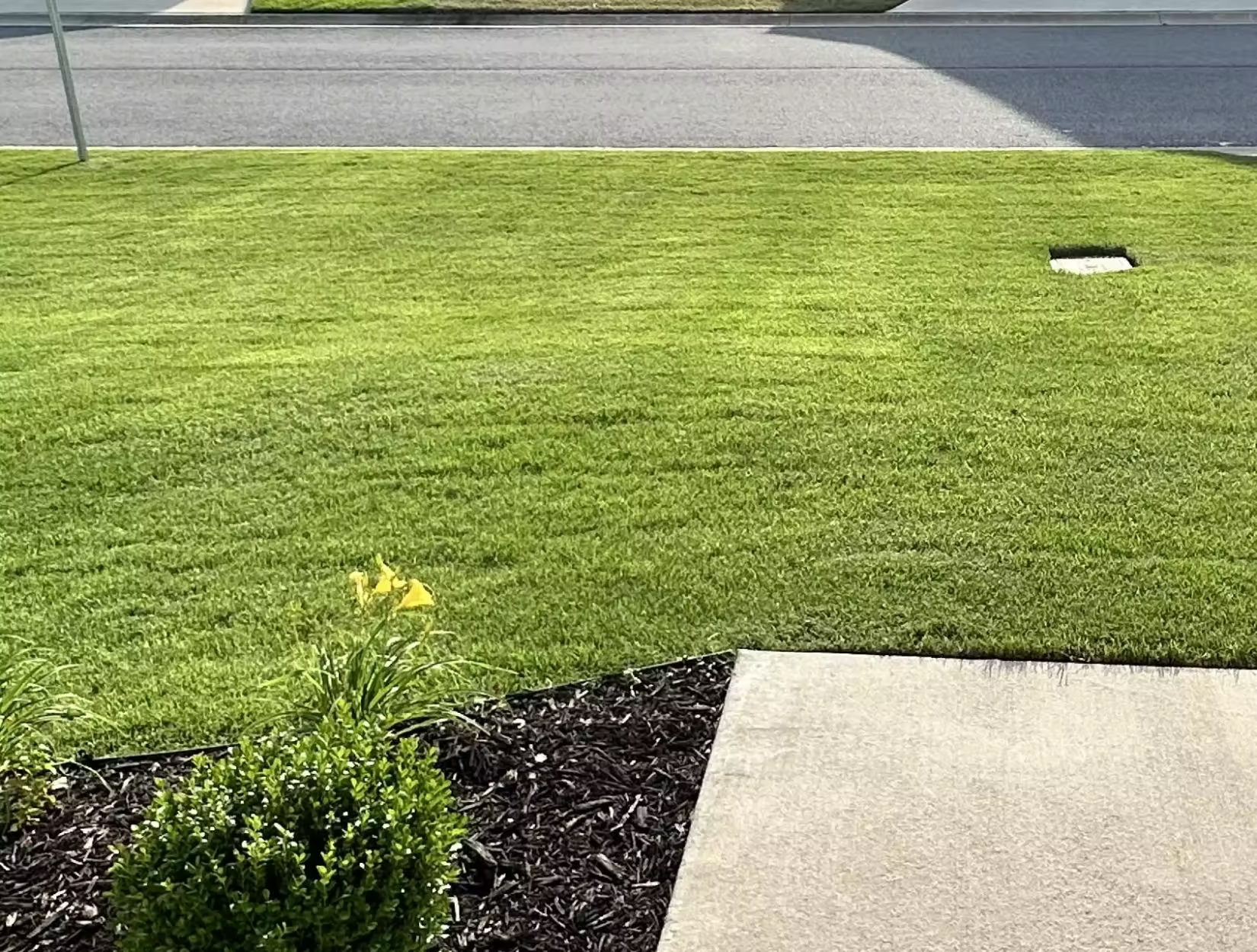
Tall Fescue At-a-Glance
Hardiness Zones
7
8
9
Mowing Height
1.0 - 2.0 inches
Sun Requirement
Full sun
Traffic Tolerance
Low
Moderate
Establishment Speed
Slow
Maintenance Level
High
The Heritage of Kentucky Bluegrass
Provide a professional, 2–3 paragraph narrative detailing the origins, breeding history, and modern adoption of this species. Focus on the transition from wild or forage use to high-performance turf applications. Highlight specific scientific breakthroughs, such as improvements in heat tolerance, disease resistance, or the development of modern cultivars. Maintain an authoritative, encyclopedic tone that establishes scientific credibility.
Gallery
Is Test Grass Right For Your Yard?
Advantages:
Excellent drought tolerance" or "Repairs itself quickly.
Best If:
Describe the ideal homeowner, landscape conditions, and lifestyle benefits. Focus on why this grass is the right choice for specific user needs.
Disadvantages:
Prone to thatch" or "Slow to germinate
Avoid If:
Highlight critical deal-breakers, climate limitations, and maintenance burdens that would lead to user dissatisfaction or lawn failure.
Technical Specifications
Family: Poaceae
Photosynthetic Pathway: C4 (Warm Season)
Growth Habit: Rhizomatous
Growth Rate: Slow
Spread Mechanism & Intensity: Aggressive, deep rhizomes with high colonization speed
Root System & Depth Potential: Type: [Architecture] | Avg Depth: [Inches] | Max Potential: [Inches]
Origin: Europe
Establishment Speed: Slow
Germination Time: Extended (14–21 Days)
Thatch Production: Low
Typical Lifespan & Invasiveness Risk: 10 years - not invasive
Seeding Rate: 100lbs/msq
Preferred NPK Ratio: 5-10-15
Toxicity & Pet Tolerance: Non-toxic to pets
Blade Texture & Width Range: 3mm–5mm; coarse, rigid texture with prominent vertical ribbing
Leaf Color Range & Turf Density: Naturally dark, olive-green with moderate density; creates a deep, textured canopy that masks minor imperfections
Vernation, Ligule, Auricles, Collar, Sheath, Seedhead: Identify the key morphological features used for scientific species verification. Detail the Vernation (folded or rolled), Ligule (hairy, membranous, or absent), Auricles (claw-like, small, or absent), Collar (narrow, broad, or divided), and Sheath (split or closed). Include the typical Seedhead structure (spike, panicle, or raceme).
Growth Pattern Appearance & Rooting Depth Potential: A stiff, upright bunch-grass that creates a distinct vertical texture
Distinguishing Traits vs. Similar Species: Identify the specific physical 'tells' that distinguish this grass from its closest visual relatives. Focus on the one or two markers that are most reliable for positive identification in the field.
Geographic & Climate Range: The "Transition Zone" of North America (roughly the central belt from Kansas/Missouri across to the Mid-Atlantic).
Hardiness Zones:
Temperature Range: Optimal Air: [e.g., 60°F – 75°F] Active Soil: [e.g., 50°F – 65°F (Ideal for root development/seeding)] Summer Stress: [e.g., Air > 90°F | Soil > 80°F] Winter Dormancy: [e.g., Soil temps consistently below 45°F]
Water Needs: Low
Fertilizer Needs: High
Sun Exposure: Primary sun needs: Full Sun Sun tolerance: Light Shade, Partial Shade
Cold Tolerance: Excellent, Fair
Drought Tolerance: Good
Salt Tolerance: Low (Sensitive)
Dormancy Trigger & Appearance: Describe the specific environmental conditions that force the grass into a dormant state (temperature, drought, or day length) and the resulting visual transformation. Detail the color shift the homeowner should expect and any changes in leaf texture or canopy density.
Elevation: Thrives from sea level up to 5,000 feet; performance declines in high-alpine environments.
Ideal Soil pH: 5.8
Suitable Soil Textures:
Suitable Soil Conditions:
Struggles In/Avoid:
Step-by-Step Video Installation Procedures
The Maintenance Philosophy
Mowing
Long text on mowing
Irrigation
Long text on irrigation
Fertilization
Long text on fertilization
Overseeding & Renovation
Long text on overseeding
The Endophyte Advantage
The advantage
The text in italics
Top Performing Cultivars
Test Cultivar
This is a tagline
Test cultivar 3
Tagline of test cultivar 3
The Seasonal Care Calendar

Spring (Mar-May)
The Spring Flush
Test narrative
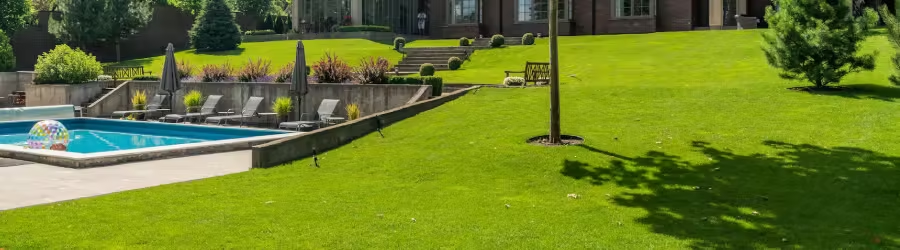
Summer (Jun-Aug)
The Summer
Test narrative
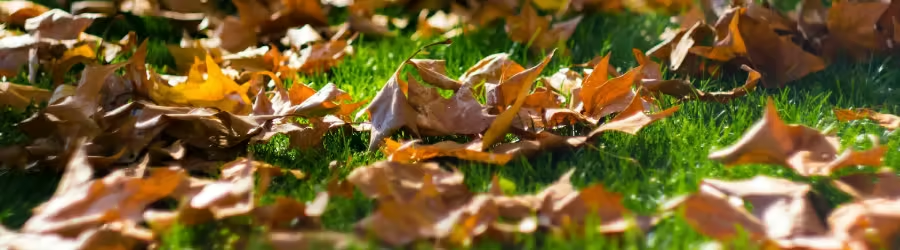
Fall (Sep-Nov)
The Fall
Test narrative
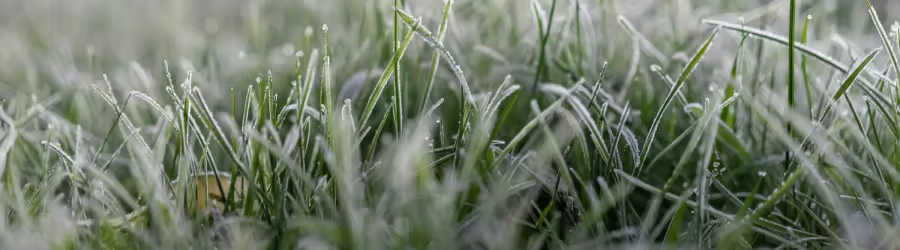
Winter (Dec-Feb)
The Winter
Test narrative
Test Grass vs. The Alternatives
The grass versus the alternatives full narrative
Find Your Precision Match
Choosing between species requires balancing your specific soil profile, local micro-climate, and maintenance goals. Use our Turf Match Tool to generate a data-backed recommendation for your specific yard.
Start Your MatchStress & Diagnostics
Common Diseases
Common Pests
Common Weeds
Common Disorders
A Full Detail on Test Grass Stressors
This is the full narrative
Deep Dives & Practical Guides
Uncategorized
Test Post
A specific guide about a grass type, such as overseeding Tall Fescue.
Frequently Asked Questions
Answers here are supported by top university researches from experts in this field.
The answer
This is the answer