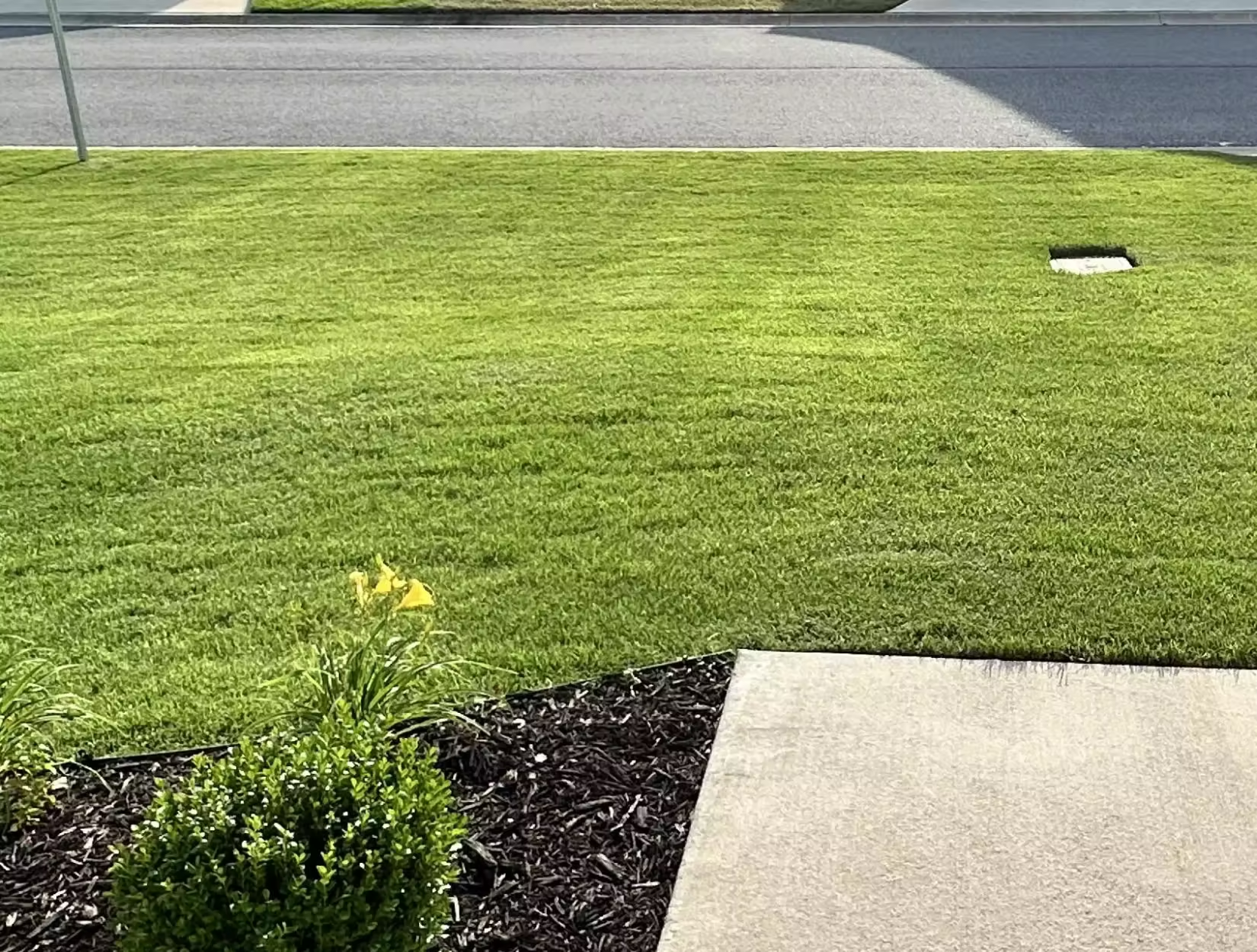
So, your lawn is starting to look less like a lush carpet and more like a neon highlighter. Before you reach for a high-nitrogen “quick fix” fertilizer, we need to take a closer look at the Symptomology. If the blades are turning pale yellow while the veins remain a haunting dark green, you aren’t dealing with a hungry lawn—you’re dealing with a chemical lockout known as Iron Chlorosis.
Table of Contents
What is Iron Chlorosis?
Iron Chlorosis is a localized Abiotic Disorder where a plant cannot produce enough Chlorophyll because it lacks iron. Iron is a vital Micronutrient that acts as a catalyst for the green pigment in your grass. Without it, the plant’s Photosynthetic capacity drops, leading to a sickly, stunted appearance.
Label: Interveinal Chlorosis: This is the “fingerprint” of the disorder. Because iron is an Immobile Nutrient, the plant cannot move it from old growth to new growth. You will see the yellowing start on the youngest blades first, specifically between the veins.
The Biological Trigger: Soil pH as the Gatekeeper
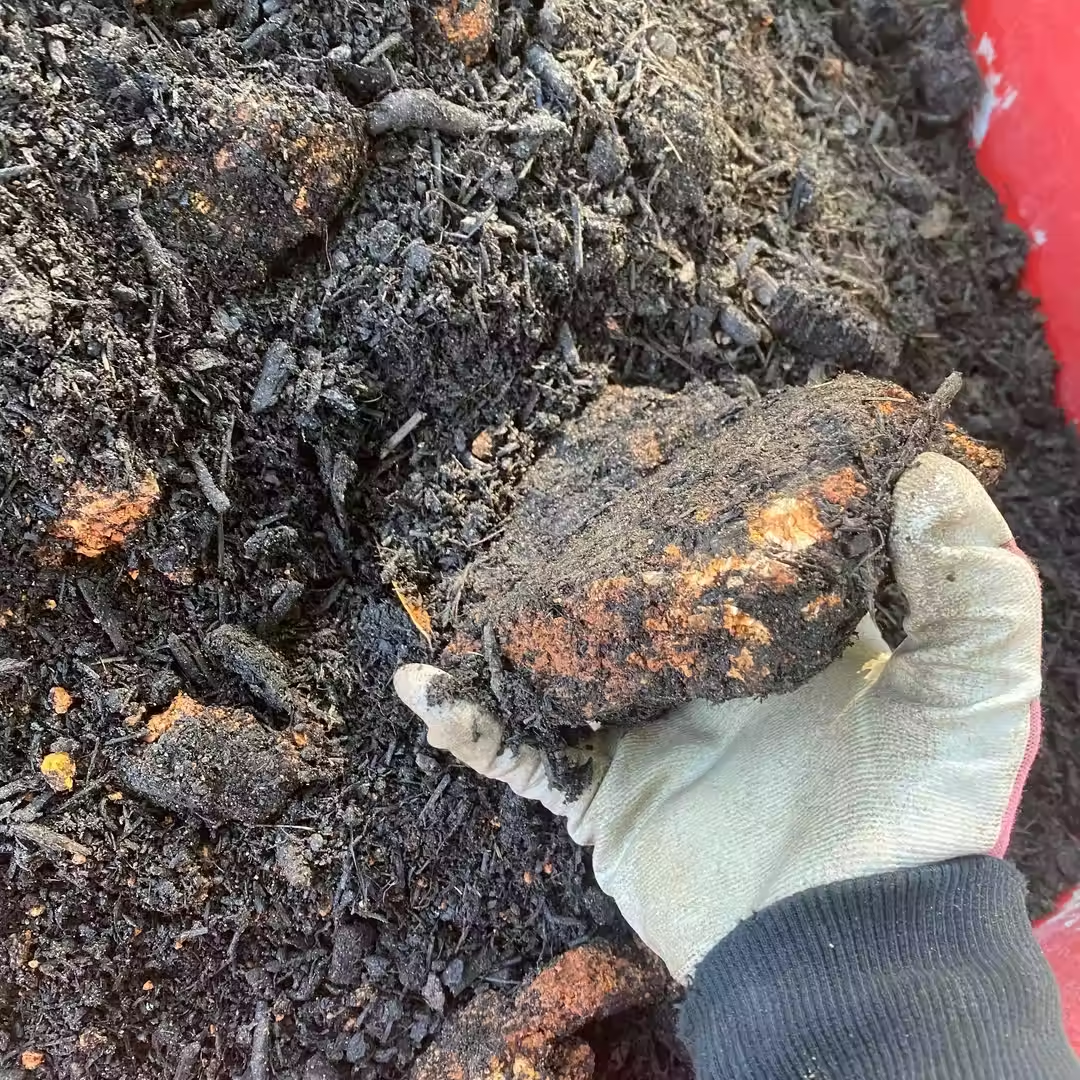
In most cases, the iron is actually present in your Substrate, but your grass simply cannot “eat” it. This is usually due to high Alkalinity (a pH above 7.0). When the soil becomes too alkaline, the iron chemically binds to other elements, becoming insoluble.
Label: Nutrient Lockout: Think of your soil $pH$ as the “gatekeeper.” If the $pH$ is too high, the gate is locked, and no matter how much iron you add to the dirt, the roots cannot pull it into the Vascular System of the plant.
Cultural Controls: How to Break the Lockout
Fixing the yellowing requires a two-pronged approach: a short-term “green-up” and a long-term soil adjustment.
Foliar Application: To get immediate results, apply a Chelated Iron spray directly to the leaves. “Chelated” means the iron is wrapped in a molecule that keeps it soluble, allowing the grass to absorb it through the Stomata (leaf pores) rather than the roots.
Soil Acidification: For a permanent fix, you must lower the soil $pH$. This is often done by applying Elemental Sulfur. This is a slow process where soil bacteria convert the sulfur into acid, gradually unlocking the iron already present in your yard.
The Hidden Side of Hardiness
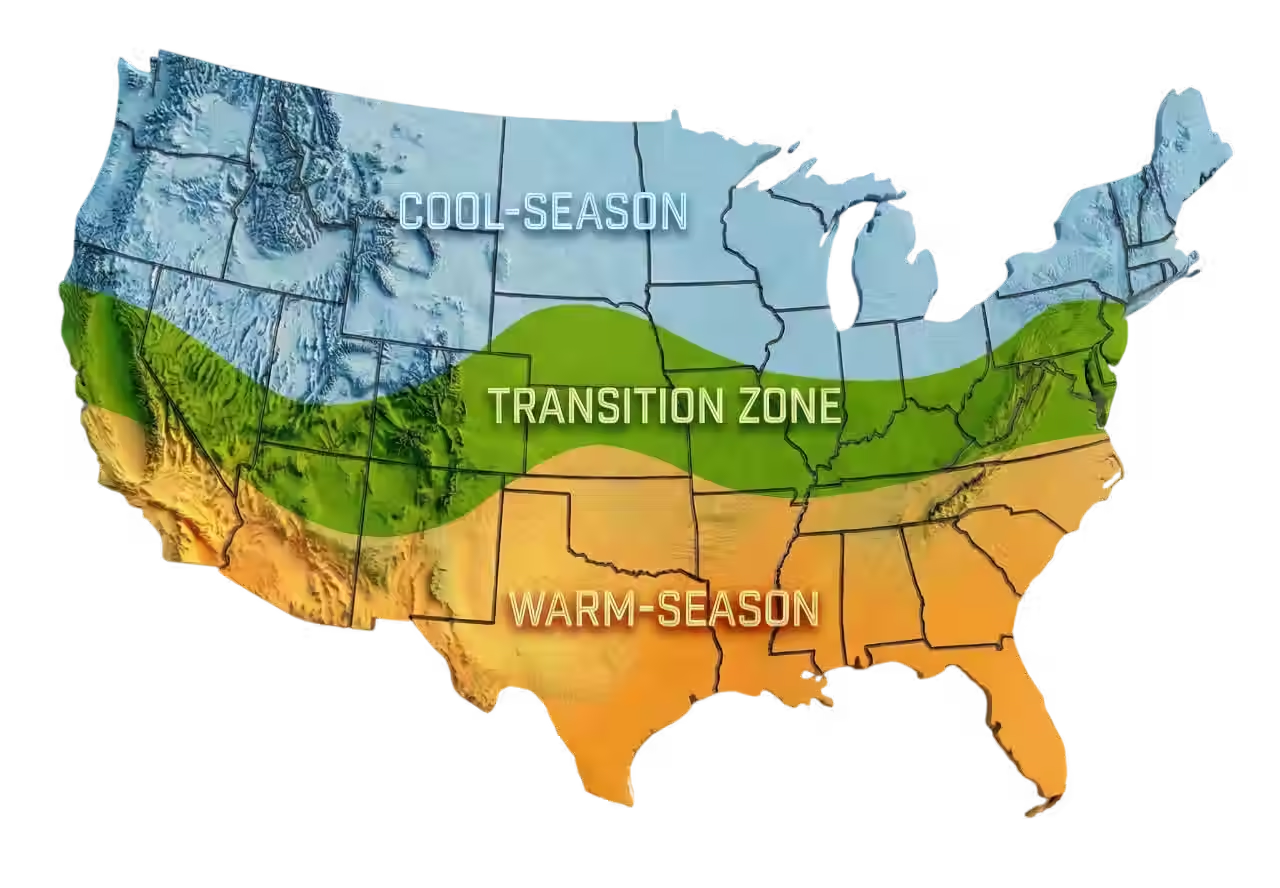
The Cold Truth: A hardiness zone is a measure of survival, not a guarantee of success. While the USDA map tells you if a plant can handle the average coldest night of winter, it doesn’t account for summer Ambient Temperatures or humidity levels. A plant that thrives in the cool, damp winters of Zone 8 in the Pacific Northwest might struggle in the sweltering, humid Zone 8 of the Southeast.
Beyond the Minimums: To protect your landscape investment, it’s critical to look at the “other half” of the climate equation. Many gardeners experience “zone envy” and try to push their limits, but understanding your local Heat Stress and Transpiration rates is just as vital as knowing your frost dates. To bridge the gap between a winter survival rating and year-round health, we’ve analyzed how these two forces work together.