
Myth Demystified
Is Mowing Wet Grass as Harmful as People Assume
Demystified By
Expert Name: Grady Miller

Expert's Take
Let me start by saying that mowing wet grass is not good practice, but sometimes it may be necessary. I’ll break down the issue into two categories: agronomic and equipment impacts.
Agronomic Impacts
Wet grass clippings are not distributed as uniformly as dry clippings. On a small scale, this may just cause unsightly clumps or streaks across the turfgrass. However, if large clumps form, the matted grass can block sunlight from reaching the lawn underneath, creating a smothering effect. Ultimately, an even distribution of clippings is necessary to achieve the highest quality cut.
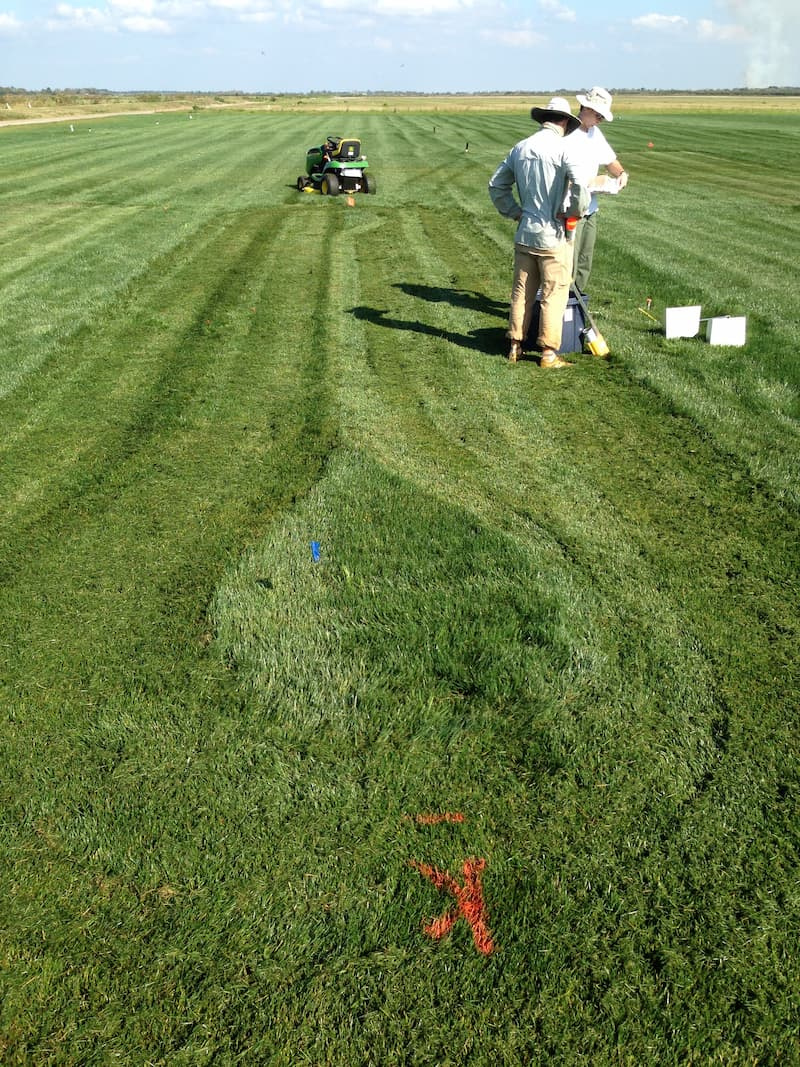
Wet soil is also much more prone to compaction and rutting. While this may not be a major issue when using a small walk-behind mower or mowing turf grown on sandy soils, it can cause significant damage to saturated soils when using heavier stand-on or zero-turn mowers. Although the impact of compaction might not be immediately obvious, the damage is cumulative. As compaction increases, turfgrass density suffers, which can eventually lead to significant grass loss.
Additionally, mowing wet grass increases the risk of spreading disease-causing pathogens, as more fungal mycelium may be present. While this sounds like a major issue, it is less common than you might imagine because the disease must be actively producing spores at the time of dispersion. Still, it only takes one bad experience with a virulent disease to make you wish you had waited for drier conditions.
Equipment Impacts
Equipment damage is usually related to the clump-forming nature of wet clippings. A large mass of wet grass can place heavy strain on the mower engine and blades. There is also a higher chance that the discharge chute will clog, especially when using a mower in “bagging mode”. In most cases, operators should clean under the mower deck after mowing wet grass to prevent crusty, hardened residues from affecting the mower’s performance the next time it’s used.
When Mowing Wet Is Necessary
Sometimes the only time to mow is right after irrigation or rainfall. In those cases, it helps to go slowly and pay attention to how the mower is performing. If the mower is pushing water with its wheels, stop—it is not worth damaging the soil to continue. If it does not seem too wet and you keep mowing, watch closely for clogging under the deck or around the chute. Try raising the deck height to reduce clogging; if that doesn’t help, stop mowing altogether. After mowing wet grass, clean the mower thoroughly, especially under the deck. If clumps or streaks remain on the turfgrass surface, rake, blow, or drag something (like a piece of chain-link fence) across the yard to break them up and distribute them.
MFY Notes
Compaction risk and how forgiving a lawn is both come down heavily to grass species — our Turfgrass Hub breaks down every major turf species and how each handles stress like this. If timing is more your question than technique, our Fall Mowing Height for Cool-Season Lawns myth page covers a closely related mowing question.