
Pathogen: Physarum, Mucilago and Fuligo spp. (slime molds)
Also called: slime mold, gray slime mold, dog vomit slime mold, scrambled egg slime mold, soot on grass
Slime Mold
All show, no harm
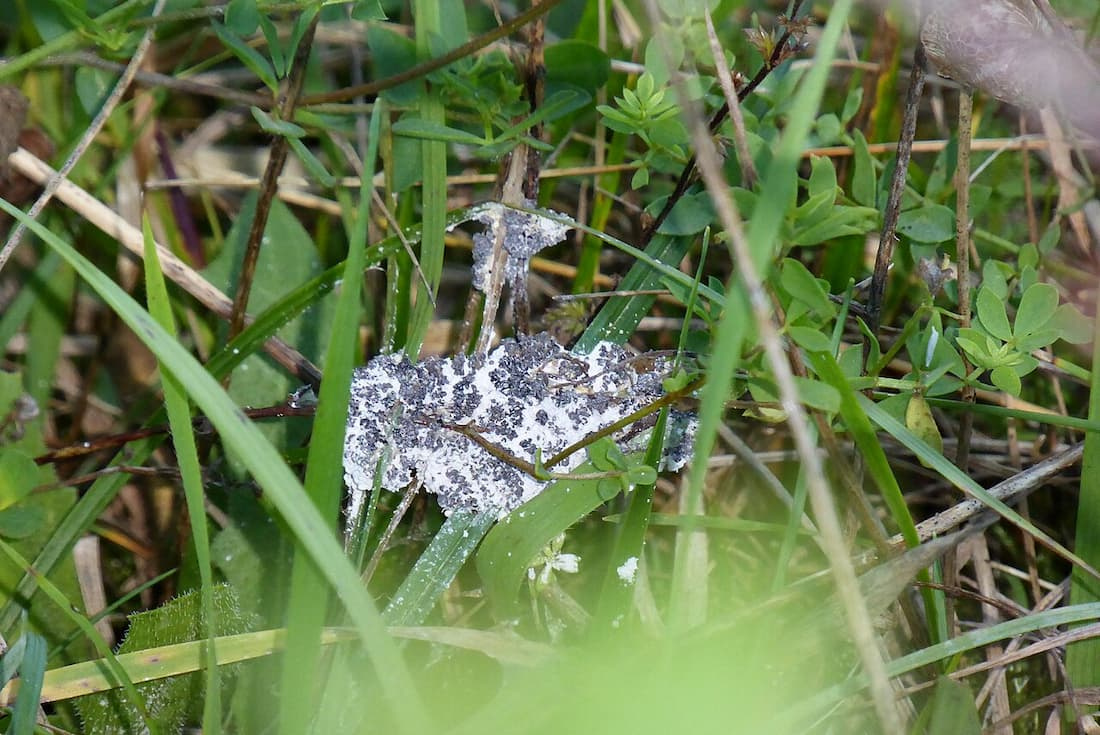
Featured Image Credit: Biodehio, via Wikimedia Commons, CC BY-SA 4.0
Slime Mold At-a-Glance
Grass Type Affected
Cool & Warm Season
Recovers on Its Own?
Yes, Quickly
Is Spraying Worth It?
Won't Help
Disease Type
Non-Pathogenic
Active Season
Late Spring & Early Summer
Mid to Late Summer
Fall
Damage Potential
Cosmetic Only
Slime Mold Quick Answers
What Slime Mold Looks Like
From Standing Height
It seems to appear overnight. After a stretch of wet weather, patches of grass look splashed with creamy, yellow, orange or pink slime, or dusted with gray, blue-gray or purplish ash. Patches run from a few inches to several feet across, in spots, rings, streaks or blotches. In a big outbreak they can cover much of the lawn. Within a day or two the color darkens to sooty gray or black. Then, once the weather dries, it fades away within a few days, and the grass underneath is still standing and green.
Up Close: Blades, Crowns and Roots
Up close, the blades show the organism, not damage. A wet, oily film or crowded pinhead-sized balls coat the blade surface and sometimes the stems. The balls are usually gray to purplish, sometimes yellow, orange or red. Wipe them off and the blade underneath is intact and green, with no spots, dark borders, bands or rotted tips. The crowns stay firm, the roots stay white and healthy, and the grass is firmly anchored, because slime mold lives above the soil and never enters the plant.
The one effect on the grass itself is shade. If a heavy coating stays on for many cloudy days, the blades under it can turn pale green or yellow because they aren’t getting enough light. That color comes back within days once the coating is gone and the sun is out. Most of the time the grass doesn’t yellow at all.
Signs of the Organism
Unlike most lawn diseases, slime mold is easy to see, because what you see is the organism itself. It starts as a wet, slimy film on the blades, creamy-white, yellow, orange or pinkish, that creeps up out of the thatch, mostly overnight. Within a day or two the film turns into thousands of pinhead-sized balls stuck along the blades, usually gray, blue-gray or purplish. As they dry, they crumble into a dark, sooty powder that rubs off on your fingers.
The slimy stage is easiest to catch early in the morning after rain or heavy dew. The gray balls and the soot show up best in the afternoon once the dew has dried.
Identification Photos
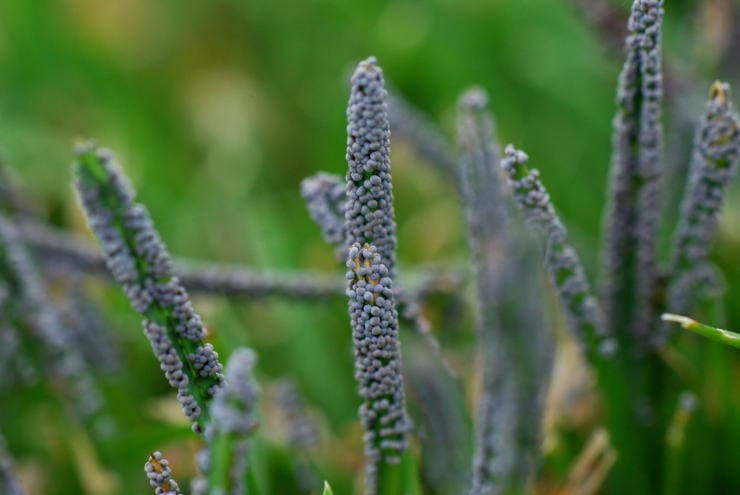
Gray Beads: The most common lawn slime mold coats blades in tiny bluish-gray beads that look alarming but simply rub or wash off.
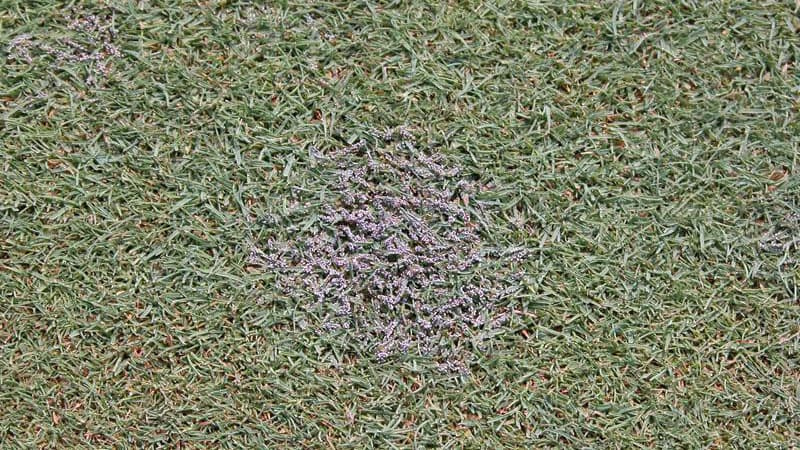
From Standing Height: On a lawn, slime mold looks like a dark gray or sooty patch that seems to appear overnight.
NC State University, used with permission
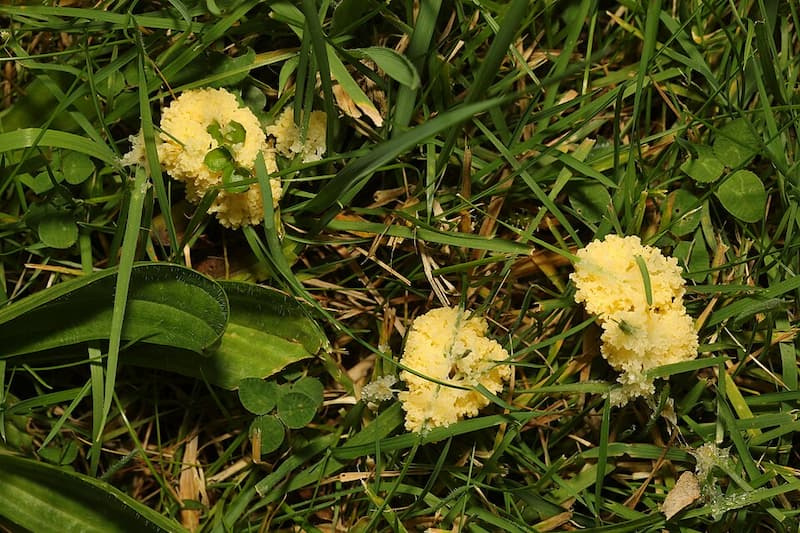
Early Stage: Some slime molds first appear as soft, bright yellow or cream masses that creep up the grass after a spell of warm, wet weather.
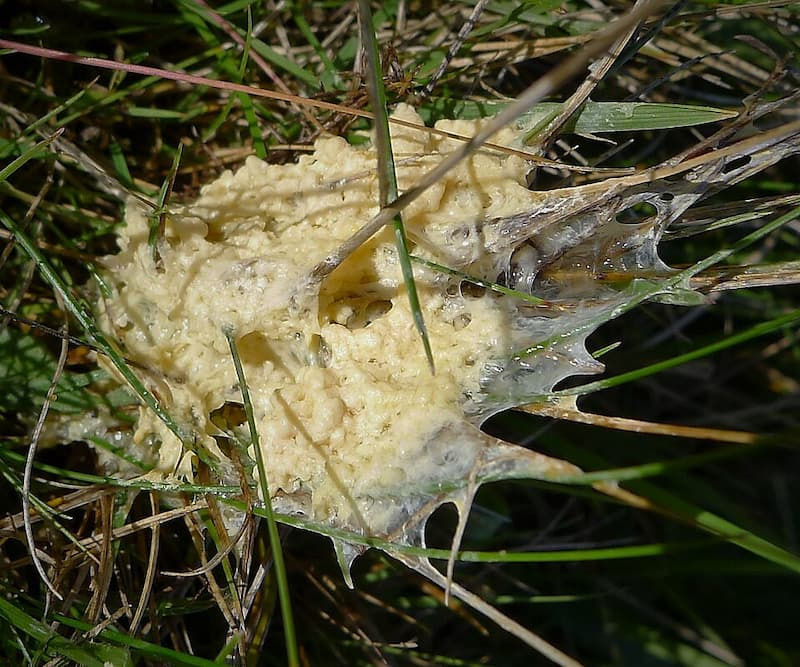
Dog Vomit Look: The creamy, crumbly mass explains its common nickname. It is feeding on bacteria and decaying matter, not on the grass itself.
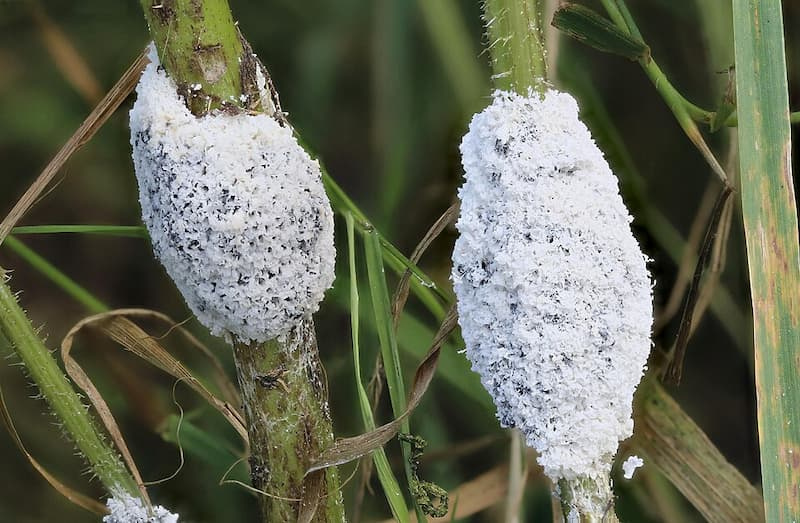
Mature Stage: Within a few days the mass dries into a white, chalky crust filled with dark spores, then crumbles away without leaving lasting damage.
Could It Be Something Else?
Common Lookalikes
Powdery mildew is the disease most often mistaken for slime mold, because both leave a white-to-gray powder on the blades, especially in shady lawns. The difference is that powdery mildew is a true fungus growing on the leaf and feeding from it, so the leaf under the powder turns yellow, while slime mold just sits on top.
Rust gets confused with the orange and dark forms of slime mold, because both leave colored dust on your shoes after you walk the lawn. Rust breaks out from inside the leaf, though, and leaves yellow flecks and spots behind. Slime mold leaves the blade clean and green.
A spill of ash, lime or granular fertilizer can also look like a gray dusting from a distance. Up close, the spill is loose grit lying on the grass, not tiny round balls attached to the blades.
Field Checks Before You Treat
- Wipe a blade. Pull a coated blade between your thumb and finger. If the coating smears off and leaves a clean, green blade with no spots, it's slime mold. If the blade underneath is yellowed, flecked or spotted, look at powdery mildew or rust instead.
- Look at the bumps up close. Kneel down, or use a magnifying glass if you have one. Slime mold forms round, pinhead-sized balls sitting on the surface of the blade. Rust pustules are slits that break out of the leaf itself, and spilled grit is loose and uneven.
- Pinch a dry ball. On a dry afternoon, pinch one of the gray or dark balls. Slime mold crumbles and puffs out dark brown, purple or black dust, and the blade stays whole.
- Tug the grass. Pull gently on a handful of grass in the middle of the patch. Slime mold leaves the grass firmly rooted with firm, light-colored crowns. Grass that pulls up easily or has dark, mushy crowns has a different problem.
- Wait two or three dry days. Push a few golf tees in around the patch's edge and do nothing else. Slime mold dries and crumbles away within 2 to 3 days of dry weather. A patch that stays, spreads or turns brown and dead is something else.
Grasses at Risk
Host Grasses
Which Grasses Suffer Most
Every lawn grass can host slime mold, and no grass suffers from it, because it uses the blades only as something to climb. Extension photos show it on tall fescue, Kentucky bluegrass, bermudagrass, St. Augustinegrass, zoysiagrass and centipedegrass alike. What decides whether a lawn gets it is thatch and moisture, not grass type. A thick, thatchy, often-wet lawn of any species sees it more. No grass or cultivar is bred or rated for resistance, and NTEP doesn’t test for it, so switching grasses won’t solve the problem.
Why It Shows Up
Conditions That Trigger It
Slime mold is set off by water, not by a particular temperature. Its spores sit in the thatch for months or years and wake up when the lawn stays wet. That’s why a lawn can go from clean to covered after one long rainy spell, and why NC State notes that big flushes often follow heavy rain after a long dry stretch. Extension sources give no temperature threshold. They describe warm, wet, overcast weather as the trigger, plus mild wet stretches in spring and late fall.
- Long leaf wetness. Ohio State names this as the main factor. The slimy stage needs a film of water to move in, so days of drizzle, fog, heavy dew or clouds that keep the grass wet are what bring it up.
- Heavy thatch. Thatch is its pantry. The organism eats the bacteria, fungi and dead plant matter in that layer, so thick thatch feeds a bigger population.
- Poor drainage and low spots. Wet soil keeps the surface damp long after the rain stops.
- Shade and still air. Shade and blocked airflow slow down how fast dew and rain dry off the blades, which adds hours of wetness every day.
- Lush, heavily watered grass. Dense, soft growth from heavy watering holds moisture down in the canopy where the slime mold climbs.
How It Survives and Spreads
Slime mold spends most of its life out of sight. Its spores rest in the soil and thatch through cold winters and dry summers. Once the lawn stays wet, they soak up water and release tiny single cells that swim through the water film around the thatch, eating bacteria. These cells merge into one slimy mass that keeps feeding, creeping slowly through the thatch like a giant amoeba.
When food or moisture starts to run short, the mass crawls up the grass blades and turns into spore balls within hours. Climbing gets its spores up into moving air, which is the only reason it uses the grass at all. The dried spores then blow away on the wind or get splashed, tracked or carried off on shoes, paws, mowers and even grass seed. They stay alive for years, so the same spot often lights up again the next time the weather turns wet.
Where It Hits Hardest: Regional Notes
Slime mold turns up across the humid eastern half of the country wherever rainy spells hit. It’s especially common in the Southeast and along the Gulf Coast, where frequent rain and the heavy thatch of bermudagrass, St. Augustinegrass, zoysiagrass and centipedegrass lawns give it everything it needs. In Louisiana it often appears in spring and late fall, and even in a normally dry fall after a long wet stretch. In the cool-season North it shows up from late spring to late fall after rain. In the dry West it’s uncommon on lawns, because dew burns off too fast for the slimy stage to climb. There it turns up mostly in irrigated mulch beds.
Slime Mold Diagnostic Profile
Check what you see against the full set of signs. The more that match, the more likely this is your problem.
What You’ll See
Symptom Color
Yellow
Brown
Red, Pink or Purple
Orange or Rust
White or Gray
Black or Dark
Visible Signs
Orange Spore Dust
White Powdery Coating
Black Spots or Pustules
Slimy or Crusty Layer
Lawn Pattern
Circular Patches
Rings or Frog-Eyes
Irregular Patches
Small Spots
Streaks or Stripes
Patch Size
Under 2 Inches
2 to 6 Inches
6 to 12 Inches
1 to 3 Feet
Over 3 Feet
Blade Symptoms
Powdery Coating
When and Where
Weather Triggers
Cool & Wet
Warm & Humid
Hot & Humid
Long Leaf Wetness (Dew or Rain)
Wet or Poorly Drained Soil
Where in the Lawn
Shade
Low or Wet Spots
Compacted or High-Traffic Areas
New Seedings
Open, Sunny Lawn
Controlling Slime Mold
- Leave light outbreaks alone. Ohio State recommends no action for light to moderate outbreaks. The first dry, sunny day shrivels the slimy stage, and the rest crumbles away within days.
- Break it up while it’s dry. Mow, rake or sweep it with a stiff broom. This knocks the powdery balls off the blades and lets sunlight reach the leaves again.
- Hose it off only once dry weather is back. A strong stream of water rinses it off the blades. Do this during a wet spell, though, and the runoff carries live cells and spores to clean turf. While the lawn is still damp, use a rake or broom instead.
- Cut back on watering. Skip irrigation while it’s showing. After that, water deeply and less often, before sunrise, so the grass dries by midday. Evening watering keeps the blades wet all night, which is exactly what the slimy stage needs to move.
- Thin the thatch. Core aeration and dethatching cut down the organic layer it lives on and let water soak in instead of sitting on top. This is the step that makes repeat outbreaks smaller.
- Fix wet, shady spots. Fill low spots, correct drainage, and thin low tree limbs to let in sun and air. If the same corner lights up after every rain, this is the reason.
- Don’t push lush growth. Avoid heavy watering and heavy feeding that make the grass soft and dense, because a thick, wet canopy is where slime mold climbs.
No fungicide will help with slime mold. It isn’t a fungus and isn’t infecting the grass, so there’s nothing for a spray to protect. By the time a product could go down, a dry afternoon has usually done the job anyway. University turf specialists agree that it isn’t needed. Put the effort into drying the lawn out and thinning the thatch.
Recovery and Repair
There’s nothing to repair. Slime mold leaves no dead grass behind, so no overseeding, slit-seeding or patching is needed. The growth crumbles away within 2 to 3 days of dry weather, and any yellowing under a heavy coat greens back up within days once the leaves get sun. Mowing or sweeping off the dried crust speeds that up by letting light reach the blades sooner.
If grass in the spot is still brown, thin or dead a week after the slime mold is gone, slime mold didn’t cause it. Look for a real disease, insects or a drainage problem underneath.
When to Call a Pro
You don’t need a lab test or a lawn service for slime mold. Colored slime or sooty balls that wipe off a healthy green blade and vanish within a few dry days are diagnosis enough. Send a sample to your county extension office’s diagnostic lab only if the grass underneath is actually dying. That means brown, collapsed, greasy-looking or rotted grass, patches that keep growing after the weather dries, or grass that pulls up easily. Those signs point to a real disease, and slime mold just happens to be sitting on top of it.
Frequently Asked Questions
These answers are synthesized from plant pathology research and diagnostic guidance published by university extension services and plant disease clinics.
Neither, strictly speaking. Older extension pages call slime molds “primitive fungi,” but they’re now classed as protists, a group closer to amoebas than to mushrooms. They feed on bacteria and dead plant matter in the thatch and never grow into the grass. They’re listed with lawn diseases only because they look like one.
Because the spores never left. Spores rest in the soil and thatch and stay alive for years, waiting for the next wet spell. A spot that stays wet longer than the rest of the lawn, from shade, poor drainage or thick thatch, wakes them up first and most often. Fix that spot’s moisture and thatch and the outbreaks get smaller.
That’s dog vomit slime mold, Fuligo septica. It mostly grows in wood mulch, but it can creep onto nearby grass. It starts as a bright yellow, foamy mass and dries into a brown, crusty lump full of dark spores. It’s just as harmless as the gray lawn kind, so rake it up and toss it, or simply leave it to dry out.
The spores were already there, waiting for water. NC State notes that big flushes often follow heavy rain after a long dry stretch. Spores that sat dormant through the dry weather all wake up at once. It’s alarming to see, but it’s a weather event, not a sign that something is wrong with your lawn.
Scientific Authority
This profile is built on plant pathology research and diagnostic guidance from university extension services and plant disease clinics. We prioritize accurate identification and cultural control first, recommending fungicides only where research shows they are justified, and naming them by active ingredient rather than brand.
Primary Resources
- Penn State Extension — Turfgrass Diseases: Slime Molds
- Penn State Turfgrass Pest Lab — Slime Mold
- Ohio State University Extension — Slime Molds on Turfgrass (HYG-3074)
- Purdue University Turfgrass Science — Slime Mold
- University of Missouri Extension — Turfgrass Disease Profiles: Slime Mold
- NC State Extension — Slime Mold in Turf
- NC State Extension — Slime Mold Outbreak (Hint: Don’t Panic!)
- LSU AgCenter — Slime Mold Sinister But Not Harmful to Lawn
- Clemson Cooperative Extension HGIC — Spanish Moss, Lichens & Slime Molds
- University of Wisconsin–Madison Extension — Slime Molds
- University of California IPM — Mushrooms and Other Nuisance Fungi in Lawns
- Texas A&M AgriLife Extension — Texas Plant Disease Handbook: Slime Mold