
Pathogen: Phytophthora spp. (mainly Phytophthora cinnamomi and Phytophthora nicotianae, formerly P. parasitica)
Also called: Phytophthora root and crown rot, crown rot, collar rot, Phytophthora wilt, wet feet, root rot
Phytophthora Root Rot
The rot that looks like drought
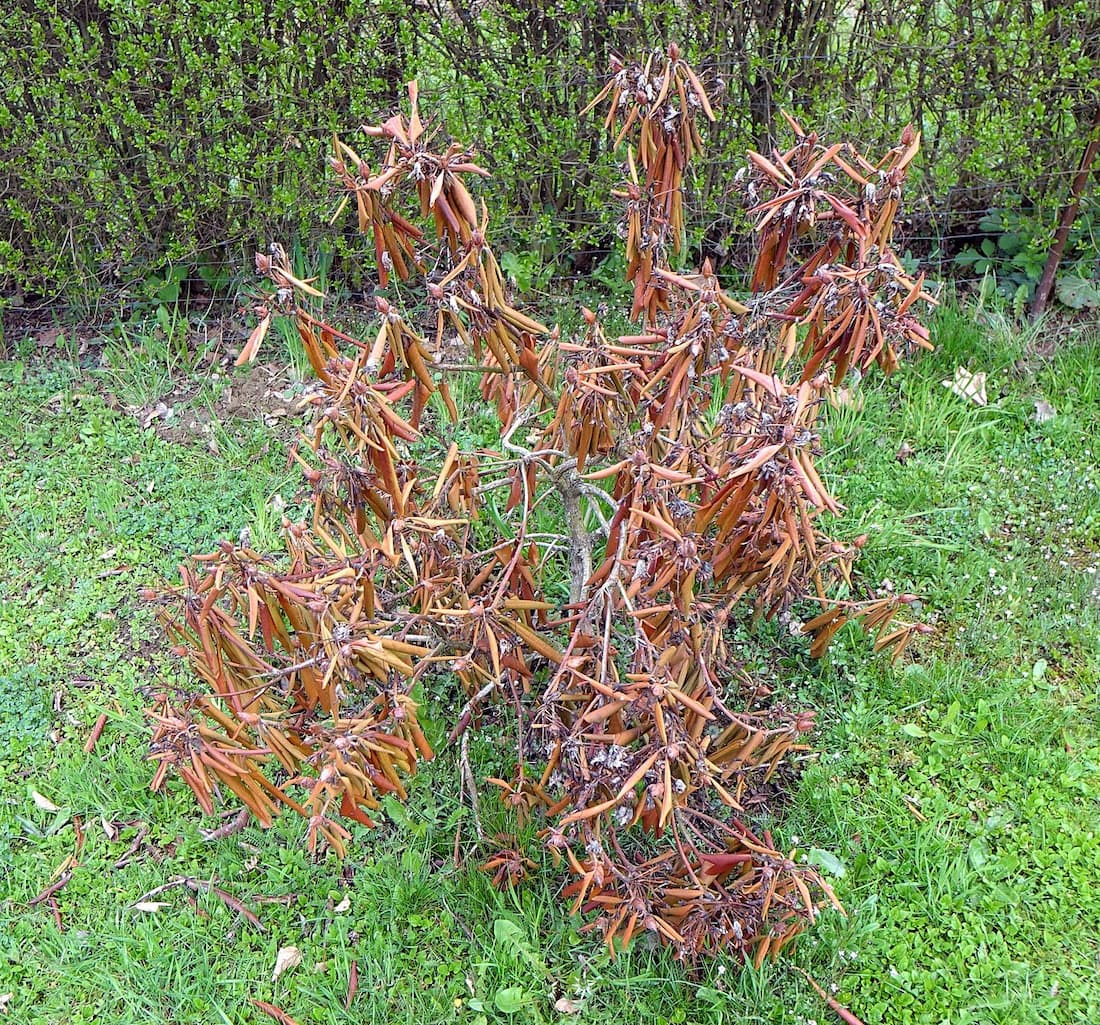
Featured Image Credit: Jerzy Opioła, via Wikimedia Commons, CC BY-SA 4.0
Phytophthora Root Rot At-a-Glance
Plant Group
Shade Trees
Evergreen Trees
Flowering Shrubs
Evergreen Shrubs
Perennials
Annual Flowers
Plant Part
Leaves
Stems & Twigs
Branches & Trunk
Roots & Crown
Whole Plant
Is Spraying Worth It?
Rarely Worth It
Disease Type
Water Mold
Active Season
Early Spring
Late Spring & Early Summer
Mid to Late Summer
Fall
Damage Potential
Weakens Over Time
Can Be Fatal
Phytophthora Root Rot Quick Answers
What Phytophthora Root Rot Looks Like
From a Few Feet Away
A plant with root rot looks thirsty. Leaves lose their shine, turn dull green, then yellow, red-purple or brown, and new growth comes in small and short. Early on, broadleaf evergreens such as rhododendrons droop in the afternoon heat and recover overnight. Later the wilting becomes permanent, branches die back, and the worst plants are usually the ones in the wettest spot in the yard.
Symptoms by Plant Part
- Roots. The disease starts here. Fine feeder roots turn brown to black, soft and soggy, and their outer layer slips off, leaving a bare thread-like core. Healthy roots are white. In wet sites the rot moves into the larger roots, and badly infected small plants pull out of the ground with almost no resistance.
- Crown and lower stem. Under the bark at the soil line, the wood turns reddish-brown, often with a sharp dark line where it meets healthy tissue. Bark at the base may darken, gum, rot or peel. Once this discolored ring circles the stem, the plant is girdled and dies.
- Leaves. They look drought-stressed: dull green first, then yellow, red, purple or brown, sometimes with scorched edges. They stay small. Depending on the plant, they either drop or hang on dead stems.
- Stems and branches. Twigs die back and branches wilt, often on one side or one branch first. Dark streaks can run from the roots up into the stems and limbs.
- Trunk on trees. Thin-barked trees such as beech and maple can develop slightly sunken cankers on the lower trunk that bleed dark sap, with pink or reddish-brown wood under the canker’s edge.
Over the season, damage below ground comes first and shows above ground later. Roots rot during wet weather in spring, and the plant collapses in the first hot, dry spell of summer, when it needs more water than its roots can supply. Small plants and new transplants die within weeks; established trees decline over several years.
Host differences that help with diagnosis:
- Rhododendron. Leaves roll inward along the midrib and point downward, turning dull green, yellow or purple. The wood at the soil line is reddish-brown.
- Azalea. Leaves yellow and drop heavily, leaving bare branches with a few leaves at the tips.
- Boxwood. Leaves fade from dark green to light green, then straw-tan, and stay attached to the dead stems. Bark at the base rots and peels; roots turn dark and brittle.
- Holly. Leaves yellow at the shoot tips, drop early, and one or more branches wilt, with brown to black streaks running from the roots into the limbs. Japanese holly is the most prone.
- Gardenia. Older leaves yellow first and drop, then the plant wilts, on one side or all over. Some plants linger for a long time; others wilt and die suddenly.
- Annual vinca. Dark brown to black lesions form on stems, and everything above them wilts and dies, often without any root rot. Root-rotted plants yellow, stunt and collapse.
Signs of the Fungus
There is nothing of the organism to see. Phytophthora lives inside roots and the lower stem, and it forms no mold, threads, mushrooms or spore dust you could spot without a microscope. What you can see is the plant’s reaction to it: reddish-brown wood under the bark at the soil line, and on thin-barked trees such as beech, dark sap bleeding from the lower trunk. That sap does not smell bad, which helps separate it from bacterial wetwood.
Identification Photos
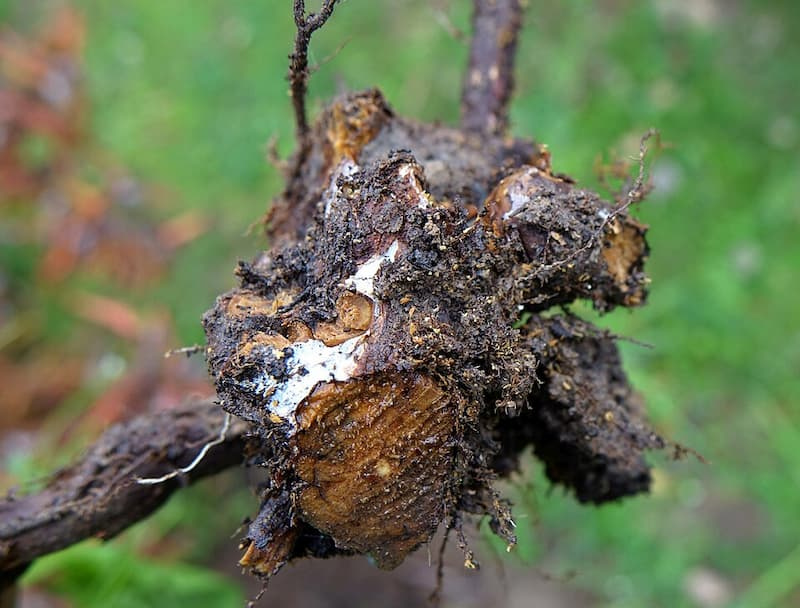
Check the Crown: Scrape the bark at the soil line. Healthy tissue is white or green, while infected wood shows reddish-brown discoloration.
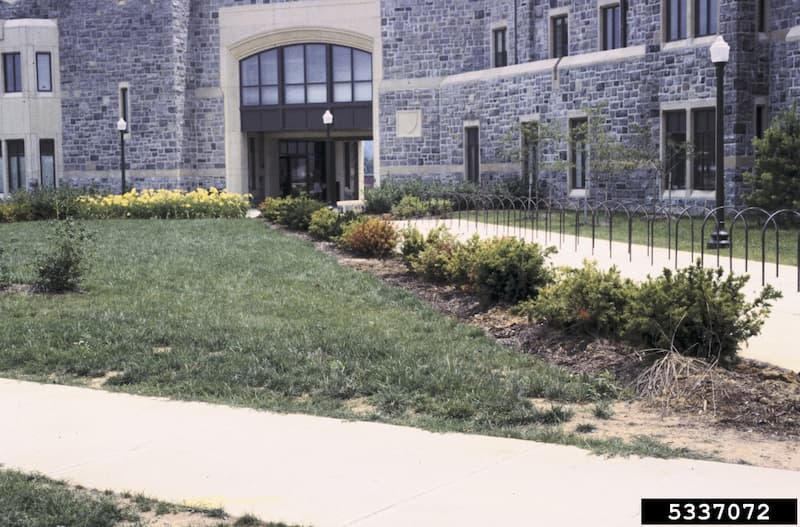
Wet Spots First: Shrubs in poorly drained beds, low spots or under downspouts are usually the first to decline, while neighbors on drier ground stay healthy.
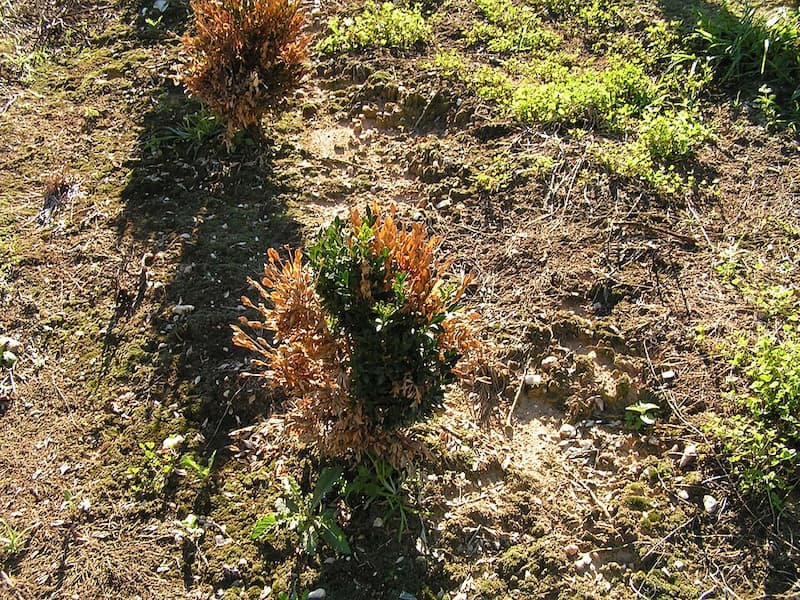
Boxwood Decline: Infected boxwoods turn light green, then yellow to orange-brown as the roots rot away, often one plant at a time.
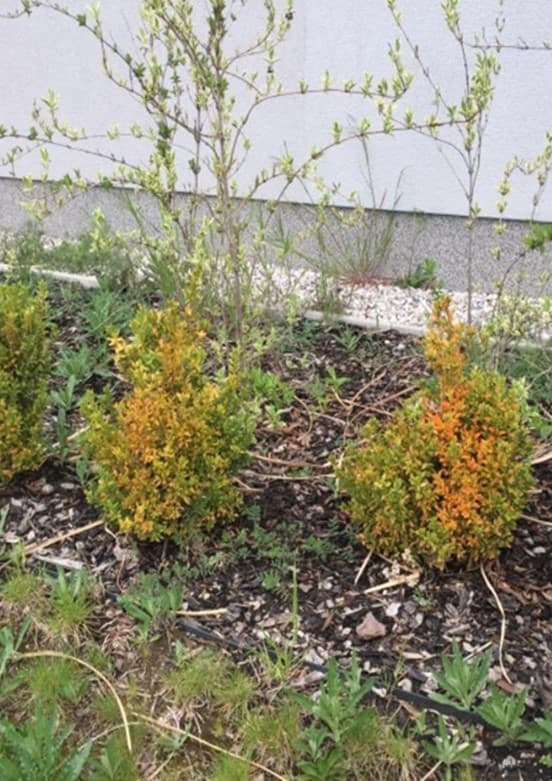
Spreads Through Beds: The pathogen moves through wet soil and water, so it can spread from plant to plant along a hedge or bed.
Could It Be Something Else?
Common Lookalikes
Armillaria Root Rot kills trees and shrubs from the roots up and causes the same wilting and dieback, so the canopy alone can’t tell them apart. The difference is under the bark: Armillaria leaves white, fan-shaped sheets of fungus and a mushroom smell, while Phytophthora leaves only discolored wood.
Boxwood Blight is the usual suspect when a boxwood browns, and both diseases kill boxwood. Blight starts with leaf spots and makes the plant drop its leaves heavily; root rot makes the leaves fade to light green, then straw-brown, and they stay attached.
Drought stress causes the same dull, wilted, yellowing or scorched leaves, and many plants with root rot are first diagnosed as “just dry.” A thirsty plant perks up after a deep watering; a root-rotted plant stays wilted, and the soil around it is usually already wet.
Black Vine Weevil grubs chew the roots and lower stem of azaleas and rhododendrons and can weaken or kill them. They also make Phytophthora damage worse, so you may find both on the same plant.
Field Checks Before You Treat
- Check the soil first. Push a trowel into the root zone a day after rain or watering. Soggy, muddy soil, a low spot, or a plant sitting where runoff collects points to Phytophthora; dry, hard soil points to plain drought.
- Water once and watch. Give a deep watering and look again the next morning. A plant that recovers was thirsty. A plant that stays wilted in moist soil has lost the roots it needs to drink.
- Scrape the bark at the soil line. Pull back mulch, then shave a thin strip of outer bark at the base of the stem with a knife. Reddish-brown inner bark, often with a sharp dark line where it meets healthy cream or green tissue, means crown rot. White fans of fungus and a mushroom smell mean Armillaria instead.
- Pull a feeder root. Dig a small hole near the edge of the root zone and pinch a fine root between two fingers. Healthy roots are firm and white inside. If the root is brown or black and the outer skin slides off, leaving a bare thread-like core, the roots are rotting.
- Look at boxwood leaves and the ground under them. Dead, straw-colored leaves still clinging to the stems point to root rot. A carpet of fallen leaves under a shrub with spotted leaves points to boxwood blight.
- Check azalea and rhododendron leaf edges. Ragged notches chewed into the leaf margins mean adult black vine weevils are feeding. Look for their C-shaped, legless, whitish grubs with brown heads in the soil around the base.
Plants at Risk
Commonly Affected Plants
Phytophthora can infect hundreds of landscape plants, but these are the ones homeowners find it on most:
- Azalea and Rhododendron — the classic hosts, along with their relatives Pieris (andromeda) and mountain laurel.
- Boxwood — killed outright in wet clay.
- Japanese Holly — very intolerant of poor drainage.
- Yew — a common host in heavy, wet soil.
- Gardenia — Phytophthora is the root rot found most often on it in South Carolina.
- Flowering Dogwood — prone in poorly drained or flooded sites.
- Fraser Fir, along with white pine, hemlock, arborvitae, false cypress and juniper.
- Annual Vinca — one of the most susceptible bedding plants, along with petunia, calibrachoa, pansy, snapdragon and begonia.
- Coral Bells (heuchera) — crowns rot and collapse; hosta, lavender and rosemary are also hosts.
Beech, maple, camellia, viburnum and forsythia are also hosts, usually in heavy, wet soil.
Resistant Choices
Resistant plants lower the risk but don’t make a plant immune: a resistant plant set in standing water can still die. Fix the drainage first.
- Azaleas. Resistant: ‘Corrine’, ‘Fakir’, ‘Fred Cochran’, ‘Glacier’, ‘Hampton Beauty’, ‘Higasa’, ‘Merlin’, ‘Polar Sea’, ‘Rose Greeley’, Indian azalea (Rhododendron simsii) and Korean azalea. Moderately resistant: ‘Alaska’, ‘Chimes’, ‘Eikan’, ‘Morning Glow’, ‘Pink Gumpo’, ‘Pink Supreme’, ‘Red Wing’, ‘Sweetheart Supreme’.
- Rhododendrons. Highly resistant: ‘Caroline’, ‘Martha Isaacson’, ‘Pink Trumpet’, ‘Prof. Hugo de Vries’, ‘Red Head’. Some tolerance: ‘Roseum Elegans’, ‘Scintillation’, ‘PJM’. Avoid ‘Nova Zembla’, ‘Chionoides White’ and ‘Catawbiense Album’ in heavy soil.
- Camellias. Sasanqua camellia is more resistant than Japanese camellia.
- Boxwood. No boxwood is reliably resistant. Where a boxwood died of root rot, replace it with a different, non-susceptible shrub.
- Annual vinca. The ‘Cora’ series resists the most common vinca Phytophthora species, though other species can still infect it.
- Flowers for infested beds. In NC State trials in infested beds, these stayed disease-free all season: narrow-leaf zinnia ‘Star Orange’, SunPatiens New Guinea impatiens, sweet potato vine ‘Ace of Spades’, angelonia ‘Serenita White’, lantana ‘Miss Huff’, purple coneflower ‘PowWow Wildberry’, switchgrass ‘Shenandoah’ and coreopsis ‘Jethro Tull’.
Why It Shows Up
Conditions That Trigger It
This disease runs on water, not weather. Just 4 to 8 hours of saturated soil is enough: once the pore spaces fill with water, the organism releases spores that swim through it to the roots. Most of the species that attack landscape plants are warm-season types, so damage builds when soil is both warm and wet. On rhododendron and azalea, soil temperatures of 80°F and above favor the disease. A few cool-season species work in cold, wet soil, mostly during California winters.
Symptoms often show up later than the infection. Roots rot during a wet spring, and the plant wilts in the first hot spell of summer, when it needs more water than its damaged roots can deliver.
Site and care factors that raise the risk:
- Poor drainage. Heavy clay, compacted soil, low spots, high water tables and beds where downspouts or runoff collect. Affected plants are usually in the wettest part of the yard. Sandy soils see less severe disease.
- Planting too deep. Burying the root flare or piling soil or mulch against the stem keeps the crown wet, which is where crown rot starts.
- Too much water. Frequent light watering, sprinklers hitting trunks, and lawn irrigation spilling into shrub beds keep the soil saturated.
- Amendments under the root ball. Organic matter placed below a plant breaks down and leaves a sunken pocket that holds water.
- Heavy or ammonium-based nitrogen. It produces soft new growth that is easy to infect.
- Splashing water and crowded plantings. Rain or sprinklers splash spores from the soil onto stems and leaves, which is how annual vinca gets its stem lesions.
- Weak roots from other stress. Roots damaged by black vine weevil grubs or by earlier drought give the disease an easier start.
How It Survives and Spreads
Phytophthora is a water mold, not a true fungus. It survives between seasons as thick-walled resting spores inside dead roots, plant debris and soil. These spores last for years in moist soil without any host plant, and some species persist for decades. Their survival drops if the soil dries out.
When the soil saturates, the resting spores sprout and form tiny spore sacs that release swimming spores. These swim through the water-filled soil toward chemicals leaking from root tips and infect the fine feeder roots directly, with no wound needed. From there the rot moves into larger roots and up into the crown, cutting off the plant’s water supply.
It spreads in water and soil: runoff flowing downhill through beds, rain and sprinkler splash, soil on shovels, tillers and shoes, and above all infected nursery plants. A plant can look fine at the garden center and wilt weeks after planting, once it meets wet soil and summer heat.
Where It Hits Hardest: Regional Notes
Phytophthora root rot occurs in every part of the US where susceptible plants grow in soil that stays wet. It does the most damage where heavy clay meets heavy rain or heavy watering. It is a constant problem in the Southeast and Mid-Atlantic, where clay soils and summer storms meet heavy plantings of azalea, rhododendron, gardenia and annual vinca. In the Midwest and Northeast it shows up mostly in compacted clay and low spots. In the dry West, it’s driven almost entirely by irrigation: the problem is the sprinkler schedule, not the rain. Sandy, fast-draining sites see much less of it.
Phytophthora Root Rot Diagnostic Profile
Check what you see against the full set of signs. The more that match, the more likely this is your problem.
What You’ll See
Symptom Color
Tan or Straw
Yellow
Brown
Red, Pink or Purple
Black or Dark
Visible Signs
Discolored Sapwood Streaks
None Usually Visible
Plant Symptoms
Leaf Spots
Curled or Distorted Leaves
Wilting
Yellowing
Browning & Dieback
Cankers
Rot
When and Where
Weather Triggers
Warm & Humid
Hot & Humid
Long Leaf Wetness (Dew or Rain)
Wet or Poorly Drained Soil
Drought or Heat Stress
Spread Pattern
Lower Leaves First
One Side or Branch
Tips Back Toward the Trunk
From the Soil Line Up
Controlling Phytophthora Root Rot
Water management is the most important control, because the organism can only move and infect when the soil is saturated. Every step below takes that saturation away.
- Fix the drainage before you plant. Soil should drain well down to the rooting depth: about 1 to 2 feet for flowers, 2 to 4 feet for shrubs and 3 to 6 feet for trees. Break up hardpan, and redirect downspouts and runoff away from beds. Where the soil can’t be fixed, plant on mounds 8 to 10 inches high for annuals and up to 2 feet high, with a gradual slope, for shrubs, trees and perennials.
- Plant high, never deep. Set plants no deeper than they grew in the nursery, with the root flare at or just above grade. Keep soil and mulch off the crown and any graft union, and skip “volcano” mulch piled against the trunk, because a wet crown is where crown rot starts.
- Water by the soil, not the calendar. Let the top few inches dry between waterings and let excess water drain before watering again. A wilted plant in wet soil needs less water, not more. Keep sprinkler spray off trunks, and place drip emitters about a foot from the trunk on young plants, moving them out toward the drip line as the plant grows.
- Keep lawn irrigation out of shrub beds. Turf needs frequent watering that keeps tree and shrub roots soaked, so don’t plant irrigated lawn right up to tree bases.
- Mulch thin and use calcium. A thin layer of fresh wood chips from healthy tree trimming can build up soil organisms that fight Phytophthora, but only if the mulch isn’t kept constantly wet. Gypsum spread on the soil surface at 15 to 25 lb per 100 sq ft adds calcium that disrupts the swimming spores. Neither cures a sick plant; both lower the odds for the next one.
- Feed lightly. Use a low-nitrogen fertilizer and avoid ammonium sources, which push soft, easily infected growth. Keep soil pH right for acid-loving plants such as azaleas, because a stressed plant resists less, but pH alone won’t stop this disease.
- Buy clean roots. Slide plants out of their pots before buying. Pass on any plant with brown roots on the outside of the root ball, a badly root-bound pot, or leaves that look wilted in the morning.
- Don’t move the problem. Stay out of wet beds, rinse soil off shovels and boots before working in a healthy bed, and rake up fallen leaves and twigs under infected plants.
- Prune dead wood in dry weather. Cut dead branches back to live wood, disinfecting tools between cuts with 70% rubbing alcohol, or 1 part household bleach to 9 parts water (soak about 2 minutes, rinse, oil the blades).
Spraying is rarely worth it. No product can regrow rotted roots, so nothing will save a plant that already stays wilted, and the products that work only protect healthy roots in a site where the drainage has also been fixed.
Most garden fungicides don’t work at all. Phytophthora is a water mold, and many fungicides target chemistry that true fungi have and water molds don’t. Chlorothalonil, myclobutanil, propiconazole, captan and sulfur do nothing against this root rot.
| Active ingredient | FRAC group | Who can use it | How it works and cautions |
|---|---|---|---|
| Potassium phosphite / phosphorous acid | P07 (formerly 33) | Sold to homeowners | Sprayed on leaves or poured on the soil; moves down into the roots and boosts the plant’s own defenses. Prevents infection; doesn’t cure it. |
| Fosetyl-Al | P07 (formerly 33) | Mostly professional products | Same group and behavior as the phosphites. |
| Mefenoxam | 4 | Mostly professional; costly and must be applied accurately | Soil treatment that protects healthy roots. Some Phytophthora have developed resistance, so it shouldn’t be used alone over and over. |
| Oxathiapiprolin | 49 | Professional only | Newer water-mold fungicide used by licensed applicators. |
The one situation where treatment makes sense: a valuable healthy shrub growing next to one that died, while you fix the drainage. A phosphite spray or drench, repeated on the label’s schedule through the summer, can help keep the spores out of its roots. Mature shade trees are not a homeowner job: their root zones are too large to treat, so call an arborist instead.
Check the active-ingredient panel, not the front of the bottle. Some phosphite products are sold as fertilizers, not fungicides, and only a product registered as a fungicide that lists ornamentals and Phytophthora on its label is a disease treatment.
Removal, Disposal and Replanting
When to remove. Remove a shrub, perennial or annual once it stays wilted after watering and the wood at the soil line is brown. It won’t come back, and its rotting roots keep adding spores to the soil. Trees are the one exception worth a try: if the brown lesion at the base covers less than a quarter of the trunk’s circumference, pull the soil away down to the top of the main roots and let the crown dry out, and keep all water away from the trunk. Lesions larger than that rarely recover, even with ideal care.
Disposal. Dig out the plant with as much of the root ball as you can, bag the roots and the soil clinging to them, and put them in the trash. Bag fallen leaves and twigs from under the plant too. Never home-compost any of it, because the resting spores survive compost piles, and never chip the wood into mulch. Wash soil off tools and boots before moving to another bed.
Replanting. Don’t put the same plant, or another susceptible one, back in the same spot: the spores stay in the soil for years. Your options:
- Change the plant. Choose a resistant cultivar or a plant that isn’t a host, and correct the drainage first.
- Raise the bed. Build a mound or raised bed with clean soil so the new roots sit above the wet, infested ground.
- Solarize the soil. For a bed of annuals or perennials, wet the soil and cover it with clear plastic for 4 to 6 weeks in the hottest, sunniest part of summer. It works best in the top 6 inches, in full sun, and poorly in foggy or cool areas, so it lowers the spore load but doesn’t sterilize the bed.
Replacing the soil entirely is possible but rarely worth the cost.
When to Call a Pro
Send a sample to your state’s extension plant diagnostic lab when a valuable tree or shrub is wilting, yellowing or dying back and the field checks don’t give a clear answer, or before you spend money replacing plants in a spot where something died. Dig up fine roots from the edge of the root zone with the soil around them, bag them so they stay moist, and include photos of the whole plant, the base of the stem and the site. Lab testing identifies the Phytophthora species, which matters because resistant plants are resistant to particular species.
Call an ISA Certified Arborist when a large tree has bleeding cankers on the lower trunk, dieback high in the canopy, or a lean, or when the root flare needs to be dug out to check for crown rot without injuring the major roots. A tree with a badly rotted root system can fall.
Frequently Asked Questions
These answers are synthesized from plant pathology research and diagnostic guidance published by university extension services and plant disease clinics.
Because its roots are gone. Phytophthora rots the fine roots that absorb water, so the plant goes thirsty in soaked soil and looks exactly like it’s in a drought. Adding more water makes things worse, because saturated soil is what lets the swimming spores reach the roots that are left. If a plant stays wilted the morning after a deep watering, check the roots before you water again.
No, but both help prevent it. Gypsum spread on the soil at 15 to 25 lb per 100 sq ft adds calcium that disrupts the swimming spores, and fresh wood chips from tree trimming feed soil organisms that compete with Phytophthora. Neither one can save a plant whose roots have already rotted. They work best with fixed drainage and careful watering.
Quite possibly. Infected nursery plants are the main way Phytophthora reaches new yards, and a plant can look healthy in its pot, then wilt weeks after planting once it meets wet soil and summer heat. Before buying, slide the plant out of its pot: healthy roots are white and firm, and brown roots on the outside of the root ball are a reason to walk away.
No. Resistant plants get infected less often and less badly, but they can still die in soil that stays waterlogged, and the spores remain in a spot where plants have died. Treat resistance as a second layer of protection on top of good drainage and planting height, not a replacement for them.
Scientific Authority
This profile is built on plant pathology research and diagnostic guidance from university extension services and plant disease clinics. We prioritize accurate identification and cultural control first, recommending fungicides only where research shows they are justified, and naming them by active ingredient rather than brand.
Primary Resources
- University of California IPM — Pest Notes: Phytophthora Root and Crown Rot (Publication 74133)
- University of California IPM — Pest Notes: Soil Solarization for Gardens & Landscapes (Publication 74145)
- University of California IPM — Black Vine Weevil
- NC State Extension — Phytophthora Root and Crown Rot in the Landscape (AG-747)
- NC State Extension — Phytophthora Blight and Root Rot on Annuals and Herbaceous Perennials
- NC State Extension Gardener Plant Toolbox — Camellia sasanqua
- Penn State Extension — Phytophthora Root Rot on Woody Ornamentals
- Penn State Extension — Understanding the Phosphonate Products
- Clemson Cooperative Extension Home & Garden Information Center — Azalea & Rhododendron Diseases
- Clemson Cooperative Extension Home & Garden Information Center — Boxwood Diseases & Insect Pests
- Clemson Cooperative Extension Home & Garden Information Center — Holly Diseases & Insect Pests
- Clemson Cooperative Extension Home & Garden Information Center — Gardenia Diseases & Other Problems
- Clemson Cooperative Extension Home & Garden Information Center — Vinca Diseases
- Clemson Cooperative Extension Home & Garden Information Center — Dogwood
- Purdue Extension — Phytophthora Diseases in Ornamentals (BP-215-W)
- Virginia Cooperative Extension (Virginia Tech) — Phytophthora Root Rot of Rhododendron and Azalea (450-615)
- University of Illinois Extension — Boxwood Blight Look-Alikes
- The Morton Arboretum — Phytophthora Root Rot