
Myth Demystified
Is Getting Rid of Your Lawn the Best Way to Save Water in a Drought
Demystified By
Expert Name: James H. Baird

Expert's Take
The short answer is no.
Is It True That Letting Your Lawn Die During a Drought Is the Best Way to Save Water?
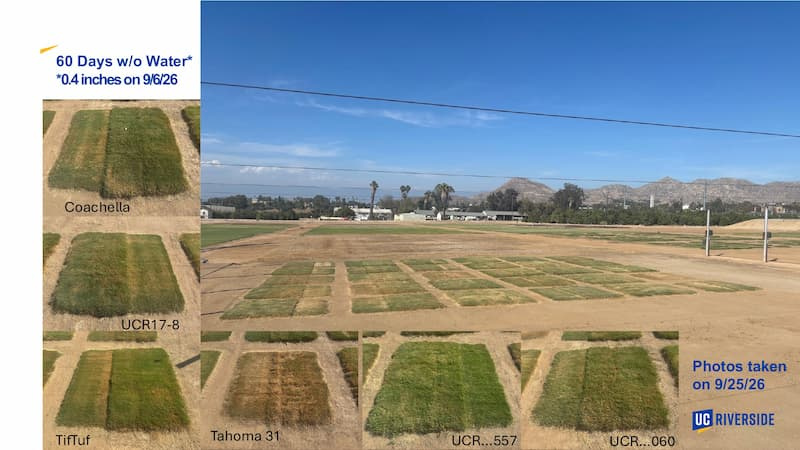
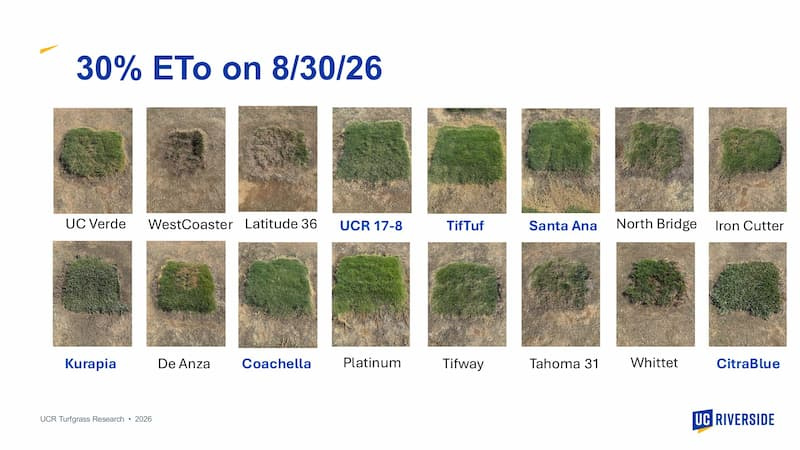
Grasses don’t waste water. People and faulty irrigation systems waste water. Choosing the right species and cultivars can be helpful as shown in the attachment (MFY note: the UC Riverside trial photos below).
Is It True That Artificial Turf Is the Eco-Friendly Answer to Drought?
I can’t think of any justification for artificial turf other than perhaps in stadia where multiple uses by many teams cannot sustain natural turf. That would be perhaps a handful of stadia in the entire world.
MFY Notes
When water restrictions hit, the lawn is usually the first thing to go: some homeowners simply stop watering and let it die, while others tear it out for artificial turf and call it the responsible choice. Jim Baird, who breeds drought-tolerant grasses at UC Riverside, explains why the grass itself is rarely the real culprit.
If you’re thinking about a grass that copes better with your climate, the Turf Match Selector can help you narrow it down.