
Pathogen: Botrytis cinerea; Botrytis paeoniae on peonies
Also called: Gray Mold, Botrytis, Botrytis Blight, Peony Botrytis Blight, Blossom Blight, Bud Rot
Botrytis Blight
The rainy-week flower rot
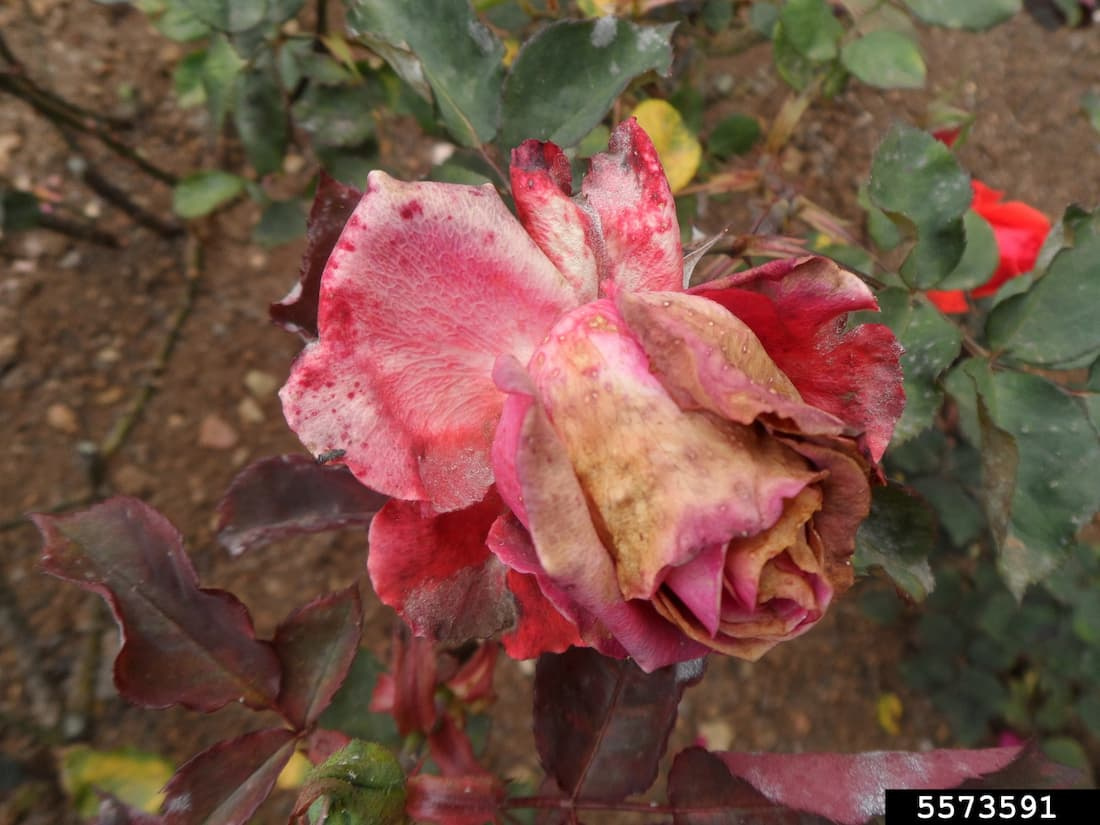
Botrytis Blight At-a-Glance
Plant Group
Shade Trees
Evergreen Trees
Flowering Shrubs
Evergreen Shrubs
Roses
Perennials
Annual Flowers
Seedlings
Plant Part
Leaves
Flowers & Buds
Stems & Twigs
Roots & Crown
Whole Plant
Is Spraying Worth It?
Rarely Worth It
Disease Type
Fungal
Active Season
Early Spring
Late Spring & Early Summer
Mid to Late Summer
Fall
Winter
Damage Potential
Cosmetic Only
Weakens Over Time
Can Be Fatal
Botrytis Blight Quick Answers
What Botrytis Blight Looks Like
From a Few Feet Away
After a cool, rainy stretch, flowers turn brown and mushy, buds go black or brown and never open, and soft brown blotches appear on nearby leaves — often with a gray, fuzzy coating on the rot. The damage is patchy: some blooms on a plant are ruined while others are fine. Peonies show it most dramatically, with young shoots flopping over at the soil line in spring.
Symptoms by Plant Part
Flowers. Petals develop small, nearly see-through spots that soon turn brown and water-soaked, usually starting on inner petals or the middle of a petal. Whole blooms then soften, rot and drop, and gray mold covers them in wet weather. Thick, fleshy petals — begonia, peony, geranium — are hit hardest.
Buds. Infected buds turn brown or black, dry out and fail to open. On peonies, small buds turn black and wither, while larger buds turn brown and papery and grow gray mold. Severe springs can cost up to 90% of the buds.
Leaves. Spots usually start where a dead petal landed or near a wound. On thin leaves, such as redbud, lesions are irregular and light to dark brown. On fleshy leaves, such as rhododendron and geranium, they form large brown blotches with darker target-like rings. In wet weather, spots can spread until the whole leaf browns and dies.
Shoots and stems. Soft new shoots go dark, water-soaked and limp, and tips die back. Peony shoots rot at the soil line when they’re 5 to 8 inches tall, then wilt and fall over. On roses, large, diffuse, target-like brown lesions form on green canes. On annual vinca, sunken stem cankers make whole branches wilt. The fungus never invades woody bark.
Bulbs, corms and tubers. Dahlia tubers and bulbs can soft-rot in damp storage, and corms and bulbs can rot in wet beds.
Through the season. Damage peaks in cool, wet weather from early spring through the main bloom period. It eases in hot, dry midsummer and returns in fall, when dying foliage piles up and rain returns.
Signs of the Fungus
The sign to look for is a fuzzy, gray to gray-brown mold on soft, rotting flowers, buds and leaves. It shows up after a day or two of rain or heavy dew and looks like dusty felt. Touch or pick an infected bloom and a small cloud of grayish spores puffs into the air. In dry weather the fuzz disappears, and you see only brown, papery tissue. Late in the season, the fungus can form tiny, hard, black specks called sclerotia on dead stems. These are its survival bodies for winter.
Identification Photos
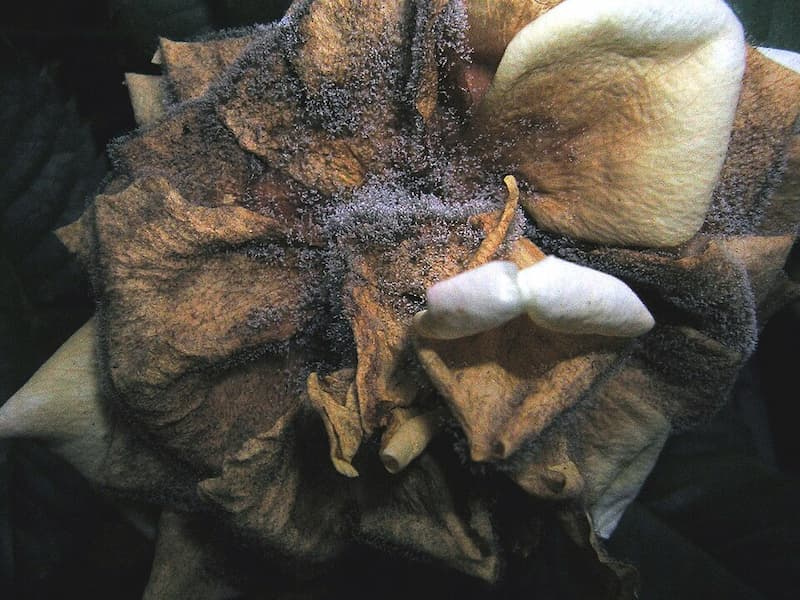
Fuzzy Gray Growth: The telltale sign is a velvety gray-brown mold that covers rotting petals in cool, damp weather. A puff of spores rises when you touch it.
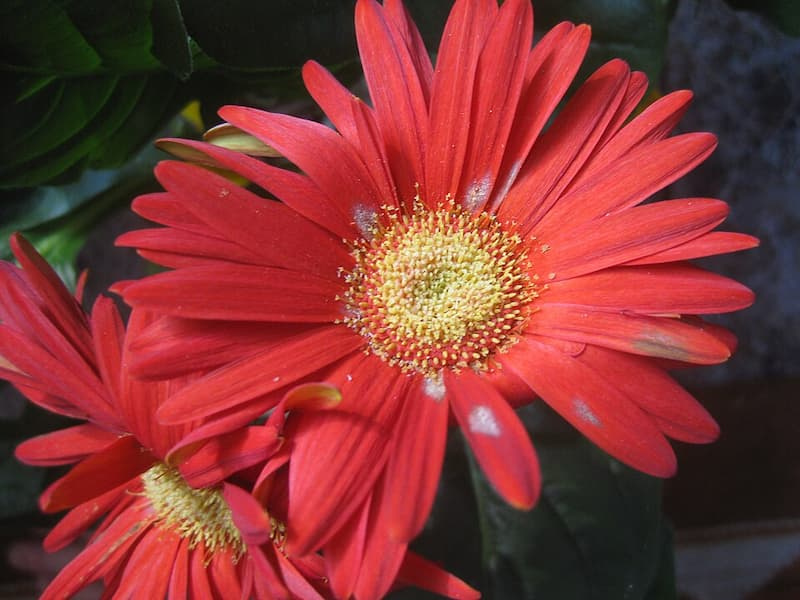
Early Petal Spots: Infection often starts as small pale or water-soaked flecks on the petals, well before the flower collapses.
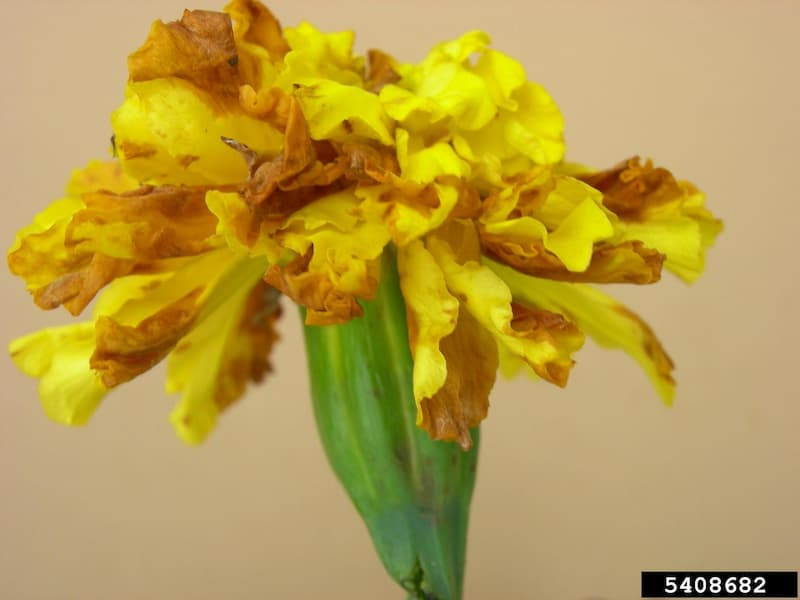
Flower Blight: Spent and fading blooms are the easiest entry point, so the browning spreads fastest through dense, double flowers like marigolds.
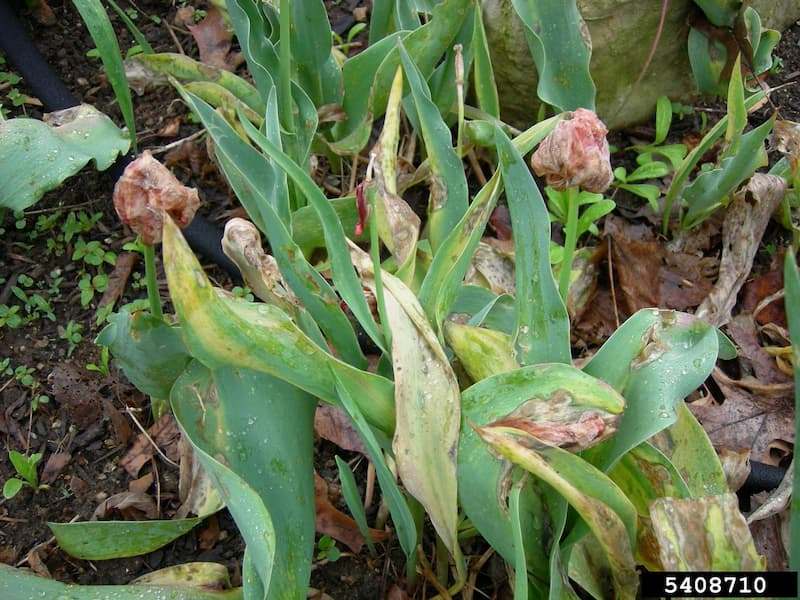
Leaves and Buds: Botrytis also blights leaves and buds, leaving tulips with twisted, tan foliage and buds that wither before they open.
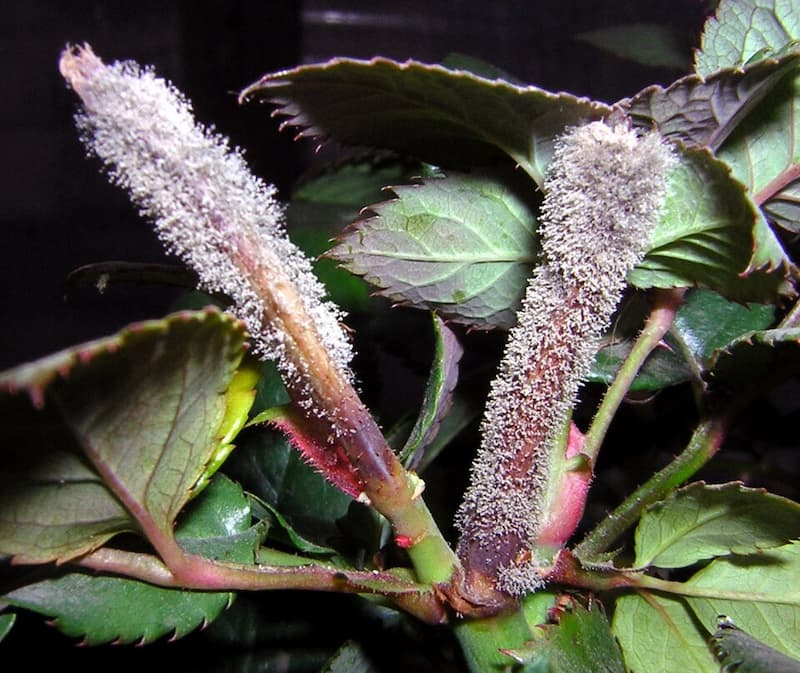
Shoot Blight: In crowded, poorly ventilated spots, the mold can coat entire young shoots, which then wilt and die back.
Could It Be Something Else?
Common Lookalikes
Phytophthora Root Rot also makes young peony and vinca shoots wilt and fall over in wet spring weather, so the collapse looks the same from a distance. The difference is at the base: Phytophthora leaves a dark, leathery rot with no gray mold, and the whole crown is often rotten.
Azalea and camellia petal blight turns blossoms brown and mushy within days, just as gray mold does. But petal blight attacks only the flowers and makes a slimy, wet rot. Botrytis is a drier rot that also moves into nearby leaves and green stems.
Natural flower aging is the most common false alarm. Every bloom browns as it fades, and old petals can pick up a little mold. The pattern gives it away: aging browns the outer petals and petal edges first.
Cold-damaged peony buds (often called bud blast) also fail to open. They stop growing at about pea size, often look reddish, and never turn papery or moldy.
Field Checks Before You Treat
- Check where the petal browning starts. Open a partly brown bloom. If brown, water-soaked spots start in the inner petals or the middle of a petal, it's gray mold. If only the outer petals and edges are brown, the flower is simply aging.
- Look for gray fuzz after wet weather. Check soft brown tissue the morning after rain or heavy dew. A gray, felt-like mold on the rot confirms Botrytis. Brown rot with no fuzz, even in damp weather, points to another problem.
- Flick a brown bloom. On a dry day, tap an infected flower against a dark background. A puff of fine gray dust is a cloud of Botrytis spores.
- Bag a sample overnight. If the weather is dry and no mold shows, seal a brown petal or leaf in a plastic bag with a damp paper towel and keep it at room temperature. Gray fuzz within one to two days confirms gray mold.
- Check the base of collapsed shoots. On a wilted peony or vinca shoot, look right at the soil line. A soft, brown, water-soaked rot, often with gray mold, is Botrytis. A dark, leathery rot with no mold, and a whole crown that comes up easily, points to Phytophthora.
- Lift a fallen petal. Where a dead petal has landed on a leaf, peel it off. A brown spot shaped exactly like the petal shows the fungus grew from the dead petal into the healthy leaf.
Plants at Risk
Commonly Affected Plants
Botrytis attacks soft tissue on hundreds of plants, but these are where homeowners find it most:
- Peony — the classic case: shoot rot at the soil line, bud blast and moldy blooms.
- Rose — blooms that rot before opening, and brown lesions on green canes.
- Hydrangea — flower heads turn tan to gray, with leaf spots where petals fall.
- Geranium — rotting flower clusters and ringed leaf blotches.
- Begonia — thick petals and stems rot quickly in damp beds.
- Dahlia — petal rot, leaf spots and tuber rot in storage.
- Petunia and impatiens — collapsing flowers and stems in crowded beds.
- Chrysanthemum — rot that starts on shaded lower leaves and climbs to the flowers.
- Rhododendron and azalea — spotted, rotting blossoms and ringed leaf spots.
It also turns up on tulips, lilies, coral bells, coneflowers, zinnias, marigolds, viburnums, lilacs, magnolia and crabapple blossoms, and many others.
Resistant Choices
- Peonies. Purdue Extension lists these garden peonies as more resistant: ‘America’, ‘Buckeye Belle’, ‘Krinkled White’, ‘Old Faithful’, ‘Pink Hawaiian Coral’, ‘Roselette’, ‘Scarlet O’Hara’ and ‘White Cap’. Tree peonies and Itoh (intersectional) hybrids such as ‘Bartzella’, ‘Gold Crown’ and ‘Rozella’ are generally more resistant than standard garden peonies.
- Petunias. ‘Fantasy Blue’ and ‘Tidal Wave Hot Pink’ resisted botrytis flower blight in Purdue’s listing.
- Trees and shrubs. Illinois Extension knows of no truly resistant woody plants, and on them the damage is mostly cosmetic anyway. Choose open, upright growers and put them where they get sun and air.
Because the fungus is everywhere, a replacement plant does better because of where and how it’s planted — full sun, wide spacing, dry foliage — more than its cultivar name.
Why It Shows Up
Conditions That Trigger It
Gray mold is a wet-plant disease more than a weather disease. Spores sprout and infect after as little as 6 hours of continuous wetness on petals and leaves, or 6 hours of humidity above about 90%. Long wet spells make it far worse. The fungus is active at air temperatures from about 32°F to 84°F and does its worst damage at about 68–77°F air temperature with high humidity. That’s why a rainy week in May or June can wreck a peony or rose display almost overnight. Hot, dry weather above the mid-80s stops it.
What turns a wet spell into an outbreak:
- Dying flowers. Faded blooms and fallen petals are the fungus’s main way in. It feeds on dead tissue first, then grows into the healthy leaves and stems they touch.
- Overhead and evening watering. Wetting flowers adds hours of the moisture the spores need, and evening watering keeps plants wet all night.
- Crowding and shade. Tight spacing and shade slow drying after rain and dew, so plants stay wet longer.
- Too much nitrogen. Heavy feeding grows soft, lush tissue that the fungus breaks into easily.
- Wounds. Rough handling, pruning in wet weather and frost damage all give the fungus an easy opening.
How It Survives and Spreads
Botrytis doesn’t need a living plant to survive. It lives on dead leaves, old flower stalks and other garden debris, and gets through winter there as fungus threads or as tiny black sclerotia. That is why it’s present in nearly every yard. When cool, damp weather returns, the fungus grows the gray fuzz on that debris, and each patch releases huge numbers of spores.
Wind carries the spores between plants and between neighboring yards. Splashing rain and sprinklers move them from leaf to leaf, and hands and pruning tools carry them on contact. A spore landing on a wet, fading petal or a wound sprouts and starts a rot. That rot then spreads by contact: an infected petal that drops onto a healthy leaf grows straight into it. In wet weather, each new rot produces fresh spores within days, which is why the disease seems to explode after a few rainy days. On peonies, the host-specific Botrytis paeoniae survives in old stalks at the base of the plant and attacks the new shoots coming up through it each spring.
Where It Hits Hardest: Regional Notes
Gray mold occurs across the US wherever plants stay wet. In the Northeast, Midwest and Mid-Atlantic, it peaks during cool, rainy springs, hitting Peony, tulip and early-flowering shrubs, and again in damp falls. The Pacific Northwest and coastal California can see it almost any time of year. Inland California and much of the Southeast see it mainly during the cool, rainy months from late fall through spring. In the dry Southwest it’s uncommon, except in shaded, crowded beds watered with sprinklers.
Botrytis Blight Diagnostic Profile
Check what you see against the full set of signs. The more that match, the more likely this is your problem.
What You’ll See
Symptom Color
Tan or Straw
Brown
White or Gray
Black or Dark
Visible Signs
Fuzzy Gray Mold
Hard Seed-Like Bodies (Sclerotia)
Plant Symptoms
Leaf Spots
Powdery or Sooty Coating
Wilting
Browning & Dieback
Cankers
Rot
When and Where
Weather Triggers
Cool & Wet
Warm & Humid
Long Leaf Wetness (Dew or Rain)
Spread Pattern
Lower Leaves First
Scattered
From the Soil Line Up
Controlling Botrytis Blight
Cultural control does most of the work against gray mold, and in most home gardens it’s all you need. Every step either takes away dying tissue the fungus feeds on or shortens the hours plants stay wet.
- Deadhead and clean up constantly. Remove faded flowers, fallen petals, moldy buds and yellowing lower leaves as soon as you see them, and bag them. Dying tissue is where the fungus builds up its spores before it moves into healthy growth.
- Keep flowers and leaves dry. Water at the soil with drip lines or a soaker hose. If you must use sprinklers, run them early in the morning so sun and wind dry the plants fast, and water deeply but less often.
- Give plants air. Space plants to their mature width, divide or thin crowded perennials, and space peonies at least 3 feet apart. Moving air dries plants after rain and dew, cutting short the wet hours the spores need.
- Plant in sun. Put susceptible flowers in full sun or at least part sun, and trim back overhanging branches. Shade slows drying.
- Go easy on nitrogen. Fertilize from a soil test, not by habit. Extra nitrogen grows the soft, lush tissue the fungus breaks into most easily.
- Prune and handle gently, and only when plants are dry. Every wound is an opening, and wet weather splashes spores right onto fresh cuts. When cutting out infected stems, disinfect tools between cuts with 70% rubbing alcohol, or 1 part household bleach to 9 parts water (soak about 2 minutes, rinse, oil the blades), so you don’t carry the fungus to the next stem.
- Cut peonies down in fall. In early fall, cut all peony stalks and leaves to the ground, bag or trash them, and cover the spot with 1 to 2 inches of mulch. The old stalks hold the fungus that attacks next spring’s shoots. For other healthy perennials, leaving clean debris over winter helps the moths, butterflies and bumble bees that shelter in it. Remove only the infected material.
For most home gardens, spraying is rarely worth it. Fungicides only protect healthy tissue before spores land, and in a long wet spell they don’t hold up well. UC IPM rates them generally not very effective in landscapes when weather favors gray mold. Minnesota and Illinois extension both call them unnecessary or seldom needed in the flower garden. Deadheading and keeping plants dry do more, and most plants recover on their own once dry weather returns.
The one situation where a spray program pays off is a peony bed that gets shoot blight year after year, even after a thorough fall cleanup. Start spraying as the shoot tips break through the ground. Repeat 2 weeks later, then every 14 days until mid-June, or as the label directs. A spray can’t save a bud or shoot that’s already infected.
| Active ingredient | FRAC group | Notes |
|---|---|---|
| Chlorothalonil | M5 | Most widely sold homeowner protectant for ornamentals. Multi-site, so resistance isn’t a concern. |
| Copper | M1 | Organic-approved products available. Can burn some flowers in hot weather. |
| Mancozeb | M3 | Multi-site protectant listed for peonies. |
| Captan | M4 | Multi-site protectant listed for peonies. Check that the label covers ornamentals. |
| Sulfur | M2 | Organic-approved products available. Don’t spray in hot weather, when it burns leaves. |
| Thiophanate-methyl | 1 | Systemic, but many gray mold populations are resistant. Alternate with a multi-site product instead of using it alone. |
| Triforine | 3 | Listed by UC IPM for landscape gray mold. |
Neem oil is sold for gray mold but is a weak fungicide. Fenhexamid, iprodione and fludioxonil-based products are mainly sold to commercial growers, not homeowners. Product names often don’t match what’s inside, so check the active-ingredient panel. Spray in the late evening to protect pollinators visiting the flowers.
Removal, Disposal and Replanting
Remove the whole plant only when its main stem base or crown has rotted through, or when an annual has collapsed and is mostly covered in mold. Those plants won’t recover, and they pour spores onto everything nearby. Otherwise, cut out only the infected flowers, buds, leaves and shoots, in dry weather, with disinfected tools.
Disposal: bag infected material for yard-waste pickup or the trash, or bury it under at least 1 foot of soil away from flower beds. Don’t add it to an ordinary home compost pile. Only a pile that reliably runs above 140°F kills the fungus, and peony stalks and leaves should never be composted at all. Don’t use infected material as mulch.
Replanting: you can replant right away in the same spot. Botrytis spores are already in the air, so new soil changes nothing. Before replanting, fix what kept the old plants wet: improve drainage, open up shade, widen spacing and switch to watering at the soil.
When to Call a Pro
Send a sample to your county extension office or state plant diagnostic lab if shoots or whole plants are collapsing at the base and you never see gray mold. That pattern points to Phytophthora or another root and crown rot, which need different handling. Also send one if plants keep dying across a bed despite good cleanup and spacing, or if a spray program fails. For the sample, cut pieces that show the edge between healthy and diseased tissue, not fully dead material. Wrap them in dry paper towels without adding water, and ship early in the week. Gray mold on a tree or large shrub rarely needs a professional, because it’s limited to flowers and soft new growth.
Frequently Asked Questions
These answers are synthesized from plant pathology research and diagnostic guidance published by university extension services and plant disease clinics.
Usually Botrytis, sometimes cold. Botrytis buds turn brown or black, go papery, and grow gray mold in damp weather. Once a bud is infected it can’t be saved, so pick it off and bag it. Buds that stop growing at about pea size and look reddish, with no mold, were usually hurt by spring cold, too much shade or stress.
No. Ants visit peony buds to feed on sugary nectar the buds produce, and they don’t harm the flowers or spread gray mold. Peonies also don’t need ants to open. Leave them alone — they move on once the flowers bloom.
Because the fungus was already there. Botrytis lives on dead plant debris in almost every yard, and its spores need as little as 6 hours of wet petals to start an infection. Each new rot produces fresh spores within days, so a rainy week can multiply the damage quickly. When dry weather returns, the outbreak usually stops just as fast.
No. Home-garden fungicides only protect tissue the fungus hasn’t reached yet, so they can’t cure a moldy bloom or bud. Remove infected parts first, then focus on keeping remaining flowers dry. A spray program makes sense only for a peony bed with a history of the disease, started as shoots emerge.
Scientific Authority
This profile is built on plant pathology research and diagnostic guidance from university extension services and plant disease clinics. We prioritize accurate identification and cultural control first, recommending fungicides only where research shows they are justified, and naming them by active ingredient rather than brand.
Primary Resources
- University of California IPM — Botrytis Blight, or Gray Mold (Pest Notes)
- University of Minnesota Extension — Gray Mold in the Flower Garden
- University of Illinois Extension — Gray Mold (Botrytis)
- University of Illinois Extension — Gray Mold [Annuals and Herbaceous Perennials]
- University of Illinois Extension — Gray Mold [Trees and Shrubs]
- Clemson Cooperative Extension Home & Garden Information Center — Gray Mold (Botrytis Blight) on Flowers, Fruits, and Vegetables
- Purdue Extension — Disease-Resistant Annuals and Perennials in the Landscape (ID-414-W)
- Iowa State University Extension — How to Manage Potential Problems Growing Peonies
- Missouri Botanical Garden Kemper Center for Home Gardening — Botrytis Blight
- Missouri Botanical Garden Kemper Center for Home Gardening — Botrytis Blight of Peony
- Missouri Botanical Garden Kemper Center for Home Gardening — Bud-Blast of Peony
- Missouri Botanical Garden Kemper Center for Home Gardening — Visual Guide: Peony Problems