
Broadleaf Plantain At-a-Glance
Weed Type
Broadleaf
Life Cycle
Simple perennial
Growth Habit
Rosette (prostrate)
Root Type
Fibrous, from a short crown
Spreading Risk
High — by seed
Pull
With Caution
Identity & Diagnostics
Visual Fingerprint
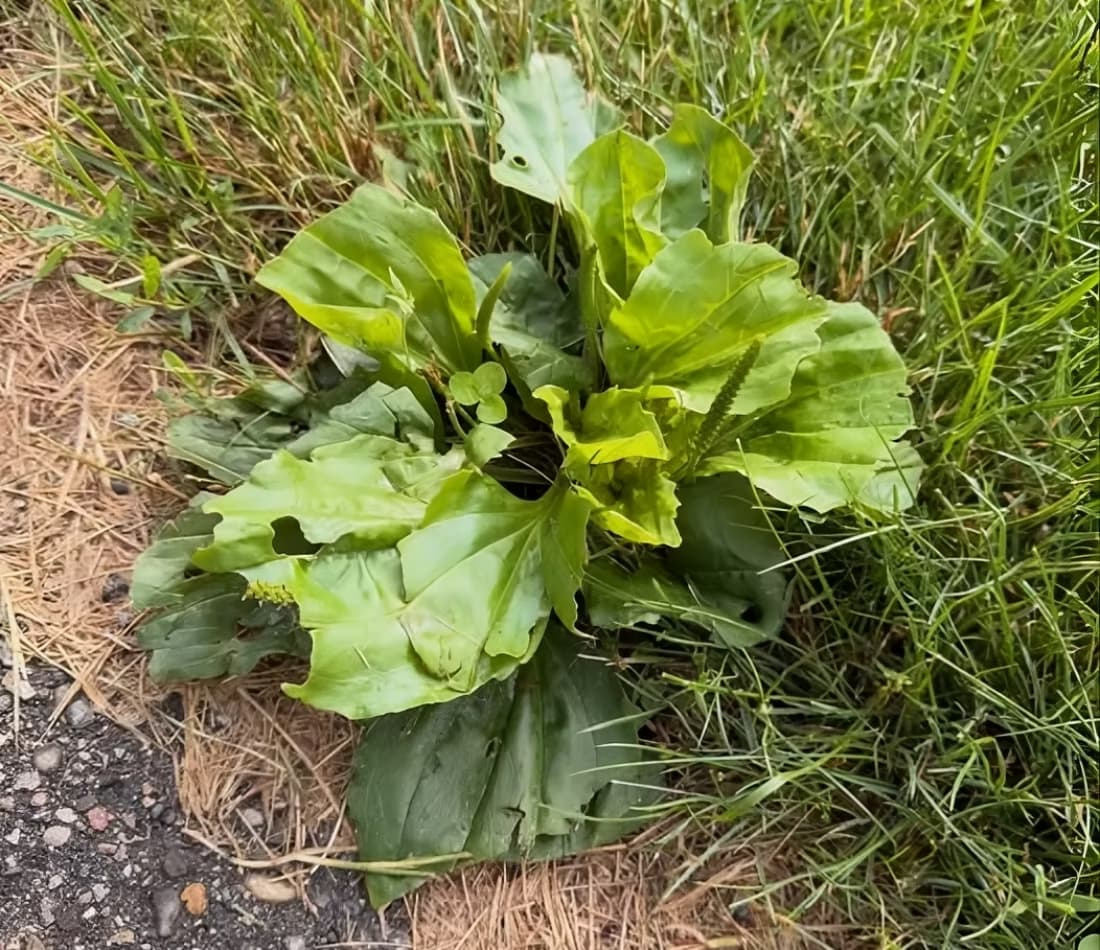
Look for a flat, circular cluster of broad, oval leaves pressed close to the ground, like a green rosette sitting on the soil. The leaves are thick and slightly leathery, medium to dark green, with several deep grooves running the length of each leaf from base to tip. In summer you’ll often see one or more thin, leafless stalks rising from the center and ending in a long, narrow, “rat-tail” spike. That combination — a flat leafy rosette plus skinny upright spikes — is what tells you it’s plantain from a standing position.
Structural Anatomy
Up close, the leaf is the giveaway. Each blade is broadly oval to egg-shaped, two to eight inches long, with smooth or slightly wavy edges, and it narrows suddenly into a thick, green stalk that looks and snaps like a stalk of celery. Running the length of the leaf are five to seven raised, roughly parallel veins. Those veins hide the single most reliable field test: tear a leaf across the middle, and instead of breaking cleanly, tough white threads pull out of the stalk like strings. Almost no other lawn weed does this.
The whole plant grows from a compressed crown right at the soil surface, with a dense mass of shallow, stringy fibrous roots below — no deep, carrot-like taproot. One more anatomy detail matters for telling plantain from its closest look-alike: the leaf stalk is green, sometimes with a faint pink tint at the very base, but it never shows the deep red or purple base that a couple of its relatives have.
Growth Patterns & Life Stages
Seedlings start with two long, narrow, spoon-shaped seed leaves that carry a fine powdery coating and three tiny parallel veins — the veins are already the family signature. The first true leaves are small and football-shaped and quickly give way to the flat juvenile rosette.
As the plant matures, the rosette thickens into leathery, broad-veined leaves, and this is the stage where post-emergent herbicides and hand-pulling work best, because the plant is putting its energy into leaves and roots rather than seed. From late spring into fall the plant “bolts,” sending up leafless stalks tipped with dense, pencil-like spikes of tiny greenish-white flowers. Once those spikes turn brown and start shedding seed, you’ve hit the “too late” stage: the plant is now feeding thousands of seeds into the soil, and disturbing it mostly scatters them.
Gallery
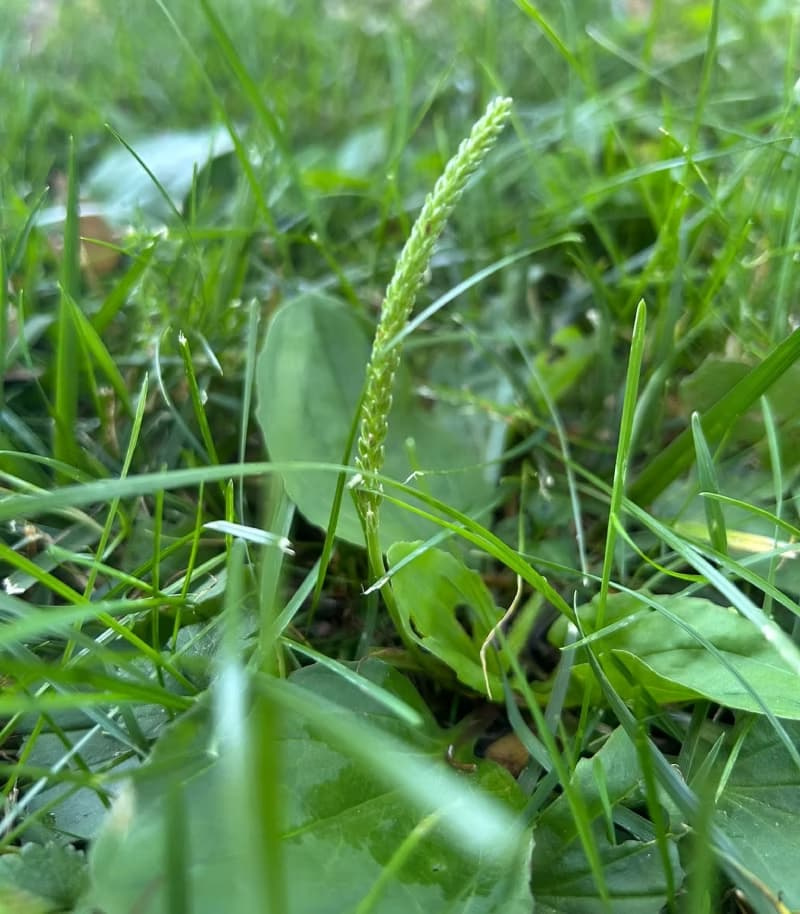
Emerging seedhead spike of a broadleaf plantain plant growing within residential lawn grass.
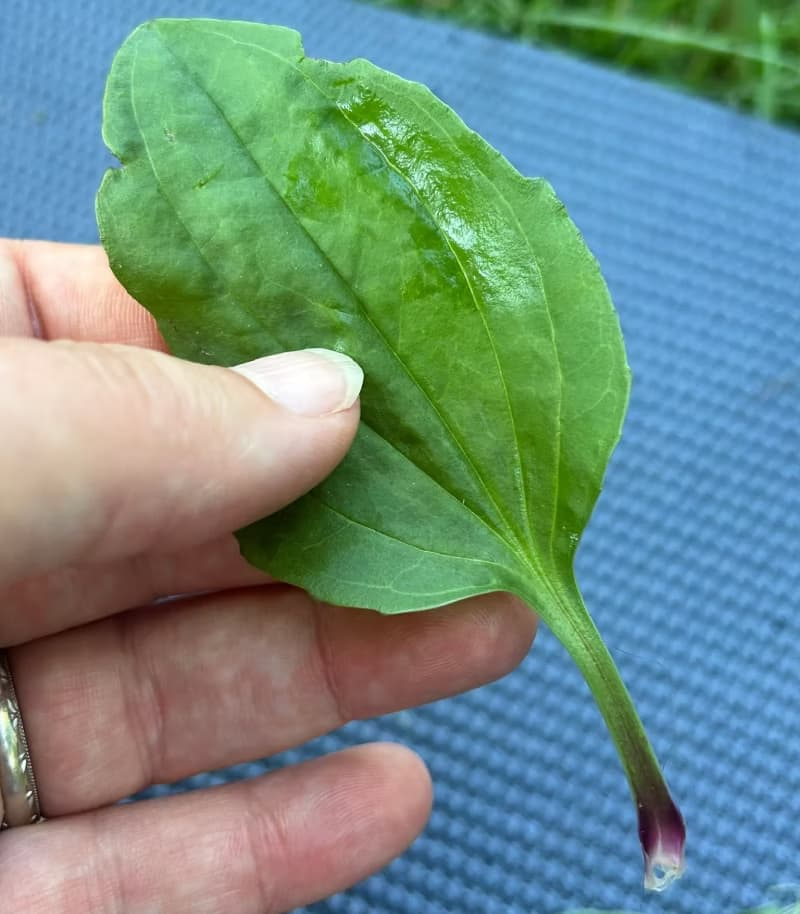
Front view of a broadleaf plantain leaf blade featuring parallel venation and a characteristic purplish-red base on the petiole.
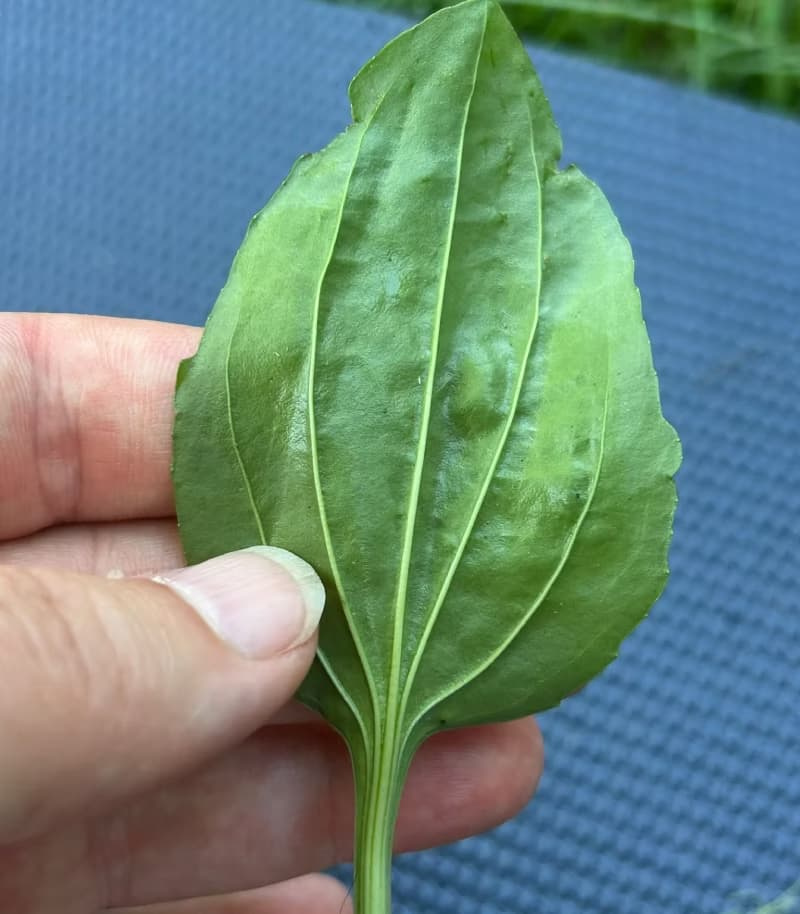
Underside view of a broadleaf plantain leaf showing five to seven prominent parallel ribs.
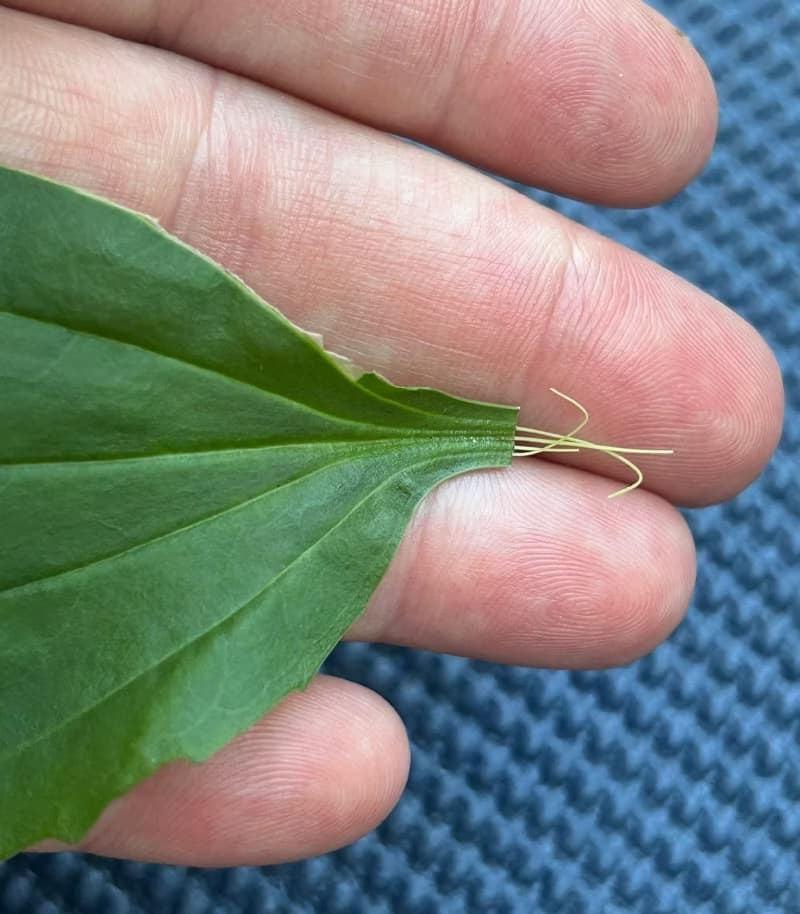
Key diagnostic feature: fibrous, stringy veins extending from a snapped broadleaf plantain leaf petiole.
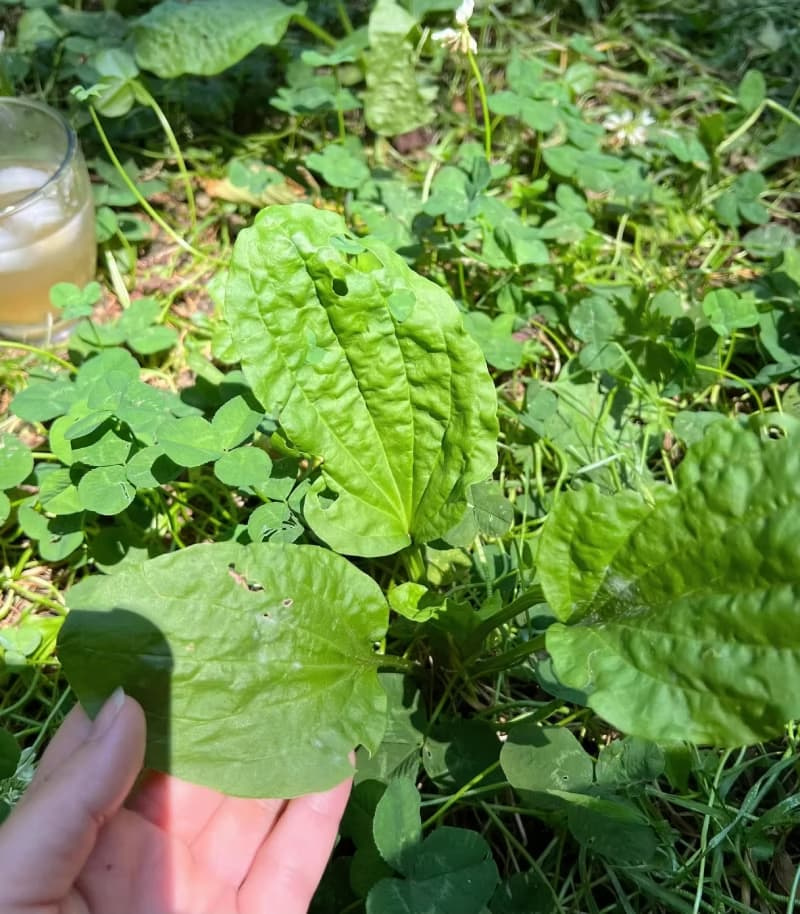
Broadleaf plantain thriving in high-moisture turfgrass alongside white clover.
The Identity Trap
Common Lookalikes
Two relatives cause almost all the real-world confusion in a yard: buckhorn plantain (Plantago lanceolata), which shares the same rosette-plus-spike shape but with very different leaves, and blackseed plantain (Plantago rugelii), which looks nearly identical to broadleaf plantain and often grows right beside it.
Identification Differentiators: How to Tell Them Apart
Buckhorn plantain is easy once you look at the leaves: they’re long, narrow, and spear-shaped rather than broad and oval, and its seed spike is a short, stubby bullet at the top of a tall stalk instead of a long rat-tail. If the leaves are wide, it isn’t buckhorn.
Blackseed plantain is the tricky one, and there’s one feature that settles it every time: the base of the leaf stalk. On blackseed plantain, the stalk is a distinct dark red to purple where it meets the crown. On broadleaf plantain, that same spot is green, or at most a faint pink. Deep red base means blackseed; green base means broadleaf.
Growing Conditions
Host Grasses
Broadleaf plantain shows up in every common lawn grass — Kentucky bluegrass, tall fescue, and perennial ryegrass in cooler regions; bermudagrass, zoysiagrass, St. Augustinegrass, and centipedegrass in warmer ones — but it isn’t really the grass that invites it in. It’s the gaps in the grass. Any time the stand thins from heat, drought, disease, low fertility, or heavy foot traffic, bare soil and sunlight reach the ground, and that’s the opening plantain’s seed bank waits for.
Host Environment/Area
This is a weed of hard, worn ground. It concentrates along compacted footpaths, driveway and sidewalk edges, play areas, and any spot that takes constant traffic, and it favors low, poorly drained places where water sits after rain. In lawns it stays flat and prostrate. In a landscape bed, without mowing or trampling to keep it down, the same plant stands up tall and its leaves can reach a foot long as it competes with your ornamentals for light — but beds are not its stronghold, for reasons covered just below.
Soil Indicators: What the Presence of This Weed Reveals About Your Yard
Where plantain thrives, it’s telling you something specific about that patch of ground: the soil is compacted, often poorly drained, and the grass there is underfed. Its tough, hard-driving fibrous roots handle dense, low-oxygen soil that starves grass roots, so a dense stand of plantain is a reliable flag for compaction that needs core aeration and for spots that stay too wet. The low-fertility signal comes with a twist worth understanding: plantain doesn’t actually like poor soil — it prefers rich soil. It wins in underfed lawns only because the hungry grass is too weak to crowd it out. Feed the lawn and the grass takes that advantage back. One thing plantain does not reliably tell you is soil pH: it tolerates a wide range and actually grows densest in alkaline, high-calcium soil, so its presence is no sign that your soil is acidic.
Lifecycle and Season
Lifecycle Category and Management Implications
Broadleaf plantain is a simple perennial, and that single fact drives everything about controlling it. The plant does not die at the end of the season. It overwinters as a live crown at the soil surface — often staying green under snow — and regrows the same plant every spring. That means a pre-emergent, which only stops sprouting seeds, does nothing to a plant that’s already established; the established plants have to be killed with a systemic post-emergent or dug out crown and all. Pre-emergent still has a job, but only against the next generation of seedlings, never against the plants you can already see.
Germination Trigger
Plantain seed germinates at and just below the soil surface — viable seedlings come almost entirely from the top quarter-inch of soil — and light is the trigger. That’s why a thick canopy or a mulch layer, which keeps the ground dark, shuts germination down, and why thinning turf sets it off. New seedlings appear from late spring through late summer, occasionally into fall, ramping up as soil warms toward the 70s. Seed shed in midsummer usually sits dormant over winter first and germinates the following spring. A small amount of seed can sprout in low light, so a dense lawn suppresses germination rather than stopping it completely.
Overwintered crowns green up in mid-spring, and new seedlings flush from late spring on. If you’re using a pre-emergent for the seedlings, it needs to be down and watered in before the soil at the surface holds around 50–55°F for five straight days — in most northern states that’s early April to early May, right about when forsythia drops its blooms and redbud flowers. The best time to spray established plants, though, is fall, roughly mid-September into early November. In fall the plant is pulling sugars down into its crown and roots for winter, and a systemic herbicide rides that flow straight into the crown, which is what kills the whole plant instead of just burning the top. Cool fall temperatures are also safe for the strong ester sprays that would be too risky in summer heat. Spring is a workable second choice, but expect to spray mature plants more than once. Note the fall collision with overseeding, since the best seeding window (roughly August 15 to September 15) overlaps your herbicide plans — the two need to be sequenced, which is covered under Post-Emergent in Lawn.
The key fact here is that plantain is cool-tolerant and stays green and active right when warm-season grasses go brown and dormant in late fall and winter. That mismatch is an opportunity: while bermudagrass is fully dormant, you can treat actively growing plantain without harming the sleeping turf, either with a directed glyphosate application over completely dormant bermuda or with atrazine, which is labeled to control young plantain on St. Augustinegrass, centipedegrass, zoysiagrass, and dormant bermudagrass in late fall or early winter. For seedling prevention, get pre-emergents down before germination — by about mid-September for the fall flush, and before soil at 2–4 inches reaches the low-to-mid 50s°F for the spring flush. One hard rule: do not put synthetic-auxin sprays (2,4-D, dicamba, and the like) on warm-season grass that is greening up in spring, or when temperatures top 85°F — both cause serious turf injury.
This zone is the hardest because both cool- and warm-season grasses share the ground, and they want opposite things. Two timing conflicts define it. First, spring green-up: overwintered plantain is growing just as bermudagrass and zoysiagrass break dormancy, and spraying synthetic auxins on grass that’s greening up can delay green-up by two to six weeks and thin the turf — so post-emergent sprays have to wait until the warm-season grass is fully green, usually about three weeks after green-up starts. Second, the fall window: the best time to seed cool-season turf (September into mid-October) runs straight into the best time to spray established plantain (October–November). You can’t do both at once — if you spray first, you wait three to four weeks before seeding, because herbicide residue blocks grass seed from sprouting; if you seed first, you can’t spray until the new grass has been mowed two or three times, which usually pushes control to spring. And a dormant-season glyphosate treatment over brown bermuda in January will kill any cool-season fescue or bluegrass it touches, so mixed lawns take careful, separate treatment on each grass type.
Herbicide Control
Pre-emergent herbicides do nothing to plantain plants you can already see — those are established perennials, and a pre-emergent only stops sprouting seeds. Its real value is holding down the huge seed bank so new seedlings don’t replace the plants you kill. Effective active ingredients include isoxaben, indaziflam, and mesotrione, with corn gluten meal as an organic option. Timing matters: the product has to be down and watered in with about a quarter to half an inch of water roughly 10 to 14 days before seedlings start. Watch the seeding conflicts — isoxaben requires you to wait about 60 days before overseeding, while mesotrione can actually go down at the time you seed Kentucky bluegrass (though it can injure newly seeded fine fescue). On a brand-new lawn, hold off on pre-emergents until the young grass has been mowed three or four times.
Established plantain is killed with systemic synthetic-auxin herbicides — the growth-regulator group. The good news is that plantain doesn’t have a dandelion’s deep storage taproot, so it can’t bounce back from a solid, well-timed kill the way dandelion does. The catch is that a single auxin is often weak on a mature, waxy-leaved plant, so use a three-way mix (2,4-D + mecoprop/MCPP + dicamba) rather than one ingredient — and skip the ones that don’t work here: dicamba alone is ineffective on plantain, and quinclorac gives poor or no control. For stubborn stands, older multi-crowned plants, or areas where standard 2,4-D underperforms, step up to triclopyr or a triclopyr-strengthened mix, which handles these tough cases. Add a nonionic surfactant (about 0.25%) to help the spray get through the thick, waxy leaf, spray when the plant is actively growing between roughly 60°F and 85°F, and don’t mow for a day or two on either side so there’s leaf surface to absorb the chemical and time for it to travel down to the crown. Fall is the standout window: with sugars moving down into the crown, the herbicide follows and kills the whole plant. Expect a program, not a single spray — heavy stands typically need two to four applications about 10 to 14 days apart, backed by the cultural work below, because a single treatment rarely finishes it.
In warm-season and transition lawns, there’s also a dormant-season option: over bermudagrass that is 100% brown and fully dormant, a glyphosate application will kill actively growing plantain without harming the sleeping turf. (Buying tip: not every product labeled “Roundup” is glyphosate anymore — check the active-ingredient panel; see Chemistry-Specific Safety Notes.) Time it carefully, because glyphosate on grass that has started to green up will set back or kill the turf.
Chemicals treat the symptom; the soil and canopy are the cause, and this weed rewards fixing them. Because plantain is a compaction flag, core aeration is the primary long-term lever — but it’s not a one-and-done job. Research shows it takes roughly four to six aeration passes with 5/8-inch hollow tines over several seasons to actually relieve packed soil, and each pass should be followed immediately by overseeding, since aeration also brings buried weed seed to the surface. Mow high (about 2.5 to 3 inches for cool-season grasses; keep warm-season grasses dense and unscalped) so the canopy shades the soil and starves seedlings of the light they need. Feed the lawn on a soil test so the grass is vigorous enough to outcompete the weed — remember plantain wins mainly where the grass is underfed — concentrating nitrogen in fall for cool-season turf and in the active summer months for warm-season turf. Overseed thin spots to close the gaps before plantain can. Mowing alone won’t control it: the plant simply flattens and keeps setting seed at heights as low as two inches.
In landscape beds, several pre-emergents are labeled around established woody shrubs and trees and are effective on plantain seedlings: isoxaben, flumioxazin, and indaziflam, along with combination products such as isoxaben + trifluralin and dimethenamid-p + pendimethalin. As in the lawn, they only stop germinating seed — they don’t touch established crowns. Apply to clean, weed-free soil before laying mulch, or spread over the mulch and water in with about a quarter to half an inch of water within a few days; without that watering, the chemical stays bound in the dry mulch and breaks down before it ever reaches the seeds. One caution: isoxaben and several of these products can injure newly installed bedding plants and delicate perennials, so keep them to established woody plantings and check the label against your specific ornamentals.
You have to work around your ornamentals here, and that shapes the whole approach. Selective broadleaf herbicides (2,4-D, dicamba, triclopyr) cannot be sprayed over the top of broadleaf ornamentals — they’ll damage or kill them — so the go-to chemical tool for a mature plantain in a bed is directed glyphosate, applied so it only touches the weed. Use a shielded nozzle, or shield desirable plants with cardboard, or best of all wipe the concentrate directly onto the plantain leaves with a sponge or wick applicator, which removes drift entirely. Skip contact-type killers (diquat, glufosinate, vinegar/acetic-acid and soap-type products): they only burn the leaves they touch, and plantain regrows from its intact crown within days. The verdict for beds differs from the lawn in one welcome way — because loose bed soil makes clean hand-removal so effective, digging the whole crown out is often the better first choice in a bed, with directed glyphosate as backup for large or awkward plants.
Mulch works against plantain by keeping the soil surface dark, since the seed needs light to sprout. Keep a consistent 2 to 4 inches of a coarse material such as bark chunks, shredded hardwood, or wood chips; coarse mulch resists blowing and packing, while fine mulch or compost breaks down into a fertile layer that seeds happily sprout in. Two limits are worth knowing. An established crown stores enough energy to push new leaves up through several inches of mulch regardless of depth, so mulch prevents new seedlings but won’t smother a plant that’s already there. And piling mulch deeper than about 4 inches can suffocate ornamental roots and, as it decomposes, create a shallow bed that plantain seed will germinate in without ever reaching the soil.
Herbicide Application Reference
The main safety issue with this weed’s chemistry is ester volatility. The ester forms of synthetic auxins (2,4-D, triclopyr) cut through plantain’s waxy leaf better than amine forms, but above roughly 85°F they can turn to vapor and drift well beyond where you sprayed, damaging broadleaf plants nearby — this is why fall, with its cool temperatures, is the safe time to use them and summer is not. That drifting vapor doesn’t respect property lines: on a warm day it can carry into an adjacent bed, a vegetable garden, or a neighbor’s yard, so keep ester sprays to cool, still conditions and switch to amine formulations if you must treat in warmth. Plantain-sensitive ornamentals to keep well clear of any auxin spray or soil residue include apple, dogwood, grape, rose, redbud, forsythia, and tomato. On warm-season lawns, also remember that 2,4-D and dicamba injure St. Augustinegrass and centipedegrass, and quinclorac is especially damaging to both — use metsulfuron or atrazine-based options on those grasses instead.
A product note that is easy to miss: the consumer “Roundup” brand no longer reliably means glyphosate. Several reformulated versions now use different active ingredients, and some of them — imazapic is one — stay active in the soil, where nearby ornamental roots can take them up and where they can block reseeding for months. That is the exact problem glyphosate is chosen to avoid here, whether you’re spot-treating in a bed full of shrubs or clearing plantain to reseed thin turf. Before you buy, read the active-ingredient panel and pick a product whose only active ingredient is glyphosate.
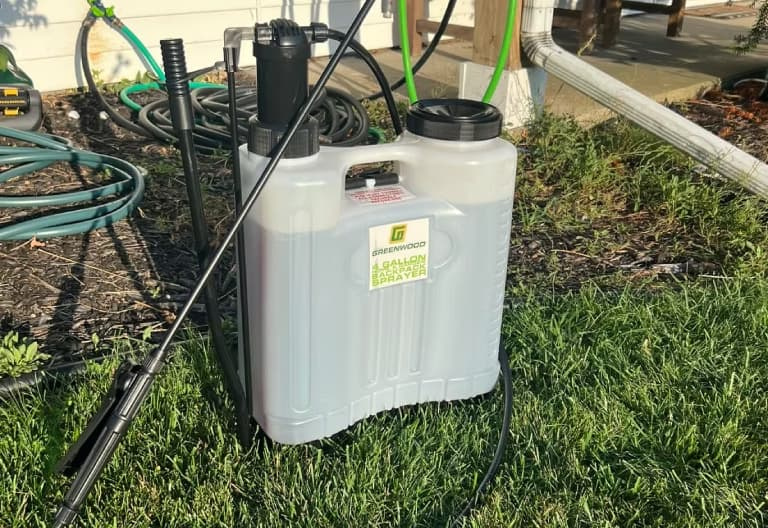
Herbicide Application Guide
New to spraying, or want to get it right? Our Herbicide Application Guide covers the practical steps this page assumes — mixing, calibration, protective gear, and the wind and temperature limits that decide whether a treatment works or drifts. Read it before you spray.
See Guide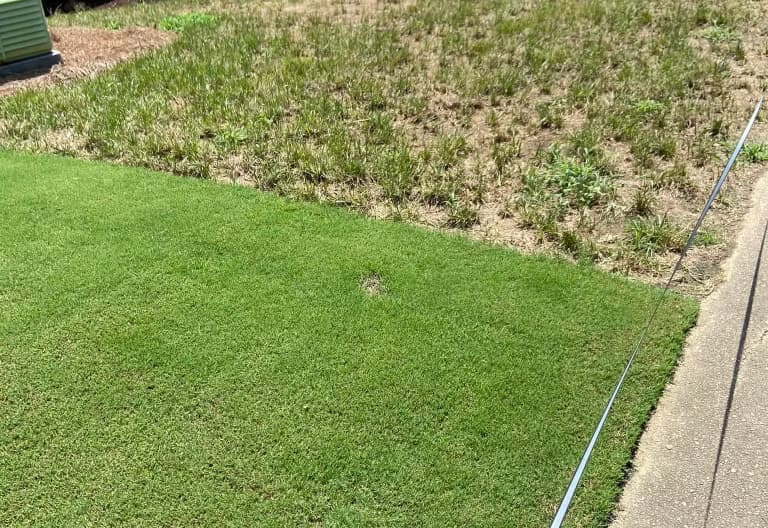
Where Two Lawns Meet
Does your lawn border a neighbor’s — or meet a different type of grass? Spraying near that line can quietly damage the yard next door, sometimes weeks later. Where Two Lawns Meet shows you how to treat safely without harming either side.
Read ArticlePulling
Pull with caution: it works for a few plants in soft, moist soil, but pulling badly — in dry or hard ground, or by yanking the leaves — is worse than not pulling at all, because it multiplies the plant.
The Biological Reason
Here’s what surprises most people. A mature broadleaf plantain isn’t one rosette on one root — over the years its crown thickens into a lumpy, multi-lobed cluster of several rosettes, sometimes six to ten inches across, all sharing one root system. Any piece of that crown that still holds living tissue can grow into a whole new plant. So when you grab a big plantain and it tears apart as it comes up, every fragment you leave behind can sprout its own rosette. Pull one plant carelessly and a few weeks later you can be looking at three or four where there was one. The fibrous roots alone can’t do this — it’s specifically the crown fragments that regrow.
Doing it right means removing the entire crown in one piece. That’s only realistic when the soil is thoroughly wet and loosened, because moisture lets the fibrous roots slide out instead of snapping. Water the spot first or wait for a good rain, work a narrow weeding fork or knife straight down alongside the plant, slide it under the crown, and lift the whole thing out as a unit — then check the hole and pick out any broken bits. Cut off the seed spikes before they ripen, bag the whole plant, and don’t compost it: the seeds and crown pieces survive ordinary composting and come back with the finished compost.
Lawn vs. Bed Pulling Difference
Soil type flips the odds. The hard, compacted ground where plantain lives in lawns is exactly what makes a clean pull fail — the tight soil grips the roots so the leaves shear off and leave the crown behind. Loose, cultivated bed soil is the opposite: it offers little resistance, so the entire crown and root system usually lift out intact and in one piece. Pulling is a genuinely good option in a bed and a frustrating one in packed turf.
Quick Reference Summary
| Lifecycle | Simple perennial (fibrous crown) |
| Active Zones | Cool, warm, and transition |
| Germination Trigger | Light at the soil surface; seedlings from the top ¼ inch, late spring into summer |
| Pre-Emergent | No against established plants; yes for new seedlings only |
| Post-Emergent Window | Fall best (crown kill); spring secondary; young, actively growing plants |
| Pull | With caution — clean crown removal in moist/loose soil only |
| Lawn Primary Tool | Fall three-way or triclopyr auxin spray + core aeration |
| Bed Primary Tool | Dig the whole crown out; directed glyphosate as backup |
| One-and-Done or Multi-Season | Multi-season — seed bank and compaction outlast any single treatment |
Frequently Asked Questions
These answers are synthesized from botanical morphology studies and herbicide efficacy trials conducted by leading university agricultural extensions.
Almost always because the crown broke off and stayed in the ground. Plantain regrows from crown fragments, and a mature plant is a cluster of several crowns sharing one root system — so a rough pull can leave multiple pieces, each growing back as a new plant. Pull only in wet, loosened soil, lift the whole crown out in one piece, and check the hole for broken bits.
No. Plantain adapts to mowing by flattening into a ground-hugging rosette that sits below the blades, and it still sets seed at cutting heights as low as two inches. Mowing high helps prevent new seedlings by shading the soil, but it won’t remove plants that are already established.
Because that’s its niche. Its tough roots handle compacted, low-oxygen soil that grass roots can’t, and its seeds are sticky when wet and hitch a ride on shoes, tires, and mower wheels — which concentrate exactly on paths and worn edges. Heavy plantain in those spots is a signal to relieve compaction with core aeration.
Not immediately, if you used a synthetic-auxin spray — the residue stops grass seed from sprouting, so wait about three to four weeks before seeding. The exception is mesotrione, which is labeled to go down at the time of seeding some cool-season grasses. If you seed first instead, hold off on broadleaf sprays until the new grass has been mowed two or three times.
You can use glyphosate as a directed spot spray in beds or over fully dormant bermuda, but check the label before you buy: the “Roundup” brand no longer reliably contains glyphosate. Several reformulated versions use other active ingredients, and some leave residue in the soil that nearby shrub and tree roots can absorb — the opposite of what you want in a planted bed. Pick a product whose only active ingredient is glyphosate.
Scientific Authority
This profile is constructed using forensic botanical data and Integrated Pest Management (IPM) research. We prioritize scientifically-vetted identification and control methods that protect the broader ecosystem while ensuring successful eradication based on peer-reviewed agricultural studies.
Primary Resources
- Penn State Extension — Indicator Weeds Provide Insight into Growing a Better Lawn; Weed Management in Turf; Controlling Weeds in Nursery and Landscape Plantings.
- Purdue Extension / Purdue Turf — Broadleaf Plantain; Buckhorn Plantain; Control of Broadleaf Weeds in Home Lawns (AY-9-W).
- Michigan State University Extension / MSU Plant & Pest Diagnostics — Broadleaf Plantain (Plantago major); MISIN species profile, Common Plantain.
- Ohio State University Extension — Ohio Perennial and Biennial Weed Guide: Broadleaf Plantain, Blackseed Plantain, Buckhorn Plantain; Buckeye Turf broadleaf weed control updates.
- Cornell University (CALS / Cornell IPM) — Plantains weed profile; Lawn Weeds; Organic Weed Management.
- University of Minnesota Extension — Plantain; Managing Weeds in Lawns.
- Iowa State University Extension and Outreach — Blackseed and Broadleaf Plantain (Integrated Crop Management).
- University of Illinois Extension — Home, Yard & Garden: Broadleaf Weed Control in Turf; Plantains Noticeable with Drought.
- University of Wisconsin Extension — Lawn Weed Control.
- UMass Amherst (Center for Agriculture, Food, and the Environment) — Broadleaf Plantain in Lawns; Turf Weed Management and Herbicide Characteristics.
- NC State Extension (TurfFiles / Extension Publications) — Broadleaf Plantain; Fall Weed Control Options for Home Lawns; Effect of Excessive Rainfall on Preemergent Herbicides; Weed Management in Annual Color Beds.
- Clemson Cooperative Extension (HGIC) — Broadleaf Weeds; Weed Control in Landscapes: Herbicides.
- University of Georgia Extension (CAES / GeorgiaTurf) — Broadleaf Plantain; Weed Control in Home Lawns; Turfgrass Pest Control Recommendations for Professionals.
- Texas A&M AgriLife Extension — turfgrass weed management guidance.
- LSU AgCenter — Lawn and Turf Weed Management.
- University of Arkansas Cooperative Extension — Turfgrass Weed Control (MP521).
- University of Florida IFAS Extension — Weed Management Guide for Florida Lawns (ENH884); Weeds as Indicators of Soil Conditions in Lawns and Landscapes.
- University of Missouri Extension — Mizzou WeedID: Broadleaf Plantain; Mulches.
- West Virginia University Extension — Broadleaf Plantain.
- Virginia Tech Extension — Weeds and Weed Management (pubs.ext.vt.edu); Common Plantain weed profile.
- University of Kentucky Extension — turf weed management guidance.
- UC Statewide IPM Program (UC IPM) — Pest Notes: Plantains; Broadleaf Plantain identification gallery; Weed Management in Landscapes.
- University of Connecticut IPM — Identification of Problem Weeds in School Turf Areas.
- Oregon State University Extension — Broadleaf Weeds in Lawns (SolvePestProblems).
- Washington State University Extension (Hortsense) — Weeds: Broadleaf Plantain.