
Scientific Name: Lolium perenne L.
Common Names: Perennial ryegrass, English ryegrass, crested ryegrass, ryegrass. Do not conflate with annual or Italian ryegrass, which is a different species.
Perennial Ryegrass
The fastest, toughest cool-season grass, and the one least able to save itself.
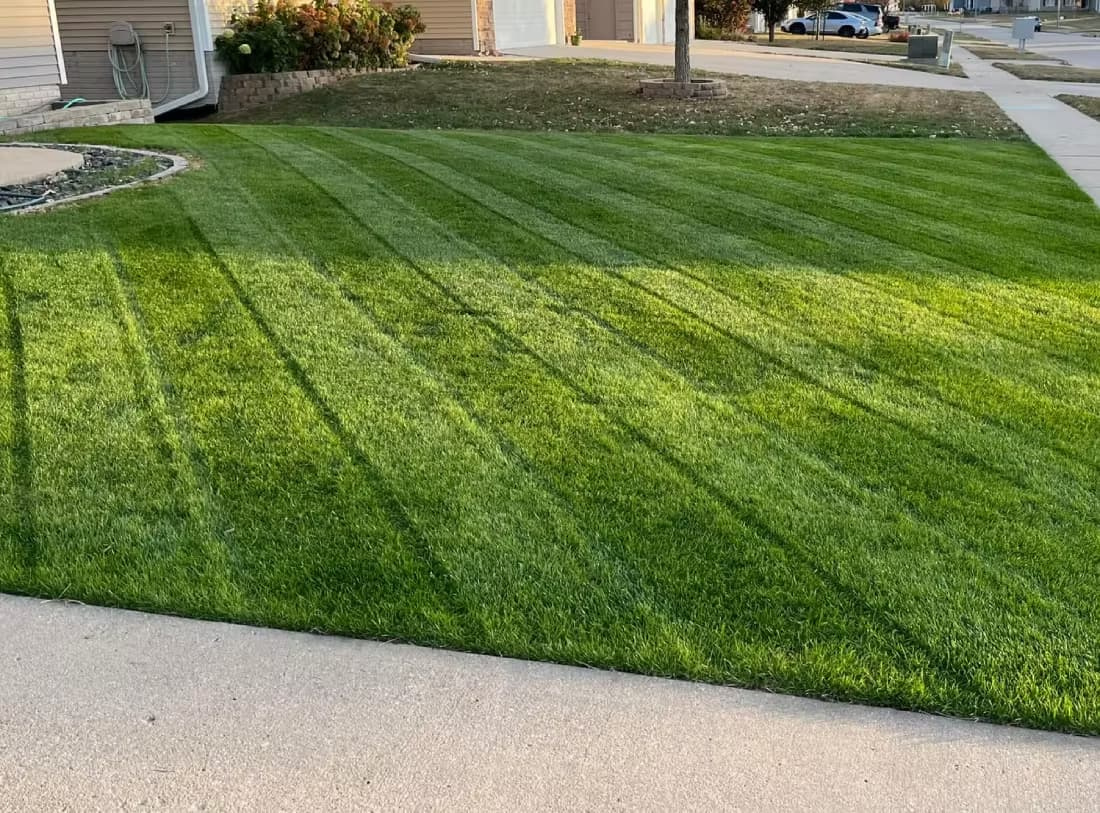
Perennial Ryegrass At-a-Glance
Hardiness Zone Min
Zone 4
Water Requirement
High
Sun Requirement
Full Sun to Light Shade
Wear Tolerance
Very High
Establishment Speed
Very Fast
Labor Intensity
High
Bred From Trampled Central Park Turf
Perennial ryegrass came to America as a pasture plant. It is native to Europe, temperate Asia, and North Africa, and it is still the dominant forage grass of Europe. For most of the time it has been in the United States, nobody thought of it as a lawn grass at all. What you could buy was forage seed — varieties like ‘Linn’ — and it behaved like forage seed: light green, coarse, clumpy, with fibrous leaves that shredded under a mower instead of cutting clean. Oregon State’s turf program sums up the pre-1960s plant bluntly. Poor heat tolerance, poor cold tolerance, poor mowing quality, and a big appetite for nitrogen. The one thing it did well was come up fast.
Then, in 1962, a Rutgers plant breeder named C. Reed Funk went to Central Park with a shovel. In Sheep Meadow he found ryegrass plants that had lived through years of being walked on, with no irrigation and no fertilizer, and he took them home. Those plants became ‘Manhattan’, released by the New Jersey Agricultural Experiment Station in 1967 — the first true turf-type perennial ryegrass and the start of an entirely new class of lawn grass. Penn State followed with ‘Pennfine’ in 1970, and the race was on.
That origin story explains the grass you can buy today better than any list of traits does. Its wear tolerance was not designed in a lab. It is simply what was left standing in a public park after everything weaker had been trampled out. The founding population was selected by feet, so foot traffic is the one thing the species is genuinely built for.
It also explains what breeders have and have not managed to fix in the sixty years since. Mowing quality, color, and density improved enormously. The two temperature weaknesses did not. Cold hardiness is still the worst of the common cool-season grasses, and summer heat still kills stands outright. So the modern breeding effort narrowed to two specific targets: a fungal endophyte that makes the plant poisonous to leaf-feeding insects, and bred-in resistance to gray leaf spot, the disease that erases ryegrass in hot, humid summers. Those two traits are still the only things that meaningfully separate one improved ryegrass from another.
Gallery
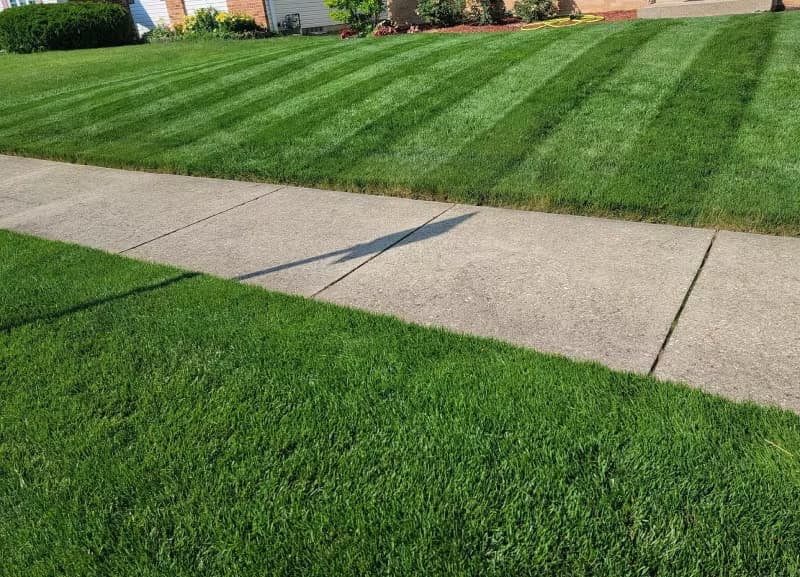
Fine leaf texture, dense canopy, and crisp striping performance along a residential sidewalk.
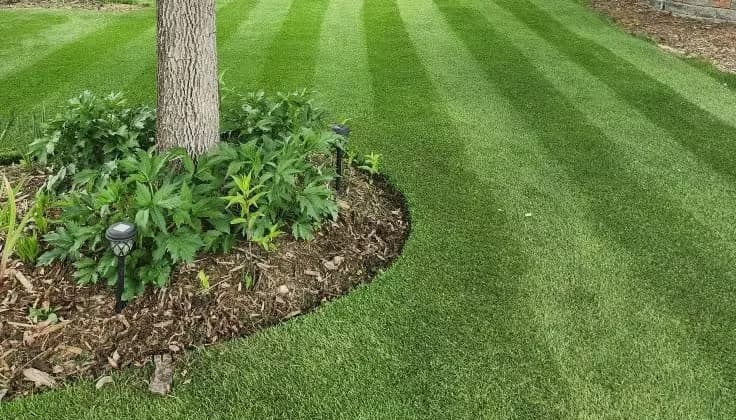
Perennial ryegrass maintained at a 0.500 inch cutting height around a tree ring.
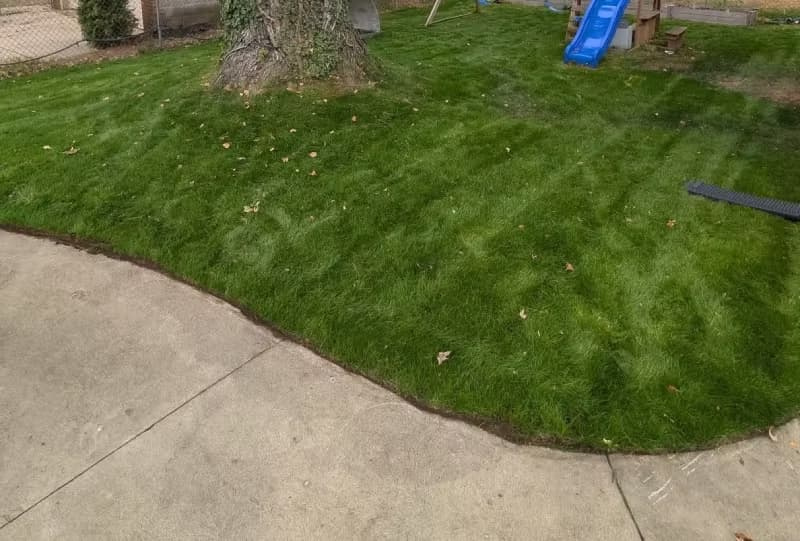
Residential lawn featuring the Nightshift perennial ryegrass blend (Fireball & Hattrick cultivars), demonstrating performance under tree shade.
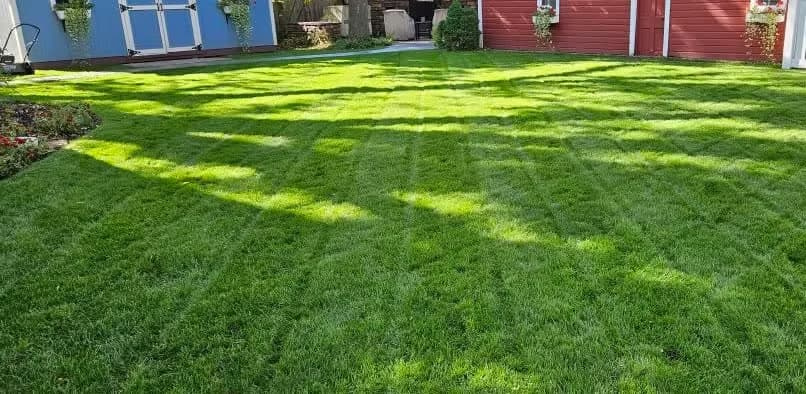
Open backyard established with the 'Fireball' perennial ryegrass cultivar in full sun.
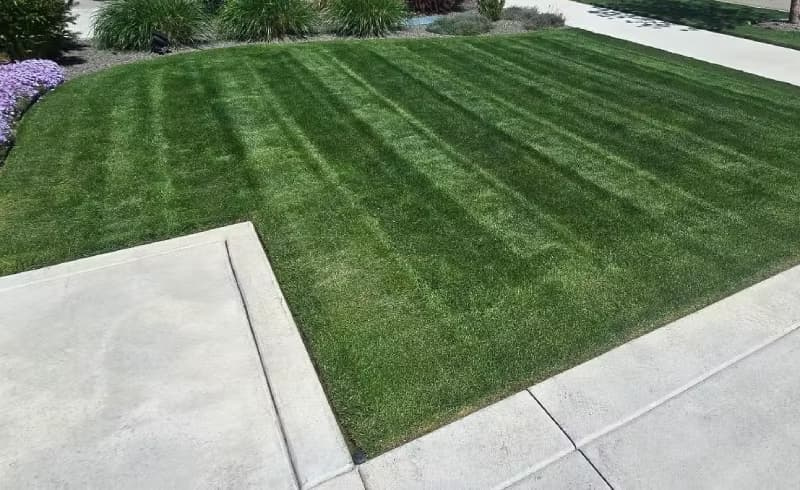
Close-up view of an elite perennial ryegrass blend highlighting fine leaf density and color contrast along hardscaping.
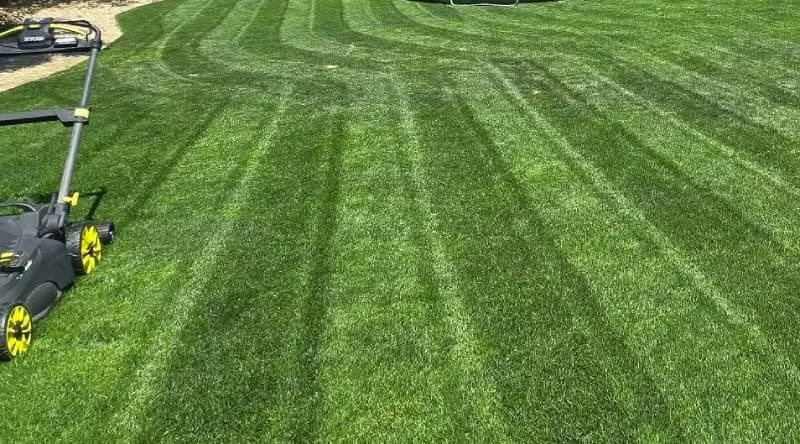
Broad backyard view demonstrating the high-traffic density and striping ability of an elite perennial ryegrass blend.
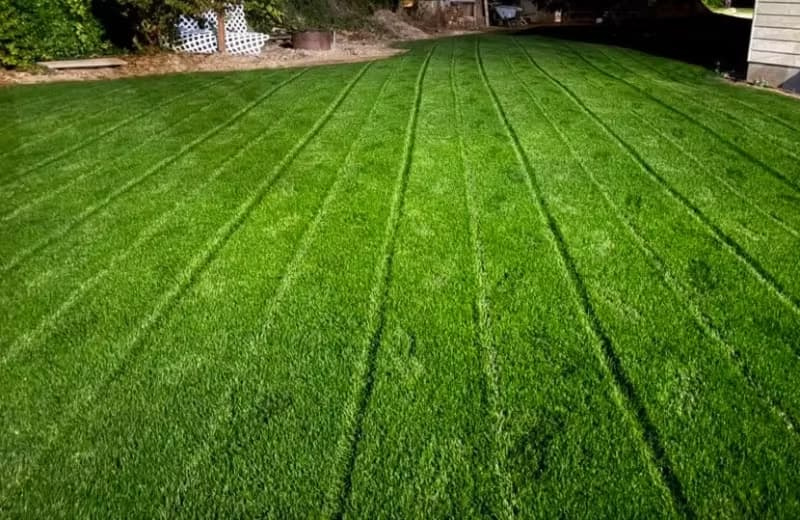
Wide lawn planted with the 'Dark 30' perennial ryegrass cultivar, highlighting its characteristic dark green hue.
Telling It Apart
To identify perennial ryegrass, pull a single shoot and look at a few structures at the base.
- Leaf underside: highly glossy and shiny — its clearest signature. When you mow, those glossy undersides catch the light and throw visible stripes.
- Vernation — how the new leaf is packed inside the bud: folded flat in a V, not rolled like a straw.
- Ligule: short and membranous, about 0.02 to 0.06 inches long. Auricles: rudimentary, small blunt nubs at the collar.
- Base: the lowest stems at soil level are a distinct reddish-purple, and the sheath is usually flattened.
- Blade: medium width, 0.08 to 0.2 inches, dark green, with a deeply ridged upper surface and a sharp-pointed, keeled tip.
One correction worth making, because it is the mistake that sends people wrong: the boat-shaped leaf tip belongs to Kentucky bluegrass, not to ryegrass. NC State records ryegrass as sharp-pointed and reserves the boat tip, along with the two pale lines flanking the midrib, for bluegrass. If you are trying to tell those two apart, the reliable pair is the glossy underside on ryegrass and the boat tip plus midrib lines on bluegrass. Their color, texture, and density are otherwise very similar.
Two look-alikes actually matter.
- Versus annual ryegrass (Festuca perennis, long known as Lolium multiflorum): they share the glossy underside and reddish base, but annual ryegrass has rolled leaves in the bud and long, claw-like auricles that clasp the stem. It is cheap, coarse, and dies out its first summer. It is never a permanent lawn, and it turns up in a lot of patch kits.
- Versus tall fescue: tall fescue has rolled leaves, a dull rather than glossy underside, distinctly rough blade margins, and wider, coarser blades ending in a sharp flat point rather than ryegrass’s keeled one.
Where perennial ryegrass sits against the rest of the cool-season group: medium texture, dark green, the best wear tolerance of the lot, poor shade tolerance, poor drought survival, moderate fertilizer needs with a heavy time commitment, and the fastest establishment by a wide margin.
Identification Photos
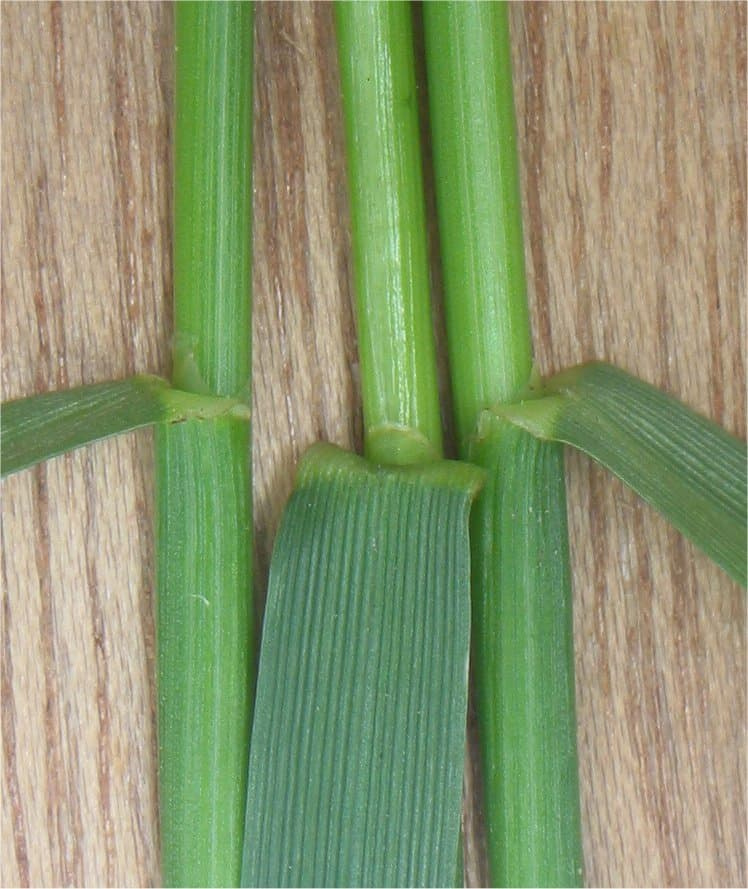
Look For: A short, membranous ligule and a slim, smooth collar. Turn the blade over to check for a glossy underside and a ribbed top, which help separate perennial ryegrass from tall fescue.
“Lolium perenne Engels raaigras ligula” by Rasbak is licensed under CC BY-SA 3.0.
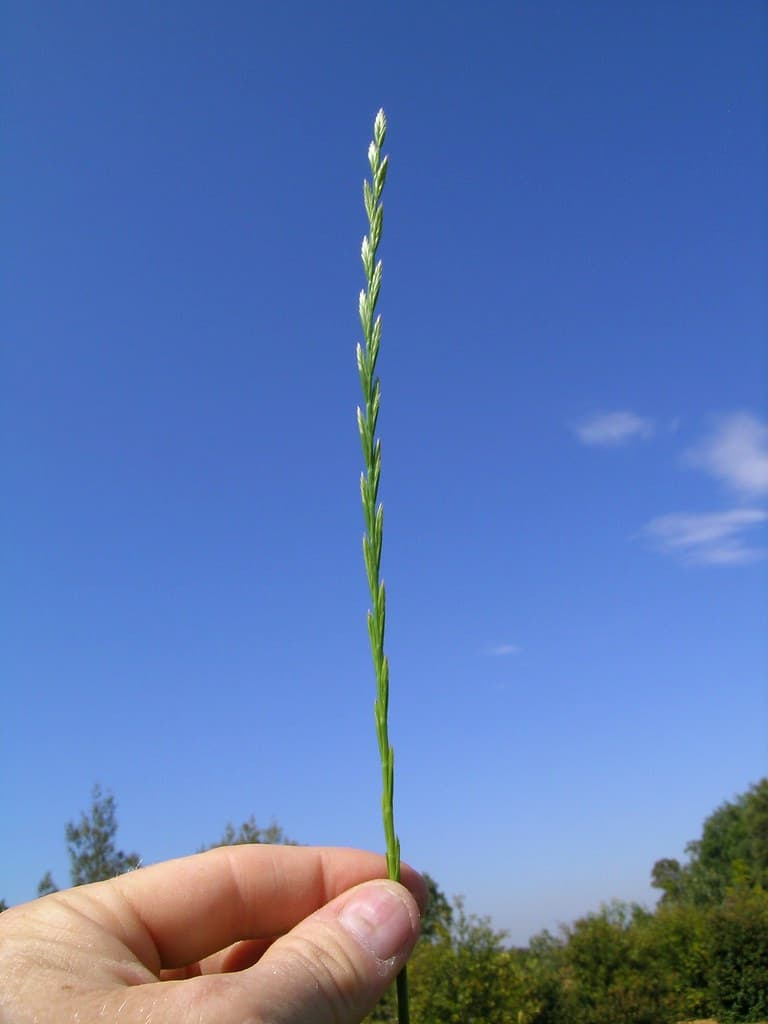
Diagnostic Feature: A flat, spike-like seedhead. Spikelets attach edgewise on alternating sides of one unbranched stem, unlike the branched panicle of bluegrass.
“Lolium perenne flowerhead” by Macleay Grass Man is licensed under CC BY 2.0.
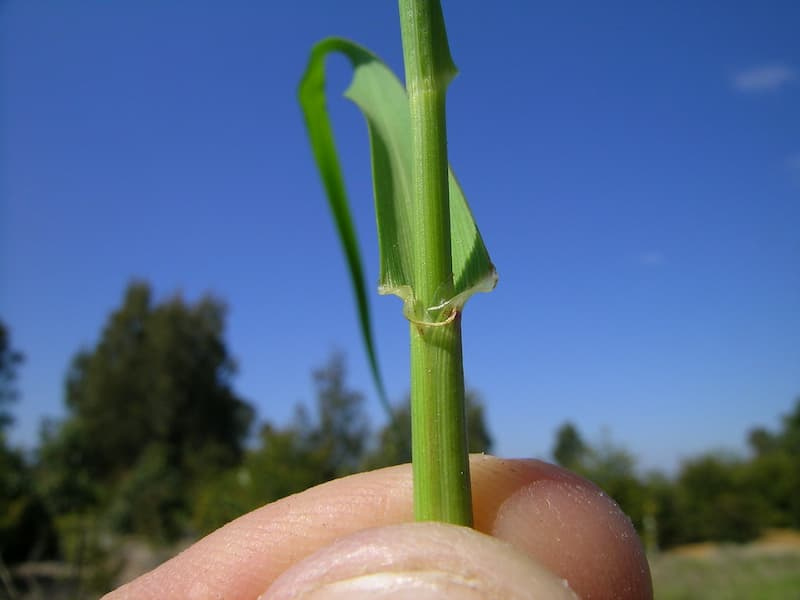
Diagnostic Feature: Small, narrow auricles. Perennial ryegrass has small, claw-like auricles wrapping the stem at the collar, smaller and less hairy than those of tall fescue.
“Lolium perenne auricles3” by Macleay Grass Man is licensed under CC BY 2.0.
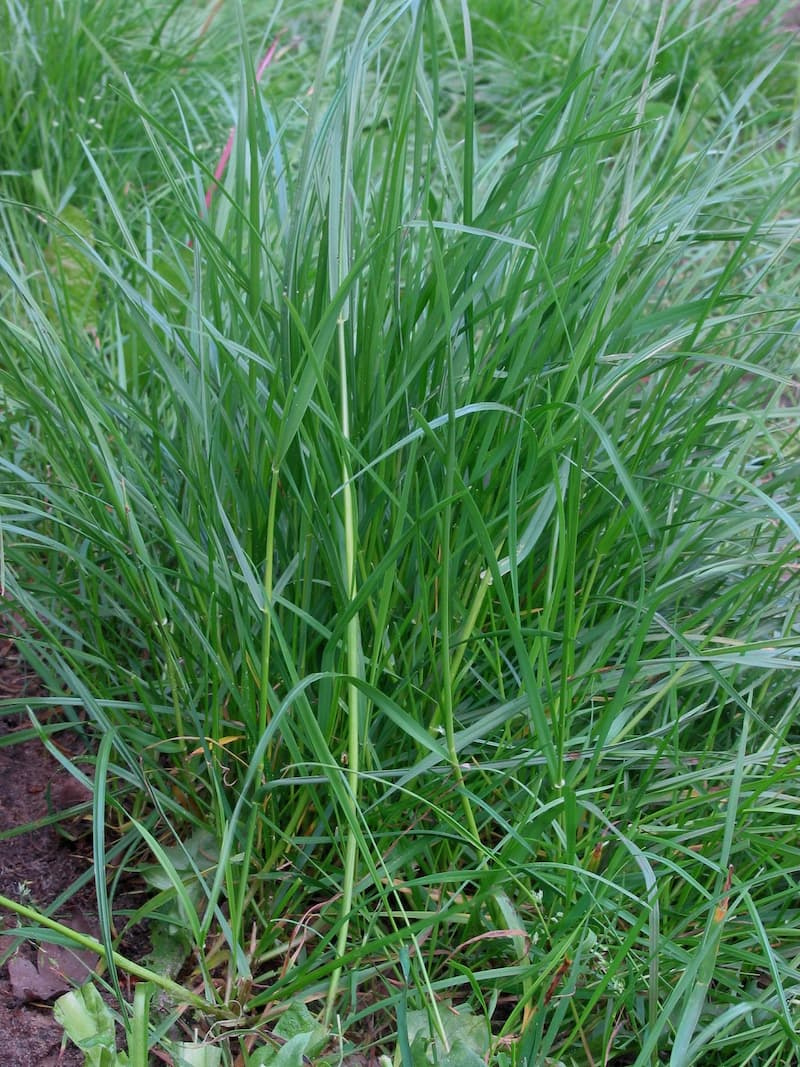
Key Identifier: Bunch-type growth. Perennial ryegrass forms upright, dark green tufts with glossy leaves and does not spread by runners or rhizomes.
“Lolium perenne Engels raaigras” by Rasbak is licensed under CC BY-SA 3.0.
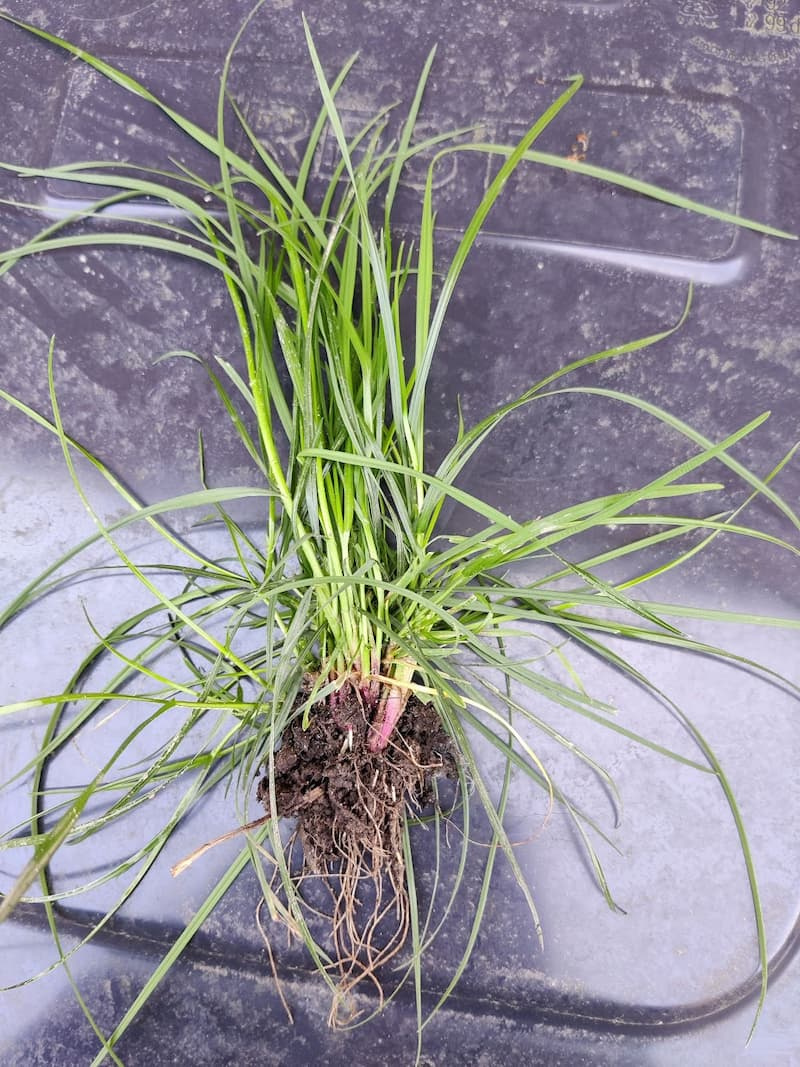
Look For: A tufted plant with no rhizomes or stolons, often with reddish stem bases. That is why perennial ryegrass lawns do not fill in gaps on their own.
“Lolium perenne, turf type cultivar” by Aramvk is licensed under CC BY 4.0.
Is Perennial Ryegrass Right For Your Yard?
Advantages:
Fastest establishment of any lawn grass. Green in 5 to 10 days, usable turf in weeks. Nothing else comes close.
Best wear tolerance of the cool-season grasses. It is the athletic-field grass of the north for a reason, and the reason is genetic — the founding turf-type population was collected from ground that had been walked on for decades.
Excellent color and mowing quality. Dark green, fine to medium texture, and glossy leaf undersides that stripe beautifully.
Semi-evergreen with exceptionally early spring green-up — which is why it is the standard for overseeding dormant bermudagrass to hold winter color.
Very good compaction tolerance, useful on the heavy, walked-on soil most lawns actually have.
Almost no thatch, so dethatching drops off the maintenance list entirely.
Built-in insect resistance is purchasable. Endophyte-enhanced seed resists surface-feeding insects with no insecticide.
Genuinely good at shading out crabgrass while it is thick.
Best If:
- you live in the cool-humid north or the Pacific Northwest, where summers stay mild
- you need a lawn fast — an erosion problem, a new build, a bare patch before an event
- you have kids, dogs, or a genuinely high-traffic yard and want the toughest cool-season surface available
- you are blending it into a Kentucky bluegrass lawn at 5 to 10 percent as a nurse grass, with bluegrass doing the healing
- you are overseeding a dormant bermudagrass lawn in the South for winter color
- you will actually irrigate through summer, and are willing to overseed every fall
Disadvantages:
No self-repair, ever. A bunch grass with no rhizomes or stolons. Every bare spot stays bare until you seed it, which makes annual overseeding permanent maintenance rather than an optional improvement.
No safe summer dormancy. It cannot go brown and wait out a drought the way bluegrass can. It stays green, runs dry, and dies.
The worst winter hardiness of the common cool-season grasses. Above roughly Zone 4 it needs snow cover to be reliable.
Gray leaf spot can erase a stand in days anywhere summers are hot and humid — roughly south of Interstate 80.
Thirsty and needs it often. 1.25 to 1.75 inches a week in hot weather, delivered more frequently than tall fescue because the roots are shallow.
Time-hungry. Mowing every 4 to 5 days in spring, a blade sharp enough to cut fibrous leaves cleanly, and an overseeding every fall.
Poor shade tolerance, and it stretches and pales rather than simply thinning when light runs short.
It can become the weed. In a cool or wet transition-zone summer, overseeded ryegrass sometimes survives, goes clumpy, and is hard to remove from the lawn around it.
Avoid If:
- you are in the transition zone or anywhere with hot, humid summers and want a permanent lawn — gray leaf spot decides this one, not you
- you want a lawn that survives on rainfall. It has no dormancy to fall back on, and going dry is not a pause, it is the end of the stand
- you are north of about Zone 4 without dependable snow cover
- your yard is shaded. Fine fescue is the answer there, and ryegrass in a shade mix mostly crowds out the grass that would have worked
- you want a low-time lawn. The fertilizer bill is ordinary; the calendar is not
- you cannot commit to overseeding every fall, because the stand only goes one direction without it
Is It Safe for Pets and Kids?
No university or extension work documents toxicity to dogs or cats from a mowed home lawn, and that absence is absence of study rather than a clearance. What is documented is livestock toxicity from endophyte-enhanced material: the endophyte Epichloë festucae var. lolii produces lolitrem B, which causes ryegrass staggers — muscle weakness, tremors, and loss of coordination that show up mainly when the animal is excited or running.
Where It Grows and Where It Fails
Perennial ryegrass is a mild-climate grass. It does its best work where spring and fall are cool and damp and summer never turns brutal — the northern lawn belt and the Pacific Northwest. Push it past that in either direction and it fails, and it fails harder than its cool-season cousins, because it is missing the survival tricks they use.
At the cold end it has the poorest winter hardiness of the common cool-season grasses, worse than Kentucky bluegrass and worse than tall fescue. In the far north — northern Minnesota, Wisconsin, Michigan — it can hold on for a few years if dependable snow cover insulates its crowns. Snow is doing real work there: it is a blanket, and the temperature under it stays far steadier than the air above. A hard winter on bare ground, or a long stretch near 15 below zero, will thin or kill the stand. Treat it as a short-lived lawn that far north, not a permanent one.
Heat is the bigger problem, and the reason is a missing feature rather than a weakness. Once air temperatures push past about 80 to 87°F, growth stalls and the plant starts burning energy reserves it has no way to replace. Its roots are shallow, and — this is the fact that decides everything — it has no protective summer dormancy. Kentucky bluegrass answers a drought by turning straw-colored and waiting for rain. Tall fescue reaches deeper water and stays green. Perennial ryegrass tries to stay green, runs out of water, and dies. Three to four weeks of hot, dry weather with no irrigation will often kill the crowns outright, and a dead crown does not come back in the fall.
That gives a clear map of where it belongs:
- Cool-humid: its home. Excellent through cool spring and fall, and it will need supplemental water to get through summer.
- Cool-arid and semiarid: workable only with regular irrigation. It fails on shallow soils and under any real drought.
- Transition zone: struggles badly. It earns its keep here as a temporary winter overseed on dormant warm-season lawns, not as a permanent turf.
- Warm-humid and warm-arid: It does not survive the jump from spring into summer.
The honest boundary is the transition zone, and this is the sentence that matters if you are deciding whether ryegrass will live where you live. In the transition zone ryegrass usually dies in summer, and the executioner is a disease called gray leaf spot. Penn State and Missouri extension put the danger zone roughly south of Interstate 80, where summers are reliably hot and humid. In those conditions the fungus can take a healthy stand down to bare ground in a matter of days. That is why transition-zone extension services tell people not to plant pure ryegrass at all — keep it under 20 percent of a mix and lean on tall fescue or bluegrass to carry the lawn through summer.
There is a second, stranger failure in that same band, and NC State documents it: in a cool or wet transition-zone summer the overseeded ryegrass sometimes does not die out. Instead it survives, goes clumpy, and becomes a weed that is genuinely hard to remove from the lawn around it. So in the transition zone the grass has two ways to disappoint you, and only one of them leaves bare ground.
On soil it is less fussy but not indifferent. It wants fertile, well-drained loam, silt loam, or clay loam, and it will take fairly wet ground as long as surface drainage is decent — but not standing water for long. Ideal pH is 6.0 to 7.0. Growth suffers below about 5.5 and the plant comes under stress above about 8.0. A droughty sand is the worst match of all, because a shallow-rooted grass with no dormancy has nothing to fall back on when the top few inches dry out.
Getting Established
Perennial ryegrass is grown from seed, and only from seed. There is no sprig or plug pathway. You can buy ryegrass sod, but it was grown from seed and needs netting to hold together, because a strict bunch grass has no runners to bind it. So establishment is a seeding decision.
Its signature trait is speed. In warm soil with steady moisture it germinates in 5 to 10 days, sometimes faster — the quickest of any cool-season lawn grass, against up to three weeks for Kentucky bluegrass. You will see green faster than with anything else. Just know that fast cover is not a finished lawn: a fully mature, deep-rooted stand still takes up to two growing seasons.
- Best time to seed: late summer to early fall, roughly mid-August to late September. Warm soil with cool nights is ideal, and a fall start lets the lawn root in before it has to face a summer.
- Spring is a fallback. Spring seedlings fight summer weeds and usually have not rooted deeply enough to survive their first hot spell.
- Rates: 4 to 6 lb of seed per 1,000 sq ft for a pure stand — some northern extensions go to 7 to 9. As a component in a bluegrass mix, it should be a small slice.
The mixing rule you cannot ignore. Ryegrass is often used as a nurse grass, sown with slower species to hold the soil while they establish. That works. But the same speed that makes it useful makes it dangerous, and the numbers here are worth walking through, because the reason usually given for the cap is wrong.
You will often read that ryegrass takes over a blend because its seed is large, so a small share by weight becomes a big share of the plants. Run it out and the opposite is true. Ryegrass runs about 230,000 seeds per pound. Kentucky bluegrass runs about 2,200,000. In a bag that is 20 percent ryegrass by weight, ryegrass supplies roughly 46,000 seeds against bluegrass’s 1,760,000 — about one seed in forty. Seed size is not the mechanism. It works against ryegrass.
The real mechanism is the head start. Ryegrass is up in 5 to 10 days; bluegrass takes 14 to 21 or more. By the time the first bluegrass seedling breaks the surface, the ryegrass has been growing for a week and a half and has begun to close a canopy over it. Bluegrass seedlings that come up under shade stay small, and small seedlings lose. Trial data from Wisconsin and Purdue shows how lopsided this gets: a mix seeded at 20 percent ryegrass by weight ended up as little as 21 percent bluegrass cover a year later. One seed in forty, four-fifths of the lawn.
So the cap holds, for a better reason than the one usually given. Keep ryegrass at 20 percent by weight at the absolute most in a bluegrass blend, and target 5 to 10 percent — that is Purdue’s number and the safest across institutions. In a shade mix, 10 percent or less, because anything more crowds out the fine fescues that actually tolerate shade, and the ryegrass then dies in the shade anyway and leaves you bare ground. NC State recommends up to 40 percent, but specifically for mountain-region mixes; treat that as a regional exception, not the general rule. Overshoot the cap and you do not get a bluegrass lawn with quick cover. You get a ryegrass lawn, and it inherits ryegrass’s summer disease and winterkill problems.
Grow-in. For the first three weeks keep the top inch of soil constantly moist — light watering two to four times a day — then shift to deeper, less frequent watering to pull roots down. Feed a phosphorus-rich starter fertilizer at seeding. On weeds, ryegrass mostly defends itself: it fills in fast enough to shade out germinating crabgrass without help.
One herbicide rule saves new lawns. Do not put a standard crabgrass pre-emergent — prodiamine or pendimethalin — on newly seeded ground. Those products work by stopping seedling root development, and they cannot tell your grass seedlings from the weeds. Wait about 60 days or four mowings. The exceptions are siduron (Tupersan) and mesotrione (Tenacity), both of which can go down at seeding and stop crabgrass without harming sprouting ryegrass. Quinclorac waits about 28 days after the seedlings emerge. Standard broadleaf sprays wait until the new lawn has been mowed two to four times.
Keeping It Healthy
Perennial ryegrass takes moderate fertilizer and a lot of your time. It rewards steady feeding and mowing, and it punishes neglect quickly, because it cannot repair itself.
Mowing. Keep a home lawn between 1.5 and 3.5 inches and move within that range by season: the lower end in spring and fall, raised to 2.5 to 3.5 inches through summer so the taller canopy shades the soil and buys those shallow roots some moisture. Never scalp below 1.5 inches on a home lawn — short mowing starves the roots and opens the door to insects, disease, and drought damage. Follow the one-third rule and never cut more than a third of the blade at once, which during ryegrass’s fast spring growth can mean mowing every 4 to 5 days.
Keep the blade sharp. This one is specific to this grass. Ryegrass leaves are unusually fibrous, and a dull blade tears them instead of cutting. The torn tips fray into white, stringy tissue, and within a day they wither and cast a gray-white haze over the whole lawn — people mistake it for disease every year. Worse, every torn tip is an open wound for fungus. Sharpen four to six times a season.
Feeding. Aim for 2 to 4 pounds of actual nitrogen per 1,000 sq ft per year, about 3 pounds for a bluegrass-ryegrass mix, and weight it toward fall. Fall nitrogen is when the plant builds the root reserves that carry it through winter and green it up early; Virginia Tech’s memory hook is SON, for September, October, November.
The one hard rule is the other direction. Pull nitrogen back to nothing in July and August. Summer feeding forces soft, watery growth at exactly the moment heat and humidity are trying to kill the plant, and it feeds gray leaf spot and brown patch directly. Underfeeding has its own tell: a lawn that keeps getting red thread and rust is a lawn asking for nitrogen.
Water. This is a thirsty grass — 1.25 to 1.75 inches a week in hot, dry weather, more than tall fescue needs and delivered more often, because shallow roots empty a shallow reservoir. And there is no dormancy safety net here. If you decide to let the lawn go dry, it will not wait for you. To keep the crowns alive through an imposed dry spell, give it at least a quarter to a half inch every two to three weeks — enough to survive, not enough to green up. Less than that risks losing the stand outright and needing a full fall reseed.
Thatch and aeration. Good news: as a bunch grass with no runners, ryegrass rarely builds thatch, so routine dethatching is rarely needed. Core aeration still helps, for a different reason. Shallow roots make it especially vulnerable to soil compaction, so aerate to relieve compaction in fall or early spring — never in summer heat.
Overseeding is maintenance, not repair. Because the plant cannot spread sideways, every patch you lose to traffic, drought, or disease stays lost. Plan on overseeding every fall to keep the stand thick. Skipping it does not leave the lawn as it was; it leaves the lawn a little thinner every year until weeds have somewhere to land.
Winter color. Ryegrass is semi-evergreen. It holds a deep green well into and through cold weather and greens up exceptionally early in spring, which is exactly why it is the number one grass for overseeding dormant bermudagrass in the South. If you are doing that, plan the spring transition out: the ryegrass will compete with the waking bermuda, so drop the mowing height in spring to stress it off and let the bermuda take back over.
What Goes Wrong
Diseases, and the humid-climate penalty. Ryegrass’s disease profile is the main reason it cannot live in hot, humid regions. Three summer diseases do the killing.
- Gray leaf spot (Pyricularia grisea) is the signature disease and the stand-killer. It fires up in hot, muggy weather around 82 to 90°F and needs only about nine hours of continuous leaf wetness to infect. It can erase a mature lawn, or a young seeding, in days. Look for small oblong spots with gray-tan centers and dark purple-brown borders, and infected leaf tips that twist into a fish-hook. Defenses: plant a gray-leaf-spot-resistant cultivar, water only in the early morning so the canopy dries fast, hold summer nitrogen to a quarter pound or less, and bag your clippings during an outbreak.
- Brown patch (Rhizoctonia solani) comes with hot, humid nights above about 65°F. It blights the leaves but spares the crowns, so the lawn usually recovers when the weather cools. Same defenses: no summer nitrogen, early-morning deep and infrequent watering.
- Pythium blight is a water mold and the fastest of the three — it can collapse a stand in 24 to 48 hours in extreme heat with saturated soil. It follows water: drainage channels, low swales, mower tracks. Fix drainage and airflow, and keep nitrogen off.
Three more show up in cool, wet, underfed conditions and are mostly cosmetic — red thread (pink threads on the leaf tips), dollar spot (bleached spots about the size of a silver dollar), and rust (orange powder that rubs off on your shoes). All three are the lawn telling you it is short on nitrogen, and a modest feeding usually grows the grass right out of them.
The bottom line on climate: in warm-humid and humid-transition regions, ryegrass carries a severe disease penalty. Kentucky bluegrass is immune to gray leaf spot and Pythium, tall fescue resists them moderately, and ryegrass gets decimated. That is why extension will not recommend it as a primary lawn there, only as a minor component under 20 percent of a mix.
Insects, and the endophyte answer. Surface feeders are the main insect threat: bluegrass billbugs, whose larvae tunnel in the stems and leave sawdust-like frass, plus sod webworms, hairy chinch bugs, and cutworms. White grubs attack from below, chewing roots. There is an elegant defense built into some ryegrass seed. Many cultivars carry a harmless internal fungus called an endophyte that produces compounds toxic to surface-feeding insects — an insect-resistant lawn with no insecticide. Two honest limits: the endophyte protects only above-ground parts, so it does nothing against root-feeding grubs, and it dies in the bag if seed is stored hot. Buy fresh and check the test date. Endophyte-enhanced seed should also never be used where livestock or horses graze, because the same compounds cause a neurological condition called ryegrass staggers in grazing animals.
Weather damage. Beyond winterkill — usually crown death from a late-winter freeze-thaw, or from cold dry wind on snowless ground — and the summer heat and drought decline, watch for scalping. Fast, uneven spring growth and tough seed stalks mean that skipping a mow and then cutting hard removes far too much leaf at once and starves the crowns.
Weeds In This Grass
Established perennial ryegrass tolerates most common lawn herbicides well, with a few sharp exceptions worth knowing before you spray.
- Safe on an established lawn: the standard three-way broadleaf mixes (2,4-D, dicamba, MCPP); the common crabgrass pre-emergents (prodiamine, pendimethalin, dithiopyr, plus bensulide and benefin); and for grassy weeds, quinclorac and — exceptionally well — ethofumesate, which is the go-to for annual bluegrass.
- Will injure or kill it: chlorsulfuron and the related sulfonylureas, including metsulfuron, foramsulfuron, and rimsulfuron. These are used to remove ryegrass from other lawns, so keep them off yours. Handle oxadiazon carefully too — it burns ryegrass unless it goes down as a granular on dry fertilizer.
On a new seeding, the establishment rule applies: standard pre-emergents block your grass seed as thoroughly as they block weed seed, so only siduron and mesotrione belong on freshly seeded ryegrass. Everything else waits — quinclorac about 28 days after seedlings emerge, full pre-emergents 60 days or several mowings out.
The real weed defense is density. Ryegrass’s fast, dense canopy is genuinely good at shading out crabgrass, and that is its competitive strength. But the bunch habit is a permanent weakness: it cannot spread sideways, so any bare spot from traffic, drought, or disease stays bare and fills with weeds. There is no chemical fix for that. The answer is routine annual overseeding to keep the stand thick, plus mowing at the taller end of the range so less light reaches the soil.
Renovating a weed-choked lawn — past roughly 50 percent weeds — starts with a non-selective herbicide to kill everything, then reseeding after a short wait, about five to seven days after treatment for broad areas. Extension publications name glyphosate for this step. Check the active-ingredient panel on whatever you actually buy: consumer products branded “Roundup” no longer reliably contain glyphosate, and the replacement ingredients behave differently.
Subtypes
Endophyte-Enhanced Ryegrass
Ryegrass carrying a live fungus inside its leaves that makes them toxic to leaf-feeding insects — pest resistance with no insecticide.
Best For: A lawn with a history of chinch bugs, sod webworms, billbugs, or cutworms, or any yard where you would rather not spray for them. It also runs on slightly less nitrogen than plain ryegrass.
Tradeoff: The protection is a living organism, so it expires — seed stored warm past about nine months buys you nothing — and even fresh, it does nothing against root-feeding grubs.
Gray-Leaf-Spot-Resistant Ryegrass
Ryegrass bred against the one disease that can take a healthy stand to bare ground in a matter of days.
Best For: Any ryegrass going into ground where July is hot and muggy — roughly south of Interstate 80, through the Mid-Atlantic and the transition zone — and any winter overseeding of a dormant southern lawn.
Tradeoff: Resistance is not immunity, and it does nothing about ryegrass's other summer problem — heat with no dormancy to fall back on.
Improved Turf-Type Ryegrass
The plain improved ryegrass that fills most bags — the fastest cover of any cool-season grass, at the lowest price.
Best For: A sunny northern lawn that needs grass on the ground fast and takes real foot traffic — a new yard, a worn play area, or a bluegrass lawn that needs a quick-starting partner. Best where summers stay mild and you can water through them.
Tradeoff: Nothing is bred into it against gray leaf spot or leaf-feeding insects, so in a humid summer your mowing and watering habits are the only defense the lawn has.
The Seasonal Care Calendar

Spring (Mar-May)
Green-Up Comes Early And Fast
Ryegrass wakes up before almost anything else, and then grows harder than you expect. Expect to mow every 4 to 5 days through the flush and to keep to the one-third rule while you do it — skipping a week and then cutting hard is how spring scalping happens, and a scalped crown starts the summer already behind.
Mow on the lower end of the range now, around 1.5 to 2 inches, and sharpen the blade before the first cut. Fibrous ryegrass leaves shred under a dull blade and leave a gray-white cast over the lawn within a day.
Spring is a fallback seeding window, not the good one — spring seedlings fight summer weeds and rarely root deeply enough to survive their first hot spell. If you must seed now, siduron or mesotrione are the only crabgrass materials that can go down with the seed. Otherwise a standard pre-emergent goes on established turf only, and broadleaf sprays wait until any new grass has been mowed two to four times.
Aerate now if you did not in fall; compaction relief matters more here than for deeper-rooted grasses. Feed lightly if the lawn is coming out of winter thin, but keep the real fertilizer program for fall. If you overseeded a dormant bermudagrass lawn, this is when you drop the mowing height to stress the ryegrass off and hand the lawn back to the bermuda.

Summer (Jun-Aug)
Surviving The Gray Leaf Spot Window
Summer is when this grass is decided, so the summer program is mostly about not making things worse.
Raise the mower to 2.5 to 3.5 inches and leave it there. A taller canopy shades the soil and buys shallow roots a little moisture, and there is nothing else in the plant’s toolkit doing that job.
Put the nitrogen away in July and August. Not less — none. Summer nitrogen forces soft, watery growth at exactly the moment heat and humidity are trying to kill the plant, and it feeds gray leaf spot and brown patch directly.
Water in the early morning, deeply, and count on doing it. 1.25 to 1.75 inches a week in hot, dry weather. Morning watering matters as much as the amount: it lets the canopy dry before the day heats up, and gray leaf spot needs only about nine hours of continuous leaf wetness to get in. If you are going to impose a dry spell, still give a quarter to a half inch every two to three weeks. That is not to keep it green, it is to keep the crowns alive, and below that you are risking the whole stand.
Watch for the three that kill. Small oblong spots with gray-tan centers and purple-brown borders, or leaf tips twisted into a fish-hook, mean gray leaf spot — bag your clippings and stop feeding. Blight that spares the crowns after hot humid nights is brown patch, and the lawn usually recovers. Turf collapsing in 24 to 48 hours along drainage lines and mower tracks in extreme heat is Pythium.
Do not aerate in summer heat, and do not seed. Anything that opens the canopy now works against you.
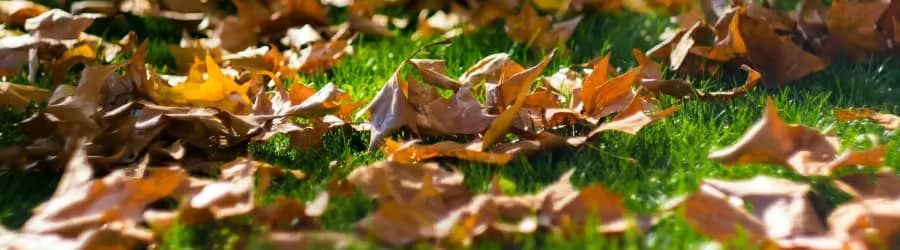
Fall (Sep-Nov)
Rebuilding The Stand Every Fall
Fall is the season this grass is actually managed in. Everything that makes next year’s lawn happens now.
Seed and overseed. Mid-August to late September is the window: warm soil, cool nights, and enough runway to root in before winter. New pure stands go down at 4 to 6 lb per 1,000 sq ft. Overseeding a thinning stand is not optional maintenance on a grass that cannot fill its own gaps — put it on the calendar the way you would mowing. Use the low end of the seeding range and aerate first if the soil is compacted; seed dropped into open holes makes far better contact than seed sitting on thatch.
Feed, and weight it here. Virginia Tech’s hook is SON — September, October, November. Fall nitrogen builds the root reserves that carry the plant through winter and drive that early spring green-up, and it does it without the disease risk that summer feeding carries. Most of the annual 2 to 4 pounds belongs in this window.
Mow lower again, back toward 1.5 to 2 inches as growth slows, and keep mowing until it stops. Going into winter long invites matting and snow mold.
Fall is also the honest moment to make a decision. If the stand thinned badly over summer and you are in the transition zone, reseeding pure ryegrass buys you a repeat of the same summer. That is the point to shift the mix toward tall fescue or bluegrass and let ryegrass go back to being the nurse grass it is good at being.
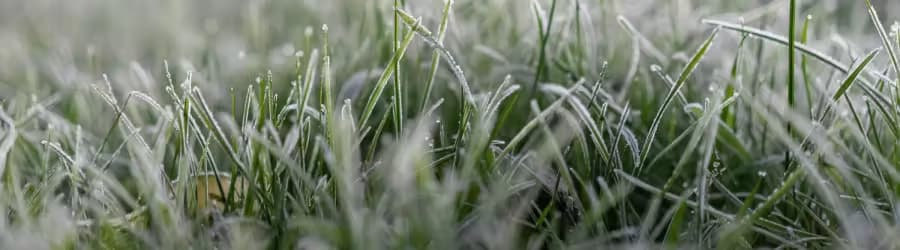
Winter (Dec-Feb)
Holding Color And Risking Winterkill
Ryegrass holds its color longer than most cool-season grasses — that semi-evergreen habit is real, and in a mild winter the lawn stays green when the neighbors’ have gone off-color. In a severe or prolonged freeze it will discolor, and that alone is not damage.
The genuine winter risk is winterkill, and it is worth knowing what actually does the killing. It is rarely a single cold number. It is crown death from a late-winter freeze-thaw cycle, or from cold dry wind working on bare frozen ground with no snow on it. Snow cover is insulation, and where it is dependable this grass survives far colder winters than its reputation suggests. Where it is not, a long stretch near 15 below zero thins or kills the stand outright.
Practically, that means staying off it. Foot traffic on frozen or frost-covered turf crushes crowns that cannot repair themselves, and a bunch grass has no runners to fill in what you break. Keep sidewalk and driveway salt off the edges for the same reason.
Otherwise winter is quiet. Do not fertilize, do not seed, and do not read winter discoloration as death — wait for spring green-up before deciding anything. If you overseeded a dormant bermudagrass lawn in the South, this is the payoff season, and the only thing to plan is stopping fertilizer by mid-to-late January so the ryegrass does not fight the bermuda’s spring return.
Where Ryegrass Wins And Loses
Perennial ryegrass is easiest to place if you compare it one trait at a time against the three grasses it actually competes with.
Versus Kentucky bluegrass. They look nearly identical — same dark green, same medium texture, similar density — and they behave completely differently. Bluegrass spreads by rhizomes and heals its own damage; ryegrass cannot. Bluegrass goes dormant in a drought and comes back; ryegrass dies. Bluegrass is immune to gray leaf spot; ryegrass is destroyed by it. What ryegrass wins is speed — 5 to 10 days to germinate against 14 to 21 or more — and wear tolerance. That is why the standard northern lawn is not one or the other but both, with ryegrass at 5 to 10 percent by weight doing the fast cover and bluegrass doing the healing.
Versus tall fescue. Tall fescue is the better choice almost anywhere summers are hot. It roots far deeper, mines water ryegrass cannot reach, resists gray leaf spot moderately, and holds up in the transition zone where ryegrass does not. Ryegrass beats it on establishment speed, on finer texture and better color, and slightly on wear. If you are in Zone 6 or 7 and choosing between them for a permanent lawn, tall fescue is usually the answer, with ryegrass as a small blend component.
Versus fine fescue. These barely compete — they are opposites. Fine fescue is the shade and low-input grass: it tolerates deep shade, wants very little nitrogen, and cannot take traffic. Ryegrass wants full sun, moderate feeding, and shrugs off traffic better than anything else in the group. If your problem is shade, ryegrass in a sun-and-shade mix is actively unhelpful, because it crowds out the fine fescue seedlings that would have solved it and then dies in the shade anyway.
The one-line version. If you need a lawn fast, or you need one that survives being walked on, ryegrass wins and nothing else is close. If you need one that survives a summer, a drought, or a winter without your help, something else wins — and ryegrass is better used as a component of that lawn than as the lawn itself.
Find Your Precision Match
Choosing between species requires balancing your specific soil profile, local micro-climate, and maintenance goals. Use our Turf Match Tool to generate a data-backed recommendation for your specific yard.
Start Your MatchTechnical Specifications
Scientific Name: Lolium perenne L.
Common Names: Perennial ryegrass, English ryegrass, crested ryegrass, ryegrass. Do not conflate with annual or Italian ryegrass, which is a different species.
Family: Poaceae (grass family), subfamily Pooideae, tribe Poeae, subtribe Loliinae
Origin: Native to Europe, temperate Asia, and North Africa; the predominant forage grass of Europe, introduced to North America for pasture and rough lawns. Turf-type breeding is American and began in the early 1960s. It naturalizes on roadsides and disturbed ground across most of the US and Canada.
Season Type: Cool-Season
Growth Habit: Bunch-type (tuft-forming)
Growth Rate: Fast
Texture: Medium
Root System Depth: Shallow and fibrous.
Spread Mechanism Intensity: None lateral. Spreads only by vertical tillering from the crown — NC State records both rhizomes and stolons as absent. A plant gets wider only as its own crown adds tillers, so a bare patch bigger than a few inches never closes on its own.
Typical Lifespan & Invasiveness Risk: Short-lived by turf standards — USDA-NRCS calls its longevity medium, with some turf varieties longer lived; forage stands run two to three years. At the cold edge treat it as a short-lived perennial. Ecological invasiveness is low to moderate: not a listed noxious weed in any US state or Canadian province, but it naturalizes on roadsides and disturbed ground and can outcompete natives for light and moisture in some western systems, including Garry oak communities in the Pacific Northwest and British Columbia.
Hardiness Zone Min: Zone 4
Hardiness Zone Max: Zone 7
Hardiness Zone Notes: Ideal Zones 5 to 7. Stretch cold to 3a only where snow cover is dependable, and expect a short-lived stand there — this grass has the poorest winter hardiness of the common cool-season grasses. The northern killer is bare frozen ground and a long stretch near 15 below zero, not cold as such; snow cover is what decides it. The southern limit is not a temperature at all. It is gray leaf spot in hot, humid summers, which Penn State and Missouri place roughly south of Interstate 80.
Cold Tolerance Rating: Low
Winter Color Profile: Semi-Evergreen
Climate Cool Humid: Excellent
Climate Cool Arid: Fair
Climate Warm Humid: Unsuitable
Climate Warm Arid: Unsuitable
Climate Transition: Poor
Sun Requirement: Full Sun to Light Shade
Shade Tolerance: Low
Water Requirement: High
Drought Survival Strategy: No Safe Dormancy (declines/dies)
Soil Texture Fit:
Sandy Loam
Loam
Silt Loam
Clay Loam
pH Optimal Min: 6
pH Optimal Max: 7
pH Stress Max: 8
Wet Feet Tolerance: Moderate
Compaction Tolerance: High
Salinity Tolerance: Moderate
Wear Tolerance: Very High
Recovery: Very Low
Recovery Mechanism: Bunch-type (no lateral spread)
Input Intensity: Moderate
Labor Intensity: High
Thatch Production: Very Low
Annual N Figure: Approx. 2 to 4 lb actual nitrogen per 1,000 sq ft per year; about 3 lb for a bluegrass-ryegrass mix. Weight it toward fall. Zero nitrogen in July and August. Endophyte-enhanced material sits at the low end of the band.
Urine Resistance: Moderate
Establishment Methods:
Seed
Sod
Germination Speed: Fast (5–7 days)
Establishment Speed: Very Fast
Seeding Rate: New pure stand 4 to 6 lb per 1,000 sq ft; some northern extensions go to 7 to 9. Sports turf 4 to 5 lb. In a Kentucky bluegrass blend, 5 to 10 percent ryegrass by weight and never above 20; 10 percent or less in a shade mix. Overseeding, separately: for routine fall overseeding of a thinning cool-season stand, extension publishes no species-specific rate — use the low end of the establishment range. For winter overseeding of dormant warm-season turf, 5 lb per 1,000 sq ft into an established lawn (Clemson), 5 to 10 lb for lawns and 8 to 12 lb for high-traffic sites (University of Georgia), and 10 lb on bare ground for erosion cover.
Improved Cultivar Availability: High
NTEP Note: NTEP rates individual perennial ryegrass cultivars, not sub-groups, and gray leaf spot resistance is the one trait its data genuinely separates them on — roughly 6.0 to 9.0 for bred-resistant entries against very low for standard improved types. Buy a blend of two or more named, certified turf-type cultivars rather than a single variety, and check NTEP trial results from the site nearest you.
Deep Dives & Practical Guides
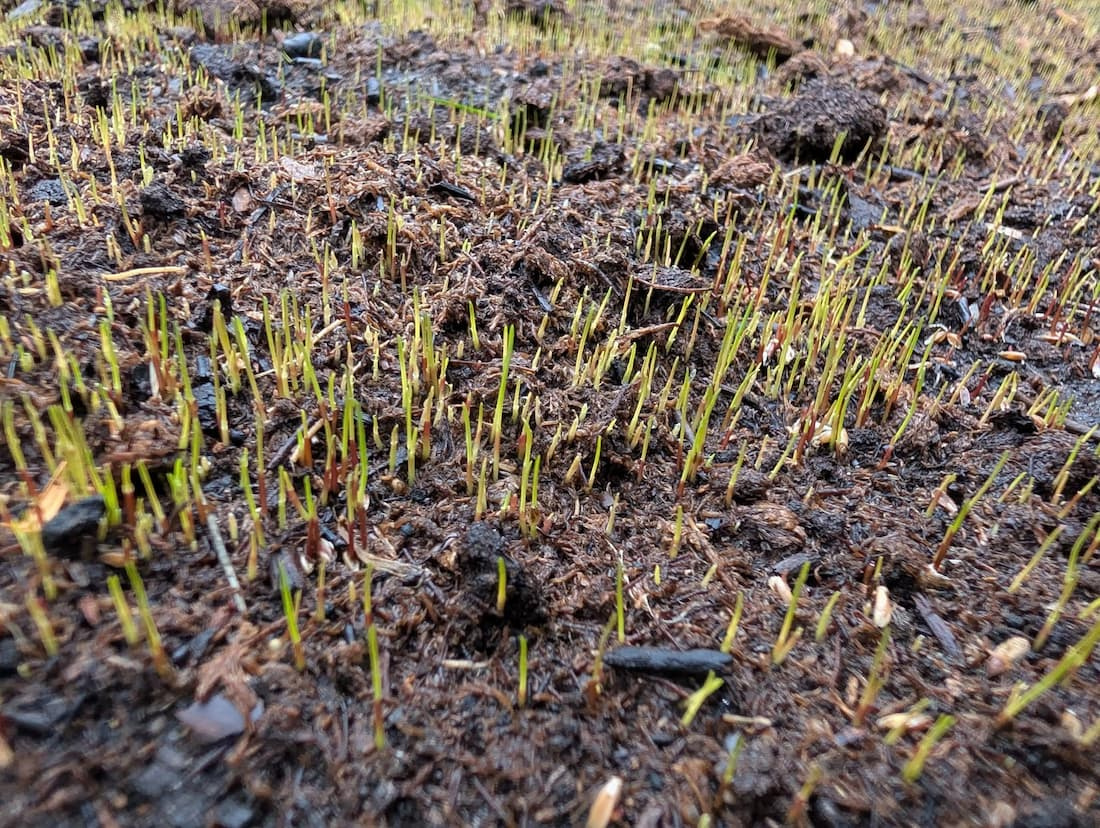
How to Establish a New Lawn From Bare Soil to First Mow
Bare soil doesn't turn into a lawn just because you scattered seed or rolled out sod — it becomes one based on a handful of specific steps done in the right order, matched to your specific grass. This guide walks through soil prep, seeding or planting method, starter fertilizer, watering as the grass grows, and knowing when it's actually safe to mow, for both cool-season and warm-season lawns.
Read Article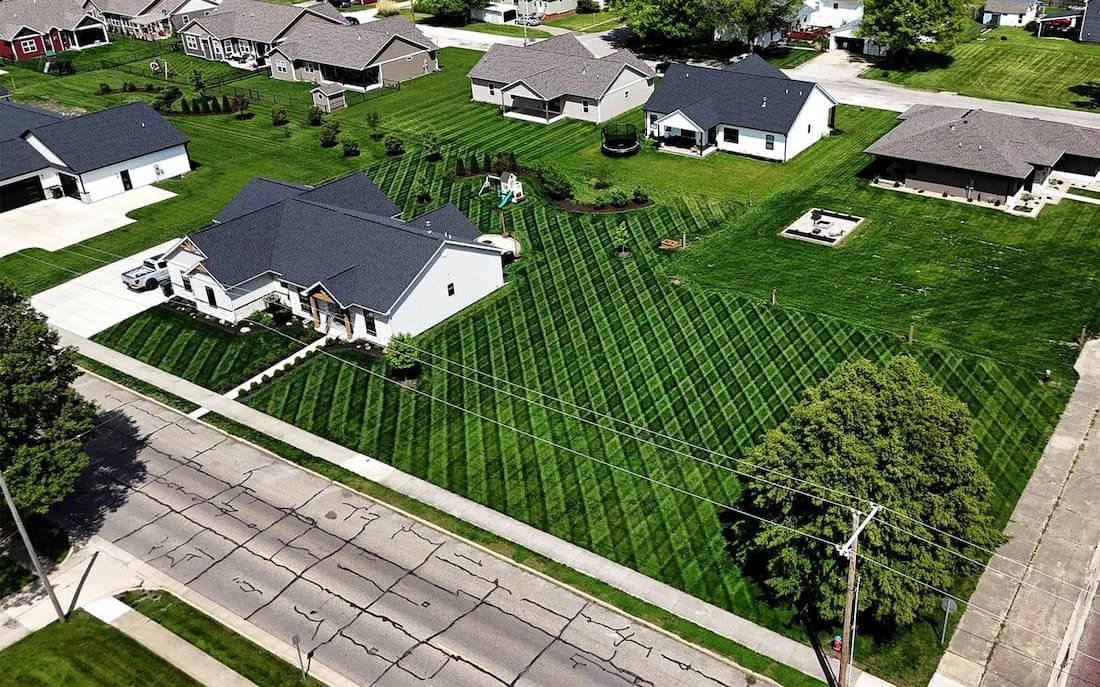
Cool Season vs Warm Season Lawn and Landscape Guide
Your lawn and your flower beds don't follow the same calendar — one runs on a cool-season engine, the other on a warm-season one, and using the wrong playbook on either can do real damage. This guide helps you figure out which system you actually have and how to care for it correctly, plus how the same cool/warm split applies to your ornamental beds.
Read Article
The Hole You Dug Is Killing Your New Plants
A shrub that looked fine all summer and stalled the next year usually didn't fail because of the plant, the weather, or the nursery. It failed because the hole it went into was a container — smooth-walled, water-holding, and impossible to root out of.
Read Article
What You Can Actually Change About Bad Soil
Heavy clay and loose sand feel like permanent sentences, and half of that is true. What your soil is made of will not change. How those particles are arranged will — and that is the half that decides whether anything grows.
Read Article
Why Your Plants Survive Winter and Die in July
Your hardiness zone is built from one number — the coldest night of an average year. It says nothing about the hottest afternoon, which is what actually kills most plants people lose. Here's how to read the other half of the map.
Read Article
Why Poa Annua Keeps Coming Back — and the 3-Year Plan That Finally Ends the Cycle
You've pulled it. You've sprayed it. You've watched the little white seedheads mock you every single spring. And every fall, like clockwork, it's back — in the lawn, in the beds, in the cracks you didn't know you had. Here's the hard truth nobody at the big-box store will tell you: you're not losing because you're doing it wrong — you're losing because you're fighting the wrong enemy on the wrong timeline. Poa annua isn't a one-season problem, and once you understand why, the three-year plan below stops feeling like a chore and starts feeling like a countdown.
Read Article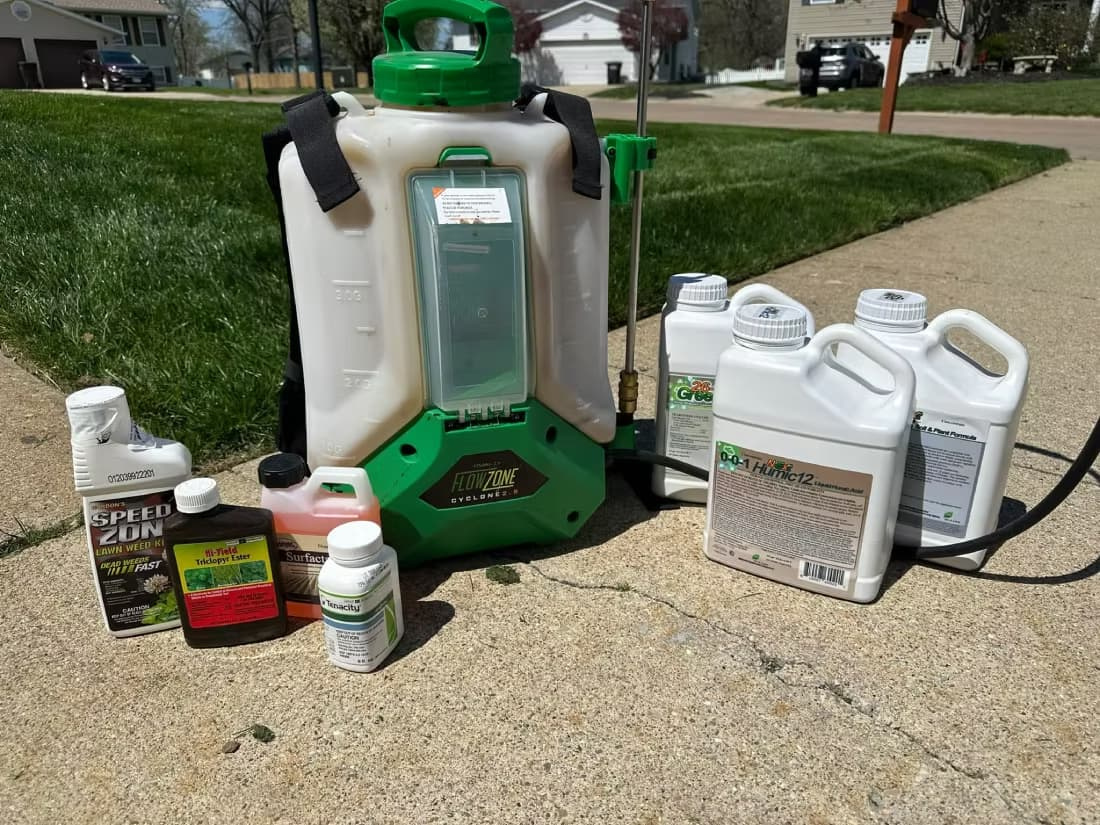
How to Apply Herbicides Correctly in Your Lawn and Garden Beds
Getting real results from a weed product has almost nothing to do with the brand on the bottle and everything to do with matching the method to the moment — the right chemistry, in the right place, at the right time. Learn how to apply herbicides correctly across both your lawn and your garden beds, whether you’re stopping weeds before they sprout or killing the ones already growing, without wasting product or harming the plants you want to keep.
Read Article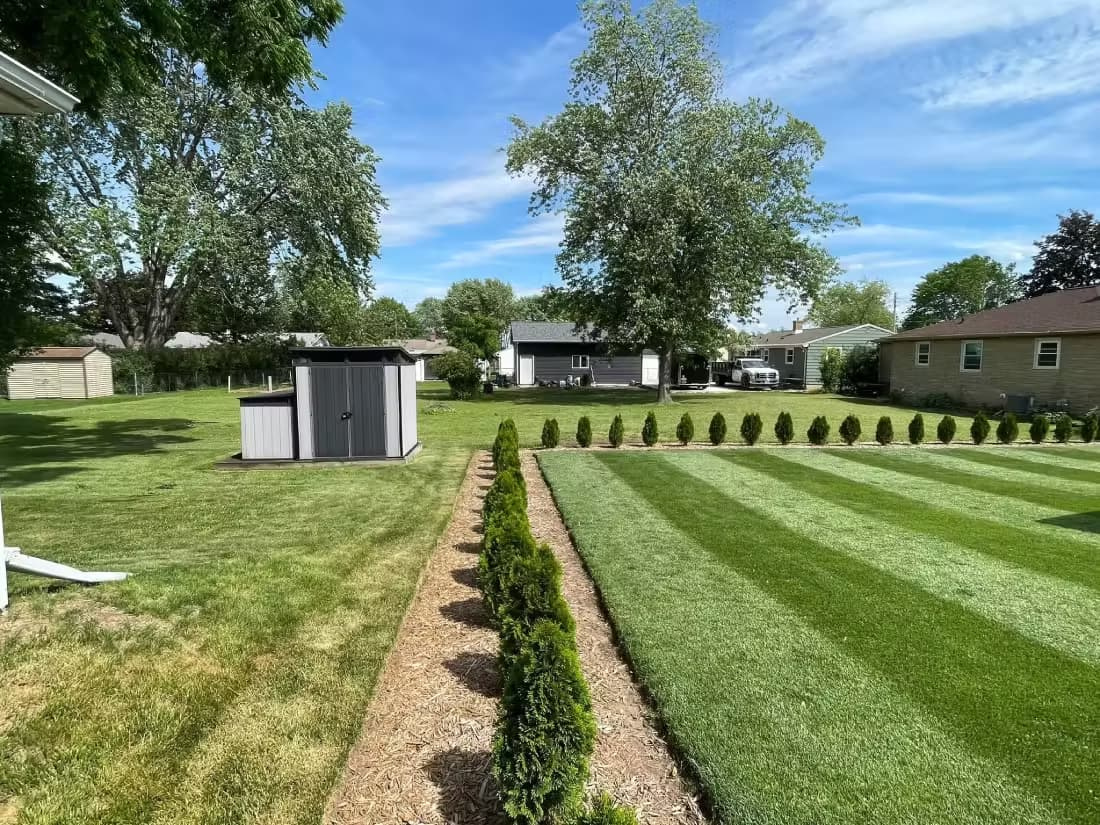
How to Kill Weeds Where Two Lawns Meet Without Harming Your Neighbor’s Grass
Controlling weeds along a shared property line is where good intentions quietly backfire—the season that's safe for your own lawn is often the season the lawn next door is most easily harmed. Learn the seasonal timing collision behind most fence-line damage, and the two habits that prevent it—reading what's actually in the bottle and spraying directed instead of broadcast—so you can clear the weeds without hurting your grass, your neighbor's, or the peace between you.
Read Article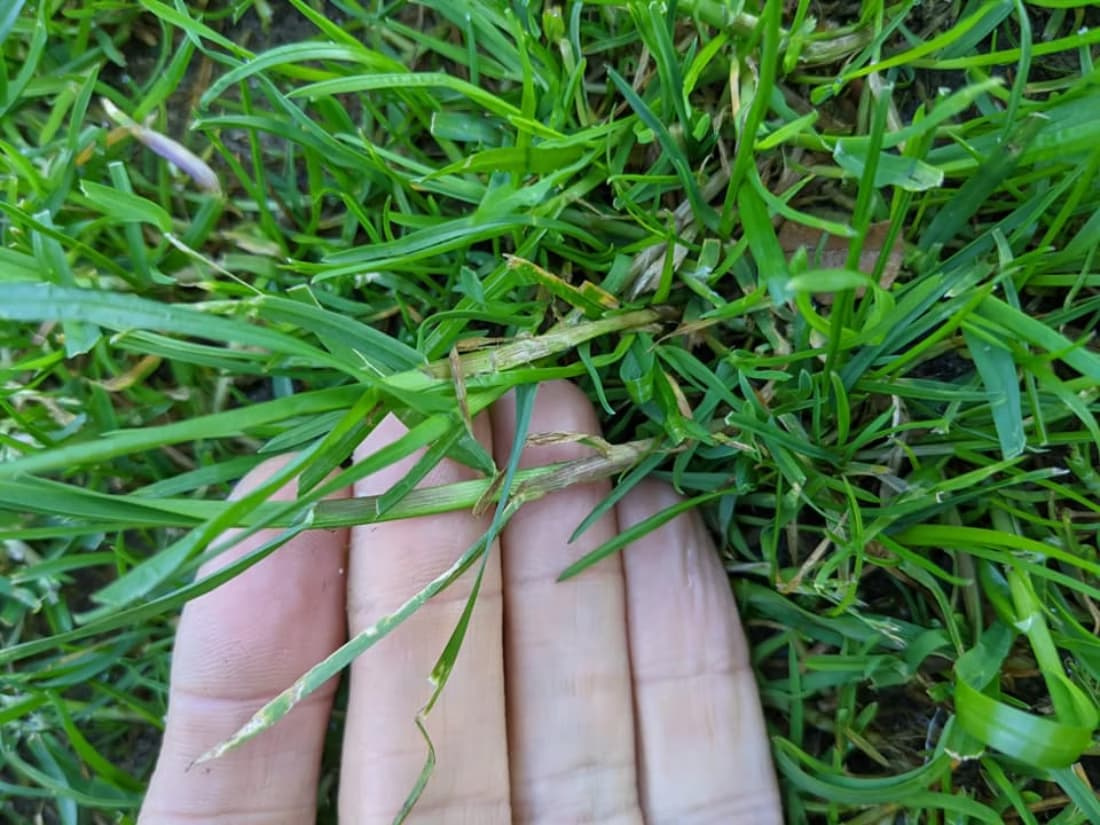
The Truth About One-and-Done Weed Control
Most homeowners lose the fight against weeds not because they work too little, but because they act before they understand. One-and-done weed control is real — but it only works when identification, timing, and the right tool all line up. This guide explains how that sequence works across your lawn and your ornamental beds, and how each weed page in the MFY hub puts it into practice for your specific invader.
Read Article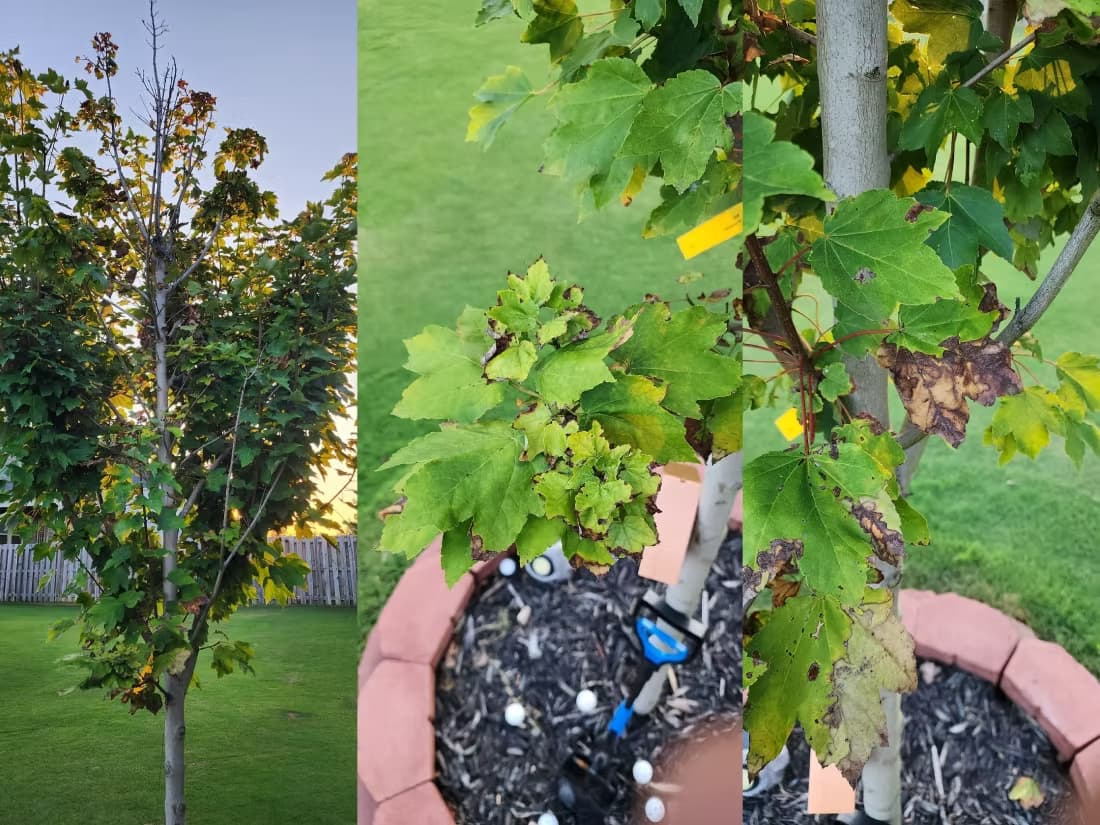
Solving the Mystery of the False Evidence in Your Lawn and Landscape
A brown leaf or a yellowing lawn is rarely what it seems. When symptoms act as decoys, a calm, forensic approach brings clarity to the confusion. Learn how to look past the surface to find the quiet truth of what your plants are truly asking for.
Read Article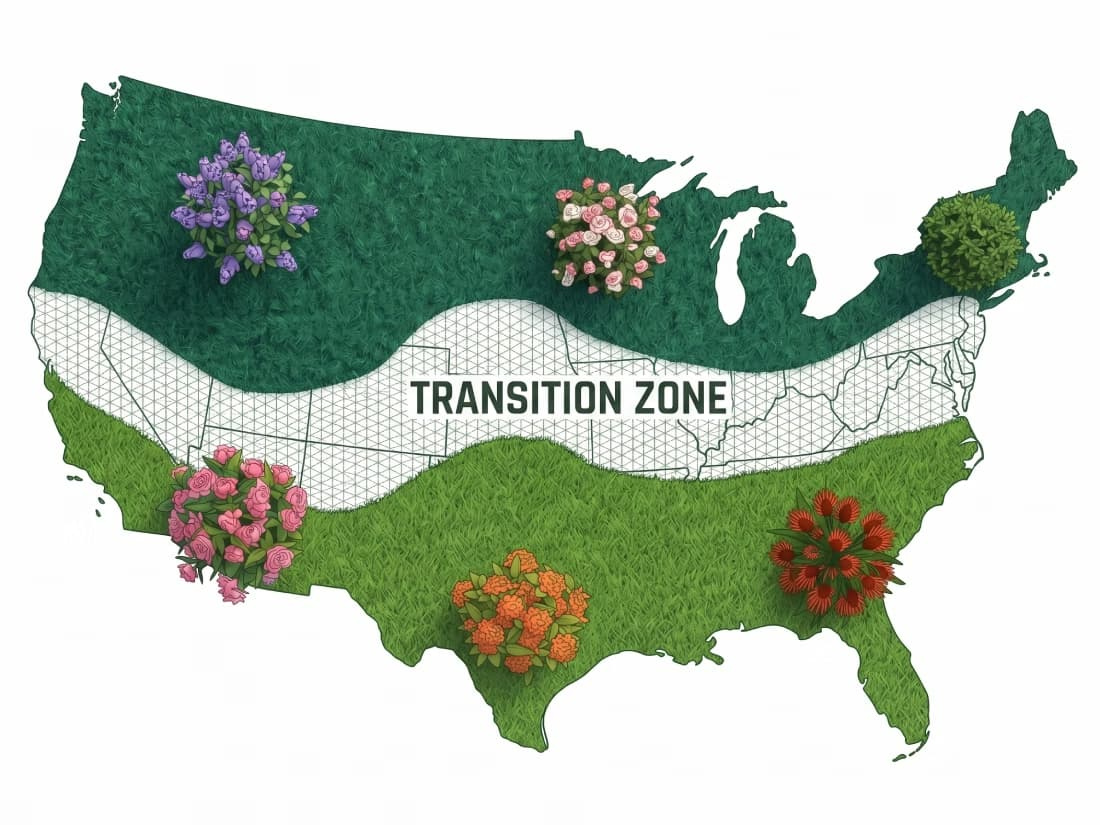
Living in the Middle: The Deep-Dive Guide to Transition Zone Lawns and Landscapes
The Transition Zone is a biological tug-of-war where neither northern nor southern species perfectly adapt. By using resilient "bridge" species and mastering maintenance levers like the Mowing Pivot, you can transform a struggling yard into a healthy landscape.
Read Article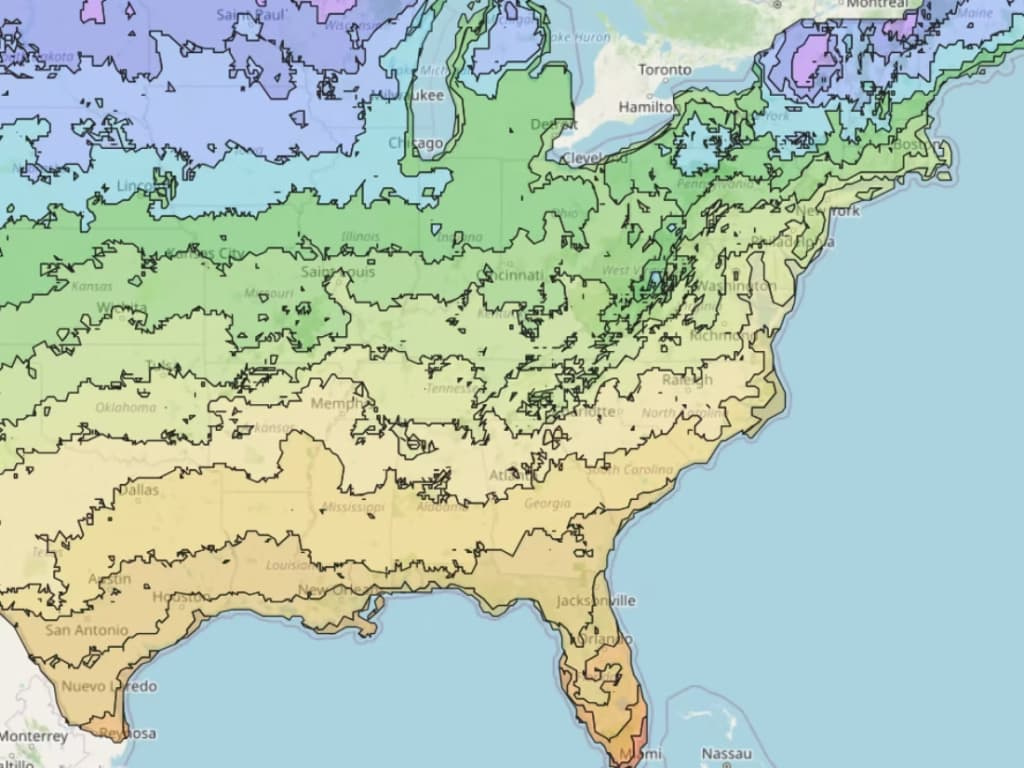
What Your Hardiness Zone Really Means for Your Lawn and Plants
Uncover the foundation of a resilient landscape by mastering the science of hardiness zones. Learn how these climate boundaries are calculated and why understanding your local temperature limits is the first step toward choosing plants that thrive year after year.
Read ArticleFrequently Asked Questions
Our maintenance and establishment guidance is derived from long-term agronomic field studies and turfgrass performance data from top research institutions.
No, and the difference matters. Patch kits usually contain annual ryegrass, a different species that germinates fast, looks fine for a season, and then dies out its first summer, leaving bare soil and weeds behind. Perennial ryegrass is a permanent lawn grass in the right climate. You can tell them apart in the ground: annual ryegrass has rolled leaves in the bud and long claw-like auricles that clasp the stem, while perennial ryegrass has flat-folded leaves and small blunt ones.
You can, and extension does not recommend it for home lawns. Pure stands are reserved for sports turf, where the wear tolerance is worth the trade. The problem is that ryegrass cannot spread sideways, so a pure stand has no way to close a bare spot — every patch you lose to traffic, drought, or disease stays lost until you seed it. Mixing it into Kentucky bluegrass at 5 to 10 percent gives you the fast cover and the wear tolerance while a rhizome-spreading partner does the healing.
The ryegrass got a head start and never gave it back. It germinates in 5 to 10 days; bluegrass takes 14 to 21 or more. By the time bluegrass seedlings appear, the ryegrass has closed a canopy over them, and seedlings that come up in shade stay small. This is not about seed size — in a 20 percent ryegrass mix, only about one seed in forty is actually ryegrass. It is entirely about timing. Wisconsin and Purdue trials found a 20 percent mix by weight down to as little as 21 percent bluegrass cover a year later, which is why the cap exists.
Almost certainly not. Ryegrass leaves are unusually fibrous, and a dull mower blade tears them instead of cutting. The frayed tips wither within a day and cast a gray-white haze over the whole lawn. Sharpen the blade — four to six times a season on this grass — and the next cut will look normal. It is worth fixing beyond appearance, because every torn tip is an open wound where fungus can get in.
Assume dead and act accordingly, because this grass does not have a safe dormancy. Kentucky bluegrass can turn straw-colored, shut down, and green up when rain returns. Perennial ryegrass has no such mode — it stays green until the roots run dry and then the crowns die. Three to four weeks of hot, dry weather without irrigation is usually enough. The way to avoid the question is to water through: even during an imposed dry spell, a quarter to a half inch every two to three weeks keeps the crowns alive.
On a ryegrass-dominant lawn, yes, and it is better to think of it as mowing rather than as repair. The plant has no rhizomes or stolons, so it physically cannot fill a gap. Every year, traffic and weather take a little out of the stand, and without overseeding the lawn thins in one direction only until weeds have somewhere to land. Fall, after aeration, is the window.
It is seed carrying a harmless internal fungus that makes the plant toxic to surface-feeding insects — billbugs, sod webworms, chinch bugs, cutworms — with no insecticide involved. It also roots slightly deeper, which buys a little heat and drought tolerance and lowers the nitrogen requirement. Two limits are worth knowing before you pay for it. It does nothing against root-feeding white grubs, and the endophyte dies in hot storage, so check that the seed test date is under about nine months or you are buying nothing. One hard rule: never use it in a pasture or paddock, because the same compounds cause a neurological condition called ryegrass staggers in grazing horses and livestock.
Not as a permanent lawn, and the reason is a specific disease rather than the heat itself. Gray leaf spot needs hot, humid weather and about nine hours of continuous leaf wetness, and in that band it can take a healthy stand to bare ground in days. Extension in the transition zone will tell you to keep ryegrass under 20 percent of a mix and let tall fescue or bluegrass carry the lawn through summer. If you do use it there, buy only gray-leaf-spot-resistant material and water in the early morning so the canopy dries fast.
Scientific Authority
This profile is grounded in turfgrass agronomy and soil science. Every recommendation—from irrigation requirements to nutrient management—is verified against agricultural research data to ensure optimal plant health and environmental sustainability in the Transition Zone.
Primary Resources
- NC State Extension TurfFiles: Perennial Ryegrass Profile
- NC State Extension TurfFiles: Kentucky Bluegrass Profile
- Oregon State University Extension: Endophyte Toxins in Grass (EM 9156)
- USDA Forest Service FEIS: Lolium perenne Subsp. perenne
- USDA-NRCS Plant Fact Sheet: Perennial Ryegrass, Lolium perenne L. (Northeast Plant Materials Program)
- USDA-NRCS Idaho Plant Materials Technical Note: Perennial Ryegrass for Irrigated Pasture in the Intermountain West
- Oregon State University Turfgrass Program: Perennial Ryegrass, Lolium perenne L. Breeding Timeline
- Rutgers, New Jersey Agricultural Experiment Station: Turfgrass Breeding Program History & Central Park Collection
- Clemson Cooperative Extension: Home & Garden Information Center — Overseeding With Ryegrass
- University of Georgia Extension (CAES): Fall Turfgrass Interseeding and Overseeding
- University of Kentucky Forage Extension: Perennial Ryegrass
- Alaska Center for Conservation Science: Invasiveness Ranking, Lolium perenne (University of Alaska Anchorage)
- Rutgers Cooperative Extension: Fact Sheet FS555
- Rutgers Cooperative Extension: Fact Sheet FS684
- Purdue University Turfgrass Science & University of Wisconsin: Blend Trials & Winterkill Data
- Penn State Extension & University of Missouri Extension: Gray Leaf Spot Geographic Analysis
- Virginia Tech Cooperative Extension: Fall-Weighted Fertilization Program & Winter Color
- University of Minnesota Extension & Iowa State University Extension: Northern Winterkill & Zone 3a Cold Edge
- University of Tennessee Extension: W160-E (Turfgrass Seed Count Data)
- National Turfgrass Evaluation Program (NTEP): Perennial Ryegrass Trials
- University of Massachusetts Extension: Endophyte Heat & Drought Performance Studies