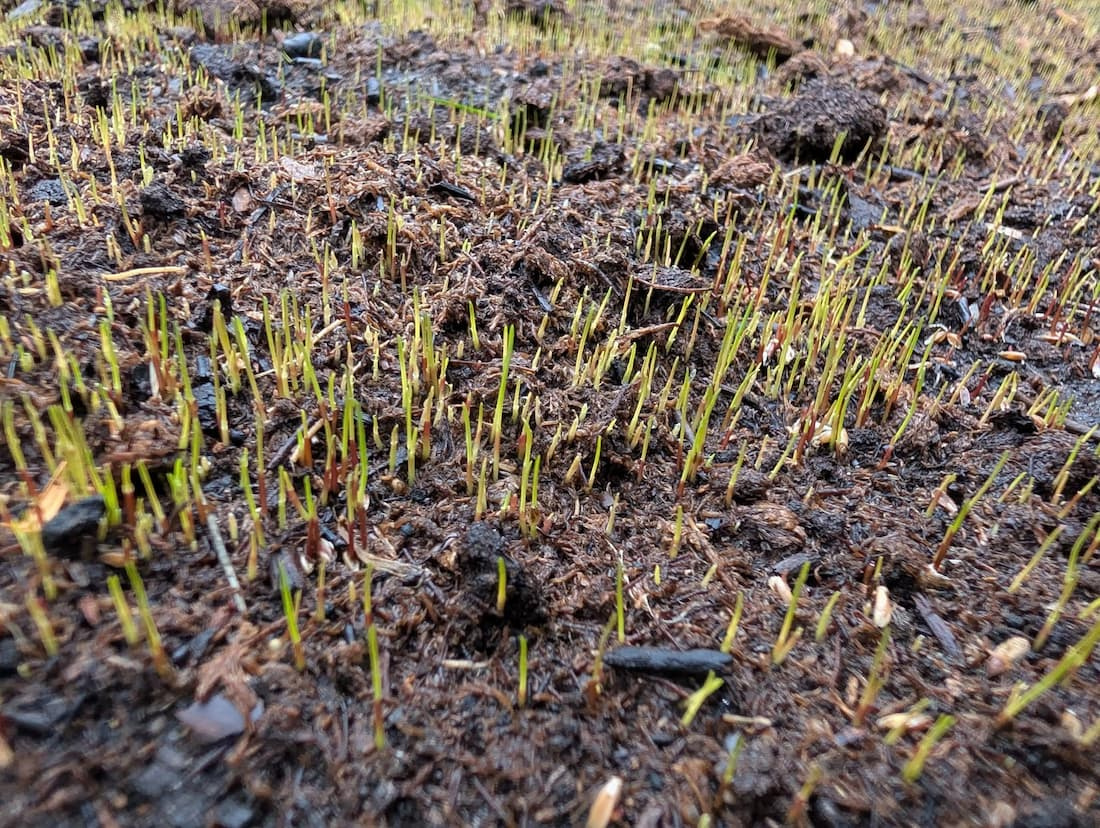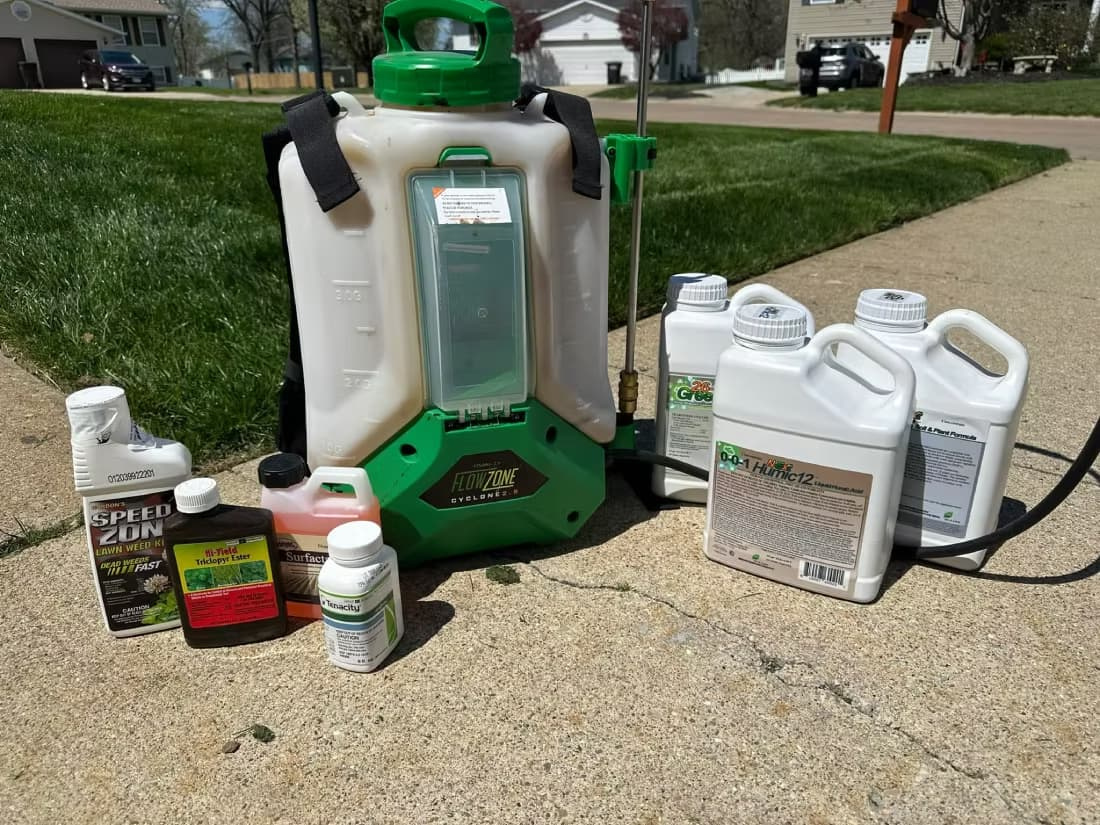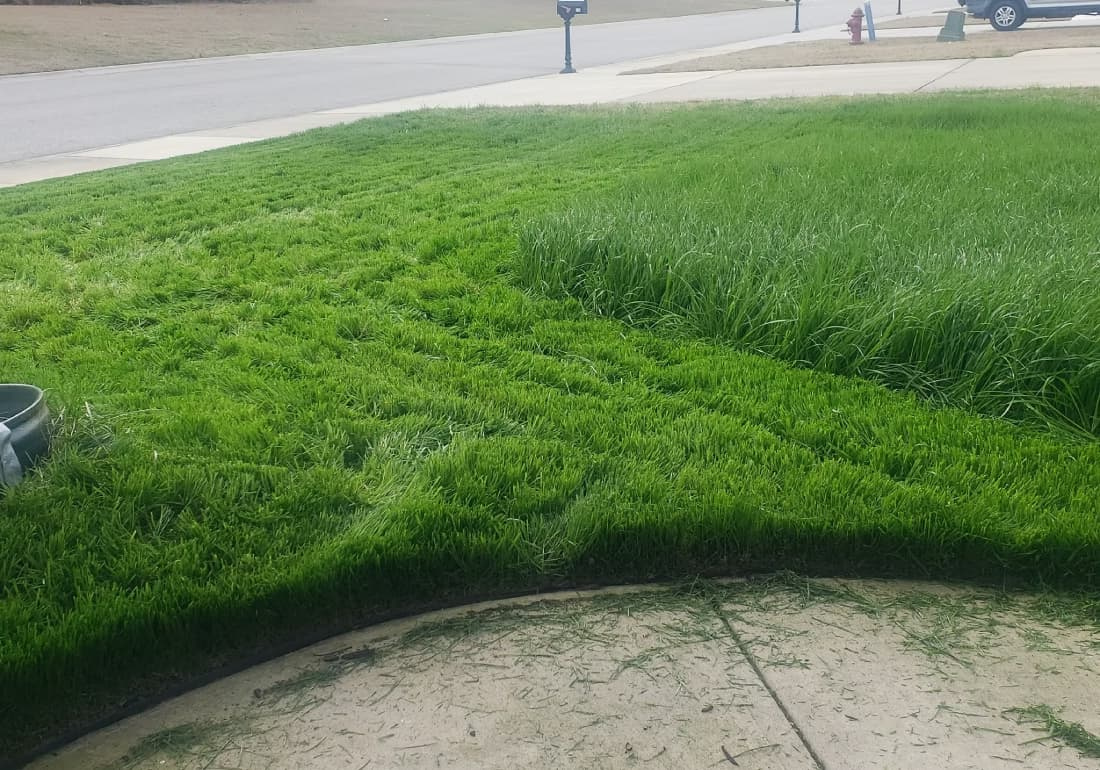
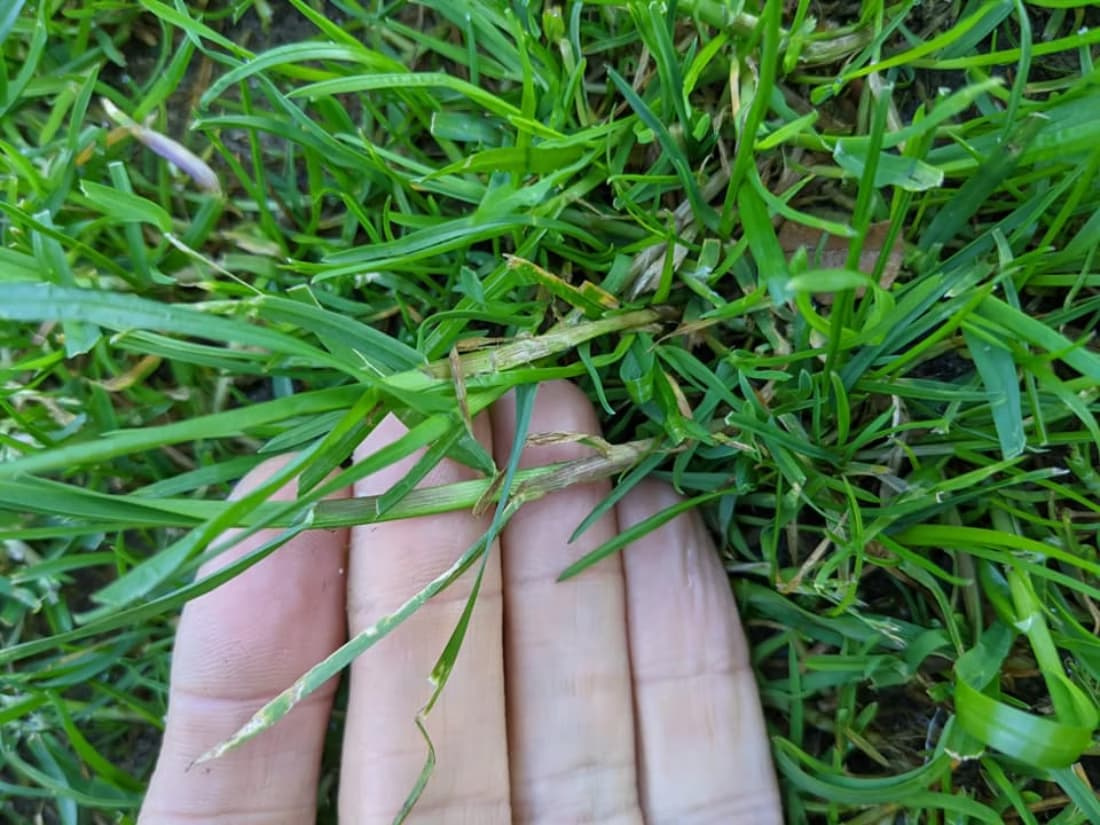
“I’ve been spraying the hell out of these for weeks and they won’t die. I dumped a bunch of stuff all over the yard and the weeds are thriving but my fescue looks fried. For every one I knock down, five more come up in its spot. I cleared a huge patch and now it’s 100% crabgrass and clover. It’s a pointless, depressing pastime.”
That is not bad luck. That is a methodology problem. Every one of those failures follows a predictable biological logic — and every one of them is preventable once you understand what that logic is.
The MFY Rule: Identify First, Then Act Once
Before you touch a product, identify the weed precisely — its plant family, its life cycle, and whether you are dealing with it in turf, in a bed, or both. That one step determines everything that follows: which chemistry works, when to apply it, whether pulling helps or actively makes the problem worse, and whether your situation calls for a single well-timed treatment or a multi-season program.
The homeowners who solve weed problems permanently are not the ones who buy the strongest product. They are the ones who spend five minutes identifying correctly — then act once, at exactly the right moment, with exactly the right tool for the right environment.
Every weed page in the MFY Weed Hub is built around this exact sequence. Identification first. Zone-specific timing second. The correct control method for your specific situation — lawn, bed, or both — third. This guide explains the methodology. Your individual weed pages handle the execution.
Table of Contents
The Biology of Why Weeds Win
Weeds do not win because they are stronger than your grass or tougher than your shrubs. They win because they are opportunists — and most homeowners hand them the opportunity by acting on a symptom rather than a cause.
The first thing to understand is that “weed” is not a plant family. It is a category of convenience that groups together hundreds of completely unrelated species. A selective broadleaf herbicide that eliminates a Dandelion is biochemically inert against a grassy weed, because grasses and broadleaf plants have fundamentally different internal target sites. The same spray that controls a broadleaf weed in your lawn does nothing to Yellow Nutsedge — because nutsedge is not even a grass, it is a sedge, and sedges require a completely different class of chemistry. Apply the wrong product to the wrong plant family and you do not get a partial result. You get nothing, with the added cost of whatever you spent.
The second thing to understand is the difference between what a weed shows above ground and what it is doing below it. Two weeds that look equally harmless in a bed or a lawn can have completely different underground survival systems. A shallow-rooted annual comes out cleanly in your hand. A rhizomatous perennial responds to being pulled by triggering a biological multiplication event — every fragment left in the soil becomes a new plant. Knowing which you are dealing with is not just useful information. It is the difference between solving the problem and doubling it.
Weeds have predictable biological weaknesses. Every species has a vulnerability window — a specific growth stage, soil temperature, or point in its seasonal cycle where the right intervention closes the case. Everything in this guide is built around finding and exploiting that window, whether the weed is in your turf or in your ornamental beds.
Zone and Season — Your First Two Filters
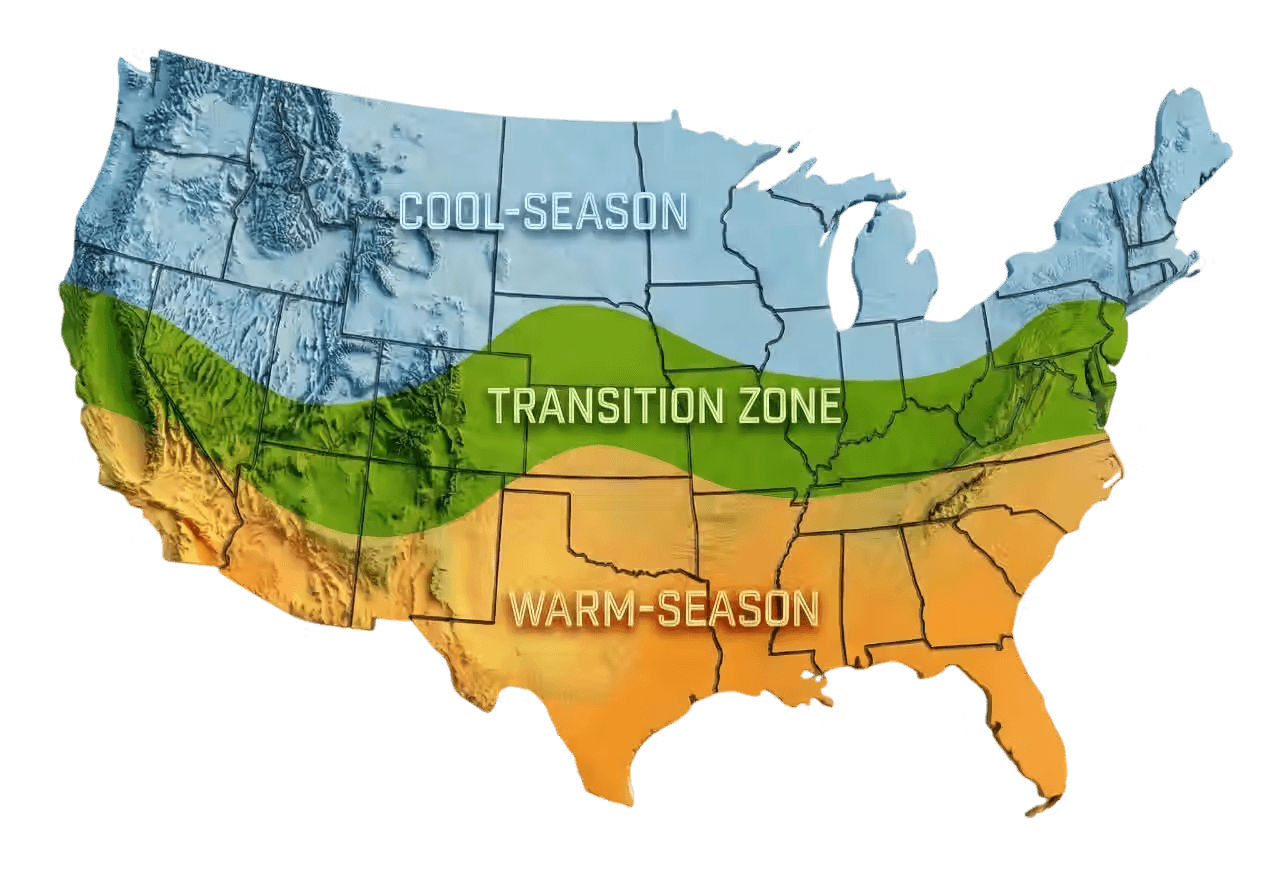
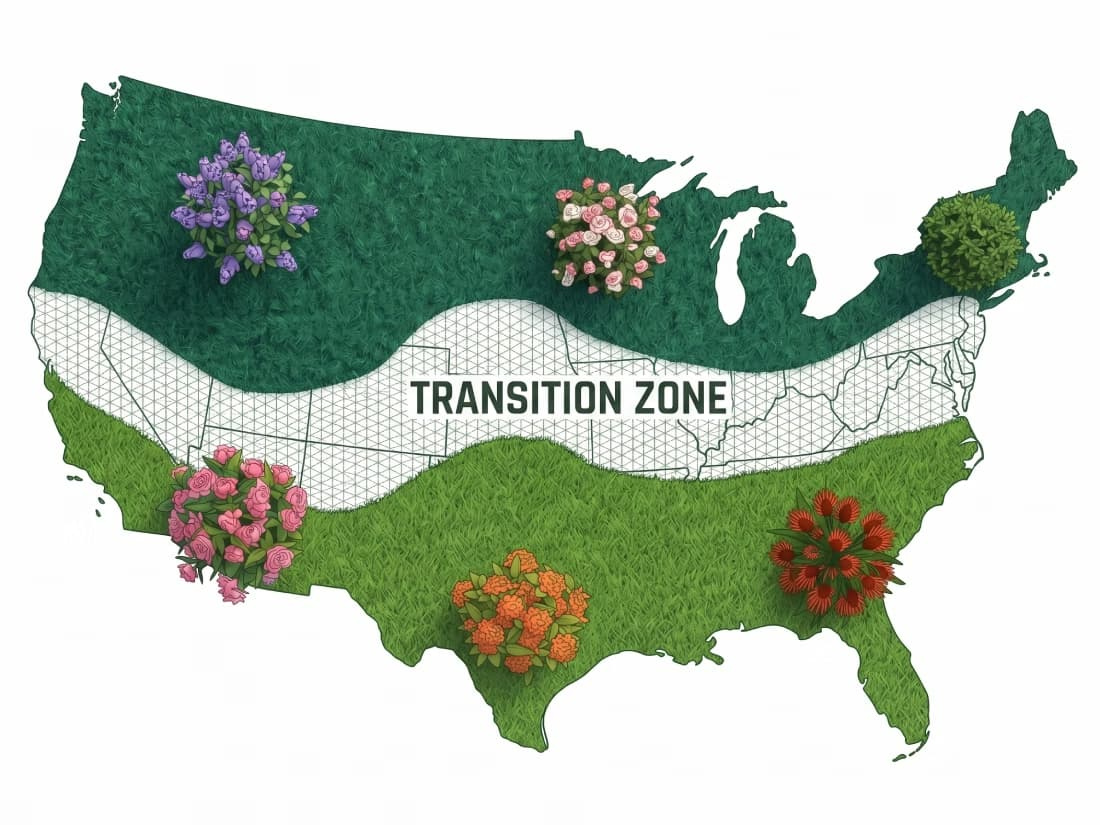
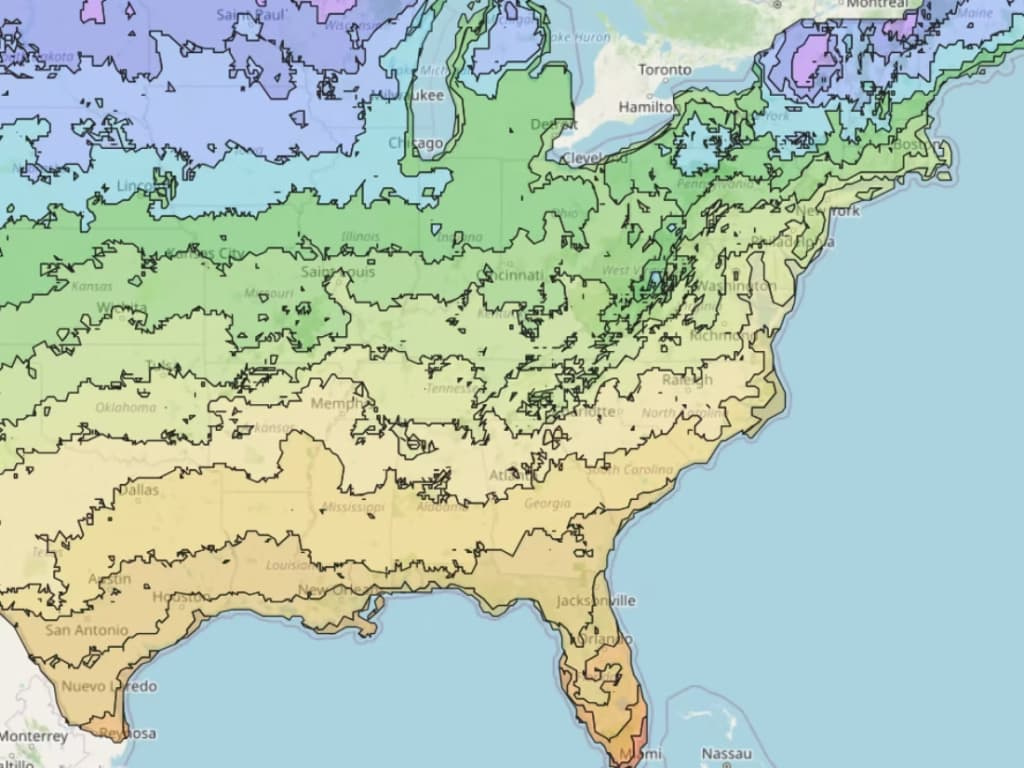
Before you inspect a single plant, apply two filters: where you are, and when it is. Your climate zone determines which weeds are biologically active in your yard right now. The season determines whether a given treatment is still possible, already too late, or not yet relevant. Together, these two variables eliminate most of the guesswork before you ever open a product.
Cool-Season Zone — Northern tier: Pennsylvania, Michigan, Ohio, Minnesota, and similar
Turf here is primarily tall fescue, Kentucky bluegrass, and perennial ryegrass — grasses that thrive at 60°F to 75°F and go semi-dormant in summer heat. The primary weed threats are summer annuals like Crabgrass that germinate in warming spring soil, and cool-season winter annuals like Henbit that germinate in late summer and overwinter as seedlings.
Warm-Season Zone — Southern tier: Florida, Georgia, Texas, Gulf Coast, and similar
Turf here is bermudagrass, zoysiagrass, St. Augustinegrass, and centipedegrass — grasses that thrive at 80°F to 95°F and go dormant in winter. That winter dormancy creates an open window for cool-season weeds that exploits the gap before the turf canopy closes back in spring. Annual Bluegrass (Poa annua) is the classic example — a weed that thrives in the exact conditions when warm-season turf is most vulnerable.
Transition Zone — Virginia, Missouri, Kansas, Kentucky, the Carolinas inland, and similar
Neither cool-season nor warm-season turf thrives year-round here, which makes this the most complex zone for weed management. A specific autumn conflict: fall pre-emergents that block winter annual weeds also prevent overseeding with cool-season grasses at the same time. There is no universal answer to that trade-off — it depends on whether weed prevention or turf renovation is the priority in a given year.
One more variable worth keeping in mind: two properties in the same county can have soil temperatures that differ by two weeks or more in spring, depending on slope, shade, and proximity to concrete or pavement. Weed management runs on soil temperature, not the calendar. A pre-emergent applied on the right date but the wrong soil temperature is a pre-emergent that does not work. The same principle applies in ornamental beds — a bed against a south-facing brick wall will hit germination thresholds weeks earlier than a shaded north-facing bed on the same property.
Step 1 — Identify Before You Act
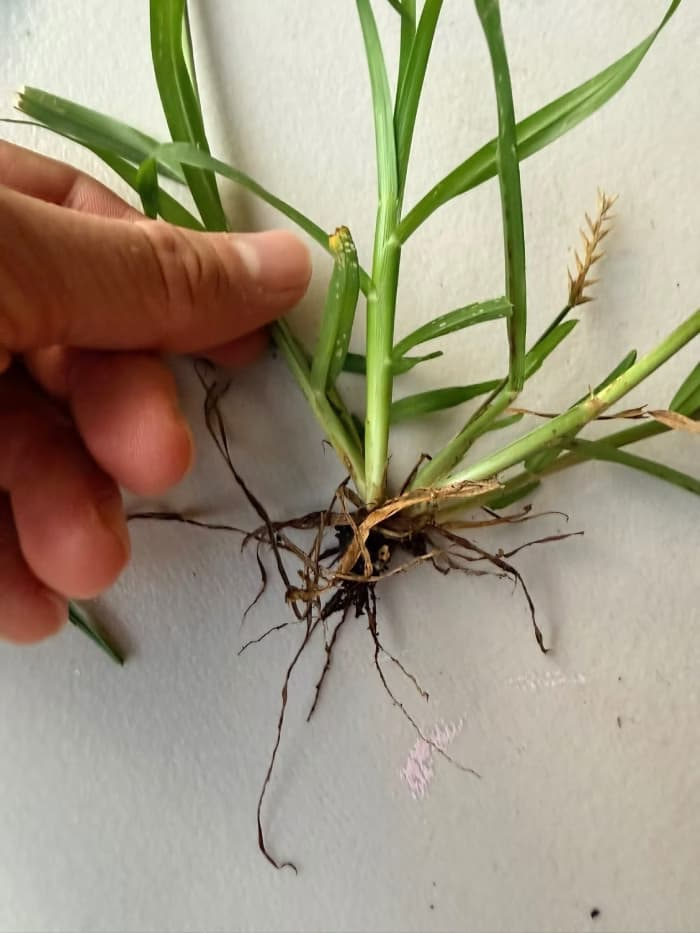
Identification is not a preliminary step. It is the step that determines whether every action that follows works or fails entirely.
The most important split is at the plant family level. True grasses — including Goosegrass and Quackgrass — have round or flattened hollow stems and require graminicide chemistry. Sedges, like Yellow Nutsedge, have a distinctly solid triangular stem — “sedges have edges” is the field mnemonic — and require ALS inhibitors that have no effect on grasses or broadleaf plants. Everything else falls under broadleaf weeds, which respond to selective broadleaf herbicides, though the specific chemistry still varies within the group.
Within those families, look-alike species are where most homeowners lose multiple seasons. Creeping Charlie (Ground Ivy) and White Clover can look similar in a bed or a lawn at first glance, but they require different chemistry, different timing, and different approaches to mechanical control. Goosegrass germinates three to four weeks later than Crabgrass and is naturally resistant to the dinitroaniline class of pre-emergents — the exact chemistry in most standard crabgrass prevention products. If your pre-emergent program worked last year and is not working this year, the first question is whether you are still dealing with the same weed.
In ornamental beds, misidentification carries an additional cost. The wrong herbicide choice in turf means the weed survives. The wrong herbicide choice near ornamentals means the weed survives and your prized plants suffer alongside it. Identification before action matters in both environments — the consequences of getting it wrong are just different.
Each weed page in the MFY hub opens with a structured identification section: photographs at multiple growth stages, the key features that separate it from its closest look-alikes, and the specific field characteristics that confirm the species before any treatment decision is made.
Step 2 — Timing Is the Primary Weapon
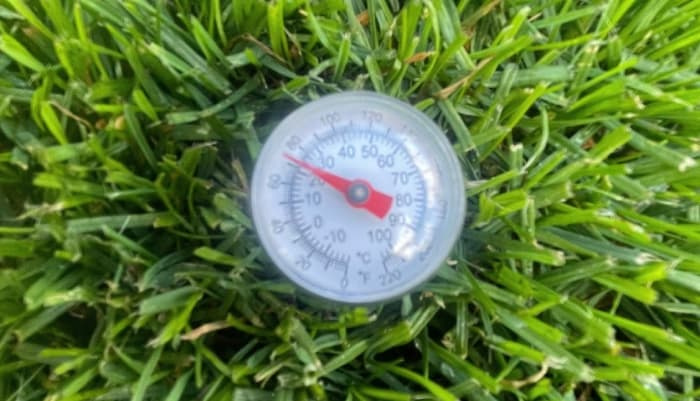
If identification determines which tool you reach for, timing determines whether that tool works. The most precisely identified weed, treated with the exact right chemistry, survives the encounter if the application misses its biological window.
Pre-Emergent Timing — The Barrier That Must Exist Before the Weed Does
Pre-emergence herbicides create a thin chemical barrier in the top layer of the soil. Germinating weed seedlings absorb it as they emerge, halting cell division before they ever reach the surface. Once a seed has germinated and pushed its root system below that barrier, the pre-emergent is completely bypassed. There is no partial credit for late application — only a more difficult post-emergent response that costs more product, more precision, and more time.
In turf, the pre-emergent is applied broadcast and watered in. In ornamental beds, the approach is different: the product is applied to the soil surface beneath the mulch layer, which itself acts as the first physical barrier by blocking the light that many weed seeds need to germinate. The timing trigger — soil temperature — is the same in both environments. The application method is not.
Below are the regional timing windows for each zone. Soil temperature is the trigger in every case, not the date on the calendar.
Spring pre-emergents (summer annual weeds — Crabgrass, Goosegrass)
Apply when soil reaches 50°F to 55°F at a 1-inch depth for five consecutive days. In the southern tier of the cool-season zone — Pennsylvania, Ohio, Indiana — this typically falls between mid-April and early May. In northern areas and shaded microclimates, it shifts to late May or even early June. Michigan’s GDD-based tracking targets crabgrass pre-emergents at 50 to 65 growing degree days (base 50°F), which correlates with forsythia petal drop as a rough landscape indicator.
Goosegrass note
Goosegrass germinates at 62°F to 65°F — three to four weeks after crabgrass in the same location. If your target is Goosegrass specifically, apply a second pre-emergent at that later threshold, or use a product labeled for both species at initial application.
Fall pre-emergents (winter annual weeds — Poa annua, Henbit, Common Chickweed)
Apply when soil temperature drops back below 70°F in late summer, typically early to mid-September in most of this zone. This is the window that controls the cool-season annuals that germinate in autumn, overwinter as seedlings, and become a visible problem the following spring. Missing this window means dealing with them post-emergently in February or March at the earliest.
Post-emergent broadleaf herbicides
Mid-September through early November is the most effective window for perennial broadleaf control — dandelion, plantain, clover — because the plants are actively translocating energy reserves downward into their root systems, carrying systemic chemistry with them. Spring applications work but are less efficient.
Spring pre-emergents (summer annual weeds)
Pre-emergent timing here arrives significantly earlier than in the North. In Florida and the Gulf Coast, target soil temperature of 65°F, which typically arrives around March 1. In coastal North Carolina and the Georgia Piedmont, the window opens in late January to mid-February. Applying at the correct soil temperature is especially critical in warm-season zones because turf green-up and weed germination often happen within a narrow two-to-three-week window that does not tolerate late applications.
Warm-season turf caution
Post-emergence broadleaf herbicides must not be applied to warm-season grasses until they are fully green and actively growing. Application during spring green-up — even when most of the lawn looks recovered — causes severe phytotoxicity on turf that is still transitioning. Patience here costs nothing. Premature treatment can set the lawn back significantly.
Fall pre-emergents (winter annual weeds — Poa annua, Henbit, Chickweed)
The autumn window opens when soil cools back to 70°F — around October 1 in central Florida, late September along the Carolinas coast. This is the most important pre-emergent window in warm-season zones because winter annuals exploit the period when warm-season turf is dormant and the canopy is open. A missed fall pre-emergent in a bermudagrass or zoysiagrass lawn often results in a lawn that is more weed than grass by February.
In ornamental beds
The same fall window applies to beds, but the mulch layer changes the calculation. Two to four inches of organic mulch significantly slows soil cooling in autumn, meaning the bed soil may reach the 70°F threshold one to two weeks later than adjacent turf. Monitor soil temperature at the bed surface, not the lawn surface, when timing fall bed pre-emergents.
Spring pre-emergents
The transition zone spans a wide range of elevation and latitude, creating meaningful timing variation even within the zone. Southern and coastal areas — northern Virginia, coastal North Carolina, southern Missouri — target mid-February to mid-March. Northern and higher-elevation areas — central Missouri, western Maryland, southern Illinois — shift to late March through mid-April. A soil thermometer is not optional here. The between-season volatility of this zone means calendar-based timing fails more often than in either adjacent zone.
The autumn conflict
This is the most consequential timing problem unique to the transition zone: fall pre-emergents that block winter annual weeds (Poa annua, Henbit, Chickweed) also prevent overseeding with desirable cool-season grasses at exactly the same time. A homeowner who applies prodiamine in September to stop Poa annua has also prevented their tall fescue overseed from germinating. There is no chemistry that distinguishes between weed seed and desired seed in the same application. The choice between weed prevention and turf renovation in any given autumn must be made deliberately, based on which problem is the greater priority that year.
Warm-season turf in this zone
Bermudagrass and zoysiagrass lawns in the transition zone are particularly vulnerable to phytotoxicity from broadleaf herbicides applied before full spring green-up. The green-up point in this zone can vary by three to four weeks depending on winter severity and spring temperature patterns. Wait for complete, uniform green-up across the entire lawn — not just the south-facing areas — before any post-emergence broadleaf application.
In ornamental beds
The transition zone autumn conflict affects beds as well as turf. If you are overseeding a lawn adjacent to ornamental beds in the same autumn, pre-emergent timing for the beds and the lawn must be coordinated rather than treated as separate decisions. A pre-emergent applied to beds in September can create a chemical gradient in the soil that affects adjacent turf renovation.
Post-Emergent: The Window That Closes Fast
When the pre-emergent window is missed or a perennial weed is already established, post-emergence chemistry becomes the tool. Young weeds at two to four leaves have thin cuticles and high internal translocation rates — the chemical moves efficiently through the plant into the root system. As weeds mature past six inches and approach flowering, cuticle thickness increases and translocation slows. At the seed-set stage, even the maximum labeled rate of a correctly chosen herbicide may fail to achieve a kill. This is the biological reality behind every forum post that describes spraying mature Crabgrass in August and watching it “not even blink.” A Crabgrass plant in late August is already dying with the first frost and dropping thousands of seeds into the soil bank for next spring. The correct move at that point is not more product. It is to plan the pre-emergent program for the following year.
Step 3 — Pull It or Spray It
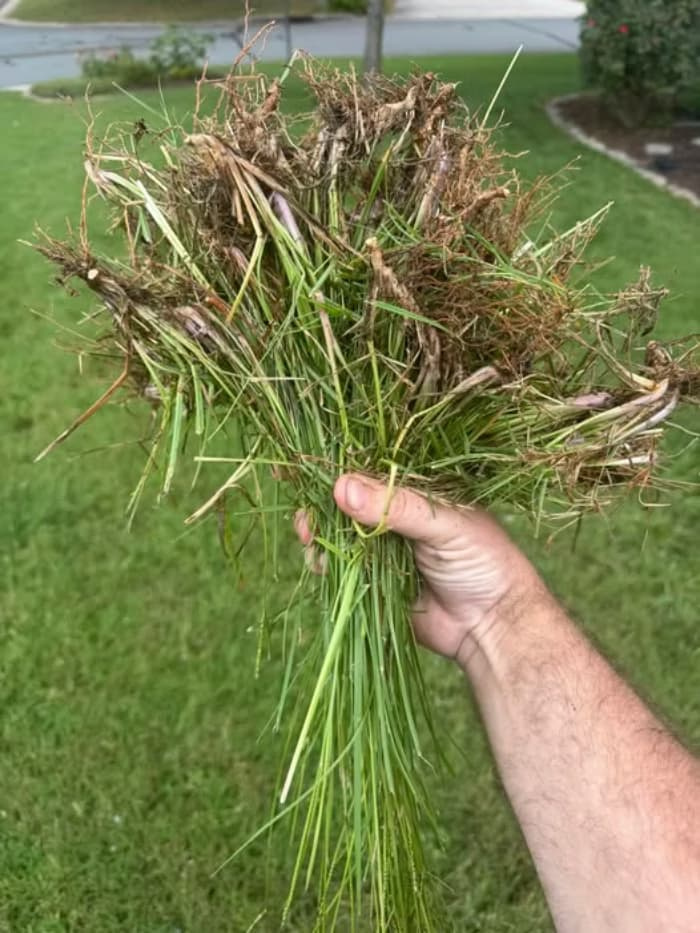
The instinct to hand-pull a weed is not wrong. For the right species, pulling is fast, free, and permanent. For the wrong species, pulling does not just fail — it triggers a biological survival response that multiplies the underground population from every fragment left behind.
When Pulling Works
Manual removal is effective for weeds that reproduce only by seed and have a taproot or shallow fibrous root system that comes out cleanly. Broadleaf Plantain pulls cleanly from moist soil before it sets seed. Common Purslane — a shallow-rooted summer annual — comes out easily but must be bagged and removed rather than left on the surface, as stem fragments re-root in warm, moist conditions. In beds especially, where soil is typically looser and less compacted than turf, shallow-rooted annuals often pull cleaner and more completely than they do from a lawn surface.
The rule applies in both environments: pull before flowering and seed set. A plant in flower is already producing seed. Timing mechanical control is no different from timing chemical control.
When Pulling Makes It Worse
Certain weeds evolved specifically to exploit mechanical disturbance. Pulling or digging them breaks a biological signal that keeps dormant underground buds suppressed, triggering a survival response that turns one plant into many.
Yellow Nutsedge
Underground rhizomes connect to basal bulbs, which connect to tubers containing up to seven viable buds each. Hand-pulling detaches the visible shoot but leaves the basal bulb and tuber network intact — and physiologically stimulated. A single tillage event scatters tubers across the bed, converting a localized patch into a widespread infestation. This weed is one of the clearest examples of why the same approach fails differently in a lawn versus a bed: in turf, the damage stays contained to the root zone. In a loose, cultivated bed, tillage spreads tubers further and faster. Control in both environments requires systemic ALS inhibitors applied to actively growing plants in the vegetative stage, not mechanical removal.
Creeping Charlie (Ground Ivy)
Spreads via above-ground stolons that can reach seven feet, rooting at every node. Pulling snaps the thin stems but leaves viable rooted nodes in the soil, each of which functions as an independent plant. This is true whether the weed is in turf or in a bed — the stolon fragments left behind after pulling regrow regardless of environment. Effective control requires triclopyr applied in late autumn when the plant is translocating carbohydrates downward, which carries the systemic chemistry into the stolon network. One autumn treatment suppresses meaningfully; elimination typically requires two to three seasons of correctly-timed applications combined with improving turf density or bed canopy cover to remove the shaded, moist conditions it prefers.
Wild Onion and Wild Garlic
Both reproduce from underground bulbs and bulblets. Pulling the visible top growth detaches cleanly from the bulb, which remains in the soil and sends up new growth — often more vigorously than before. Repeated pulling with no bulb extraction produces multi-year persistence with no reduction in population. The correct approach in both lawn and bed situations is post-emergence broadleaf herbicide applied in late winter to early spring during active growth, before the plants enter summer dormancy. Attempting to pull at any other time simply defers the problem to the following season.
Step 4 — Lawn vs. Bed: Same Weed, Different Battle
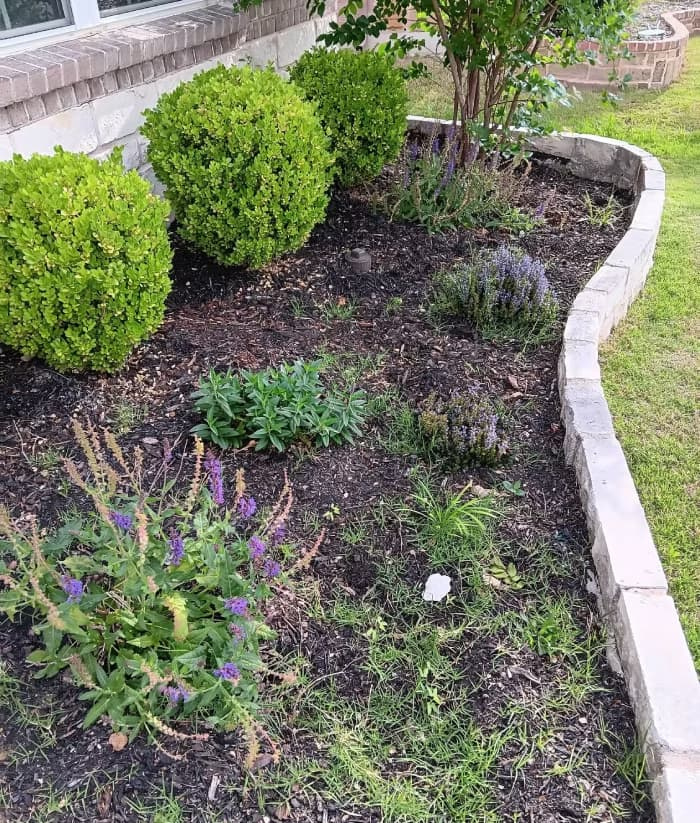
Every section above has noted, in passing, that the approach differs between turf and ornamental beds. This is the section that explains why — because the reason is rooted in plant biology, and understanding it prevents one of the most common and most damaging mistakes a homeowner can make.
Why Lawn Chemistry Kills Ornamentals
Turf is a monoculture of grasses — monocotyledonous plants. Selective broadleaf herbicides (2,4-D, MCPA, dicamba, MCPP) work by interrupting physiological pathways that exist only in dicotyledonous (broadleaf) plants, leaving grasses unharmed. That selectivity is precisely why they are so effective in a lawn.
In an ornamental bed, that same selectivity becomes the problem. Roses, broadleaf shrubs, perennial flowers, and trees are all dicots — the exact plant class these herbicides are designed to eliminate. Spray drift, root uptake through the soil, or even vapor from ester-based phenoxy formulations on hot days above 85°F can damage or kill prized ornamentals from a treatment that was only ever meant for the lawn. This is not a matter of being careful with the sprayer. Some products physically vaporize into a gas at high temperatures and drift independently of where they were sprayed. The ornamental damage appears as leaf cupping, twisting, and epinasty — days after the application, far from where the sprayer was ever pointed.
The Same Weed, Two Environments
Control approach by environment — Spotted Spurge as example
Spotted Spurge in turf is controlled pre-emergently with isoxaben or prodiamine applied at the correct soil temperature threshold, or post-emergently with selective broadleaf herbicides containing triclopyr or carfentrazone once the plant is visible. The broadcast application over turf is straightforward — the chemistry is safe on grasses and targets only broadleaf plants.
The lawn also benefits from a cultural advantage: a dense, well-maintained turf canopy physically blocks the light Spotted Spurge needs to germinate. Chemical control in a healthy lawn is often a backup to the canopy’s own competitive pressure, rather than the primary strategy.
In an ornamental bed, the selective broadleaf chemistry used in turf is not an option — it will damage or kill the broadleaf ornamentals the bed is built around. Pre-emergent isoxaben is safe for use around most established ornamentals and is applied to the soil surface beneath the mulch layer, where it creates the chemical barrier without contact with plant tissue above ground.
Post-emergent control in a bed requires either directed glyphosate applied with extreme precision to the Spurge foliage only — zero contact with ornamental stems, leaves, or green bark — or hand removal at the seedling stage before the plant establishes its taproot. The mulch layer provides the same germination-blocking benefit here as the turf canopy does in the lawn, which is why a two-to-four-inch mulch depth maintained consistently is one of the most effective weed management tools available in an ornamental bed.
Pre-Emergent Products by Site
| Product | Active Ingredient | Approved Site | Notes |
|---|---|---|---|
| Barricade / Cavalcade | Prodiamine | Lawns & Beds | Broad-spectrum grass and broadleaf control; do not apply over the top of ornamentals in flower |
| Gallery 75DF | Isoxaben | Lawns & Beds | Broadleaf weeds; safe around most established ornamentals; apply before germination |
| Snapshot 2.5TG | Trifluralin + Isoxaben | Landscape Beds only | Annual grasses and broadleaf weeds in beds and groundcovers; not for turf use |
| Freehand 1.75G | Dimethenamid-p + Pendimethalin | Beds & Groundcovers | Annual grasses, broadleafs, nutsedge suppression in landscape beds |
Each individual weed page in the MFY hub includes a dedicated lawn vs. bed control section that specifies which products and methods apply in each environment for that specific weed, so you are not cross-referencing label language under pressure when the weed is already established.
Step 5 — One Treatment or a Season Program?
“One-and-done” is worth defining precisely, because the version of it that circulates in forums and product marketing is a fantasy, and the version that actually exists is genuinely achievable — but only when the four preceding steps are correct.
The fantasy version is a single product application that permanently sterilizes a lawn or bed. That does not exist. What does exist: for the right weed, treated at exactly the right growth stage with the correct chemistry for the correct environment, one well-timed treatment can close the case for the season and significantly deplete the seedbank for future seasons. That is a real result. It just requires the sequence to be right first.
Simple annuals — Common Mallow, Prostrate Knotweed, Oxalis — reproduce only by seed and have no underground vegetative structures. Catch them at the right growth stage with the right chemistry and the population is gone. The seedbank takes a few seasons of consistent treatment to fully deplete, but the season’s visible problem is solved in one pass.
Perennials with underground reproductive systems are a different category. Canada Thistle requires sequential systemic applications timed to early bud stage in June and fall regrowth in September, repeated across two to three seasons, to exhaust the carbohydrate reserves in its deep creeping rhizome network. A single application achieves 50% to 90% temporary shoot suppression at best — which looks like success until the regrowth appears. Canada Thistle in a bed is a particular challenge because the rhizome network can extend under adjacent turf and re-invade the bed from below.
The individual weed pages tell you clearly which category your specific weed falls into, what the realistic treatment timeline looks like, and whether a one-season result is achievable or a multi-year program is the honest expectation.
The Second Layer — Resistance and Dose
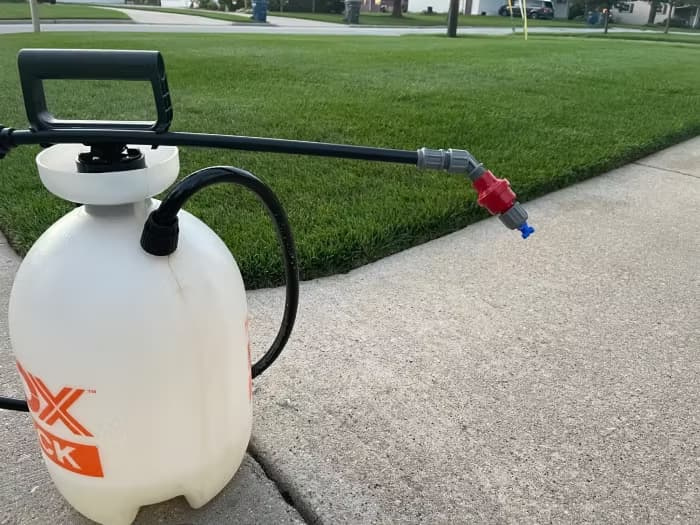
Two things quietly undermine even well-planned weed control programs: resistance and over-application. Both are worth understanding before they become a problem.
When the Same Product Stops Working
Herbicide resistance is a documented biological phenomenon, not a product defect. Every weed population contains rare individuals with a natural genetic mutation that allows them to survive a normally lethal dose. Under normal conditions, those individuals are insignificant. Under repeated selection pressure from the same herbicide chemistry, the susceptible individuals are eliminated and the resistant ones reproduce unchecked, eventually dominating the population. Annual Bluegrass populations in Florida and the Southeast have confirmed resistance to multiple pre-emergent classes — dinitroanilines, dithiopyr, and in some cases ALS inhibitors. If a program that worked reliably is losing effectiveness, the answer is rarely a higher rate. It is a different mode of action.
The solution is rotating herbicide modes of action — not rotating brand names. Two products with different names can share identical chemistry and provide no rotational benefit. A basic annual rotation: isoxaben one year (Group 21), prodiamine the next (Group 3), oxadiazon the third (Group 14). This applies equally in turf and in beds, and it is especially relevant in beds that receive the same pre-emergent product year after year without reassessment.
The Lowest Effective Dose
More product is not more effective. Correct timing reduces the dose required to achieve control — a young weed at the two-leaf stage requires significantly less chemistry than a mature plant at six inches. Over-application of dinitroaniline pre-emergents above labeled rates causes root pruning on established turf by inhibiting cell division in actively growing root tissue. The effect is worst on warm-season grasses recovering from winter dormancy — centipedegrass and St. Augustinegrass are particularly sensitive. In beds, over-application of pre-emergents near established ornamentals can cause root zone chemistry buildup that affects the plants you are trying to protect.
If turf health is uncertain in spring, the split-application protocol is a reasonable safeguard: apply 50% of the target pre-emergent rate in late February to early March, assess the turf’s recovery at eight to ten weeks, and apply the remaining 50% only if the turf is recovering normally.
Safety & Sensitivity Audit: Protecting Your Home and Environment
Before Any Application
Never spray above 85°F. Phenoxy herbicides — 2,4-D, dicamba, MCPA — volatilize above this temperature. The invisible vapor drifts with air currents and deposits on non-target plants across the property and beyond. The ornamental damage appears days later as leaf cupping, twisting, and dieback. Apply on calm mornings below 85°F with wind under 10 mph.
Never stack two untested treatments at once. If a post-emergent and a fertilizer are applied in the same week and something goes wrong, there is no way to identify the cause. Treat one variable at a time, observe the response over ten to fourteen days, then reassess.
Read the label for your specific turf or ornamental species. Some pre-emergents safe on bermudagrass are not labeled for centipedegrass. Some post-emergents safe on tall fescue are not safe on fine fescues. Some products safe around established broadleaf ornamentals are not safe around newly transplanted material. The label is not a formality — it is the primary source of species-specific safety data.
Environmental Sensitivity
Pre-emergents require half an inch of rainfall or irrigation within 24 to 48 hours to activate and move into the soil layer. Without activation, the product degrades on the surface before forming a barrier. In areas with heavy clay or near impermeable surfaces, significant rainfall shortly after application can carry dissolved herbicide toward storm drains or waterways. Do not apply within the labeled setback distance from water bodies, and avoid applications within 24 hours of a forecast heavy rain event.
When to Stop and Seek Help
Some situations are beyond the scope of homeowner tools: large-scale infestations of confirmed invasive species, suspected drift damage to a neighbor’s property, or any treatment requiring a restricted-use pesticide. Your local cooperative extension office can provide species-level identification confirmation, soil testing, and guidance on what options are available — and whether a licensed applicator is needed. It is a free resource, and the identification confirmation alone is often worth the call before investing in a treatment program.
Sources and Further Reading
- University of Florida IFAS — Weed Management Guide for Florida Lawns (ENH884)
- University of Florida IFAS — Florida Homeowner Herbicide Guide (ENH1311)
- University of Florida IFAS — Turfgrass Weed Science Lab
- Penn State Extension — Lawn and Turfgrass Weed Control
- Penn State Extension — Weed Identification and Control
- Purdue University — Turfgrass Weed Control for Professionals, 2024 (Open Access)
- Purdue University Turfgrass Science — Weed Control Resource Hub
- Purdue University Turfgrass Science — Homeowner Publications
- NC State Extension — TurfFiles
- NC State Extension — Pest Control for Professional Turfgrass Managers
- University of Georgia CAES — Georgia Turf
- Clemson University HGIC — Home and Garden Lawn Resources
- Texas A&M AgriLife Extension — Texas Turf
- UC IPM — Pest Management Guidelines: Landscape
- Ohio State University Extension (Ohioline) — Lawn Care
- University of Missouri Extension — Lawn and Garden
- Michigan State University Extension — Turfgrass Science