
Scientific Name: Festuca arundinacea Schreb. (syn. Schedonorus arundinaceus, Lolium arundinaceum)
Common Names: Tall fescue; turf-type tall fescue (TTTF); reed fescue; Kentucky fescue; alta fescue
Tall Fescue
The toughest cool-season grass for heat and drought — and the default answer across the transition zone.
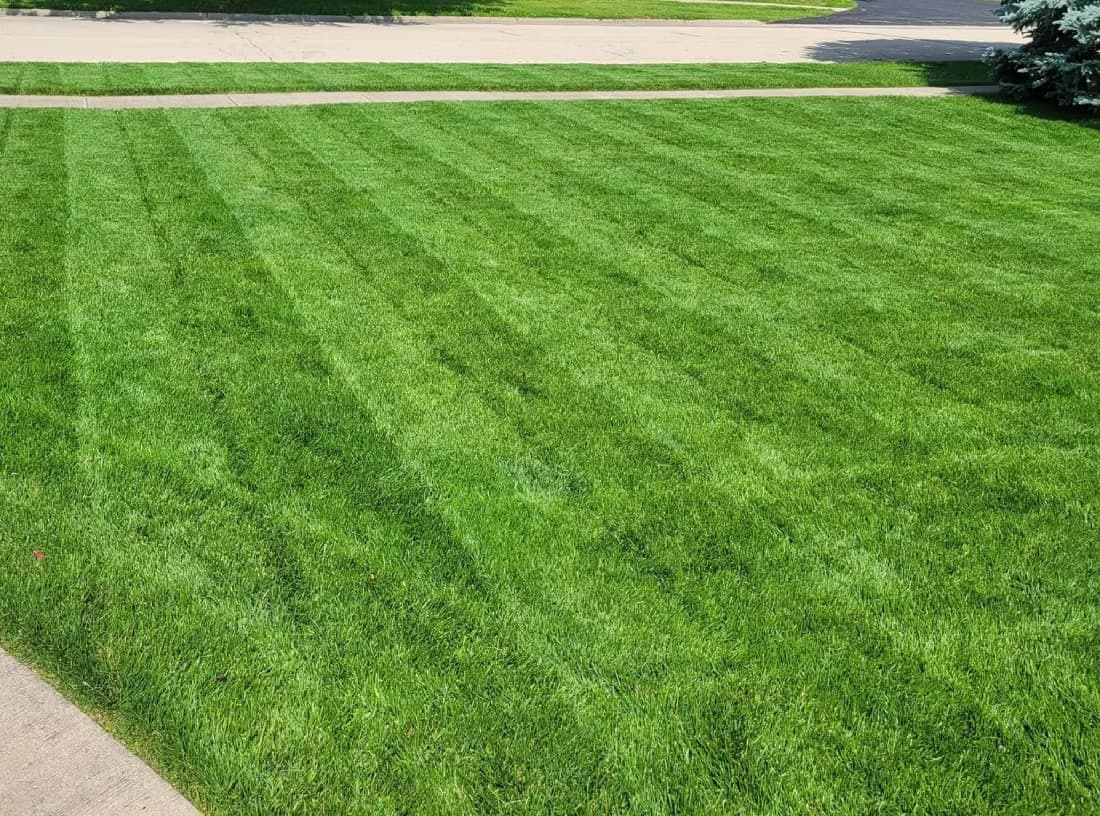
Tall Fescue At-a-Glance
Hardiness Zone Min
Zone 4
Water Requirement
Moderate
Sun Requirement
Tolerates Partial Shade
Wear Tolerance
High
Establishment Speed
Moderate
Labor Intensity
Moderate
From Kentucky Pasture To American Lawn
Tall fescue is native to Europe, western Asia, and North Africa. It arrived in America before 1800, and almost certainly by accident — as a stray contaminant in meadow fescue seed shipped over from England. For more than a century nobody noticed. It was recorded as meadow fescue, planted as meadow fescue, and not correctly identified as its own species until the 1950s.
The turning point was a detour. In 1931, University of Kentucky agronomist E. N. Fergus traveled to Menifee County to judge a sorghum syrup show and was invited to stop by the W. M. Suiter farm. On a steep hillside he found a thick stand of grass still green through a serious regional drought — grass that had been sitting there untended for over forty years. He carried a few pounds of seed back to the university.
It went into trial plots in 1932 and was released in 1943 as Kentucky 31. By the 1950s it was the most widely planted cool-season grass in the country. Today it covers roughly 35 million acres.
Two problems came with it. The first was livestock: a fungus living inside the plant — the same endophyte that made it so tough — produces alkaloids that sicken grazing cattle and horses, a condition Kentucky researchers pinned down as fescue toxicosis by the 1970s. The second problem is the one that matters to you. Kentucky 31 was selected for cows, not lawns. It is coarse, clumpy, and pale, and in a lawn it looks like a weed because it functionally is one.
The fix came in 1979, when the first improved turf-type tall fescue reached the market. Turf-types run up to a third finer in the blade and produce roughly three times the tillers, which is what turns a clumpy pasture grass into something that reads as a lawn. Then the 1988 Midwest drought sent homeowners hunting for grass that could stay green without irrigation, and tall fescue took off — by the early 1990s it had displaced Kentucky bluegrass as the dominant lawn grass in southern California.
Here is why the history is worth knowing: both versions are still on the shelf. The pasture grass from 1943 and the lawn grass from 1979 are the same species, sold in similar bags, and the cheap one is usually the wrong one.
Gallery
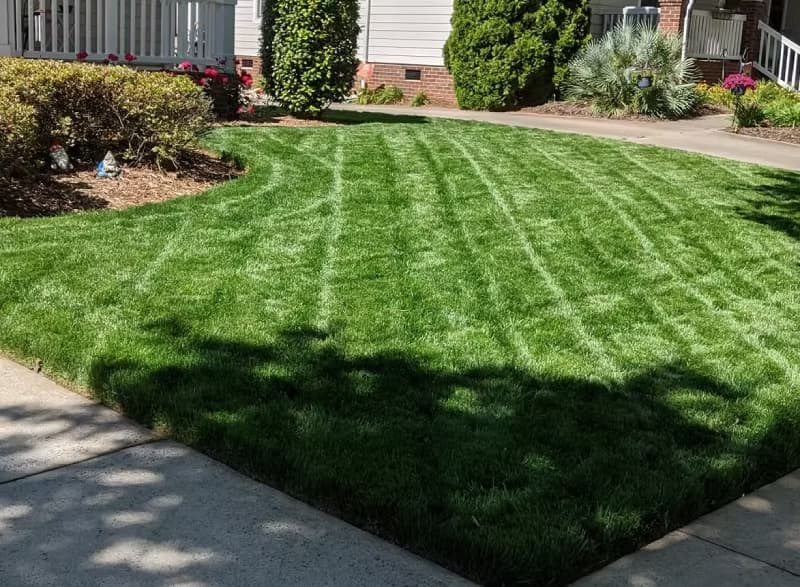
Crisp mower stripes on a turf-type tall fescue lawn, demonstrating density and spring color in the transition zone.
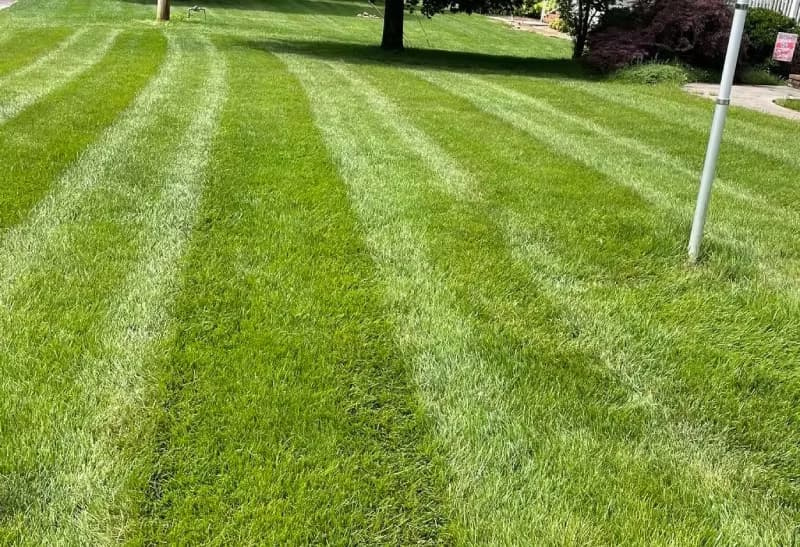
Striping performance on a Kentucky 31 (K-31) tall fescue lawn, showcasing its wide leaf blades and lighter green, utility-turf color.
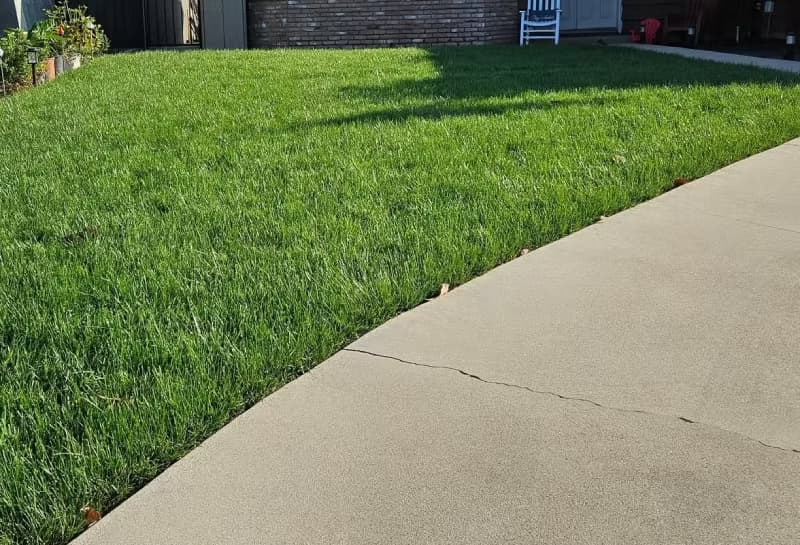
A dense stand of 'Marathon' tall fescue, a popular dwarf/turf-type tall fescue selection known for high canopy density and deep rooting.
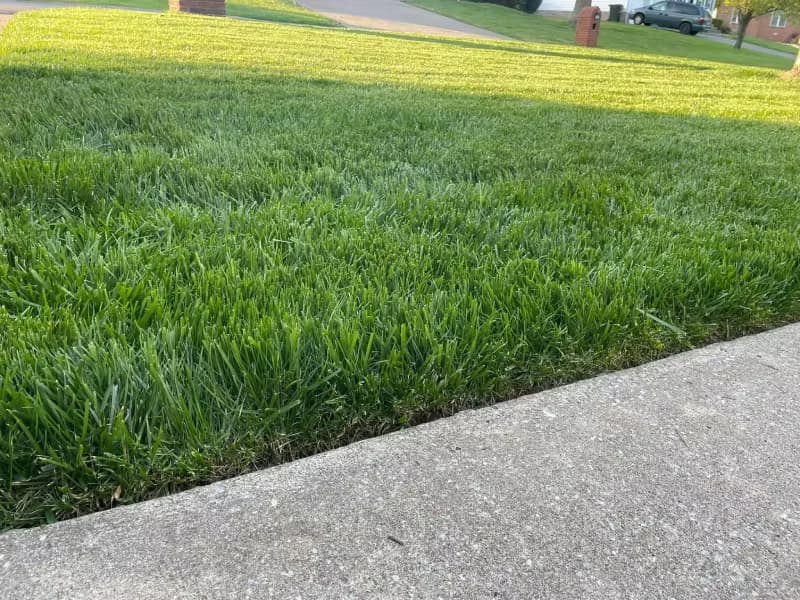
Profile view showing tall fescue maintained at a higher 3.5 to 4-inch cutting height to improve summer heat and drought endurance.
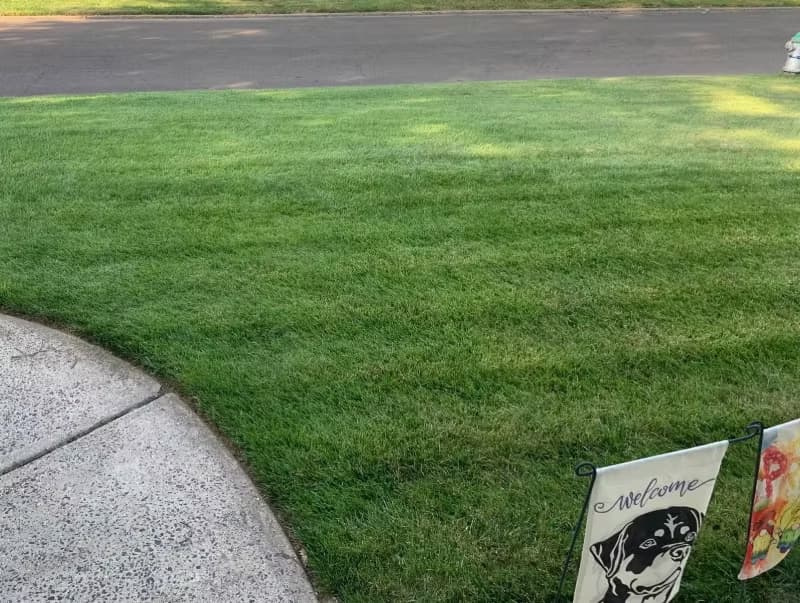
Turf-type tall fescue demonstrating uniform coverage and canopy density under extended daily direct sunlight.
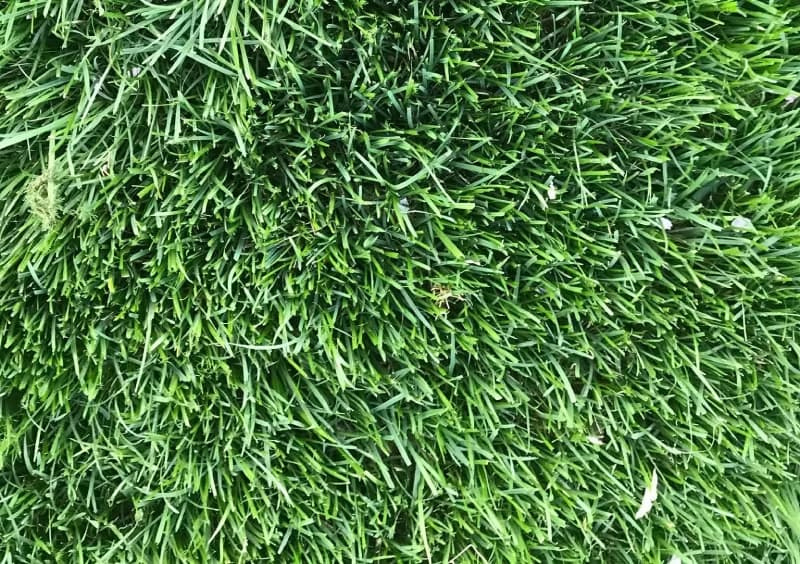
Macro view showing the upright leaf blade architecture, fine texture, and rich green color of an elite turf-type tall fescue blend.
Telling It Apart
Up close, tall fescue reads coarse and tough. The key marks: rolled vernation, meaning the young leaf is rolled in the bud rather than folded; a short membranous ligule; auricles absent or tiny; a broad, pale collar; a round sheath that runs reddish-pink to purple near the crown; and a flat, coarse blade about 1/8 to 1/4 inch wide with many equal parallel veins, no central midrib, a dull rather than glossy underside, and rough, barbed margins you can feel by running a finger from tip to base.
Two confusions actually come up:
- Tall fescue as a weed in a fine lawn. Coarse forage-type fescue shows up as conspicuous, wide-bladed clumps in a Kentucky bluegrass or fine fescue lawn. It gives itself away by greening up earlier in spring and, in summer, staying green and growing while the bluegrass around it goes drought-brown. There is no selective fix — in a cool-season lawn, removing it means killing the clump and reseeding.
- Tall fescue versus perennial ryegrass. Both are bunch grasses with veined leaves, but ryegrass has folded vernation, small distinct auricles, a glossy leaf underside, and smooth margins — the exact opposite of fescue’s dull, barbed leaf.
Identification Photos
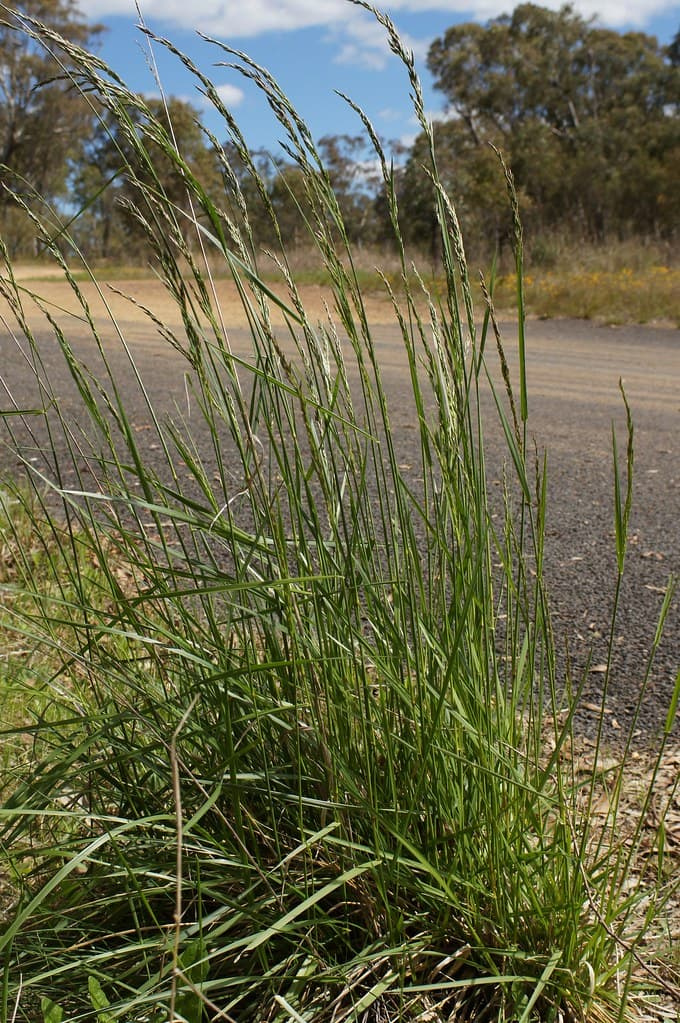
Key Identifier: Bunch-type growth. Tall fescue grows in dense, upright clumps rather than spreading by runners, which is why thin or unmown patches turn into coarse tufts.
“Festuca arundinacea plant11” by Macleay Grass Man is licensed under CC BY 2.0.
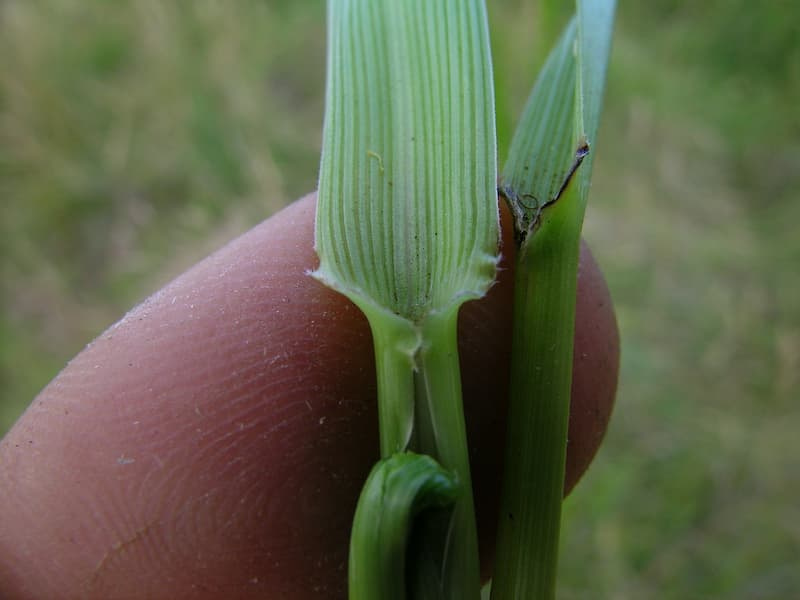
Look For: Short, blunt auricles at the base of the blade, often with fine hairs along the edge. Combined with rough leaf edges and a ribbed upper surface, this separates tall fescue from perennial ryegrass.
“Festuca arundinacea collar3” by Macleay Grass Man is licensed under CC BY 2.0.
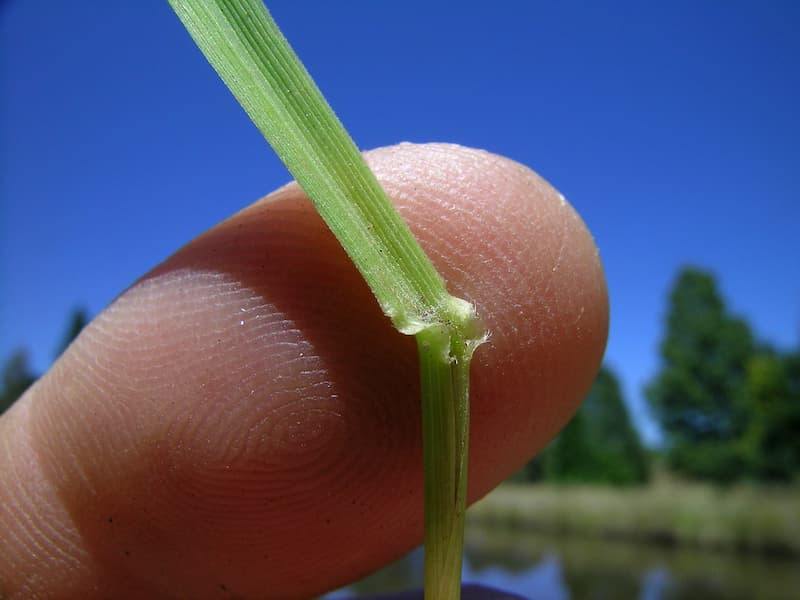
Look For: A broad collar with a very short, membranous ligule and a blade that angles away from the stem. Check the collars of several tillers, since a single one can be hard to read.
“Festuca arundinacea collar4” by Macleay Grass Man is licensed under CC BY 2.0.
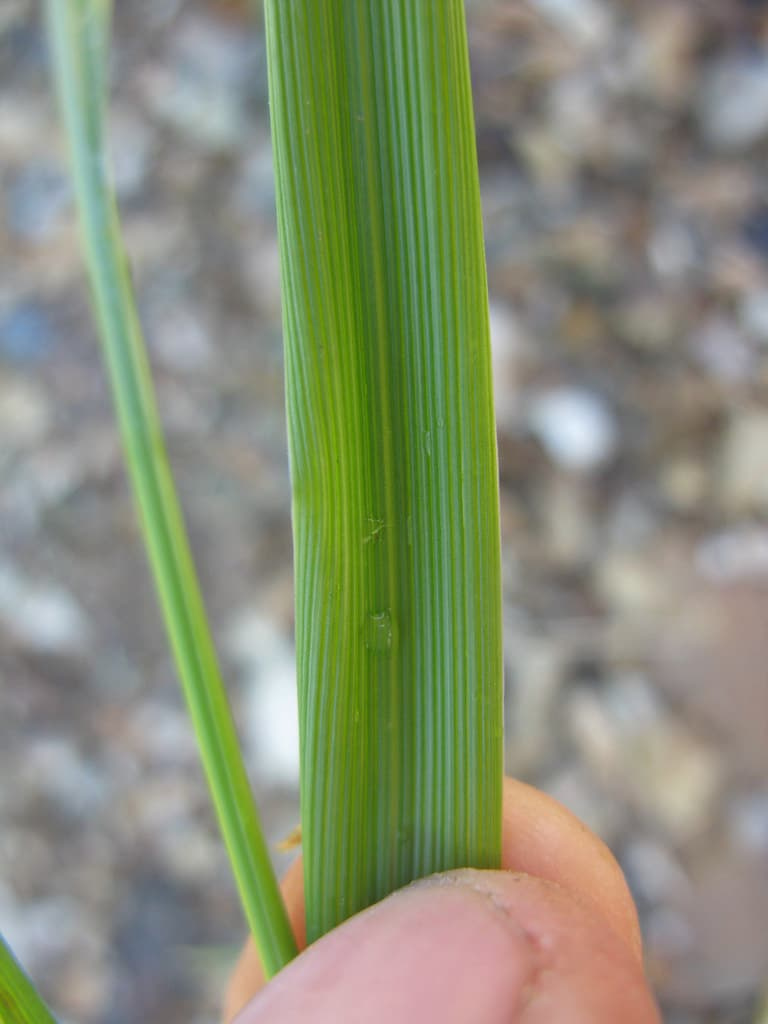
Diagnostic Feature: Prominent ribs. The upper surface of a tall fescue blade has distinct parallel ridges you can feel with a fingernail, which gives the grass its coarse texture.
“Festuca arundinacea leaf ribs1” by Macleay Grass Man is licensed under CC BY 2.0.
Is Tall Fescue Right For Your Yard?
Advantages:
The most heat- and drought-tolerant cool-season lawn grass, on the strength of roots reaching 2 to 3 feet down.
Needs about half the nitrogen of Kentucky bluegrass — 2 to 3 lb per 1,000 sq ft a year — and less water for the same look.
Holds one of the best winter colors of any cool-season grass; green when the neighbors are not.
Very good wear tolerance, so it takes traffic well.
Barely produces thatch, so dethatching is essentially off the maintenance list.
Tolerates a wide herbicide toolbox once established, which makes weed control simple.
Broadly adaptable across soil types, from sand to heavy clay, and handles somewhat poorly drained ground.
The most urine-resistant cool-season grass, alongside perennial ryegrass — useful with dogs.
Germinates quickly and establishes from seed at moderate cost.
Best If:
- You live in the transition zone, the Mid-Atlantic, or the lower Midwest, where it is simply the best cool-season option available.
- You want a green lawn through summer heat without running the sprinklers constantly.
- You want to spend less on fertilizer and water than a bluegrass lawn demands.
- You have kids or dogs and need a lawn that takes traffic — and urine — without falling apart.
- You have a partly shaded yard that still gets 4 to 6 hours of direct sun, ideally in the morning.
- You can commit to one seeding session every fall. That single habit is what makes this grass work.
Disadvantages:
Cannot repair itself. As a bunch grass it has no rhizomes or stolons, so every bare spot stays bare until you seed it.
Needs routine fall overseeding every year — a permanent maintenance job other grasses do not have.
Brown patch is a near-certainty in humid summers, and no cultivar is immune.
Coarser in the blade than Kentucky bluegrass, fine fescue, or perennial ryegrass.
Winter hardiness is only Medium, and prolonged ice cover can take out a stand.
Moderately compaction-sensitive, so annual core aeration is not optional.
Sod is fragile and tears in handling without a bluegrass binder.
Buying the wrong bag — forage-type instead of turf-type — leaves you with a permanent coarse weed.
It is invasive in native grasslands, so it is the wrong choice next to prairie or natural areas.
Avoid If:
- You want a lawn that fills its own bare patches. This one never will.
- You are not going to overseed each fall — without it, the stand thins year over year until it is more weed than grass.
- You want the finest possible blade. Bluegrass, ryegrass, and fine fescue are all finer.
- Your yard has low, poorly draining spots in a cold-winter region, where ice cover will kill it.
- You are in the deep South or the humid coastal plain, where summer heat and disease overwhelm it.
- Your lawn is deeply shaded, especially without morning sun — dew that lingers means brown patch.
- You are planting next to restored prairie or a natural area it could invade.
Is It Safe for Pets and Kids?
No toxicity to dogs or cats is documented. Many tall fescue cultivars carry a fungal endophyte that produces alkaloids causing fescue toxicosis in grazing livestock — cattle, horses, and sheep. That is a pasture problem, not a lawn one, because dogs and cats do not graze. The practical rule: never feed lawn clippings from an endophytic tall fescue lawn to livestock, and never use them as livestock bedding.
Where It Grows and Where It Fails
Tall fescue is a cool-season, bunch-type grass, and it is the toughest cool-season lawn grass for heat and drought. Its range runs from Florida to Canada, but its real home is the transition zone — the belt across the mid-South and Mid-Atlantic where summers are too hot for Kentucky bluegrass and ryegrass but winters are too cold for warm-season grasses. In that belt it is the top pick, for a simple reason: it needs about half the nitrogen and far less water than Kentucky bluegrass to look the same.
Its edge comes from roots. Most lawn grasses root a few inches down. Tall fescue sends roots 2 to 3 feet deep, and as deep as 4 feet in some measurements — about twice the depth of Kentucky bluegrass. Deep roots reach water the shallow-rooted grasses cannot, so it stays green well into a dry spell. That is drought avoidance: it dodges the stress instead of merely enduring it.
The cold edge is about drainage, not temperature. Its winter hardiness rates Medium — better than perennial ryegrass, below Kentucky bluegrass. But the thing that actually kills it up north is usually not cold, it is prolonged ice cover. University of Minnesota turf plots came through most winters with little damage, then lost nearly the whole tall fescue stand after a late-December rain froze into a long-lasting ice sheet in the low spots. Ice seals the crown off from oxygen; the plant suffocates. So in the northern part of its range the decision is where you plant it, not whether: keep it out of low, poorly draining ground, and seed early enough that plants are mature before fall hardening starts. Young fall-seeded plants that never hardened off are the other common loss.
At the hot edge it hits summer decline. Once nights stay above about 68 to 70°F and days run 85 to 90°F with humidity, growth stops, leaves roll to save water, and the grass becomes a sitting target for brown patch. If a drought there runs past about three weeks with no water, you can lose the stand outright.
Across the five climate profiles:
- Cool-Humid — a strong fit. Rainfall usually carries it, with water helping through summer dry spells.
- Cool-Arid — works with irrigation, and it will use a lot of water to stay green.
- Warm-Humid — marginal, and only at the northern edge, because summer heat plus disease overwhelm it on sandy coastal-plain soils.
- Warm-Arid — not documented by university sources.
- Transition — its home turf, and the premier cool-season option, with the summer-decline caveat above.
Getting Established
Tall fescue is established from seed or sod — never from sprigs or plugs. Here is the why: it is a bunch grass that grows only by tillering upward from its crown. It has no creeping stems to spread sideways, so there is nothing to cut up and plant. That single fact shapes everything downstream.
Seed is the standard, and timing is the whole game. The primary window is late summer to early fall — roughly mid-August through mid-October depending on how far north you are — because the soil is still warm, moisture is reliable, and weed competition has faded. Seed at 6 to 8 lb per 1,000 sq ft (state guidance runs 6 to 9). Resist the urge to overseed heavily; crowded seedlings compete with each other and give you a weak, thin, disease-prone stand.
Spring seeding is the risky fallback, and extension discourages it. Spring seedlings never build deep roots before summer arrives, so they get overrun by crabgrass and cooked by the first heat wave — and they demand constant watering all summer just to hang on.
Seed germinates in 5 to 10 days in good conditions, stretching to two or three weeks in poor ones. But germinated is not finished: a new lawn takes 6 to 9 months to become usable turf and 12 to 18 months before it can take heavy traffic.
Sod is the choice when you need cover now, need to hold a slope against erosion, or are planting outside the fall window. One catch: pure tall fescue sod is fragile. With no rhizomes to bind the soil, it tears during handling, which is why sod farms mix a little Kentucky bluegrass into it. New sod needs frequent, often daily, water for the first three to four weeks to root down.
Adding Kentucky bluegrass to a seeded lawn does the same job for you — it buys the one thing tall fescue cannot do for itself, which is fill a bare spot. Kentucky bluegrass spreads by rhizomes, so a small amount of it knits the gaps that a bunch grass leaves open. Keep the proportion small: 5 to 10 percent Kentucky bluegrass by weight, and never more than 15 percent. The reason is seed size. Kentucky bluegrass seed is tiny — about 2.2 million seeds per pound against roughly 220,000 for tall fescue, a ten-to-one difference. A blend that reads as 90/10 on the bag is close to half bluegrass by actual plant count, and at 15 percent bluegrass outnumbers the fescue about two to one. Tall fescue germinates faster and claims ground first, which pulls the finished stand back in its favor, but the margin is thinner than the label suggests. Go past 15 percent and you no longer have a tall fescue lawn — you have a bluegrass lawn, with bluegrass water and nitrogen bills to match.
Keeping It Healthy
Mow high, and mow high on purpose. Keep tall fescue at 2.5 to 4 inches, with a home target around 3 to 3.5 inches. In summer, raising to 3.5 to 4 inches shades the soil, cools the root zone, and cuts water loss — but only bother if you set that height back in spring while roots were actively growing, or if you irrigate. Raising the deck mid-drought on an unwatered lawn backfires: the same shrunken root system now has to feed more leaf, which worsens the stress. Never drop below 2.5 inches. Scalping halts root growth and opens the door to weeds — in one NC State field trial, crabgrass cover went from 0 percent at a 4-inch mowing height to 95 percent at 1 inch. High mowing is the single most effective non-chemical weed control this grass has.
Feed in fall, not summer. Tall fescue needs a moderate 2 to 3 lb of nitrogen per 1,000 sq ft per year (the full documented range is 1 to 4). Weight it toward fall — a September application to rebuild density after summer, and a late-November application, after the last mow while the lawn is still green, which the plant stores as carbohydrates to fuel spring green-up. Keep summer nitrogen to a minimum: pushing soft growth in the heat drains reserves and feeds brown patch, which thrives on exactly the lush, thin-walled tissue that nitrogen produces.
Water deeply and rarely. Figure 1 to 1.5 inches per week, up to 1.75 in extreme heat, applied to wet the soil 4 to 6 inches down. Deep, infrequent watering trains roots downward; shallow daily sprinkling keeps the surface wet, which is precisely what crabgrass seeds and fungal spores want. If you are letting the lawn go dormant in a drought, know the line between dormancy and death: a healthy stand survives brown and dormant for 3 to 6 weeks, and up to 5 to 8 under ideal conditions, as long as the crown stays alive. To hold dormant crowns without greening the lawn back up, apply 0.25 to 0.5 inch every 3 to 4 weeks. Push past that with no crown water — or run traffic across dormant turf — and the crowns die and will not recover.
Thatch is a non-issue; compaction is not. Because it does not creep, tall fescue barely makes thatch, so dethatching is rarely needed — and you can leave clippings on the lawn, where they break down fast and return up to a quarter of its nitrogen. What it does need is core aeration in early fall to relieve compaction, which otherwise chokes the deep roots that are this grass’s whole advantage. Aerating right before fall overseeding is a two-for-one: the open holes make an ideal seedbed.
Overseed every fall, as routine. Seed at 3 to 6 lb per 1,000 sq ft to replace plants lost to summer stress, disease, or wear. This is density maintenance, not the warm-season trick of overseeding for winter color — tall fescue is already green in winter. It needs overseeding for one structural reason: as a bunch grass, it cannot fill its own bare spots.
About endophyte. Many turf-type cultivars are sold endophyte-enhanced, meaning they carry a fungus that lives inside the plant and improves resistance to leaf-feeding insects. It needs roughly 40 percent infection to do anything useful. It changes nothing you can see — not appearance, growth, mowing, or schedule — so treat it as a bonus on the seed tag rather than a decision. The one hard rule: those alkaloids are toxic to grazing livestock, so clippings from an endophytic lawn should never be fed or used as bedding.
What Goes Wrong
The diseases that matter are the humid-summer ones, and the headliner is brown patch (Rhizoctonia solani). It fires up when nights stay above 68 to 70°F, days hit 80 to 90°F or more, and — the real trigger — leaves stay continuously wet for 10 to 12 hours. That is why morning sun matters so much: a lawn shaded at dawn holds dew past the wetness threshold and gets hammered. It shows as circular tan patches, 6 inches to several feet across, with individual leaves carrying tan lesions rimmed in dark brown. Management is all about drying the canopy and easing off summer nitrogen — water at dawn, between 2 and 8 a.m., so the sun dries the grass fast; prune trees to open airflow; and keep any summer nitrogen slow-release and under 0.5 lb.
Two more humid-weather diseases round out the trio. Gray leaf spot (Magnaporthe oryzae, also written Pyricularia) is brutal on new fall seedings in the hot transition zone — look for leaf lesions that twist the blade into a fish-hook, and note there is no white mycelium like brown patch shows. Pythium blight, or grease spot, hits in hot, wet, poorly drained ground: greasy, matted, collapsing grass. Cooler-season diseases — net blotch, red thread, leaf rust — show up too, but most clear with proper fall fertility and sharp mower blades. Worth knowing: tall fescue is not normally susceptible to dollar spot, so dollar-spot-like symptoms on fescue are usually brown patch in disguise.
The insects to watch: white grubs, which feed on roots — treat only above 6 to 10 per sq ft; fall armyworm, a late-summer marcher that can strip a lawn overnight, with a home-lawn threshold of just 1 per sq ft; sod webworm; and billbugs. A tip that separates them fast: grub-damaged sod peels up like loose carpet because the roots are gone, while webworm and billbug damage stays anchored.
Abiotic troubles are the flip side of the climate story — summer heat decline at the hot edge, the dormancy-versus-death line, scalping from mowing too low, and winterkill at the cold edge. Winterkill usually comes from crown hydration, where a warm spell followed by a hard freeze ruptures the rehydrated crown, or from prolonged ice cover.
Telling look-alike problems apart saves you from spraying the wrong thing. Brown patch gives circular patches, upright leaves, bordered lesions, morning mycelium, and crowns still alive. Drought gives diffuse areas, blue-gray color, footprints that stay, and crowns alive. Fertilizer burn gives sharp spreader-wheel stripes and dead crowns. Armyworm gives chewed, ragged, stripped leaves with roots intact, plus frass and birds. The universal test: tug a handful of brown grass — if it resists and the crowns are firm and off-white, the plant is alive.
Weeds In This Grass
Tall fescue tolerates a wide herbicide toolbox, which makes weed control straightforward once the lawn is established. It handles the common pre-emergents — prodiamine, dithiopyr, pendimethalin — for crabgrass, and the standard post-emergents: the three-way broadleaf mixes (2,4-D, dicamba, MCPP), triclopyr, quinclorac for crabgrass, and halosulfuron or sulfentrazone for nutsedge. See the MFY weed pages for product and timing on each specific weed. A few chemistries kill tall fescue — chlorsulfuron, clethodim, and non-selective glyphosate — so those are renovation tools, not lawn tools.
The one hard rule is the new-stand restriction. Standard pre-emergents stop any seed from rooting, including your grass, and they linger in the soil for months — so if you apply one in spring, you cannot seed until fall. The exceptions are mesotrione and siduron, the only pre-emergents safe to use at seeding; mesotrione even controls crabgrass and some broadleaves while your fescue comes up. For broadleaf sprays on a new lawn, wait until the seedlings have been mowed two to four times.
For cultural weed control, the growth habit tells you the strategy: a bunch grass cannot reclaim a bare spot, so every thin patch is an open door. Density is the whole defense — mow tall, feed in fall, water deep, and overseed routinely.
For a full renovation — when less than about 30 percent of the lawn is worth keeping, or invasive perennial grasses have moved in — the non-selective active ingredient is glyphosate, applied to actively growing weeds, then reseed after a 5 to 7 day wait, since the soil holds no residue. Note on products: check the active-ingredient panel before you buy. The Roundup brand name no longer reliably means glyphosate, so read the label to confirm you are getting the chemistry you intend.
Subtypes
Improved Turf-Type Tall Fescue
Deep-rooted, heat-tough cool-season turf sold as a blend of named cultivars — the default lawn across the transition zone.
Best For: Sunny to lightly shaded yards in the transition zone and Mid-Atlantic, where summers are too hot for Kentucky bluegrass and winters too cold for bermudagrass. Best for someone who wants a full green lawn on moderate water and about half the nitrogen a bluegrass lawn needs, and who will overseed it every fall.
Tradeoff: No cultivar resists brown patch, and because tall fescue cannot spread sideways, every patch it kills has to be overseeded back in.
The Seasonal Care Calendar

Spring (Mar-May)
Green-Up Comes Early And Fast
Tall fescue wakes up in March or April, once soil temperatures pass about 50°F, and it greens up earlier than most of its neighbors. Growth peaks now, so mowing gets frequent — set your deck to 3 to 3.5 inches and keep the blade sharp, because a torn leaf tip is an open door for disease later.
This is the season to make one decision: if you plan to run a taller canopy through summer, raise the height now, while roots are actively growing and can support the extra leaf. Raising it in July, mid-drought, does the opposite of what you want.
Apply crabgrass pre-emergent when soil temperatures reach the mid-50s — but only if you are not seeding. Pre-emergent and seed cannot share a spring; the herbicide blocks your grass just as effectively as the weed. Go light on spring nitrogen. Pushing lush top growth now spends carbohydrate the plant will need in July, and heavy spring feeding is one of the most reliable ways to make brown patch worse two months later.
Summer (Jun-Aug)
Riding Out The Brown Patch Window
Summer is survival, not improvement. Growth slows once nights stay above 68 to 70°F, and the lawn’s job is simply to reach September with live crowns.
Water deeply and rarely — 1 to 1.5 inches a week, up to 1.75 in extreme heat, in one or two soakings rather than daily sprinkling. Water at dawn, between 2 and 8 a.m. This is not about evaporation. It is because brown patch needs 10 to 12 hours of continuous leaf wetness, and dawn watering lets the sun dry the canopy before that clock runs out. Evening watering hands the disease exactly the conditions it wants.
Keep nitrogen to a minimum — slow-release and under 0.5 lb per 1,000 sq ft if you feed at all. Nitrogen in the heat produces soft, thin-walled tissue that brown patch tears through.
If you are letting the lawn go dormant, commit to it. A healthy stand survives brown for 3 to 6 weeks, and up to 5 to 8 in ideal conditions, but only if the crowns stay alive — give them 0.25 to 0.5 inch every 3 to 4 weeks and keep traffic off entirely. Half-watering a dormant lawn is the worst option: it wakes the plant up without supporting it.
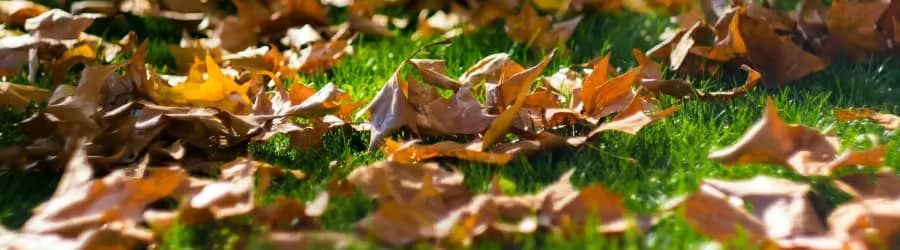
Fall (Sep-Nov)
The Season That Rebuilds The Stand
Fall is the most important season for this grass, and it is not close. Everything summer took, fall gives back — and because tall fescue cannot fill its own gaps, if you skip fall you simply have less lawn next year.
Core aerate in early fall to relieve compaction, then overseed at 3 to 6 lb per 1,000 sq ft while the aeration holes are still open — they make an ideal seedbed and the two jobs take one afternoon together. The seeding window runs roughly mid-August to mid-October depending on how far north you are: soil is still warm, moisture is reliable, and summer weeds have quit competing.
Fertilize in September to rebuild density, then again in late November, after the last mow while the lawn is still green. That last feeding is not for growth — the plant stores it as carbohydrate and spends it on spring green-up.
One timing rule if you are seeding in the north: get it down early enough that plants mature before fall hardening begins. Immature fall seedlings are the ones that do not come through winter.
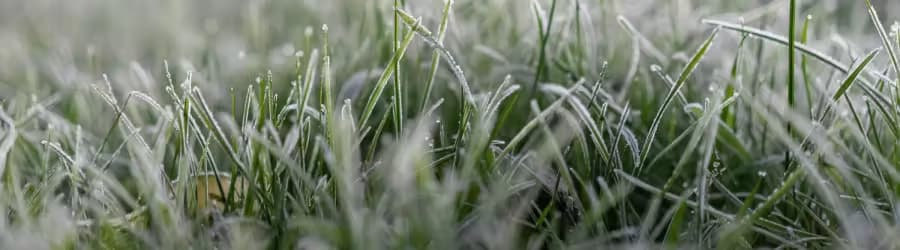
Winter (Dec-Feb)
Green All Winter Unless Ice Settles
Tall fescue is semi-evergreen and holds one of the best winter colors of any cool-season grass. It goes off-color only in severe, prolonged freezes, so through most winters in most of its range there is nothing to do but look at it.
The one real winter risk is ice, not cold. A prolonged ice sheet — typically from a winter rain that freezes and sits — seals the crowns off from oxygen and suffocates them, and it does the most damage in low, poorly draining spots. There is no treatment once it happens; the defense is where you planted and how well that ground drains. If you know a corner of the yard collects water and ices over, expect to reseed it in fall.
The other winter loss is crown hydration: a warm spell rehydrates the crown, a hard freeze ruptures it. Nothing to be done about that either, beyond keeping drainage good and traffic off frozen or dormant turf, which crushes crowns that cannot repair themselves until spring.
How It Stacks Up Against Bluegrass
Against Kentucky bluegrass, the trade is repair for toughness. Bluegrass spreads by rhizomes and fixes its own bare spots; tall fescue never will. But bluegrass wants roughly double the nitrogen and noticeably more water, browns out sooner in a dry summer, and struggles where tall fescue is comfortable. Shade tolerance is roughly a wash. Choose bluegrass if self-repair matters most and you will pay for it in inputs; choose tall fescue if summer performance and lower bills matter more and you will handle repair yourself each fall. Blending a small amount of bluegrass into tall fescue — 5 to 10 percent by weight, never over 15 — buys some of the repair without the input bill.
Against perennial ryegrass, tall fescue wins on heat, drought, and persistence. Ryegrass germinates faster, which is why it dominates quick-fix mixes, but it is less heat-tolerant and shorter-lived. Both are bunch grasses, so neither repairs itself. Ryegrass is the finer blade and the glossier leaf.
Against fine fescue, the split is shade versus traffic. Fine fescue is the better shade grass and far finer in texture, but it will not take wear or heat the way tall fescue does. In a yard with both deep shade and open sun, the answer is often both — fine fescue under the trees, tall fescue in the open.
Against the warm-season grasses — bermudagrass, zoysia — the question is whether you want a lawn that is green in winter. Warm-season grasses go dormant and brown for months but shrug off the summer heat that puts tall fescue into decline. In the transition zone, that is genuinely the choice: green all winter with a hard summer, or the reverse.
One comparison that is not a choice. Forage-type tall fescue and turf-type tall fescue are the same species, and the forage type is not a budget version of the lawn grass — it is a pasture grass that behaves like a weed in a lawn. Coarse, clumpy, pale, and impossible to remove selectively. If a bag does not say turf-type, or a shade mix pads itself out with annual ryegrass, put it back.
Find Your Precision Match
Choosing between species requires balancing your specific soil profile, local micro-climate, and maintenance goals. Use our Turf Match Tool to generate a data-backed recommendation for your specific yard.
Start Your MatchTechnical Specifications
Scientific Name: Festuca arundinacea Schreb. (syn. Schedonorus arundinaceus, Lolium arundinaceum)
Common Names: Tall fescue; turf-type tall fescue (TTTF); reed fescue; Kentucky fescue; alta fescue
Family: Poaceae; tribe Poeae, subtribe Loliinae; genus Schedonorus (historically placed in Festuca, and for a period in Lolium)
Origin: Native to Europe, western Asia, and North Africa. Reached the United States before 1800, most likely as a contaminant in meadow fescue seed shipped from England, and was not correctly identified as tall fescue until the 1950s. USDA imported additional germplasm from Sweden in 1901.
Season Type: Cool-Season
Growth Habit: Bunch-type (tuft-forming)
Growth Rate: Fast
Texture: Coarse
Root System Depth: 2 to 3 feet typical, measured as deep as 4 feet — roughly twice the rooting depth of Kentucky bluegrass
Spread Mechanism Intensity: None. Spreads only by tillering upward from the crown; no functional rhizomes or stolons. Cultivars marketed as rhizomatous produced rhizomes measuring under 1/8 inch against over 3 inches for Kentucky bluegrass, with no measurable gain in spread, self-repair, or sod knitting (Kansas State trials).
Typical Lifespan & Invasiveness Risk: Long-lived perennial. Individual plants persist for decades on poor sites, but a lawn stand thins year over year because summer stress kills plants the bunch habit cannot replace — which is why routine fall overseeding is standard rather than optional.
Hardiness Zone Min: Zone 4
Hardiness Zone Max: Zone 7
Hardiness Zone Notes: Ideal Zones 5 to 7 — the transition zone, Mid-Atlantic, and lower Midwest, where it is the premier cool-season choice. Zone 4 works, but the limit there is not the thermometer, it is prolonged ice cover: avoid low, poorly draining ground and seed early enough that plants mature before fall hardening. Zone 3 is not recommended. Zone 8 only at the northern, upland edge, where summer heat and brown patch overwhelm it on sandy coastal-plain soils. Extension does not publish numeric USDA zones for tall fescue; these are MFY-assigned from adaptation statements. Cold hardiness ranks Medium — better than perennial ryegrass, below Kentucky bluegrass.
Cold Tolerance Rating: Moderate
Winter Color Profile: Semi-Evergreen
Climate Cool Humid: Good
Climate Cool Arid: Fair
Climate Warm Humid: Poor
Climate Transition: Excellent
Sun Requirement: Tolerates Partial Shade
Shade Tolerance: Moderate
Water Requirement: Moderate
Drought Survival Strategy: Both (avoidance then dormancy)
Soil Texture Fit:
Sand
Loamy Sand
Sandy Loam
Loam
Silt Loam
Clay Loam
Clay
pH Survival Min: 4.5
pH Optimal Min: 6
pH Optimal Max: 7
Wet Feet Tolerance: High
Compaction Tolerance: Low
Salinity Tolerance: Moderate
Wear Tolerance: High
Recovery: Very Low
Recovery Mechanism: Bunch-type (no lateral spread)
Input Intensity: Low
Labor Intensity: Moderate
Thatch Production: Very Low
Annual N Figure: 2 to 3 lb N per 1,000 sq ft per year typical, within a documented range of 1 to 4 lb; weight the total toward fall
Urine Resistance: High
Establishment Methods:
Seed
Sod
Germination Speed: Moderate (7–14 days)
Establishment Speed: Moderate
Seeding Rate: New lawn 6 to 8 lb per 1,000 sq ft (state guidance runs 6 to 9); routine fall overseeding 3 to 6 lb per 1,000 sq ft
Improved Cultivar Availability: High
NTEP Note: NTEP evaluates tall fescue heavily — 113 varieties in recent trials — but extension treats the result as one broad, interchangeable pool of improved turf-type cultivars rather than as ranked subtypes. The one selection lever that maps to a real stressor is brown patch resistance. Every tall fescue is susceptible; they differ in how badly. So choose from your state extension list of recommended turf-type cultivars, favor those with documented brown patch tolerance, and buy a blend of three or four rather than a single one, so no single disease can take the whole stand. No cultivar is immune, and every one of them still needs the same summer canopy management.
Deep Dives & Practical Guides
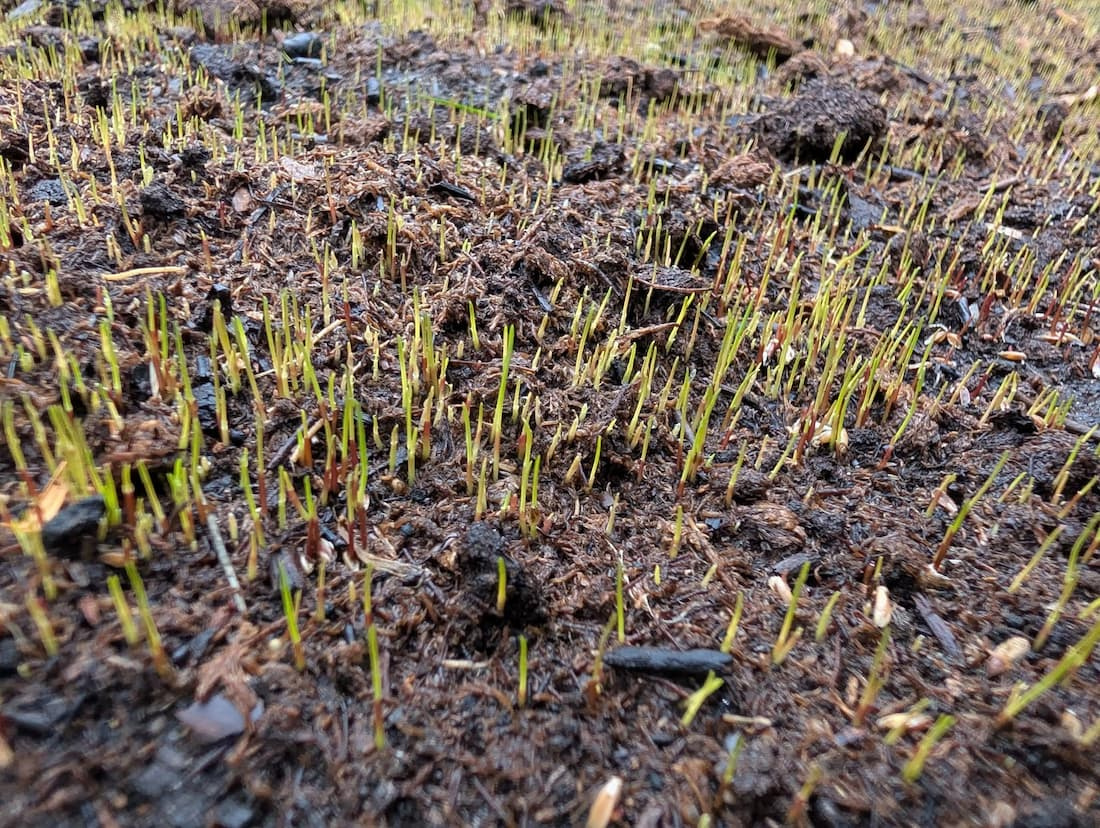
How to Establish a New Lawn From Bare Soil to First Mow
Bare soil doesn't turn into a lawn just because you scattered seed or rolled out sod — it becomes one based on a handful of specific steps done in the right order, matched to your specific grass. This guide walks through soil prep, seeding or planting method, starter fertilizer, watering as the grass grows, and knowing when it's actually safe to mow, for both cool-season and warm-season lawns.
Read Article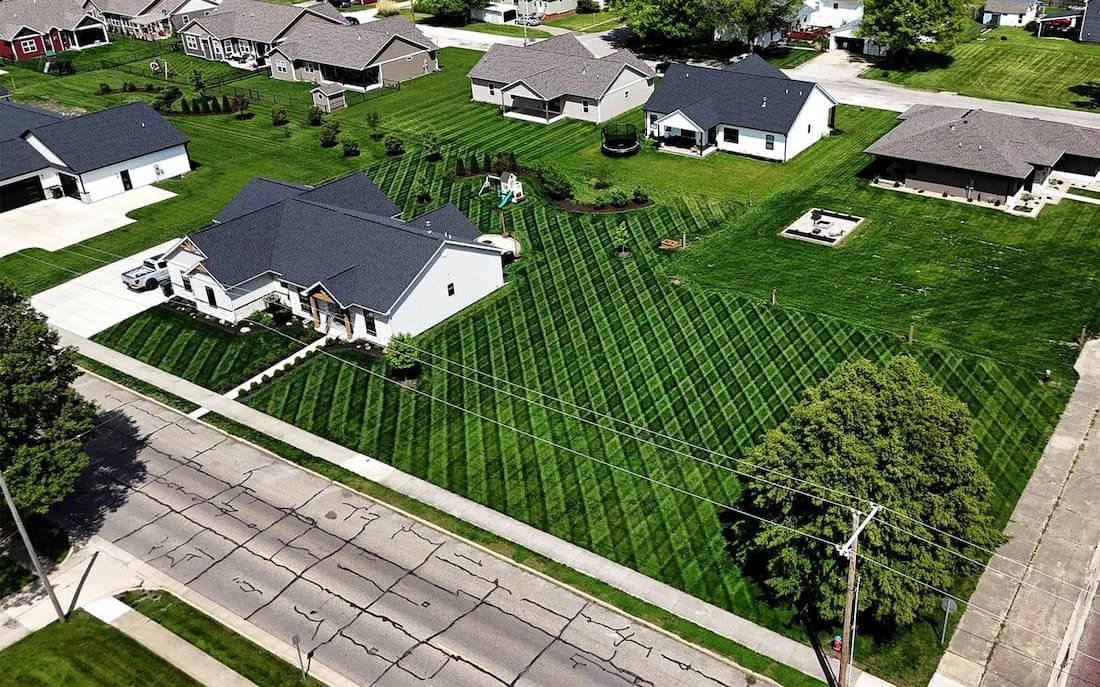
Cool Season vs Warm Season Lawn and Landscape Guide
Your lawn and your flower beds don't follow the same calendar — one runs on a cool-season engine, the other on a warm-season one, and using the wrong playbook on either can do real damage. This guide helps you figure out which system you actually have and how to care for it correctly, plus how the same cool/warm split applies to your ornamental beds.
Read Article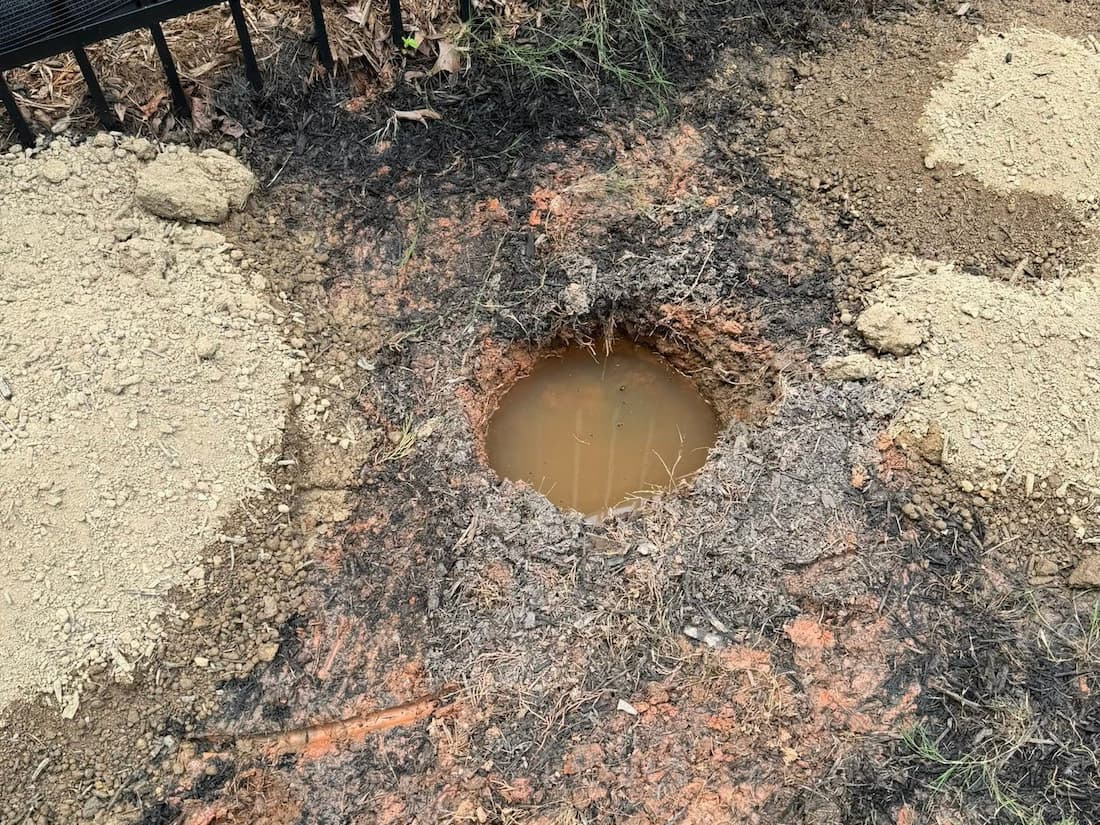
The Hole You Dug Is Killing Your New Plants
A shrub that looked fine all summer and stalled the next year usually didn't fail because of the plant, the weather, or the nursery. It failed because the hole it went into was a container — smooth-walled, water-holding, and impossible to root out of.
Read Article
What You Can Actually Change About Bad Soil
Heavy clay and loose sand feel like permanent sentences, and half of that is true. What your soil is made of will not change. How those particles are arranged will — and that is the half that decides whether anything grows.
Read Article
Why Your Plants Survive Winter and Die in July
Your hardiness zone is built from one number — the coldest night of an average year. It says nothing about the hottest afternoon, which is what actually kills most plants people lose. Here's how to read the other half of the map.
Read Article
Why Poa Annua Keeps Coming Back — and the 3-Year Plan That Finally Ends the Cycle
You've pulled it. You've sprayed it. You've watched the little white seedheads mock you every single spring. And every fall, like clockwork, it's back — in the lawn, in the beds, in the cracks you didn't know you had. Here's the hard truth nobody at the big-box store will tell you: you're not losing because you're doing it wrong — you're losing because you're fighting the wrong enemy on the wrong timeline. Poa annua isn't a one-season problem, and once you understand why, the three-year plan below stops feeling like a chore and starts feeling like a countdown.
Read Article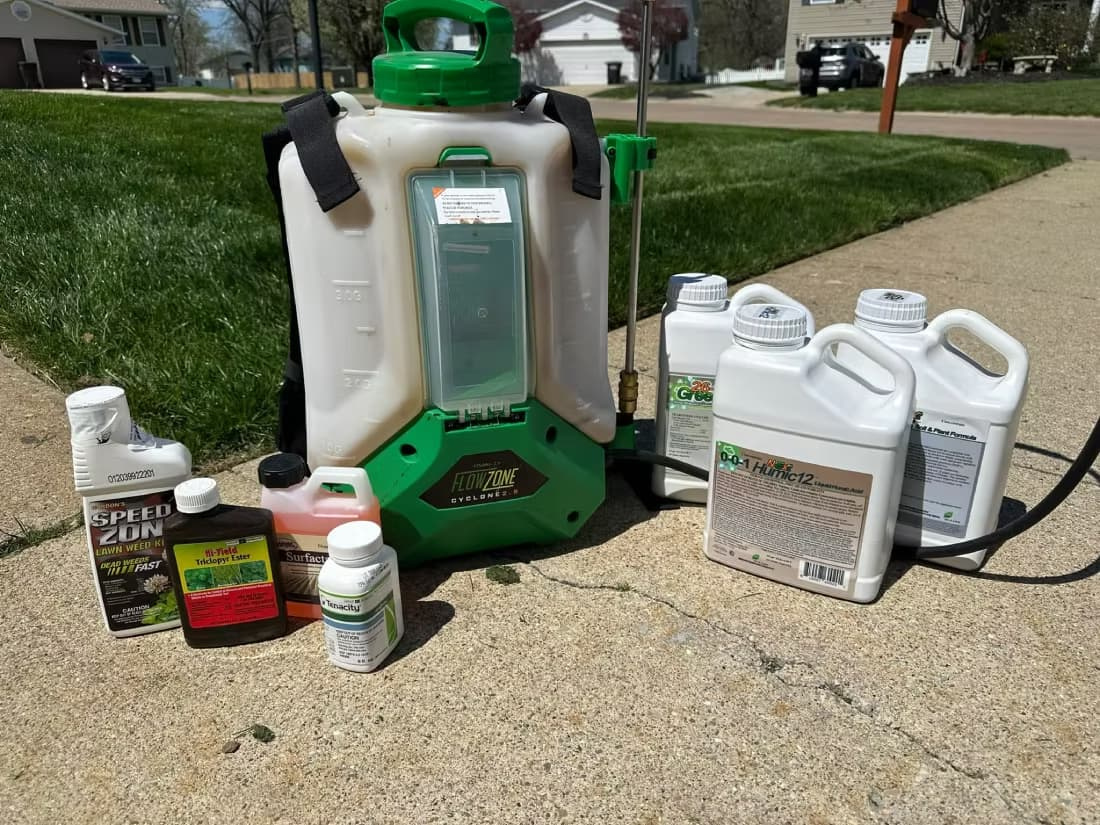
How to Apply Herbicides Correctly in Your Lawn and Garden Beds
Getting real results from a weed product has almost nothing to do with the brand on the bottle and everything to do with matching the method to the moment — the right chemistry, in the right place, at the right time. Learn how to apply herbicides correctly across both your lawn and your garden beds, whether you’re stopping weeds before they sprout or killing the ones already growing, without wasting product or harming the plants you want to keep.
Read Article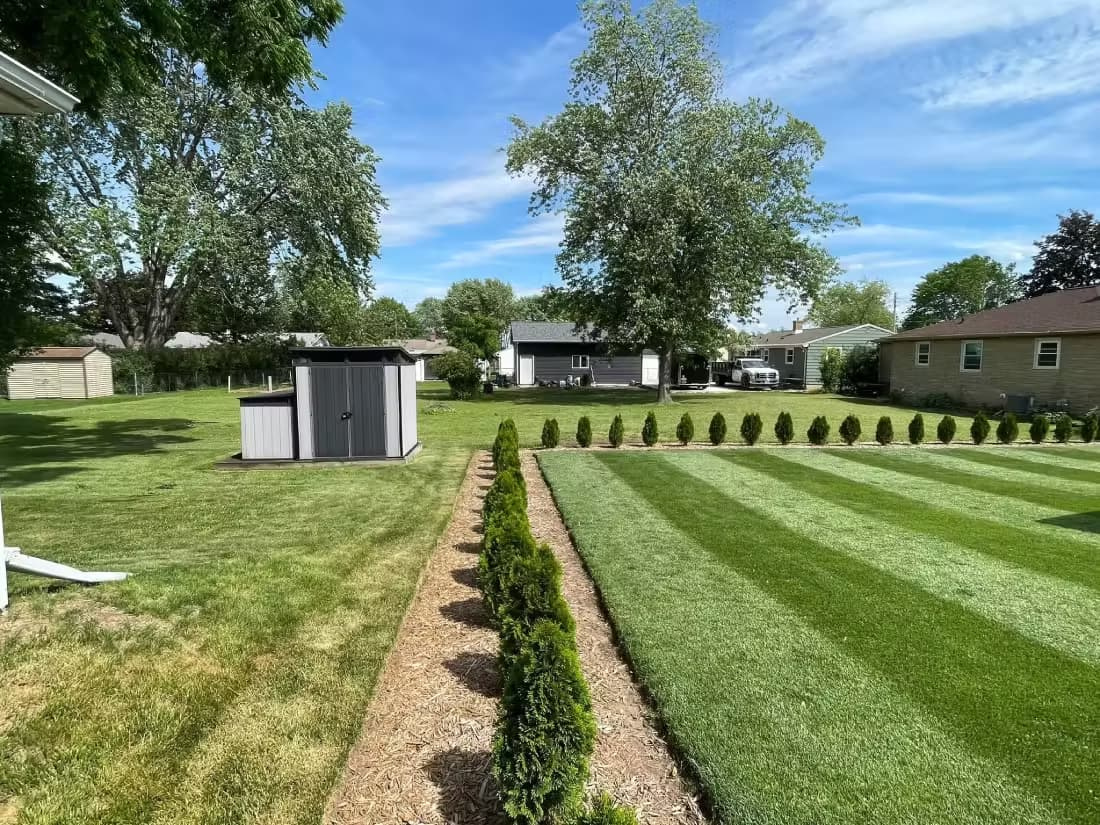
How to Kill Weeds Where Two Lawns Meet Without Harming Your Neighbor’s Grass
Controlling weeds along a shared property line is where good intentions quietly backfire—the season that's safe for your own lawn is often the season the lawn next door is most easily harmed. Learn the seasonal timing collision behind most fence-line damage, and the two habits that prevent it—reading what's actually in the bottle and spraying directed instead of broadcast—so you can clear the weeds without hurting your grass, your neighbor's, or the peace between you.
Read Article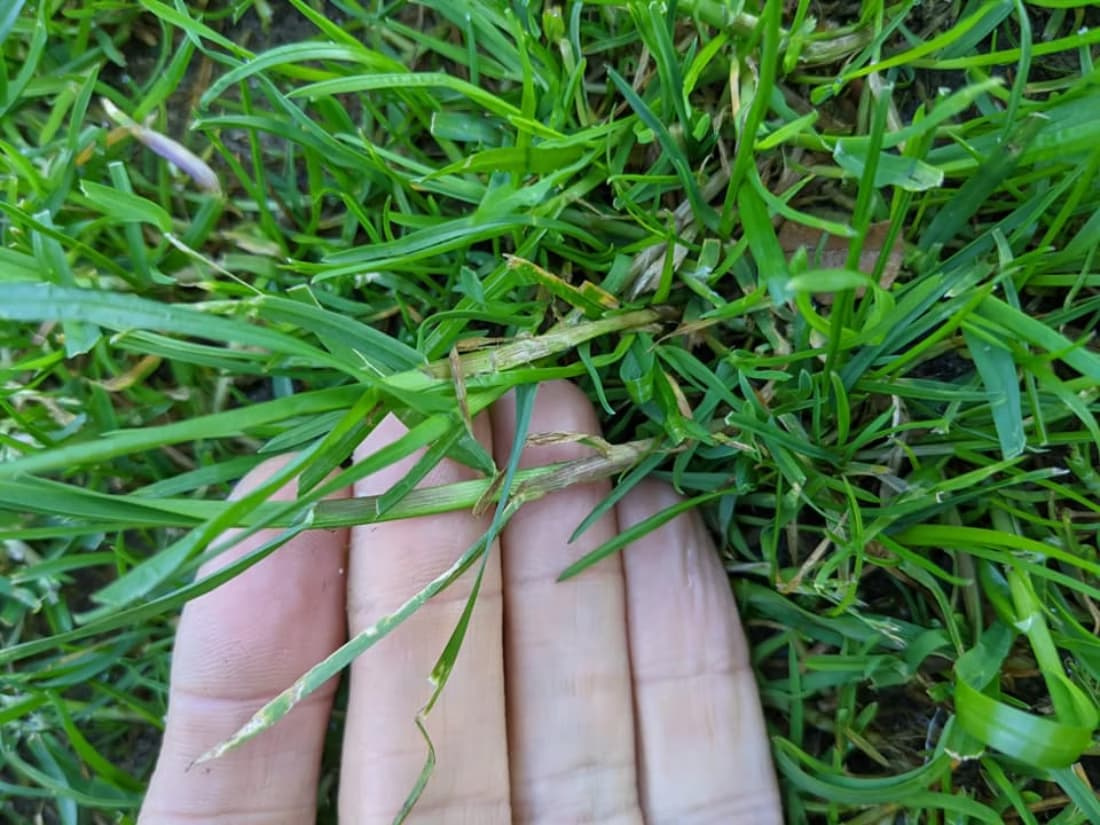
The Truth About One-and-Done Weed Control
Most homeowners lose the fight against weeds not because they work too little, but because they act before they understand. One-and-done weed control is real — but it only works when identification, timing, and the right tool all line up. This guide explains how that sequence works across your lawn and your ornamental beds, and how each weed page in the MFY hub puts it into practice for your specific invader.
Read Article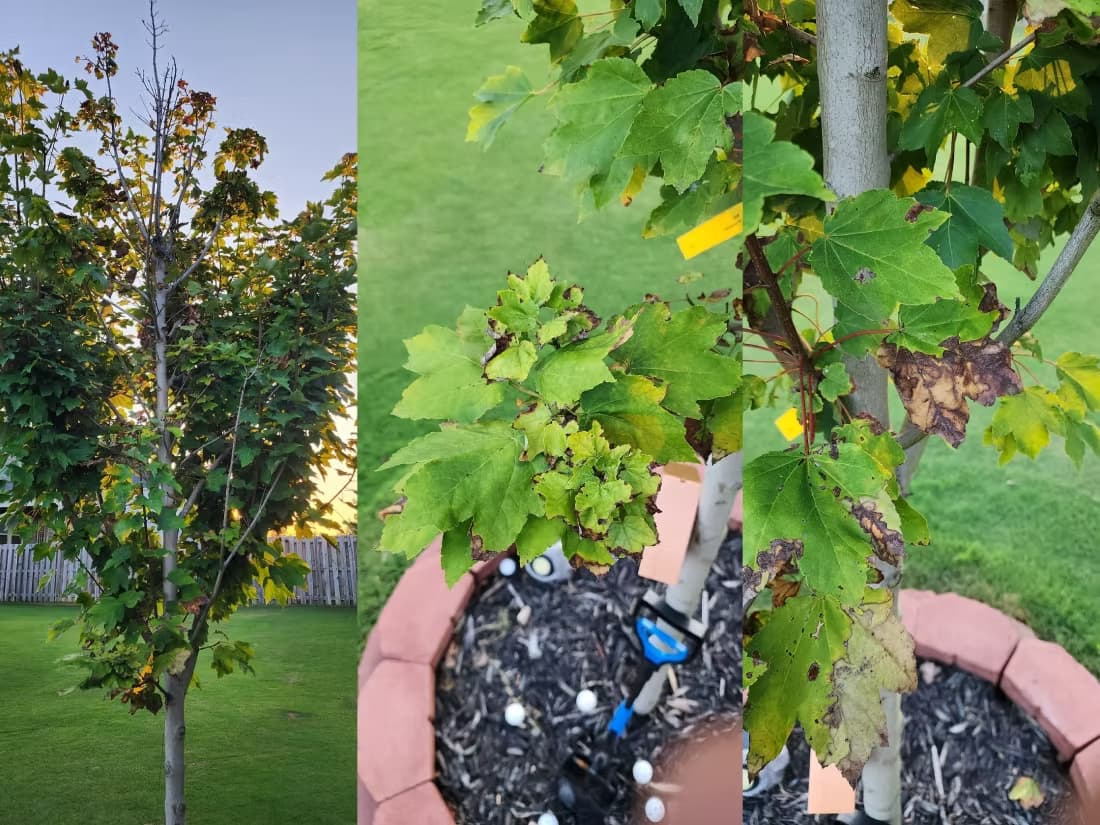
Solving the Mystery of the False Evidence in Your Lawn and Landscape
A brown leaf or a yellowing lawn is rarely what it seems. When symptoms act as decoys, a calm, forensic approach brings clarity to the confusion. Learn how to look past the surface to find the quiet truth of what your plants are truly asking for.
Read Article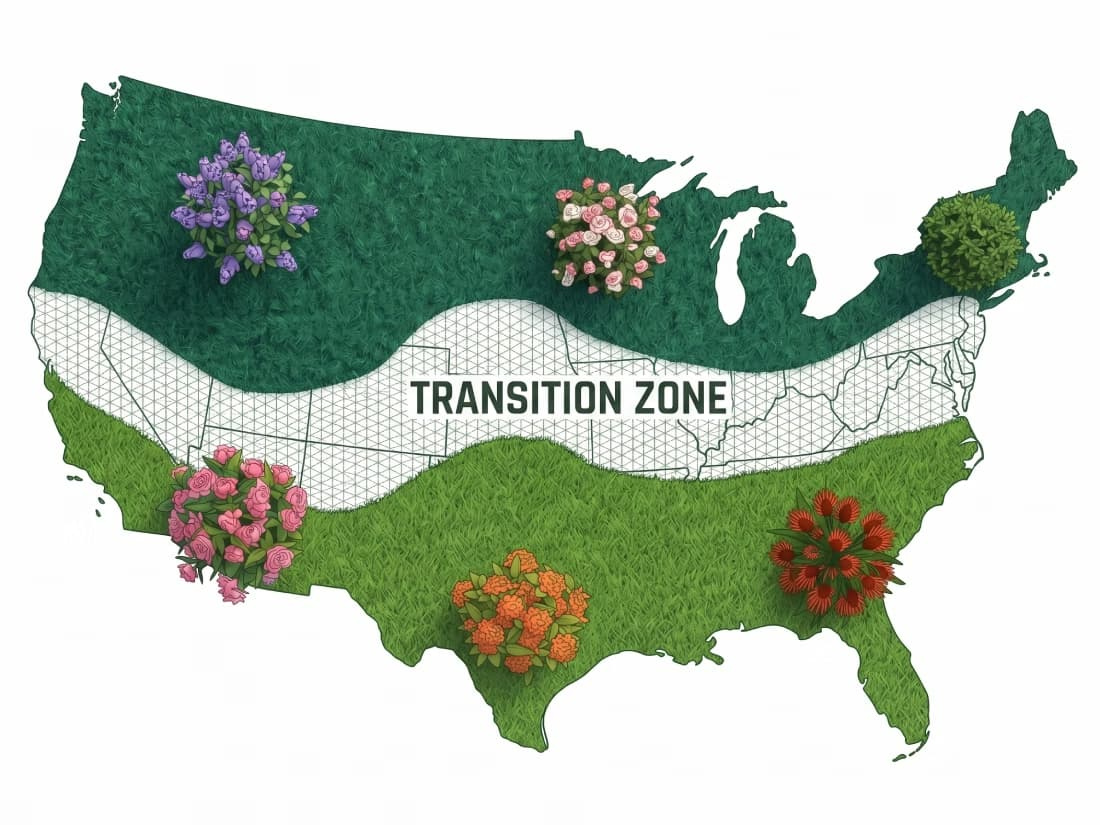
Living in the Middle: The Deep-Dive Guide to Transition Zone Lawns and Landscapes
The Transition Zone is a biological tug-of-war where neither northern nor southern species perfectly adapt. By using resilient "bridge" species and mastering maintenance levers like the Mowing Pivot, you can transform a struggling yard into a healthy landscape.
Read Article
What Your Hardiness Zone Really Means for Your Lawn and Plants
Uncover the foundation of a resilient landscape by mastering the science of hardiness zones. Learn how these climate boundaries are calculated and why understanding your local temperature limits is the first step toward choosing plants that thrive year after year.
Read ArticleFrequently Asked Questions
Our maintenance and establishment guidance is derived from long-term agronomic field studies and turfgrass performance data from top research institutions.
No, and this is the most important thing to know about it. Tall fescue is a bunch grass — it grows upward from its own crown and has no runners to travel sideways. A bare spot stays bare until you put seed on it. Cultivars marketed as rhizomatous do produce tiny rhizomes, under 1/8 inch in university trials against over 3 inches for Kentucky bluegrass, which is far too little to close a gap. Plan on overseeding every fall.
Because summer is when it loses plants. Heat stops growth, brown patch takes out patches, and traffic on stressed turf finishes the job — and none of those plants get replaced, because the grass cannot spread. That is exactly why fall overseeding is treated as routine maintenance for this grass rather than a repair job. A lawn that gets seeded each September holds its density; one that does not gets thinner every year.
No. Kentucky 31 is a forage variety released in 1943 for pasture, and along with Alta and Fawn it is coarse, clumpy, and pale in a lawn. It is cheap and widely stocked, which is why it ends up in home yards, but you cannot remove it selectively afterward — it is the same species as your lawn grass, so nothing kills it without killing everything. Look for turf-type on the bag, and check that a shade mix has not been padded out with annual ryegrass.
Never below 2.5 inches, and 3 to 3.5 is a better home target. Scalping halts root growth and strips the canopy that shades out weed seed. In one NC State trial, crabgrass cover ran 0 percent at a 4-inch mowing height and 95 percent at 1 inch. Mowing height is the cheapest weed control you have.
Tug a handful. If it resists and the crowns at the base are firm and off-white, the plant is alive and dormant. If it pulls out easily and the crowns are brown and mushy, that section is gone. A healthy dormant stand holds for 3 to 6 weeks, and up to 5 to 8 in good conditions, if you give it 0.25 to 0.5 inch of water every 3 to 4 weeks and keep foot traffic off it entirely.
You can, but extension discourages it and the reason is mechanical. Spring seedlings do not have time to build the deep root system that carries this grass through summer, so they arrive at the first heat wave shallow-rooted and unprepared. They also compete with crabgrass germinating at the same moment, and you cannot use pre-emergent to stop it without also stopping your grass. If you must seed in spring, expect to water all summer and to reseed in fall anyway.
Almost certainly not. Thatch comes from creeping stems, and tall fescue does not have any, so it barely produces thatch at all. What it does need is core aeration in early fall — it is moderately sensitive to compaction, and compacted soil chokes the deep roots that are this grass’s entire advantage. Aerate first, overseed straight into the holes.
Yes. Many cultivars carry an endophyte fungus that produces alkaloids toxic to grazing livestock, but that is a pasture issue — dogs and cats do not graze, and no toxicity to them is documented. It is actually one of the better dog lawns: tall fescue and perennial ryegrass are the most urine-resistant cool-season grasses, though concentrated spots will still burn. The one rule is never to feed clippings from an endophytic lawn to livestock or use them for bedding.
Scientific Authority
This profile is grounded in turfgrass agronomy and soil science. Every recommendation—from irrigation requirements to nutrient management—is verified against agricultural research data to ensure optimal plant health and environmental sustainability in the Transition Zone.
Primary Resources
- NC State Extension TurfFiles: Tall Fescue Profile
- NC State Extension Gardener Plant Toolbox: Lolium arundinaceum Profile
- University of Minnesota Turfgrass Science: Can we use tall fescue for lawns in Minnesota?
- University of Missouri Extension: Tall Fescue Lawns (G6700)
- Purdue University Extension: Turfgrass Selection for Indiana Lawns (AY-27-W)
- Penn State Extension: Turfgrass Disease and Cool-Season Lawn Management
- Virginia Tech & University of Maryland Extension: Turfgrass Cultivar Recommendations
- Kansas State University: Rhizomatous Tall Fescue Evaluation
- National Turfgrass Evaluation Program (NTEP): Tall Fescue Trials
- USDA-NRCS: Tall Fescue Plant Fact Sheet and Plant Guide (LOAR10)
- University of Kentucky Research and Education Center: The Rise and Improvement of Tall Fescue
- University of Arkansas Cooperative Extension: Kentucky 31 Fescue
- Oregon State University Forage Information System: Tall Fescue Monograph
- University of Tennessee Extension: Turfgrass Seed Characteristics (W160-E)