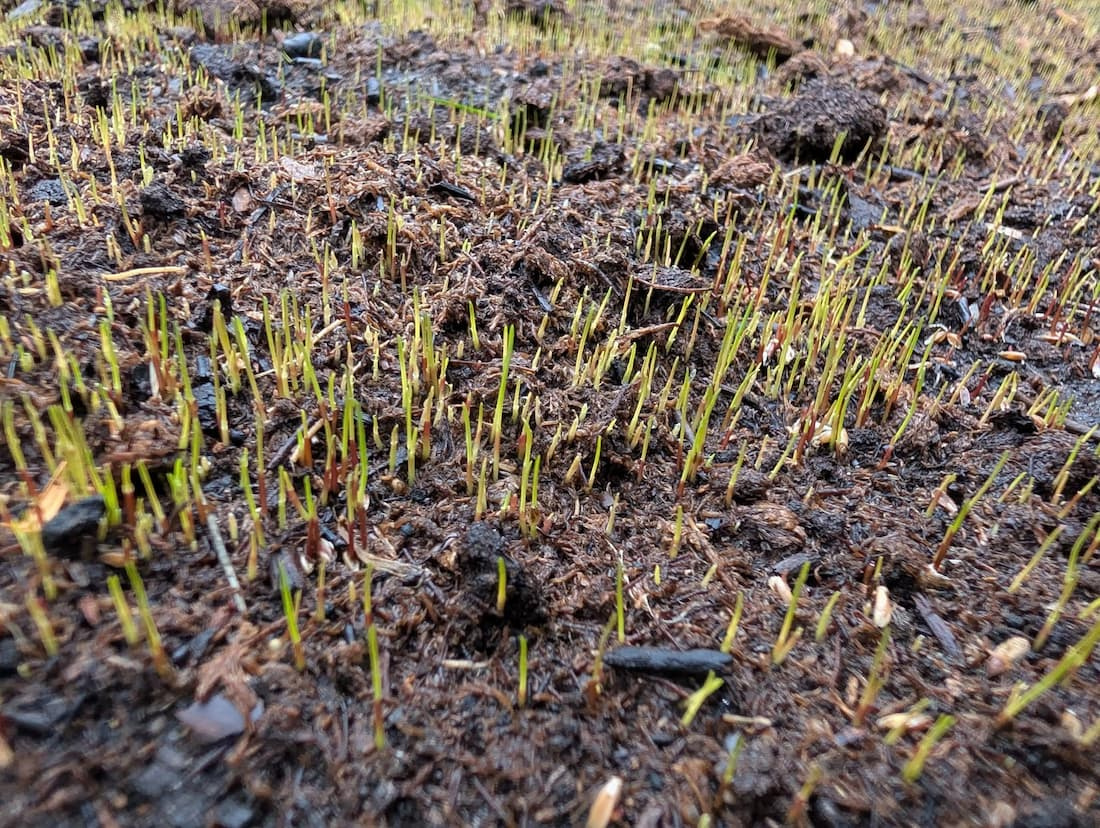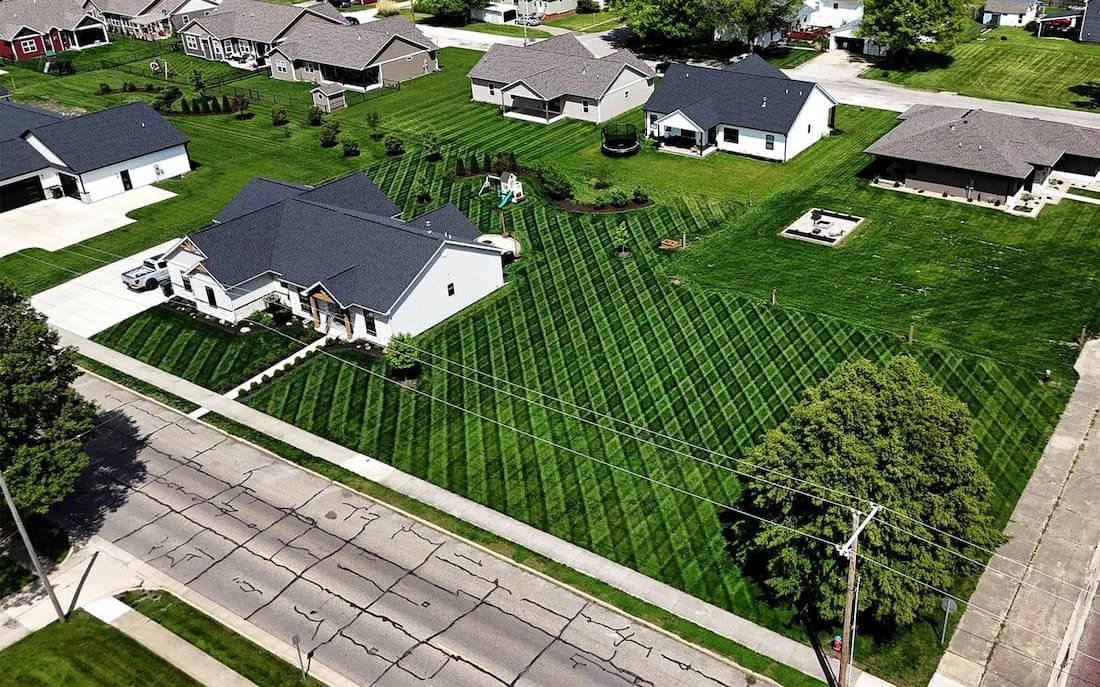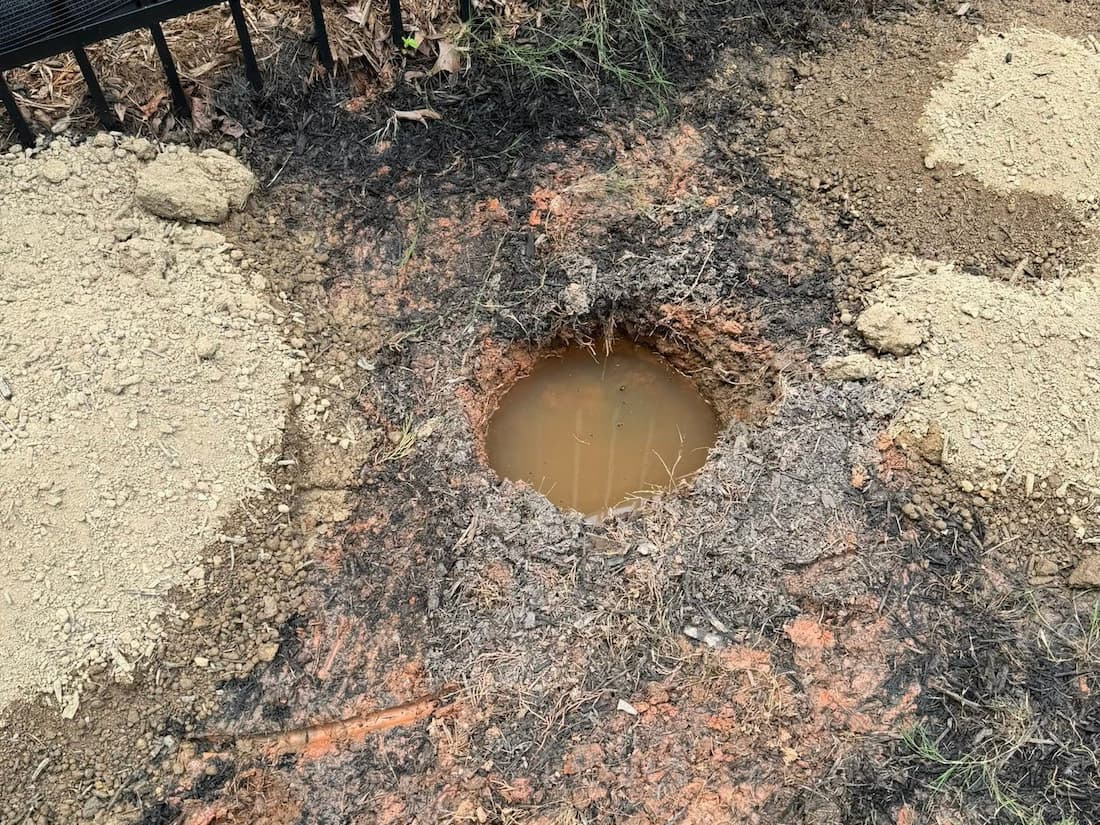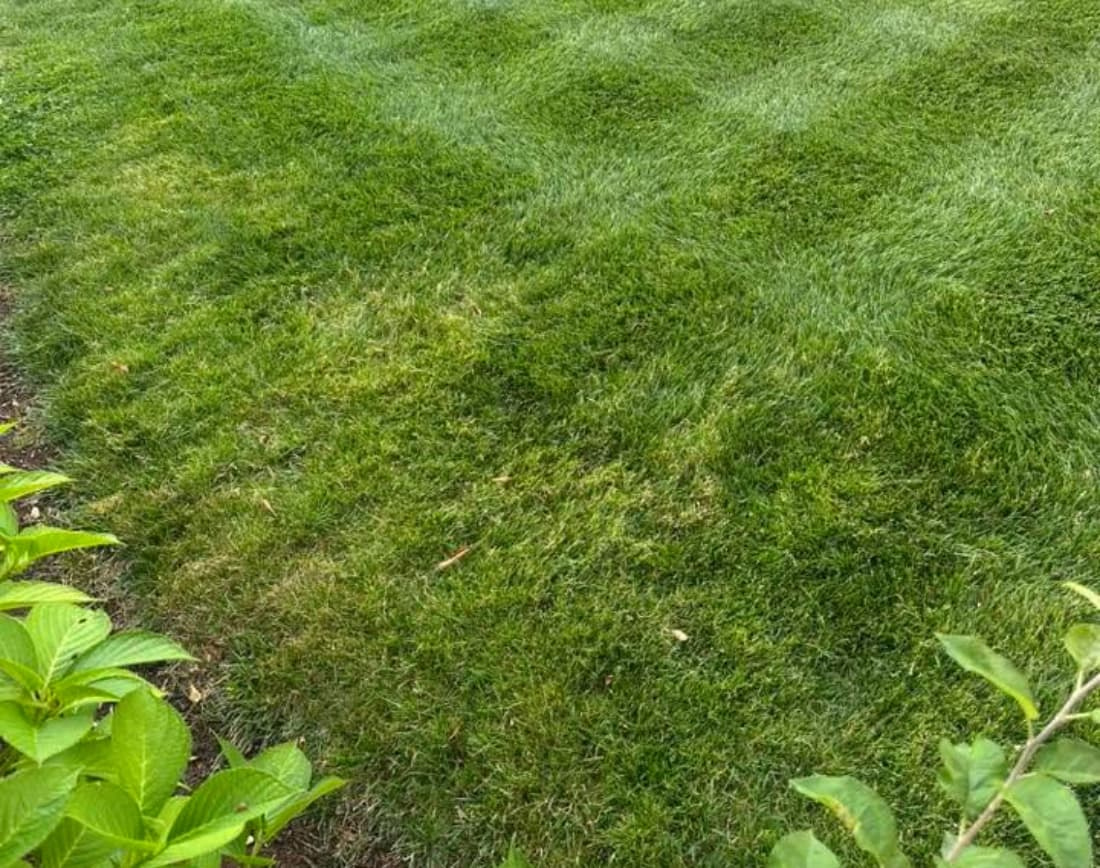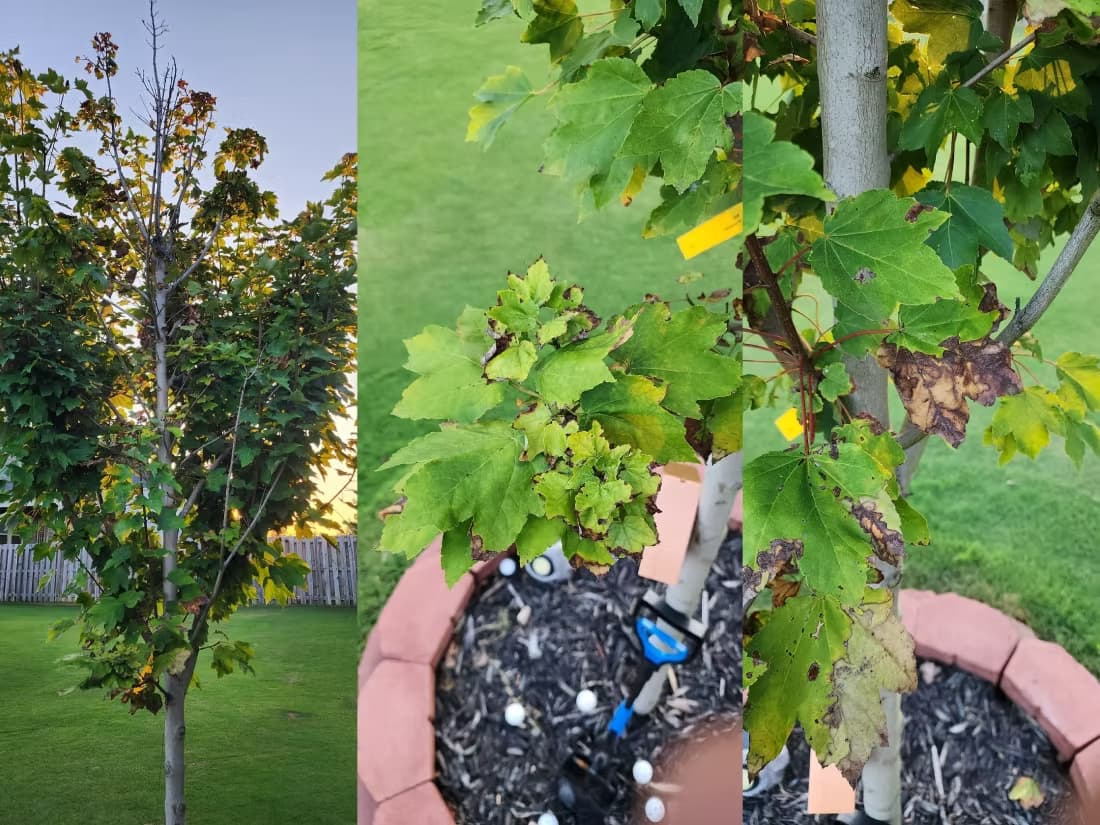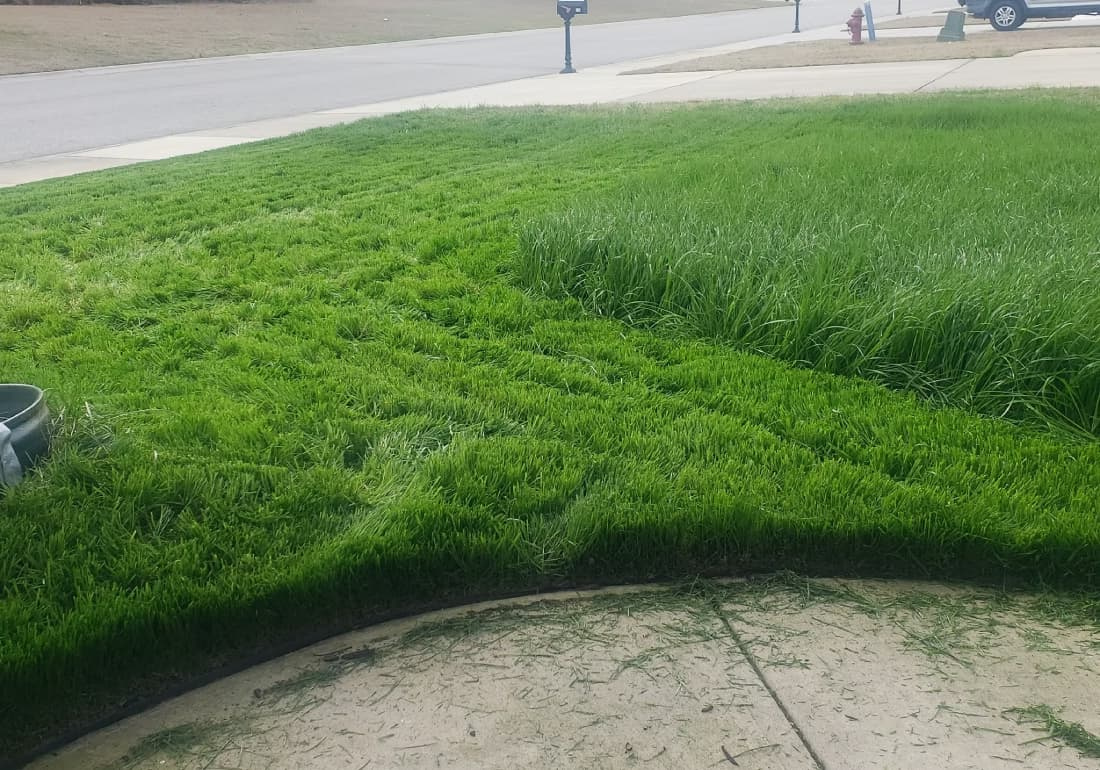
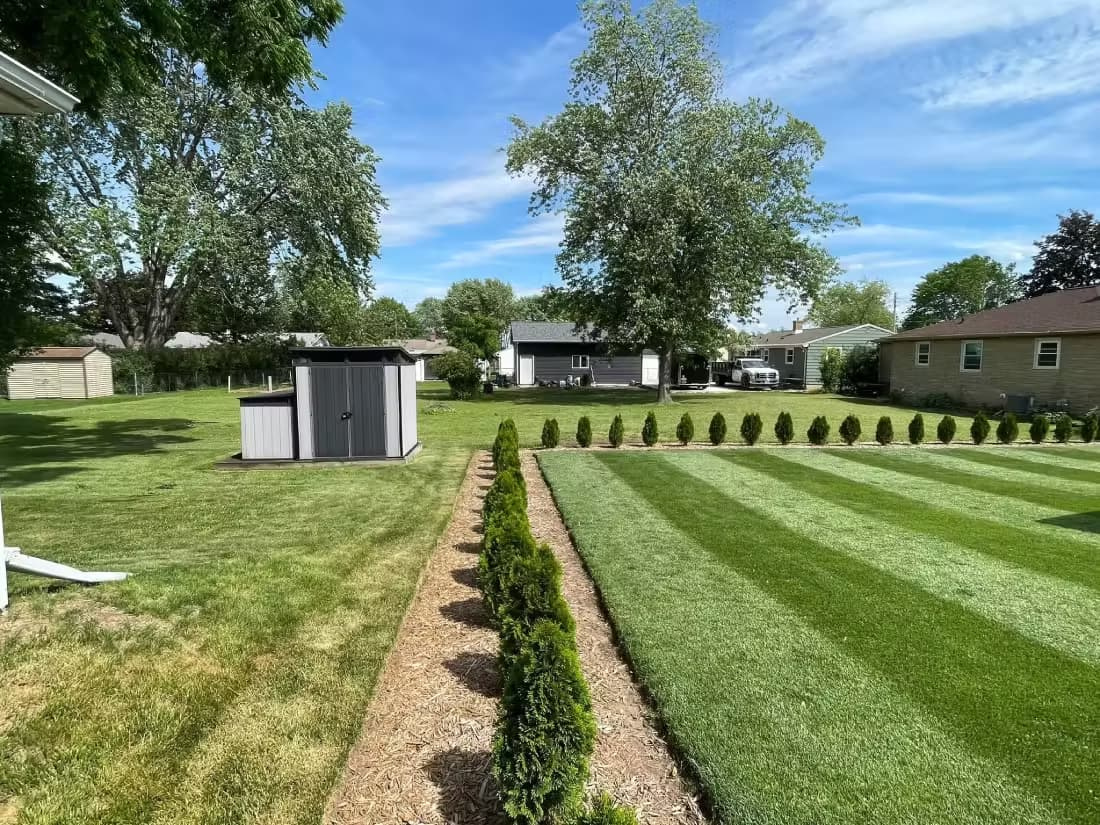
“It stayed green for about two weeks, then went crunchy brown—right along the fence” is a complaint that surfaces again and again, usually trailed by the same suspicion: the neighbor did it. From there the advice splinters. Some swear by a monthly “Fence-Line Barrier”—a strip of Roundup sprayed along the property line to stop the other lawn from creeping in; others fall back on “my side, my business” and treat the boundary like a wall. Layer on the usual folk wisdom—”spray on a nice calm, sunny afternoon,” “Roundup is Roundup, just grab a bottle,” “a weed killer that spares fescue will spare everything”—and plenty of homeowners end up in a “Border Blame” spiral, certain the damage stops at the line on their deed, when the chemistry pays no attention to fences at all.
The MFY Advice
Treat to your lawn’s calendar, not the season printed on the bag; go directed — wick, wipe, or paint — in the last few feet before any property line; and check what’s actually in the bottle, because the word “Roundup” no longer tells you what’s inside.
Table of Contents
The Timing Trap: Why Both Lawns Are Never Safe at the Same Time
Grasses come in two families that keep opposite schedules, and that difference is the whole problem.
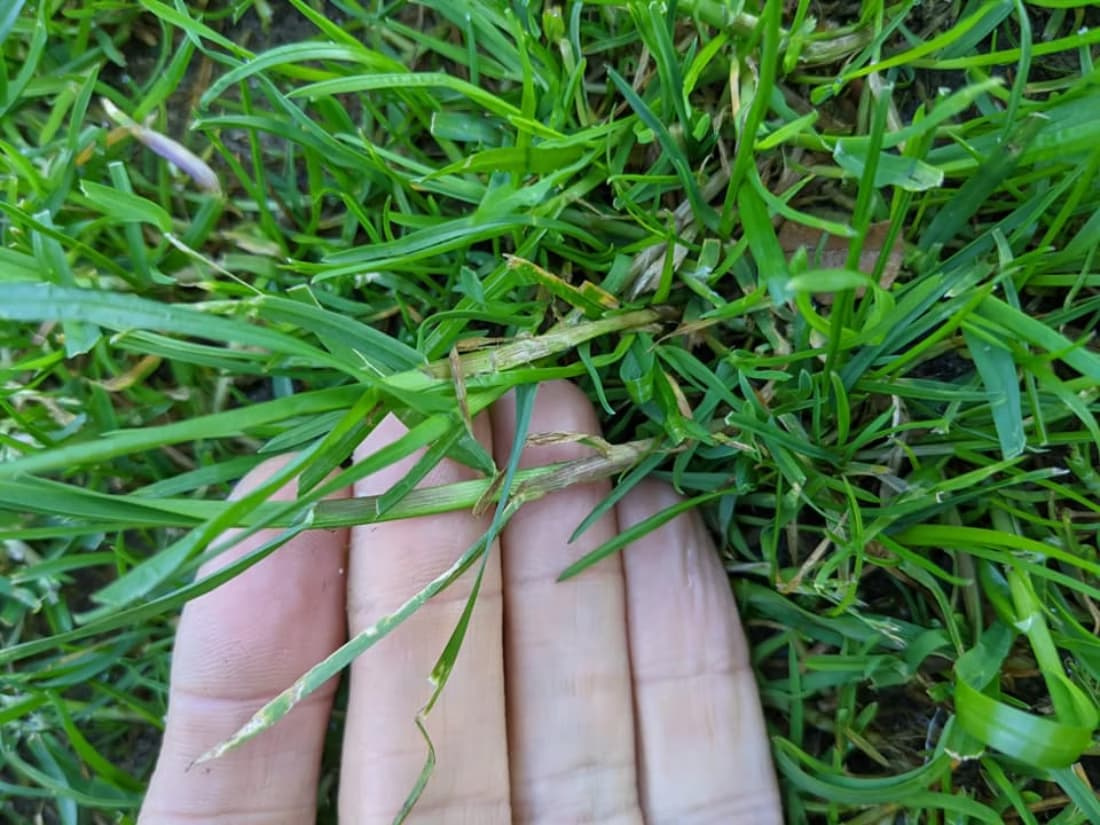
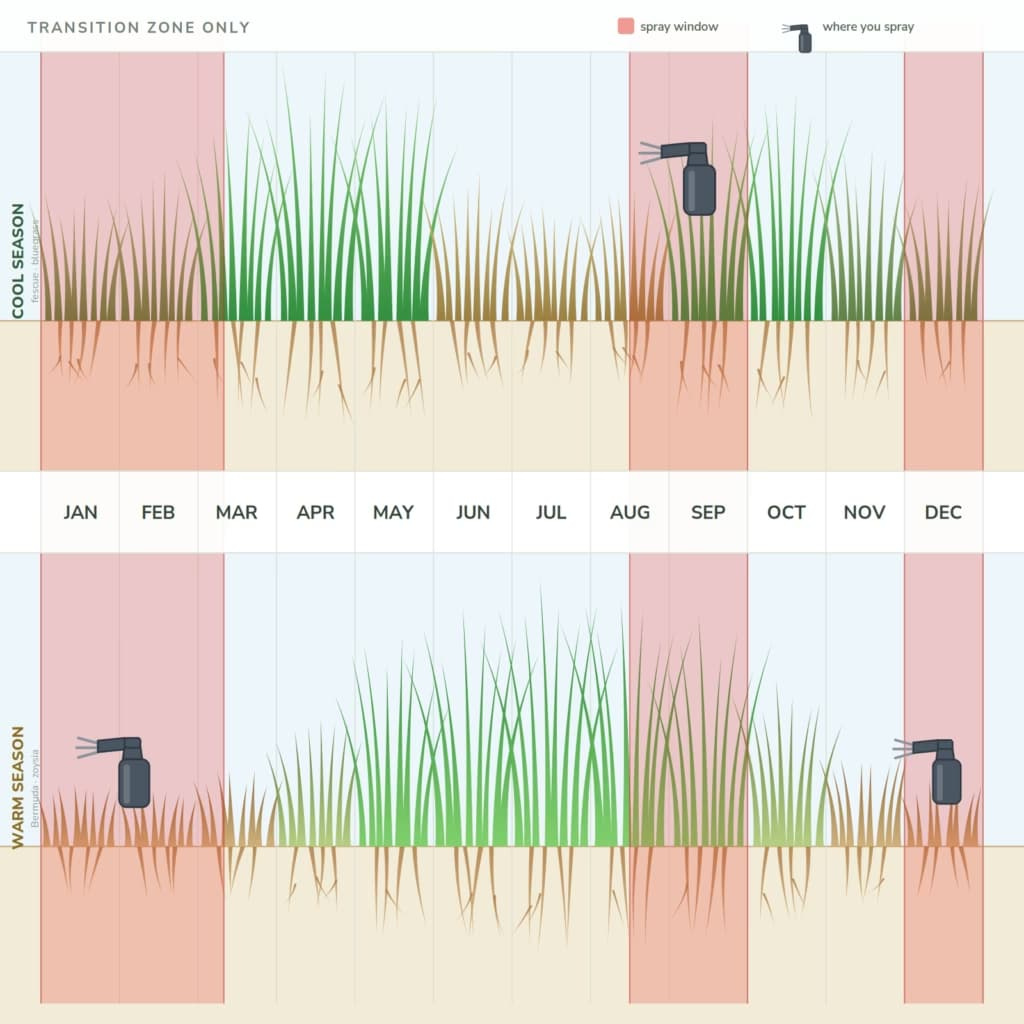
Cool-season grasses — tall fescue, Kentucky bluegrass, perennial ryegrass — do their real growing in spring and fall. When a tough perennial grassy weed invades one, like Bermudagrass creeping under the fence, there is no home-lawn spray that kills the weed and spares the good grass. They’re too closely related. So the standard fix is to spot-kill the patch with glyphosate and reseed. The best time is late summer to early fall, roughly mid-August through the end of September. Here’s the mechanism: as the days shorten, the weed stops feeding its leaves and starts moving sugar down into its roots to survive winter. Glyphosate is systemic — it moves with the plant’s own traffic — so a spray during that downhill flow gets carried deep into the roots and kills the whole plant instead of just the top.
Now look across the fence. That exact fall window is when an adjacent warm-season lawn — Bermuda or zoysia — is still green and growing hard. Anything that drifts onto it gets pulled straight into its system.
Warm-season grasses do the opposite. When temperatures drop below about 50–55 °F, they shed their green, turn straw-brown, and go fully dormant for winter. That dormant spell is its own window: you can spray a non-selective herbicide on the green winter weeds poking through, and the sleeping turf isn’t hurt — because completely brown, dormant foliage has no active flow to absorb the chemical. But mid-winter is exactly when the neighbor’s cool-season lawn is still up and growing. Same story in reverse: drift onto it, and it gets injured.
And here’s why a little drift does real damage instead of a harmless singe. Glyphosate doesn’t just burn the leaf it lands on. It’s carried to the plant’s growing points, so even a light dose that drifts onto actively growing grass gets moved into the tissue that makes new growth. The result is dead patches or a lawn that greens up late in spring — not a burnt leaf tip you can mow off.
Put it together and you get the trap at the center of this whole article: on a shared line, there is no single season that is safe for both lawns at once. The right time to treat one is the most dangerous time for the other. Think of it as a scissor — the two blades pass each other, and the fence line is where they cross.
The reason this matters so much: almost nobody knows this collision exists. There’s no warning on the bag. So the people who cause it aren’t careless — they’re simply missing one fact.
Who Actually Has This Problem
You have the scissor if two different grass families meet at or near your line — a cool-season lawn on one side and a warm-season lawn on the other — or if the two types meet in a seam inside a single yard. If both sides are the same family, you don’t have the timing conflict (though the drift rules below still apply).
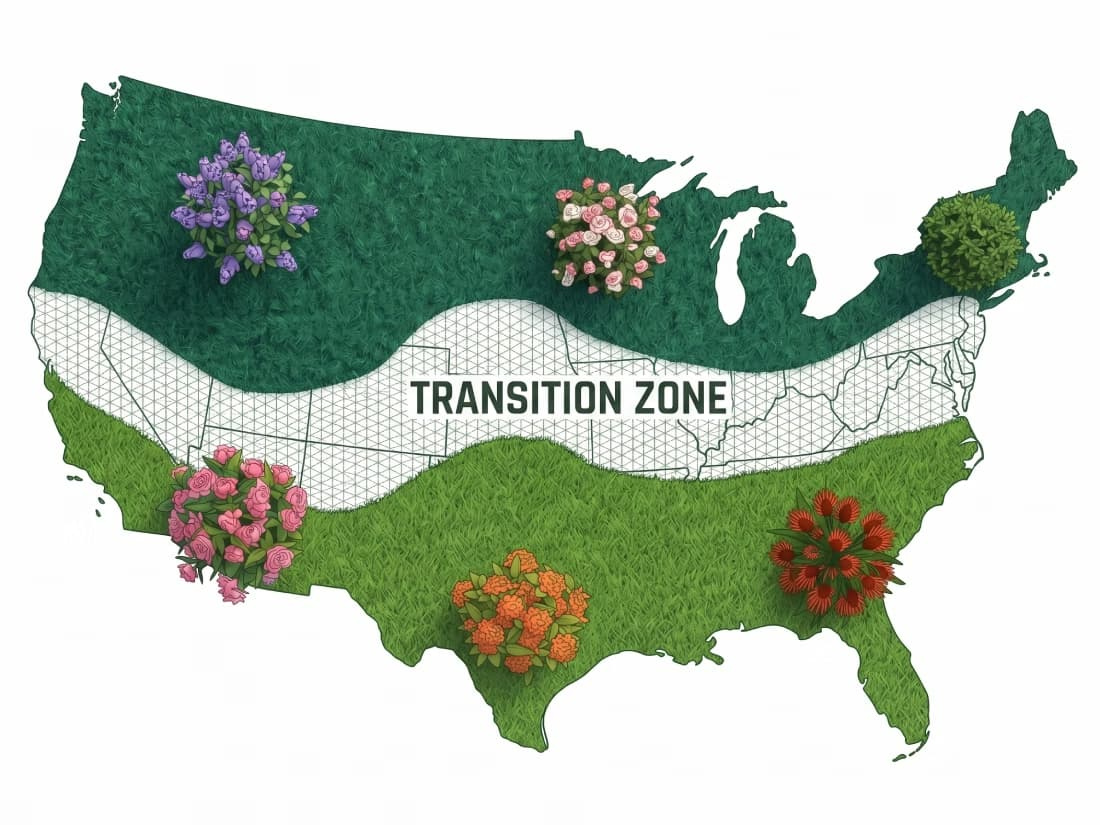
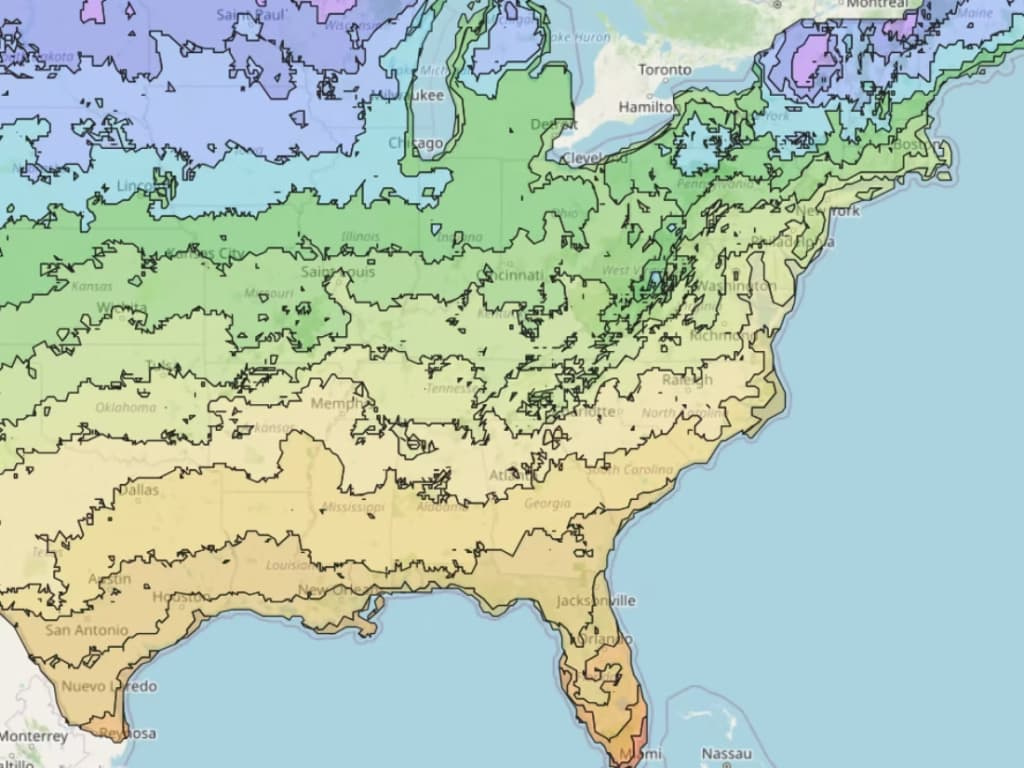
This is most common in the transition zone — think Tennessee, Virginia, the Carolinas, Kentucky, the mid-Atlantic — where the climate lets both grass families grow, so mixed neighborhoods are the norm rather than the exception.
The two safe windows sit on opposite ends of the year:
- Cool-season lawn: late summer to early fall (about August 15–September 30), while the weed is moving sugar to its roots.
- Warm-season lawn: deep winter dormancy, and the window closes as soon as the grass starts to green up in spring.
Because green-up drives the deadline, the safe winter window is regional. Rough guides from turf extension programs:
- Florida / Gulf Coast: green-up February–March, so finish any dormant spray by mid-January.
- Georgia, the Carolinas, central/south Texas: green-up March–April, finish by early February.
- Transition zone (TN, VA, NC): green-up April–May, finish by early March.
The rule underneath all of these: spray at least two weeks before growth starts. Warm-season turf sprayed within days of green-up can lose up to 40% of its quality, according to NC State turf research. Miss the window on the late side and you’re spraying grass that has already started to wake up and drink.
How to Do It Without Hurting the Lawn Next Door
Equipment Prep: What to Buy, and What to Check on the Bottle
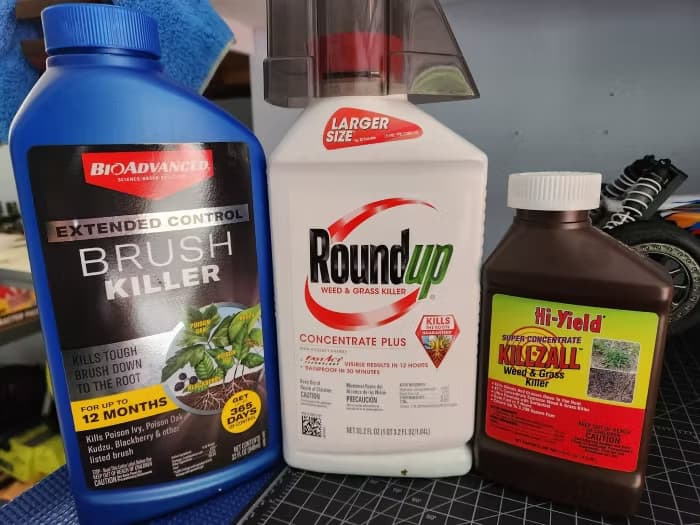
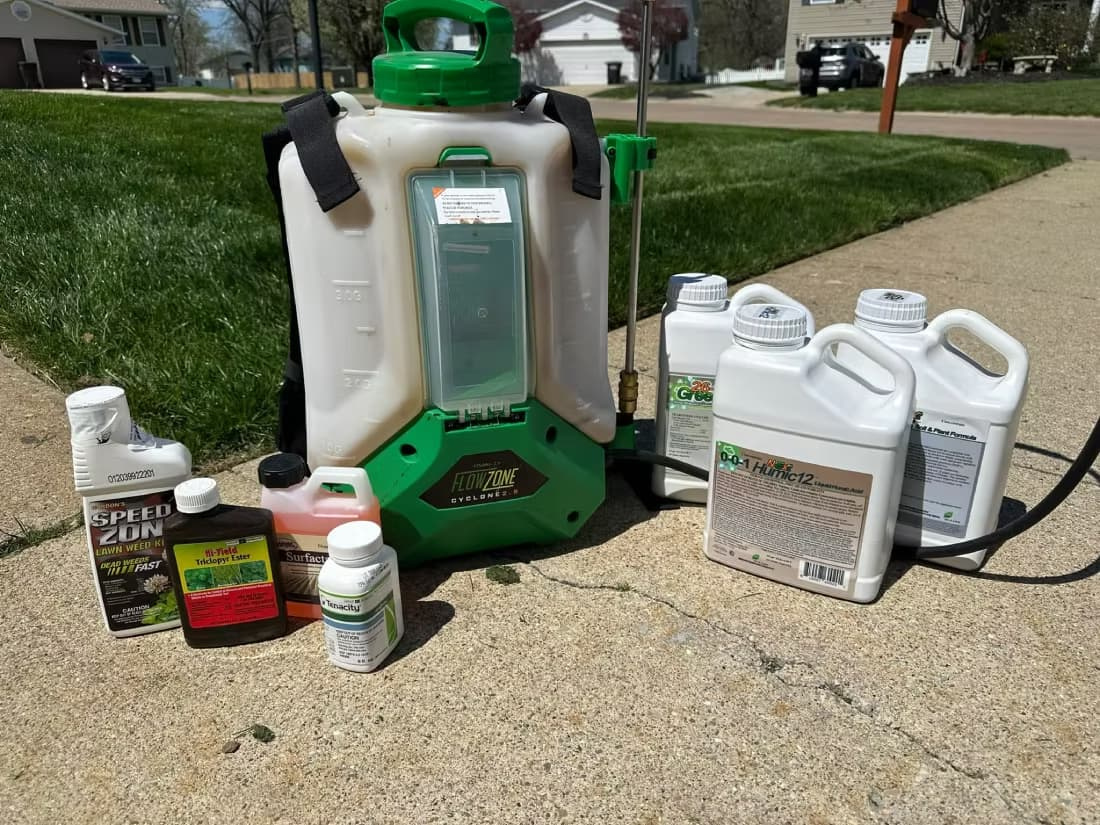
The bottle. For a spot-kill-and-reseed job, you want a product that lists glyphosate as the only active ingredient. Three reasons, all mechanical: it kills down to the root, it grabs onto the soil fast so you can reseed within about a week, and it doesn’t turn into vapor or linger in the ground. Read the active-ingredient panel on the label, not the brand name on the front. For the general handling — mixing, calibration, and personal protective gear — see our full Herbicide Application Guide; we won’t repeat it here.
What to keep away from the line. Avoid anything containing imazapic — that’s the “Dual Action,” “Preventer,” or “365” versions. Imazapic is a long-lasting soil chemical. It can travel sideways through the soil into your neighbor’s tree and shrub roots, and it blocks replanting for 4 to 12 months. A residual product is the wrong tool anywhere near a boundary you or your neighbor might reseed.
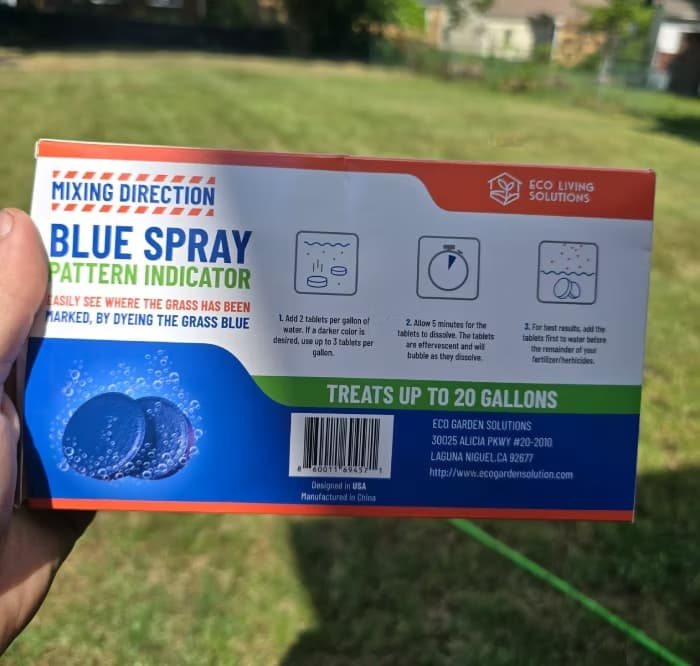
The applicators. For the last few feet before the line, skip the sprayer. A wick or wiper applicator, or a paint brush loaded with concentrate, puts the herbicide straight onto the weed’s leaf with no droplets in the air — which drops physical drift essentially to zero. If you must spray, use a shielded or hooded sprayer, which hoods the nozzle so wind can’t catch the mist. Add a marker dye so you can see exactly where you’ve been.
The buffer strip. Agree with your neighbor on a narrow unsprayed strip right along the line, kept clear by hand-pulling or wiping — never by spraying. It gives both lawns a margin for error.
Execution: Step by Step
- Identify the line and both grass types. Know which side is cool-season and which is warm-season. That’s what sets your timing — everything downstream depends on it.
- Check the bottle. Read the active-ingredient panel. Glyphosate-only for spot-kill-and-reseed. No imazapic near the line.
- Pick the method. Broadcast spraying is off the table anywhere close to the boundary. Switch to directed application — wick, wipe, or paint — in the last few feet.
- Pick the timing for your lawn. Cool-season: late summer to early fall. Warm-season: full dormancy, at least two weeks before green-up.
- Give your neighbor a heads-up. A two-minute “I’m treating weeds along the fence this weekend — mind moving your potted plants, and tell me if anything of yours is close to the line.” This is the step that quietly prevents the whole dispute, because now you’re both watching the same spot.
- Apply with the drift-safe technique. Wait for calm-but-not-dead air, a cool part of the day, no hot spell in the forecast, and any breeze pointed away from the line.
- Set up and keep the buffer strip. Maintain that unsprayed margin mechanically going forward.
The Deeper Cuts (What the Pros Watch For)
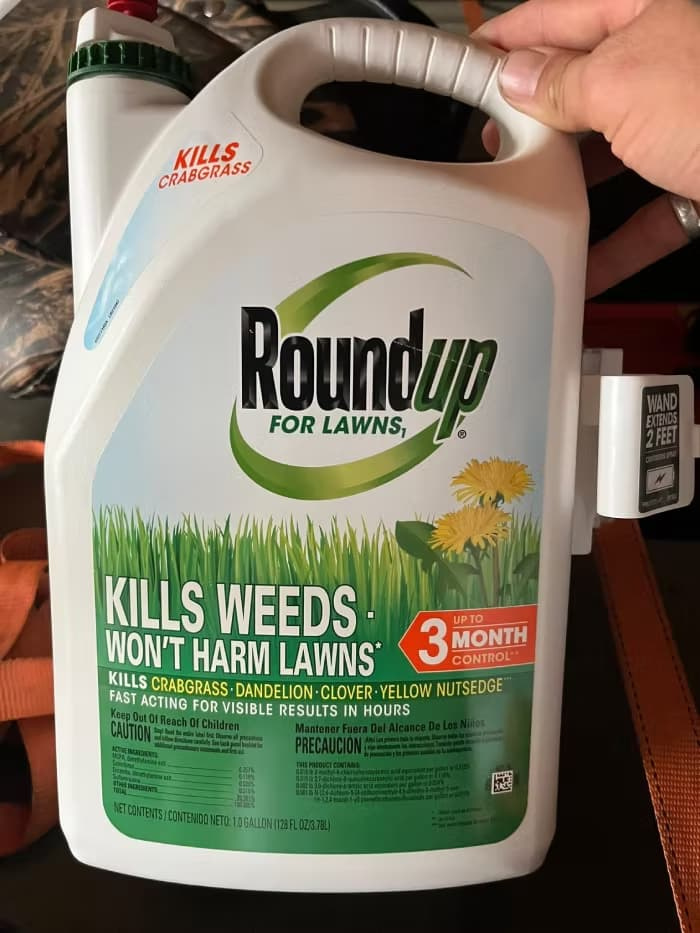
The bottle probably isn’t glyphosate anymore. This is the one that catches experienced homeowners. Bayer announced the move in 2021 and phased it in starting in 2023; by 2024–2025 the reformulated versions are the norm on shelves, though old glyphosate stock can still turn up and professional Roundup still contains it. The reason was managing lawsuits, not any ban; glyphosate is still fully legal. The everyday “Roundup Weed & Grass Killer” you grab now is a three-way mix — triclopyr, fluazifop-P-butyl, and diquat — and the “Dual Action” and “365” versions add imazapic on top. Meanwhile glyphosate is still sold plenty of other ways: generic store-brand bottles, the legacy Roundup Super Concentrate (the purple-cap one), and professional products. So “Roundup is Roundup” is simply dead. Read the panel every time.
Heat and vapor — the honest version. You’ll hear that you should never spray weed killer in the heat, and that’s good advice — but the reason usually gets garbled. The triclopyr in consumer Roundup is a low-volatility salt, so it isn’t the vapor problem. The real vapor risk lives in ester and dicamba products — 2,4-D esters, dicamba weed-and-feeds, triclopyr-ester brush killers — which readers reach for all the time. On a hot day those lift off the leaf or soil as a gas and drift for days, well after you’ve packed up: dicamba can keep moving as vapor up to 60 days, and hot-weather ester vapor up to 30. So heat is genuinely the enemy — you just have to know which chemical you’re actually holding. Heat also dries fine droplets in the air and, on still evenings, sets up the inversions below.
The zoysia trap. A “dormant” zoysia lawn usually isn’t really asleep. Unlike Bermuda, zoysia keeps green stems and stolons alive down at the base, under a brown surface canopy. And those stolons soak up several times more herbicide than the leaves do — up to four times more in the research. So a winter dormant spray that’s perfectly safe on fully brown Bermuda can still injure zoysia, with the damage showing up unexplained in spring. Extension services in Arkansas and Tennessee flat-out advise against non-selective sprays on dormant zoysia. If the warm-season lawn on the line is zoysia, treat the “dormant window” as unsafe, not safe.
Temperature inversions. The instinct to spray on a dead-calm evening is exactly backwards. As the ground cools at dusk, a layer of warm air can settle on top of the cool air near the ground and cap it — so nothing rises and disperses. Fine droplets and vapor hang in that low layer and slide sideways for a long way on the faintest breeze. The tells: heavy dew, ground fog pooling in low spots, smoke lying flat instead of rising, and sounds carrying clearly from far off. See any of those and don’t spray. Completely still air is a warning sign, not a green light.
Why it looks like the neighbor did it. Herbicide damage hides in time. Glyphosate injury takes 1 to 2 weeks to appear — longer in cool, cloudy weather — so grass can stay green for a while and then go crunchy brown. A winter dormant-spray mistake is worse: it doesn’t show at all until the lawn tries to green up in spring, months later. Damage that shows up next door, weeks or seasons after the cause, gets read as sabotage when it was chemistry. And the geometry is symmetric — the very same fence lets either neighbor accidentally injure the other. This isn’t a “your neighbor is out to get you” story. It’s a “two honest people, one missing fact” story, in both directions.
If It Already Happened
Say a brown streak has already shown up along the line. Start from the most likely explanation, which is also the kindest one: an honest mistake. Almost nobody knows the timing collision exists, so someone treating their own lawn “correctly” can injure the lawn next door without a clue that it’s even possible.
The delayed timing is actually the tell that it was chemistry, not a fib. “It stayed green a couple weeks, then went crunchy” is textbook systemic injury — that’s how glyphosate works, not how a cover story works.
The outlook is better than it looks. Most turf recovers. Bermuda caught at light green-up usually greens back up; a glyphosate patch reseeds and fills in. In the moment the damage looks permanent, and it usually isn’t.
So fix it together. Figure out which bottle and which window caused it, so it doesn’t repeat; agree on the unsprayed buffer strip; and reseed the patch. That five-minute conversation solves the actual problem — a feud never does.
Safety & Sensitivity Audit: Protecting Your Home and Environment
Before you treat anything near a boundary, run this list. It protects the neighbor’s yard, the environment, and you.
- Gear and handling first. Wear the protective equipment the label calls for and follow the label rate exactly. The details are in our Herbicide Application Guide — don’t freehand this part.
- Protect the neighbor’s root zones. Keep any imazapic product far away from trees and shrubs, on either side of the line. Roots run well past the branch tips, imazapic moves through soil, and roots pull it in — the result is stunting, yellowing, and dieback that can take weeks to show.
- Mind the vapor and the residue. If your bottle contains an ester or dicamba, don’t use it near the line in warm weather — it can drift as a gas for days after you’re done. If it contains imazapic, expect it to linger in the soil and block replanting for months, and to travel sideways in heavy rain.
- Never rinse equipment near the line or anywhere water drains toward your neighbor. Rinse water carries the same chemicals as the spray.
- Own where it lands. You are responsible for where your product ends up — your side or theirs. Under federal law (FIFRA), it’s a violation to use a pesticide in a way the label doesn’t allow, and that includes ignoring the wind and boundary cautions. Read that as a reason to take real care, not as a weapon to wave at anyone. The goal here is to protect first and never to prove fault.
Sources
This article synthesizes university extension, pesticide-safety education, and peer-reviewed turfgrass and weed-science sources, with EPA-registered product labels and manufacturer information used only for current product composition; the Roundup reformulation timeline is drawn from university-extension sources.
- Cornell University Pesticide Safety Education Program (PSEP) — the pesticide label and weather-wise application
- Penn State Extension — amines versus esters; herbicide volatility and selection
- Purdue University (Extension, Purdue Turf, College of Agriculture) — spray-drift reduction; herbicide delays after seeding; triclopyr; “When Roundup Isn’t Roundup” (consumer reformulation)
- Ohio State University Extension (Ohioline; Herbicide-Drift Risk Management program) — spray drift and herbicide injury; dicamba and 2,4-D drift
- Rutgers Cooperative Extension, Plant & Pest Advisory — best practices to avoid herbicide drift
- Michigan State University, Plant & Pest Diagnostics — the Roundup reformulation
- Louisiana State University AgCenter — reformulation of homeowner Roundup
- University of Tennessee Institute of Agriculture (UT Hort; Herbicide Stewardship) — Roundup product changes; Bermudagrass control in fescue and zoysia; dormant-spray timing
- North Carolina State University TurfFiles — glyphosate on slightly greened-up Bermudagrass
- Clemson University Home & Garden Information Center — reducing herbicide damage in the landscape
- University of Georgia CAES — herbicide injury to trees
- University of Florida IFAS — Bermudagrass contamination management; federal pesticide law
- University of Missouri Extension and Missouri Weed Science — lawn and turf management; off-target movement
- University of Arkansas Cooperative Extension and Horticulture — zoysiagrass care calendar; seeded Bermudagrass establishment
- Virginia Tech (VTechWorks) — zoysiagrass response to spring green-up herbicides
- University of Delaware Cooperative Extension — herbicide drift and temperature; pasture herbicide use
- University of Wisconsin–Madison Extension — dicamba volatility
- Iowa State University Integrated Crop Management — dicamba volatility; temperature inversions
- North Dakota State University Extension — air-temperature inversions and pesticide drift
- University of Wyoming Extension — air-temperature inversions and pesticide drift
- University of Nebraska–Lincoln CropWatch — avoiding off-target movement
- University of California Agriculture & Natural Resources (UC IPM) — seasonal grass growth
- UMass Center for Agriculture, Food, and the Environment — turfgrass response to water deficits
- South Dakota State University Extension; University of Arizona and New Mexico State University Extension; Northern Arizona University — weed control and residual herbicides
- Minnesota Department of Natural Resources — imazapic pesticide risk assessment
- Washington State Department of Transportation — imazapic roadside-vegetation fact sheet
- Peer-reviewed journals: Weed Science and Weed Technology (Cambridge); ASHS journals — zoysiagrass subcanopy herbicide absorption and green-up transition
- U.S. EPA registered pesticide labels — product active-ingredient composition and replant intervals
- Bayer / Roundup product information — consumer product composition only (current active-ingredient panels)formation — reformulation timeline and consumer product composition