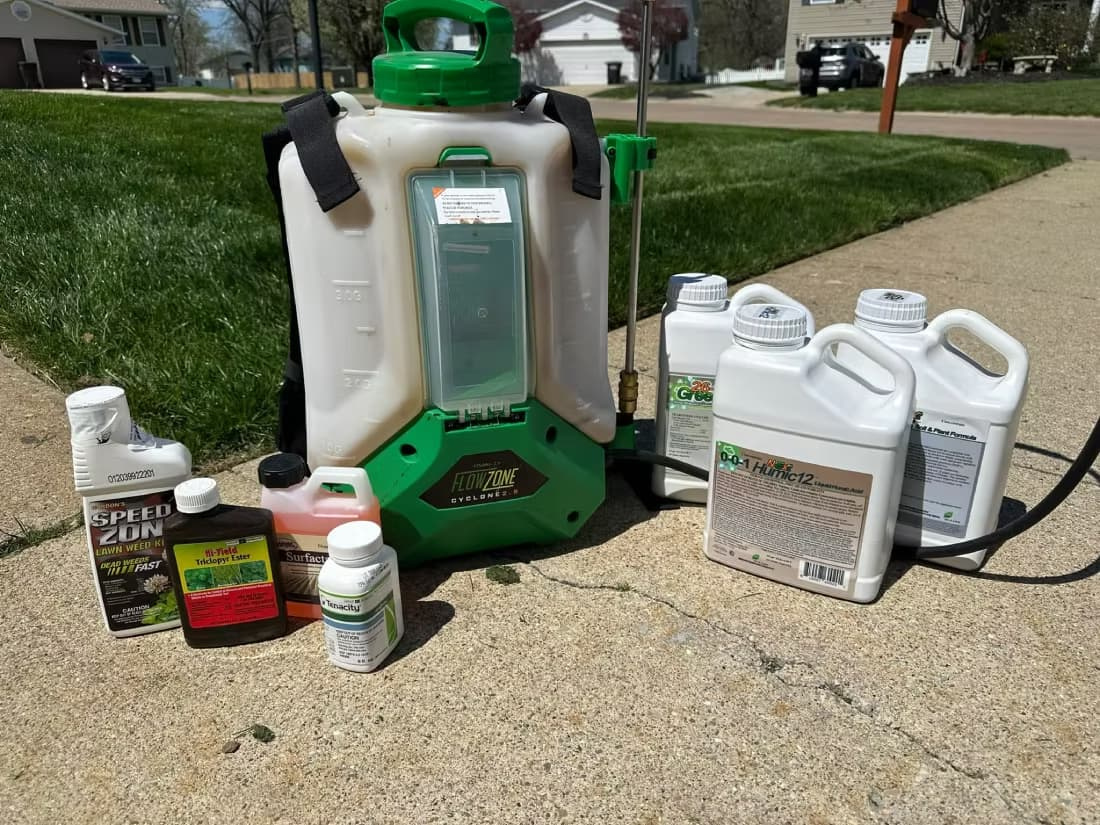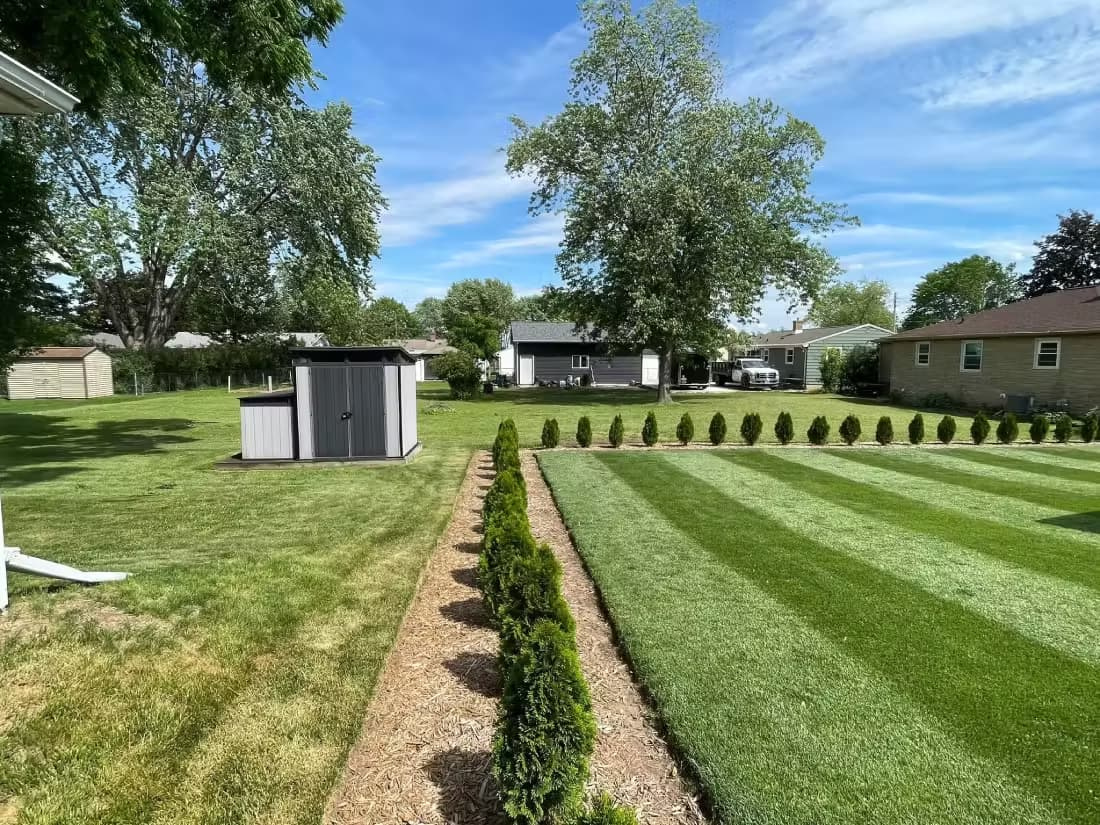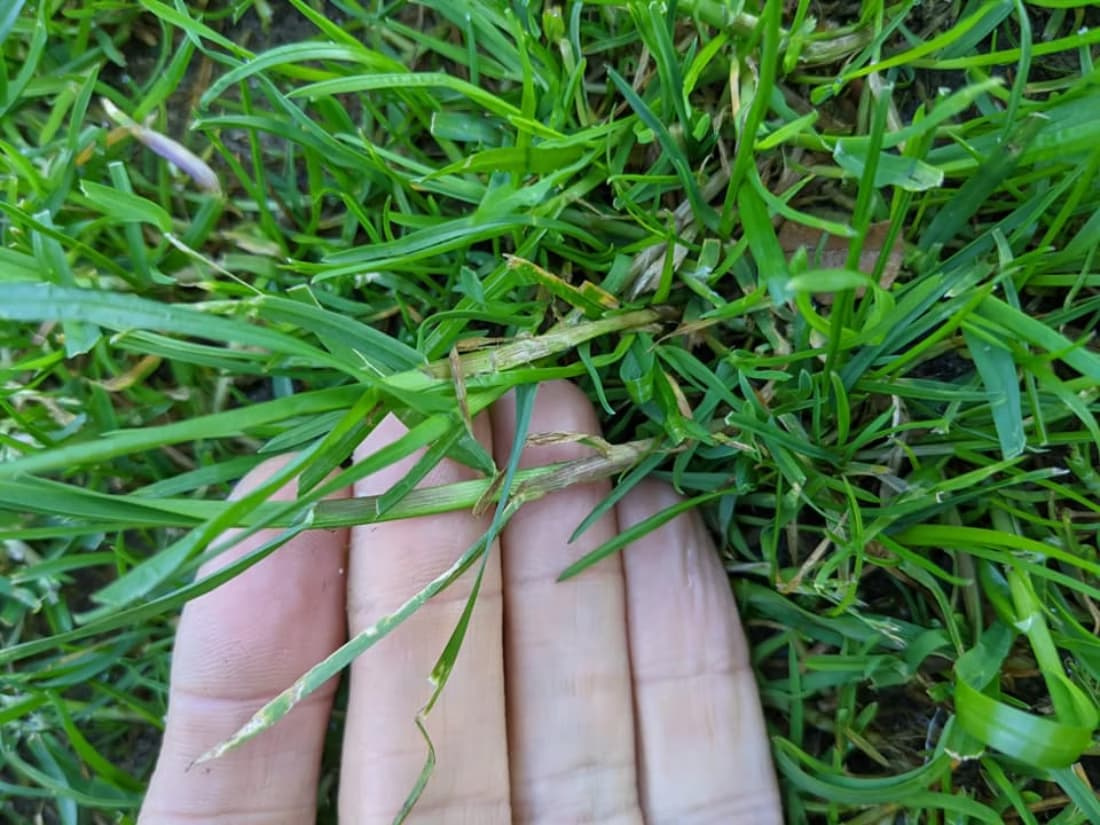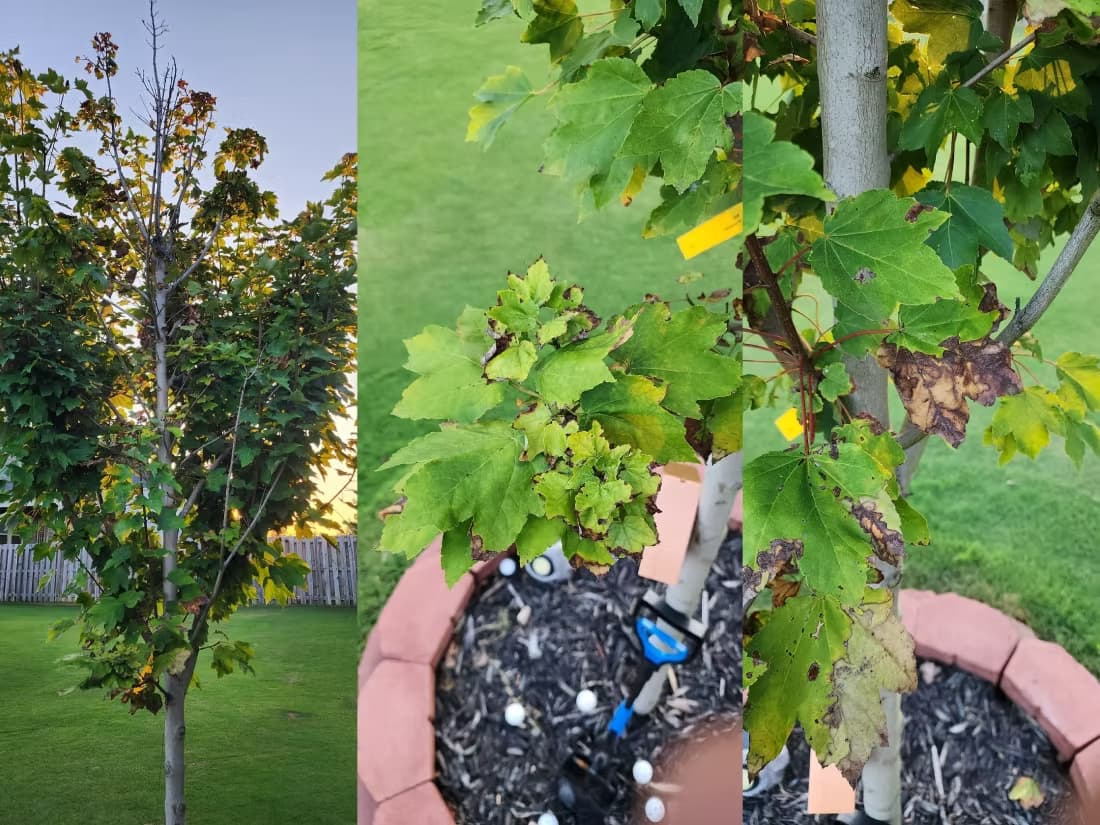
Spend an hour on any lawn forum and the same defeated thread repeats itself. “I pull it and it comes back thicker.” “By the time I see the white seedheads it’s already too late.” “Every spray that kills the Poa also fries my good grass.” “The stuff that worked three years ago does nothing now.” “I finally cleared a big patch and now that bare spot is a Poa nursery.” And the kicker: “My lawn is perfect and my neighbor’s yard just reseeds mine every time the mower crosses the property line.” It reads like futility. It’s not — it’s just a seed-bank problem being fought like a plant problem.
The MFY Advice: You Can’t Win This in One Season — So Stop Trying
Here’s the bottom line before anything else: a single healthy Poa annua plant drops anywhere from a few hundred to over 2,000 seeds, and roughly one in ten of those stays alive in your soil for six years or more. That reservoir — the seed bank — is the real opponent, and it sits under your lawn and your beds. The plant you can see is just this year’s withdrawal from an account you didn’t open.
That changes everything about how you fight it. You will never spray, pull, or mow your way to a clean yard in one season, because even 100% control of visible plants leaves the bank fully funded. What actually works is starving the bank over multiple seasons while making your lawn and beds too dense for new seeds to sprout. That’s a three-year job, and it has a rhythm: Year 1 you stop the bleeding, Year 2 you grind the bank down, Year 3 you let a thick lawn (and well-mulched beds) finish the job. Get the timing of one fall pre-emergent right, layer cultural control on top, and rotate your chemistry so the weed can’t adapt — and you go from “endless cycle” to “under control.” Not eradicated. Controlled. The difference matters, and we’ll be honest about it the whole way down.
Table of Contents
The Origin Story: A Seed Machine That Runs on Your Mistakes
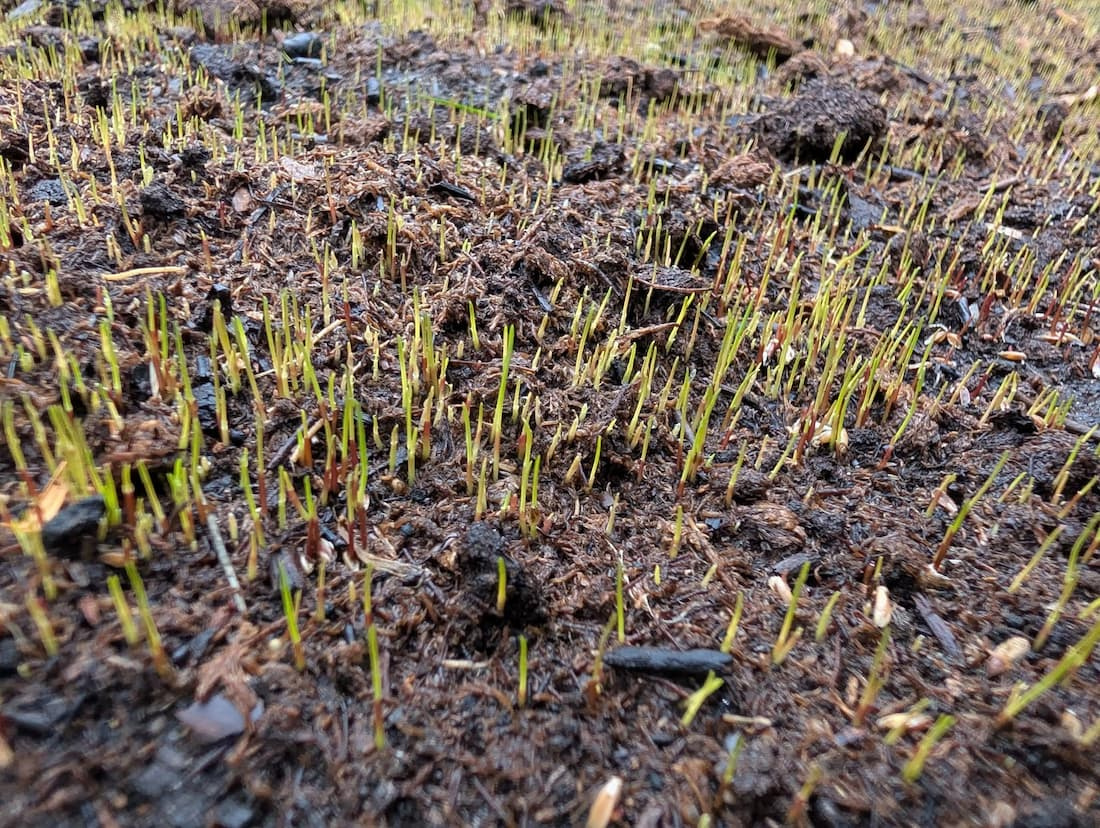
To beat this weed you have to respect what it actually is. Annual bluegrass is a winter annual: it sprouts in fall, grows all winter, seeds in spring, and dies in summer heat. Sounds convenient — the plant kills itself every year — but that’s the trap. It doesn’t need to survive. It just needs to make seed, and it is frighteningly good at it.
Seed at the Speed of Light
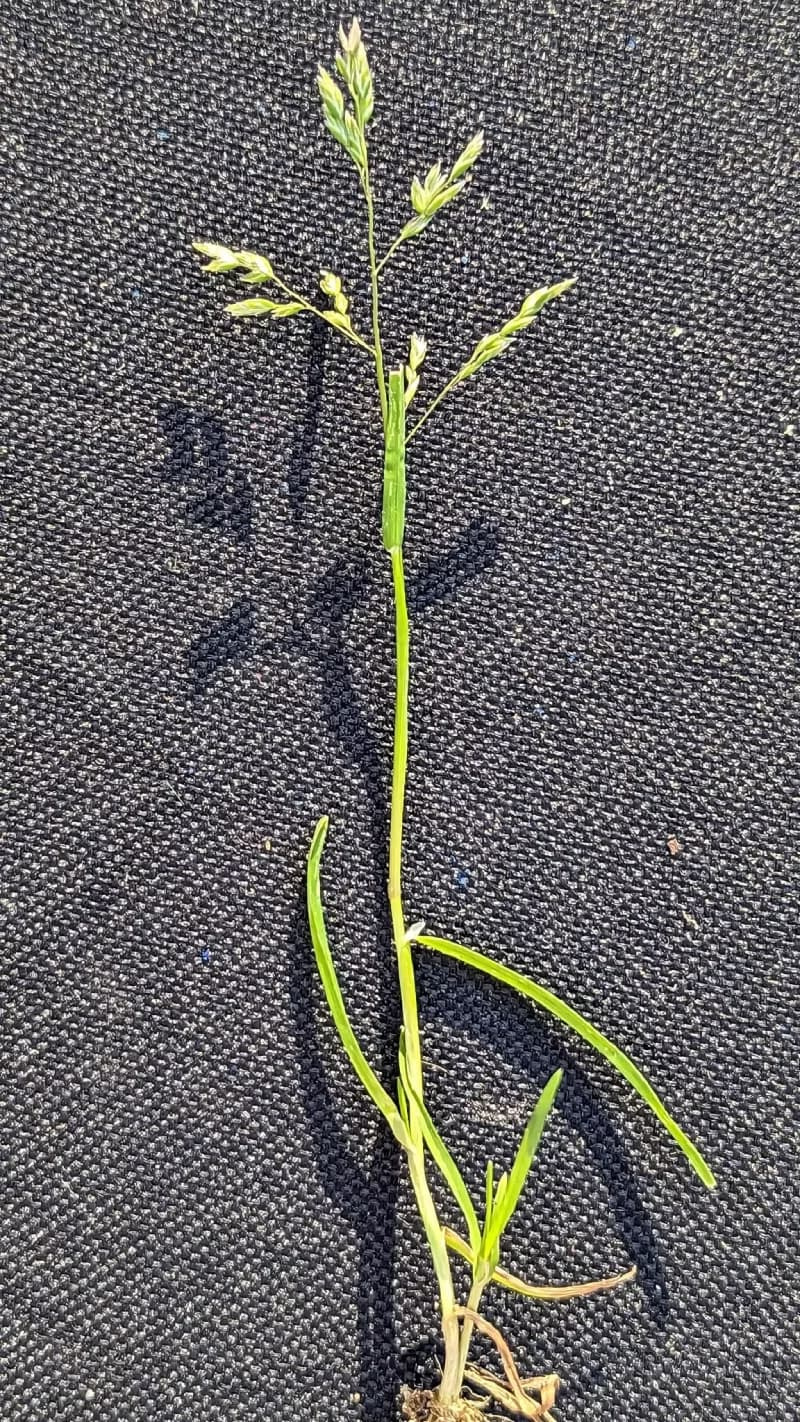
This is the part that surprises most homeowners. A Poa annua flower can produce viable seed within about a day of pollination. Cut the seedhead off, and it can still finish ripening viable seed after it’s separated from the plant. It goes from a sprouting seedling to a seed-dropping adult in as little as six to eight weeks, and — this is the cruel part — it flowers and sets seed even when you scalp it below an eighth of an inch. Purdue and Michigan State turf programs both document this relentless, mow-proof seeding. So by the time you spot those telltale white seedheads, the damage is already done: seed is dropping into your soil as you read the mower manual. That single fact answers the most common forum complaint — “it’s too late by the time I see it” — because with Poa annua, it usually is.
The Bare-Spot Trap
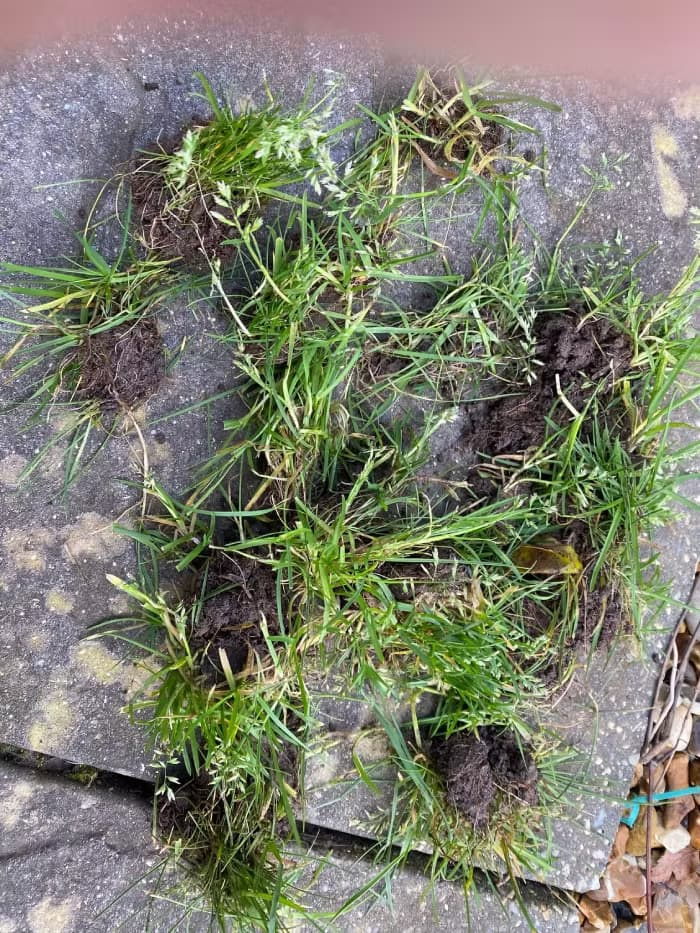
Poa annua seed needs light to germinate. That’s why it explodes into any thin, scalped, or freshly disturbed patch of soil — and why the well-meaning homeowner who rips out a big clump and walks away has just built a nursery. The bare spot is exactly the sunlit, open soil the seed bank is waiting for. Every removal that isn’t immediately followed by filling the gap is a net gain for the weed.
Why garden beds are even more inviting than the lawn
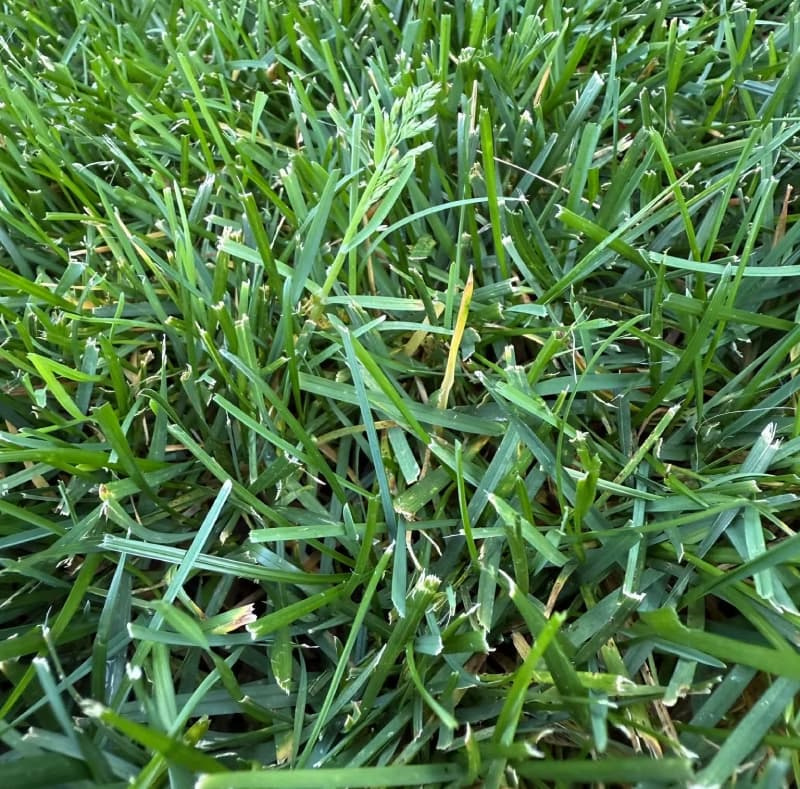
Beds hand Poa annua everything it wants. The frequent surface irrigation that keeps ornamentals happy also keeps the weed’s shallow, thirsty roots alive right through the dry stretches that would kill it in open turf. And beds get disturbed constantly — weeding, planting, dividing perennials — which keeps dredging buried seed up into the light where it can sprout.
Worse, the seed often doesn’t even need your soil. As mulch breaks down into a moist, loose layer, incoming seed germinates inside the decomposing mulch without its roots ever reaching dirt. Landscape fabric doesn’t save you either — the roots simply grow down through the weave. Extension research also notes that an infested bed acts as a seed reservoir that quietly re-seeds the adjacent lawn, so beds aren’t a side issue; they’re often the source.
The Neighbor Comparison: Why Your Crabgrass Preventer Failed
Here’s the mix-up that quietly sabotages more yards than any other. Crabgrass and Poa annua are mirror-image twins. Both are grassy annuals. Both are stopped by the same class of pre-emergent chemistry (the Group 3 “DNA” herbicides — prodiamine, dithiopyr, pendimethalin). But they run on opposite calendars. Crabgrass is a summer annual: it wakes up when soil warms in spring, which is why the whole world sells “crabgrass preventer” in April. Poa annua is a winter annual: it wakes up when soil cools below 70°F in fall.
So if your entire pre-emergent program is a spring crabgrass application — and for most homeowners, it is — you are completely defenseless during Poa annua’s main germination window six months later. As NC State and Purdue extension both note, a spring-only barrier simply isn’t present when the fall flush arrives. You didn’t buy the wrong product. You applied the right product at the wrong weed’s bedtime.
Where and When This Applies
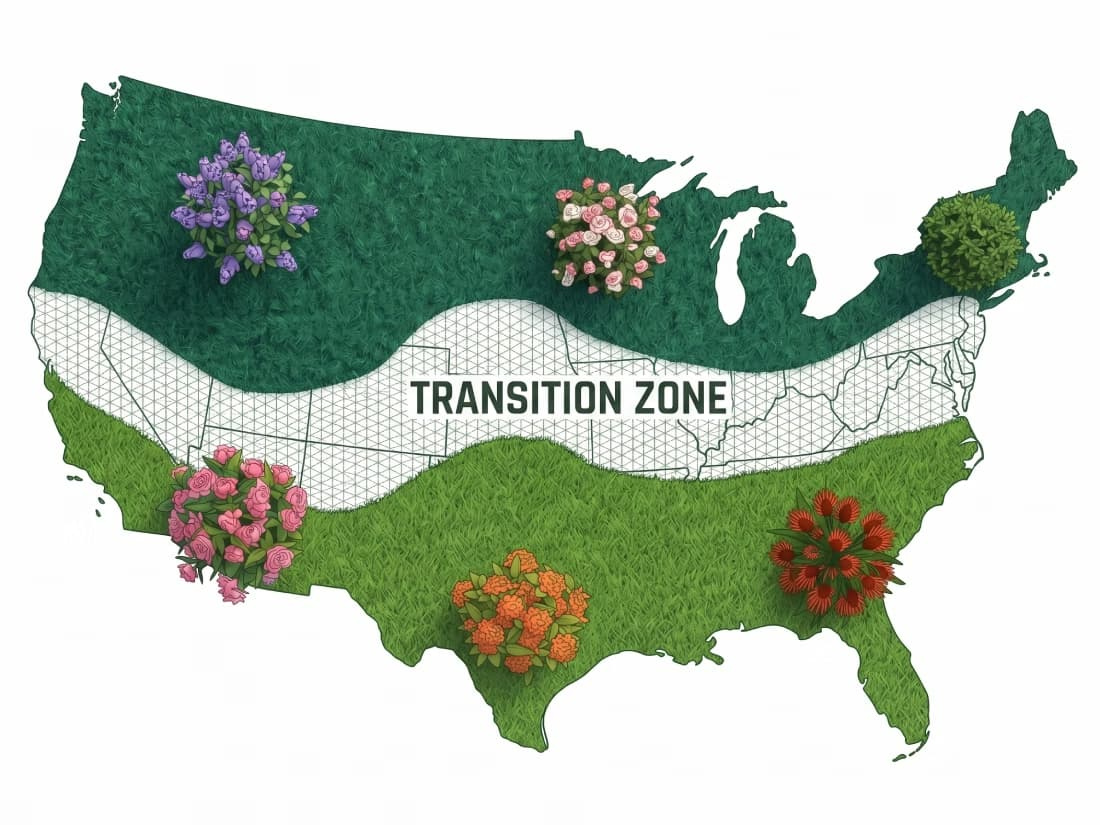
This plan covers both lawns and garden beds, across all three turf zones. The core logic is identical everywhere — starve the seed bank, deny it light — but the tools fork depending on where the weed is growing and what grass you have. The visible plan below is the universal spine; expand the accordion that matches your situation for the specifics.
- Cool-season lawns (tall fescue, Kentucky bluegrass, perennial ryegrass — the northern half of the country): Prevention does almost all the work, because there is essentially no post-emergent a homeowner can safely spray over a cool-season lawn without injuring the turf. Poa annua is a cousin of Kentucky bluegrass, and the chemistry can’t tell them apart.
- Warm-season lawns (bermudagrass, zoysiagrass, centipedegrass, St. Augustinegrass — the South): More rescue options, but mostly on fully dormant turf, which opens a winter treatment window the North doesn’t have.
- The transition zone (that miserable middle band where both grass types share the yard): The hardest of the three, because every timing decision collides with something.
- Garden beds (all zones): The one place you actually get a selective spray — more on that in the Roadmap.
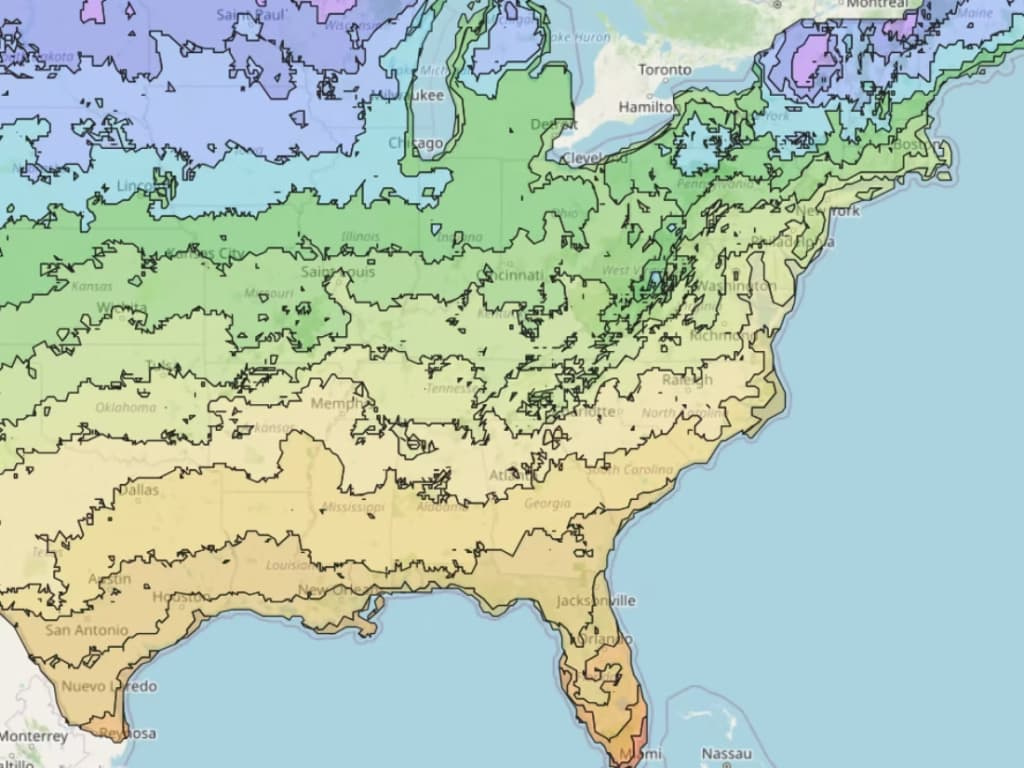
Season-wise, the active battle runs fall through spring, with the single most important date of the whole year being the fall pre-emergent window tied to soil cooling. Not sure which zone you’re in or when your soil crosses that line? Run your address through the USDA Hardiness Zone Finder before you buy a thing — the calendar dates below shift by weeks depending on your latitude.
What To Do Right Now (Before the 3-Year Plan)
Where you are on the calendar decides your first move. Find yourself below and act on that line before you read the long game.
If it’s late summer / early fall (soil still above 70°F): This is the golden window. Everything good starts here.
- Get a pre-emergent barrier down before soil drops below 70°F at the 1–3 inch depth (roughly when daytime highs settle at or below 75°F for four straight days). This is the highest-leverage single action in the entire plan.
- Water it in with about ¼ to ½ inch of irrigation within a few days, or it degrades on the surface before it works.
- Do not aerate or dethatch right now. You’d be flinging buried seed into sunlight at the exact peak of germination.
How to Catch Your Fall Window (Without Watching the Thermometer Like a Hawk)
You’re tracking a falling number and trying to get ahead of it — not hitting one magic day. The window is “soil heading toward 70°F but not there yet,” which in real life is a week or two, not a knife’s edge. Three ways to catch it, easiest first:
- Read the air, not the soil. Soil temperature lags air temperature by a few days, so you don’t have to measure the ground at all to get close. When you get your first stretch of daytime highs holding around 75°F or below for about four days straight — that late-summer cool-down everyone notices — your soil is crossing the 70°F line right about then. No tools required.
- Confirm with a $10 soil thermometer. The one tool worth buying, and it turns guesswork into a two-minute check. Push the probe about 2 inches into the ground, in the morning, in a spot that represents your lawn (not deep shade, not blazing afternoon sun), every few days once the nights start cooling. Get the barrier down while readings are still in the low 70s — you want it in place before the flush, not reacting to it.
- Or use a free soil-temperature map. University tools like GreenCast’s soil-temperature map — and some state extension maps — pull readings from local weather stations; you enter your location and read the number. One caveat: they show regional averages, so a shady, damp, low corner of your own yard can run a few degrees cooler than the map says.
The calendar anchor: in most of the country this window lands somewhere in the late-August-to-October stretch — earlier as you go north or up in elevation, later toward the coastal South. Miss the front of it by a few days and you’re fine; wait until it’s been cold for two weeks and you’ve already let the first big flush through. Run your address through the USDA Hardiness Zone Finder for your tighter local range, and the thermometer just becomes confirmation of what the calendar already told you.
If it’s fall/winter and you already see green Poa clumps (but no white seedheads yet): You missed the perfect barrier, but you still have a window.
- Warm-season, fully dormant (100% brown) lawn: a low rate of glyphosate cleans up the winter weeds effectively.
- Warm-season, actively growing: selective sulfonylurea options exist (see the Annual Bluegrass control page for products).
- Cool-season lawn: honestly, mostly hold the line with cultural control and nail the barrier next fall — there’s no clean homeowner spray here.
If you see white seedheads (spring): The pulling and spraying window for this cycle has closed — seed is dropping. Switch to damage control:
- Bag every clipping. The seeds survive the mower; bagging is the difference between a small problem and a reseeded lawn.
- Do not rip out big patches and leave bare soil — you’ll just plant next year’s crop. Mark the spots and hit them with the pre-emergent + fill plan this fall.
- Start the Year 1 roadmap below this coming fall. This spring is a write-off; make peace with it.
If it’s summer: Poa is dying on its own. Use this lull to fix the conditions — drainage, compaction, mowing height, watering habits — so you walk into fall with a yard that’s already harder to invade.
Right now, if it’s in your garden beds
Beds have one move the cool-season lawn doesn’t: a selective grass-killer. If you’re seeing young, actively growing Poa in the beds, clethodim (Envoy Plus, Select Max) can be sprayed over the top of your broadleaf shrubs, perennials, and flowers — it kills the grass and leaves the ornamentals alone. It only works on young plants, so hit it before seedheads form.
One expensive trap to avoid: two common grass-killers on the shelf — sethoxydim (Poast) and fluazifop (Fusilade, Ornamec) — do not control Poa annua. Reaching for those wastes a season. For non-selective cleanup around plants, use a directed glyphosate spot-spray with a shield, or diquat for fast contact knockdown. And keep clethodim well away from any ornamental grasses, lilies, or sedges — it kills those too.
From Defense to Offense in Three Years
One season is a skirmish. Three years is how you win the war, because that’s roughly how long sustained pressure takes to draw down the seed bank while your plantings thicken into a wall. Here’s the arc. Each year shows the universal spine first, then two small expandable panels — one for your zone’s specifics, one for garden beds.
Year 1 — DEFENSE: Stop the Bleeding
The only Year 1 goal is to stop adding seed and get a real barrier down. You are not clearing the yard this year. Accept that and you’ll actually succeed.
- Nail the fall pre-emergent. This is the whole ballgame. Time it to soil cooling below 70°F. Your Group 3 workhorses are prodiamine, dithiopyr, and pendimethalin; indaziflam is a strong alternative.
- Stop the seed rain. Bag clippings whenever seedheads are present. Clean the mower deck after cutting infested areas — you are, right now, the neighbor whose mower reseeds the yard.
- Begin the cultural corrections (these carry through all three years): start mowing high, shift to deep-and-infrequent watering, and plan drainage or compaction fixes for the right season — never fall.
Year 1 — your zone’s specifics (cool / warm / transition)
Cool-season, heavy infestation: This is the year for the aggressive reset Purdue and Michigan State document — let the lawn go drought-dormant in mid-summer to kill the shallow-rooted Poa, then in late August slice-seed desirable grass and apply mesotrione at seeding on the bare seedbed. Mesotrione is the rare product that blocks Poa germination while letting your new grass come up (skip it if you’re growing creeping bentgrass). Rough barrier timing for the North: late August to early September.
Warm-season: Barrier windows run earlier as you go south — around August 15 in Arkansas, September 1–15 across the upper South, October 1–15 in the coastal Deep South. If you missed the barrier and the bermuda is fully dormant, a low-rate glyphosate cleanup buys you a cleaner Year 2 start.
Transition zone — the landmine: If you’re overseeding (cool-season renovation, or ryegrass over dormant bermuda for winter color), you cannot lay a standard pre-emergent and seed at the same time — the barrier kills your grass seed too. Either seed first and rescue later, or skip the barrier on seeded areas, lean on dense seeding, and apply a light pre-emergent only after the new grass has been mowed twice.
Year 1 — in garden beds
Your barrier and your mulch work together here. First, refresh mulch to a uniform 2–4 inches (about 3 is the sweet spot) — that depth blocks the light Poa seed needs to germinate. Then apply a bed-labeled pre-emergent on top of the mulch, not under it, because incoming seed germinates in the mulch layer, so that’s where the barrier has to sit. Good options around established ornamentals include trifluralin, dithiopyr, prodiamine, oryzalin, pendimethalin, indaziflam, and the combo product Snapshot (trifluralin + isoxaben). Water it in with ¼–½ inch within a few days.
Two cautions. Deep-rooted trees and shrubs are very safe; shallow-rooted perennials, groundcovers, and new transplants can be stunted by strong root-inhibitors like oryzalin and pendimethalin — wait until new plantings are well rooted before treating. And for young plants that are already up, pulling is cleaner in loose bed soil than in turf — a genuine advantage — but every pull disturbs soil and triggers a fresh flush, so pull only before seedheads and fill the gap you leave.
Year 2 — THE GRIND: Starve the Bank
Now the seed bank starts drawing down, because Year 1 stopped the deposits. Year 2 is about relentless, rotated pressure — and this is where most people who quit in frustration actually would have started winning.
- Rotate your pre-emergent — this is not optional. Poa annua is one of the most resistance-prone weeds on earth. Michigan State, UGA, and Texas A&M have all documented populations that laugh off the Group 3 dinitroanilines, plus triazine- and glyphosate-resistant biotypes, in home lawns across the Southeast. If your fall barrier is working less well each year, that’s not bad luck — it’s selection pressure. Don’t run the same product two falls in a row. Rotate to a different mode of action — for example, swap a Group 3 (prodiamine) for indaziflam, or a Group 15 chemistry.
- Run the full cultural offensive (details in the next section). This is the year it compounds.
- Fill every void. Overseed thin spots and any patch you cleared, so the seed bank has no sunlit soil to colonize. This directly closes the bare-spot trap.
- Add the second, spring pre-emergent to catch the smaller spring germination flush.
Year 2 — your zone’s specifics (cool / warm / transition)
Cool-season: On perennial ryegrass or tall fescue lawns, a late-fall (November–December) ethofumesate program — sequential applications about four weeks apart — selectively grinds down established Poa as the turf heads to dormancy. It’s marginal on Kentucky bluegrass, so know your grass first (the Grass Comparison Tool helps).
Warm-season: This is your rescue-chemistry year. On fully dormant bermuda, non-selective cleanup (glyphosate, glufosinate, flumioxazin) is fair game; on actively growing bermuda/zoysia, selective sulfonylureas (trifloxysulfuron, foramsulfuron) and triazines on young plants give real control. Tank-mixing two different modes of action, as the warm-season extension guidance recommends, hits resistant escapes while controlling the susceptible population.
Transition zone: Keep the overseeding conflict in mind every single time you reach for chemistry — the calendar collision from Year 1 never goes away here, and volatile spring temperatures make that second spring pre-emergent especially worth it.
Year 2 — in garden beds
The same resistance rule applies: rotate the bed pre-emergent’s mode of action rather than running the same active ingredient every fall. Keep the mulch topped up to 2–4 inches and re-apply the barrier on top of it.
For escapes that slip through, this is where beds shine — hit young, actively growing Poa with clethodim over the top of broadleaf ornamentals, or spot-treat with directed glyphosate. Then close the gaps the way you’d overseed a lawn: fill bare patches with plantings, groundcover, or fresh mulch so there’s no open, sunlit soil left for the seed bank to exploit. Remember clethodim will kill ornamental grasses, lilies, sedges, and rushes — keep it off those.
Year 3 — OFFENSE: Let the Landscape Do the Work
By now the deposits have stopped, two seasons of germination have been intercepted, and — if you did the cultural work — your desirable plantings are dense. This is the year the landscape itself becomes the primary weapon. A thick lawn canopy shades the soil surface, and a well-mulched, well-planted bed does the same; since Poa seed needs light to sprout, a full stand of grass or a solid mulch layer smothers the germination trigger better than any chemical. Your job shifts from attacking to maintaining and mopping up:
- Keep the fall barrier down as insurance — but you’re now protecting a winning position, not fighting from behind.
- Spot-treat escapes instead of blanket-spraying. There should be far fewer.
- Hold the cultural standard. The moment you drop your mowing height, slip back to shallow daily watering, or let the mulch thin out, you re-roll the welcome mat.
Year 3 — beds & zones, in brief
In beds, “offense” means your ornamentals and mulch have closed ranks: maintain that 2–4 inch mulch layer, keep plantings full, and drop to spot clethodim or directed glyphosate on the rare escape. In lawns, hold your mowing height and watering discipline and lean on the dense canopy. Across every zone, the barrier is now insurance, not the front line.
A necessary dose of honesty: three years gets you to control and dominance, not a sterile, Poa-free yard. That persistent ~10% of seed stays viable for six-plus years — it outlives any three-year window — and you can’t seal your property line against a neighbor’s seed riding in on a mower or a breeze. What three years buys you is a yard where Poa annua is a rare, manageable guest instead of the host. That’s the real, achievable win — and it’s a world away from the endless cycle.
The Cultural Offensive (the part that never expires)
Chemistry buys you time; culture is what makes the win permanent. Michigan State, Purdue, and the southern extension programs all put these ahead of the sprayer:
- Mow high. Keep cool-season lawns at 2.5–3 inches or taller (warm-season grasses at their proper height — never scalped). Every extra inch shades more soil and starves the light-hungry seed. Yes, this fights the “manicured low cut” itch — but low mowing is a Poa annua invitation, so pick your priority.
- Water deep and infrequent. Let the surface dry between soakings. This starves Poa’s shallow roots while your lawn’s deep roots thrive. It resolves the classic irrigation tug-of-war: the watering that’s right for your turf is exactly the watering that’s wrong for the weed.
- Fix compaction — but only in active turf growth. Core-aerate when your desirable grass is growing so it fills the holes, and never in early fall. Check whether your soil is even the problem with the Soil Profile Builder and the Soil Condition Hub.
- Feed on the right schedule. Keep spring nitrogen and phosphorus modest (heavy spring feeding fuels the weed) and shift feeding to fall for cool-season turf, or the summer active window for warm-season turf.
The bed version of cultural control: mulch is your canopy
In beds you don’t have a grass canopy to shade the soil — mulch is your canopy. Keep it at a uniform 2–4 inches (about 3 is ideal), using a medium texture (roughly ¾-inch particles); coarse nuggets leave light-gaps and extra-fine mulch mats down and suffocates roots.
But know its limit: mulch alone is incomplete against this weed, because seed germinates right in the decomposing top layer without reaching soil, and landscape fabric doesn’t stop roots from growing through. That’s the whole reason the pre-emergent goes on top of the mulch — the two together intercept the seed where it actually lands. Full plantings help too: the denser your groundcover and perennials, the less open, sunlit soil the seed bank has to work with.
Safety & Sensitivity Audit: Protecting Your Home and Environment
Kids and pets: Follow every product’s label re-entry interval to the letter. As a rule, keep children and pets off treated turf and beds until sprays have fully dried and granular products have been watered in and the surface is dry again. The label’s number always wins over any general advice here.
“Dormant” means 100% brown — no exceptions. Glyphosate, glufosinate, flumioxazin, and atrazine on warm-season lawns are safe only on completely dormant turf. Any green tissue means green-up injury or a delayed, patchy spring. Atrazine in particular goes on bermudagrass only when fully dormant — never at spring green-up.
Watch the water. Triazines like atrazine and simazine are effective but carry real runoff and groundwater concerns — mind buffer zones near wells, ditches, and water bodies, and never over-apply “to be sure.” Don’t treat sloped lawns or beds right before heavy rain; runoff carries herbicide onto non-target plants and toward storm drains.
Some tools aren’t yours to buy. Pronamide (Kerb) is a Restricted-Use Pesticide — not available for general homeowner purchase, and a sign you’ve reached the point of calling a licensed applicator rather than pushing harder yourself.
Resistance is an environmental responsibility, not just a personal one. Rotating modes of action (Year 2 above) isn’t only about your yard — every time someone hammers the same chemistry, they help breed the resistant Poa that eventually shows up in everyone’s yard. Rotate on principle.
Sanitation counts. Bag and remove seed-laden clippings rather than composting them warm, and rinse equipment after working infested areas. It’s low-tech, it’s unglamorous, and it prevents more spread than most sprays.
Extra cautions when you’re working around ornamentals
Don’t poison the plants you’re protecting. The selective grass-killer clethodim is safe over broadleaf ornamentals but lethal to ornamental grasses, lilies, sedges, and rushes — know what’s in the bed before you spray. And keep dicamba out of the root zone and dripline of trees and shrubs; it’s mobile in soil and taken up through roots, causing systemic injury.
Two more bed-specific traps: strong pre-emergents like oryzalin and pendimethalin can stunt shallow-rooted perennials and new transplants if they leach into the root zone, so wait until plantings are established. And granular products can burn ornamental foliage if granules lodge in wet leaves — apply to dry foliage and brush any strays to the ground.
For the full walk-through on calibration, protective equipment, mixing order, and label compliance behind any product named here, see the MFY Herbicide Application Guide. And when you’re ready to identify exactly what you’re dealing with — or confirm it’s really Poa annua and not one of its look-alikes — start at the Annual Bluegrass (Poa annua) identification page.