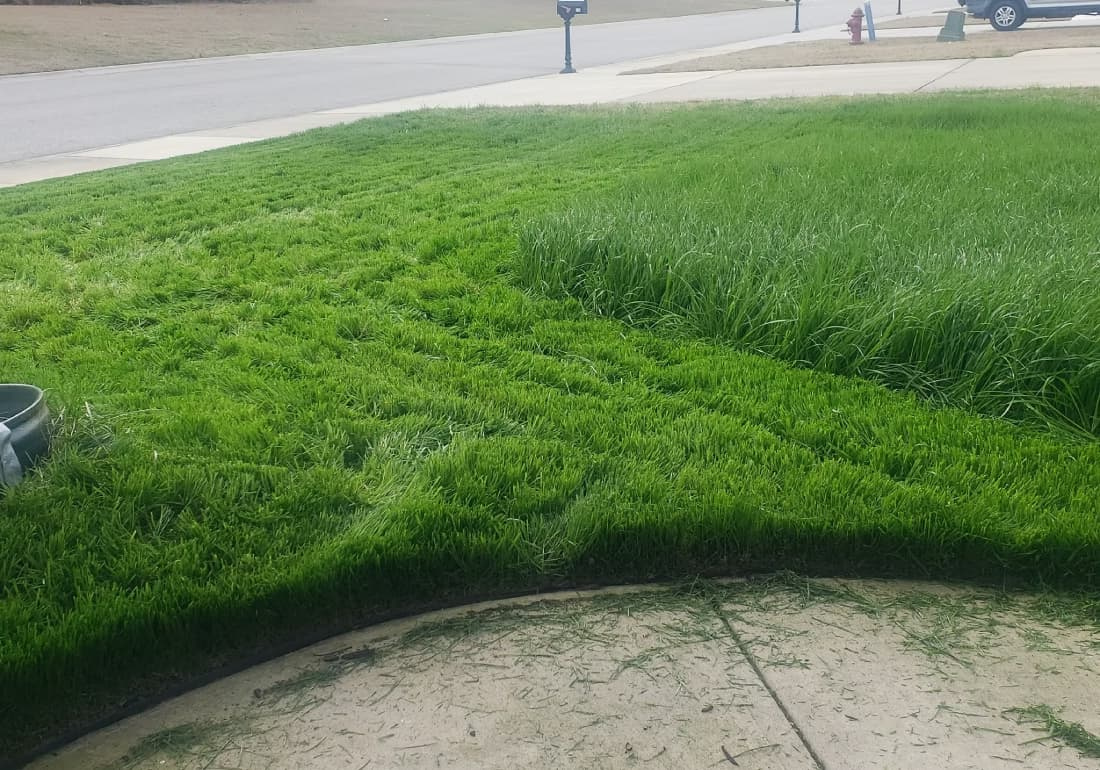
“I’m just going to scalp the lawn today so I don’t have to mow again for two weeks.” It is a common shortcut, but it ignores the biological reality of how grass actually grows. When life gets busy and the grass gets out of control, the temptation is to hack it all down to a low height in a single afternoon to “get it over with”. Some homeowners believe they can simply dump extra fertilizer on the yard to help it bounce back from a heavy cut, or they choose to leave their mower on one fixed setting from early spring through the dead of winter. You will often hear neighbors argue that sharpening mower blades is a waste of time and that the concept of “root shock” is just a myth designed to make people work harder. It is easy to fall for the idea that as long as the lawn looks short and neat, the plant is doing just fine.
The MFY Advice
Stop mowing only on weekends and start using a “Mow-At” trigger. To keep your roots growing deep, never remove more than one-third of the grass height in a single cut. Removing too much at once causes root shock, which can stop root growth entirely for up to 14 days. Stay in control by consistently maintaining your species’ target height, breaking the rule only for specific needs like summer heat protection or spring thatch management.
Table of Contents
The Biological Necessity
Your grass is more than just a green carpet; it is a complex energy factory. The leaf blades act as solar panels that capture sunlight and turn it into food through photosynthesis. When you mow, you are effectively “harvesting” the plant’s power supply.
The Survival Mode Shift
When you follow the one-third rule, the plant has enough leaf surface left to keep producing energy while it heals. However, if you cut off too much at once, the plant enters a state of physiological panic called a source-sink shift. In this survival mode, the grass stops sending energy down to the roots and diverts every available resource upward to regrow its leaves.
The Crider Threshold: Why Roots Stop Growing
This reaction is not a gradual slowdown; it is a biological “on-off” switch known as the Crider Threshold. Research from Penn State shows that the shock to the root system becomes much worse the more you cut:
- Removing 33% or less: Root growth may slow down slightly, but the plant continues to explore the soil for water and nutrients.
- Removing 50%: Root growth stops completely for 6 to 14 days.
- Removing 60% or more: The roots can stop growing for over three weeks, and some of the root system may actually die off.
The Danger of Root Shock
When root growth stops, the lawn becomes incredibly vulnerable. Without active roots, the grass cannot effectively reach deep-soil moisture or pull in the nutrients it needs to stay green. Over time, repeated “root shock” leads to a thinning lawn, more weeds, and a yard that browns out the moment the summer heat arrives.
The Rescue Protocol: Fixing a Neglected Lawn
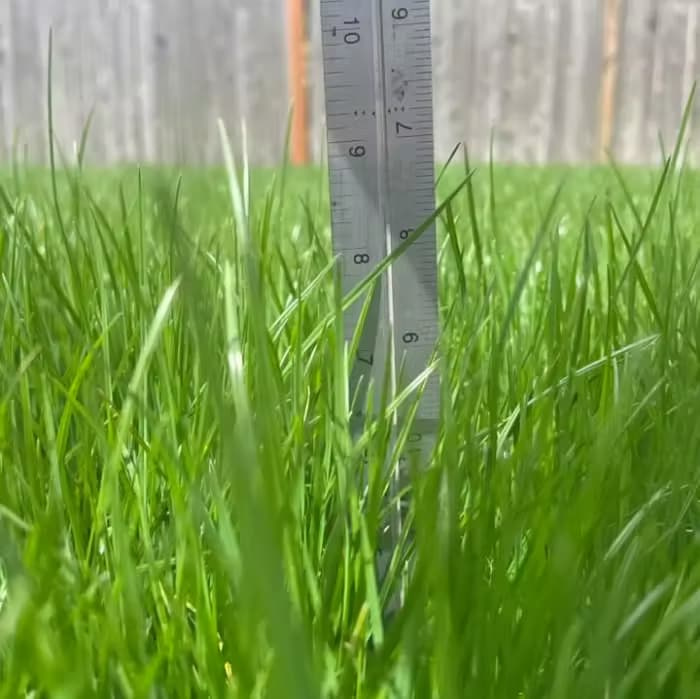
If your lawn has turned into a meadow due to vacation, weather, or a broken mower, your first instinct might be to hack it all down to “normal” in one go. Doing this is a mistake that causes massive root shock and can actually kill sections of your grass.
When grass grows tall, the lower parts of the plant are shaded and protected from the sun. If you remove the top canopy all at once, you expose these tender stems to direct sunlight, leading to a condition called sunscald. To avoid this, you must use the Step-Down Method.
The “Step-Down” Method
The goal of this protocol is to gradually lower the height of the lawn in small increments, allowing the plant 48 to 72 hours between cuts to stabilize its energy and keep its roots alive.
| Stage of Rescue | Action | Wait Period |
|---|---|---|
| Initial Cut | Reduce the height by only 1⁄3 | 3 Days |
| Second Cut | Reduce the new height by another 1⁄3 | 3 – 4 Days |
| Subsequent Cuts | Continue 1⁄3 reductions until you reach your target | 3 – 5 Days |
| Stabilization | Resume your standard maintenance height | 5 – 7 Days |
A Real-World Example
If your Kentucky Bluegrass has grown to 9 inches, do not drop it straight to 3 inches.
- First Cut: Set your mower to 6 inches. Wait three days while the plant starts growing new leaves.
- Second Cut: Drop the mower to 4 inches. Wait another three to four days.
- Final Cut: Move the mower to your target height of 3 inches.
Mower Tip: If your mower deck doesn’t go high enough for the “Initial Cut,” you may need to use a weed trimmer or a professional brush mower to take the first layer off safely.
Avoiding “Extra Stress” During Rescue
While you are stepping down the height, your lawn is in a fragile state. To help it recover faster, follow these two rules:
- No Fertilizer: Do not apply nitrogen fertilizer while the lawn is overgrown or during the rescue process. This would force the grass to grow even faster, making it harder to catch up.
- Manage Water: Ensure the lawn stays hydrated. A thirsty lawn that is also being heavily cut is much more likely to die.
Mower Height Calibration: The “Concrete Test”
To follow the one-third rule, you cannot rely on the numbers printed on your mower’s adjustment lever. Most manufacturers use “notches” (1, 2, 3, 4) that rarely match real-world inches. To stay in control, you must find your mower’s True Height.
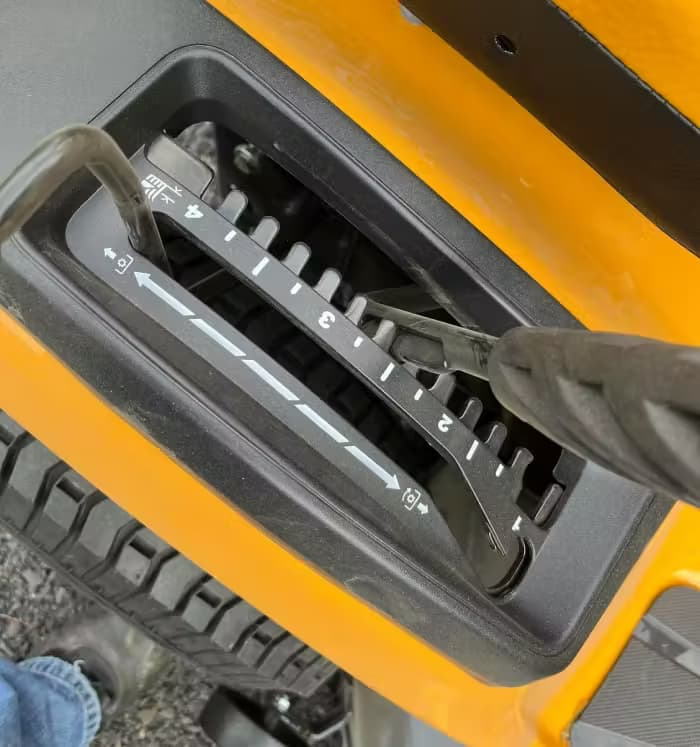
Why Mower Notches Lie
The numbers on your mower are often just a scale, not a measurement. Factors like tire pressure, deck wear, or even the brand of the mower can change how high the blade actually sits above the ground. If you think you are cutting at 3 inches but you are actually at 2.5 inches, you could be accidentally triggering root shock every time you mow.
How to Map Your “True Heights”
Professional turf managers use the Concrete Test to ensure their equipment is perfectly adjusted.
- Park on Level Ground: Move your mower onto a flat, level concrete surface like a garage floor or driveway.
- Safety First: Ensure the engine is off and the spark plug wire is disconnected so the mower cannot start while you are working near the blades.
- Measure the Blade: Reach under the mower deck and rotate the blade so it is pointing toward the side. Use a small ruler to measure the exact distance from the concrete floor to the sharpened edge of the blade.
- Create Your Map: Repeat this for every notch on your mower. Write down the actual height for each setting (e.g., Notch 3 = 2.75 inches).
Pro Tip: Keep a small “Height Map” taped to your mower or inside your shed. This allows you to quickly adjust your deck based on your grass’s Mow-At trigger without having to guess.
The Consistency Schedule: Your Species-Specific Mowing Dashboard
To gain full control over your lawn, you must move from a schedule based on the calendar to one based on biology. Consistency is the secret to professional results. By monitoring your grass and mowing exactly when it hits its “Mow-At” trigger, you prevent the energy drain caused by over-cutting and keep your root system growing deep.
Use the tables below to find the specific heights and frequencies for your grass type.
These grasses thrive in the spring and fall but may slow down or go dormant during extreme summer heat.
| Species | Target Height | Mow-At Trigger | Growth Habit |
|---|---|---|---|
| Kentucky Bluegrass | 2.5″ – 3.5″ | 3.75″ – 5.25″ | Rhizomatous (Spreads via underground stems) |
| Tall Fescue | 3.0″ – 4.0″ | 4.5″ – 6.0″ | Bunch-type (Check crown height; do not scalp) |
| Fine Fescue | 2.5″ – 3.5″ | 3.75″ – 5.25″ | Bunch/Rhizomatous (Great for shade) |
| Perennial Ryegrass | 2.0″ – 3.0″ | 3.0″ – 4.5″ | Bunch-type (Requires very sharp blades) |
| Creeping Bentgrass | 0.1″ – 0.5″ | 0.15″ – 0.75″ | Stoloniferous (High maintenance/Golf grade) |
Seasonal Frequency for Cool-Season Turf:
- Early Spring: Every 4–5 days to manage the initial growth surge.
- Late Spring: Every 3–5 days during peak vertical growth.
- Summer: Every 7–14 days (or suspend mowing) to protect the lawn from heat stress.
- Fall: Every 5–7 days to help the plant store energy for winter.
These grasses love the heat and grow most aggressively during the summer months.
| Species | Target Height | Mow-At Trigger | Growth Habit |
|---|---|---|---|
| Bermudagrass | 0.5″ – 1.5″ | 0.75″ – 2.25″ | Stolon/Rhizome (Very resilient to low cuts) |
| Zoysiagrass | 1.0″ – 2.0″ | 1.5″ – 3.0″ | Stolon/Rhizome (Durable and thick) |
| St. Augustinegrass | 2.5″ – 4.0″ | 3.75″ – 6.0″ | Stoloniferous (High crowns; keep it tall) |
| Centipedegrass | 1.0″ – 2.0″ | 1.5″ – 3.0″ | Stoloniferous (Slow growing/Low maintenance) |
| Bahiagrass | 3.0″ – 4.0″ | 4.5″ – 6.0″ | Rhizomatous (Tough and utility-focused) |
| Seashore Paspalum | 1.0″ – 2.0″ | 1.5″ – 3.0″ | Stolon/Rhizome (Salt tolerant) |
| Buffalograss | 2.0″ – 3.0″ | 3.0″ – 4.5″ | Stoloniferous (Extremely drought tolerant) |
Seasonal Frequency for Warm-Season Turf:
- Spring: Every 5–7 days as the lawn emerges from dormancy.
- Summer: Every 3–5 days during maximum growth heat.
- Fall: Every 7–10 days as growth slows down.
- Winter: Generally none (dormant phase).
Strategic Exceptions: When to Break the Rule
While the one-third rule is the primary shield for your lawn’s health, there are two specific scenarios where breaking it is actually the right move. These are strategic interventions designed to help your grass handle massive changes in the weather.
The Spring Scalp: Waking Up the Roots
For dormant warm-season grasses like Bermudagrass and Zoysiagrass, you should intentionally scalp the lawn once a year in early spring. This involves removing the dead, tan winter tissue down to a height of 0.5 to 1.0 inch.
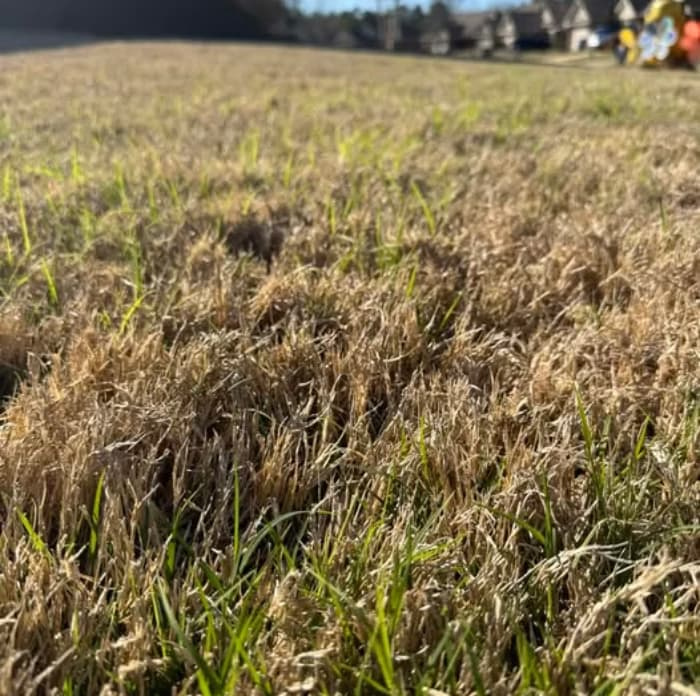
The Science Behind the Exception:
- Soil Warming: Removing the insulating layer of dead grass allows sunlight to hit the soil directly, which rapidly increases soil temperatures.
- Root Activation: Warmer soil is the primary trigger that tells the root system to start growing again after winter.
- Thatch Management: Scalping clears away old organic matter that can block water from reaching the soil or provide a home for lawn pests.
- Uniform Canopy: By clearing out the old growth, the new green grass emerges evenly for a smoother, more professional look.
Timing is Critical: Perform your spring scalp after the last hard freeze of winter, but before the grass is more than 30% green. If you scalp too late, you will cut off healthy new tissue and delay your lawn’s spring recovery.
The Heat Wave Buffer: Summer Survival
Cool-season grasses like Tall Fescue and Kentucky Bluegrass face severe stress when temperatures climb above 32°C (90°F). During these heat waves, the plant loses energy faster than it can produce it. To protect the lawn, you should raise your mowing height by 0.5 to 1.0 inch.
The Science Behind the Exception:
- Deep Root Support: Mowing height and root depth are directly linked; taller leaves support a deeper root system that can reach moisture deep in the soil.
- Microclimate Cooling: A taller, denser canopy shades the soil and the plant’s “crown”—the heart of the plant—keeping it significantly cooler than the air temperature.
- Moisture Conservation: Extra shading reduces the amount of water lost to direct soil evaporation.
If the grass stops growing during extreme heat or drought, stop mowing entirely. Mowing a wilted or dormant lawn can cause mechanical bruising that permanently damages the plant.
The Diagnostic Visuals: Clean Cut vs. Shredded Blade
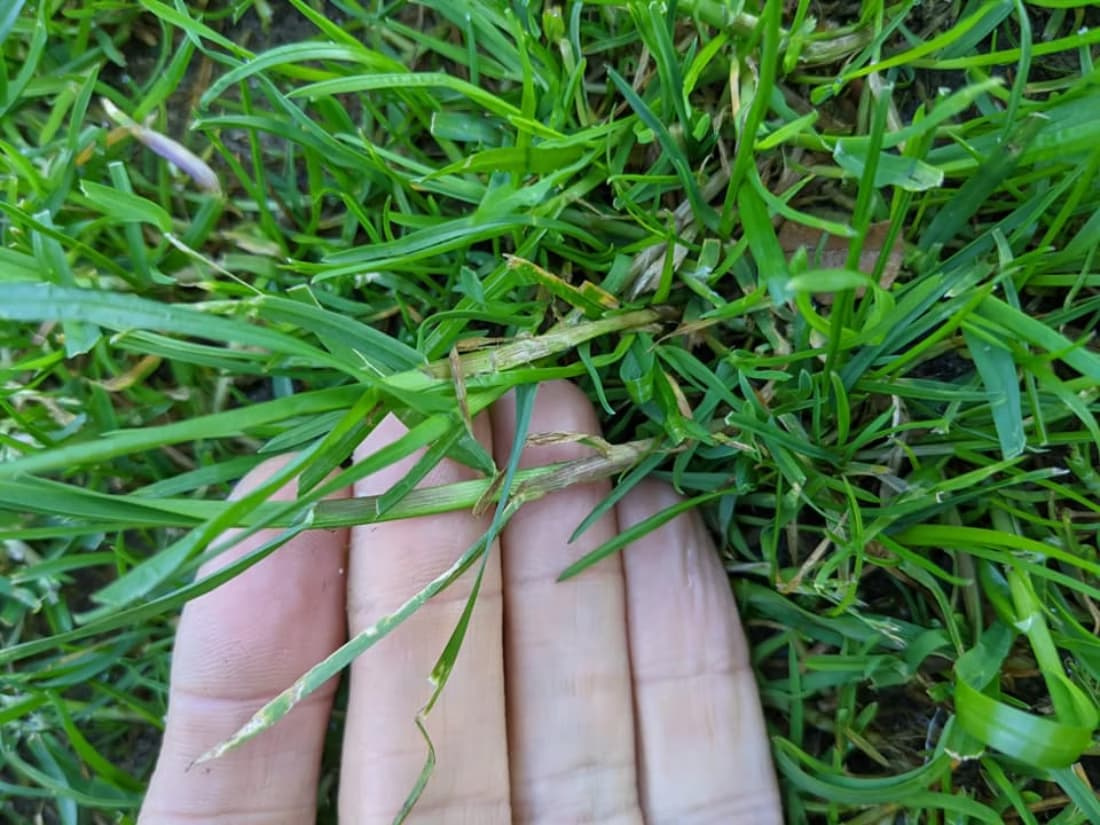
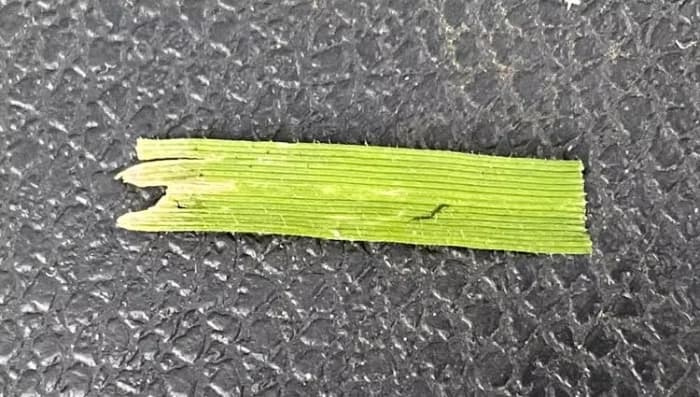
Even if you follow the one-third rule perfectly, the quality of the cut determines how fast your grass recovers. Think of the grass blade as the plant’s “skin.” A clean cut is like a surgical incision that heals quickly, while a shredded cut is like a jagged tear that leaves the plant bleeding out its moisture.
The Blade-to-Blade Comparison
To understand why blade sharpness matters, you have to look at the grass on a microscopic level.
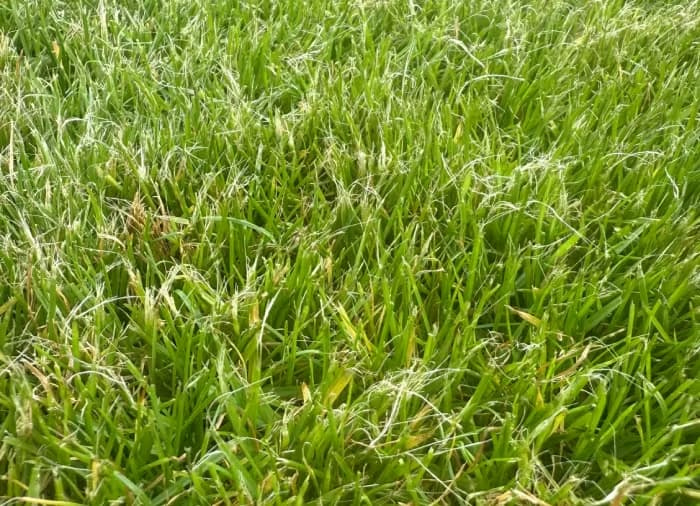
The “White Flag” Effect
If you look at your lawn from a distance and it has a dusty, white, or brown tint right after mowing—even though it’s still green underneath—you are seeing the “White Flag” effect. This is the result of thousands of shredded tips drying out and dying all at once.
Why a Poor Cut is Dangerous
The damage from a dull blade isn’t just cosmetic; it causes three major physiological problems:
- Increased Thirst: A shredded tip facilitates accelerated water loss through the plant’s xylem. On a hot, dry day, this can lead to localized wilting and desiccation.
- Open Doors for Disease: Ragged wounds and exposed cell contents provide an ideal substrate for fungal pathogens like Brown Patch or Dollar Spot.
- Energy Drain: The plant must divert energy away from root growth to lignify and seal these massive, mangled wounds.
Mastering the one-third rule changes your relationship with your lawn from one of guesswork to one of scientific control. By respecting the Crider Threshold and using species-specific Mow-At triggers, you are no longer just performing a chore; you are managing a biological energy factory. This consistency is the bridge that allows your grass to develop the deep root systems and dense canopy needed to thrive through every season. Stop mowing by the weekend and start mowing for your lawn’s health.
Safety & Sensitivity Audit: Protecting Your Home and Environment
- Tool Safety: Disconnect the spark plug wire before checking blade height to prevent accidental startup. Clear debris before mowing to avoid projectiles.
- Blade Care: Sharpen blades annually; dull edges shred grass, causing “White Flag” water loss and inviting disease.
- Plant Stress: Never mow wilted or dormant grass, as it causes permanent crown bruising.
- Rescue Rules: If fixing a neglected lawn, stop all nitrogen fertilizer and bag your clippings to avoid smothering the canopy.