
Scientific Name: Poa pratensis L.
Common Names: Kentucky bluegrass, June grass, smooth meadow grass, spear grass, common meadow-grass
Kentucky Bluegrass
The grass that heals itself, if you can pay its water and nitrogen bill.
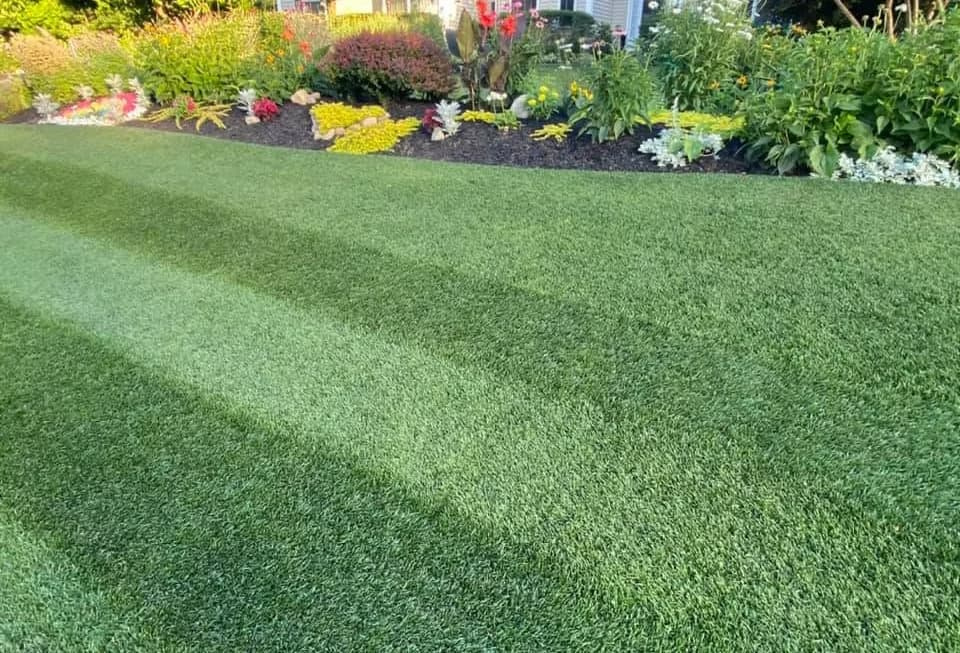
Kentucky Bluegrass At-a-Glance
Hardiness Zone Min
Zone 3
Water Requirement
High
Sun Requirement
Full Sun to Light Shade
Wear Tolerance
Moderate
Establishment Speed
Slow
Labor Intensity
High
Not From Kentucky At All
Kentucky bluegrass is not from Kentucky. It is not from anywhere in North America. USDA-NRCS lists it as native to Europe, naturalized here, and Oregon State’s turf program puts it plainly: it arrived with traders and settlers coming over from Europe. In its home range it was a meadow and pasture grass on fertile, well-drained ground — which is exactly the ground it still wants in your yard.
It spread across the continent faster than the settlers did. Utah State Extension records that Native peoples called it white man’s tracks, because it turned up wherever European livestock and plows had been. The seed travels well: cobwebby hairs at the base of each floret catch on fur, hooves, boots, and wagon wheels. By the time farmers reached central Kentucky the grass was already waiting, doing especially well on the region’s limestone soils — USDA-NRCS still lists soils of limestone origin as its best fit. The name stuck to the place where people noticed it, not the place it came from.
For its first two centuries here it was livestock feed, not lawn. The turf story starts with an accident. In the 1930s, Joe Valentine, superintendent at Merion Golf Club in Pennsylvania, spotted a patch of bluegrass that plainly outperformed everything around it. After trials it was released as ‘Merion’ in 1947 by the USGA Green Section and USDA’s Crops Research Division. Merion was the first low-growing, dark green, disease-resistant bluegrass — the first one you could mow short without losing it to leaf spot. It became the yardstick.
Merion was luck. What came next was work, and it was hard for a specific reason: Kentucky bluegrass mostly reproduces by apomixis, meaning most of its seed is a clone of the mother plant. A grass that clones itself is very difficult to cross-breed. Dr. C. Reed Funk at Rutgers solved it, developing the first successful method of breeding the species by intraspecific hybridization. Through the 1960s and 1970s Rutgers released landmark cultivars — ‘Adelphi’, ‘Bonnieblue’, ‘Galaxy’, ‘Glade’, ‘Majestic’ — and other university and company programs followed. Oregon State counts over 200 released cultivars, selected for color, low growth habit, disease resistance, heat tolerance, shade tolerance, and seed yield.
That apomixis is also why the shopping advice in Getting Established reads the way it does. A single-cultivar bluegrass lawn is genetically one plant repeated a few million times, so whatever kills one plant kills all of them. Blends exist because of how this grass reproduces, not because seed companies like bundling things.
One last chapter, and it is not flattering. The same traits that make bluegrass a good lawn — tough rhizomes, grazing tolerance, seed that hitchhikes — make it a problem outside the yard. NDSU Extension classes it as a widespread invasive perennial across Northern Great Plains rangeland, where it crowds out native mixed-grass prairie species and degrades habitat for pollinators and birds. If your property backs onto remnant prairie or native grassland, that is worth knowing before you seed.
Gallery
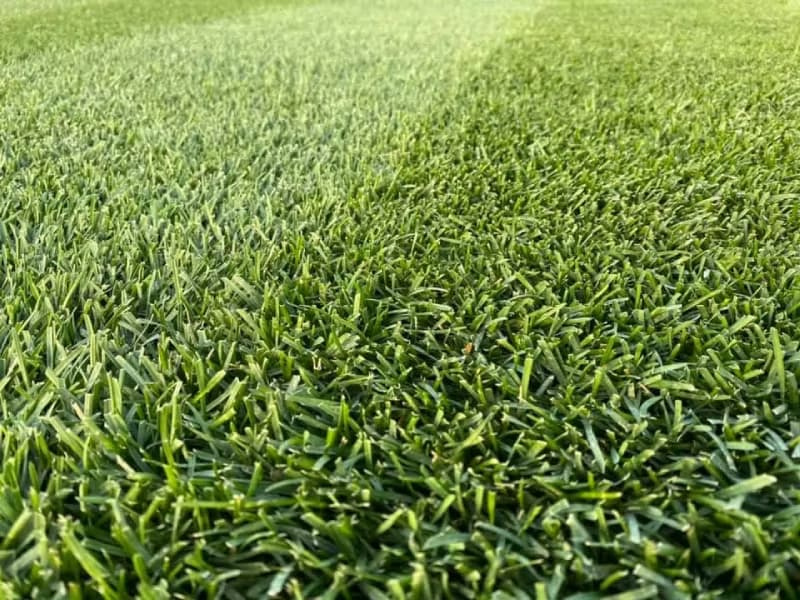
Close-up view of Kentucky bluegrass canopy density and blade structure.
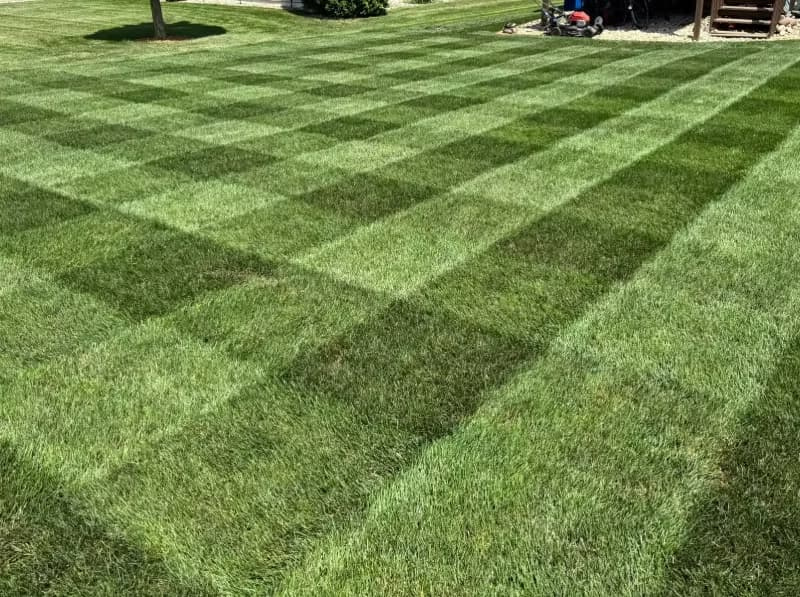
Checkered striping pattern achieved on a thick Kentucky bluegrass stand.
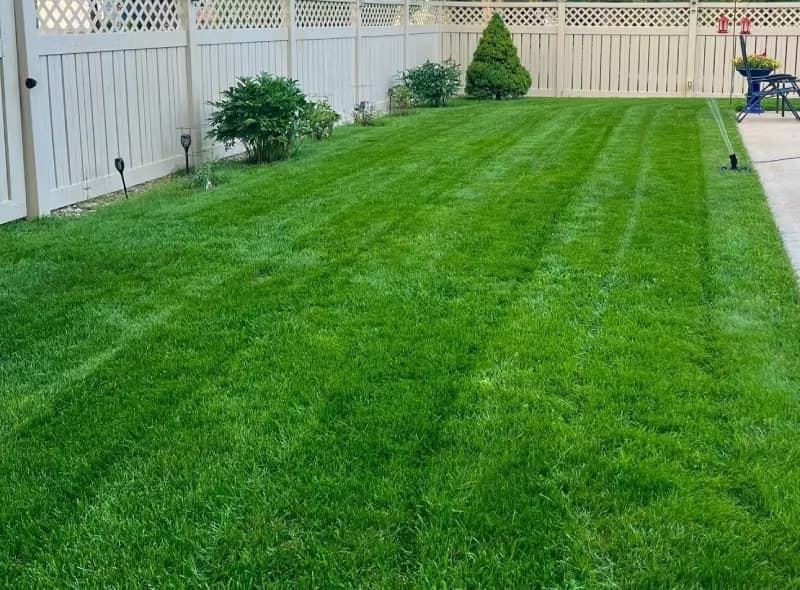
Established Kentucky bluegrass lawn performance in USDA Hardiness Zone 5b.
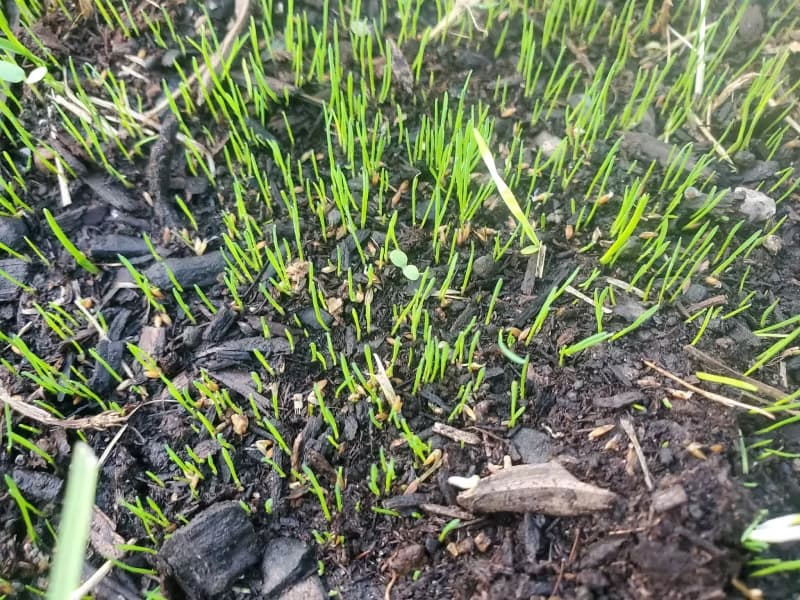
Midnight Kentucky bluegrass seedlings emerging 10 days after seeding in Northern Ohio.
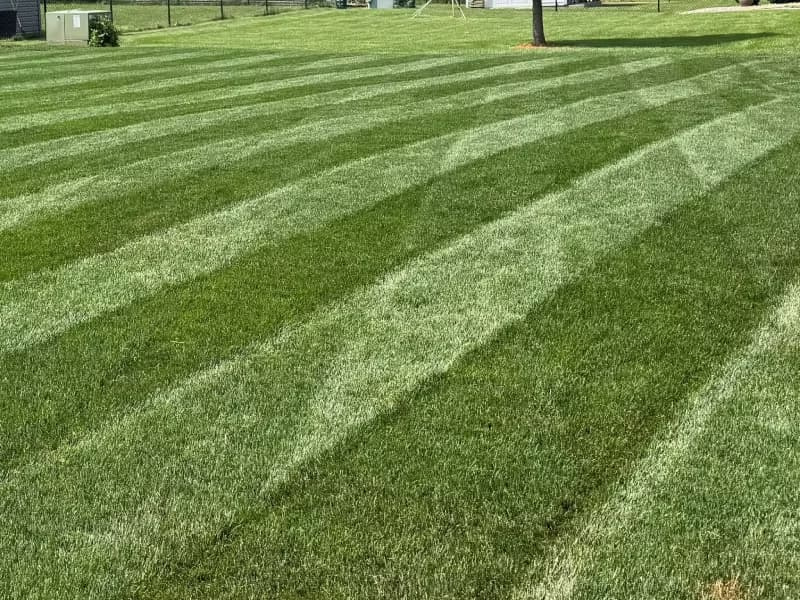
Nightfall Kentucky bluegrass maintained at a 4-inch height of cut showcasing dark color and stripe retention.
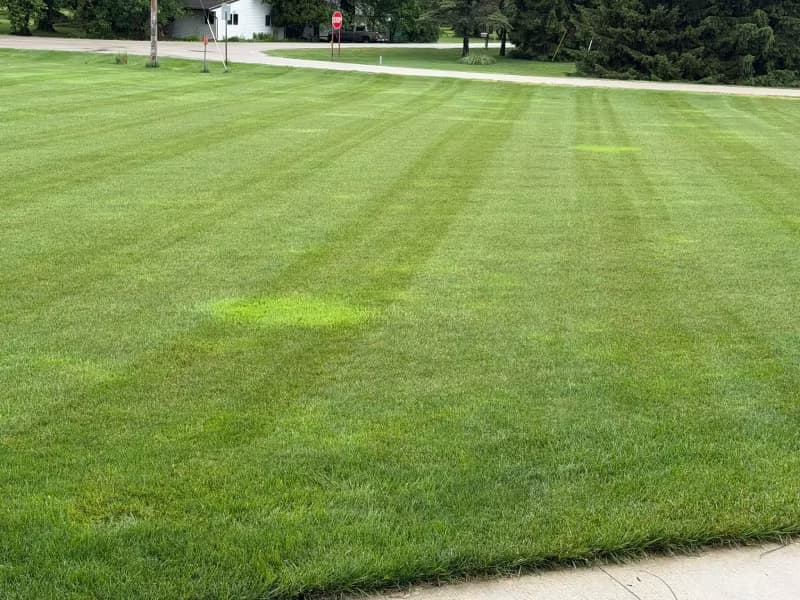
Distinct bright green patches of Poa standing out against an established Kentucky bluegrass lawn.
Telling It Apart
To confirm a grass is Kentucky bluegrass, check features that do not change with mowing or watering.
Look at the leaf tip — it pinches into a distinct boat shape, like the bow of a canoe; pull the edges apart and the blade splits clean. Hold a blade to the light and you will see two faint pale lines running either side of the midrib. The youngest leaf is folded flat in the bud, the sheath is smooth and hairless, there are no auricles (the little claws that clasp the stem in ryegrass), and the ligule — the tissue where blade meets sheath — is so short, well under a millimeter, that you practically need a lens. That near-invisible ligule is itself the giveaway. Below ground it runs bright white rhizomes, the underground stems behind all that self-repair.
It is most often confused with three grasses:
- Perennial ryegrass, its usual mixture partner: a sharply pointed tip, a glossy, mirror-like leaf back (bluegrass is dull), a ridged upper surface, small auricles, a reddish-purple stem base, and clump growth with no rhizomes.
- Annual bluegrass (Poa annua), a weed: apple-green, with a long, clear, tape-like ligule against bluegrass’s tiny one, shallow roots you can pull up by hand, and prolific whitish seedheads even when mowed short.
- Rough bluegrass (Poa trivialis), a weed: pale green, spreading by above-ground stolons instead of underground rhizomes, with a glossy leaf back, a long pointed ligule of 4 to 6 millimeters, and a rough, sandpapery feel from tiny backward-facing hairs.
Where does it sit against other lawn grasses overall? Medium-to-fine texture, medium-to-dark green, excellent wear recovery, poor shade tolerance (only moderate up in cool mountain climates), moderate drought tolerance — it survives by going dormant, not by out-rooting the drought — moderate-to-high input needs, and slow to establish. That profile, great at healing and winter survival and needy in heat and shade, is the shape of every decision on this page.
Identification Photos
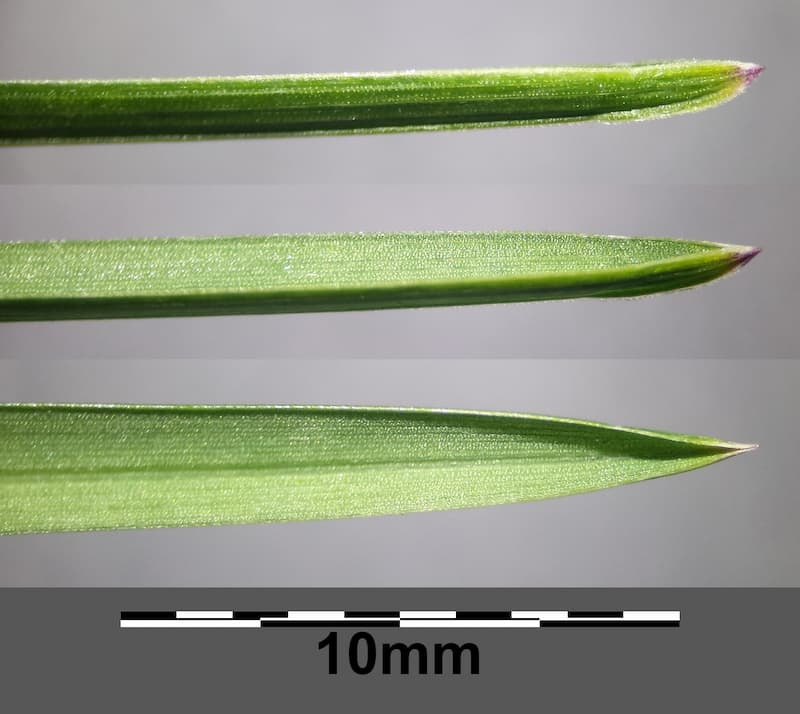
Diagnostic Feature: The boat-shaped tip. Kentucky bluegrass blades end in a tip that curves inward like the bow of a boat, a trait the bluegrasses share that separates them from ryegrasses and fescues, which taper to a plain point.
“File:Poa pratensis sl15.jpg” by Stefan.lefnaer is licensed under CC BY-SA 4.0.
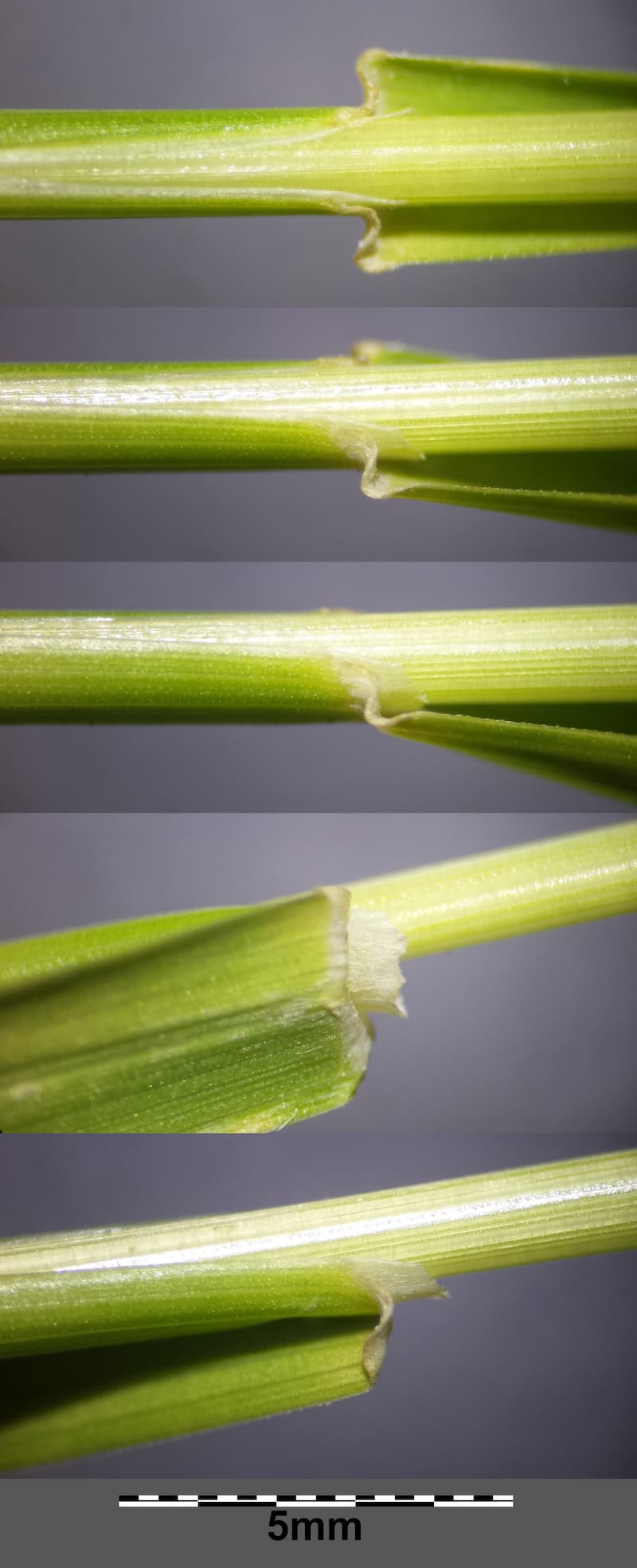
Look For: A smooth, slightly flattened sheath and a short, blunt ligule at the collar, with no auricles. This is the quickest way to confirm Kentucky bluegrass once you have a plant in hand.
“File:Poa pratensis sl12.jpg” by Stefan.lefnaer is licensed under CC BY-SA 4.0.
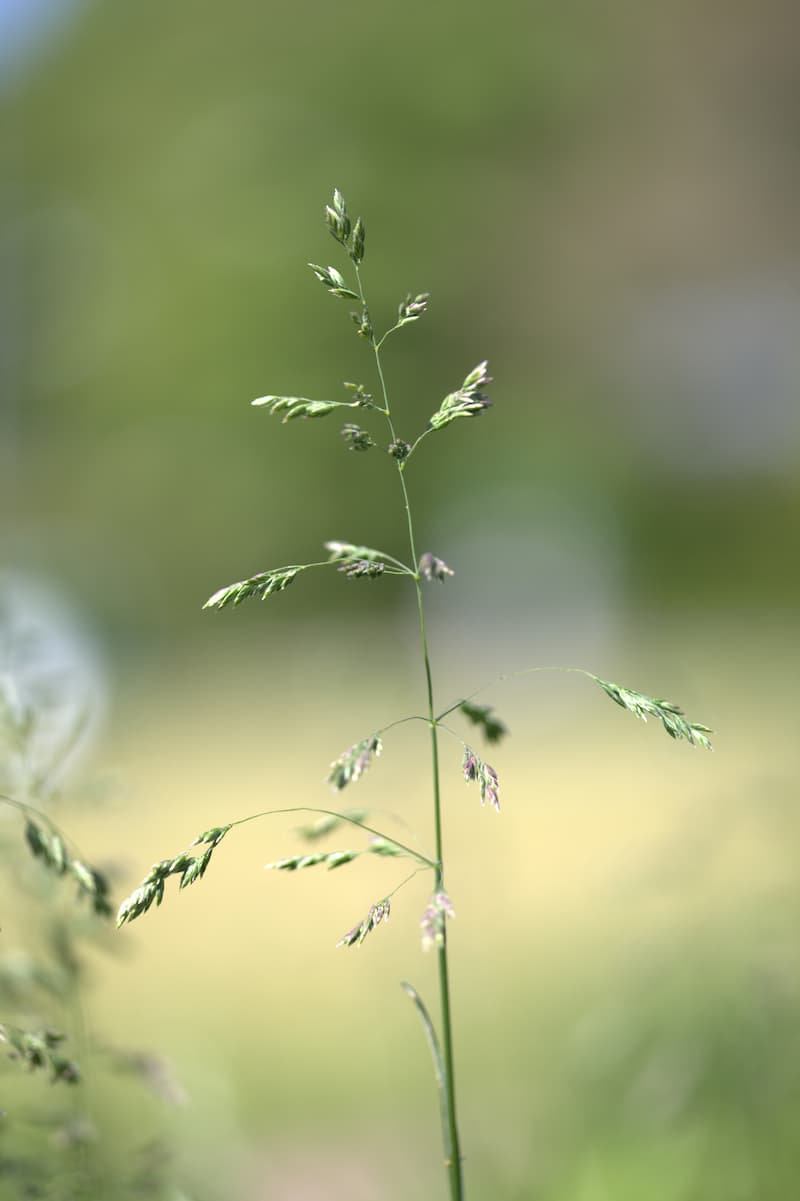
Look For: An open, pyramid-shaped panicle with small spikelets on branched stalks. It appears in late spring and is an easy confirmation if you let a patch flower.
“Poa pratensis 02” by Averater is licensed under CC BY-SA 3.0.
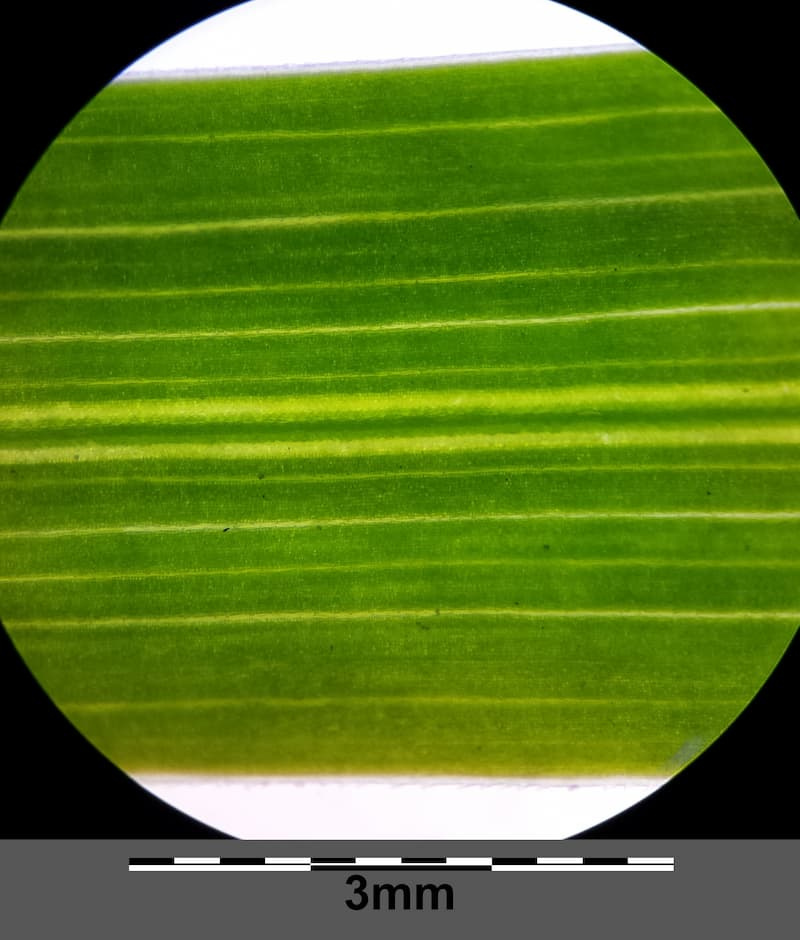
Key Identifier: Twin lines. Held up to the light, a Kentucky bluegrass blade shows two faint, translucent lines running parallel to the midrib on either side of it.
“File:Poa pratensis sl14.jpg” by Stefan.lefnaer is licensed under CC BY-SA 4.0.
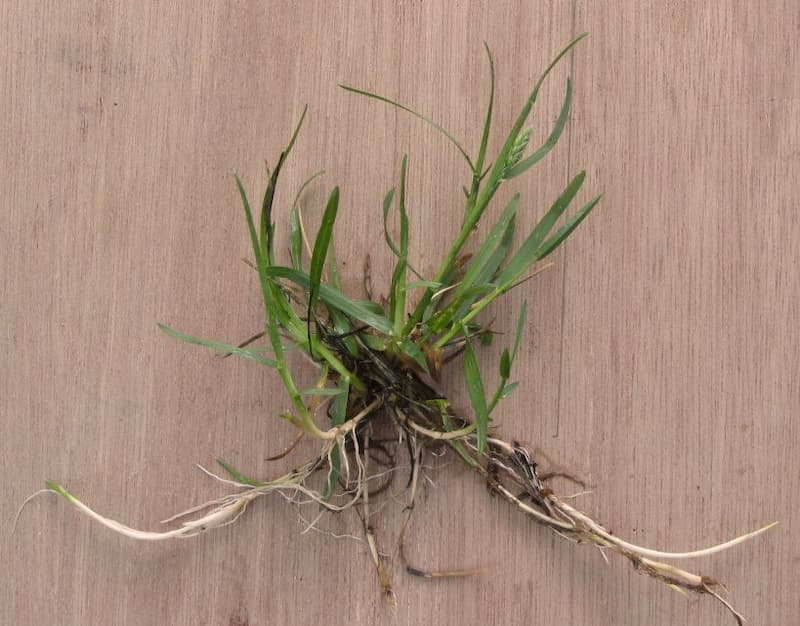
Diagnostic Feature: Rhizomes. Pull up a plant and look for pale underground stems running sideways. They are how Kentucky bluegrass spreads and fills in thin spots.
“Veldbeemdgras Poa pratensis” by Rasbak is licensed under CC BY-SA 3.0.
Is Kentucky Bluegrass Right For Your Yard?
Advantages:
It repairs itself. The highest recuperative capacity of any cool-season grass, driven by rhizomes that can run 20 to 60 feet from a single shoot in one season. Bare spots close on their own. No other cool-season lawn grass does this as well.
It survives brutal winters. Reliable to Zone 3a. Winter is simply not what threatens this grass.
Density that fights weeds for you. A thick, rhizome-knit canopy shades the soil surface hard enough that crabgrass seed cannot get the light and warmth to germinate.
The look. Fine-to-medium blades, dark blue-green color, and a uniform carpet that is the reference standard for a northern lawn.
Real cultivar choice. Over 200 released cultivars and decades of NTEP trial data, sorted into trait groups you can actually shop by — shade, drought, wear, or low input.
Drought is survivable, not fatal. It browns out and waits. A quarter inch of water a week keeps the crowns alive through a long dry spell.
It makes sod possible. The rhizome mat holds together well enough to be cut, rolled, and laid — which is why an instant lawn is an option here and not with bunch grasses.
Best If:
- You live in USDA Zone 3 through 6, ideally 4 or 5, where summers stay mild and winters are the part everyone worries about.
- You have full sun, or close to it — at least 4 to 6 hours of direct light, with morning sun if you can choose.
- You have kids, dogs, or a yard that takes real use. Nothing else in the cool-season lineup heals damage the way this does.
- You want the classic dense, dark, uniform northern lawn and consider the look worth the work.
- You are willing to water and feed on schedule — roughly 1 to 1.5 inches of water a week and 2 to 4 pounds of nitrogen a year.
- You can seed in fall and wait, or can afford sod if you cannot.
- You want a lawn that fixes its own bare patches instead of one you overseed every year.
Disadvantages:
Slow to establish. 10 to 21 days to germinate and six to nine months to knit in. That is a long window with open soil and weed pressure, and it is the single most common reason a bluegrass seeding fails.
Poor in shade. Needs 4 to 6 hours of direct sun. In low light it stretches thin and succulent and loses root mass, then mildew and moss take over.
Shallow roots and a high water bill. UC Cooperative Extension puts it in the 1-to-8-inch rooting group. It needs 1 to 1.5 inches a week to stay green, up to 2 in a transition-zone summer.
Summer is its weak season. Heat above 90°F shrinks the roots, and humidity multiplies disease. In the transition zone, holding it green through August is a real project.
A long disease list. Summer patch, necrotic ring spot, leaf spot and melting-out, dollar spot, rust, powdery mildew, stripe smut.
No endophyte protection. Unlike the fescues and ryegrass, it has no built-in insect deterrent, and billbugs are named after it.
Thatch and compaction. It builds thatch faster than most lawns and tolerates compaction poorly, so dethatching and core aeration are recurring jobs, not one-time ones.
It is invasive outside the yard. A genuine problem on Northern Great Plains native prairie.
Avoid If:
- You are in the warm-humid South or the desert Southwest. It does not persist. This is not a management problem you can solve.
- Your yard is genuinely shaded. Under mature trees, go 50 to 90% fine fescue. Even the best shade-selected bluegrass type cannot carry deep shade.
- You are under watering restrictions and want a green lawn. It will hold dormant and survive, but it will be brown, and the water bill to keep it green is the highest of the common cool-season grasses.
- You want low maintenance. Between mowing, fall feeding, dethatching, and aeration, this is the highest-labor cool-season lawn grass. Fine fescue is the honest low-input answer.
- Your soil stays wet or is badly compacted. It is rated intolerant of both, and no cultivar fixes that.
- You need a lawn fast. Six to nine months to maturity from seed. If the timeline is short, either lay sod or pick a faster species.
- Your property borders remnant native prairie. Consider what happens when the rhizomes and seed cross the fence line.
Is It Safe for Pets and Kids?
No documented toxicity. USDA-NRCS lists it as highly palatable forage for horses, cattle, and sheep, so it is not a poisoning risk to grazing or chewing pets. Its pet weakness is urine burn, not toxicity, and its urine resistance is rated Low.
Where It Grows and Where It Fails
Kentucky bluegrass is a cold-climate grass. It shrugs off hard winters as far north as USDA Zone 3a and performs best in Zones 4 and 5. Its comfort zone is cool, moist weather: it grows hardest in spring and fall and slows down in summer heat. As a rule of thumb, it thrives where average July temperatures stay below 75°F and starts to struggle badly once summer heat pushes past 90°F.
The thing that kills Kentucky bluegrass is not winter — it is summer. Its roots are shallow to begin with; UC Cooperative Extension puts the species in the 1-to-8-inch rooting group, at the opposite end of the scale from tall fescue. At the southern edge of its range, high summer soil temperatures shrink that already-short root system down to a couple of inches, which cannot reach deep soil moisture. Heat, drought, and aggressive fungal disease then gang up and thin the stand.
So the honest boundary rule is this: Kentucky bluegrass thrives in the north, where cool soil lets it hold the roots it has, and merely survives in the transition zone, where it needs heavy watering, some afternoon shade, and active disease control just to hold on. Push it further south into hot, humid country and it fails outright — warm nights never let it recover, and wet warm soil rots the roots.
Here is how it behaves across the five climate types:
- Cool and humid (Northeast, upper Midwest): perfectly adapted. Rain usually keeps it alive; expect to water only through summer dry spells to keep it from going dormant.
- Cool and arid (northern Plains and Intermountain West): performs beautifully with irrigation and carries very little disease pressure, because dry air is hostile to the fungi that plague it elsewhere. Without irrigation it survives by going brown and dormant. The cost here is water, not adaptation.
- Transition zone: hangs on, but suffers real heat stress in July and August. Afternoon shade and frequent irrigation help; fungal disease is a constant threat. Texas A&M puts the transition-zone summer requirement at up to 2 inches of water per week — and notes the rootzone is often too shallow to even hold that much at once.
- Warm and humid (the South): does not persist. Warm nights, humidity, and root-rotting wet soil finish it off.
- Warm and arid (desert Southwest): a wall it cannot climb without constant, impractical watering.
Getting Established
Kentucky bluegrass is grown from seed or laid as sod, and that is the whole list. There is no plug-or-sprig shortcut here; those belong to warm-season grasses like zoysia and bermuda that run across the surface. Most people seed, because sod — while it gives you an instant, weed-free lawn — is expensive.
Seed it in late summer or early fall. Roughly August 15 to September 15 in the north, September 1 to 30 in transition areas. That window works because the soil is still warm enough for decent germination, fall rains keep it moist, and cool weather has shut down the summer weeds that would otherwise smother young grass. A fall seeding also gets two full cool seasons to build roots before it faces its first summer. Sow at 1.5 to 3.0 pounds per 1,000 square feet, no deeper than a quarter inch — this is one of the smallest turf seeds there is, at roughly 2.2 million seeds per pound, and the seedlings cannot climb out from deeper than that. Spring is a distant second choice: cold soil slows germination further, and crabgrass wakes up at exactly the wrong moment.
Then be patient, because this is the grass’s one big catch. Kentucky bluegrass germinates in 10 to 21 days, usually about 14, and needs six to nine months to knit into a mature, wear-tolerant lawn. During that long stretch the soil sits bare and open, and fast weeds like crabgrass will happily fill the gap. A new bluegrass seeding needs active weed management, not a plant-it-and-forget-it approach.
While it is coming in, water lightly one to three times a day to keep the top half-inch to inch of soil moist — but do not soak it, or you will drown or wash away the seed. Once seedlings hit an inch or two, water less often and more deeply to pull roots downward. A starter fertilizer high in phosphorus (something like 10-20-10, at about 1 pound of phosphate per 1,000 square feet) at seeding helps roots establish.
Never Plant Just One Cultivar
This is the rule that surprises people. Because Kentucky bluegrass reproduces clonally, a one-cultivar lawn has essentially zero genetic variation — one disease that beats that cultivar beats your whole lawn at once. Plant a blend of three to five unrelated cultivars. When one gets hit, the resistant ones survive and their rhizomes repair the damage. That repair-from-within is the entire reason blending works so well on this species and matters less on bunch grasses.
Getting The Mix Ratios Right
Bluegrass is almost always sold mixed with other species, and the weight percentage on the bag is not what you think it is.
Cap perennial ryegrass under 10% by weight, ideally under 5%. The problem is not how many seeds you are adding — bluegrass has about 2.2 million seeds per pound against ryegrass’s 230,000, so bluegrass still dominates any mix by seed count. The problem is speed. Ryegrass is up in 5 to 7 days; bluegrass takes 14 to 21. The ryegrass seedlings are established and shading the ground before the bluegrass has broken the surface, and the bluegrass never catches up. Purdue found that a 50/50 mix by weight left only about 10% bluegrass after a single year. A small amount of ryegrass is useful for quick cover and erosion control. A large amount is a ryegrass lawn wearing a bluegrass label.
For shade, lead with fine fescue, not bluegrass. Rutgers and Missouri put it at 30 to 50% shade-type Kentucky bluegrass to 50 to 70% fine fescue, seeded at 3 to 4 pounds per 1,000 square feet. Under real tree shade, go further — 50 to 90% fine fescue. Even the best shade-selected bluegrass cannot carry deep shade alone.
For the transition zone, lead with tall fescue. Rutgers puts it at 85 to 95% tall fescue to 5 to 15% Kentucky bluegrass by weight. That tiny-looking bluegrass share is not a token: tall fescue seed is about 230,000 per pound against bluegrass’s 2.2 million, so a 90/10 mix by weight comes out close to 50/50 by actual seed count. The bluegrass is there to add rhizome repair to a bunch grass that has none.
Two more things at the register. Buy certified blue-tag seed, which guarantees the cultivar is what the bag says. And if you are in a cool, wet maritime climate — western Washington and similar — WSU says pure bluegrass simply fails there; cap it at 30% of the mix and lead with fine fescue and ryegrass.
Herbicides On A New Lawn
Go easy until the lawn is old enough to take them. A few products are safe early — siduron can go down at seeding, and mesotrione at seeding for pre-emergence — but most require the new grass to be mowed two to four times first, and some soil-active pre-emergents (prodiamine among them) need a 60-day wait. Read the label’s seedling restriction before you spray anything young.
Keeping It Healthy
Kentucky bluegrass is a moderate-to-high-input grass — noticeably hungrier and thirstier than fine fescue or tall fescue. That is the price of its density and its self-repair. Skimp on inputs and it thins, yellows, and lets weeds and disease in.
Mowing. Cut at 1.5 to 2.5 inches through spring and fall, leaning higher for older common-type lawns (never below 2 inches, or leaf spot will thin them) and lower for improved compact cultivars, which tolerate 1.5 inches and sometimes less on sports fields. Then raise the mower to 3 to 4 inches for summer. This is not cosmetic. Taller blades shade and cool the crown — the growth point sitting right at the soil surface — and high soil heat there kills the plant outright. Taller grass also grows deeper roots, because root depth tracks shoot height. In shade, hold around 3 to 3.5 inches to give a thin canopy more leaf to catch light. Whatever the height, never remove more than a third of the blade at once; scalping shocks the plant and stalls root growth. Texas A&M notes another reason not to go low: below 1 inch, annual bluegrass and crabgrass move straight in.
Feeding. Plan on 2 to 4 pounds of actual nitrogen per 1,000 square feet per year for a typical lawn — 1 to 3 for a low-input lawn, 3 to 5 for a high-input, irrigated, clippings-removed one. The single most important rule is when: feed in fall, not summer. The heaviest feeding is about 1 pound in September plus 0.5 to 0.75 pound in late fall while the grass is still green; that builds density and winter root reserves. A light spring feeding is fine. Summer nitrogen is a mistake — it forces tender leaf growth at the expense of roots, triggers summer patch, and can burn heat-stressed turf. Two free shortcuts: leave your clippings on the lawn (they recycle roughly a pound of nitrogen back per year), and remember that shaded lawns need about half the nitrogen of sunny ones.
Watering. This grass wants about 1 to 1.5 inches a week to stay green and growing, up to 2 inches in hot, windy weather. Water deeply and infrequently, soaking the soil 4 to 6 inches down, rather than a little every day — shallow daily watering breeds shallow roots, disease, and weeds. Early morning is best.
The reassuring part is what happens when you stop. Kentucky bluegrass does not die in drought, it goes dormant: the leaves turn straw-brown to shut down water loss while the crown and roots hold on in suspension. A healthy lawn can sit dormant for 4 to 6 weeks, and 60 days or more with good soil, thin thatch, and no traffic, then green back up fast when rain returns. If a drought runs long and you want to keep crowns alive without waking the grass, a quarter inch of water a week is enough — Texas A&M puts the floor as low as a quarter inch every two to three weeks.
The one thing that turns dormancy into death is traffic. Driving or mowing over parched, brittle, dormant turf crushes the crowns permanently. Thick thatch, compacted soil, and existing root disease do the same.
Thatch. Because it spreads by tough, slow-to-rot underground stems, Kentucky bluegrass builds thatch faster than most lawns — a layer of intermingled living and dead stems at the soil surface. Half an inch or less is fine and even helpful. Past that it blocks water, air, and fertilizer, so dethatch with a vertical mower or core-aerate when it thickens, in the cool of early fall when the grass can recover. Core aeration in fall or spring also relieves compaction, which this grass does not tolerate well, and speeds thatch breakdown.
Overseeding. You generally do not need to overseed a bluegrass lawn every fall the way warm-season lawns are overseeded — the rhizomes fill bare spots on their own. Save overseeding for repairing real damage.
Endophytes. Worth knowing: unlike tall fescue, fine fescue, and perennial ryegrass, Kentucky bluegrass carries no protective endophyte fungi. There is no endophyte-enhanced bluegrass to shop for. It has no built-in insect deterrent and leans on good fertility and watering to outgrow feeding damage instead.
What Goes Wrong
Kentucky bluegrass has a long disease list — the flip side of being bred and grown so intensively. The good news is that most problems share the same cultural fixes: do not overwater, do not feed in summer, mow high in heat, and keep thatch down.
Root-rot diseases, the serious ones. Two soilborne fungi attack the roots and are the signature bluegrass diseases. Summer patch shows up in mid-to-late summer as sunken, straw-colored circles and rings, favored by hot weather, wet or compacted soil, and low mowing. Necrotic ring spot infects during cool, wet spring and fall but shows its damage in summer as rings with a tuft of surviving green grass in the middle — the classic frog-eye. Both are fought the same way: deep and infrequent watering, core aeration, higher mowing, slow-release nitrogen, and holding the soil slightly acidic around pH 6.0 to 6.2, since summer patch gets worse as soil goes alkaline.
Leaf diseases. Leaf spot and melting-out hit in cool, wet spring weather and can rot crowns and thin an entire stand — this disease is so destructive on old common types that it is the reason modern turf-type cultivars were bred at all. Dollar spot makes silver-dollar-sized straw patches and is worse on underfed lawns. Rust coats blades, and your shoes, in orange powder, showing up on slow, underfed, shaded, or drought-stressed grass. Powdery mildew dusts shaded, still-air lawns white. Stripe smut is a systemic, lifelong infection that streaks blades black and shreds them, then quietly kills the plant during summer drought.
Which climates make it worse. Humidity is the multiplier. Warm nights and long periods of leaf wetness drive severe outbreaks of brown patch, dollar spot, Pythium, and melting-out. This is exactly why morning sun matters so much — it dries the dew before fungi get going — and why a bluegrass lawn in a humid transition-zone yard carries a real disease penalty that the same lawn in a dry western climate does not.
Insects. White grubs (beetle larvae) eat roots until the sod peels back like a rug, and raccoons and skunks tearing it up to get at them do the rest. The bluegrass billbug is named for this grass; its larvae hollow out the stems and leave behind fine, sawdust-like frass. Sod webworms chew leaves in sunny patches. With no endophyte protection, this species is more exposed to insect feeding than the fescues and ryegrass.
Telling Brown Patches Apart
Since so many problems look like a brown patch, two quick physical tests sort out most of them.
- Pull the sod. If it peels up easily and the roots are chewed off, it is grubs.
- Tug a stem. If it snaps at the base and the hollow end is packed with sawdust-like powder, it is billbugs.
- If the sod stays anchored, read the pattern. Rings with green centers mean necrotic ring spot. Solid sunken brown circles in hot weather mean summer patch. Diffuse browning across a slope or a high-traffic strip, with roots still firm and crowns still green at the base, is just drought dormancy — water it, do not spray it.
Weeds In This Grass
A thick Kentucky bluegrass lawn is its own best weed control. The dense, rhizome-knit canopy shades the soil so weed seeds like crabgrass never get the warm light they need to sprout. Anything that thins the lawn — scalping, summer nitrogen, shallow watering — opens the door. So the cultural basics do most of the work here: mow high, feed in fall, water deep.
When you do need to spray, mature Kentucky bluegrass tolerates a wide range of herbicides, which is why so many products list it on the label. On an established stand it handles the common broadleaf killers (2,4-D, MCPP, MCPA, dicamba, triclopyr), the main crabgrass pre-emergents (prodiamine, pendimethalin, dithiopyr, siduron), several grassy-weed post-emergents (quinclorac, plus topramezone and fenoxaprop at limited rates), and sedge products (bentazon, halosulfuron, sulfentrazone). For the specific weed you are fighting and the product that pairs with it, see the linked weed pages — dandelion, crabgrass, white clover, creeping Charlie, henbit, oxalis, annual bluegrass, quackgrass, and rough bluegrass all have their own.
Two honest limits.
New lawns are fragile. Most of these products require the grass to be mowed two to four times first. Check the label’s seedling restriction before spraying anything young.
Rough bluegrass (Poa trivialis) is nearly impossible to remove selectively in a home lawn. The one chemistry that targets it is restricted to golf courses and sod farms, so on a residential lawn your real options are digging out the patches or spot-killing them with a non-selective herbicide and reseeding.
If you are renovating — killing off an old weedy lawn to start over — a non-selective herbicide is the usual tool, and you can seed about 10 to 14 days after spraying. The wait lets the kill finish and lets you spot survivors before you commit seed. One caution: do not assume a bottle labeled “Roundup” contains glyphosate. The consumer brand has been reformulated and now uses different active ingredients that behave differently in soil and drift. Read the active-ingredient panel and match the product to what you actually intend to do.
Subtypes
Aggressive-Type Kentucky Bluegrass
The fastest-healing Kentucky bluegrass — the group that closes a bare patch on its own instead of waiting for you to overseed.
Best For: A lawn that takes real punishment: children, a dog that runs the same line every day, a worn strip by the gate, a patch of soil where the goal used to be. Full sun, in the north, on a yard you are willing to feed.
Tradeoff: It takes over. Put it in a blend and it crowds out the other cultivars, so whatever weakness it happens to carry becomes the whole lawn's weakness.
Common Kentucky Bluegrass
The original, unimproved Kentucky bluegrass — upright, pale and full of seedheads by late spring, which is how you spot it.
Best For: Anyone whose bluegrass looks thin, stemmy and seedy while a neighbour's looks dense and dark, and anyone standing in front of a shelf about to buy the cheapest bag of Kentucky bluegrass in the store.
Tradeoff: It has essentially no leaf spot resistance, so it thins itself out every cool, wet spring. That one weakness is the reason the entire improved bluegrass market exists.
Compact-America Kentucky Bluegrass
The bluegrass for a lawn with tree shade or a watering restriction — the only group bred to resist the disease that shade brings.
Best For: A lawn getting 4 to 6 hours of direct sun rather than full exposure — a north-facing yard, or one with a couple of mature trees. It also suits a fully sunny lawn where watering is limited by cost, a well, or municipal restrictions.
Tradeoff: The best shade tolerance in the species is still only moderate — under a real closed tree canopy you need fine fescue, not this.
Compact-Midnight Kentucky Bluegrass
The darkest, densest Kentucky bluegrass there is — and the one that only looks that way if you keep watering it.
Best For: A full-sun front lawn in the northern half of bluegrass country where appearance is the point and an irrigation system is already in the ground. It suits someone who mows at 1.5 to 2.5 inches, feeds on schedule, and waters through July and August.
Tradeoff: The color is tied to the water bill — this is the group that loses its looks first when you stop irrigating.
Mid-Atlantic Kentucky Bluegrass
The deepest-rooted Kentucky bluegrass — the group to plant if you want one bluegrass lawn that survives a hot summer without much fuss.
Best For: An ordinary sunny lawn anywhere in bluegrass country, and the first choice at the hot southern edge of the range where July, not January, is what kills the grass. It also suits anyone watering on a restriction or paying for every gallon.
Tradeoff: A medium-to-wide blade and a medium green — it will never look like the dark, fine showpiece next door, and the two cultivars that made this group's reputation have left the shelf.
The Seasonal Care Calendar

Spring (Mar-May)
Why Green Up Runs Late
Spring is when bluegrass does some of its best growing — and when it tests your patience first. Many of the elite compact cultivars are notoriously slow to green up, staying dull and tan until mid-to-late May while neighbors’ ryegrass lawns went green in March. That is genetics, not damage, and it is a trait that came bundled with dark color and dense growth. Do not fertilize it awake.
Mow at 1.5 to 2.5 inches — higher for older common-type lawns, never below 2 inches on those, or leaf spot will thin them. Start mowing as soon as it is actively growing and stick to the one-third rule from the first cut.
A light spring feeding is fine, and that is the whole story on spring nitrogen. The heavy feeding belongs in fall. Pushing nitrogen now buys you top growth at the expense of the roots you will need in July.
This is the window for crabgrass pre-emergent, timed before soil temperatures hit the germination point. It is also the window for cool-wet leaf diseases — leaf spot, melting-out, necrotic ring spot infection — so avoid evening watering and let the canopy dry.
Core aeration works in spring if you missed fall, and it is the right time for it if compaction is your main problem. Skip spring seeding unless you have no alternative: cold soil slows an already-slow germinator, and you will be fighting summer weeds with seedlings.
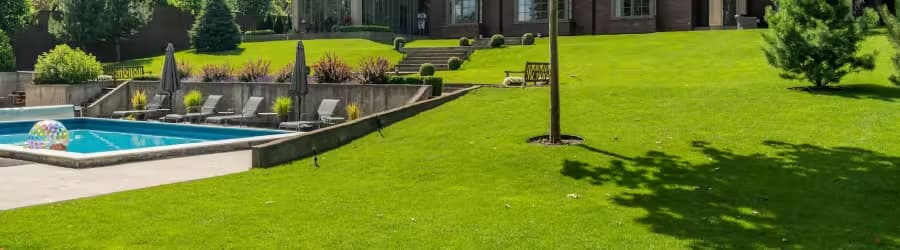
Summer (Jun-Aug)
Protecting The Crown Through Heat
Summer is survival, not growth. Everything you do now is about protecting the crown — the growth point at the soil surface — from heat, because that is what actually kills this grass.
Raise the mower to 3 to 4 inches, and 3 to 3.5 in shade. Taller leaf shades and cools the crown and drives deeper roots. This is the single highest-value thing you can do in July.
Do not fertilize. Summer nitrogen forces tender growth just when the plant needs to be conserving, triggers summer patch, and can burn heat-stressed turf outright.
Water deeply and infrequently — soak 4 to 6 inches down, early morning, aiming for 1 to 1.5 inches a week and up to 2 in hot, windy weather. Daily light sprinkling is the worst thing you can do; it builds shallow roots and keeps the canopy wet long enough for fungi to work.
Or let it go dormant on purpose. Brown is a strategy here, not a failure. A healthy lawn holds dormant 4 to 6 weeks, and longer with good soil and no traffic. If you take that route, stay off it. Traffic on brittle dormant turf crushes crowns permanently, and that damage does not green back up. A quarter inch of water a week keeps the crowns alive without waking the grass.
Watch for the summer diseases now: sunken straw circles (summer patch), rings with green centers (necrotic ring spot), and sod that peels up over chewed roots (grubs). Do the pull-and-tug tests before you reach for anything.
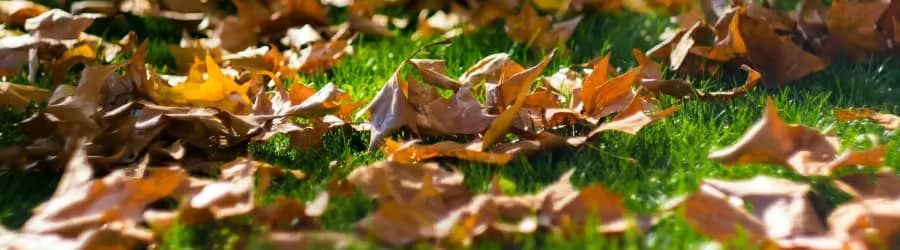
Fall (Sep-Nov)
The Season That Builds The Lawn
Fall is the real season for Kentucky bluegrass. Cool air, warm soil, and fall rain line up so that almost everything worth doing to this lawn is done between late August and freeze-up.
Seed now. Roughly August 15 to September 15 in the north, September 1 to 30 in transition areas, at 1.5 to 3.0 pounds per 1,000 square feet and no deeper than a quarter inch. The soil is still warm enough to germinate, the rain shows up, and summer weeds have quit competing.
Feed now, and feed heaviest now. About 1 pound of nitrogen in September, plus another 0.5 to 0.75 pound in late fall while the grass is still green. That late application builds density and winter root reserves and improves winter color on cultivars that hold it.
Dethatch or core-aerate in early September, while the grass still has enough season left to fill the holes and knit back. This is the right time for both, and it is the fix for two of the species’ recurring weaknesses at once — thatch buildup and compaction.
Drop the mowing height back to the 1.5-to-2.5-inch range as heat breaks. Keep mowing until growth genuinely stops; going into winter with long, floppy grass invites snow mold.
Fall is also the honest window for broadleaf herbicide, when perennial weeds are moving food down into their roots and take the product with it.
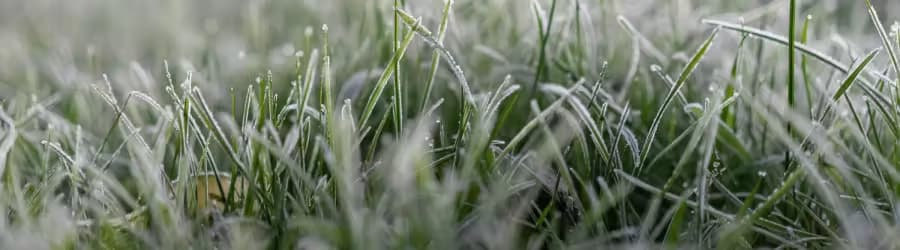
Winter (Dec-Feb)
Brown Is Not Dead In Winter
Kentucky bluegrass goes dormant or semi-dormant for winter, and how brown it gets is genetics, not health. Some cultivars hold green well into the cold; others turn straw-colored or take on a purple cast. Both are normal. This winter browning is a color trait and has nothing to do with summer drought dormancy, even though they look similar. If your lawn browns in winter and your neighbor’s does not, you bought different cultivars.
There is very little to do, and that is the point. Stay off frozen or frost-covered turf — walking on frost-stiffened blades ruptures the cells and leaves footprint-shaped dead tracks that show up at green-up.
Two things worth watching for in cold regions. Snow mold — gray and pink — develops under long-lying snow cover, especially over lush, unmown, over-fertilized grass. That is the argument for mowing until growth stops and for not pushing late nitrogen too hard. And de-icing salt along drives and walks: this grass is only moderately salt-tolerant, so expect edge damage where the salt piles up and plan to flush and reseed those strips in spring.
Winter cold itself is not a threat. This is the most winter-hardy grass on the roster, and every cultivar type is uniformly hardy — the type groups differ in winter color, not winter survival.
Bluegrass Against Fescue And Ryegrass
Most people choosing Kentucky bluegrass are really choosing between it and three other cool-season grasses. Here is the honest comparison.
Versus tall fescue. Tall fescue is the better grass for heat, drought, and the transition zone, and it is not close — it roots several times deeper, so it finds water bluegrass cannot reach and stays green on less. Bluegrass beats it on two things: it repairs itself, and tall fescue does not. Tall fescue is a bunch grass, so every bare spot has to be reseeded by hand. That is why the standard transition-zone recommendation is not one or the other but a mix — 85 to 95% tall fescue with 5 to 15% bluegrass by weight, which lands near 50/50 by seed count and gives a deep-rooted lawn the ability to heal.
Versus perennial ryegrass. Ryegrass germinates in a week where bluegrass takes three, and it takes wear better in the moment. But it is a bunch grass with no repair mechanism, it is shorter-lived, and it is less winter-hardy. Ryegrass is the right answer when you need cover fast. Bluegrass is the right answer when you need a lawn that lasts and mends. Mixing them is standard practice, but keep the ryegrass under 10% by weight or it will simply outrun and replace the bluegrass.
Versus fine fescue. Fine fescue is the low-input, shade, and drought answer — far less nitrogen, far less water, far less mowing, and genuinely functional under trees where bluegrass fails. What it will not do is take traffic or repair damage. If your yard is shaded or you want to stop working on it, fine fescue is the better grass and this page is the wrong page. Under real tree shade the correct mix is 50 to 90% fine fescue with bluegrass as the minority partner, not the reverse.
The short version. Choose Kentucky bluegrass when you have sun, cold winters, real foot traffic, and the willingness to water and feed. Choose something else when you have shade, heat, water limits, or limited time — and in most transition-zone and shaded yards, the right answer is bluegrass in a mix rather than bluegrass alone.
Find Your Precision Match
Choosing between species requires balancing your specific soil profile, local micro-climate, and maintenance goals. Use our Turf Match Tool to generate a data-backed recommendation for your specific yard.
Start Your MatchTechnical Specifications
Scientific Name: Poa pratensis L.
Common Names: Kentucky bluegrass, June grass, smooth meadow grass, spear grass, common meadow-grass
Family: Poaceae, tribe Poeae, genus Poa
Origin: Eurasia. Native to Europe and northern Asia; naturalized in North America after arriving with European settlers and livestock in the colonial era. Not native to Kentucky or anywhere in North America, despite the name. Some western populations may predate introduction; the turf material is all introduced.
Season Type: Cool-Season
Growth Habit: Rhizomatous
Growth Rate: Moderate
Texture: Fine
Root System Depth: Shallow. UC Cooperative Extension places Kentucky bluegrass in the shallow potential-rooting group, 1 to 8 inches. Roots push down early — about 9 inches by April in New Jersey work — then summer heat pulls the effective rootzone back to a few inches. Water to 6 to 8 inches deep and mow tall, because rooting depth tracks shoot height.
Spread Mechanism Intensity: Rhizomes only, and vigorous. A single shoot can produce 20 to 60 feet of rhizomes in one growing season, which is the engine behind the species' recovery rating.
Typical Lifespan & Invasiveness Risk: Long-lived perennial; a well-managed stand persists indefinitely through rhizome renewal. Invasive outside the lawn. NDSU Extension classes it as a widespread invasive perennial on Northern Great Plains rangeland, where it displaces native mixed-grass prairie species and degrades habitat for pollinators and birds. Relevant to homeowners bordering remnant prairie or native grassland.
Hardiness Zone Min: Zone 3
Hardiness Zone Max: Zone 6
Hardiness Zone Notes: Ideal in Zones 4 and 5. Zone 3 and Zone 6 are both stretch ends for opposite reasons — Zone 3 tests winter, Zone 6 tests summer. Warm-edge Zone 6 and the upper transition zone hold it only with irrigation, some afternoon shade, and active disease control. Thrives where average July temperatures stay below 75°F; struggles badly above 90°F.
Cold Tolerance Rating: Very High
Winter Color Profile: Dormant
Climate Cool Humid: Excellent
Climate Cool Arid: Good
Climate Warm Humid: Unsuitable
Climate Warm Arid: Unsuitable
Climate Transition: Poor
Sun Requirement: Full Sun to Light Shade
Shade Tolerance: Low
Water Requirement: High
Drought Survival Strategy: True Dormancy
Soil Texture Fit:
Sandy Loam
Loam
Silt Loam
Clay Loam
pH Optimal Min: 6
pH Optimal Max: 7
pH Stress Max: 7.2
Wet Feet Tolerance: Low
Compaction Tolerance: Low
Salinity Tolerance: Low
Wear Tolerance: Moderate
Recovery: Very High
Recovery Mechanism: Rhizomes
Input Intensity: High
Labor Intensity: High
Thatch Production: High
Annual N Figure: 2 to 4 lb actual N per 1,000 sq ft per year for a typical lawn; 1 to 3 low-input, 3 to 5 high-input (irrigated, clippings removed). Per type: Common approx. 1 to 2, Mid-Atlantic approx. 1 to 3, Compact-America approx. 2 to 4, Compact-Midnight and Aggressive approx. 3 to 5 lb N.
Urine Resistance: Low
Preferred NPK Ratio: No published ratio for established turf; extension routes phosphorus and potassium through a soil test rather than a fixed ratio. At seeding only, a high-phosphorus starter such as 10-20-10 at about 1 lb of phosphate per 1,000 sq ft.
Establishment Methods:
Seed
Sod
Germination Speed: Slow (14–21 days)
Establishment Speed: Slow
Seeding Rate: 1.5 to 3.0 lb per 1,000 sq ft, seeded no deeper than one quarter inch. Shade mix with fine fescue: 3 to 4 lb per 1,000 sq ft total. Approximately 2,200,000 seeds per pound — one of the smallest seeds on the roster, which is why the depth limit matters and why weight percentages in a mix mislead.
Improved Cultivar Availability: High
NTEP Note: Deep, continuous coverage. NTEP has run national Kentucky bluegrass tests since the 1980s; the 2017 test carries a 2018 to 2022 final report and the 2023 test is reporting progress data now. Recent trials run over 100 entries each.
Deep Dives & Practical Guides
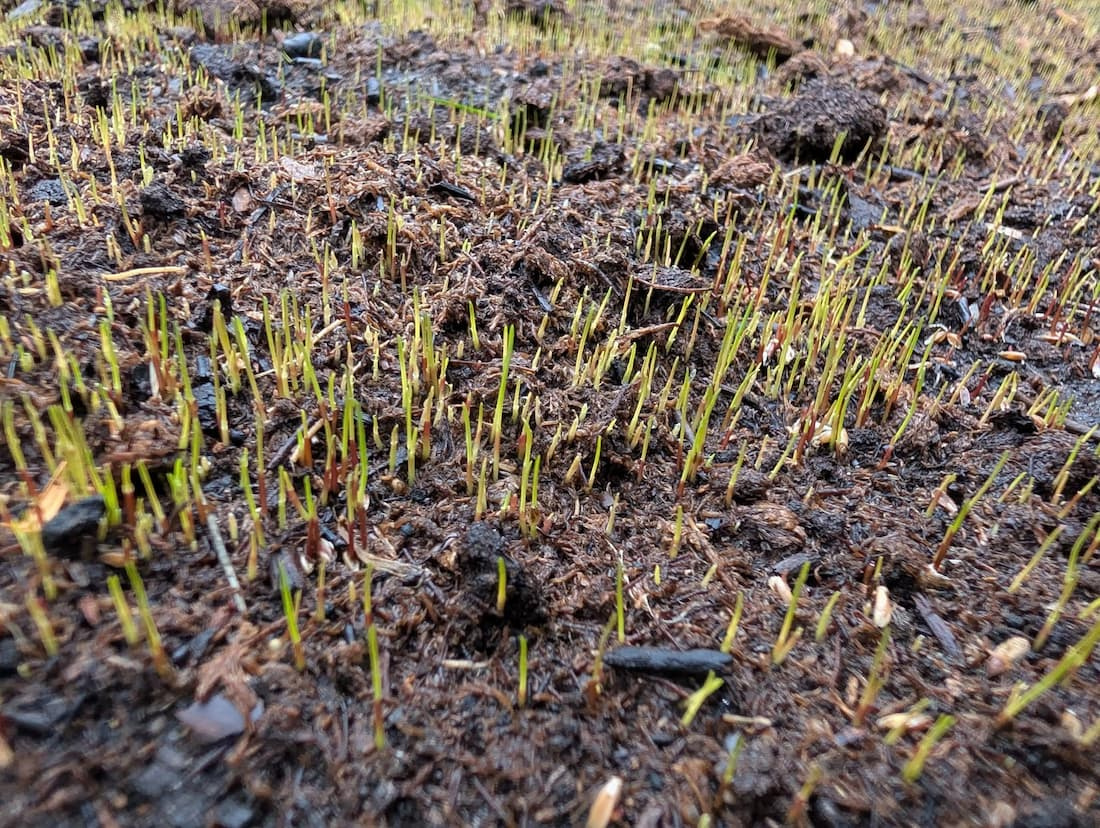
How to Establish a New Lawn From Bare Soil to First Mow
Bare soil doesn't turn into a lawn just because you scattered seed or rolled out sod — it becomes one based on a handful of specific steps done in the right order, matched to your specific grass. This guide walks through soil prep, seeding or planting method, starter fertilizer, watering as the grass grows, and knowing when it's actually safe to mow, for both cool-season and warm-season lawns.
Read Article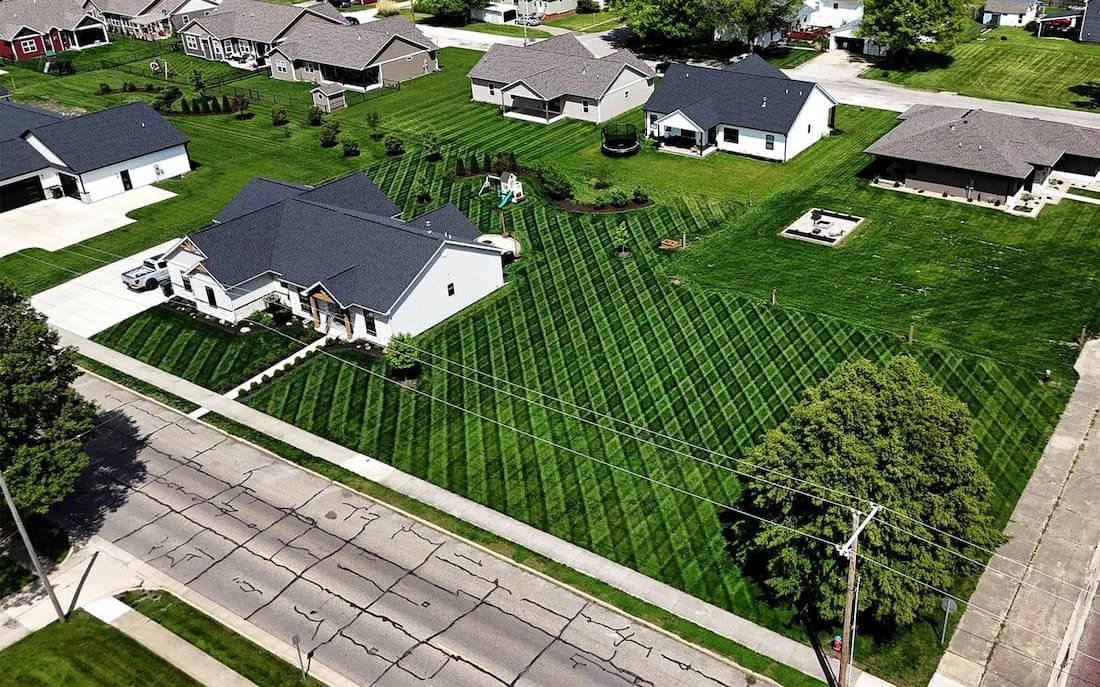
Cool Season vs Warm Season Lawn and Landscape Guide
Your lawn and your flower beds don't follow the same calendar — one runs on a cool-season engine, the other on a warm-season one, and using the wrong playbook on either can do real damage. This guide helps you figure out which system you actually have and how to care for it correctly, plus how the same cool/warm split applies to your ornamental beds.
Read Article
The Hole You Dug Is Killing Your New Plants
A shrub that looked fine all summer and stalled the next year usually didn't fail because of the plant, the weather, or the nursery. It failed because the hole it went into was a container — smooth-walled, water-holding, and impossible to root out of.
Read Article
What You Can Actually Change About Bad Soil
Heavy clay and loose sand feel like permanent sentences, and half of that is true. What your soil is made of will not change. How those particles are arranged will — and that is the half that decides whether anything grows.
Read Article
Why Your Plants Survive Winter and Die in July
Your hardiness zone is built from one number — the coldest night of an average year. It says nothing about the hottest afternoon, which is what actually kills most plants people lose. Here's how to read the other half of the map.
Read Article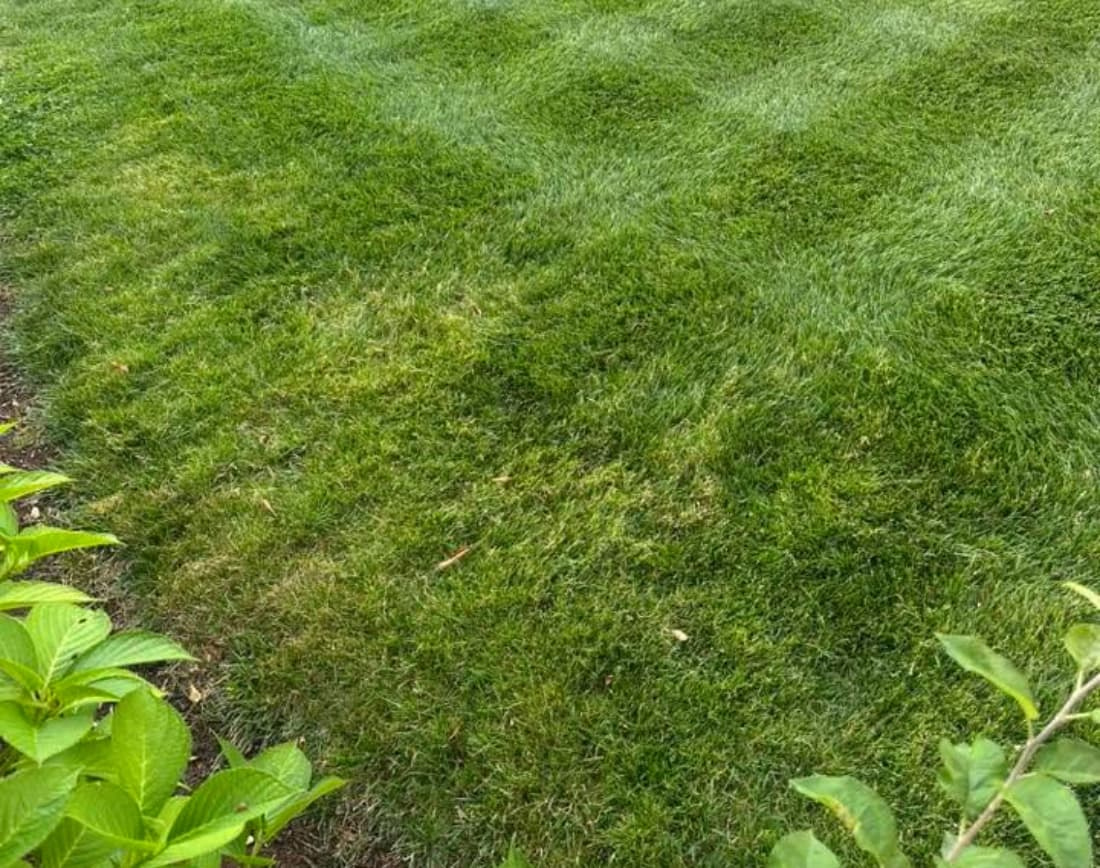
Why Poa Annua Keeps Coming Back — and the 3-Year Plan That Finally Ends the Cycle
You've pulled it. You've sprayed it. You've watched the little white seedheads mock you every single spring. And every fall, like clockwork, it's back — in the lawn, in the beds, in the cracks you didn't know you had. Here's the hard truth nobody at the big-box store will tell you: you're not losing because you're doing it wrong — you're losing because you're fighting the wrong enemy on the wrong timeline. Poa annua isn't a one-season problem, and once you understand why, the three-year plan below stops feeling like a chore and starts feeling like a countdown.
Read Article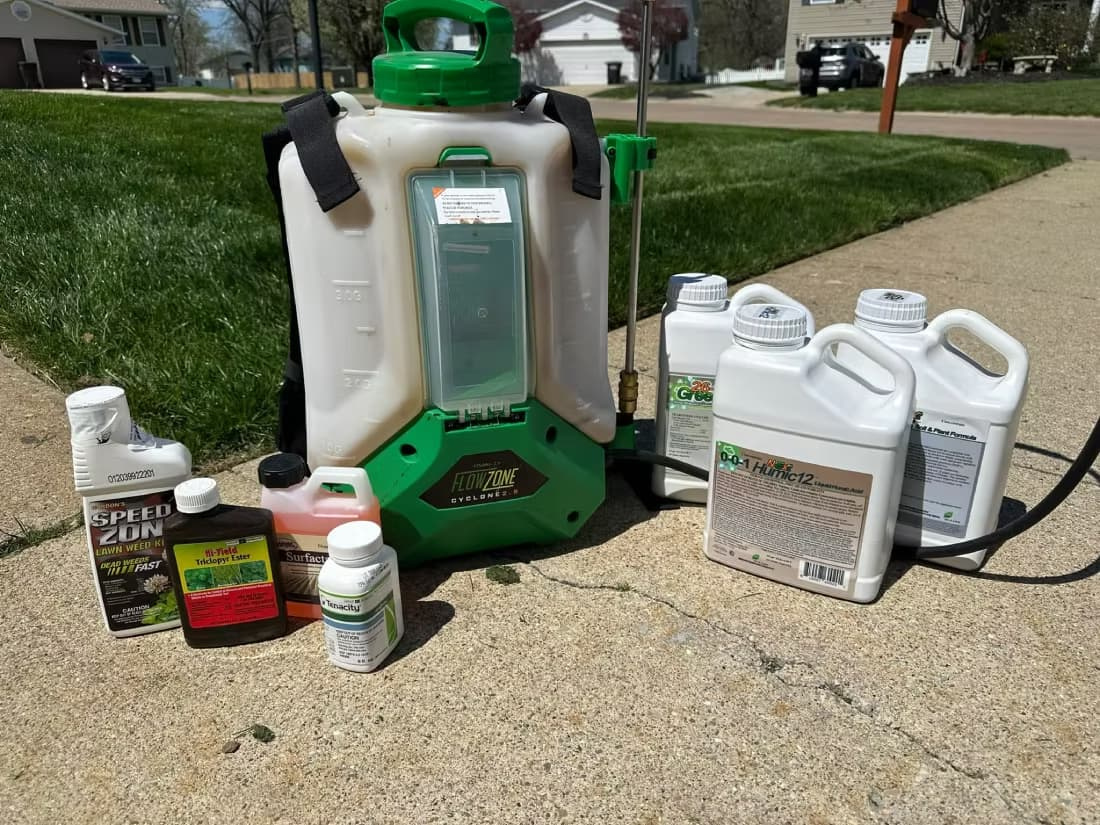
How to Apply Herbicides Correctly in Your Lawn and Garden Beds
Getting real results from a weed product has almost nothing to do with the brand on the bottle and everything to do with matching the method to the moment — the right chemistry, in the right place, at the right time. Learn how to apply herbicides correctly across both your lawn and your garden beds, whether you’re stopping weeds before they sprout or killing the ones already growing, without wasting product or harming the plants you want to keep.
Read Article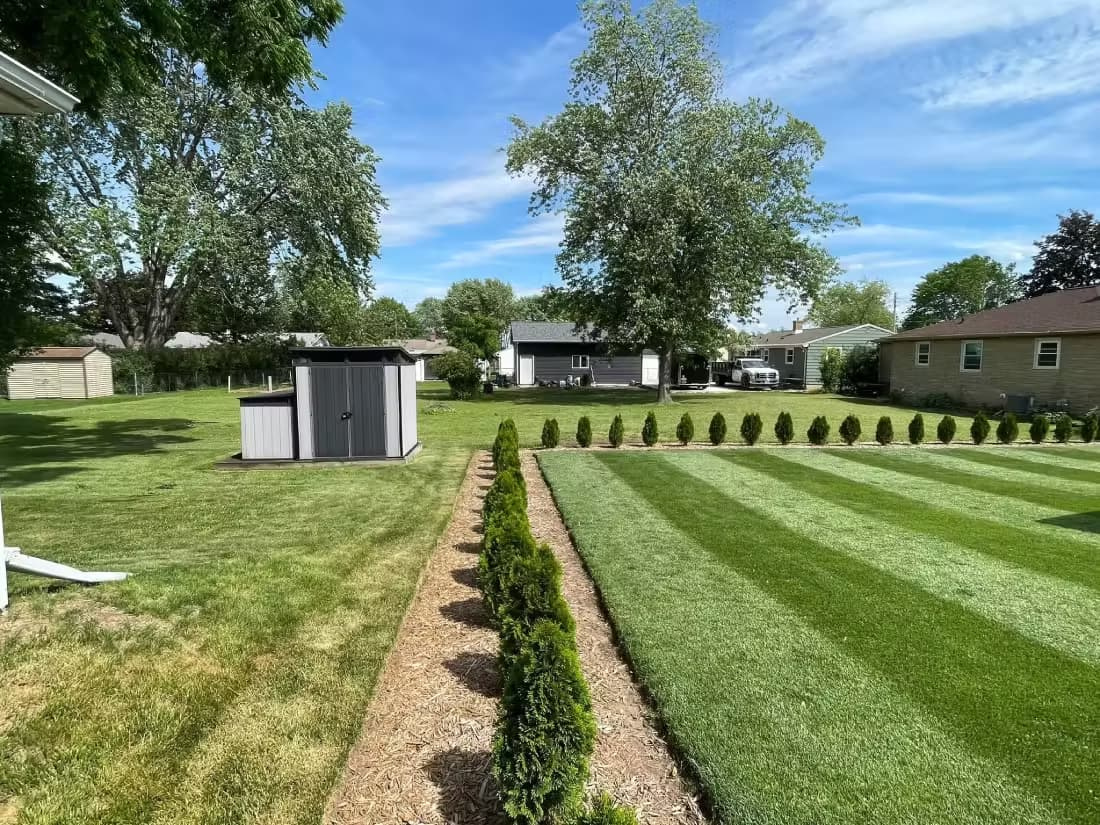
How to Kill Weeds Where Two Lawns Meet Without Harming Your Neighbor’s Grass
Controlling weeds along a shared property line is where good intentions quietly backfire—the season that's safe for your own lawn is often the season the lawn next door is most easily harmed. Learn the seasonal timing collision behind most fence-line damage, and the two habits that prevent it—reading what's actually in the bottle and spraying directed instead of broadcast—so you can clear the weeds without hurting your grass, your neighbor's, or the peace between you.
Read Article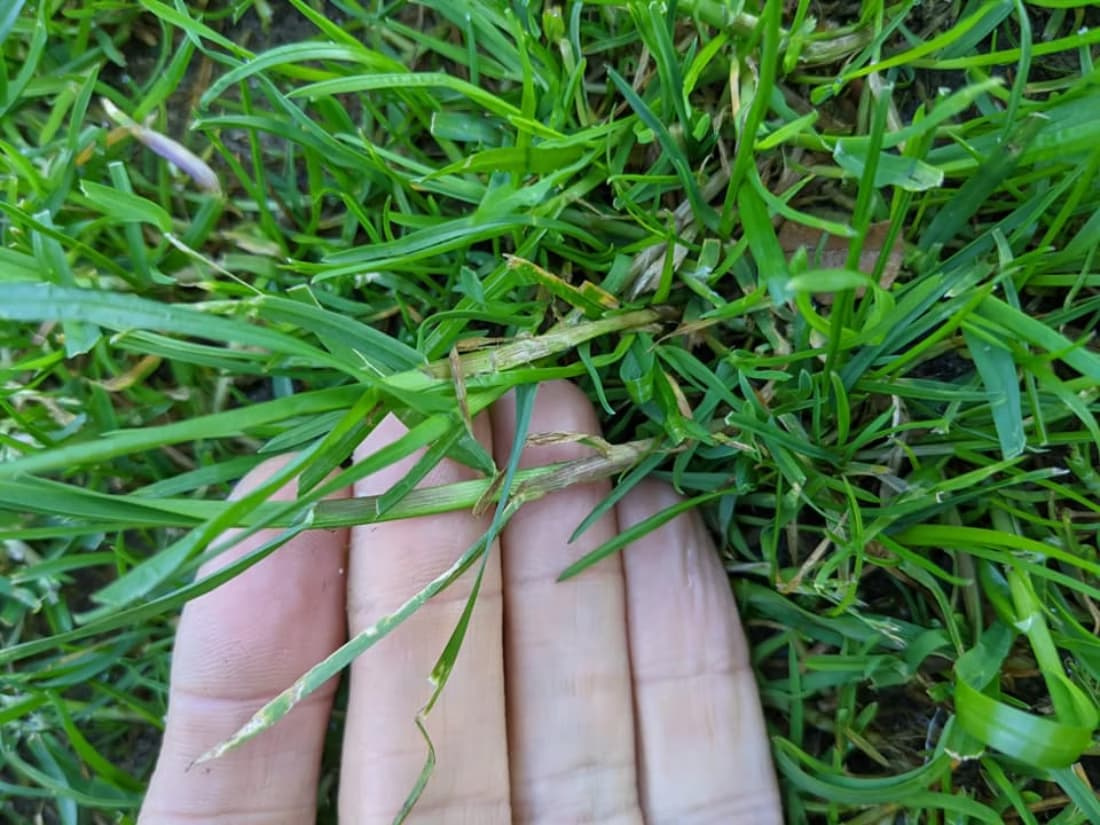
The Truth About One-and-Done Weed Control
Most homeowners lose the fight against weeds not because they work too little, but because they act before they understand. One-and-done weed control is real — but it only works when identification, timing, and the right tool all line up. This guide explains how that sequence works across your lawn and your ornamental beds, and how each weed page in the MFY hub puts it into practice for your specific invader.
Read Article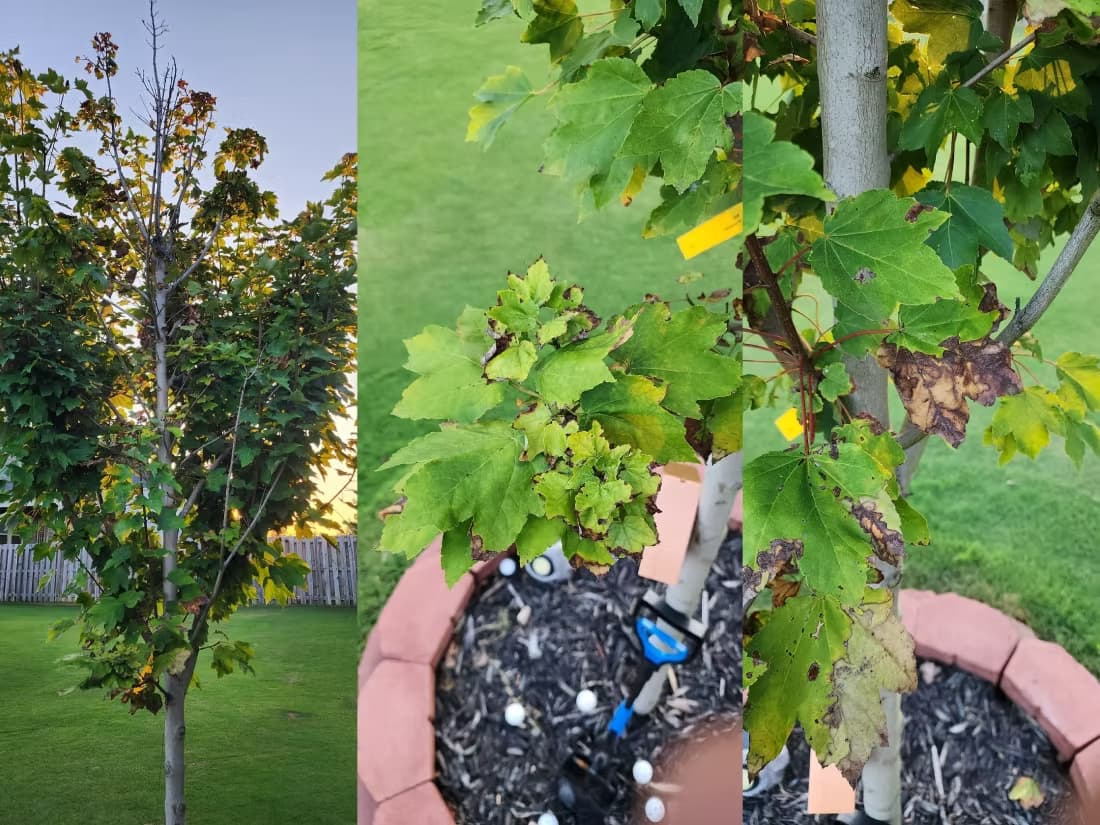
Solving the Mystery of the False Evidence in Your Lawn and Landscape
A brown leaf or a yellowing lawn is rarely what it seems. When symptoms act as decoys, a calm, forensic approach brings clarity to the confusion. Learn how to look past the surface to find the quiet truth of what your plants are truly asking for.
Read Article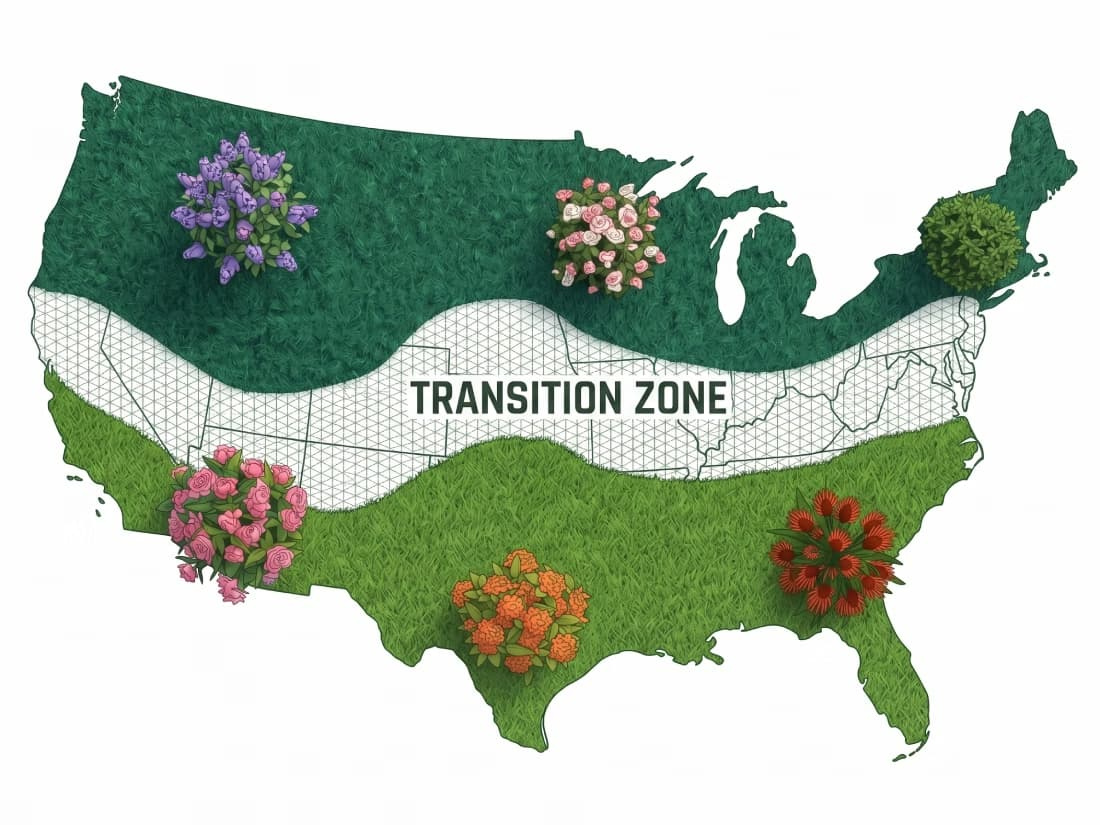
Living in the Middle: The Deep-Dive Guide to Transition Zone Lawns and Landscapes
The Transition Zone is a biological tug-of-war where neither northern nor southern species perfectly adapt. By using resilient "bridge" species and mastering maintenance levers like the Mowing Pivot, you can transform a struggling yard into a healthy landscape.
Read Article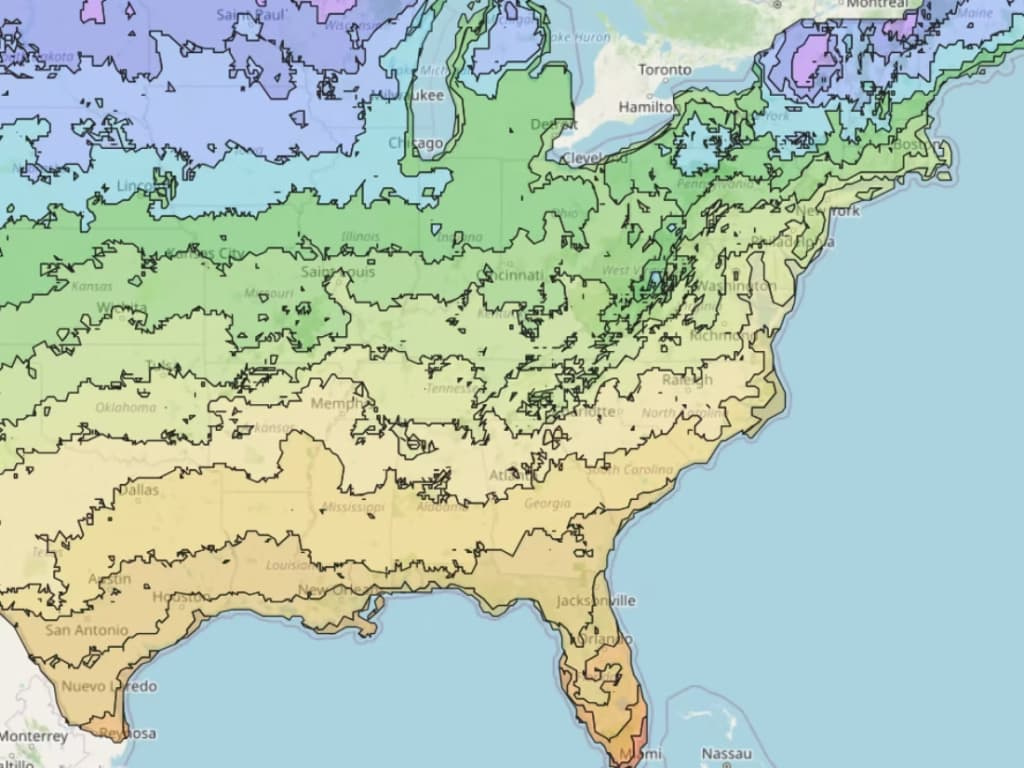
What Your Hardiness Zone Really Means for Your Lawn and Plants
Uncover the foundation of a resilient landscape by mastering the science of hardiness zones. Learn how these climate boundaries are calculated and why understanding your local temperature limits is the first step toward choosing plants that thrive year after year.
Read ArticleFrequently Asked Questions
Our maintenance and establishment guidance is derived from long-term agronomic field studies and turfgrass performance data from top research institutions.
Almost certainly cultivar genetics, not a problem. Many of the elite dark compact types are slow to green up and stay dull until mid-to-late May. Do not fertilize it awake — spring nitrogen buys leaf growth at the cost of the roots you need in July.
Tug a handful. If the crowns at the base are still firm and greenish and the roots hold, it is dormant and will recover when water returns. Dormancy is this grass’s normal drought strategy, and a healthy lawn holds it 4 to 6 weeks, longer with good soil. The thing that turns dormancy into death is walking or driving on it while brittle.
Not real shade. It needs 4 to 6 hours of direct sun, and in low light it stretches thin, loses root mass, and gets mildew. Shade-selected types help at the margins, but under mature trees the right answer is a mix that is 50 to 90 percent fine fescue.
1 to 1.5 inches a week to stay green and growing, up to 2 inches in hot, windy weather. Water deeply and infrequently — soak 4 to 6 inches down early in the morning rather than sprinkling daily, because daily light watering builds shallow roots and wet leaves that fungi love.
Fall, heaviest. About 1 pound of nitrogen per 1,000 square feet in September plus 0.5 to 0.75 pound in late fall while the grass is still green. A light spring feeding is fine. Skip summer nitrogen entirely — it triggers summer patch and can burn heat-stressed turf.
No, and that is one of this grass’s real advantages. Rhizomes fill bare spots on their own. Overseed to repair actual damage, not on a schedule.
A blend, always — three to five unrelated cultivars. Kentucky bluegrass reproduces by cloning, so a single-variety lawn is genetically one plant repeated millions of times, and one disease that beats it beats everything. Look for certified blue-tag seed.
Because ryegrass is up in 5 to 7 days and bluegrass takes 14 to 21, so the ryegrass establishes and shades out the bluegrass seedlings before they arrive. Purdue found a 50/50 mix by weight left only about 10 percent bluegrass after a year. Keep ryegrass under 10 percent by weight, ideally under 5 percent.
Necrotic ring spot, the classic frog-eye. It infects in cool, wet spring and fall but shows damage in summer. Fight it culturally: deep and infrequent watering, core aeration, mow higher, slow-release nitrogen, and hold soil pH around 6.0 to 6.2.
It is not toxic; USDA-NRCS lists it as palatable forage for livestock. The problem with dogs is urine, not poisoning. This grass is only moderately salt-tolerant and takes urine burn readily, leaving a dead straw center ringed with dark green fertilized grass.
Scientific Authority
This profile is grounded in turfgrass agronomy and soil science. Every recommendation—from irrigation requirements to nutrient management—is verified against agricultural research data to ensure optimal plant health and environmental sustainability in the Transition Zone.
Primary Resources
- USDA-NRCS Plant Guide: Kentucky Bluegrass (PDF)
- Penn State Extension: Kentucky Bluegrass Identification and Management
- Purdue University Turfgrass Science Extension
- NC State Extension TurfFiles: Kentucky Bluegrass Profile
- Rutgers Center for Turfgrass Science & Turf Trials
- Michigan State University Extension: Turfgrass Management
- UMass Extension Turf Program: Understanding a Seed Label
- Virginia Tech Extension: Turfgrass Variety Recommendations & Selection
- Kansas State University Extension: Kentucky Bluegrass Lawns
- Cornell University Sports Field Management: Seeding Rates
- NTEP: National Kentucky Bluegrass Trial Data
- Utah State University Extension: Kentucky Bluegrass Range Plants Guide