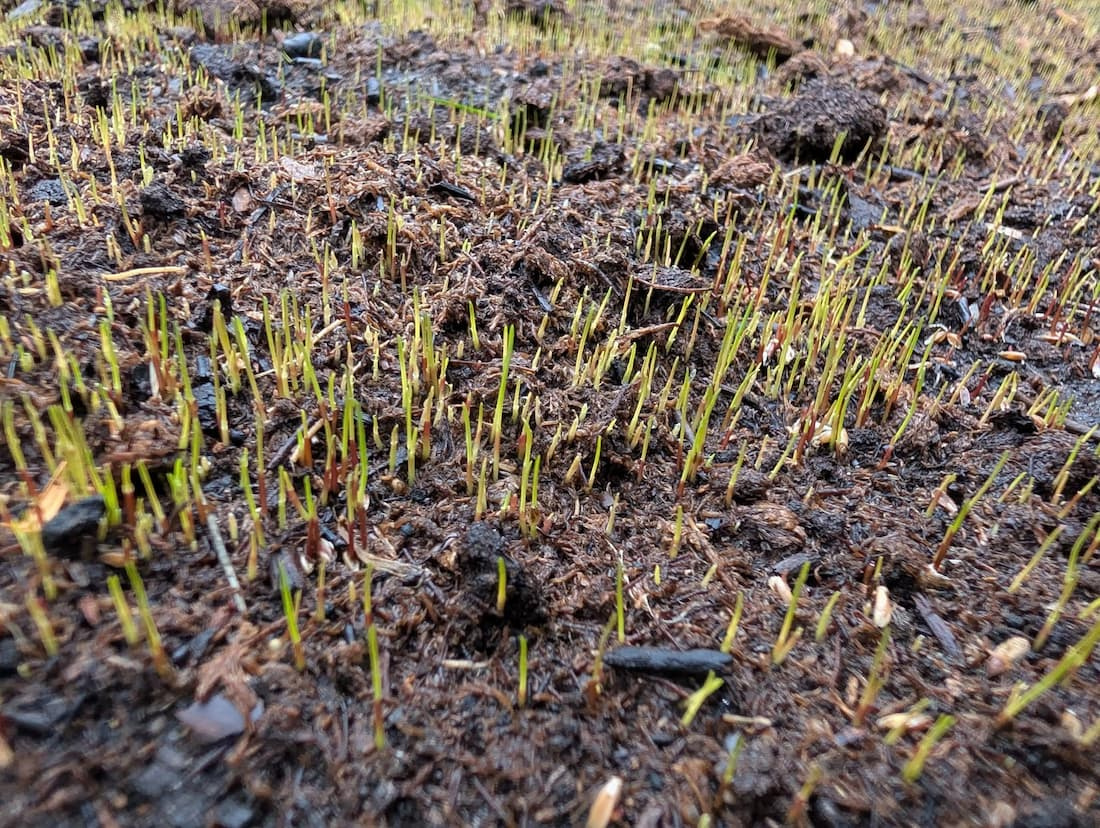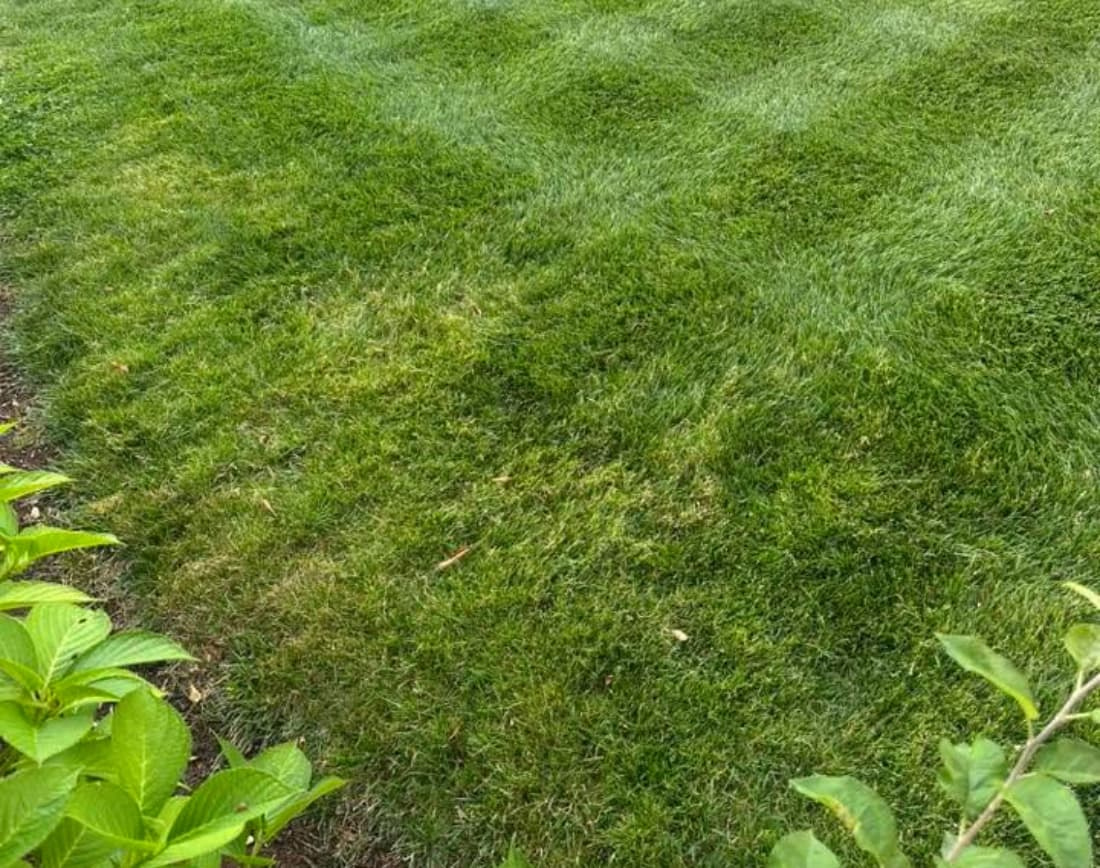
“I live smack in the transition zone, so picking a grass is basically a crap shoot” is a complaint that shows up in some form on nearly every regional lawn forum, and the replies never agree. One camp insists you should pick grass for the summer, not the winter—go warm-season and let it go brown for a few months, because a heat-killed lawn is worse than a dormant one. Another swears the local extension office quietly favors warm-season anyway, so why fight it. A third group skips the choice entirely and tries to have both: overseed fescue into dormant Zoysia every fall, or let a patch of buffalograss creep in under a cool-season lawn, chasing one continuous green yard instead of two seasonal ones. The question that actually decides it—”is it a bad idea to mix a cool season grass into a warm season lawn?”—gets asked constantly and answered every possible way, because almost nobody frames it as what it really is: two plants running opposite rulebooks, sharing one root zone, each one waiting its turn to choke out the other.
The MFY Advice
Every lawn and flower bed runs on one of two clocks, and they never agree. One wakes up hungry in the cool months and goes quiet in the heat; the other waits out the cold looking half-dead, then thrives once everything else struggles. The fix isn’t complicated once you know which clock you’re on. Finding out is the part almost nobody does first.
Table of Contents
Why Your Yard Runs on Two Different Clocks
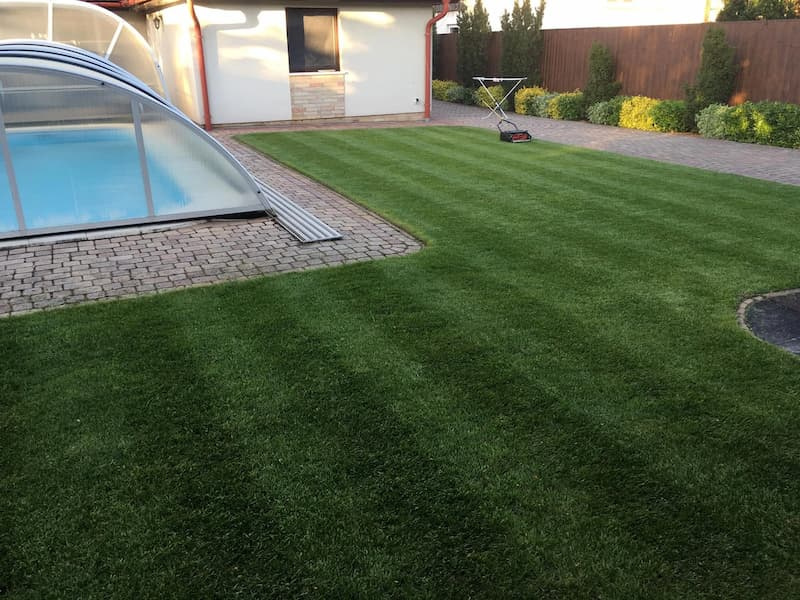
The “two clocks” from a minute ago aren’t just a nice way of putting it. They come from two genuinely different ways that plants turn sunlight into food—and once you understand that one difference, almost everything else about your lawn and garden starts to make sense.
Two Engines, Two Temperatures
Cool-season grasses—like Kentucky bluegrass, tall fescue, and perennial ryegrass—use a food-making process that runs best in cool air, somewhere between 65°F and 75°F. It has one big weakness: once temperatures climb past about 85°F, the plant starts wasting energy just trying to cope with the heat, a process called photorespiration. That’s why a cool-season lawn often looks tired, pale, or thin in the middle of summer, even with plenty of water.
Warm-season grasses—like Bermudagrass, Zoysiagrass, and St. Augustinegrass—evolved a more efficient trick for hot weather. They add an extra step that concentrates carbon dioxide inside special cells, almost like a supercharger, so the plant keeps making food efficiently between 75°F and 95°F, right where cool-season grasses would be struggling. The tradeoff: once soil temperatures drop below about 50°F to 55°F, warm-season grasses can’t keep up. They turn brown and go dormant until spring.
Why This One Difference Changes Everything
That single difference in how each plant makes food explains most of what confuses homeowners:
- Growing season — cool-season grasses grow fastest in spring and fall; warm-season grasses grow fastest in the peak of summer.
- Dormancy — cool-season grasses slow down or go dormant in summer heat; warm-season grasses go dormant and turn brown all winter.
- Care needs — whatever helps one system (like heavy summer watering and feeding for a warm-season lawn) can actively stress the other (a cool-season lawn already struggling with heat).
A Quick Example: Two Neighbors, Same Street
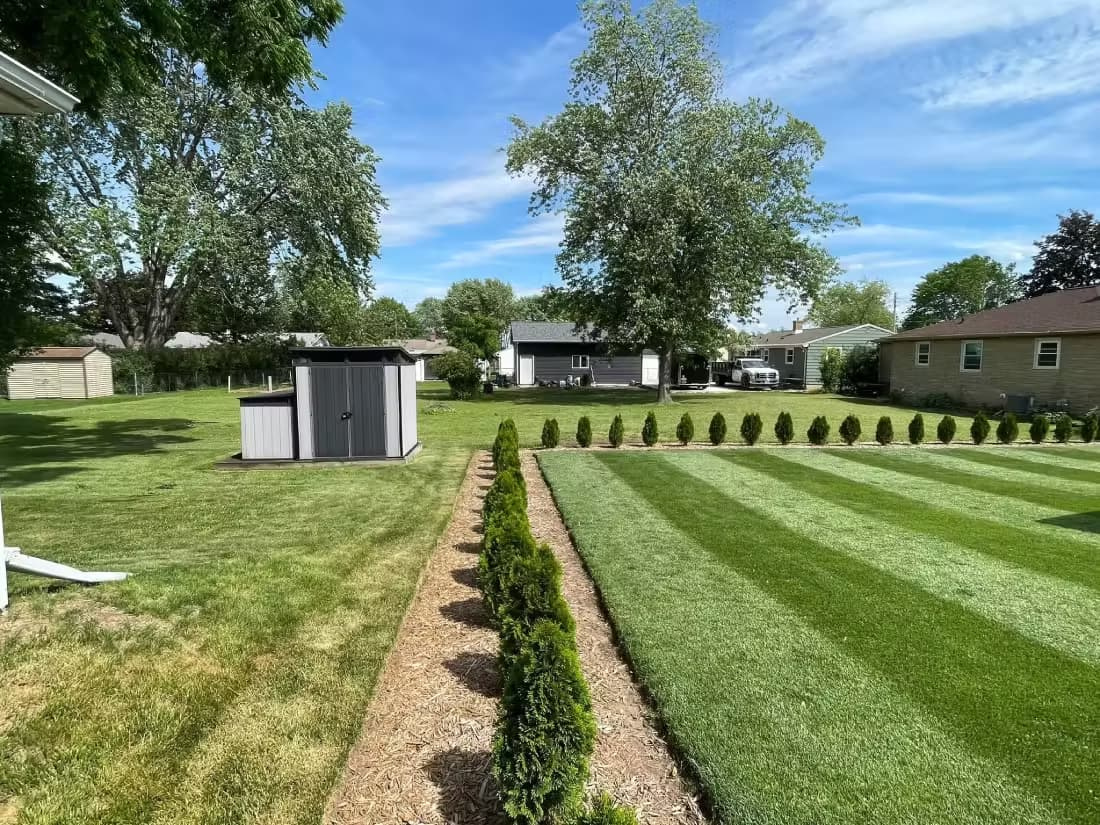
Picture two houses on the same block. One lawn is a deep, rich green all through October, November, and April, then starts fading a little by August. The other lawn looks a bit rough and brown in early spring, but by July it’s the greenest yard on the street—and it barely needs watering.
Neither homeowner is doing anything wrong. They just have two different systems: the first is a cool-season lawn (probably tall fescue or Kentucky bluegrass), and the second is a warm-season lawn (probably Bermudagrass or Zoysiagrass). Each one is behaving exactly the way it’s supposed to for its type.
What About Flowers and Shrubs?
Ornamental plants use the words “cool-season” and “warm-season” too, but for a different reason. It’s not about how they turn sunlight into food—it’s about whether they can survive frost. Cool-season annuals, like pansies and violas, shrug off freezing temperatures and bloom in fall, winter, and early spring. Warm-season annuals, like petunias, zinnias, and marigolds, can’t handle any frost and do their growing from late spring through summer. Same two words, different reason behind them. We’ll get into exactly how to work with both a little further down.
Finding Out Which System You Actually Have
Everything below depends on one question: do you already have grass growing, or are you starting with bare dirt? The two situations call for different information, so find your situation below.
If You Already Have a Lawn
There are two ways to figure out whether your yard is running the cool-season system or the warm-season one. You don’t need both—either one works on its own, but together they confirm each other.
Method 1: Check Your Region
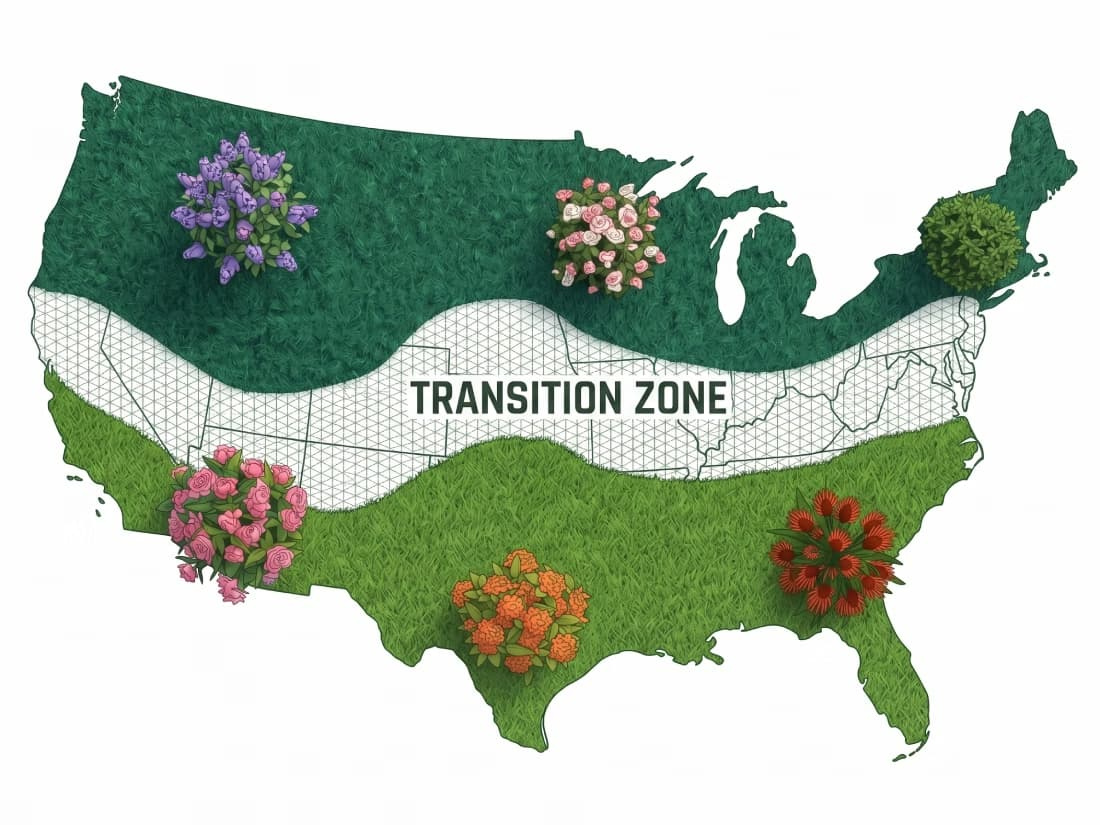
Most of the United States falls cleanly into one of two lawn regions, with one tricky strip in between.
- Cool-season region — the northern half of the country: places like Minneapolis, Seattle, Hartford, Omaha, Chicago, and Boston. (See our full Hardiness Zone Hub for your exact zone.)
- Warm-season region — the Deep South, Gulf Coast, Florida, and the arid Southwest: places like Savannah, Orlando, Houston, Phoenix, Atlanta, and Tampa.
- The transition zone — a band across the middle of the country where both systems overlap and neither one is fully comfortable: places like Raleigh, Charlotte, St. Louis, Kansas City, Dallas, and Baltimore.
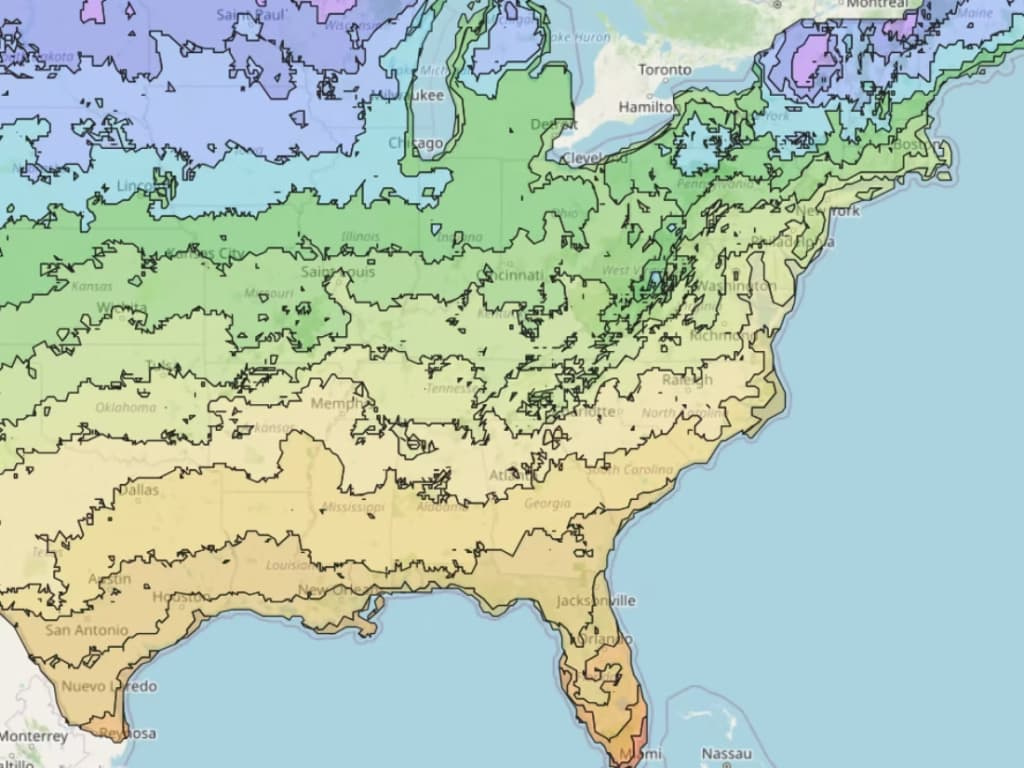
Here’s the catch: the USDA hardiness zone map only measures how cold your winters get. It doesn’t measure summer heat at all. That’s a big part of why the transition zone is so confusing—winters there get cold enough to hurt warm-season grass, but summers get hot enough to hurt cool-season grass too. We’ve covered that overlap zone in detail in our transition zone guide, so if that’s where you live, that article is your next stop after this one.
Method 2: Watch What Your Lawn Actually Does
If you’d rather skip the map entirely, your lawn is already telling you which system it runs:
| Cool-Season Lawn | Warm-Season Lawn | |
|---|---|---|
| Fall, winter, early spring | Stays green | Brown and dormant |
| Peak summer heat | May brown temporarily, recovers with rain | Bright green, growing fastest |
| After the first hard frost | Stays mostly green | Turns uniformly tan until spring |
If your lawn is green all winter and struggles a bit in August, you have a cool-season lawn. If your lawn is the greenest thing on the block in July and turns completely brown the moment frost hits, you have a warm-season lawn. That’s it—no zone map required.
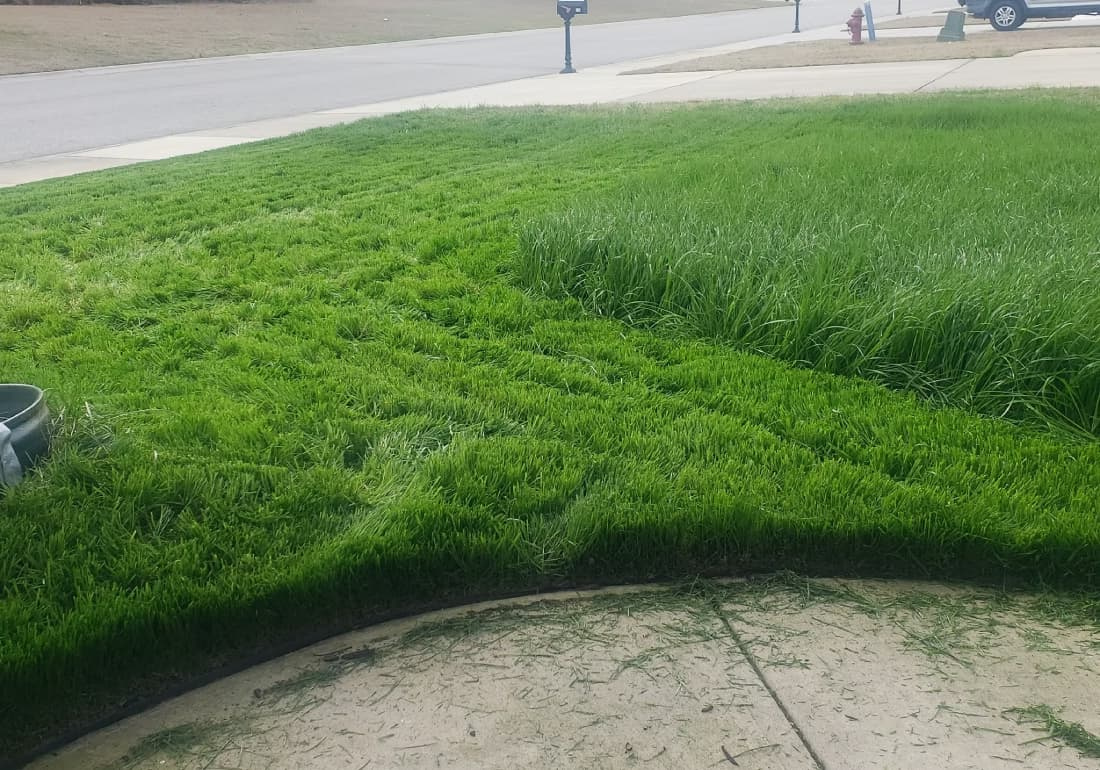
One quick reassurance: if any of that brown color has you worried, do the tug test. Give a small handful of grass a gentle pull. If it resists and stays rooted, it’s just dormant. If it comes up with no resistance at all, that patch may actually be dead—we’ll go much deeper on how to tell the difference later in this guide.
If You’re Starting From Scratch
New construction, a full renovation, or your very first lawn—there’s nothing to diagnose yet, so the question changes from “what do I have” to “what do I want.” Start with the same region check above to see which category you fall into, then it comes down to one trade-off:
- Want a lawn that’s green through fall, winter, and spring, and don’t mind some stress (or extra watering) during the hottest weeks of summer? Choose cool-season.
- Want a lawn that’s at its greenest and toughest during peak summer, and don’t mind it going completely brown for the winter? Choose warm-season.
- Live in the transition zone? Neither choice is flawless there—it’s about deciding which season matters more to you and accepting the trade-off that comes with it. Our transition zone guide walks through that decision in more depth.
Once you’ve picked a direction, the care section below has the actual seeding and sodding windows for getting it in the ground.
A Quick Note on Flowers and Shrubs
Ornamentals don’t follow this region-based logic at all—they follow your local frost dates instead, not a hardiness zone. We’ll cover exactly how that works in the next section.
The Right Way to Care for Your Lawn
Here’s the good news: once you know which system your lawn runs, almost every care decision gets easier. Do the right thing at the right time for your system, and your lawn does most of the work itself.
If You’re Just Getting Started
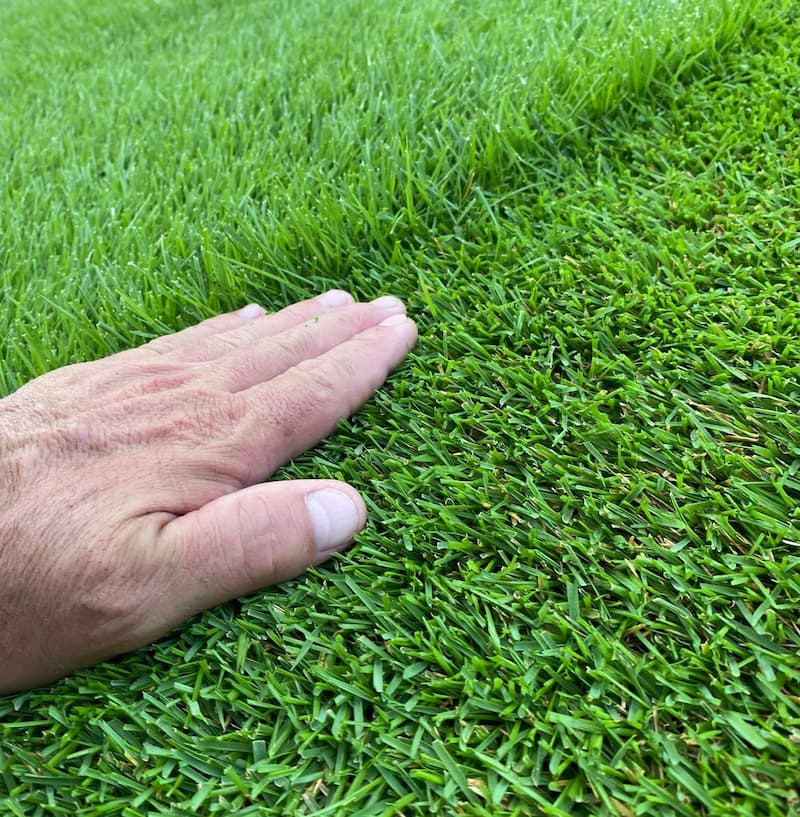
If you figured out which system you’re on earlier in this guide and you’re planting from bare dirt, timing matters more than almost anything else.
- Cool-season lawns — seed or sod in late summer to early fall, roughly late August through mid-October. The soil is still warm enough for fast germination, but the worst heat is behind you.
- Warm-season lawns — seed or sod in late spring to early summer, roughly May through June, once the soil is reliably warm.
Planting outside these windows is one of the most common ways a new lawn struggles before it even gets going—seedlings planted in the wrong season don’t have time to build roots before facing weather they can’t handle yet.
Timing is only half the job, though — this section covers when to plant, not the actual soil prep, seeding rate, starter fertilizer, watering schedule, and first-mow timing that decide whether that seed or sod actually takes. We cover all of that, step by step, in How to Establish a New Lawn From Bare Soil to First Mow.
Feeding Your Lawn at the Right Time
Fertilizer timing works almost backwards for each system:
- Cool-season lawns — the single most important feeding happens in early fall (late August through September). This is when the plant is actively building roots and storing energy for winter, not just growing leaves. A light feeding in late spring is optional; heavy feeding in summer does more harm than good, since it pushes leaf growth right when the plant is already struggling with heat.
- Warm-season lawns — feed during active growth, from late spring through mid-summer, when the plant can actually use it. Stop as the weather cools in fall; feeding a lawn that’s heading into dormancy just wastes fertilizer and can hurt its ability to harden off for winter.
One easy win for both systems: leave your grass clippings on the lawn after mowing instead of bagging them. It quietly returns a meaningful share of the nitrogen your lawn needs, for free.
Mowing: Right Height, Right Habits
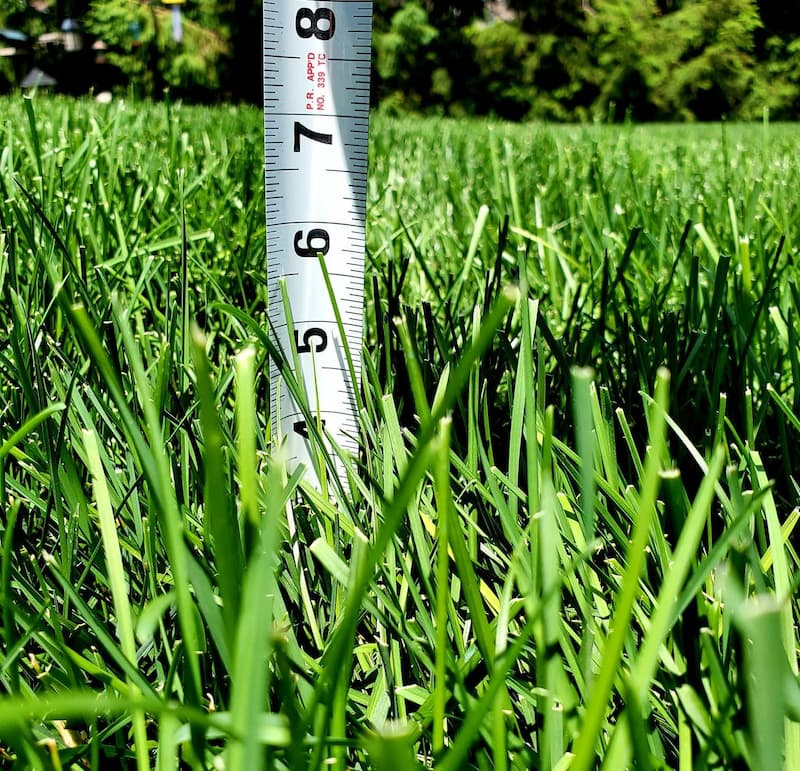
Skip the idea of one “correct” mowing height—each system has its own comfortable range:
| System | Typical Mowing Height |
|---|---|
| Cool-season lawns (bluegrass, fescue, ryegrass) | 2.5–3.5 inches (taller in hot regions, lower end in humid ones) |
| Warm-season lawns (Bermuda, Zoysia, St. Augustine, centipede) | 1–2 inches (fine-textured varieties can go a bit lower) |
A few habits matter more than the exact number:
- Never cut more than one-third of the blade length in a single mow. Cutting further than that stresses the plant and forces it to burn stored energy just to recover.
- Raise your mower height in shady spots—about 50% higher than in full sun. Shaded grass already gets less light and grows thinner, weaker blades than a full-sun lawn, so more leaf surface helps it capture what light does reach it, and the taller cut avoids piling mechanical stress on top of a plant that’s already struggling for energy.
- Keep your mower blade sharp. A dull blade shreds grass tips instead of cutting them cleanly, and shredded tips turn brown and invite disease.
One More Seasonal Task: Aeration and Dethatching
If your lawn feels spongy underfoot or water tends to puddle instead of soaking in, it’s due for aeration or dethatching. Time it the same way you’d time anything else: to match your system’s active growth period, so it can heal quickly instead of sitting stressed and open.
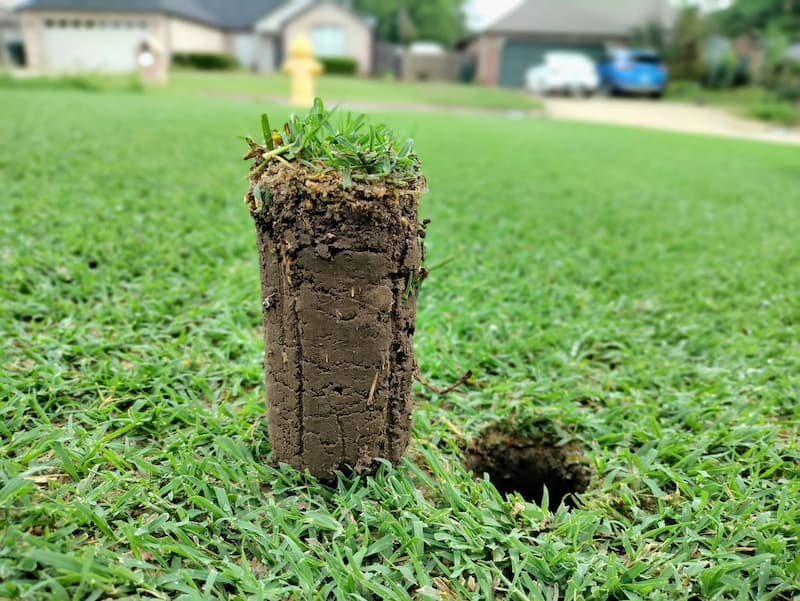
- Cool-season lawns — aerate or dethatch in early fall, the same window as overseeding.
- Warm-season lawns — aerate or dethatch in late spring to early summer, once the lawn is fully green and growing.
Doing either job during dormancy just leaves the lawn damaged with no ability to recover until the next growing season.
Watering: Active Growth vs. Dormant Turf
During active growing months, water deeply and infrequently rather than a little every day—this encourages roots to grow deeper instead of staying near the surface. Water in the morning rather than the evening: grass that goes into the night with wet blades gives fungal disease exactly the damp conditions it needs, and the resulting damage often gets mistaken for drought stress instead of what it actually is.
During dormancy, most lawns don’t need any supplemental water at all. Before watering a dormant lawn, push a screwdriver into the soil: if it slides in easily 6 to 8 inches, there’s already enough moisture. Only consider watering during an unusually long dry spell (three or more weeks with no rain), and only when temperatures are above 40°F.
Don’t Try to Mix the Two Systems
It’s tempting to want a lawn that’s always green—overseeding a warm-season lawn with cool-season grass to fill in over winter, or letting a cool-season lawn pick up some warm-season grass to survive summer better. Extension research is consistent here: don’t. The two systems have different mowing heights, different watering needs, and different growth habits, and whichever one is actively growing at a given time will crowd out the other. The result isn’t a lawn that’s always green—it’s a lawn that’s always fighting itself.
If a green-year-round lawn is your goal, that’s handled differently: overseeding a dormant warm-season lawn with annual ryegrass every fall for temporary winter color is a real, well-established practice with its own trade-offs (more on that in the deeper material below). That’s different from permanently blending two systems into one lawn.
Bare Spots: Will It Fix Itself, or Do You Need to Overseed?
Whether a thin or bare patch fills back in on its own depends on how your grass spreads, not on luck:
- Grasses that spread on their own (Kentucky bluegrass, Bermuda, Zoysia, St. Augustine, centipede) send out underground or above-ground stems that can fill bare spots without help.
- Grasses that don’t spread (tall fescue, perennial ryegrass, most fine fescues) grow in individual clumps and can’t fill bare patches by themselves—these need to be overseeded to recover density.
One timing conflict worth knowing before you overseed: pre-emergent weed preventer and grass seed don’t mix. Pre-emergent products stop seeds from germinating—including the grass seed you just put down. If you’re overseeding, skip the pre-emergent that season, or ask about a seeding-safe option before applying anything.
Not sure which type you have? That’s one more reason the diagnosis step earlier in this guide is worth doing first.
Let Weeds Tell You Something
Weeds aren’t just a nuisance—they can tell you something about your lawn’s health. Certain weeds germinate specifically in cool weather, others specifically in warm weather, so a sudden weed problem can be a clue that your turf canopy has thinned out at exactly the time of year that species prefers. We’ll come back to specific weed examples later, with links to our full weed profiles.
The Same Idea Applies to Your Flower Beds
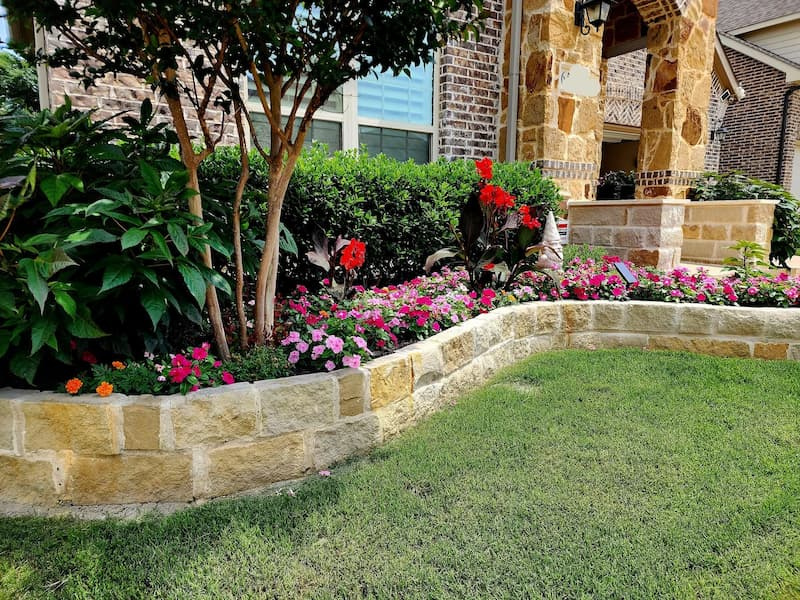
Your flower beds run on the same basic logic as your lawn, just with a different mechanism (frost tolerance instead of photosynthesis) and a different rhythm.
The Two-Rotation Model
Instead of one bed that’s supposed to bloom all year, think of it as two plantings:
- Cool-season rotation (roughly October–April) — pansies, violas, snapdragons, and ornamental kale. Plant once the soil cools below 70°F; these tolerate frost and bloom through fall, winter, and early spring.
- Warm-season rotation (roughly May–September) — once the cool-season flowers decline in mid-spring, replace them with true heat-tolerant summer annuals like lantana, vinca, marigolds, and zinnias, once the soil is reliably above 60°F.
Buy by Soil Temperature, Not by What’s on the Shelf
Garden centers stock warm-season annuals like petunias as early as they can sell them—often well before it’s actually safe to plant. Buy based on what the soil temperature actually is, not what’s available on the shelf. Plant too early into cold, damp soil and you’ll see stunted roots and purple-tinged leaves; plant based on nursery timing alone in a hot climate and you risk the kind of sudden collapse gardeners call “Wave Death”—petunias that look healthy for weeks, then die all at once once real summer heat and humidity arrive.
Ease New Plants Into the Outdoors
Before moving any seedling from a protected environment—a nursery greenhouse, an indoor start—into open ground, give it several days outside in a sheltered spot first. This is called hardening off, and skipping it is one of the fastest ways to lose an otherwise healthy plant to sudden cold, wind, or sun exposure.
Where the Experts Actually Disagree, and How to Decide for Yourself
Everything above covers the core game plan. Below are the handful of places where good advice genuinely varies by region — and how to read that variation for your own yard.
Why Fall Fertilizer Timing Gets More Complicated Than “Early September”
Nearly every land-grant program — Purdue, Ohio State, Kansas State, Cornell, and Michigan State among them — agrees that late August through September is the single most important nitrogen window for cool-season turf. The disagreement shows up in what happens after that. Kansas State and Ohio State both favor a second, heavier dose in November while the lawn is still green, arguing it builds root and crown reserves for an earlier spring green-up. Purdue keeps a lighter November top-up on the books, but skips it outright once the ground is frozen or close to it. Cornell and Michigan State drop late-fall nitrogen from the schedule entirely — Cornell backs that up with an actual law, a fertilizer blackout across New York from December 1 to April 1, and Michigan State points to snow mold, a disease that thrives under the same long snow cover the Great Lakes region gets every winter. Kansas State’s more relaxed stance comes from drier winters and heavier soil, where both leaching and snow mold pressure are much lower to begin with.
For your lawn: in sandy soil, near a sensitive watershed, or anywhere with long snow cover, stick to one solid September feeding and skip both the November top-up and routine spring feeding. In a drier climate with heavier soil, a September feeding plus a modest November one is fine. Everywhere, one rule holds: never fertilize frozen or snow-covered ground, and only feed again in spring if the lawn genuinely looks thin.
Should You Overseed a Dormant Warm-Season Lawn With Ryegrass?
The University of Arizona Cooperative Extension treats overseeding dormant Bermudagrass with ryegrass as routine practice in desert climates like Phoenix and Tucson, where heat arrives fast and predictably enough each spring that the ryegrass reliably burns off right as the Bermudagrass wants to wake up. Clemson, Mississippi State, and LSU AgCenter, all managing humid Southeastern climates, take a cooler view of the same practice on an already-healthy lawn — cool, wet spring weather can drag on there, and modern heat-tolerant ryegrass cultivars now persist long enough to keep shading the Bermudagrass right when it needs sunlight to break dormancy. Texas A&M splits the difference, treating overseeding as a short-term repair option rather than a routine one.
For your lawn: in a dry climate with full irrigation control, overseeding each winter is reasonable — just commit to forcing the transition in spring (lower the mowing height, feed the Bermudagrass, cut back watering once it’s about 80% green) and give it a full summer to rebuild roots before doing it again. In a humid climate, save it for a specific event or storm-damaged turf rather than doing it every year, and use perennial ryegrass, not annual, for a gentler transition. One rule everywhere: never overseed a lawn in its first winter — the competition can damage an immature root system.
Does a Dormant Lawn Need Winter Watering?
Colorado State University recommends watering dormant turf during dry spells, citing the dry air and wind that pull moisture out of the plant — and a less obvious risk, since drought-stressed winter grass can attract mites that leave dead patches easy to mistake for winterkill. Clemson agrees watering helps during extended dry periods, since underground crowns stay metabolically active year-round. Texas A&M and the University of Georgia land on the opposite side: in their climates, natural rainfall is already enough, and extra water only oversaturates already-wet ground, driving out oxygen and delaying spring green-up. The University of Arizona takes a third position — dormant Bermudagrass there uses so little water that watering it just costs money for no benefit.
For your lawn: test the soil before watering anything — push a screwdriver into the ground, and if it slides in easily 6 to 8 inches, skip it. In a dry, windy winter climate (the high plains, the Rockies), water once or twice a month on days above 40°F. Anywhere with regular winter rain (the Gulf Coast, the Southeast, the desert Southwest), leave the irrigation off. If your winters are unpredictable, step in only during an unusually long dry stretch — three weeks or more with no rain.
Why “Just Mow It at X Inches” Doesn’t Actually Work
Michigan State University recommends cutting Kentucky bluegrass as high as 3.5 inches, based on research showing that height builds enough root mass to survive heavy grub damage without needing insecticide. Penn State, working with the same grass in a cooler climate where grub pressure isn’t as central a concern, recommends a lower 1.5 to 2.5 inches instead, prioritizing dense turf and less thatch. Neither is wrong — they’re solving different problems. A sharper exception shows up during drought: Clemson, the University of Georgia, Michigan State, and Kansas State all recommend raising the mower deck about half an inch during a summer dry spell — standard advice almost everywhere. Purdue disagrees for one specific case: a non-irrigated cool-season lawn already deep in summer drought, where the roots have already stopped growing for the season, so a taller cut just adds leaf surface with nothing extra underground to support it.
For your lawn: lean toward the higher end of your grass’s range if grub damage has been a recurring problem, and toward the lower end in a humid, disease-prone climate. And if you’re mid-drought on an unirrigated cool-season lawn, leave the mower height alone — that’s the one case where the popular advice backfires.
Should Homeowners Use Plant Growth Regulators (PGRs)?
Products like trinexapac-ethyl (sold as Primo Maxx) slow vertical grass growth and are standard in professional turf care — but this is one topic where extension programs don’t really split: it’s a professional tool, not a DIY one. Purdue points to the precision it demands, calibrated sprayers and narrow timing windows measured in accumulated heat units, and has documented real damage from residential misapplication drifting into nearby ornamental trees. Kansas State takes a more practical angle, recommending DIY homeowners solve the same underlying problem — usually shaded, stressed turf — by cutting nitrogen roughly in half and mowing less often instead. Texas A&M, Rutgers, and NC State all point to the same conclusion from a different direction: safe, precise timing depends on tools, like heat-unit tracking and canopy sensors, that most homeowners simply don’t have.
For your lawn: skip the PGR. If your turf is struggling in shade, cut nitrogen and mowing frequency instead — Kansas State’s safer substitute. If you want true PGR-level results, that’s a job for a licensed lawn care professional with the right equipment.
Dormant or Dead? The Real Diagnostic Tests, and How Long to Wait
The tug test — grab a handful of brown grass and pull; resistance means dormant, easy pull-out means dead — is real and institutionally validated, but it’s one tool among several. Clemson uses that same tug test specifically for fungal crown rot, where infected grass pulls free from a rotted base. Texas A&M uses a “carpet-roll” test for grub damage — a section that lifts up like a rug means the roots were severed underneath. The University of Georgia scratches a crown or stolon with a fingernail instead: green and moist means alive, brown and brittle means dead. When the damage isn’t visible at the surface, Penn State digs a small crown sample and seals it in a moist bag at room temperature, watching for regrowth within 2 to 5 days, while Rutgers pots a small turf core in fresh soil and looks for new leaves within about a week — the lab-style approach that cool-season lawns tend to need, since a frozen crown or underground fungal pathogen rarely shows anything you can tug or scratch your way to.
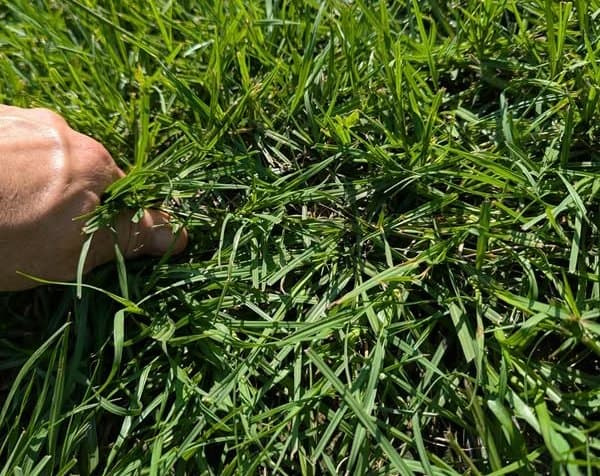
Timing matters too, and it isn’t one number. Purdue’s benchmark for a cool-season lawn recovering from summer drought is 10 to 14 days after regular watering resumes. NC State found that cold-injured Bermudagrass crowns can still be alive but need 4 to 6 weeks of sustained hot weather before showing any green-up at all. Rutgers adds one specific trap: some Kentucky bluegrass varieties have such strong natural winter dormancy that they don’t fully green up until mid-to-late May, easy to mistake for winterkill if you don’t know that’s just how that variety behaves.
For your lawn: match the test to what you actually suspect — a tug test for rot, a gentle lift for grub damage, a fingernail scratch if you’re unsure — and if it’s still inconclusive, dig a small crown sample, seal it in a damp bag, and watch for growth within a week. Then give it the right amount of time: about two weeks after summer drought, a month or more after a hard winter.
Why the Same Question Gets Different Answers
By now you’ve probably noticed a pattern: one extension office gives a number, another gives a different one, and both are backed by real research. Purdue’s turf program puts the “ideal” cool-season growth temperature at 68–77°F, based on lab-measured biochemical efficiency, while UMass Amherst and Virginia Tech land closer to 60–75°F, based on how fast the grass blade visibly grows in a real yard — both numbers are correct, just answers to two different questions. Elsewhere the split comes from soil depth: LSU AgCenter waits for 2-inch soil temperatures before fertilizing warm-season grass, a fast-swinging reading suited to Louisiana’s quick spring, while Clemson and the University of Georgia wait for a slower, buffered 4-inch reading better suited to the Carolinas and Georgia, where a warm week in March can still be followed by a hard freeze. Sometimes it’s the scale itself: the University of Georgia ranks warm-season grasses by how many days they stay looking green under drought, while Auburn ranks the same grasses by whether they actually survive it, which is why Zoysiagrass can score low on one scale and high on the other. And sometimes it’s just regional climate: Oklahoma State ties Bermudagrass green-up to nighttime air above 60°F, since Oklahoma’s spring swings hard between hot days and cold nights, while Clemson ties it to daytime temperatures in the mid-70s, since South Carolina’s strong spring sun warms the soil even when nights stay cool.
What this means for you: treat any single number you read online as a rough marker, not a rule carved in stone. When two trusted sources genuinely disagree, lean toward whichever one was measured closest to your own region and your own soil.
Are Petunias Cool-Season or Warm-Season? It Depends on Your Summer
NC State Extension and Clemson both treat petunias as a spring-planted annual for the Mid-Atlantic and Upper South, since moderate summer heat there lets them keep flowering right through the season — Clemson recommends planting as soon as frost danger passes, and the Alabama Cooperative Extension System goes even earlier, into late February or March, since it rates petunias as semi-hardy enough to shrug off a light frost. The LSU AgCenter and UF/IFAS Gardening Solutions flip that advice entirely for the Deep South and Florida: standard petunias hit the mid-90s°F of a Gulf Coast summer and lose vigor by July, so both recommend planting instead in fall — October through early March — for color that runs from fall through late spring, the reverse of how the rest of the country treats them.
The plant physiology backs up both sides: petunias naturally start growing at fairly cool soil temperatures, which is why they thrive everywhere in spring. The split only shows up once summer heat enters the picture — moderate heat, keep growing them through summer; brutal, humid heat, switch them to a fall/winter crop instead. This is also where heat-tolerant trailing types like Wave and Supertunia Vista Bubblegum earn their reputation: they hold up noticeably longer into summer heat than a standard petunia, which is why the LSU AgCenter still recognizes a short secondary spring planting window for those specific varieties, even though full-size petunias there stick to fall and winter.
For your beds: if your summers stay in the 80s°F, plant petunias in spring like everyone else and expect them to bloom into fall. If your summers regularly hit the 90s°F for weeks at a time (the Deep South, the Gulf Coast, inland Florida), plant them in fall instead for a fall-through-spring show, and save spring planting for the heat-tolerant trailing varieties only.
Why Even Weed Identification Gets Complicated by Region
Common chickweed is about as textbook a winter annual as they come — Purdue, Clemson, and the University of Missouri all describe the same pattern: it germinates in fall, spreads into dense mats over winter, flowers in spring, and dies back once summer heat arrives. Except in California’s cool, fog-buffered coastal climate, where UC ANR notes it skips that die-back entirely and grows as a true year-round perennial instead. Hairy bittercress tells a similar story: Clemson treats it as a standard winter annual, while NC State classifies it as “summer annual or winter annual, depending on location” — in some climates it germinates and completes its whole life cycle in summer instead of winter.
The pattern behind both is the same one you’ve seen elsewhere in this guide: the “annual” label only holds where winter is cold enough to actually kill the plant back on schedule. Somewhere mild, fog-buffered, or with an unusually long transitional season, the same weed never hits the trigger that forces it to die off, so it just keeps growing instead of following the textbook calendar.
What actually matters for your yard has less to do with the exact label and more to do with what the weed is telling you. Chickweed and hairy bittercress both show up in the same kind of spot — thin, shaded, overly moist turf that lost the competition for space at some point last season.
For your lawn: don’t worry about whether a weed is technically an annual, biennial, or perennial where you live. Treat its presence as a signal to fix the underlying thinning — more sun, less water, a higher mowing height — rather than just spraying and moving on.
Putting It All Together
Everything in this guide comes back to one idea: your lawn and your beds are each running on their own internal clock, and the “correct” move for one system is often exactly the wrong move for the other. Once you know which clock your yard runs on, the rest is mostly consistency — feed it, water it, and mow it on its own schedule instead of a generic one. If you want to go deeper on any single grass mentioned here — how it handles shade, drought, or wear day to day — MFY’s turfgrass hub lists every major grass grown for lawns in the US, clearly separated by category, with each one covered in full depth.
A Few Safety Notes Before You Get Started
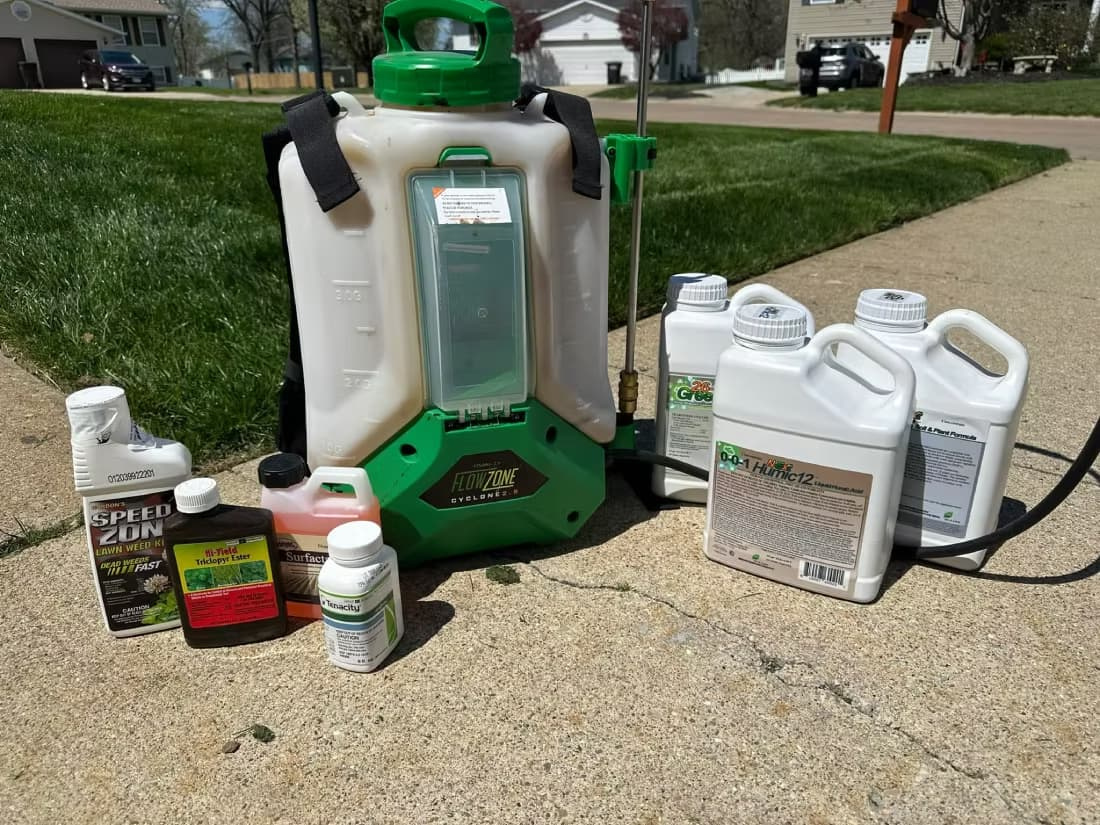
Most of what’s covered in this guide is low-risk when done as directed, but a few habits keep kids, pets, and the environment safe too. Follow the label exactly — the rate, timing, and re-entry period on any fertilizer or herbicide product aren’t suggestions, they’re based on the same kind of institutional research covered throughout this guide, tailored to that specific product. Keep kids and pets off treated areas until the product has fully dried, or longer if the label specifies a re-entry interval — some herbicides and fertilizers call for 24 to 48 hours. Store everything locked up in its original container, out of reach of children and pets, and never transfer lawn chemicals into an unmarked bottle. Keep granules and sprays off hard surfaces — fertilizer or herbicide that lands on a driveway or sidewalk runs straight into storm drains with the next rain instead of feeding your lawn, so sweep any stray granules back onto the grass before watering. Wear gloves and eye protection when mixing anything concentrated, then wash your hands and any exposed skin afterward. And as covered earlier in this guide, skip PGRs and other specialty chemicals as a homeowner project — misapplication has caused real, documented damage to nearby trees and landscaping. None of this is meant to be alarming; it’s the same handful of habits professional lawn care crews already follow as routine.
Sources
This guide draws on turfgrass and horticulture research and extension guidance from Purdue University, Ohio State University, Kansas State University, Cornell University, Michigan State University, the University of Arizona Cooperative Extension, Clemson University’s Home & Garden Information Center, Mississippi State University Extension, the LSU AgCenter, Texas A&M AgriLife Extension, Colorado State University Extension, the University of Georgia Extension, Penn State Extension, Rutgers Center for Turfgrass Science, NC State Extension, UMass Amherst’s Turf Program, Virginia Cooperative Extension, the University of Maine Cooperative Extension, Auburn University, Oklahoma State University, the University of California Agriculture and Natural Resources (UC IPM), the University of Missouri Extension, the Alabama Cooperative Extension System, and UF/IFAS Gardening Solutions, along with the USDA Plant Hardiness Zone Map.