
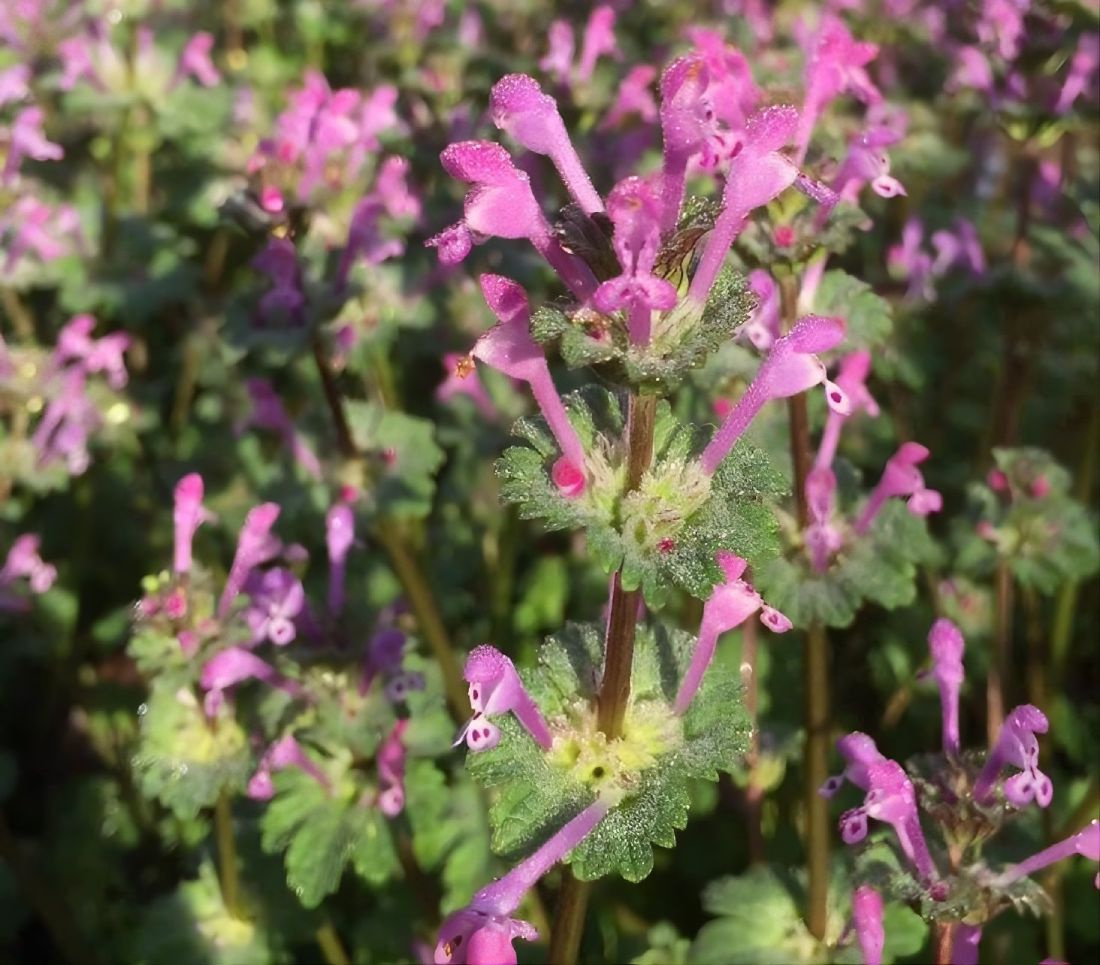
Henbit At-a-Glance
Weed Type
Broadleaf
Life Cycle
Winter annual
Growth Habit
Low and sprawling (ascending to prostrate)
Root Type
Fibrous (a shallow taproot when young)
Spreading Risk
High — by seed
Pull
Yes, with caution
Identity & Diagnostics
Visual Fingerprint
Henbit shows up as a low, loose, sprawling mat of soft green in fall through early spring, often before anything else in the yard is growing. The stems are square, not round, and often tinged reddish-purple near the base. The leaves are rounded and scalloped with a crinkled, wrinkled surface. The giveaway most people notice is the early-spring color: dense whorls of small, pink-to-purple tubular flowers held up on the tips of the stems, hovering over a lawn or bed that otherwise still looks bare.
Structural Anatomy
Roll a stem between your fingers. If it has four flat sides and sharp corners, you’re in the mint family, and henbit is a mint-family weed. The leaves grow in opposite pairs, each pair turned a quarter-turn from the one below it, and they’re kidney-shaped to round with blunt, scalloped teeth and deep, wrinkled veins that radiate from the leaf base.
The one feature that nails the ID — even with no flowers present — is how the leaves attach along the stem. Down low, the leaves sit on their own little stalks (petioles). But the leaves higher up have no stalk at all: they wrap directly around the square stem and clasp it, often meeting at their bases to form a small cup or ring around the stem. Petioled leaves at the bottom, stalkless stem-hugging leaves toward the top: that transition is henbit, and it doesn’t happen in other common broadleaf lawn weeds.
Growth Patterns & Life Stages
Henbit runs on a fall-to-spring clock. Seeds sprout in fall as the soil cools, forming small, round-leaved seedlings that settle into a low, cold-hardy rosette and wait out winter — still alive, just idling, and green during warm spells when everything around them is brown. When late winter and early spring arrive, the plant shoots up fast (a spring-germinated plant can go from sprout to flower in about 36 days), sprawls, and flowers. After it sets seed, rising summer heat kills it outright; henbit is gone on its own by early summer.
Here’s the stage that matters for control, and it’s the one people miss. The moment the upper leaves close in and clasp the stem, the plant has already started setting seed in its hidden lower flowers. That’s the “too late” marker — not the purple flowers, which come afterward. By the time you see purple, the seed is often already made.
Gallery
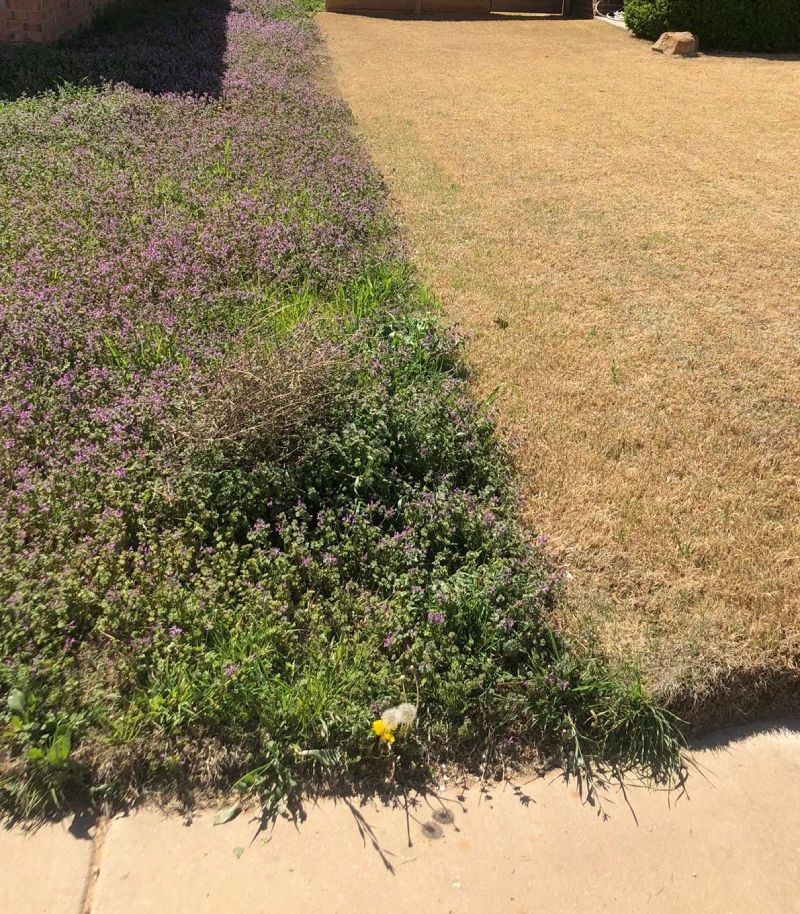
Severe henbit infestation invading a residential lawn along a property line adjacent to dormant turfgrass.
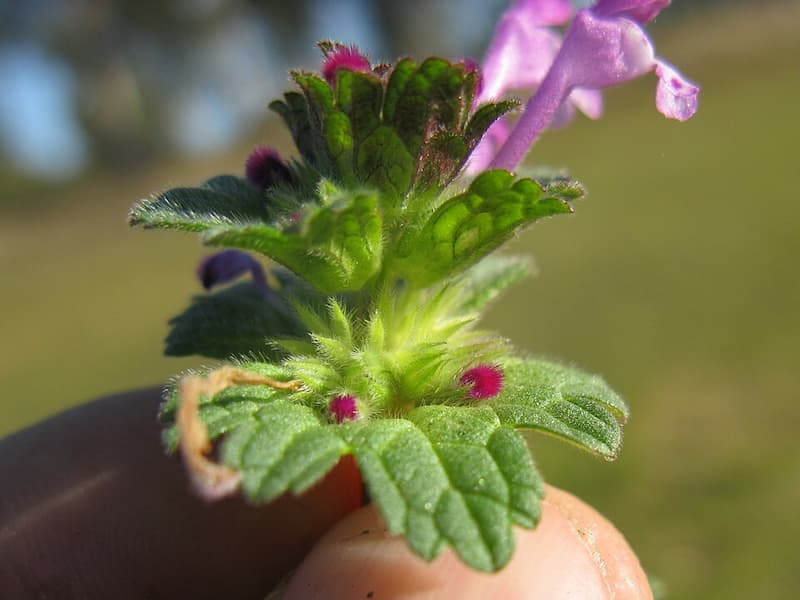
Diagnostic Feature: Henbit's upper leaves clasp the stem directly with no stalk at all — the quickest way to rule out its lookalike, purple deadnettle, whose upper leaves always have a short stalk.
“Lamium amplexicaule flower bud1 (14648551468)” by Harry Rose from South West Rocks, Australia is licensed under CC BY 2.0.
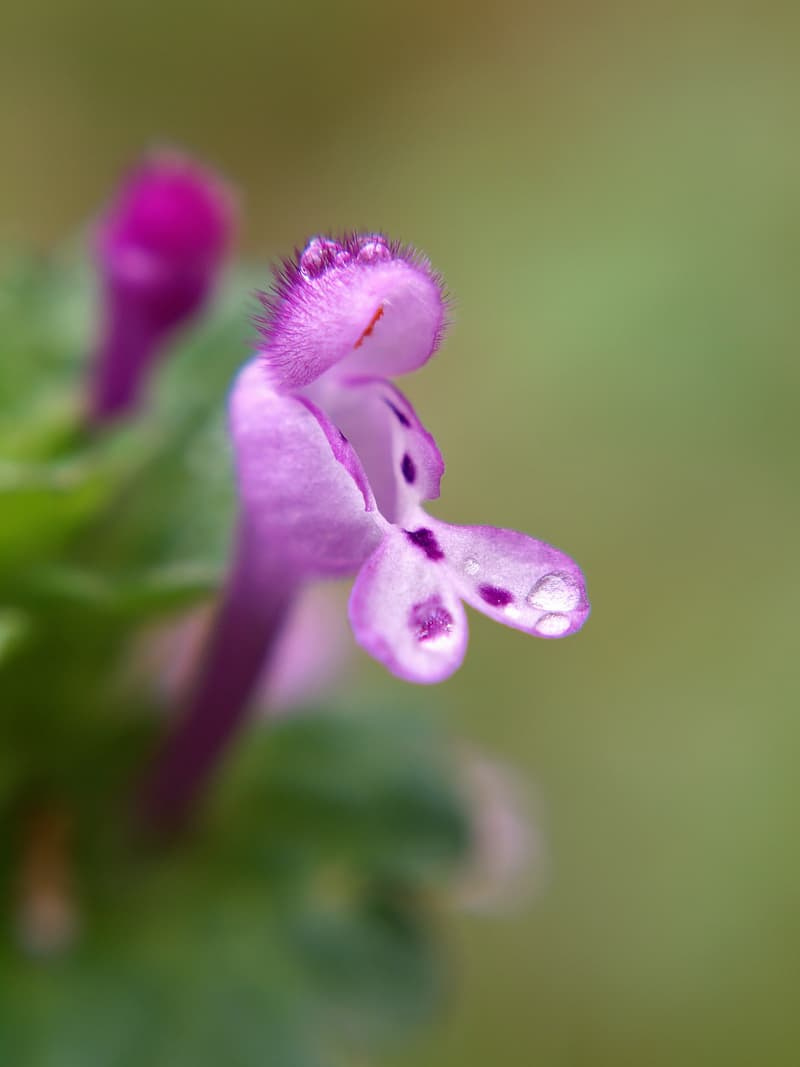
Diagnostic Feature: Each small tubular flower has a hooded upper lip and a spotted lower lip, typical of the mint family henbit belongs to.
“Henbit (Lamium amplexicaule)” by Anne Worner is licensed under CC BY-SA 2.0.
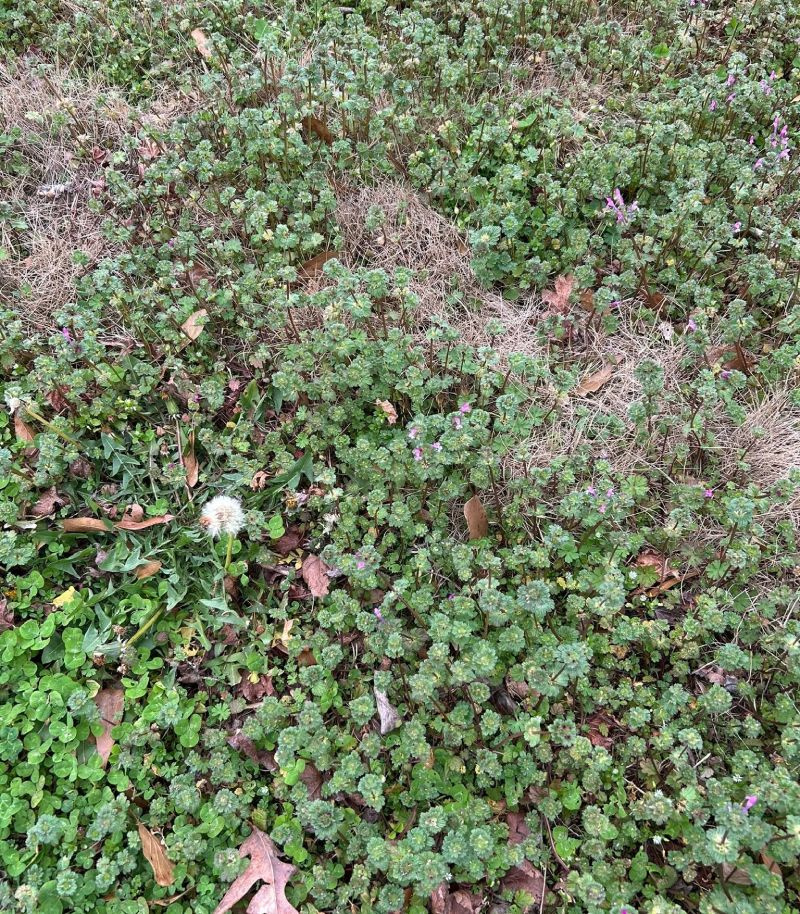
Dense mat of henbit establishing in a mowed home lawn alongside emerging dandelion seedheads.
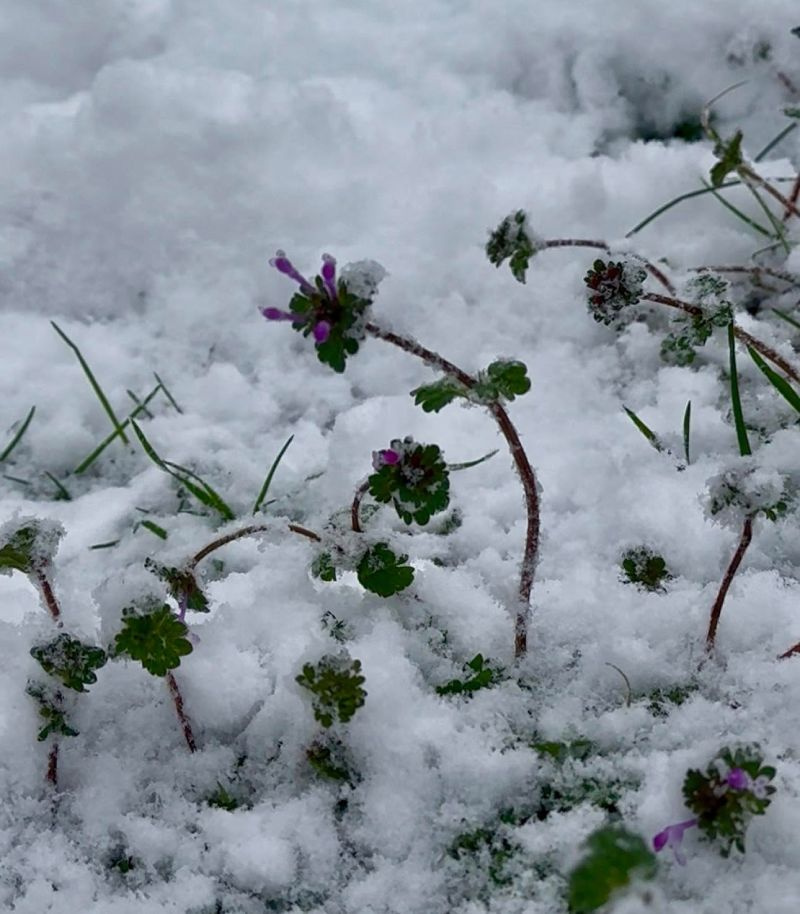
Henbit displaying extreme cold tolerance, actively flowering through a layer of winter snow.
The Identity Trap
Common Lookalikes
Purple deadnettle is henbit’s close cousin — same square stems, same purple flowers, same seasons, constantly mixed up with it. Ground ivy (creeping Charlie) also has square stems, scalloped round leaves, and purple flowers, and gets mistaken for henbit all the time — but it’s a creeping perennial, and that difference decides whether your whole control plan works.
Identification Differentiators: How to Tell Them Apart
Henbit vs. purple deadnettle: Look at the top of the plant. Henbit’s upper leaves are stalkless, green, and clasp the stem. Purple deadnettle’s upper leaves keep their stalks, are triangular to heart-shaped, crowd together at the tip like a little stacked pagoda, and are flushed reddish-purple. Stalkless and green up top means henbit; stalked, triangular, and purple-tinged up top means deadnettle. (Both are winter annuals, so their control is the same either way — this one’s about confidence, not consequences.)
Henbit vs. ground ivy: This is the confusion that actually costs you. Crush a leaf: ground ivy gives off a strong, unmistakable minty smell, and henbit has almost no scent. Then look at how it grows: ground ivy runs along the ground on creeping stems that root at nearly every point they touch, and every leaf sits on a long stalk. Henbit sprawls but doesn’t creep-and-root like that, and it has those stalkless upper leaves. It matters because ground ivy is a perennial — fall pre-emergents and quick spring sprays won’t touch its root system, and treating it like henbit means it comes right back. If it smells like mint and creeps, stop treating it as henbit.
Growing Conditions
Host Grasses
Henbit is a weak competitor — in a thick, healthy lawn it can barely get a foothold, so where you see it, the turf was already thin. In cool-season lawns it moves into gaps left by summer heat stress or into new and renovated turf that hasn’t filled in yet. It’s an even bigger problem in warm-season lawns: as bermuda, zoysia, centipede, and St. Augustine go dormant and brown for winter, henbit greens up and spreads through the open, sleeping canopy, standing out as a green blanket over brown grass.
Host Environment/Area
Henbit doesn’t play favorites between lawns and beds — the research is clear that it establishes equally well in both wherever there’s an opening and enough moisture. The single strongest trigger is freshly disturbed soil. Its seeds need light to sprout, so anything that turns the soil — tilling a bed, pulling out spent summer annuals, planting fall bulbs, aerating a lawn — lifts buried seed into the light and sets off a dense flush. Its favorite spots: thin lawn edges, open or unmulched beds, and the bare “clearance” rings kept mulch-free around the base of shrubs and perennials.
Soil Indicators: What the Presence of This Weed Reveals About Your Yard
Henbit is a useful tattletale about the ground it’s growing in. A heavy stand usually signals soil that stays wet — poor drainage, a low spot, compaction, or frequent shallow watering that keeps the surface damp. Big, lush flushes also point to rich, high-nitrogen soil; henbit loves fertility and often marks over-fertilized ground. And because its seeds need light, a sudden carpet of henbit is a reliable sign the soil was recently dug, tilled, or otherwise disturbed.
Lifecycle and Season
Lifecycle Category and Management Implications
Henbit is a winter annual: it grows from seed, lives through fall, winter, and spring, and dies on its own when summer heat arrives. It has no underground survival structure — no rhizome, no tuber, no bulb — so it can only come back by seed. That’s the good news and the whole strategy. Because everything depends on seed, a fall-timed pre-emergent barrier is a genuinely powerful tool, and the real job every year is to stop this year’s plants from making next year’s seed. The catch is timing: everything happens in fall and early spring, so control that’s aimed at summer weeds — or applied in spring — misses.
Germination Trigger
Henbit is a fall germinator. Its seeds start sprouting as the soil cools down, not as it warms up. Germination becomes possible once soil temperature drops below about 70°F, and the main flush comes as soils settle into the 50s and 60s through September and October (roughly four to five straight days in that cooling range gets it going). The seeds also need light: they sprout from the top inch of soil, and seed buried deeper than about an inch stays dormant in the dark until something brings it up. Expect two waves — a big fall flush and a smaller backup flush in early spring.
In cool-season lawns (tall fescue, Kentucky bluegrass, perennial ryegrass), henbit germinates in the late-summer-to-fall window when the turf is recovering from summer and may be thin. Put a pre-emergent down in late August to mid-September, before soil cools past 70°F. If you’d rather use a post-emergent spray, the sweet spot is October into early November, while the plants are small rosettes — more on why under Post-Emergent in Lawn. A spring pre-emergent (the kind aimed at crabgrass) does nothing here, because henbit is already up and rooted by spring. Spring sprays are mostly wasted too: the plants are mature, hard to kill, already setting seed, and about to die anyway.
In warm-season lawns, henbit’s calendar is flipped against the grass. As bermuda, zoysia, centipede, and St. Augustine go dormant below about 50°F, henbit germinates and fills the open, brown canopy — which is exactly why it’s so visible in a southern winter lawn. Pre-emergent timing runs late August to early October, earlier in the north of the zone and later toward the coast. During deep dormancy in winter you have extra options, including a dormant-turf glyphosate cleanup (covered under Post-Emergent in Lawn). The hard rule for spring: do not spray broadleaf post-emergents while the grass is greening up. A warm-season lawn breaking dormancy can’t shrug off herbicide the way a fully-green lawn can, and spraying then causes yellowing, stunting, and weeks of delayed green-up.
The transition zone is the trickiest, because two important jobs land in the same fall window. The pre-emergent barrier for henbit needs to go down in late August to mid-September — but that’s also the best time to seed or overseed cool-season grass, and standard pre-emergents (prodiamine, dithiopyr) block your grass seed just as effectively as they block henbit. You can’t do both with the same product.
Two ways through it: prioritize the pre-emergent and postpone seeding (after prodiamine you’re locked out of seeding for months; combination products like sulfentrazone + prodiamine want a 12-week wait), or prioritize seeding and use a seedling-safe chemistry. Mesotrione (Tenacity) is the useful one here — it can go down at seeding, controls henbit, and lets cool-season grass come up; siduron is seedling-safe too but weak on broadleaves like henbit. If you go the selective-spray route instead, respect the reseeding intervals: about 4–6 weeks after 2,4-D, 3–4 weeks after MCPA + triclopyr + dicamba combinations.
Two more transition-zone cautions on the warm-season side. First, the same spring green-up injury risk applies — hold broadleaf sprays until the grass is fully green and mowed a couple of times. Second, if you use a dormant-season glyphosate broadcast on bermuda, watch the weather: a warm winter day pushes glyphosate uptake, but it can also nudge the bermuda into an early, partial green-up, and even ~15% green tissue deep in the canopy will take up glyphosate and set summer green-up back two to six weeks. Check down in the canopy for green before you spray.
Herbicide Control
Pre-emergent works well on henbit, because a seed-only weed is exactly what a germination barrier is built to stop. Timing is the whole game: apply in late summer to early fall, before soil cools past ~70°F, and water it in with about a quarter to half an inch of irrigation so the barrier sets in the top inch of soil where the seed sprouts.
Effective active ingredients include prodiamine, dithiopyr, and pendimethalin (mitotic inhibitors, safe on established cool- and warm-season turf), and isoxaben, which is especially strong on broadleaf weeds like henbit. On warm-season lawns, atrazine and simazine add pre- and early-post activity and are labeled for St. Augustine, centipede, and zoysia — but on bermuda, atrazine is for fully dormant turf only. A natural option, corn gluten meal, gives weak, partial suppression and doubles as a light fertilizer, but it blocks desirable grass seed just as it blocks weed seed.
That last point is the catch across every product here: if you’re seeding or overseeding this fall, you cannot use a standard pre-emergent — it will kill your new grass too. In that case, skip the barrier and lean on a fall post-emergent once the new turf is established, or use a seedling-safe chemistry (see Transition Zone Timing).
The best time to spray henbit is fall, on small seedlings (roughly October 1 to November 1) — and there’s a mechanism behind that, not just a date. In late fall the young plants are actively moving sugars down into their roots for winter, and a systemic herbicide rides that flow straight down, killing root and shoot together; the weakened seedlings are also far likelier to die over winter. Spray the same plants in spring, once they’re mature and flowering, and you’ll struggle — the foliage has toughened, the plant is pouring its energy into seed, and it’s about to die naturally anyway.
For cool-season lawns, the workhorses are the synthetic auxins: three-way mixes of 2,4-D + dicamba + MCPP, plus triclopyr (particularly good on stubborn mint-family weeds) and fluroxypyr. The PPO inhibitors carfentrazone and sulfentrazone are useful for fast burndown in cold weather and are gentle on new turf seedlings. On warm-season lawns, sulfonylurea (ALS) products like metsulfuron are effective and turf-safe on bermuda and zoysia — but they will badly injure cool-season grasses, so keep them off fescue and bluegrass. Henbit’s leaves are hairy and shed spray easily, so add a surfactant: a non-ionic surfactant at about 0.25% or a crop/seed oil at about 1%.
There’s also a narrow non-selective option for warm-season lawns: in the dead of winter (December–January), you can spot-treat or broadcast glyphosate over bermuda or zoysia that is completely dormant and brown, when there’s no green turf tissue to absorb it. Any green in the canopy will take it up and get hurt, so this is a fully-dormant-only tool. (Buying tip: not every product labeled “Roundup” is glyphosate anymore — check the active-ingredient panel.)
One-and-done, or multi-season? Multi-season — plan on three to five years. A single well-timed treatment can clear this year’s plants, but the soil seed bank keeps restocking the lawn, so real control means pairing a fall pre-emergent or fall post-emergent with dense-turf practices year after year until the buried seed runs down.
A thick canopy is your best and cheapest herbicide, because henbit seed needs light and can’t sprout under dense grass. Mow cool-season lawns tall — 3 to 4 inches — to shade the soil, and mow warm-season grasses at the top of their species range. Don’t count on mowing to control henbit, though: it flowers and seeds below mower height. Feed cool-season turf in fall to close summer gaps before henbit germinates, but don’t overdo nitrogen — henbit thrives on rich soil, so over-feeding a thin lawn helps the weed more than the grass. Overseed thin spots in late summer so the grass wins the race for those openings, and water deep and infrequent so the surface dries out between soakings, which quietly kills off shallow henbit seedlings. If you aerate, overseed at the same time — bare aeration just lifts buried seed into the light.
Several pre-emergents are labeled for use around established ornamentals and control henbit well: isoxaben (strong on broadleaves), oryzalin, benefin + oryzalin, dimethenamid-p + pendimethalin, and isoxaben combinations such as isoxaben + trifluralin, isoxaben + prodiamine, and isoxaben + dithiopyr. Apply in the fall cooling window, early to mid-September. The cleanest method is to spray or spread onto bare, weed-free soil and then lay mulch over it; if you apply over existing mulch, water it in right away so the active ingredient washes down to the soil surface instead of sitting on the mulch and breaking down in sunlight.
Watch ornamental sensitivities closely. Isoxaben can injure a long list of common plants — burning bush, hydrangeas, foxglove, lamb’s ear, coneflower, and others — and shouldn’t go where you’ll set bedding plants within the year; the isoxaben + dithiopyr combos are specifically off-limits around hydrangeas and foxglove. Don’t apply any pre-emergent right around newly installed transplants until the soil has settled.
Around ornamentals, broadcast spraying is off the table — the selective broadleaf herbicides that are safe on a lawn will injure or kill garden plants. For spot control on henbit that’s already up, the options are directed and shielded:
- Directed glyphosate, sprayed carefully onto the henbit only, with a piece of cardboard held as a shield so nothing drifts onto leaves, green stems, or bark. Younger, actively growing henbit is much easier to kill this way than older plants.
- Organic contact sprays — pelargonic acid, strong (5%+) vinegar/acetic acid, or clove-oil products — which burn down any green tissue they touch and so need the same shielding.
For most homeowners, though, the honest answer in a bed is to hand-pull — henbit is an easy pull when it’s young, and a bed lets you get it cleanly (see Pulling). One-and-done, or multi-season? Multi-season again, for the same seed-bank reason as lawns — but a bed you keep mulched and promptly weeded can stay on top of henbit with very little spray.
Mulch beats henbit by cutting off the light its seeds need. A clean, coarse organic mulch kept at a uniform 3 inches (3–4 inches in a badly infested bed) blocks germination well; coarse bark that dries fast on top works far better than fine, moisture-holding mulch, which can turn into a seedbed of its own. Refresh mulch in late August to early September, just ahead of the fall germination window, to bury freshly dropped seed before it can sprout. Two weak points to expect: spots where the layer thins below about 2 inches over winter, and the bare “clearance” rings you keep around plant crowns — both let light in, and henbit will find them, so those areas need hand-weeding.
Herbicide Application Reference
Two of the auxin herbicides used on henbit — 2,4-D and triclopyr — come in ester forms that can turn to vapor above about 85°F and drift onto nearby beds, and 2,4-D residue is notoriously hard to rinse out of a sprayer, so keep a dedicated sprayer away from your ornamentals. The warm-season sulfonylureas like metsulfuron carry their own limits: keep them off cool-season turf entirely (they’ll kill it) and out from under the drip line of desirable trees, whose roots can pick them up. The non-selective options — glyphosate on dormant turf, atrazine near beds — kill or injure any green plant they reach, so directed application and buffers around ornamental roots matter.
A product note that’s easy to miss: the consumer “Roundup” brand no longer reliably means glyphosate. Several reformulated versions now use different active ingredients, and some of them — imazapic is one — stay active in the soil, where nearby ornamental or tree roots can take them up and where they can block reseeding for months. That soil-residual behavior is the exact problem glyphosate is chosen to avoid here, whether you’re spraying over dormant turf you plan to green up again or spot-treating in a bed you’ll replant. Before you buy, read the active-ingredient panel and pick a product whose only active ingredient is glyphosate.
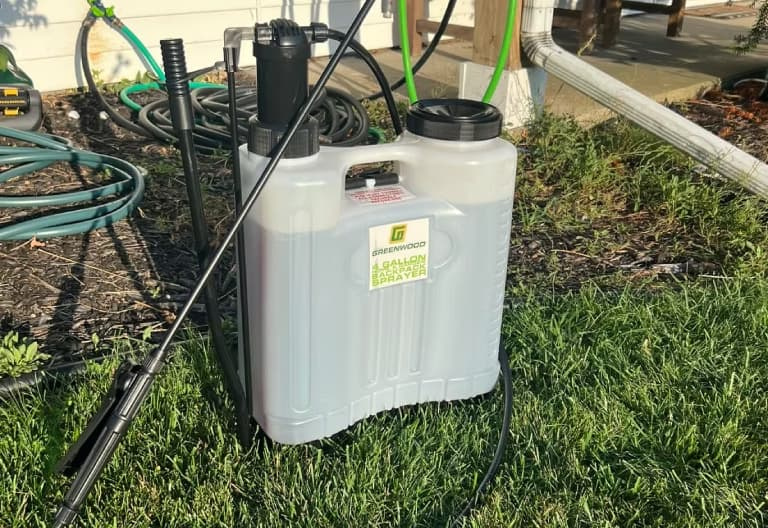
Herbicide Application Guide
New to spraying, or want to get it right? Our Herbicide Application Guide covers the practical steps this page assumes — mixing, calibration, protective gear, and the wind and temperature limits that decide whether a treatment works or drifts. Read it before you spray.
See Guide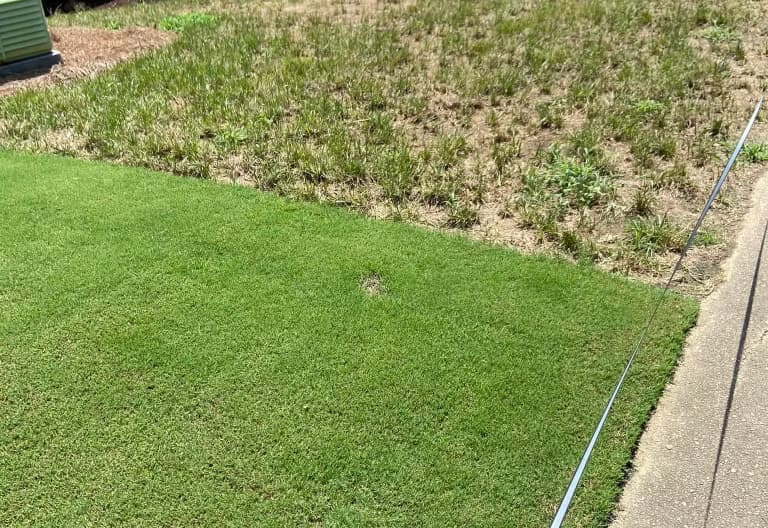
Where Two Lawns Meet
Does your lawn border a neighbor’s — or meet a different type of grass? Spraying near that line can quietly damage the yard next door, sometimes weeks later. Where Two Lawns Meet shows you how to treat safely without harming either side.
Read ArticlePulling
Yes — pull henbit, but pull it young and pull it before it flowers. Wait too long and pulling starts working against you.
The Biological Reason
Timing is everything, because two things change as henbit matures.
First, the root. A young seedling has a shallow taproot that lifts out clean with a gentle tug from moist soil. As the plant ages, that becomes a dense, shallow mat of fibrous roots that grips the soil, so a late pull tends to snap the top off and leave the roots behind to regrow.
Second — and this is the real trap — the seed. Henbit makes two kinds of flowers. The showy purple ones you notice are the late ones. Lower down, hidden in the leaf whorls, it makes small, closed flowers that pollinate themselves and set viable seed first, before the purple ever opens. So by the time the plant looks like it’s flowering, it may already be loaded with mature seed, and disturbing it just shatters that seed straight into the soil — one plant can carry a few hundred to a couple thousand seeds, and a big one far more. The safe-pulling window closes when the upper leaves start clasping the stem, which is the outward sign that hidden seed-set has begun.
There’s one more wrinkle worth knowing. The extension programs don’t fully agree here: Iowa State describes henbit as rooting only from its main root, while Wisconsin, Cornell, and the southern turf programs report that its sprawling lower stems can root wherever they press into moist soil. The weight of the evidence says henbit can root at those lower nodes — it’s a minor, backup trick, not its main way of spreading, but minor is enough to matter when you’re pulling. A snapped-off, rooted stem piece left lying on damp ground can re-establish.
So: pull when the soil is moist and the plant is still small and un-flowered, get the whole thing, and don’t leave pieces behind. Bag pulled plants and take them off-site — don’t drop them on the lawn and don’t home-compost flowering plants, because both the seed and the rooted stem fragments can survive.
Lawn vs. Bed Pulling Difference
Loose bed soil is a real advantage for pulling — henbit lifts out cleaner there than from packed turf. But that same loose, moist, shaded bed soil is where those lower stems root most readily, and every time you dig you expose more light-hungry seed and trigger a fresh flush. In beds, the smarter move for small seedlings is to slice them off at the soil line with a stirrup hoe rather than dig — you kill the weed without turning the soil into a fresh seedbed.
Quick Reference Summary
| Lifecycle | Winter annual (broadleaf), seed only |
| Active Zones | Cool-season, warm-season, transition |
| Germination Trigger | Soil cooling below ~70°F; main flush Sept–Oct |
| Pre-Emergent | Yes — fall (late Aug–mid Sept) |
| Post-Emergent Timing | Small fall seedlings, ~Oct 1–Nov 1 |
| Pull | Yes, with caution — before flowering |
| Lawn Primary Tool | Fall pre-emergent + fall selective post-emergent |
| Bed Primary Tool | Mulch + hand-pulling + directed spot spray |
| One-and-Done or Multi-Season | Multi-season (3–5 years to deplete seed bank) |
Frequently Asked Questions
These answers are synthesized from botanical morphology studies and herbicide efficacy trials conducted by leading university agricultural extensions.
Because the fight is really with the seed bank, not the plant you pulled. Henbit seed stays alive in the soil for at least five years — by some university accounts as long as 25 to 40 — so new seedlings keep emerging. Pulling late makes it worse: disturbed plants shatter seed, and any digging lifts buried seed into the light. Real control is a multi-year routine of fall prevention plus a dense lawn.
For stopping this year’s seed, largely yes. Henbit sets seed in hidden lower flowers before the purple ones open, so once you see purple the seed is usually already made. You can still bag and remove the plants to keep them from adding more, but the bigger win now is getting a pre-emergent down next fall before the cycle restarts.
Wrong season. Crabgrass preventers go down in spring for a summer weed. Henbit is a winter annual that sprouts in fall, so a spring barrier misses it completely. To prevent henbit with a pre-emergent, apply in late summer to early fall.
No. Henbit grows low and sprawling and simply flowers and sets seed below the height of the mower blade, so mowing tidies the look without stopping the seed. Mow to keep the grass thick — that’s what actually suppresses henbit — not to control the weed directly.
In a lawn, mostly it’s just crowding out thin turf. In a vegetable garden it’s more than cosmetic: henbit can host soybean cyst nematode, two-spotted spider mites, and tomato spotted wilt virus, so a heavy stand near your tomatoes or beans is worth clearing rather than ignoring.
Scientific Authority
This profile is constructed using forensic botanical data and Integrated Pest Management (IPM) research. We prioritize scientifically-vetted identification and control methods that protect the broader ecosystem while ensuring successful eradication based on peer-reviewed agricultural studies.
Primary Resources
- Penn State Extension — “Henbit — a Common Winter Annual”; “Lawn and Turfgrass Weeds: Dead Nettle”; “Dead Nettle, Henbit, and Ground Ivy — Three Look-Alike Weeds”; “Indicator Weeds Provide Insight into Growing a Better Lawn”
- Purdue University Turfgrass Science and Extension — “Henbit”; “Purple Deadnettle”; “How Late Is Too Late to Control Broadleaf Weeds?”
- Michigan State University Extension — “Purple Deadnettle and Henbit: Two Common Garden Spring Weeds”; “Spring Blooming Lawn and Garden Weeds: Winter Annual Identification and Management”
- Cornell Cooperative Extension (CALS) — “Deadnettles”
- Iowa State University Extension and Outreach — “Henbit”; “What Is the Difference Between Ground Ivy, Creeping Charlie, and Henbit?”; “How to Manage Annual Weeds”
- University of Wisconsin–Madison Extension / Horticulture — “Henbit, Lamium amplexicaule“; “Creeping Charlie, Glechoma hederacea“
- University of Illinois Extension — “Managing Weeds in Lawns”
- Rutgers Cooperative Extension (NJAES) — “FS385: Broadleaf Weed Control in Cool-Season Lawns”
- Kansas State Research and Extension — “Broadleaf Weed Chemical Control”
- University of Massachusetts Amherst Turf Program — herbicide characteristics / weed management
- UC IPM and UC ANR — “Herbicide Treatment Table / Turfgrass”; weed identification and herbicide-symptom resources
- Clemson Cooperative Extension (HGIC) — “Henbit”; “Weed of the Month — Henbit”
- University of Georgia CAES — “Weed Control in Home Lawns”
- Texas A&M AgriLife Extension — “Henbit — AggieTurf”
- Auburn University Extension (ACES) — “Henbit and Purple Deadnettle Identification and Control”
- Virginia Tech Extension — “Fall Lawn Care”; “Spring and Summer Lawn Management Considerations for Warm-Season Turfgrasses”
- LSU AgCenter — “Landscape Weeds: Henbit”
- University of Missouri Extension — weed identification / broadleaf weed resources
- Oklahoma State University Extension — “Henbit”
- NC State Extension (TurfFiles) — “Henbit | NC State Extension Publications”
- University of Kentucky Turfgrass Science — “Controlling Winter Weeds on Bermudagrass Athletic Fields”
- West Virginia University Extension — lawn weed management
- University of Florida IFAS Extension — weed identification / landscape resources
- University of Tennessee Extension — “What’s in That Jug?” (product active-ingredient guidance)
- Weed Science Society of America — weed biology references