

Turfgrass Hub
Your definitive guide to every major lawn species. From species overviews to deep-dives on individual pages, this hub covers everything you need to know about selecting and growing the perfect turf. Build a professional-grade yard with data-backed species insights tailored for your climate.
A Place to Start: Understanding Your Turf
Welcome to the Turfgrass Hub; you’ve landed in the right place to find everything you need to know about the grasses that form the heart of your yard. This hub is a collection of knowledge gathered over years, designed to help even a complete beginner grow a beautiful, healthy lawn. Think of this page as the MFY library—a central place to find exactly what you need, whenever you’re ready for it.
The most important lesson MFY has gathered over the years is that every grass has its own internal clock. A great lawn isn’t just about the color; it’s about the timing. You’ll see a lot of talk here about Cool-Season and Warm-Season grasses. It’s the primary way we separate them, and for good reason. Some species love the crisp, cool air of a spring morning, while others don’t truly wake up until the summer sun is hot enough to bake a stone.
Growing a lawn is a partnership with the soil and the seasons, and it rarely happens overnight. We’ve laid out all the major species you’ll encounter below. Take your time browsing the collection. MFY pairs years of hands-on experience with university expert data to craft each individual species page, ensuring you have the most accurate, technical details at your fingertips.
Climate and Growth: Seasons and Hardiness Zones
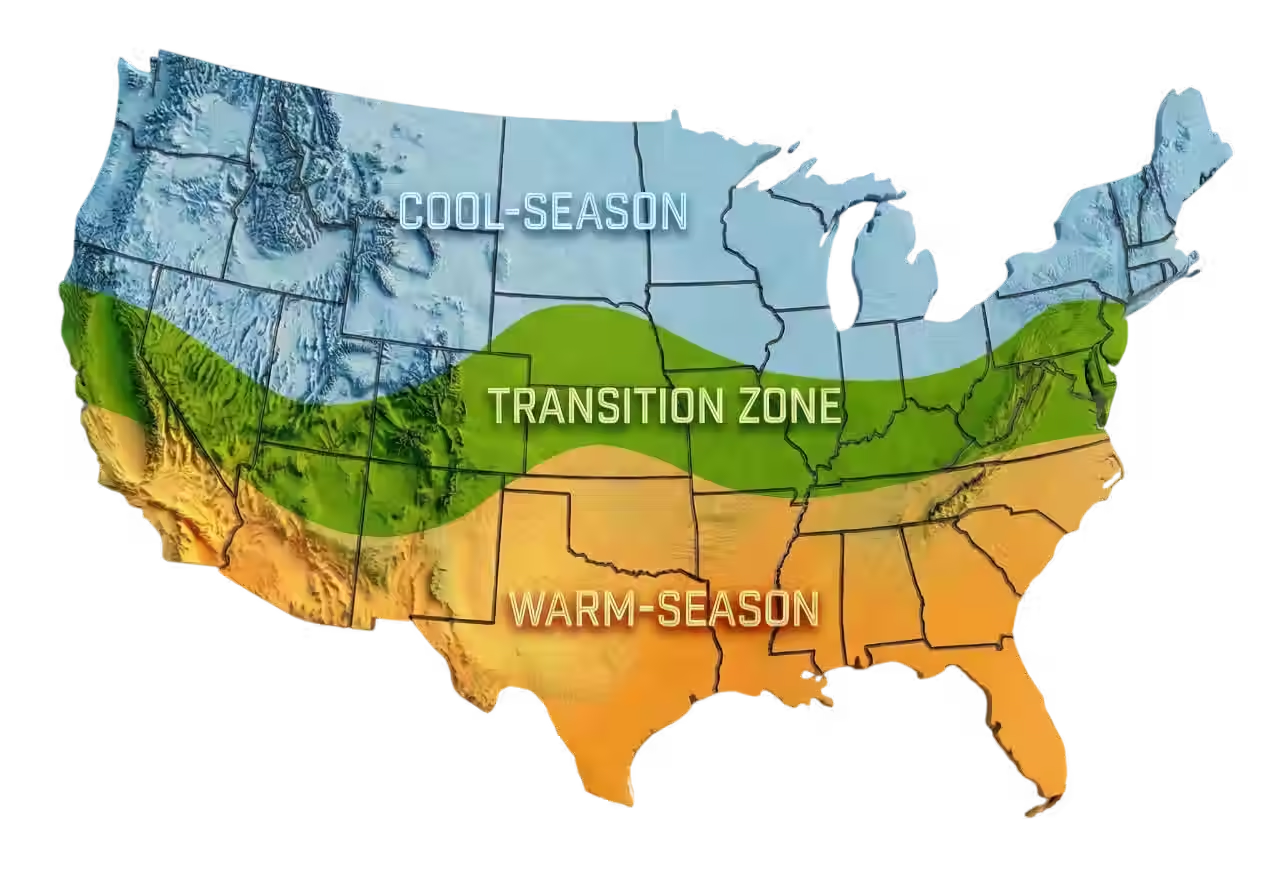
Every turfgrass species is biologically hardwired to a specific climate. The map divides the country into three primary regions based on these temperature thresholds. Cool-Season (C3) grasses dominate the North, thriving in the spring and fall when temperatures are between 60°F and 75°F. Conversely, Warm-Season (C4) species are found in the South, requiring intense heat to hit their peak growth between 80°F and 95°F. Between these two lies the Transition Zone, a challenging middle ground where both types can grow, but the extreme swings of summer and winter make maintenance more complex.
While these seasons dictate when a grass grows, its ultimate survival depends on winter lows. This is determined by Hardiness Zones—a scientific standard that measures a plant’s ability to withstand extreme cold. To ensure you choose a species that can survive your local winter, MFY provides a dedicated hub featuring a high-precision Hardiness Zone lookup tool to identify your exact requirements by zip code.
Cool-Season Turfgrass Species
The following collection represents the primary cool-season species found across the Northern and Transition climates. MFY has developed a comprehensive technical profile for every species listed below; simply select a card to access the full repository of data, maintenance schedules, and expert insights.

Tall Fescue
Scientific Name: Scientific Name
Also Known As: Common Names / Aliases
Hardiness Zones:
5
6
7
Test tagline for grass
Perennial Ryegrass
Scientific Name: Scientific Name
Also Known As: Common Names / Aliases
Hardiness Zones:
4
5
6
7
8
Test tagline for grassTest tagline for grassTest tagline for grassTest tagline for grass
Kentucky Bluegrass
Scientific Name: Scientific Name
Also Known As: Common Names / Aliases
Hardiness Zones:
5
6
7
Test tagline for grass
Fine Fescues (The Fine Fescue Group)
The term “Fine Fescue” is actually a collective name for a group of closely related species—including Chewings, Hard, Sheep, and Creeping Red Fescue—rather than a single type of grass. MFY groups them together because they share nearly identical physical characteristics, such as exceptionally narrow, needle-like leaves, and a shared biological tolerance for heavy shade and poor soil conditions.
Sheep Fescue
Scientific Name: Scientific Name
Also Known As: Common Names / Aliases
Hardiness Zones:
6
7
8
9
10
Test tagline for grass
Creeping Red Fescue
Scientific Name: Scientific Name
Also Known As: Common Names / Aliases
Hardiness Zones:
4
5
6
Test tagline for grass
Chewings Fescue
Scientific Name: Scientific Name
Also Known As: Common Names / Aliases
Hardiness Zones:
6
7
8
Test tagline for grass
Hard Fescue
Scientific Name: Scientific Name
Also Known As: Common Names / Aliases
Hardiness Zones:
6
7
8
9
Test tagline for grass
Bentgrasses (The Agrostis Genus)
Bentgrasses are a specialized group within the Agrostis genus, primarily consisting of Creeping, Colonial, and Velvet Bentgrass. These species are categorized together due to their unique ability to thrive under extremely low mowing heights and their aggressive, spreading growth habits. While they are the gold standard for high-performance golf greens, each variety within the group has distinct requirements detailed on their individual pages.
Velvet Bentgrass
Scientific Name: Scientific Name
Also Known As: Common Names / Aliases
Hardiness Zones:
4
5
6
7
8
Test tagline for grass
Colonial Bentgrass
Scientific Name: Scientific Name
Also Known As: Common Names / Aliases
Hardiness Zones:
6
7
8
9
Test tagline for grass
Creeping Bentgrass
Scientific Name: Scientific Name
Also Known As: Common Names / Aliases
Hardiness Zones:
5
6
7
Test tagline for grass
Warm-Season Turfgrass Species
The following collection highlights the primary warm-season species designed for Southern and lower Transition Zone environments. These grasses are biologically optimized for peak performance during the heat of mid-summer and possess high levels of drought and sun tolerance. Every card below serves as an interactive entry point to a complete technical profile; simply select a species to access its comprehensive maintenance data, growth characteristics, and regional performance insights.
Kikuyugrass
Scientific Name: Scientific Name
Also Known As: Common Names / Aliases
Hardiness Zones:
4
5
6
7
Test tagline for grass
Carpetgrass
Scientific Name: Scientific Name
Also Known As: Common Names / Aliases
Hardiness Zones:
5
6
Test tagline for grass
Centipedegrass
Scientific Name: Scientific Name
Also Known As: Common Names / Aliases
Hardiness Zones:
5
6
Test tagline for grass
Seashore Paspalum
Scientific Name: Scientific Name
Also Known As: Common Names / Aliases
Hardiness Zones:
4
5
6
7
8
Test tagline for grass
Zoysia Grass
Scientific Name: Scientific Name
Also Known As: Common Names / Aliases
Hardiness Zones:
5
6
7
Test tagline for grass
St. Augustinegrass
Scientific Name: Scientific Name
Also Known As: Common Names / Aliases
Hardiness Zones:
6
7
8
9
Test tagline for grass
Bermudagrass
Scientific Name: Scientific Name
Also Known As: Common Names / Aliases
Hardiness Zones:
7
8
Test tagline for grass
Bahiagrass
Scientific Name: Scientific Name
Also Known As: Common Names / Aliases
Hardiness Zones:
4
5
6
Test tagline for grass
Native & Low-Input Warm-Season Species
While most warm-season grasses are selected for their aggressive growth and lush “carpet” density, species like Buffalograss and Blue Grama occupy a unique category of their own. These are true North American natives, biologically hardwired to survive in the rugged, arid conditions of the Great Plains with almost no human intervention.
Unlike traditional lawns that require consistent irrigation and chemical inputs, these species are “low-input” survivors. They can thrive on 70% less water than traditional cultivars and actually prefer poor, unfertilized soil. Choosing these grasses represents a shift in intent: moving away from the high-maintenance, manicured look toward a sustainable, eco-conscious landscape. Because they are native, they provide critical support for local pollinators and possess a natural, meadow-like aesthetic that stays green during peak heat but requires significantly less mowing throughout the year.
Blue Grama
Scientific Name: Scientific Name
Also Known As: Common Names / Aliases
Hardiness Zones:
5
6
Test tagline for grass
Buffalograss
Scientific Name: Scientific Name
Also Known As: Common Names / Aliases
Hardiness Zones:
5
6
7
8
Test tagline for grass
A Suite of Data-Driven Tools for Your Yard
Understanding your soil composition is the essential first step toward a thriving lawn. Use the MFY Soil Profile Tool to identify your soil type and receive tailored amendment recommendations.
Build Soil ProfileNot sure which species fits your specific environment? Our Turf Match Tool analyzes your local climate, sun exposure, and usage needs to find your perfect grass match.
Find My MatchCompare Grasses
Selecting between two top contenders? MFY developed a side-by-side comparison tool to help you evaluate technical specs, maintenance levels, and visual traits simultaneously.
Start Comparison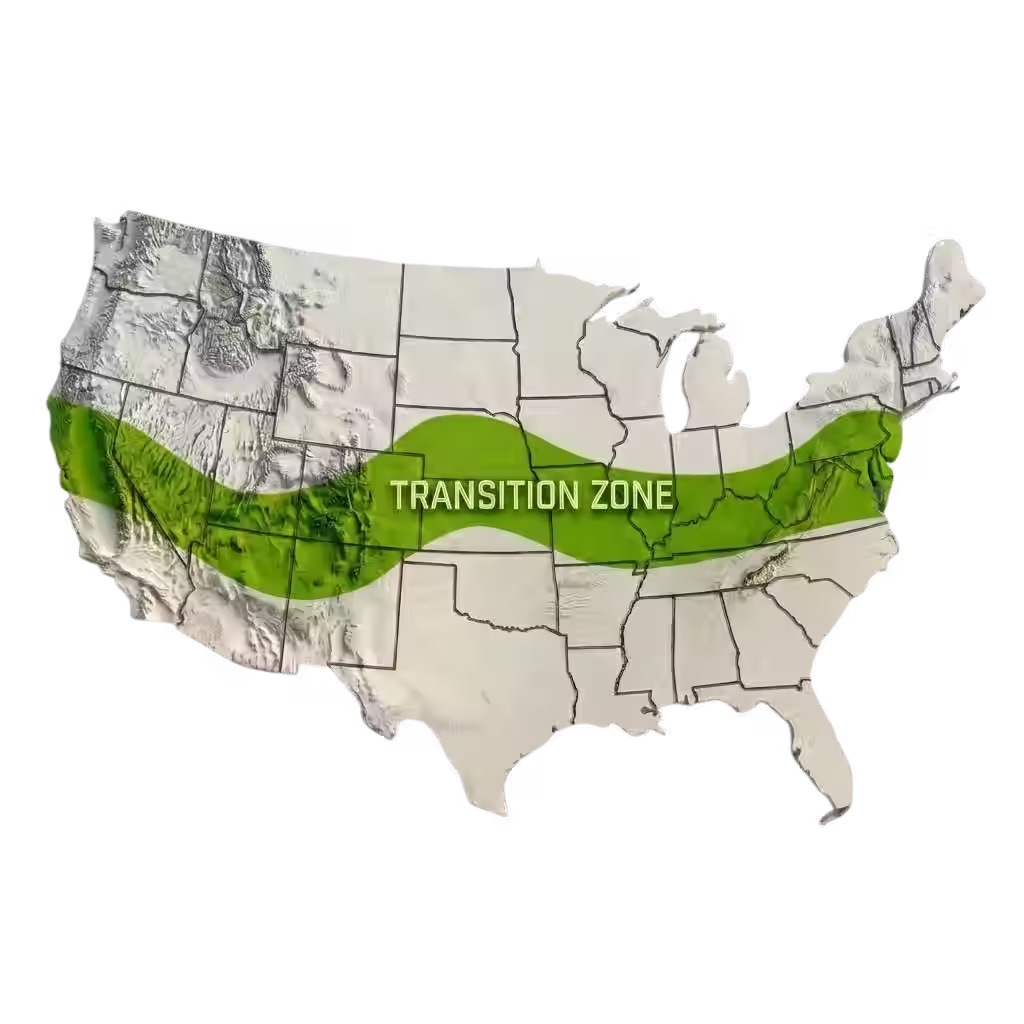
Living in the Middle? Why the Transition Zone is Challenging
Living in the Transition Zone—that central belt stretching across the United States—is notoriously difficult for any homeowner, but you don’t have to tackle it alone. This region is a unique climate of extremes where the weather is often too harsh for Warm-Season (C4) grasses in the winter and too intense for Cool-Season (C3) species in the summer.
While the biological hurdle is real, selecting a species specifically aligned with your unique microclimate and soil biology can eliminate many of the chronic frustrations associated with this region. Beyond temperature thresholds, the key to success in the middle ground often lies in Adaptability. Because no single grass is perfect year-round, your management strategy—such as adjusting mowing heights and timing your nutrient applications—is just as critical as the species you plant. By balancing the right biology with professional-grade maintenance habits, you can transform a struggling lawn into a resilient, healthy landscape.