
Scientific Name: Bouteloua gracilis (Willd. ex Kunth) Lag. ex Griffiths. Accepted synonyms: Chondrosum gracile Kunth (basionym), Bouteloua oligostachya (Nutt.) Torr. ex A. Gray, Chondrosum oligostachyum (Nutt.) Torr., Bouteloua gracilis var. stricta (Vasey) Hitchc
Common Names: Blue grama, blue gramagrass, mosquito grass, eyelash grass. Colorado state grass
Blue Grama
The prairie native that dies from kindness — overwater it or overfeed it and you lose it.
Blue Grama At-a-Glance
Hardiness Zone Min
Zone 3
Water Requirement
Very Low
Sun Requirement
Full Sun (6+ hrs direct)
Wear Tolerance
Low
Establishment Speed
Slow
Labor Intensity
Very Low
The Prairie Grass Nobody Bred
Blue grama is one of the few lawn grasses nobody designed. It is the dominant native grass of the shortgrass prairie — the dry band of country running from the Canadian prairie provinces down through the Great Plains and into Mexico — and it got its shape from two pressures that never let up there: not enough rain, and constant grazing. Both pushed it the same direction. Stay short. Keep the growing points low.
That last detail is why it works as a lawn at all. Blue grama’s crowns and growing points sit right at the soil surface, below the reach of a grazing animal’s teeth, which is also below the reach of a mower blade. A grass that survived bison survives a rotary mower. Below ground it built the other half of the answer: roots that reach about 6 feet down for drought insurance, with a dense mat of fine feeder roots spreading 12 to 18 inches sideways through the surface soil to catch light rain that never soaks in. It runs on the C4 photosynthetic pathway, the hot-weather, water-thrifty version of photosynthesis.
Colorado made it the state grass in 1987.
Here is the part that changes how you shop for it. There is no blue grama breeding program of the kind that produced modern Kentucky bluegrass or hybrid bermudagrass. Every named blue grama on the market is a collection — a wild population gathered from one specific place, increased for seed, and released for rangeland improvement, mine reclamation, and roadside stabilization. ‘Lovington’ traces to a 1944 field harvest near Lovington, New Mexico, at 3,900 feet in about 14 inches of annual rain, released in 1963. ‘Hachita’ was collected in 1957 from a mesquite-invaded plain south of Hachita, New Mexico, at roughly 4,400 feet in about 10 inches of rain, released in 1980. ‘Alma’ is a 1992 composite screened for heavier seed and stronger seedling vigor. Bad River Ecotype is a 1996 selection from a river floodplain in central South Dakota, released for the northern Great Plains.
Read those records as a list of addresses, because that is what they are. What separates one blue grama from another is not turf quality — it is where its ancestors lived. That single fact drives everything on the seed tag, and it is the reason a bag of unlabeled “native grass seed” is a gamble rather than a bargain.
Gallery
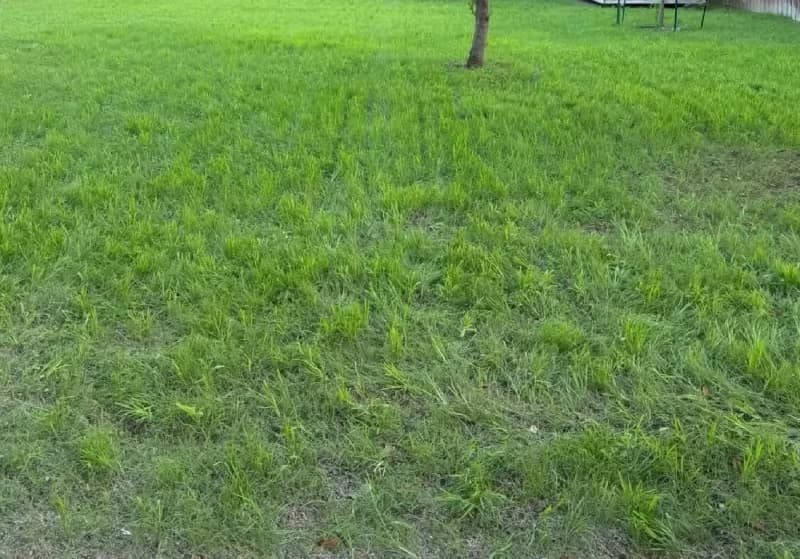
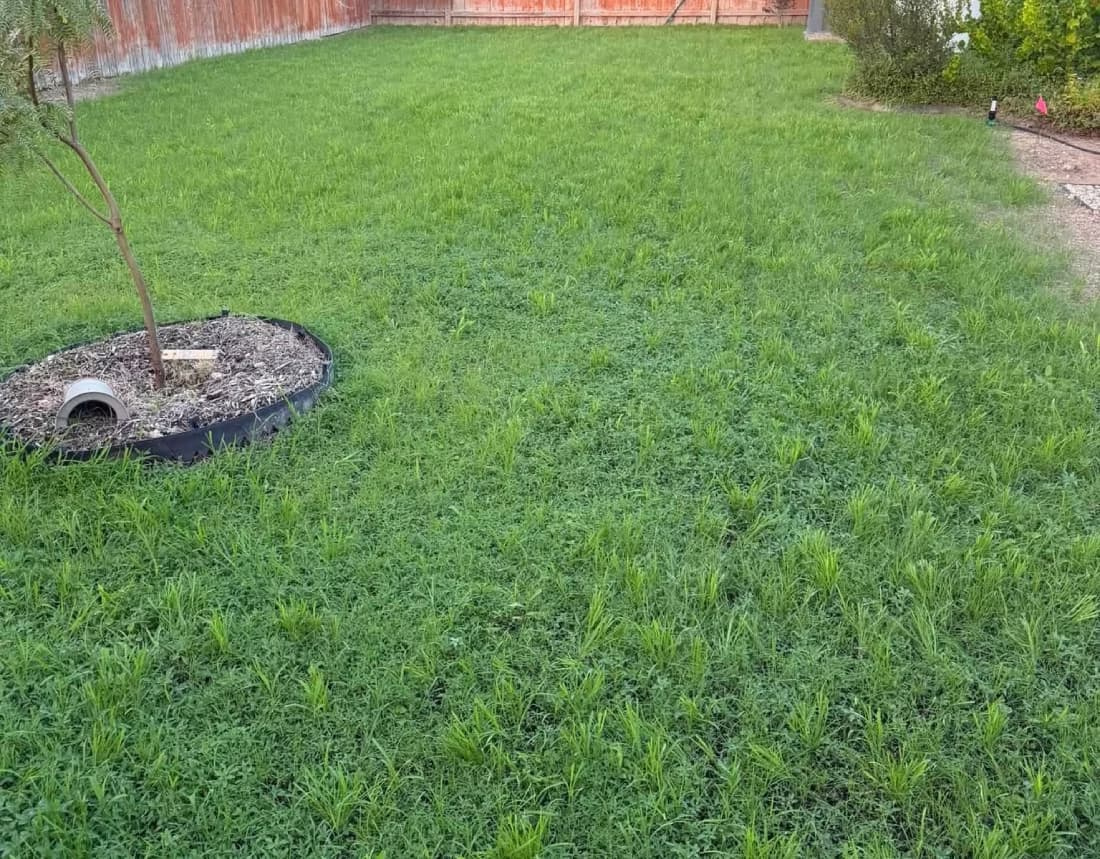
Naturalized blue grama grass turf canopy showing its characteristic light green color and tufted growth pattern.
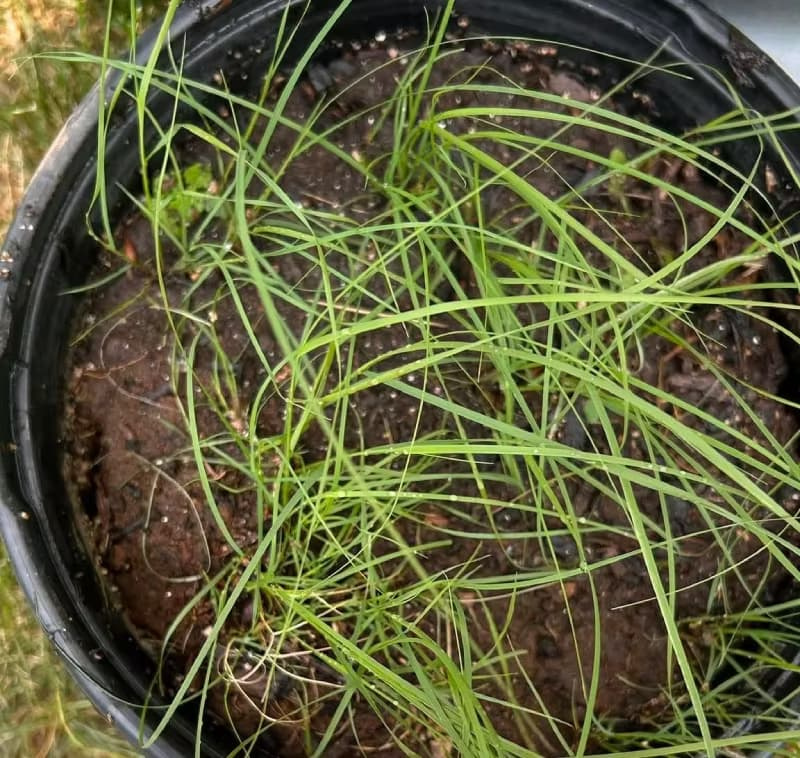
Blue grama (Bouteloua gracilis) seedlings establishing from seed in a container, illustrating its fine thread-like initial leaf growth.
Telling It Apart
Blue grama is a fine-textured grass. The blades are narrow — USDA-NRCS measured them at 0.03 to 0.08 inch across on the material it released, which is roughly a thirtieth to a twelfth of an inch, finer than Kentucky bluegrass — 2 to 7 inches long, mostly low to the ground, and colored gray-green to blue-green. If you have read that blue grama has blades an eighth to a fifth of an inch wide, that figure belongs to a much coarser grass; measured against a ruler this one is closer to a pine needle than a fescue blade. Up close it has a short fringe of hairs where the blade meets the stem (the ligule), no ear-like clasps (auricles), and smooth, hairless sheaths.
But the giveaway is the seed head. Two to three short, one-sided, comb-like spikes are held out sideways from the stalk, curved like an eyelash or an eyebrow. Nothing else in a lawn looks quite like it, which is where the old name “mosquito grass” comes from.
The one look-alike that matters is buffalograss, because the two are so often sold together in a native mix. Three things separate them.
- Growth habit. Buffalograss spreads fast by above-ground runners (stolons) that root as they travel. Blue grama grows in slow clumps and stays put.
- Seed head. Blue grama shows the sideways eyelash comb. Buffalograss has separate male flags and hard, burr-like female seeds tucked down low in the canopy.
- Color and feel. Buffalograss is a softer, brighter-green mat. Blue grama is a little coarser and grayer in hand, and dries to straw-yellow.
A distant relative, hairy grama, is the other one you may run into: its seed comb ends in a tiny needle-like tip poking out past the last floret, where blue grama’s comb ends clean.
Identification Photos
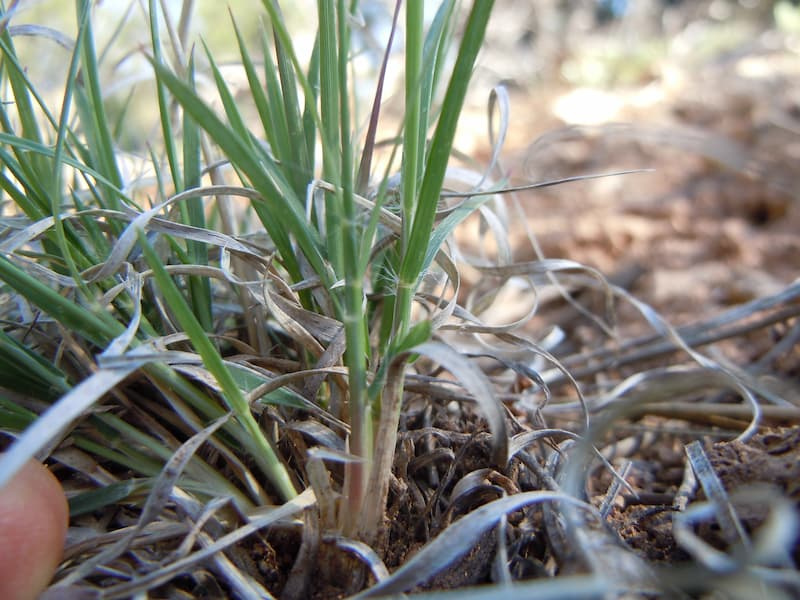
Key Identifier: Bunch-type growth. Blue grama grows in dense tufts and spreads slowly, giving it a clumpy look.
“Bouteloua gracilis (6243884823)” by Matt Lavin from Bozeman, Montana, USA is licensed under CC BY-SA 2.0.
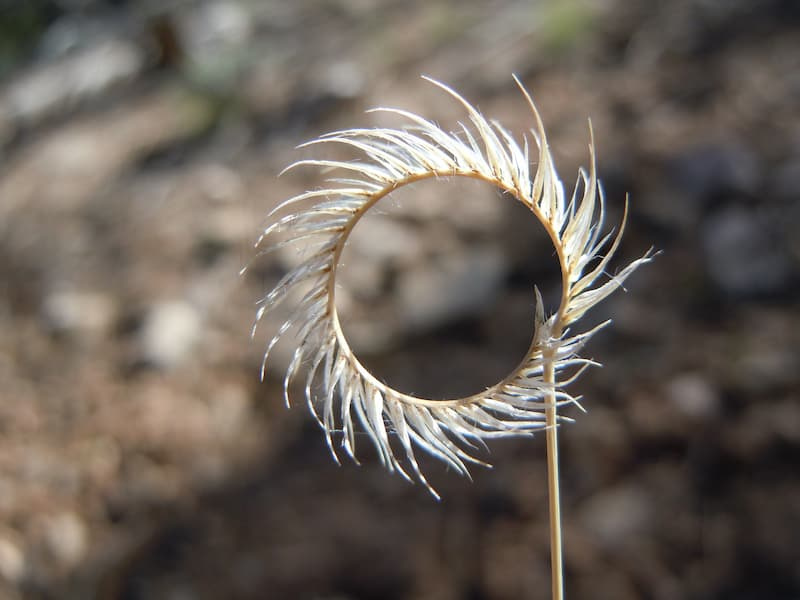
Look For: A curled, hairy seed spike. Blue grama seedheads bend into an arc or loop, which makes them hard to confuse with other lawn grasses.
“File:Bouteloua gracilis 003 — Matt Lavin.jpg” by Matt Lavin from Bozeman, Montana, USA is licensed under CC BY-SA 2.0.
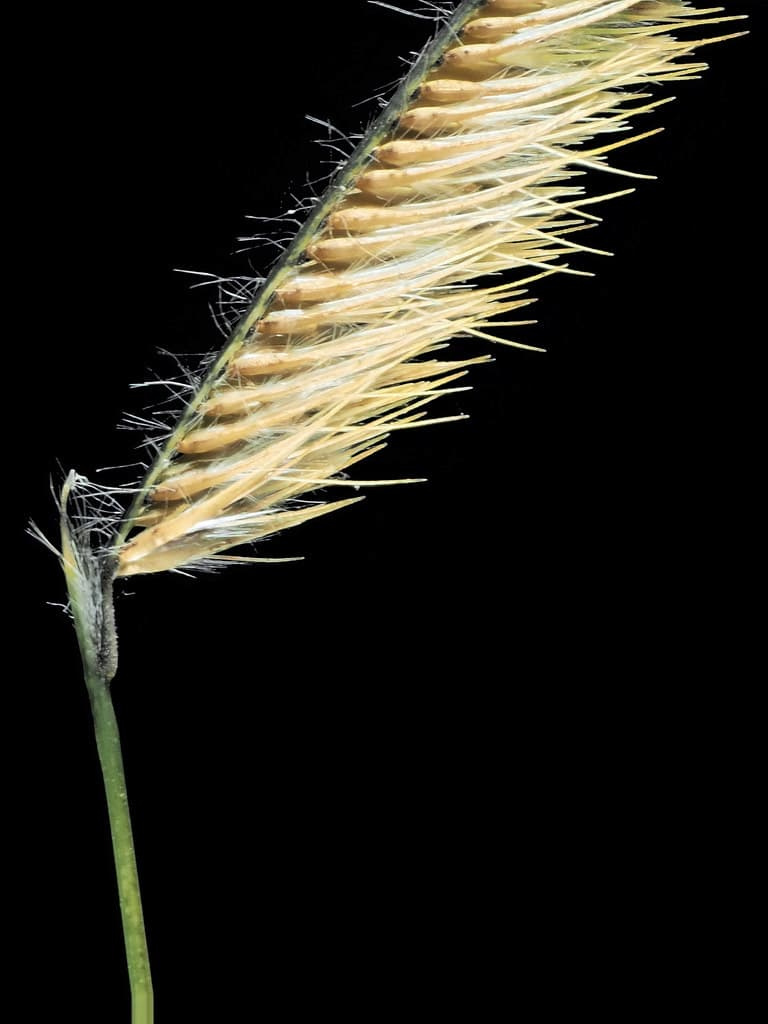
Diagnostic Feature: The eyelash seedhead. Blue grama spikelets sit in a dense, one-sided comb along the stem, with hairs that look like eyelashes.
“2016-08-27-14.12.48 ZS PMax Bouteloua gracilis-1” by John Rusk is licensed under CC BY 2.0.
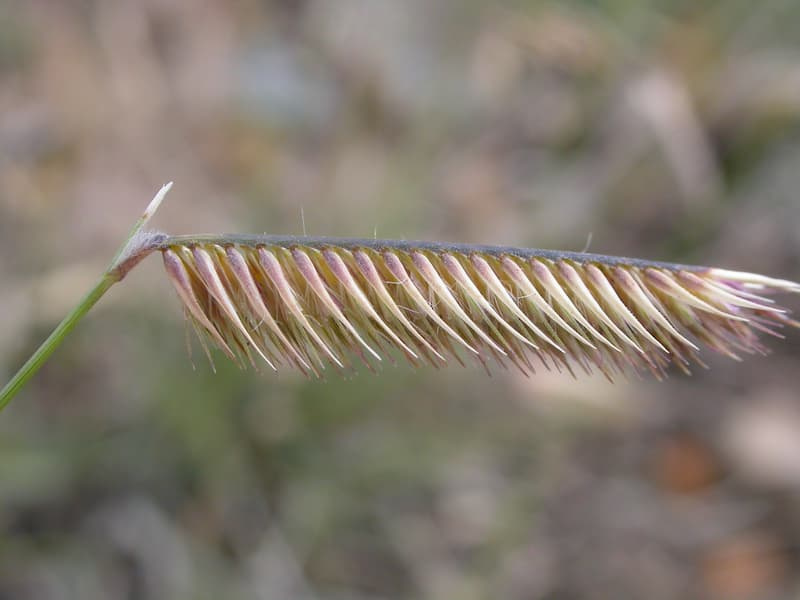
Look For: Spikelets angled along one side of a curved spike, usually with one to three spikes per stem.
“Bouteloua gracilis (3796725893)” by Matt Lavin from Bozeman, Montana, USA is licensed under CC BY-SA 2.0.
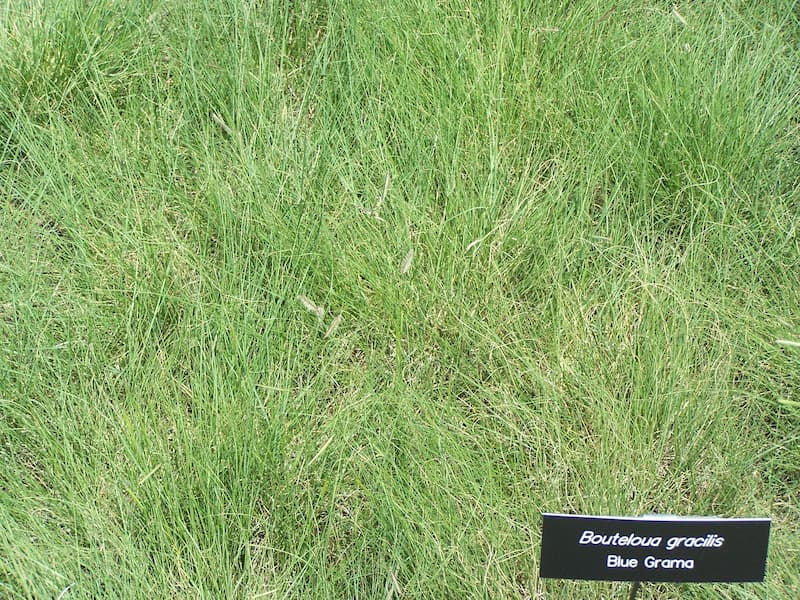
Key Identifier: A fine-textured, low-growing sward of narrow, light green blades that stays soft and open.
“Blue grama Bouteloua gracilis MN 2007” by SEWilco is licensed under CC BY-SA 3.0.
Is Blue Grama Right For Your Yard?
Advantages:
Uses very little water. About 24 inches a year to hold acceptable lawn quality, against 38 for a cool-season lawn — and inside its native range of 8 to 15 inches of rain, it can live on rainfall alone.
Almost no fertilizer. One to 2 pounds of nitrogen per 1,000 square feet a year for a maintained lawn; essentially none for a meadow. It evolved on poor soil and does not want to be fed.
Almost no mowing. Two to 3 cuts a season, or one cleanup pass a year if you let it grow as a meadow.
Exceptionally cold-hardy for a warm-season grass. Survives to USDA Zone 3 and winter lows near −30°F — a combination almost nothing else on the warm-season list offers.
Virtually disease-free in dry climates. With no thatch to speak of, no dethatching and no routine aeration.
Genuinely native. A keystone shortgrass-prairie species that supports insects and wildlife, is not invasive anywhere, and mixes well with wildflowers because its bunch habit leaves room between plants.
Distinctive to look at. The one-sided eyelash seed heads are the most recognizable feature of any lawn grass on this site, and the winter straw color often carries a purple or copper cast.
Best If:
- You live in the dry West or the High Plains — roughly Zones 3 to 8, below about 7,000 feet, in country that gets 8 to 20 inches of rain a year.
- You want the lowest-input lawn on this site and are willing to trade appearance for it.
- You have full sun. Six hours of direct sun is a floor, not a target.
- You are replacing a Kentucky bluegrass lawn specifically to cut irrigation, and are prepared for a two-year transition rather than a weekend.
- You can accept a straw-brown lawn from October to May and would rather plant crocus through it than fight it.
- You want a native, wildlife-friendly planting, or a mowable meadow that reads as prairie rather than as turf.
- You have a low-traffic area — a front yard, a hell strip, a slope, a large ornamental area.
Disadvantages:
Brown for 6 to 7 months. It goes dormant at the first hard frost and does not green up until soil holds 60° to 70°F, usually mid-to-late May. This is the single biggest reason people regret a native lawn, and it cannot be fixed by overseeding with ryegrass.
A hard, slow, weedy establishment. Two or more growing seasons to a closed stand, watering every 4 to 5 hours for the first month, and a full year in which pre-emergent herbicide is off the table. Colorado State says plainly that establishing a native lawn can be difficult, expensive, and frustrating.
It does not repair itself. A bunch grass with no runners cannot fill a bare spot. Damage has to be reseeded, and it will not close quickly when you do.
Poor traffic tolerance. Low wear tolerance and even lower recovery. This is a front-yard and ornamental-area grass, not a place where children and dogs play. New Mexico State goes as far as saying it may suit pasture or ornamental use better than turf.
Narrow herbicide options. Several common products injure it, retail weed-and-feed mixes burn it, and grassy-weed control comes down to three documented active ingredients.
No sod, and no turf-type cultivars. You cannot buy an instant lawn, and there is no NTEP data to shop by — origin latitude is the whole selection decision.
Fails in humid climates and above about 7,000 feet. Wherever there is enough moisture for taller plants, they shade it out.
Avoid If:
- You live anywhere humid. Moisture, not cold, is what kills this grass, and the humid East and Southeast are where it loses.
- You need a lawn that takes traffic — kids, dogs, games. It wears poorly and then cannot recover.
- You want green grass year-round, or even most of the year. Six to seven months brown is the deal.
- Your site is shaded. This is a full-sun grass with no shade tolerance at all; it thins and dies out rather than merely slowing down.
- Your soil stays wet, floods, or drains poorly. Saturation is one of the few things that kills it outright.
- You are above about 7,000 feet, where the growing season is too short.
- You need a lawn this season. There is no sod, and seed takes two or more years to close.
- You are not willing to run frequent, short irrigation cycles for the first month. That single requirement decides most blue grama seedings.
Is It Safe for Pets and Kids?
No toxicity is documented, and no source reviewed lists blue grama as toxic to pets, livestock, or people. USDA-NRCS describes it as a highly palatable forage grass grazed year-round by cattle and wildlife, which is meaningful evidence of non-toxicity. Note honestly that this is an absence of any toxicity finding plus a long grazing record, not a turf-specific pet-safety study — and that pet urine tolerance is separately undocumented.
Where It Grows and Where It Fails
Blue grama is a warm-season grass native to the dry grasslands of the Great Plains and Mountain West. It grows wild from Mexico north into Canada, and extension programs across the western states recommend it for home lawns — but elevation matters more than which state you are in. In New Mexico it works statewide. In Arizona it suits elevations from 4,000 to 8,800 feet, and in Utah roughly 3,500 to 8,000 feet. Colorado State University Extension draws a hard line: above about 6,500 to 7,000 feet the growing season is too short and blue grama struggles.
The surprising part is how cold-hardy it is. Most warm-season grasses die in a hard northern winter. Blue grama survives to USDA Zone 3 — Colorado State reports established stands taking winter lows near −30°F in eastern Colorado without dying, and USDA-NRCS released the northern-origin Bad River material specifically for the northern Great Plains at Zone 3. For an established lawn inside its range, winterkill is essentially a non-issue. The one exception is young seedlings. Seed too late in summer and they cannot root deeply or store enough energy before the first freeze, and they die over the winter.
Blue grama fails going east, not north. It evolved in country that gets 8 to 15 inches of rain a year, and it cannot hold its own where the climate is wetter and more humid. Three things go wrong at once. Taller weeds and cool-season grasses shade it out. Constant moisture invites leaf diseases it otherwise almost never gets. And its one great advantage — thriving on almost no water — stops being an advantage when everything around it is wet too. Moisture, not cold, is what defeats this grass at the edges of its range.
Which climates suit it. Blue grama does well in dry-cool regions below about 7,000 feet, where it sleeps through a long winter. It is at its best in dry-warm regions, where it wakes fast after monsoon rain and grows hardest between 77°F and 95°F. It is not adapted to cool, humid climates. For the warm, humid Southeast and for the humid side of the transition zone, no source we trust publishes a rating at all — everything about the way this grass fails going east says it would struggle in both, and that is how we have rated them, but treat those two as our read of the mechanism rather than as a measured result.
Getting Established
You establish blue grama from seed. Because it grows in clumps instead of knitting into a solid mat, it cannot be cut and rolled as sod — pure blue grama sod simply is not sold. Plugs are a minor option for small areas, where they spare you seed washing away in a heavy rain, birds eating it, or the weed flush that follows tilling a big seedbed. For most lawns, seed is the answer.
Seed the right amount, at the right time, shallow. Extension seeding rates run 1 to 2 pounds per 1,000 square feet in New Mexico, 1 to 3 pounds in Colorado, and as high as 3 to 5 pounds where you want dense turf quickly. Buy and measure on a Pure Live Seed (PLS) basis: blue grama seed is light, fluffy, and full of chaff, so a bag’s weight tells you very little about how many living seeds you are actually sowing. Watch the units on any rate you find, too. USDA-NRCS publishes 1 to 3 pounds PLS per acre — that is a rangeland rate, roughly forty times lighter than a lawn rate for the same numbers.
Plant in late spring to early summer, once the soil has warmed. A warm-season grass barely moves until soil temperature passes about 65°F. Colorado’s window is April through July; northern New Mexico runs mid-May to August, southern New Mexico mid-April to September. Build a firm seedbed — clear rocks bigger than 2 to 3 inches, till, grade, and roll until your footprints sink no more than half an inch — then plant just a quarter to half an inch deep and roll again for good seed-to-soil contact.
Expect a slow, weedy first year, and water for it. Blue grama comes up quickly, usually in one to two weeks, though untreated seed can take three to four. The lawn is another story: it needs two or more growing seasons to close up completely. Your first summer will look like a weed patch, and that is normal — a half-empty stand leaves bare soil for summer weeds to jump into.
To keep seedlings alive early, the soil surface has to stay damp. Water for a few minutes every 4 to 5 hours through the day for the first 3 to 4 weeks. The mechanism is worth knowing, because it explains why this cadence is not optional. A blue grama seedling grows its permanent roots from a crown sitting right at the soil surface, and it needs 2 to 4 days of continuously moist surface soil to get them started. Research summarized by USDA-NRCS found that seedlings failing to put out those permanent roots within 6 to 10 weeks of emerging usually died — the leaf area outgrew what the temporary seed roots could supply, and the plant ran out of water it had no way to reach. Let the surface dry at the wrong moment and you lose the stand, not just a few plants. Once it is rooted, stretch the watering intervals out through the rest of the summer.
New Mexico State suggests light early feeding — about 0.5 to 0.75 pound of actual nitrogen per 1,000 square feet every other week for the first 6 to 8 weeks — and no more than that, because heavy nitrogen stunts the very roots you are trying to grow.
Blending with buffalograss. Blue grama is most often mixed with buffalograss for a tougher low-water lawn. Colorado State’s premium native mix for clay and loam soils is 20 percent blue grama to 80 percent buffalograss by weight. That looks lopsided, and it is worth understanding why it is not. Blue grama runs 700,000 to 800,000 seeds per pound (USDA-NRCS), while buffalograss is sold as multi-seed burs that are far heavier per seed. So 20 percent of the weight buys you a much larger share of the seeds — the ratio is written that way on purpose, to get a roughly even stand from two species with wildly different seed sizes. The two then split the job. Blue grama germinates first and holds the soil while buffalograss, which often takes about three weeks to come up, arrives later and spreads by stolons to tighten everything together. If you broadcast rather than drill, double the seeding rate. Nebraska–Lincoln documents a broader native mix of equal 20 percent parts hard fescue, sheep fescue, sideoats grama, buffalograss, and blue grama.
Keeping It Healthy
The whole secret to blue grama is doing less. It is a native grass built for poor soil and little water, and the fastest way to kill it is to treat it like a thirsty, hungry cool-season lawn.
Mow high and rarely. Colorado State recommends 2.5 to 3 inches; New Mexico State allows up to 4. You will mow only 2 to 3 times a season, and Texas A&M notes that once a month gives a soft, even lawn. Or do not mow at all — left alone, blue grama forms a low, swirling meadow 4 to 12 inches tall, topped by its curved seed heads, and needs a single cleanup pass in late winter. Never cut below 2 inches. Scalping strips off the leaves the plant feeds itself with, halts root growth, drains the crown’s stored energy, and opens bare ground to weeds.
Feed lightly, and never after mid-August. A maintained blue grama lawn needs only 1 to 2 pounds of nitrogen per 1,000 square feet per year (Colorado State), split into an early-summer and a mid-summer feeding — and you can cut that by a quarter to a third just by leaving the clippings on the lawn. A minimally managed meadow needs essentially none. Stop all nitrogen after August 15: a warm-season grass heading into dormancy cannot use it, and a late feeding only grows weeds and leaches into groundwater on sandy soil. The single most common way people kill blue grama is exactly this — too much nitrogen and too much water together, which overfeeds the leaves, starves the roots, and hands the lawn to the aggressive cool-season grasses and broadleaf weeds that crowd the native grass out.
Water deep, infrequently, or not at all — and be careful with the numbers you have heard. New Mexico State’s trials found a native lawn held at acceptable quality gets by on about 24 inches of water a year, rain plus irrigation, against 38 inches for a cool-season lawn. That is about a third less water, not a third of the water. The familiar “one-third the water” claim describes a different lawn: one you allow to go dormant. In its home range of 8 to 15 inches of rain a year, blue grama survives on rainfall alone, and that is where the dramatic savings actually live. Both numbers are true. They describe different expectations, and it is worth choosing between them on purpose rather than by accident.
To hold color through a dry summer, Colorado State’s deficit schedule is just 1 to 2 inches every 4 to 5 weeks, applied deep, because the roots reach about 6 feet down. When it browns out in a drought, do not panic and do not start sprinkling daily. Brown is not dead — the plant drops its leaves to protect a living crown and greens back up within a day or two of a real soaking. Light daily watering will not wake a fully dormant lawn anyway; it just keeps the surface damp for weeds and fungus.
Skip the dethatching and aeration. Because it grows slowly and in clumps, blue grama barely builds thatch, so power raking and verticutting are almost never needed — and they do real harm here, because the tines catch crowns and tear whole clumps out, leaving holes that a bunch grass cannot fill back in. Core aeration is not routine either. Use it only to relieve genuine compaction or a drainage problem, and do it in early-to-mid summer when the grass is growing fast enough to heal.
Plan for a long brown winter. Blue grama turns straw-brown at the first hard fall frost — sometimes with an attractive purple or copper cast — and stays dormant for 6 to 7 months. New Mexico State names that dormant stretch plainly as the thing homeowners are not expecting from a native lawn. Green-up is late, only once soil holds steady at 60° to 70°F, usually mid-to-late May. That long brown season is the real tradeoff, and the fix is not to overseed with cool-season ryegrass: ryegrass is aggressive enough to take the stand over and destroy it. Extension agronomists suggest tucking spring bulbs like crocus and daffodil into the turf instead, for early color while the grass sleeps.
What Goes Wrong
In its dry home country, blue grama is one of the healthiest grasses you can plant — extension services describe it as virtually disease-free. Almost everything that goes wrong comes from giving it too much water, or growing it somewhere too humid.
Disease is a wet-weather problem. No disease singles out blue grama, and formal extension pathology keys do not list one for it. But a stand watered by frequent overhead sprinklers, grown in a humid climate, or left wet overnight becomes open to general turf fungi — rust and leaf spot on the blades, and crown rot or root rot in soggy, compacted, or low-lying spots. New Mexico State’s guidance is blunt: lawns that stay wet too long, or collect standing water, invite disease. Water early in the day rather than in the evening so the blades dry.
The pest that matters at home is white grubs, the larvae of June beetles, which feed on grass roots underground. Because blue grama keeps most of its root mass in the top 8 inches of soil, grub feeding can cut a plant off from water fast, and a bad patch can kill the grass outright. If a section browns, will not green up with water, and the dead grass pulls loose from the soil like a rug, check for grubs.
Telling the browning apart is the most useful skill you can have here, because the causes look alike and need opposite responses.
- Winter dormancy — the whole lawn turns an even straw color on schedule as it gets cold, and the crowns stay firm. Do nothing but a late-winter cleanup mow.
- Drought dormancy — a gray-blue or purple cast, showing up in the driest patches first, with footprints that stay pressed into the turf. The crown is alive but dry. A deep watering of half an inch to an inch greens it up within a day or two.
- Stand death — pale, brittle grass that crumbles and lifts away from the soil in irregular dead patches, with a hollow crown or chewed roots. Confirm grubs, then replant in the warm-season window.
- Disease — yellow-and-green streaking, or dark water-soaked rot, in circles or spots, often with a soft crown. Improve drainage, cut back watering, and stop late-day overhead watering.
Two disorders round it out. On very alkaline soil, at pH 8.0 and up, iron gets locked up and the grass yellows between the veins while the veins themselves stay green. That is iron chlorosis, a soil-chemistry problem, not a nitrogen shortage, and feeding it more nitrogen will not fix it. And on uneven ground, mowing a tall stand suddenly down to lawn height scalps the high spots to the crown and can kill them outright — never take off more than a third of the height at once.
Weeds In This Grass
Blue grama is itself a grass, which makes weeding it awkward: most weed killers built to kill grassy weeds will kill blue grama too. It is also a native with limited herbicide testing behind it, so caution is the rule. (For weed-by-weed help, see the MFY weed guides.)
The hardest stretch is the first year. For a full year after seeding you cannot use pre-emergent herbicides — the chemical barrier that stops weed seeds stops your grass seed too. For weeds that come up alongside young grass, wait until the lawn has been mowed five to six times before spraying anything at all. This is the squeeze that makes native lawns frustrating: the grass needs constant surface moisture to survive, that same moisture triggers a flush of summer weeds like crabgrass and spotted spurge, and the usual pre-emergent tools are off the table. Mowing at 2 inches helps — it takes the tops off taller weeds and pushes the grass to spread sideways and shade them out.
Once established, you have real options. Colorado State and others document that mature blue grama tolerates the pre-emergents prodiamine, pendimethalin, and isoxaben. Avoid dithiopyr and oryzalin, which injure it. For broadleaf weeds such as dandelion and white clover, 2,4-D used alone is well tolerated — but not during summer heat, and never as the retail “weed and feed” mixes, which add dicamba and MCPP, both of which badly burn blue grama. Carfentrazone, metsulfuron, and several others are documented as safe. For grassy weeds the list is narrow: only quinclorac, mesotrione, and imazapic are documented as selective enough to use.
One powerful trick uses the winter dormancy. Because blue grama goes completely brown and stops taking anything up from roughly October to May, while cool-season weeds like annual bluegrass, henbit, and common chickweed stay green and active, you can broadcast a glyphosate-based non-selective herbicide across the dormant brown lawn and kill the green weeds without touching the sleeping grass — as long as the grass shows zero green.
Two cautions matter. Timing must be exact: any green tissue at all and you will do permanent damage. And check the active-ingredient panel before you buy. The consumer “Roundup” brand no longer reliably contains glyphosate; several reformulated versions use entirely different chemicals — some that blue grama tolerates, meaning they will not do the job, and some that leave soil residue that can harm the grass or your next seeding. This technique depends on the specific chemistry, so buy for the active ingredient, not the brand name.
Subtypes
Cold-Hardy Blue Grama
The South Dakota ecotype that holds a native lawn through a Zone 3 winter, where southern blue grama seed dies.
Best For: An open, full-sun yard in the northern Great Plains or a cold valley — the Dakotas, eastern Montana, Wyoming, western Nebraska, northern Colorado — where winter lows reach −30°F or lower. It is the pick anywhere the origin printed on the seed bag matters more than any other trait.
Tradeoff: Seed only, no plug option, and a short northern season — miss the early-summer planting window and the seedlings will not root deep enough to survive their first winter.
Salt-Tolerant Blue Grama
The two blue gramas that still sprout in salty ground — for a road-salt strip or mildly saline irrigation, not a coastline.
Best For: A dry-climate yard with a real but moderate salt problem: a parkway strip that catches winter de-icing runoff, a low spot where irrigation salts have concentrated, or well water that tests mildly saline. Soil in roughly the 3 to 6 mmhos/cm range.
Tradeoff: The salt advantage is at germination, not maturity — once it is up, blue grama loses more growth to saline water than buffalograss does, so this buys you a stand, not a permanently salt-proof lawn.
Southern Plains Blue Grama
The driest-adapted blue grama you can buy, and the only one sold as ready-to-plant plugs instead of just seed.
Best For: A full-sun yard on the southern or central plains — New Mexico, southeastern Colorado, western Kansas, and the Texas and Oklahoma panhandles — below about 6,500 feet, on 8 to 16 inches of rain a year. It is also the pick for anyone who would rather plant live plugs than gamble on a seeding.
Tradeoff: Both cultivars are southern-origin, so they winterkill if you plant them much north of Colorado.
The Seasonal Care Calendar

Spring (Mar-May)
Waiting Out A Late Green Up
Spring is mostly a waiting game, and the hardest part is not doing anything about it. Blue grama will still be straw-brown while every cool-season lawn on the street is green, and it stays that way until the soil holds steady at 60° to 70°F — usually mid-to-late May, weeks after your neighbors. That is normal and it is not a sign of winterkill.
Do the one cleanup mow in late winter or very early spring, before green-up, cutting the dead top growth down but never below 2 inches. Skip the spring fertilizer entirely: feeding a dormant warm-season grass feeds the cool-season weeds instead. Hold off on water too — the crowns are not drawing yet, and wet, warm surface soil in April is exactly what germinates a summer’s worth of weeds.
Late spring is when the work starts. Once soil passes 65°F, this is the window to seed a new lawn or patch bare spots, and Colorado’s planting window opens in April and runs through July. If you are spot-treating winter weeds with a dormant non-selective application, that window closes the moment you see any green tissue in the grass — after that, you have lost the free pass.
Summer (Jun-Aug)
Growing Hard In The Heat
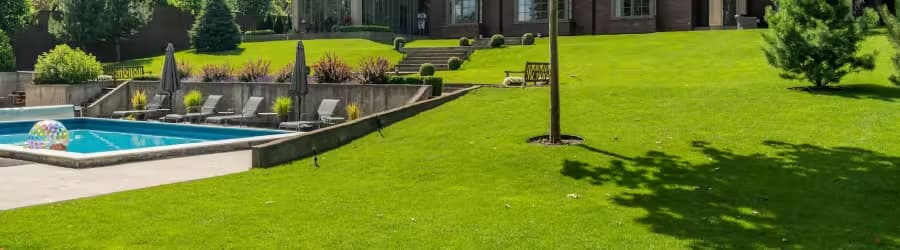
Summer is blue grama’s season. It grows hardest between 77°F and 95°F and responds fast to monsoon rain, so this is when the whole year’s work gets done — and when it is easiest to overdo it.
Both feedings happen now: one in early summer, one in mid-summer, totaling only 1 to 2 pounds of nitrogen per 1,000 square feet for the year. Leave the clippings and you can cut even that by a quarter to a third. Mow 2 to 3 times across the whole season at 2.5 to 4 inches, never below 2, and never taking more than a third of the height at once.
Water deeply and rarely, or not at all. Colorado State’s deficit schedule is 1 to 2 inches every 4 to 5 weeks. If the lawn browns in a heat wave, that is drought dormancy doing its job, not a lawn dying — a gray-blue cast and footprints that stay pressed in are the tell. One deep soaking brings it back in a day or two. Daily sprinkling will not.
This is also the only window for core aeration if you genuinely have compaction, since the grass is growing fast enough to heal. And it is the time to watch for white grubs: a brown patch that will not respond to water and pulls loose from the soil is the pattern to check.
Fall (Sep-Nov)
Cutting Off Nitrogen Before Dormancy
Fall is defined by one hard date. Stop all nitrogen after August 15. A warm-season grass heading into dormancy cannot use late nitrogen; it grows weeds instead, and on sandy soil it leaches straight past the roots into groundwater. There is no fall feeding on a blue grama lawn, which is the exact opposite of the cool-season calendar most people have learned.
Do not seed now either. This is the seeding mistake that costs whole lawns: seedlings from a late-summer or fall planting cannot build deep roots or store enough energy before the first freeze, and they die over winter even though established plants in the same yard shrug off −30°F.
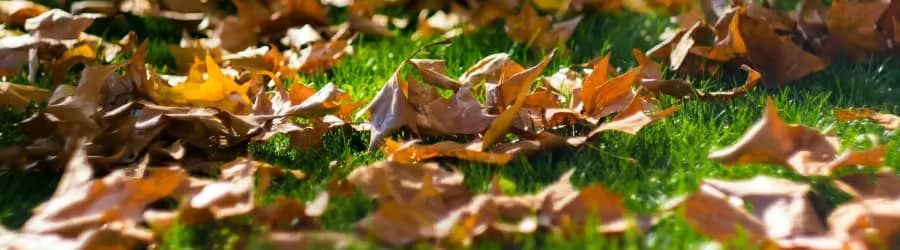
The lawn will turn straw-brown at the first hard frost, often in late September or October, sometimes with a purple or copper cast. Let it. Taper irrigation off as growth stops. If you want early color for next spring, autumn is when to tuck crocus and daffodil bulbs into the turf, so they come up through the brown while the grass is still asleep.
Winter (Dec-Feb)
Working The Long Brown Dormancy
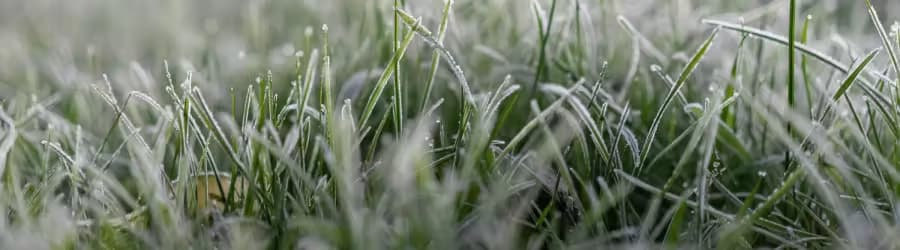
Winter is the long stretch — the lawn is fully dormant and straw-brown for 6 to 7 months, and there is genuinely nothing to maintain. No feeding, no watering, no mowing until the late-winter cleanup pass.
But dormancy is also a tool, and this is the one season blue grama gives you an advantage no conventional lawn offers. Because the grass takes up nothing at all from roughly October to May while cool-season weeds stay green and growing, you can broadcast a glyphosate-based non-selective herbicide over the whole brown lawn and kill those weeds outright without harming the sleeping grass. Two rules make it safe. The grass must show zero green tissue — any at all and the damage is permanent. And check the active-ingredient panel before you buy, because consumer “Roundup” no longer reliably means glyphosate; some reformulations use chemicals blue grama tolerates, which will not work, and others leave soil residue that can hurt the grass or your next seeding.
Otherwise, stay off it where you can. Dormant crowns sitting at the soil surface take traffic damage they cannot repair until growth resumes in late May. Finish with the single cleanup mow in late winter, above 2 inches, to clear the dead top growth before green-up.
Blue Grama Versus Buffalograss And Bluegrass
Versus buffalograss — these two are the shortgrass-prairie pair, and the choice between them comes down to repair. Buffalograss spreads by stolons, so it knits into a mat, fills its own bare spots, and takes more traffic. Blue grama grows in clumps and does neither. What blue grama offers in exchange is a longer green season, better performance on sandy soils, more cold hardiness at the northern edge, and those seed heads. In practice most western extension programs do not make you choose: the standard recommendation is to plant both together, roughly 20 percent blue grama to 80 percent buffalograss by weight for clay and loam, and let each cover the other’s weakness.
Versus Kentucky bluegrass — this is the trade most people are actually considering, and it is a real one in both directions. Blue grama uses far less water, almost no fertilizer, and a fraction of the mowing. Kentucky bluegrass gives you a green lawn for most of the year, repairs itself through rhizomes, and takes children and dogs. Blue grama is brown from October to May, cannot repair damage, and will not tolerate play. If your goal is to stop irrigating, blue grama is the bigger step by far. If your goal is a usable lawn that costs less, look at the cool-season options first.
Versus tall fescue — tall fescue is the middle path in the drier West: deep-rooted, drought-tolerant, and green year-round in most of the range, but still needing several times the water blue grama does and regular mowing all season. Choose tall fescue where you need a lawn that works underfoot and stays green. Choose blue grama where water is the constraint and the lawn is mostly to be looked at.
Versus fine fescue — the other low-input answer, but for opposite sites. Fine fescue is the low-water choice for shade and cool climates; blue grama is the low-water choice for full sun and dry heat. At high elevation, where blue grama runs out of growing season above about 7,000 feet, the fine fescues are usually the better recommendation.
Find Your Precision Match
Choosing between species requires balancing your specific soil profile, local micro-climate, and maintenance goals. Use our Turf Match Tool to generate a data-backed recommendation for your specific yard.
Start Your MatchTechnical Specifications
Scientific Name: Bouteloua gracilis (Willd. ex Kunth) Lag. ex Griffiths. Accepted synonyms: Chondrosum gracile Kunth (basionym), Bouteloua oligostachya (Nutt.) Torr. ex A. Gray, Chondrosum oligostachyum (Nutt.) Torr., Bouteloua gracilis var. stricta (Vasey) Hitchc
Common Names: Blue grama, blue gramagrass, mosquito grass, eyelash grass. Colorado state grass
Family: Poaceae (grass family); subfamily Chloridoideae; genus Bouteloua; tribe Cynodonteae in current treatments, placed in Eragrostideae in older ones.
Origin: North American native. Dominant grass of the shortgrass prairie, from the Canadian prairie provinces (Alberta, Saskatchewan, Manitoba) south through the Great Plains and Mountain West into Mexico. Not introduced anywhere in its US range.
Season Type: Warm-Season
Growth Habit: Bunch-type (tuft-forming)
Growth Rate: Slow
Texture: Fine
Root System Depth: Deep for the size of the plant. Roots documented to about 6 feet, but most root mass sits in the top 8 inches, and the fine surface roots spread sideways 12 to 18 inches (Weaver, via the USDA-NRCS plant guide). The depth is real drought insurance; it is not a claim that the lawn feeds from 6 feet down day to day.
Spread Mechanism Intensity: Very low. Short rhizomes and lateral tillering only — clumps widen slowly and do not knit into a repairing mat. Two or more growing seasons to close a stand from seed. Bare spots have to be reseeded; the grass will not fill them. USDA-NRCS documents phenotypic plasticity: the species grows as a bunch grass in the southern part of its range and can behave as a weak sod former in the north, at high elevation, or under heavy grazing. Plan on bunch behavior in a home lawn.
Typical Lifespan & Invasiveness Risk: Long-lived perennial; established stands persist for decades. No ecological invasiveness risk — it is a native keystone species of the shortgrass prairie, is not listed as noxious or invasive in any state, and is planted deliberately for range restoration and erosion control. Its ecological problem runs the other way: it is outcompeted by taller vegetation wherever moisture allows, which is why it holds ground in dry country and disappears in wet country. It does not creep into beds; it reproduces essentially only by seed.
Hardiness Zone Min: Zone 3
Hardiness Zone Max: Zone 8
Hardiness Zone Notes: Ideal range is roughly Zones 4 to 7 in dry country below about 6,500 to 7,000 feet. The Zone 3 cold edge is well documented: Colorado State reports established stands taking winter lows near −30°F in eastern Colorado without winterkill, and USDA-NRCS released the northern Bad River material specifically for the northern Great Plains at Zone 3. Cold is not what limits this grass. Two other things do. Going up, the growing season runs out — Colorado State draws the line at about 6,500 to 7,000 feet, and the practical elevation band is roughly 3,500 to 8,000 feet depending on latitude. Going east, moisture defeats it: taller vegetation shades it out, humidity brings leaf disease it otherwise never sees, and its water thrift stops being an advantage. The Zone 8 maximum is an MFY inference, not a sourced figure — New Mexico State treats it as adapted statewide (southern New Mexico reaches Zone 8b), while Arizona recommends it only from about 4,000 feet up, which excludes the Zone 9 to 10 low desert. One cold exception matters: seedlings, not established plants. Seed too late in summer and the young plants cannot root deeply or store enough energy before the first freeze, and they die over winter.
Cold Tolerance Rating: Very High
Winter Color Profile: Dormant
Climate Cool Humid: Unsuitable
Climate Cool Arid: Good
Climate Warm Humid: Poor
Climate Warm Arid: Excellent
Climate Transition: Poor
Sun Requirement: Full Sun (6+ hrs direct)
Shade Tolerance: Very Low
Water Requirement: Very Low
Drought Survival Strategy: Both (avoidance then dormancy)
Soil Texture Fit:
Sand
Loamy Sand
Sandy Loam
Loam
Silt Loam
Clay Loam
Clay
pH Survival Min: 5.5
pH Optimal Min: 6
pH Optimal Max: 7
pH Stress Max: 8.4
Wet Feet Tolerance: Very Low
Compaction Tolerance: Moderate
Salinity Tolerance: Moderate
Wear Tolerance: Low
Recovery: Very Low
Recovery Mechanism: Bunch-type (no lateral spread)
Input Intensity: Very Low
Labor Intensity: Very Low
Thatch Production: Very Low
Annual N Figure: Maintained lawn approx. 1 to 2 lb N per 1,000 sq ft per year (Colorado State), split into one early-summer and one mid-summer feeding; cut by a quarter to a third if clippings are returned. Minimally managed meadow: essentially none. Establishment is the exception and runs higher briefly — about 0.5 to 0.75 lb N per 1,000 sq ft every other week for the first 6 to 8 weeks (New Mexico State). No nitrogen after August 15 in any regime.
Establishment Methods:
Seed
Plugs
Germination Speed: Moderate (7–14 days)
Establishment Speed: Slow
Seeding Rate: 1 to 2 lb per 1,000 sq ft (New Mexico State); 1 to 3 lb per 1,000 sq ft (Colorado State); 3 to 5 lb per 1,000 sq ft where dense turf is wanted quickly. Double the rate if broadcasting rather than drilling. Buy and measure on a Pure Live Seed (PLS) basis — the seed is light and chaffy and bulk weight overstates the living seed you are sowing. Watch the units: USDA-NRCS publishes 1 to 3 lb PLS per acre, which is a rangeland rate roughly forty times lighter than a lawn rate. No routine overseeding rate is published; blue grama is overseeded only to restore density lost to damage, and must not be overseeded with cool-season ryegrass for winter color.
Improved Cultivar Availability: Low
NTEP Note: NTEP holds no independent pure-blue-grama cultivar trials. The species appears in NTEP work only inside multi-species mixtures, where individual cultivar performance cannot be isolated, so there is no turf-performance ranking to shop from and no bred turf-type lineage of the kind that exists for Kentucky bluegrass or bermudagrass. Every named blue grama is a wild population collected from one place and increased for seed, released for rangeland and reclamation use rather than lawns. That makes the single tipping axis latitudinal origin, expressed as cold-hardiness, and it is the one lever that maps to a real stressor: material collected in the southern part of the range is the least winter-hardy and winterkills when moved north, while northern-origin material stays short and slow-growing but does not survive a southern summer well enough to compete. What to do about it, by trait: buy a named, regionally adapted seed lot whose stated collection origin sits near your own latitude and USDA zone, and refuse unnamed "common" or "wild" seed of unstated origin — that is the purchase that winterkills. Two secondary traits are documented and worth asking about where they apply: some northern-origin material also rates superior for germination on salt-affected soil, and some southern-origin material was selected for heavier seed and stronger seedling vigor, which eases the hardest part of establishing a native lawn. Do not buy ornamental blue grama for a walkable lawn — the ornamental selections ('Blonde Ambition' is the one on garden-center benches) grow 3 feet or more and cannot survive mowing to lawn height.
Deep Dives & Practical Guides
How to Establish a New Lawn From Bare Soil to First Mow
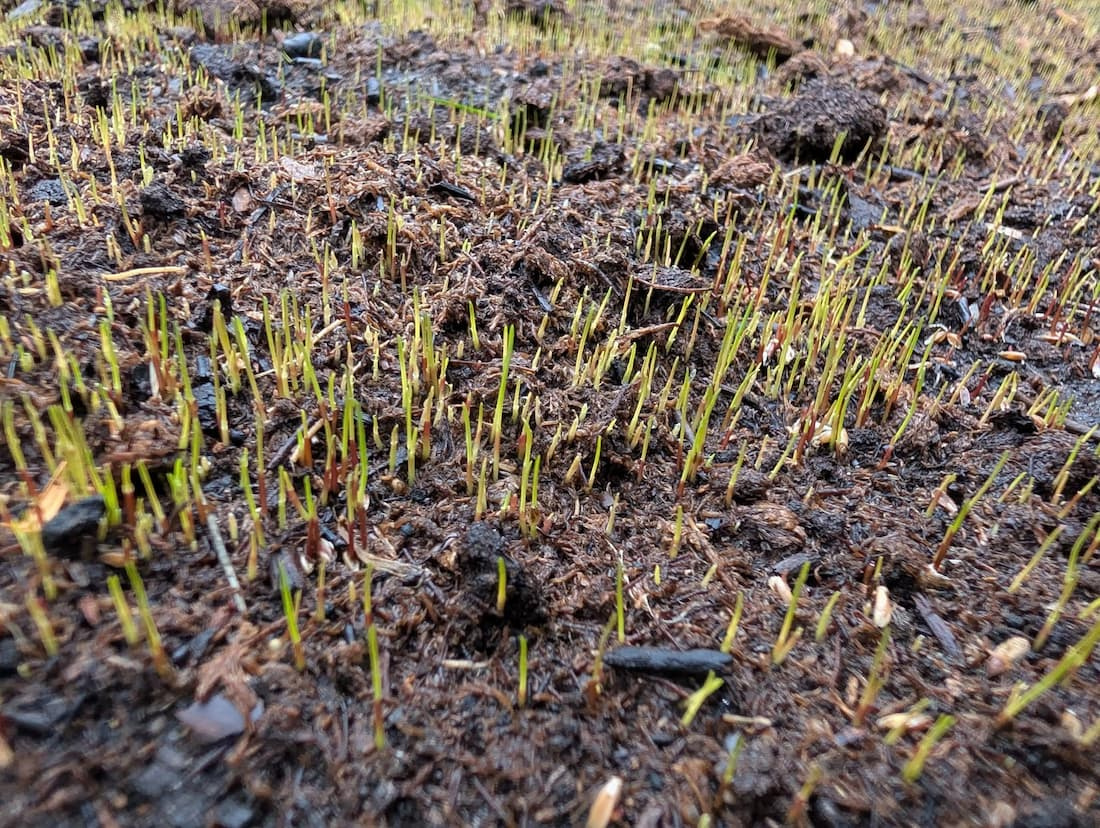
Bare soil doesn't turn into a lawn just because you scattered seed or rolled out sod — it becomes one based on a handful of specific steps done in the right order, matched to your specific grass. This guide walks through soil prep, seeding or planting method, starter fertilizer, watering as the grass grows, and knowing when it's actually safe to mow, for both cool-season and warm-season lawns.
Read Article
Cool Season vs Warm Season Lawn and Landscape Guide
Your lawn and your flower beds don't follow the same calendar — one runs on a cool-season engine, the other on a warm-season one, and using the wrong playbook on either can do real damage. This guide helps you figure out which system you actually have and how to care for it correctly, plus how the same cool/warm split applies to your ornamental beds.
Read Article
The Hole You Dug Is Killing Your New Plants
A shrub that looked fine all summer and stalled the next year usually didn't fail because of the plant, the weather, or the nursery. It failed because the hole it went into was a container — smooth-walled, water-holding, and impossible to root out of.
Read Article
What You Can Actually Change About Bad Soil
Heavy clay and loose sand feel like permanent sentences, and half of that is true. What your soil is made of will not change. How those particles are arranged will — and that is the half that decides whether anything grows.
Read Article
Why Your Plants Survive Winter and Die in July
Your hardiness zone is built from one number — the coldest night of an average year. It says nothing about the hottest afternoon, which is what actually kills most plants people lose. Here's how to read the other half of the map.
Read Article
Why Poa Annua Keeps Coming Back — and the 3-Year Plan That Finally Ends the Cycle
You've pulled it. You've sprayed it. You've watched the little white seedheads mock you every single spring. And every fall, like clockwork, it's back — in the lawn, in the beds, in the cracks you didn't know you had. Here's the hard truth nobody at the big-box store will tell you: you're not losing because you're doing it wrong — you're losing because you're fighting the wrong enemy on the wrong timeline. Poa annua isn't a one-season problem, and once you understand why, the three-year plan below stops feeling like a chore and starts feeling like a countdown.
Read Article
How to Apply Herbicides Correctly in Your Lawn and Garden Beds
Getting real results from a weed product has almost nothing to do with the brand on the bottle and everything to do with matching the method to the moment — the right chemistry, in the right place, at the right time. Learn how to apply herbicides correctly across both your lawn and your garden beds, whether you’re stopping weeds before they sprout or killing the ones already growing, without wasting product or harming the plants you want to keep.
Read Article
How to Kill Weeds Where Two Lawns Meet Without Harming Your Neighbor’s Grass
Controlling weeds along a shared property line is where good intentions quietly backfire—the season that's safe for your own lawn is often the season the lawn next door is most easily harmed. Learn the seasonal timing collision behind most fence-line damage, and the two habits that prevent it—reading what's actually in the bottle and spraying directed instead of broadcast—so you can clear the weeds without hurting your grass, your neighbor's, or the peace between you.
Read Article
The Truth About One-and-Done Weed Control
Most homeowners lose the fight against weeds not because they work too little, but because they act before they understand. One-and-done weed control is real — but it only works when identification, timing, and the right tool all line up. This guide explains how that sequence works across your lawn and your ornamental beds, and how each weed page in the MFY hub puts it into practice for your specific invader.
Read Article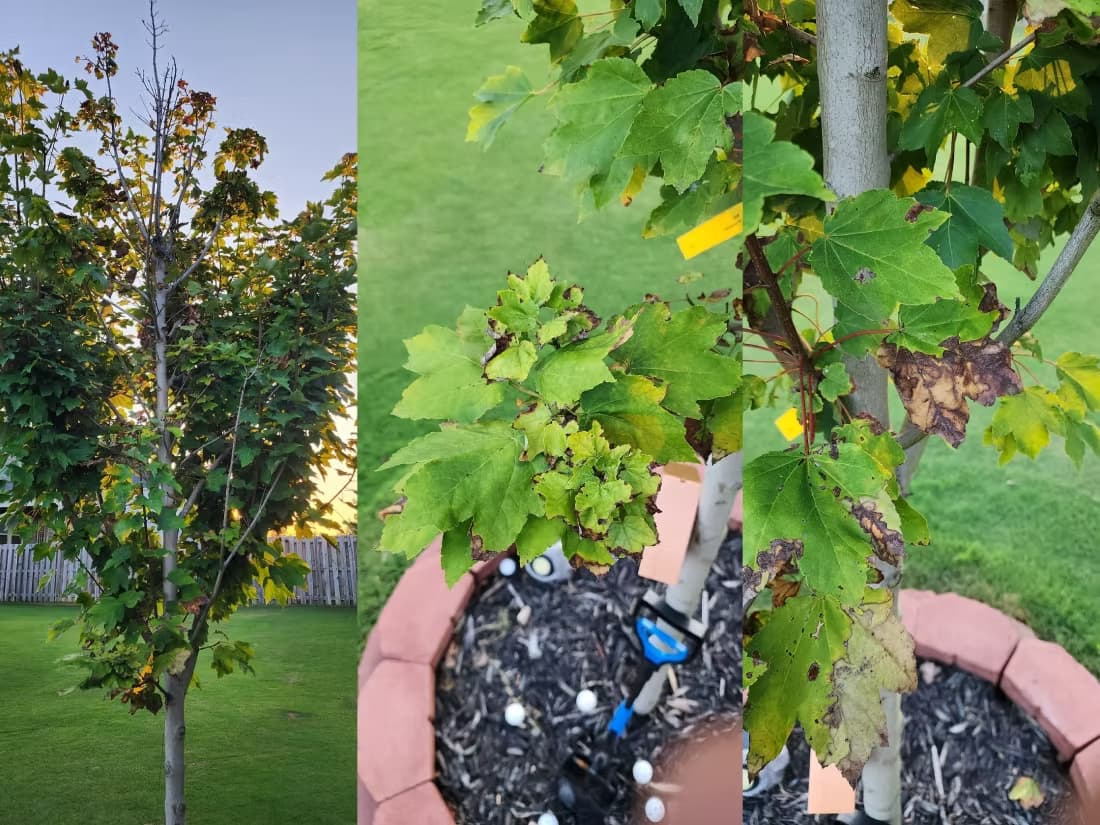
Solving the Mystery of the False Evidence in Your Lawn and Landscape
A brown leaf or a yellowing lawn is rarely what it seems. When symptoms act as decoys, a calm, forensic approach brings clarity to the confusion. Learn how to look past the surface to find the quiet truth of what your plants are truly asking for.
Read Article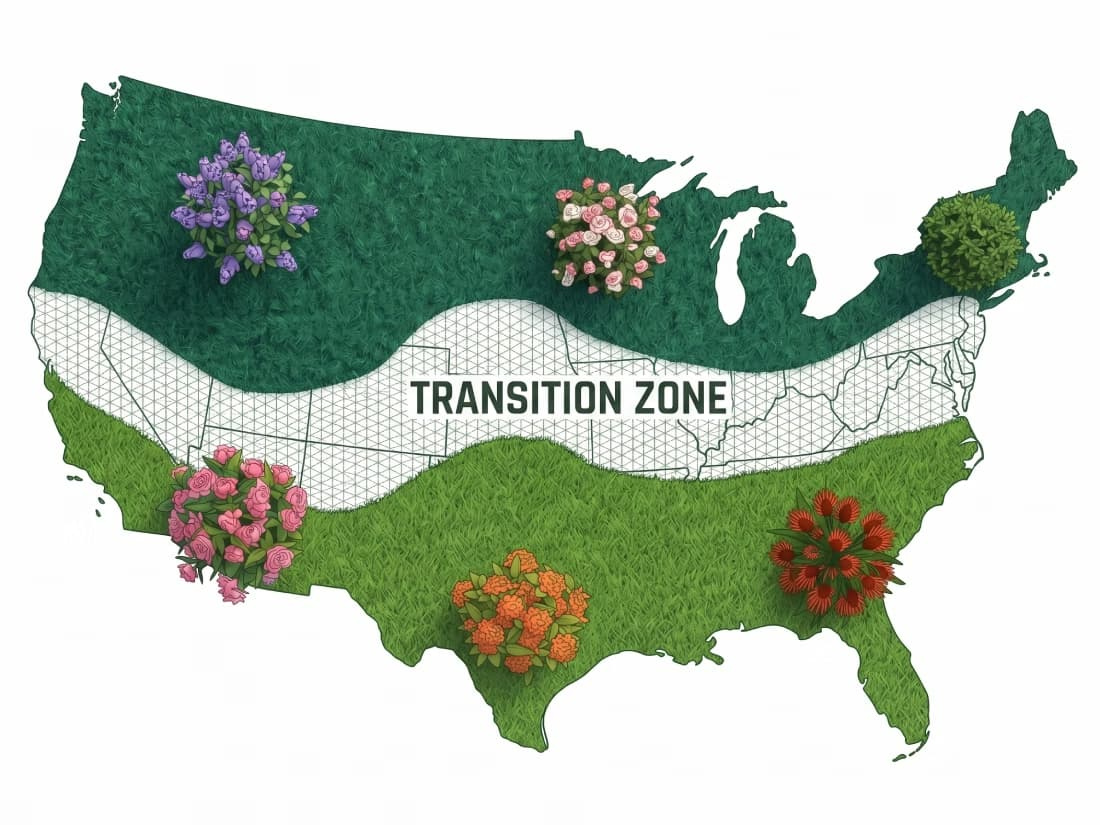
Living in the Middle: The Deep-Dive Guide to Transition Zone Lawns and Landscapes
The Transition Zone is a biological tug-of-war where neither northern nor southern species perfectly adapt. By using resilient "bridge" species and mastering maintenance levers like the Mowing Pivot, you can transform a struggling yard into a healthy landscape.
Read Article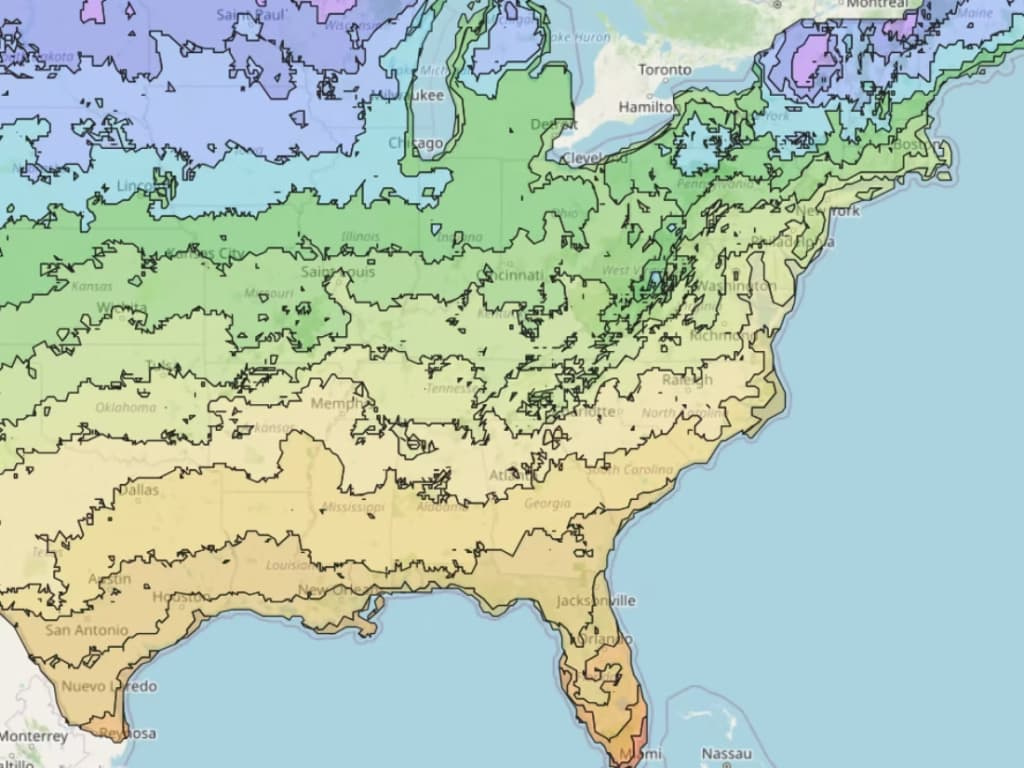
What Your Hardiness Zone Really Means for Your Lawn and Plants
Uncover the foundation of a resilient landscape by mastering the science of hardiness zones. Learn how these climate boundaries are calculated and why understanding your local temperature limits is the first step toward choosing plants that thrive year after year.
Read ArticleFrequently Asked Questions
Our maintenance and establishment guidance is derived from long-term agronomic field studies and turfgrass performance data from top research institutions.
Almost certainly dormant. Check the pattern and the crown. Even, straw-colored browning across the whole lawn on schedule as it gets cold is winter dormancy — the crowns will still be firm. A gray-blue or purple cast that starts in the driest patches, with footprints staying pressed into the turf, is drought dormancy; a deep watering of half an inch to an inch greens it up in a day or two. Dead grass is different: pale, brittle, crumbling, lifting away from the soil in irregular patches, with a hollow crown or chewed roots. Only the last one needs action. Blue grama is brown 6 to 7 months of the year by design.
No. Because it grows in separate clumps rather than knitting into a continuous mat, blue grama cannot be cut and rolled as sod, and pure blue grama sod is not sold. Seed is the standard method; plugs are a minor option for small areas. Plan on two or more growing seasons from seeding to a closed stand.
Do not. This is the single most damaging thing you can do to an established blue grama lawn. Cool-season ryegrass is aggressive enough to take the stand over and destroy it — you will trade a dormant native lawn for a ryegrass lawn with all the water and mowing that implies. If the brown season bothers you, plant spring bulbs like crocus and daffodil into the turf for early color instead.
Because it is supposed to, and because you cannot spray your way out of it. A new stand is half-empty for its first season or two, leaving bare soil that summer weeds jump into — and the constant surface watering the seedlings need is exactly what those weeds want too. On top of that you cannot use pre-emergent herbicide for a full year after seeding, since the barrier that stops weed seeds stops your grass seed as well. Wait until the lawn has been mowed five to six times before spraying anything, and mow at 2 inches meanwhile to cut the tops off taller weeds.
Yes, and this is the genuinely surprising thing about it. Blue grama survives to USDA Zone 3, with Colorado State documenting established stands taking winter lows near −30°F in eastern Colorado without winterkill. The catch is not the established lawn, it is the seedlings and the seed origin. Seed too late in summer and the young plants winterkill. And blue grama collected in the southern part of its range is far less cold-hardy than northern material, so a bag of unlabeled seed from the wrong latitude can fail in a northern winter even though the species is rated for Zone 3.
Inside its native range — country that gets 8 to 15 inches of rain a year — an established stand can live on rainfall alone, though it will go dormant and brown in dry stretches. To hold green color through a dry summer instead, Colorado State’s deficit schedule is 1 to 2 inches every 4 to 5 weeks, applied deep. What it must not get is a little water often. Light daily sprinkling will not wake a dormant lawn, and it keeps the surface damp for weeds and fungus. Establishment is the exception: for the first 3 to 4 weeks the seedlings need frequent short cycles, several times a day.
No, and this is the structural limitation to plan around. Blue grama is a bunch grass with only short rhizomes and no stolons, so it has essentially no ability to spread into a gap. Anything that removes a clump — grub damage, a power rake, heavy traffic, a scalped high spot — leaves a hole that stays a hole until you reseed it. That is also why dethatching equipment is a bad idea here and why this is not a grass for a play area.
The technique is real, but the product name is no longer reliable. Because blue grama takes up nothing while fully dormant, a glyphosate-based non-selective herbicide applied over the brown lawn kills green cool-season weeds without harming the grass. Two things have to be right. The grass must show zero green tissue, or the damage is permanent. And you must check the active-ingredient panel, because consumer “Roundup” no longer reliably contains glyphosate — some reformulated versions use different chemicals that blue grama tolerates (so they will not kill the weeds) and others leave soil residue that can harm the grass or your next seeding. Buy for the active ingredient, not the brand.
Scientific Authority
This profile is grounded in turfgrass agronomy and soil science. Every recommendation—from irrigation requirements to nutrient management—is verified against agricultural research data to ensure optimal plant health and environmental sustainability in the Transition Zone.
Primary Resources
- New Mexico State University Extension: Turfgrasses for New Mexico (Guide H-508)[cite: 1]
- USDA-NRCS Plant Materials Center: Blue Grama Plant Guide (Bouteloua gracilis, symbol BOGR2)[cite: 2]
- USDA-NRCS Los Lunas Plant Materials Center, NMSU & CSU: ‘Hachita’ Blue Grama Conservation Release Profile[cite: 3]
- USDA-NRCS Los Lunas Plant Materials Center & NMSU: ‘Lovington’ Blue Grama Release Profile[cite: 4]
- Colorado State University Extension: Native Lawn Establishment in Colorado (Tony Koski, 2022)[cite: 5]
- Colorado State University Extension: Buffalograss Lawns Profile[cite: 6]
- New Mexico State University Extension: Lawn Care for Disease Control (Guide H-507)[cite: 7]
- New Mexico State University Extension: Turfgrass Irrigation (Circular 660)
- New Mexico State University Extension: Turfgrasses for Northern New Mexico (Guide H-511)
- Colorado State University Extension: Fact Sheet 7.229 (Low-Input & Native Lawn Management)
- USDA Forest Service FEIS: Bouteloua gracilis Profile
- National Turfgrass Evaluation Program (NTEP): Pure-Stand Trial Evaluation Data