
Pathogen: Pythium spp. (water molds), Rhizoctonia solani and Fusarium spp.
Also called: seedling blight, seed rot, pre-emergence damping off, post-emergence damping off, Pythium seedling blight
Damping Off
The new-seeding killer
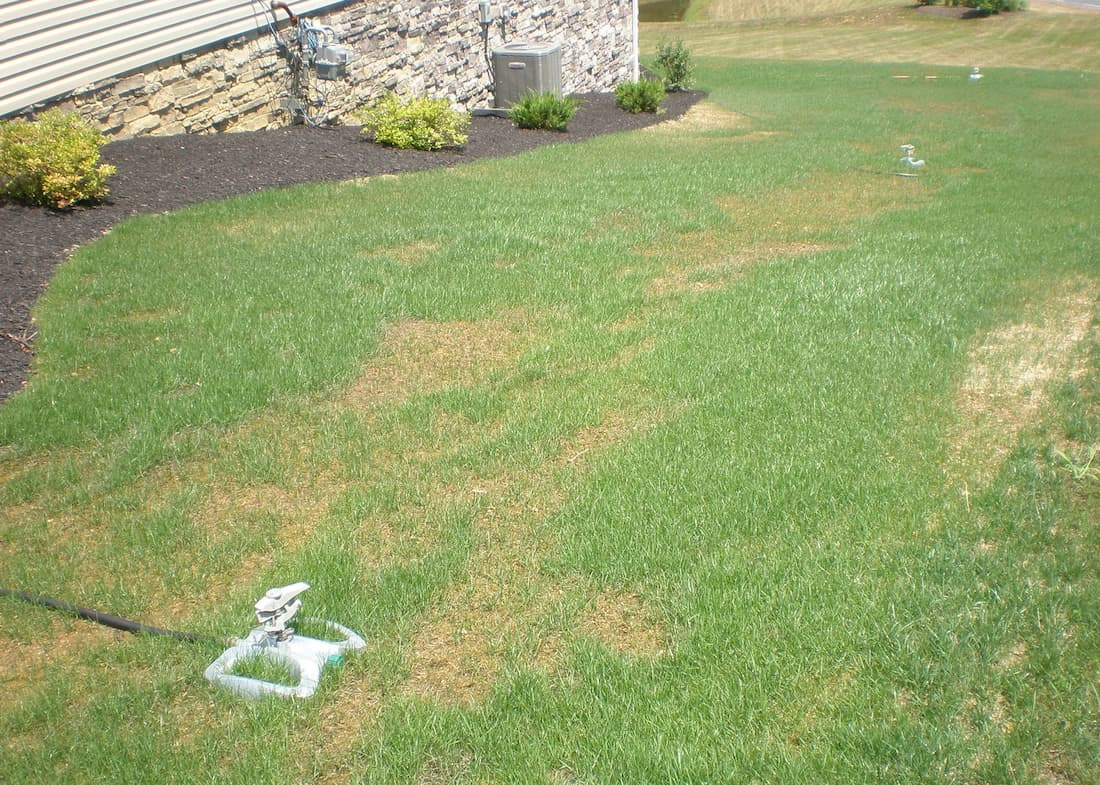
Featured Image Credit: Pete Landschoot, Penn State University, used with permission
Damping Off At-a-Glance
Grass Type Affected
Cool & Warm Season
Recovers on Its Own?
Usually Not
Is Spraying Worth It?
Rarely Worth It
Disease Type
Fungal
Water Mold
Active Season
Early Spring
Late Spring & Early Summer
Mid to Late Summer
Fall
Damage Potential
Can Be Fatal
Damping Off Quick Answers
What Damping Off Looks Like
From Standing Height
A new seeding either comes up thin and patchy, or comes up well and then fails in spots. Small spots of collapsed seedlings, often in low or wet areas, quickly grow into circular or irregular patches and can merge into large bare areas. On slopes the damage often runs in streaks down drainage paths. Affected seedlings first look wilted and twisted, then turn dark and greasy. Over the next several days they shrivel to brown or straw-tan and flatten into a matted crust on bare soil.
Up Close: Blades, Crowns and Roots
The diagnosis is made at the soil line, not on the leaf blade. After seedlings come up, the stem right at or just below the surface becomes water-soaked, dark and pinched, as if tied off with a thread. The seedling can’t hold itself up, so it falls over while the leaves are still green. The leaves then go limp, stick together and turn dark and greasy, then brown, without the distinct spots or bands that diseases of mature grass leave. The crown is soft and discolored. The roots are short, brown and water-logged, and the outer layer often slides off and leaves a thin white thread. Before emergence there is nothing to see above ground. Seed dug up from bare areas is soft, dark and rotting, or sometimes dry and shriveled, instead of sprouting.
Signs of the Fungus
On humid mornings, look for white, fluffy fungal growth webbing across collapsed seedlings and gathering around their bases at the soil line. Check while dew is still on the grass: the growth is fragile and disappears once the sun dries the stand. In dry weather you usually see nothing at all, only the dead seedlings, so no webbing doesn’t rule damping off out.
Identification Photos
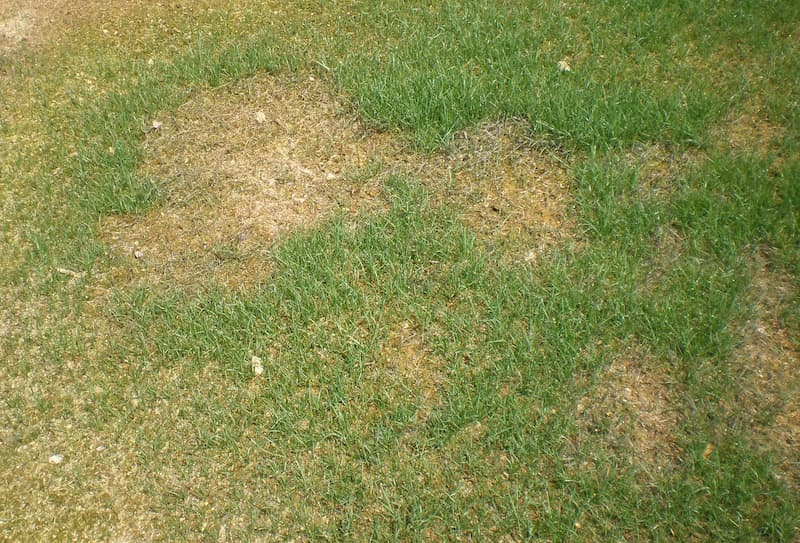
Collapsed Seedlings: Infected seedlings collapse in roughly circular patches and seldom recover, so these spots usually need reseeding.
Pete Landschoot, Penn State University, used with permission
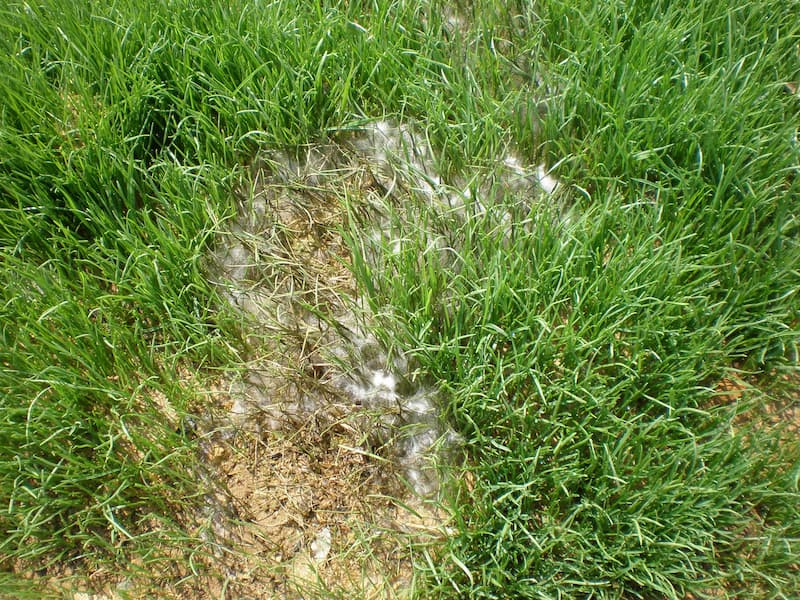
Cottony Growth: On dewy, humid mornings, white, fluffy fungal growth can cover the collapsed seedlings, a sign the fungus is actively spreading.
Pete Landschoot, Penn State University, used with permission
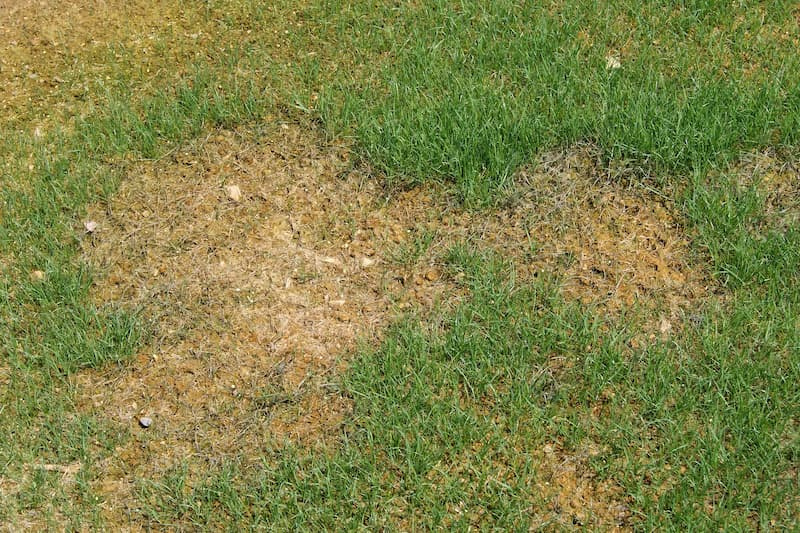
Summer Seedings at Risk: Hot, humid weather and waterlogged soil favor the fungi behind damping-off, so lawns seeded in summer are hit hardest.
Pete Landschoot, Penn State University, used with permission
Could It Be Something Else?
Common Lookalikes
Pythium Blight is caused by the same water molds, in the same hot, humid weather, and it also leaves greasy, collapsed patches with white webbing in the morning. The difference is the grass’s age: Pythium blight attacks mature turf, while damping off hits seed and seedlings in their first weeks.
Brown Patch is caused by Rhizoctonia, one of the damping off organisms. A lawn seeded in spring can get it in its first summer, which makes it easy to confuse. Brown patch shows tan leaf spots with dark borders on grass that is already rooted and mowed several times. Damping off rots the stem right at the soil line.
Seedlings that dried out also wilt, brown and collapse in patches, especially on slopes and sunny edges where the surface dries first. They look the same from a standing view but are still firm at the soil line.
Seed that never came up leaves thin, bare areas that look just like pre-emergence damping off. The usual causes are cold soil, seed planted too deep, seed washed away by heavy rain, or old seed.
Field Checks Before You Treat
- Pinch the stem base. Pick five to ten collapsing seedlings at the edge of a patch and gently pinch and pull each one right at the soil surface. A stem that is soft, dark or water-soaked and snaps at the soil line points to damping off. A firm, dry stem points to drought, heat or fertilizer burn.
- Check at dawn. Look at the patch early in the morning while dew is on. White, cottony webbing across the seedlings confirms an active infection. No webbing means look again on the next humid morning or move to the other checks.
- Dig where nothing came up. Once the seed should have sprouted (about a week for ryegrass, two to three weeks for bluegrass), scrape away the top half inch to inch of soil in a small bare area. Soft, dark, rotting seed means seed rot. Hard, unchanged seed means a germination problem: cold soil, dry soil, old seed or seed planted too deep.
- Rinse the roots. Lift a small clump of sick seedlings with the soil attached and wash the roots gently in water. Pull a root between your thumb and finger. If the outer layer slides off and leaves a thin white thread, the roots are rotting.
Grasses at Risk
Which Grasses Suffer Most
All grasses are susceptible while they are seeds and seedlings, and none have usable resistance at that stage. Ratings for mature disease resistance don’t protect a seedling, because its tissue hasn’t toughened yet. Risk depends mostly on how a grass is planted and how fast it gets through the seedling stage. The cool-season grasses homeowners seed most often are the ones most often hit. Perennial Ryegrass sprouts fastest but forms dense, humid stands when seeded heavily in warm weather. Kentucky Bluegrass takes two to three weeks to sprout, which leaves seed exposed in the soil the longest. Tall Fescue and Fine Fescue fall in between. Bentgrass is very susceptible but rarely seeded in home lawns. Seeded warm-season grasses such as Bermudagrass can also be hit. Grasses planted as sod, plugs or sprigs, including most St. Augustinegrass and many Zoysiagrass lawns, skip the seedling stage and don’t get damping off.
Why It Shows Up
Conditions That Trigger It
Damping off is a disease of timing. Seed and seedlings are only vulnerable for the first few weeks, and the disease wins whenever the weather slows the grass down while speeding the organisms up. Which organism does the damage depends on the weather. Pythium does most of its damage in warm-to-hot, humid weather. Rhizoctonia is more common when it’s cool.
Cold soil works against seed before it sprouts. General seedling guidance from Penn State puts the risk of seed rot highest when soil is below 68°F, because slow germination leaves seed sitting in wet soil longer. After the seedlings come up, the risk rises again when soil climbs above 77°F. That’s why cool-season grass seeded in late spring or summer fails so often: hot soil, humid nights and the constant watering a seedbed needs all arrive at once.
Site and care factors that raise the risk:
- Too much seed. Seeding above the bag rate makes a crowded stand that traps humidity at the soil line and stays in the vulnerable seedling stage longer.
- Too much nitrogen. Heavy fertilizer at or soon after seeding forces soft, fast growth that is easy to invade, especially with seedings in early to midsummer.
- Waterlogged soil and standing water. Pythium spreads by spores that swim through films of water, so saturated soil, low spots and drainage swales are where patches start.
- Evening or night watering. Watering late keeps the seedlings wet all night.
- Thick mulch. A heavy layer of straw or other mulch over the seed holds extra moisture against the seedlings.
- Poor air movement. Seedbeds hemmed in by walls, fences or dense plantings stay humid longer.
- Seed planted too deep. Deep seed takes longer to emerge, which means more time exposed in the soil.
How It Survives and Spreads
These organisms are already in almost every soil. They live on old roots and organic matter and survive for years as tough resting structures: thick-walled spores for Pythium, small hard fungal masses for Rhizoctonia. When seed takes up water, it leaks sugars into the soil, and that wakes the resting organisms. They grow into the seed or into the tender stem just below the surface. Infection before the seedling comes up is seed rot, or pre-emergence damping off. Infection after it comes up is post-emergence damping off: the stem rots and pinches at the soil line, and the seedling falls over and dies.
Once a patch starts, water spreads it. Runoff and puddles carry Pythium’s swimming spores downhill, which is why damage often runs in streaks along slopes and drainage paths. Mowers, spreaders and shoes move infested soil and wet, infected seedlings into healthy areas. On humid mornings the fungal growth can also bridge directly from one crowded seedling to the next. As seedlings mature, their tissue toughens and the risk fades. An established lawn doesn’t get damping off.
The same organisms kill flower and vegetable seedlings in garden beds and indoor seed trays. There, seedlings collapse with a pinched, dark stem at the soil line. Prevention is the same idea on a smaller scale. Start seeds in fresh, pasteurized seed-starting mix rather than garden soil, wash and disinfect reused trays, keep the mix evenly moist but never soggy, and give the seedlings warmth and moving air.
Where It Hits Hardest: Regional Notes
Damping off isn’t a regional disease. It shows up anywhere grass is grown from seed, because the organisms are in nearly every soil. It’s a serious problem wherever cool-season lawns are seeded in late spring or summer in humid climates, which takes in the Northeast, Midwest and Transition Zone. Heavy clay, low spots and compacted soil around new construction raise the risk further. In the humid South, seeded warm-season lawns face the same risk in wet summer weather, but most southern lawns go in as sod or plugs and skip the seedling stage entirely. Dry Western climates dry the surface fast, but a seedbed kept constantly wet with irrigation can still have problems.
Damping Off Diagnostic Profile
Check what you see against the full set of signs. The more that match, the more likely this is your problem.
What You’ll See
Symptom Color
Tan or Straw
Brown
White or Gray
Black or Dark
Visible Signs
Cottony White Webbing
Slimy or Crusty Layer
None Usually Visible
Lawn Pattern
Circular Patches
Irregular Patches
Small Spots
Streaks or Stripes
Overall Thinning
Patch Size
2 to 6 Inches
6 to 12 Inches
1 to 3 Feet
Over 3 Feet
Blade Symptoms
Rotted Leaf Base or Crown
Rotted Roots
When and Where
Weather Triggers
Cool & Wet
Warm & Humid
Hot & Humid
Long Leaf Wetness (Dew or Rain)
Wet or Poorly Drained Soil
Where in the Lawn
Shade
Low or Wet Spots
Compacted or High-Traffic Areas
New Seedings
Controlling Damping Off
Prevention is the only real control, because seedlings that collapse can’t be saved. Every step below either shortens the weeks the grass spends as a vulnerable seedling or takes away the wet, soft conditions the organisms need.
- Seed at the right time. Seed cool-season grass in late summer to early fall (late August to early September in the North), or in spring as a second choice. In fall the soil is still warm enough for fast germination, while cool nights and mornings hold the heat-loving water molds back. Avoid summer seedings. Seed warm-season grass in late spring, once warm soil drives fast rooting.
- Use the bag rate, not more. Extra seed makes a crowded, humid stand that stays in the seedling stage longer. A thinner stand that matures fast is safer than a thick one that rots.
- Feed phosphorus, go light on nitrogen. At seeding, use a starter fertilizer that supplies about 1 lb of phosphorus per 1,000 sq ft to push root growth (new seedings are usually exempt from state phosphorus limits, but check yours). Around the first mowing, apply no more than 0.5 lb of readily available nitrogen per 1,000 sq ft, because heavy nitrogen makes the soft growth these organisms invade.
- Water to sprout, then back off. Water lightly and often only until the seed comes up, keeping the surface moist but never soggy. Then water less often and let the leaves and soil surface dry between waterings. Water in the morning or early afternoon so the seedbed dries before dark.
- Fix drainage before seeding. Loosen compacted soil and regrade low spots before you plant, so water never stands on the surface. Don’t try to establish grass in a wet swale without fixing the drainage first.
- Mulch thinly. Use only a light layer of straw, enough that you can still see soil through it. A thick layer holds moisture against the seedlings.
- Plant at the right depth. Rake seed in to about a quarter inch so it sprouts fast instead of sitting in the soil.
- Mow dry, and mow high during an outbreak. Once seedlings reach mowing height, regular mowing opens the canopy and helps it dry. If damping off is active, raise the height or stop mowing the new grass, and never mow it wet.
- Open up shade and airflow. Thin or prune shrubs and low limbs around the seedbed so wind and sun can dry it.
Spraying is rarely worth it on a home lawn: fungicides can only prevent damping off, they can’t revive seedlings that have already collapsed, and the products that work are mostly professional-only. The one chemical step that pays off for a homeowner is buying fungicide-coated seed for a summer seeding, a site with a history of damping off, or an expensive renovation. Coated seed protects the seed through germination, the riskiest stretch, and adds only pennies per pound to the price.
The organism matters when choosing a product, because damping off is caused by both a water mold and true fungi, and no single ingredient covers both groups. Most ordinary lawn fungicides don’t touch the water mold Pythium. That includes propiconazole, myclobutanil and tebuconazole (FRAC 3) and thiophanate-methyl (FRAC 1). Water molds are built differently from true fungi, so these ingredients have nothing to hit. The ingredients that do control Pythium mostly miss Rhizoctonia and Fusarium. Lawn fungicides are sold by brand name, so read the active-ingredient panel before buying anything.
| Active ingredient | FRAC group | Controls | Who uses it |
|---|---|---|---|
| Mefenoxam | 4 | Pythium only | Professional seedbed treatments and commercial seed coatings |
| Etridiazole | 14 | Pythium only | Professional |
| Propamocarb | 28 | Pythium only | Professional |
| Cyazofamid | 21 | Pythium only | Professional |
| Fluoxystrobin | 11 | Pythium; also other Rhizoctonia diseases | Professional; also sold premixed with chlorothalonil or myclobutanil to cover all three organisms |
| Mancozeb | M3 | Pythium (protectant) | Mostly professional lawn products |
| Fludioxonil | 12 | Rhizoctonia and Fusarium only | Professional and seed treatment |
Fungicides work only as prevention: applied to the seedbed or new seedlings before hot, wet weather, or at the very first sign of collapse. If you don’t know which organism you have, a lab diagnosis or a product that covers all three is the only sound choice. Pythium has developed resistance to mefenoxam, strobilurins (FRAC 11) and propamocarb in some areas, so professionals rotate FRAC groups. If you do treat, use a granular product or a small hand sprayer, because walking heavy equipment across a wet seedbed crushes the seedlings you’re trying to save.
Recovery and Repair
Dead seedlings don’t come back. Surviving seedlings around a patch will tiller slowly into the gap once the weather cools, but bare spots larger than a few inches usually fill with weeds before they fill with grass. Plan to reseed. For cool-season lawns, wait until late summer to early fall (late August to mid-September in the North). Reseeding in the same hot, wet weather usually fails the same way. Before you seed, rake out the matted dead seedlings and bag them for yard-waste pickup or the trash, not your compost pile, because this is a soil-borne disease. Loosen the top half inch of soil, fix any spot where water stood, and sow fresh seed at the bag rate, using coated seed if the site has failed before. Add starter fertilizer, mulch lightly, and water lightly and often only until the seed comes up, then taper off. For warm-season lawns, repair in late spring or early summer with seed, sod or plugs; sod and plugs avoid the seedling stage entirely.
When to Call a Pro
Send a sample to your state’s extension plant diagnostic lab before buying any fungicide. Pythium needs different ingredients than Rhizoctonia, and a lab is the only way to know which one you have. A sample is also worth it when a new seeding collapses even though you seeded on time, watered correctly and kept fertilizer light. Dig a plug a few inches across and a few inches deep from the edge of a patch, where dying seedlings meet healthy ones, and keep the soil and roots intact. Dead, dried-out seedlings are useless for diagnosis. Wrap the plug dry, without adding water, and ship it early in the week. Consider a lawn professional when seedings fail in the same shaded or wet area year after year, which usually means drainage or grading work, or for a large renovation where losing the seeding would be costly.
Frequently Asked Questions
These answers are synthesized from plant pathology research and diagnostic guidance published by university extension services and plant disease clinics.
The thick stand was the problem. Extra seed or heavy nitrogen makes a crowded, soft stand that holds humidity right at the soil line, which is the exact spot where these organisms attack the stem. When warm weather and daily watering arrive, the stand that looked best is the one that collapses. Seeding at the bag rate gives a stand that matures and toughens faster.
It probably didn’t control the organism you have, or it came too late. The most common lawn fungicides control true fungi and do nothing to Pythium, the water mold behind most summer damping off. No fungicide can revive seedlings that have already collapsed, because their stems are rotted through. Put your effort into reseeding at the right time instead.
No. Nitrogen pushes soft, fast growth that these organisms invade more easily, so it makes an outbreak worse. Hold off until the weather cools. At the first mowing, stay at or below 0.5 lb of readily available nitrogen per 1,000 sq ft.
Yes, once the weather changes. The organisms stay in the soil, as they do in almost every lawn, so what decides the outcome is the conditions at reseeding. Wait for cooler weather, fix any spot where water stands, and use the bag rate with coated seed if the spot has failed before.
Not if it’s thin. A light layer helps by keeping seed evenly moist, but a heavy layer holds water against the seedlings and slows drying, and sources list excess mulch as a risk factor. Spread it thinly enough that you can see soil through it.
Scientific Authority
This profile is built on plant pathology research and diagnostic guidance from university extension services and plant disease clinics. We prioritize accurate identification and cultural control first, recommending fungicides only where research shows they are justified, and naming them by active ingredient rather than brand.
Primary Resources
- Penn State Extension — Turfgrass Diseases: Damping-Off Diseases (Causal Fungi: Pythium, Rhizoctonia, and Fusarium spp.)
- Penn State Extension — Damping Off
- NC State Extension — Damping Off in Turf
- Purdue University Turfgrass Science — Damping Off Diseases in New Seedlings
- University of California IPM — Seed Rot and Damping-Off (Turfgrass)
- University of Missouri Extension — Damping Off (Turfgrass Disease Profiles)
- UMass Amherst Extension Turf Program — Pythium Diseases of Turf
- University of Wisconsin–Madison Plant Disease Diagnostics Clinic — Damping-Off
- Texas A&M AgriLife Extension — Seedling Disease (Texas Plant Disease Handbook)