
Hardiness Zone Hub
Your definitive guide to North American climate zones. From interactive maps to deep-dives on individual pages, this atlas covers everything you need to know about syncing your landscape with your local environment. Access structured, data-backed climate insights tailored for your specific region.
The Master Blueprint for Your Local Climate
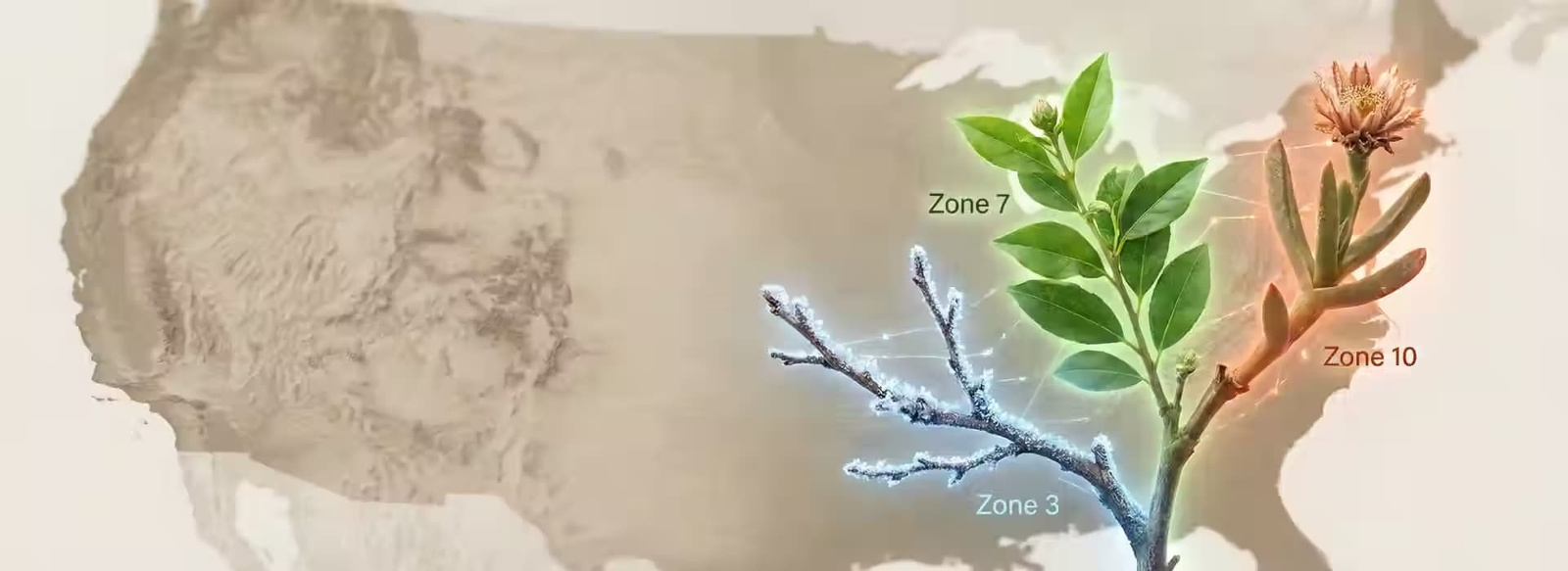
The USDA Hardiness Zone system is the most essential tool for any homeowner looking to demystify the relationship between their backyard and the natural world. While we often focus on what we want to plant, the Hardiness Zone Atlas defines what is biologically possible. By organizing North America into specific regions based on their average annual minimum winter temperatures, this atlas provides the structured data you need to ensure your turf, ornamental plants, and trees are perfectly synced with your local environment.
Whether you are designing a high-performance lawn or selecting a new flowering shrub, understanding your zone is the first step in moving from guesswork to precision. Explore the structured registry below to find your specific zone, access detailed planting schedules, and see exactly which species are hardwired to thrive in your unique microclimate.
Pinpoint Your Hardiness Zone
Your journey starts with one simple but vital number: your local winter temperature floor. While this atlas organizes climate data for all of North America, its real value comes to life when you see how it applies to your own backyard. Every zone in the registry below represents a unique environment with its own set of rules. Understanding these levels is the ultimate “gatekeeper” that decides which plants will thrive and which will fail.
Finding your specific zone is the first step toward a successful landscape. By knowing your baseline, you can stop the guesswork and focus on the specific lists and planting schedules that match your area. This approach lets you explore the registry with confidence, building a beautiful, resilient yard based on facts rather than trial and error.
To start filtering the individual zone lists for your region, use the MFY Zone Finder to instantly find your primary USDA Hardiness Zone. Simply enter your five-digit ZIP code to get started.
Enter your zip code below
A ZIP code offers precision, but the interactive map below provides the geographic context needed for professional results. Use it to verify the Border Rule: if you live near a boundary, local microclimates can shift your conditions into the neighboring zone. The map also reveals your Climate Buffer, showing if your yard is a warm pocket susceptible to sudden temperature swings from colder surrounding regions.
The USDA Hardiness Zones
Below is the organized collection of North American hardiness zones, ranging from the sub-arctic conditions of Zone 1 to the tropical climates of Zone 13. Each entry represents a unique biological profile defined by a 10-degree Fahrenheit difference in average annual minimum temperatures. Within these cards, you can explore the specific sub-zones (a and b) that further refine your local climate data. Select your zone to access its dedicated page, where you will find detailed planting schedules, interactive maps, and a curated list of species specifically compatible with your environment.
USDA Hardiness Zone 1: The Arctic Frontier
Temp. Range: -60°F to -50°F
First Frost: Aug 5 – Aug 30
Last Frost: May 25 – Jun 25
Continuous permafrost and extreme cold stop roots from growing
USDA Hardiness Zone 2: The Subarctic Shield
Temp. Range: -50°F to -40°F
First Frost: Aug 15 – Sep 10
Last Frost: May 1 – May 30
Extreme cold and dry winter wind desiccate unprotected tissue
USDA Hardiness Zone 3: The Cold Continental
Temp. Range: -40°F to -30°F
First Frost: Sep 5 – Sep 30
Last Frost: Apr 25 – May 30
Late spring freezes and winter wind desiccation injure woody tissue
USDA Hardiness Zone 4: The Cool Temperate
Temp. Range: -30°F to -20°F
First Frost: Sep 1 – Sep 25
Last Frost: May 15 – Jun 10
Desiccating winter wind and repeated freeze-thaw soil cycles
USDA Hardiness Zone 5: The Temperate Heartland
Temp. Range: -20°F to -10°F
First Frost: Sep 20 – Oct 15
Last Frost: Apr 25 – May 20
False spring warm spells followed by hard Arctic freezes
USDA Hardiness Zone 6: The Mild Temperate
Temp. Range: -10°F to 0°F
First Frost: Sep 25 – Nov 5
Last Frost: Apr 1 – May 25
Winter freezes plus summer heat and humidity stress both grass types
USDA Hardiness Zone 7: The Middle South
Temp. Range: 0°F to 10°F
First Frost: Oct 15 – Nov 25
Last Frost: Apr 1 – May 5
Summer heat breaks cool-season turf while sudden freezes injure warm-season
USDA Hardiness Zone 8: The Warm Temperate
Temp. Range: 10°F to 20°F
First Frost: Oct 25 – Dec 5
Last Frost: Mar 1 – Apr 15
Four sub-regions with conflicting climates and no shared answer
USDA Hardiness Zone 9: The Subtropical Border
Temp. Range: 20°F to 30°F
First Frost: Dec 1 – Dec 20
Last Frost: Feb 1 – Feb 25
Extreme summer heat and too few winter chill hours
USDA Hardiness Zone 10: The Tropical Threshold
Temp. Range: 30°F to 40°F
First Frost: Late Dec, 10a only
Last Frost: Early Feb, 10a only
No chill hours, no dormancy, and year-round pest pressure
USDA Hardiness Zone 11: The True Tropics
Temp. Range: 40°F to 50°F
First Frost: None recorded
Last Frost: None recorded
Continuous pest pressure and no chilling to trigger dormancy
USDA Hardiness Zone 12: The Equatorial Tropics
Temp. Range: 50°F to 60°F
First Frost: None recorded
Last Frost: None recorded
Constant warmth plus extreme swings between wet and dry
USDA Hardiness Zone 13: The Ultra-Tropical
Temp. Range: 60°F to 70°F
First Frost: None recorded
Last Frost: None recorded
Nonstop heat prevents dormancy and accelerates disease pressure
The Foundation: Soil & Environment
While your hardiness zone dictates the air temperature, your soil determines the health of your root systems. To build a truly professional-grade landscape, you must align your local climate with the physical conditions of your ground. Our dedicated soil hubs provide the data-backed insights you need to understand these variables. Explore the Soil Texture Hub to identify your specific earth type or dive into the Soil Conditions Hub to master pH levels, drainage, and nutrient density. Understanding these factors ensures that the species you select for your zone have the right foundation to thrive.
Discover Soil TexturesDiscover Soil ConditionsSoil Profile Tool
Identifying your soil is the key to precision maintenance. Use the MFY builder to document your yard’s unique layers and gain a clear picture of your property’s hidden environment.
Build Profile
The Science Behind the Zones
The formal numbers on this page are a fine start, but let’s be real: your plants don’t read mailing addresses. To turn you into a true yard investigator, we’ve drafted a guide that goes past the map and into the actual science of survival. We’ll teach you how to master “Border Logic,” why your lawn and garden live by different rules, and how to spot the hidden “Soda Can Effect” before it pops your grass cells. This is your secret handbook for protecting your investment from the inside out.
Learn More