
Observations: White crust on soil, scorched leaf tips
High Salinity (Salty Soil)
Salt in the root zone stops plants drinking, even in wet soil
High Salinity (Salty Soil) At-a-Glance
Diagnostic Threshold
EC above 4 dS/m
Remediation Difficulty
High
Recovery Timeline
Seasonal
How to Identify High Salinity (Salty Soil)
Salinity is soluble salt built up in the root zone at a concentration that stops plants absorbing water. It is measured as electrical conductivity, and soil above 4 dS/m is classed as saline — though turf starts suffering well below that, around 3.
The symptoms look exactly like drought. Grass turns dark blue-green, wilts, and browns at the leaf tips and margins. The difference is that drought-stressed turf recovers within a day of watering and salt-stressed turf does not, because the water is physically there and chemically unavailable.
Look for a loose white crystalline crust where water has evaporated. Then look at the pattern: salt damage follows drainage swales, low spots, sprinkler patterns, and road edges. Insect damage spreads in irregular patches, and fertilizer burn follows spreader lines within days of application.
Salinity is soluble salt built up in the root zone at a concentration that stops plants absorbing water. It is measured as electrical conductivity, and soil above 4 dS/m is classed as saline — though turf starts suffering well below that, around 3.
The symptoms look exactly like drought. Grass turns dark blue-green, wilts, and browns at the leaf tips and margins. The difference is that drought-stressed turf recovers within a day of watering and salt-stressed turf does not, because the water is physically there and chemically unavailable.
Look for a loose white crystalline crust where water has evaporated. Then look at the pattern: salt damage follows drainage swales, low spots, sprinkler patterns, and road edges. Insect damage spreads in irregular patches, and fertilizer burn follows spreader lines within days of application.
Forensic Signs
Evidence that separates salinity from the things it imitates:
- A loose white crystalline crust on the surface after the soil dries. This is salt precipitating out as water evaporates.
- Turf that stays wilted and scorched after watering, rather than perking up within 24 hours the way drought-stressed grass does.
- Leaf tip and margin burn working inward, caused by chloride carried to the leaf edge in the transpiration stream.
- Damage following drainage lines, low spots, irrigation spray patterns, or the first few feet in from a road or sidewalk.
- A smooth, brownish-black, greasy crust instead of a white one. That means sodic rather than saline, and it needs a completely different fix.
- Surface sealing and standing puddles on a soil that used to drain — the signature of sodium dispersing the clay.
Where It Shows Up
Four sources account for nearly all home landscape salinity. Coastal spray and flooding deposit sodium and chloride directly. De-icing salt accumulates along driveways, sidewalks, and roadside strips, concentrated wherever plowed snow gets piled. Saline irrigation water in arid regions leaves salt behind every time water evaporates. And over-fertilizing with high-salt-index products such as potassium chloride does the same thing.
Texture decides whether salt accumulates or moves through. Coarse soils — Sand, Loamy Sand, Sandy Loam — have large pores that let rainfall flush salts down past the roots. Fine soils — Clay Loam, Silty Clay, Clay — hold them in place.
A shallow water table makes everything worse. Salty groundwater wicks upward by capillary action and evaporates at the surface, leaving its salt behind, over and over.
Why Precision Matters: Treating the Root Cause
Noticing that your grass looks "off" or that water is pooling is a great start, but in yard care, the symptoms of different conditions often look exactly the same. Guessing whether your soil is acidic or just low on nutrients often leads to wasted effort and money on treatments that don't work. To truly fix a problem, you need a precise diagnostic that moves beyond a simple hunch.
We’ve built a specialized tool to give you that clarity. It’s completely free (and always will be), requires no signup or email, and is designed so you can return to your results whenever you need to adjust your recovery plan.
The MFY Soil Profile Builder
Our tool helps you move from observing a symptom to identifying the actual condition. By guiding you through simple field tests and sensory checks—like checking your soil’s pH or physical resistance—the tool handles the interpretation for you, delivering a clear diagnostic profile. This ensures you aren't just treating the "look" of your yard, but are addressing the specific state of your soil so it can get back to supporting healthy growth.
Build Your ProfileThe Diagnostic & Recovery Roadmap
One lab test decides everything here, and getting it wrong makes the soil worse. Saline soil is flushed with fresh water. Sodic soil needs gypsum first, because leaching it without calcium disperses the clay and seals the surface. And saline-sodic soil looks like the first and behaves like the second — leach it before applying gypsum and you wash the salts out while leaving the sodium behind, converting it into a genuinely sodic soil.
Biological Impact
Salt does not poison plants so much as dehydrate them. Dissolved salts lower the water potential of the soil solution, so roots have to work harder to pull water in. Past a certain point the gradient reverses and water is drawn out of root cells into the soil. This is why it is called physiological drought.
In sodic soil there is a second problem. Sodium displaces calcium on the clay, aggregates break apart, dispersed particles clog the pores, and the root zone goes anaerobic. Pythium, Phytophthora, and Rhizoctonia all move into that.
Chemical Blockade
Three ions cause direct toxicity. Chloride travels to leaf margins and scorches them. Sodium disrupts enzyme systems and displaces potassium inside plant tissue. Boron accumulates and burns leaf tips.
Then there is competition. High sodium blocks root uptake of potassium and calcium, and excess sulfate and chloride suppress phosphate and nitrate absorption. Sodic soils also tend to run above pH 8.5, which precipitates iron, manganese, and zinc into forms roots cannot use — so you get chlorosis on top of everything else.
Immediate Stabilization
Stop adding salt before you try to remove any.
- Stop all synthetic fertilizer, composted manure, and chemical ice melt immediately. Fertilizer salts add directly to the problem.
- Test your irrigation water. If it is carrying salt, every watering makes things worse and light frequent watering is the worst pattern of all.
- Skim off any white crust or black greasy residue from bed surfaces so it does not wash back in with the next rain.
- If a lab has confirmed non-sodic saline soil and the subsoil drains, apply one deep freshwater leach to push salt below the top 6 inches.
Structural Remediation
What you do depends entirely on the lab result, and the sequence matters more than the materials.
- Saline — leach with fresh water. Applying 6 inches of water depth over 1,000 sq ft takes about 3,740 gallons; 12 inches takes about 7,480. Deliver it in cycles over 2 to 3 days so it soaks rather than runs off.
- Sodic — gypsum first, typically 40 to 80 lb per 1,000 sq ft with the exact rate calculated by the lab from your exchangeable sodium and CEC. Work it into the top 3 to 6 inches where you can, then leach.
- Saline-sodic — gypsum first, then leach. Reversing that order strips the salts, leaves the sodium bound to the clay, and turns the soil sodic.
- Budget 1 to 3 months for reclamation once started, depending on how well the subsoil drains.
- Not worth doing where groundwater is shallow with no drainage outlet, or the irrigation water is permanently brackish. Switch to salt-tolerant planting.
Prevention Rhythm
Where the source keeps operating, this becomes annual maintenance rather than a one-time fix.
- In arid regions or where irrigation water carries salt, apply a deliberate autumn leach when evapotranspiration is low.
- Core aerate every fall to keep vertical channels open for salt to move down through.
- Switch to low-salt-index fertilizers. Potassium sulfate has roughly a third the salt index of potassium chloride.
- Put up burlap or snow fencing along sidewalk and driveway edges in winter to keep salted snow off beds and turf.
- Use coarse sand for winter traction instead of chemical ice melt wherever you can.
The Strengths & Challenges of High Salinity (Salty Soil)
The Bright Side:
Elevated soil salinity suppresses root-feeding insect pests, including scarab beetle grubs.
Saline soils are almost always alkaline, which rules out aluminum and manganese toxicity entirely.
As long as sodium stays low, dissolved salts actually keep clay particles flocculated and infiltration good.
Genuinely reversible in 1 to 3 months with fresh water, provided the subsoil drains and the source is stopped.
The Main Hurdles:
Creates physiological drought, so plants wilt and scorch even when the soil is visibly moist.
Rules out many popular lawn grasses, including Kentucky bluegrass and centipedegrass.
Causes chloride and sodium toxicity, producing leaf margin burn and premature leaf drop.
Where sodium is high, disperses the clay and seals the surface into an impermeable crust.
Condition Compatibility & Relationships
Plants That Love This Condition
Salt-tolerant plants use one of two strategies: glands that excrete salt out through the leaf surface, or root membranes that filter ions out before they enter. Coastal natives have both, which is why the reliable list reads like a dune or a salt marsh edge.
Trees
- Live Oak — the most dependable large tree for coastal salt exposure across the South.
- Eastern Red Cedar — tolerates both salt spray and de-icing salt, which makes it useful along driveways.
Shrubs and perennials
- Yaupon Holly — handles salt, drought, and alkalinity together, which is an unusually useful combination.
- Wax Myrtle and Northern Bayberry — coastal natives that fix their own nitrogen, which matters because salty sites are often poor as well.
- Juniper — evergreen, drought-hardy, and among the best choices for roadside strips.
- Adam’s Needle Yucca and Sea Thrift — both genuinely at home in salty coastal soil.
- Switchgrass and Little Bluestem — native grasses that tolerate salt and hold soil against erosion.
Grasses That Love This Condition
Turfgrass salt tolerance spans a wide range, and knowing where your grass sits tells you whether the lawn is worth saving or worth replacing.
- Seashore Paspalum — the most salt-tolerant turfgrass available, functioning above 10 dS/m and in some cases irrigable with brackish water. Limited to warm coastal regions, but nothing else comes close.
- Alkaligrass — a cool-season specialist for roadside strips and de-icing salt zones. Coarse and not a fine lawn grass, but it survives where nothing else will.
- Bermudagrass, St. Augustinegrass, and Buffalograss — moderately tolerant, holding up in the 6 to 10 dS/m range, which covers most road-salt and moderate coastal situations.
- Tall Fescue and Zoysiagrass — moderately sensitive, workable up to about 6 dS/m with active salt management.
Match the grass to your measured reading rather than to the general idea that a species is tough. The numbers on a lab report make this an unusually clear decision.
Plants That Struggle In This Condition
Salt-sensitive plants have poor osmotic regulation — they cannot generate enough internal pressure to pull water out of a salty soil solution, so they dehydrate while standing in moisture.
- Rose — highly sensitive, and one of the most common losses along a salted driveway or walkway.
- Azalea and Rhododendron — fail at low salt levels, compounded by the shallow root systems that keep them in the zone where salt concentrates.
- Red Maple — sensitive enough that roadside specimens routinely show marginal leaf scorch and dieback on the road-facing side.
- Eastern White Pine — among the most salt-sensitive conifers, browning from the tips inward after winter salt exposure.
Along a salted driveway or sidewalk, the first 10 to 15 feet is the damage zone. Put tolerant species there and keep the sensitive ones further back.
Grasses That Struggle In This Condition
Two common lawn grasses sit at the sensitive end of the scale and fail below 3 dS/m, which is well under the level that formally classifies a soil as saline.
- Kentucky Bluegrass — the most salt-sensitive of the widely planted cool-season grasses. Roadside strips and coastal lawns thin out permanently, and reseeding the same species just repeats the loss.
- Centipedegrass — sensitive in warm regions, and it also wants acidic soil, while saline soils are usually alkaline. Wrong on both counts.
- Fine Fescues and Perennial Ryegrass — moderately sensitive, workable in mild cases but not where salt is a recurring annual load.
Get an EC number before reseeding. If it is above 6 dS/m, no amount of care will keep a sensitive grass alive there.
Deep Dives & Practical Guides
How to Establish a New Lawn From Bare Soil to First Mow
Bare soil doesn't turn into a lawn just because you scattered seed or rolled out sod — it becomes one based on a handful of specific steps done in the right order, matched to your specific grass. This guide walks through soil prep, seeding or planting method, starter fertilizer, watering as the grass grows, and knowing when it's actually safe to mow, for both cool-season and warm-season lawns.
Read Article
Cool Season vs Warm Season Lawn and Landscape Guide
Your lawn and your flower beds don't follow the same calendar — one runs on a cool-season engine, the other on a warm-season one, and using the wrong playbook on either can do real damage. This guide helps you figure out which system you actually have and how to care for it correctly, plus how the same cool/warm split applies to your ornamental beds.
Read Article
The Hole You Dug Is Killing Your New Plants
A shrub that looked fine all summer and stalled the next year usually didn't fail because of the plant, the weather, or the nursery. It failed because the hole it went into was a container — smooth-walled, water-holding, and impossible to root out of.
Read Article
What You Can Actually Change About Bad Soil
Heavy clay and loose sand feel like permanent sentences, and half of that is true. What your soil is made of will not change. How those particles are arranged will — and that is the half that decides whether anything grows.
Read Article
Why Your Plants Survive Winter and Die in July
Your hardiness zone is built from one number — the coldest night of an average year. It says nothing about the hottest afternoon, which is what actually kills most plants people lose. Here's how to read the other half of the map.
Read Article
Why Poa Annua Keeps Coming Back — and the 3-Year Plan That Finally Ends the Cycle
You've pulled it. You've sprayed it. You've watched the little white seedheads mock you every single spring. And every fall, like clockwork, it's back — in the lawn, in the beds, in the cracks you didn't know you had. Here's the hard truth nobody at the big-box store will tell you: you're not losing because you're doing it wrong — you're losing because you're fighting the wrong enemy on the wrong timeline. Poa annua isn't a one-season problem, and once you understand why, the three-year plan below stops feeling like a chore and starts feeling like a countdown.
Read Article
How to Apply Herbicides Correctly in Your Lawn and Garden Beds
Getting real results from a weed product has almost nothing to do with the brand on the bottle and everything to do with matching the method to the moment — the right chemistry, in the right place, at the right time. Learn how to apply herbicides correctly across both your lawn and your garden beds, whether you’re stopping weeds before they sprout or killing the ones already growing, without wasting product or harming the plants you want to keep.
Read Article
How to Kill Weeds Where Two Lawns Meet Without Harming Your Neighbor’s Grass
Controlling weeds along a shared property line is where good intentions quietly backfire—the season that's safe for your own lawn is often the season the lawn next door is most easily harmed. Learn the seasonal timing collision behind most fence-line damage, and the two habits that prevent it—reading what's actually in the bottle and spraying directed instead of broadcast—so you can clear the weeds without hurting your grass, your neighbor's, or the peace between you.
Read Article
The Truth About One-and-Done Weed Control
Most homeowners lose the fight against weeds not because they work too little, but because they act before they understand. One-and-done weed control is real — but it only works when identification, timing, and the right tool all line up. This guide explains how that sequence works across your lawn and your ornamental beds, and how each weed page in the MFY hub puts it into practice for your specific invader.
Read Article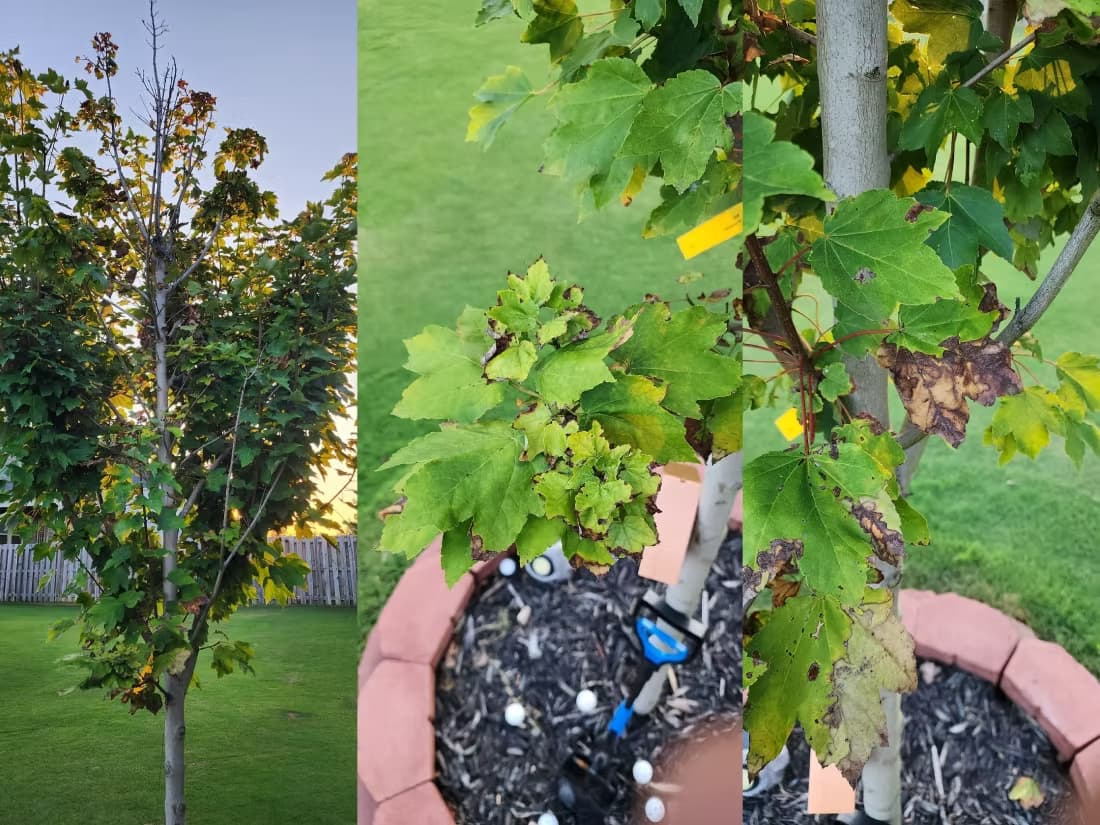
Solving the Mystery of the False Evidence in Your Lawn and Landscape
A brown leaf or a yellowing lawn is rarely what it seems. When symptoms act as decoys, a calm, forensic approach brings clarity to the confusion. Learn how to look past the surface to find the quiet truth of what your plants are truly asking for.
Read Article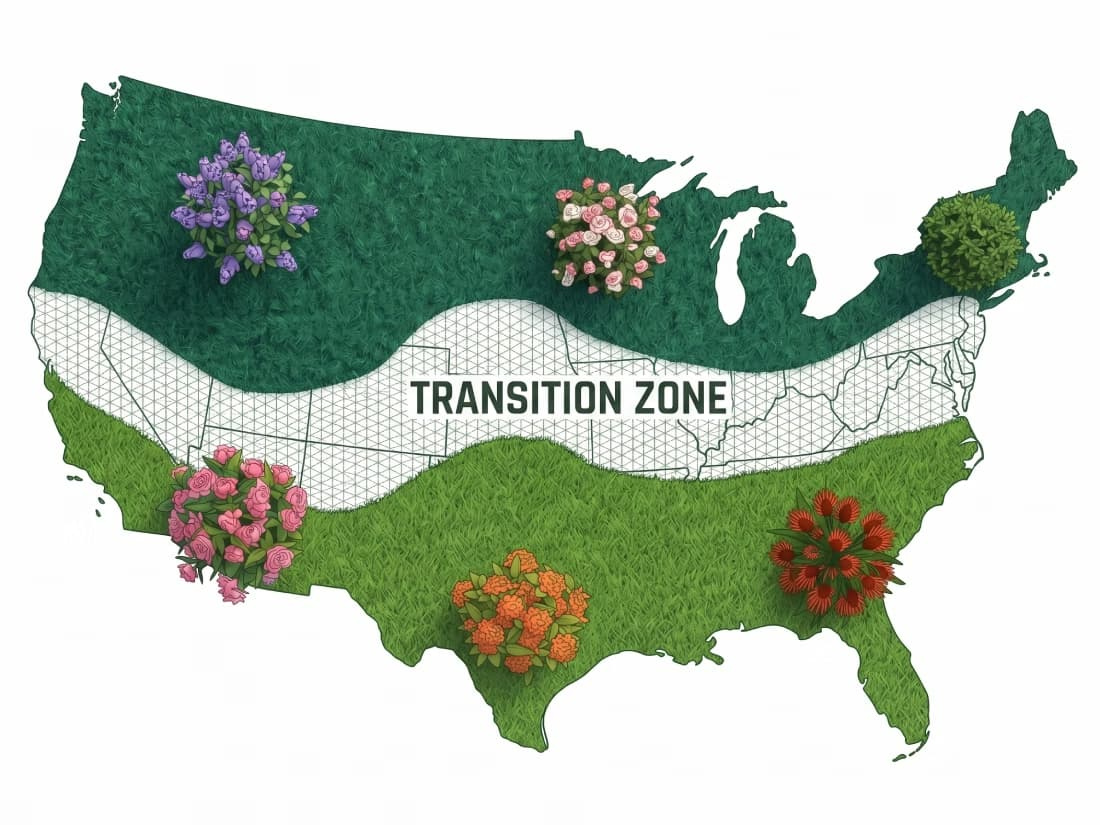
Living in the Middle: The Deep-Dive Guide to Transition Zone Lawns and Landscapes
The Transition Zone is a biological tug-of-war where neither northern nor southern species perfectly adapt. By using resilient "bridge" species and mastering maintenance levers like the Mowing Pivot, you can transform a struggling yard into a healthy landscape.
Read Article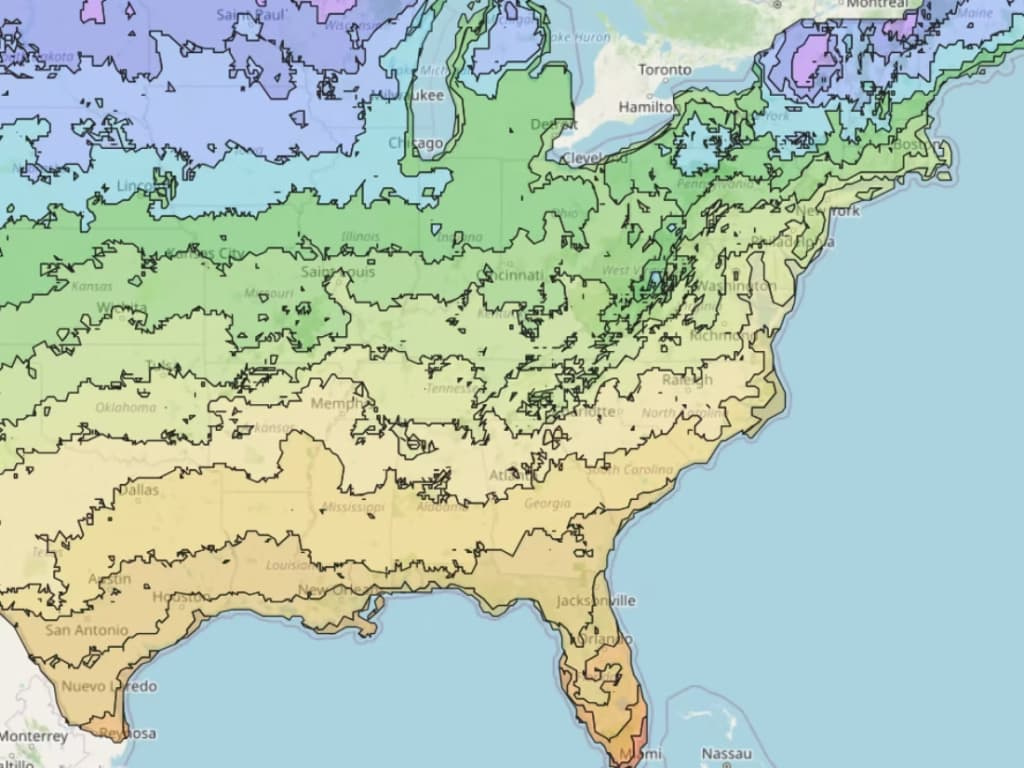
What Your Hardiness Zone Really Means for Your Lawn and Plants
Uncover the foundation of a resilient landscape by mastering the science of hardiness zones. Learn how these climate boundaries are calculated and why understanding your local temperature limits is the first step toward choosing plants that thrive year after year.
Read ArticleFrequently Asked Questions
These FAQs replace forum guesswork with research-backed data from leading agricultural institutions. We provide proven facts to ensure your yard care is grounded in the science of how your soil actually works.
Only if a lab confirms the soil is sodic. Gypsum is calcium sulfate — a soluble salt itself. On an ordinary saline soil it adds more dissolved ions to a root zone that already has too many, increasing the osmotic stress and making the scorching worse. Gypsum only helps where sodium occupies more than about 13 to 15 percent of the exchange capacity, because there its calcium displaces that sodium. Saline soil needs fresh water, not gypsum.
Because salt holds the water chemically. Dissolved salts lower the water potential of the soil solution, so roots have to overcome that pressure to absorb anything — and past a certain concentration water is pulled out of the roots instead. Daily shallow watering makes it worse: the water evaporates and leaves its salt behind in the top couple of inches, concentrating the problem exactly where the roots are. Water deeply and less often to push salt below the root zone.
To clear salt from the top 12 inches of soil you need to apply 6 to 12 inches of water depth. At yard scale, 6 inches over 1,000 square feet is roughly 3,740 gallons, and 12 inches is about 7,480. That is a lot of water, and it has to go on in cycles over two or three days so it soaks in rather than running off. Do it in cool weather when evaporation is low, and only once you have confirmed the soil is saline rather than sodic.
Deal with the salt first, and check for free lime before spending anything on sulfur. If the soil contains free calcium carbonate — pour vinegar on a dry sample and watch for fizzing — then sulfur oxidizes to sulfuric acid, reacts with the carbonate, and produces carbon dioxide without permanently lowering the pH. You can spend years on it for no result. Freshwater leaching addresses the salinity, which is the problem actually damaging your plants.
Probably not. Handheld probes measure bulk electrical conductivity or simple resistance between two prongs, and both vary enormously with how wet the soil happens to be and what texture it is. A proper lab test uses a saturated paste extract, which standardizes the moisture content so the reading means something. More importantly, no handheld meter can measure sodium adsorption ratio or exchangeable sodium, and those are what tell you whether the soil is sodic — which changes the treatment completely.
Sodic, by a wide margin. Saline soil holds its physical structure — water still infiltrates normally, and fresh water flushes the salt out over a few months. Sodic soil has sodium bound to the clay itself, which disperses the aggregates, seals the surface, and destroys drainage. You have to displace that sodium with calcium before any leaching will work. The worst case is saline-sodic, because it looks like the easy problem and becomes the hard one if you leach it first.
Scientific Authority
This profile is built on soil science and real-world field trials. Every tip—from watering to feeding—is backed by university research to ensure your soil’s 'hardware' stays healthy and sustainable for the long term.
Primary Resources
- USDA-NRCS — Soil Survey Manual, Chapter 3: Examination and Description of Soil Profiles
- USDA Salinity Laboratory — Diagnosis and Improvement of Saline and Alkali Soils (Agriculture Handbook 60)
- Colorado State University Extension — Managing Saline and Sodic Soils
- Utah State University Extension — Salinity and Plant Tolerance
- Kansas State Research and Extension — Management of Saline and Sodic Soils
- University of Minnesota Extension — De-icing Salt Damage to Landscape Plants
- Texas A&M AgriLife Extension — Irrigation Water Quality Standards and Salinity Management
- NC State Extension — Soils and Plant Nutrients, Extension Gardener Handbook
- USDA-NRCS — Soil Health Guide: Soil Electrical Conductivity