
Parent Species:
Improved Turf-Type Ryegrass
The plain improved ryegrass that fills most bags — the fastest cover of any cool-season grass, at the lowest price.
Is Improved Turf-Type Ryegrass Right For Your Yard?
Best For:
Tradeoff:
What Makes It Different
This is the default pool, and what defines it is what it does not carry. “Improved turf-type” means only that a ryegrass was bred for lawns instead of livestock — finer leaves, darker color, denser growth, a lower crown, and leaf tissue that cuts cleanly instead of shredding. Everything ryegrass is known for comes standard here: cover in 5 to 10 days, and the best wear tolerance of any cool-season grass.
What is missing is targeted breeding. Most of the classic names in this group were released between the 1960s and the early 1990s — before gray leaf spot became a lawn-killing problem in the eastern United States, and before endophyte content was something a seed bag advertised. They were selected for color, mowing quality, and speed. Nobody screened them against a disease that had not arrived yet. That gap is the entire reason the other two ryegrass pages exist, and it is worth reading them before you settle here.
Who It’s For
A sunny lawn in the cool-humid north or the Pacific Northwest, where summer heat is not the thing that decides whether grass lives. It is the right pick when the job is speed — bare ground that needs covering before winter, a strip worn out by a gate or a dog run, a slope that needs holding — or when ryegrass is the small fast-starting fraction of a Kentucky bluegrass blend rather than the lawn itself.
It is also the budget answer. Generic 100% perennial ryegrass is the cheapest cool-season seed on the shelf, and a 50 lb bag covers most of a yard. If the plan is to overseed every fall anyway — and with a bunch grass it should be — buying the plain pool and reseeding often is a defensible strategy in a mild climate.
The Cultivars
You almost never buy one of these on its own. Ryegrass is sold as a blend of two to four cultivars, and in the big-box channel the cultivars are not named at all. The list below is lineage more than shopping list — it tells you what a name on a label means.
| Cultivar | How it’s sold | What it’s good at | Notes |
| Manhattan | Certified seed through the Manhattan Ryegrass Growers Association; current version is Manhattan 7 GLR | The original fine-textured turf type; dark color, clean mowing | A Rutgers release that started the category. The line has run through numbered generations; the current one is bred for gray leaf spot, so it belongs on the resistant page, not this one |
| Palmer | Blend component and professional channel; current version is Palmer V | Heat and humidity tolerance, dense turf | Palmer V is both endophyte-enhanced and gray-leaf-spot-selected — the distributor states over 92% endophyte. Rated 7.3 for gray leaf spot in NTEP’s Maryland trial |
| Pennfine | Rarely sold standalone now | Fast establishment, good mowing quality | A 1970s Penn State release. Historically important, effectively superseded |
| Prelude | Blend component; current version is Prelude IV | Reliable general-purpose turf | Sold in professional blends, often paired with Palmer |
| Derby | Blend component; current version is Derby Xtreme | Dark color, close mowing, southern overseeding | The updated version was bred for gray leaf spot. Note the current spelling is “Xtreme” |
| Fiesta | Blend component; current version is Fiesta 4 | Dense, consistent turf | Fiesta 4 rates 8.0 for gray leaf spot in NTEP — again, the newer version has left this category |
| Yorktown, Gator, Tara, Elka, Barry, Regal, Blazer | No standalone retail presence found | Historic NTEP entries | Older-generation names. If one appears on a label, it is an old lot or an old blend formula |
The pattern is the point. These names did not disappear — they got version numbers, and nearly every current version carries gray-leaf-spot selection, endophyte, or both. So “standard improved turf-type” increasingly describes older seed and unnamed generic bags rather than anything a breeder is releasing today.
What Changes In Care
Nothing changes. This group is exactly what the perennial ryegrass care section describes — 2 to 4 lb of nitrogen per 1,000 sq ft a year weighted to fall, none in July and August, 1.25 to 1.75 inches of water a week in summer heat, mowed at 2.5 to 3.5 inches through summer with a sharp blade.
One emphasis, though: because nothing is bred in, those cultural habits are carrying the entire disease load. Watering before dawn so the canopy dries early, and keeping summer nitrogen at zero, are not optional here the way they nearly are on a resistant cultivar.
Before You Buy
- Turf-type, never forage. Cheap “common” ryegrass or the forage cultivar Linn is a coarse, light green pasture grass that shreds under a mower. Linn scored 3.0 for gray leaf spot in NTEP’s Maryland rating — the lowest entry on the table, against 8.7 at the top.
- Perennial, never annual. Annual ryegrass is a different species, sold cheap and hidden in patch kits, and it dies out its first summer and leaves bare soil.
- Named cultivars, never “VNS.” Variety Not Stated bags are usually forage leftovers. Buy certified seed with cultivars printed on the tag.
- Buy a blend, not one cultivar. Two to four named turf types spread the risk of any single one failing.
- Read the analysis label. You are looking for roughly 99% pure seed, 0.00% weed seed, germination at 85% or better, and a test date inside the last year. Specialist online suppliers print this; big-box bags usually do not.
- Mind the percentage in a mix. Cap ryegrass at 20% by weight in a Kentucky bluegrass blend — 5 to 10% is the safer target — and at 10% or less in a shade mix. Ryegrass seed is large and its seedlings are aggressive, so 20% by weight becomes far more than 20% of the plants.
Deep Dives & Practical Guides
Why Poa Annua Keeps Coming Back — and the 3-Year Plan That Finally Ends the Cycle
You've pulled it. You've sprayed it. You've watched the little white seedheads mock you every single spring. And every fall, like clockwork, it's back — in the lawn, in the beds, in the cracks you didn't know you had. Here's the hard truth nobody at the big-box store will tell you: you're not losing because you're doing it wrong — you're losing because you're fighting the wrong enemy on the wrong timeline. Poa annua isn't a one-season problem, and once you understand why, the three-year plan below stops feeling like a chore and starts feeling like a countdown.
Read Article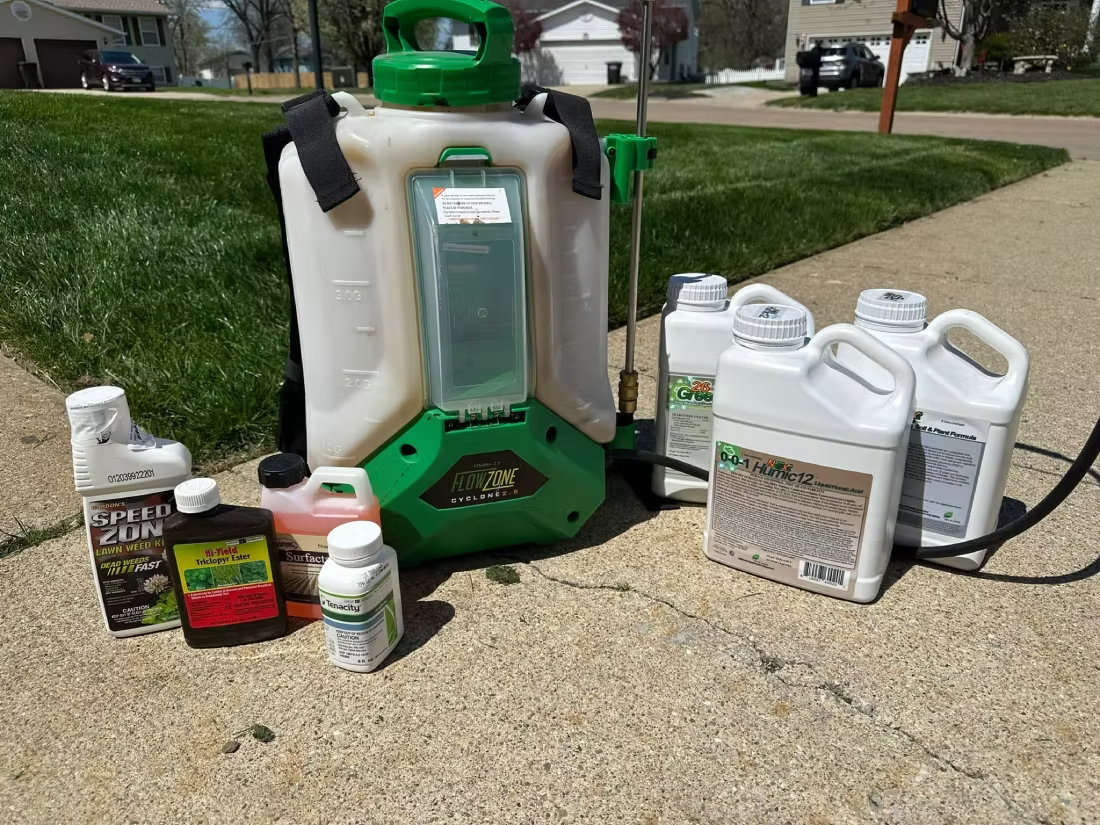
How to Apply Herbicides Correctly in Your Lawn and Garden Beds
Getting real results from a weed product has almost nothing to do with the brand on the bottle and everything to do with matching the method to the moment — the right chemistry, in the right place, at the right time. Learn how to apply herbicides correctly across both your lawn and your garden beds, whether you’re stopping weeds before they sprout or killing the ones already growing, without wasting product or harming the plants you want to keep.
Read Article
How to Kill Weeds Where Two Lawns Meet Without Harming Your Neighbor’s Grass
Controlling weeds along a shared property line is where good intentions quietly backfire—the season that's safe for your own lawn is often the season the lawn next door is most easily harmed. Learn the seasonal timing collision behind most fence-line damage, and the two habits that prevent it—reading what's actually in the bottle and spraying directed instead of broadcast—so you can clear the weeds without hurting your grass, your neighbor's, or the peace between you.
Read Article
The Truth About One-and-Done Weed Control
Most homeowners lose the fight against weeds not because they work too little, but because they act before they understand. One-and-done weed control is real — but it only works when identification, timing, and the right tool all line up. This guide explains how that sequence works across your lawn and your ornamental beds, and how each weed page in the MFY hub puts it into practice for your specific invader.
Read Article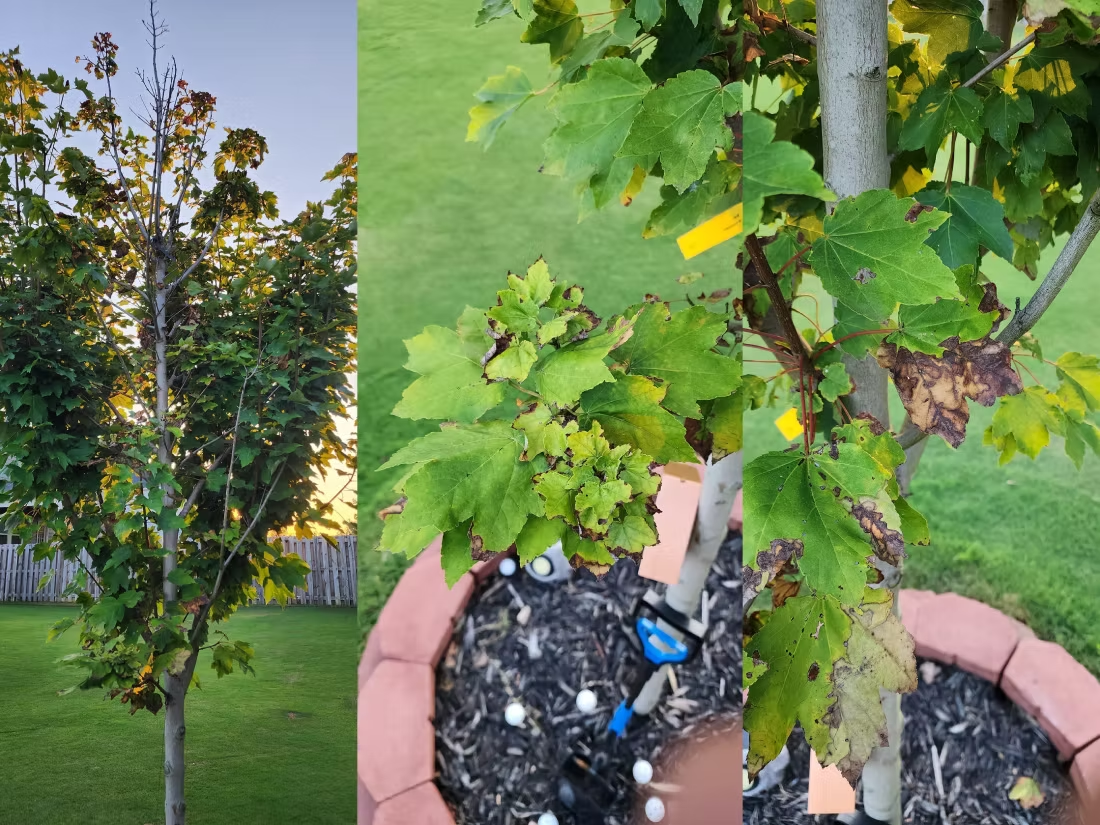
Solving the Mystery of the False Evidence in Your Lawn and Landscape
A brown leaf or a yellowing lawn is rarely what it seems. When symptoms act as decoys, a calm, forensic approach brings clarity to the confusion. Learn how to look past the surface to find the quiet truth of what your plants are truly asking for.
Read Article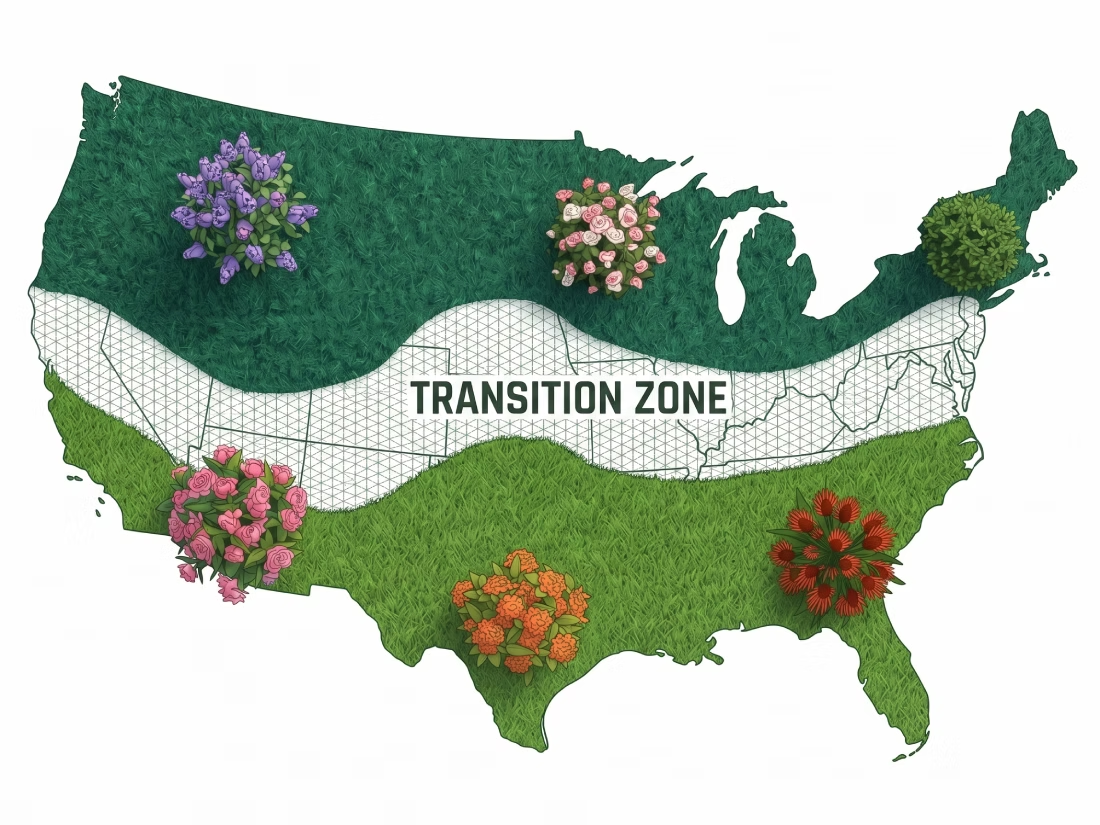
Living in the Middle: The Deep-Dive Guide to Transition Zone Lawns and Landscapes
The Transition Zone is a biological tug-of-war where neither northern nor southern species perfectly adapt. By using resilient "bridge" species and mastering maintenance levers like the Mowing Pivot, you can transform a struggling yard into a healthy landscape.
Read Article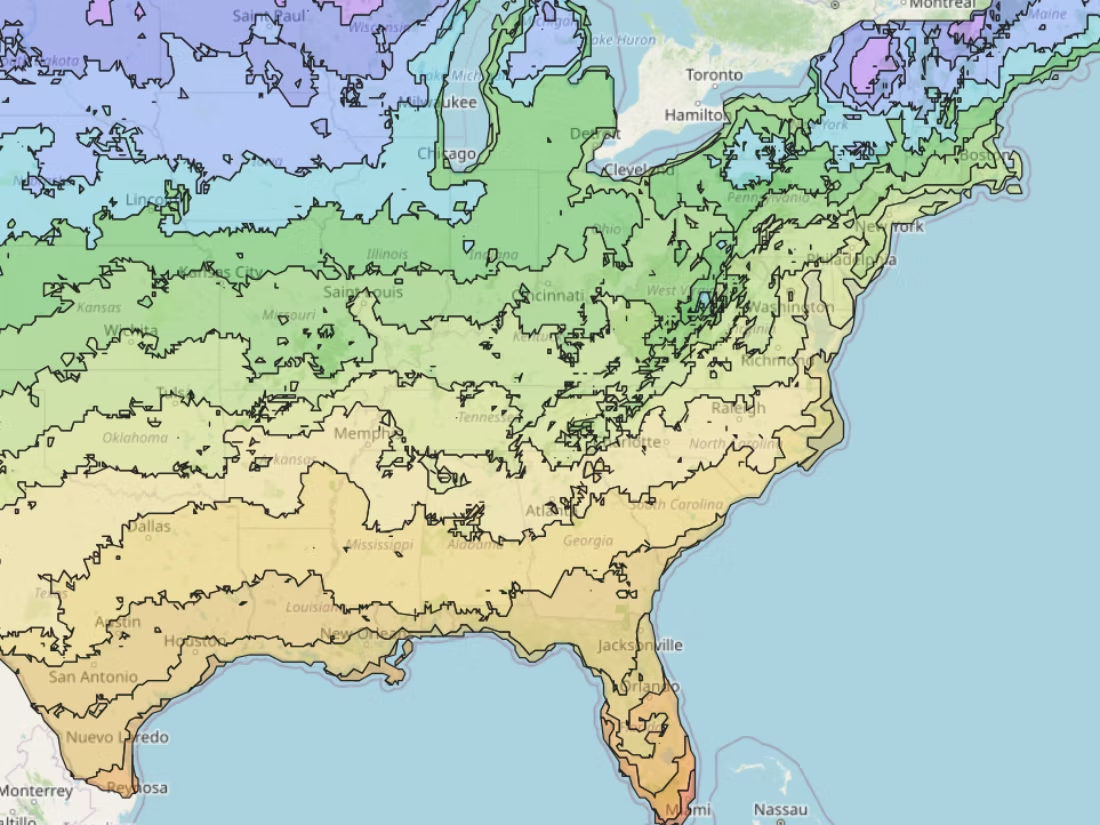
What Your Hardiness Zone Really Means for Your Lawn and Plants
Uncover the foundation of a resilient landscape by mastering the science of hardiness zones. Learn how these climate boundaries are calculated and why understanding your local temperature limits is the first step toward choosing plants that thrive year after year.
Read Article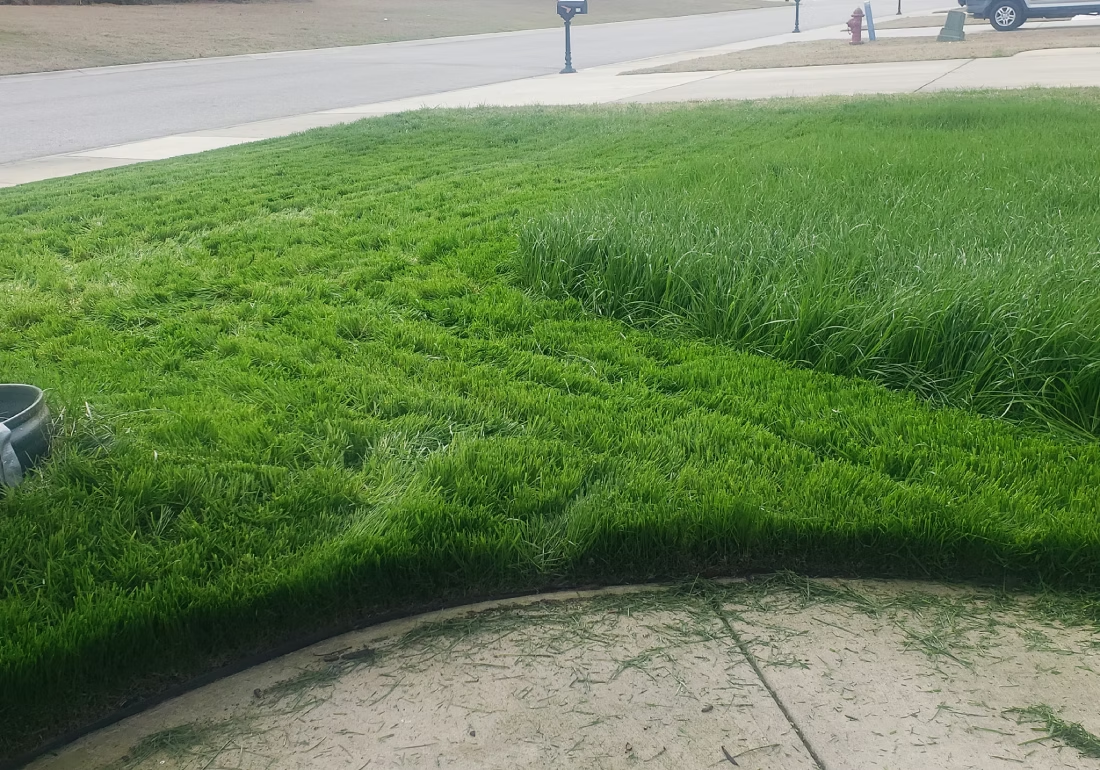
The One-Third Mowing Rule: A Species-Specific Guide to Mowing Heights
Stop guessing your lawn's health. While the one-third rule is the foundation, every grass species has its own threshold for stress. This guide provides exact 'mow-at' heights, seasonal frequency adjustments, and mower setting tips for over 12 grass types to ensure a professional-grade cut every time.
Read Article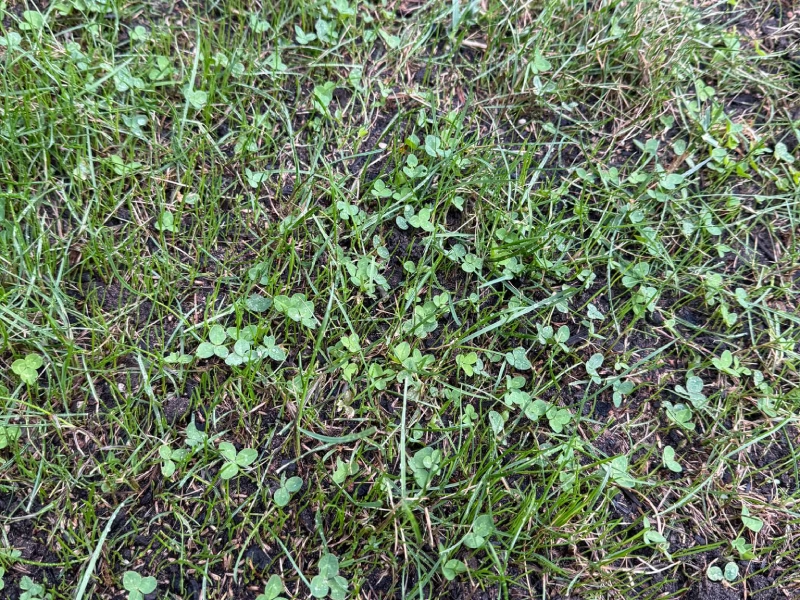
How to Kill Weeds in New Grass Without Killing the Grass
You spent weeks preparing the soil and watering your new seeds, only to see a "carpet of green" that looks more like a weed patch than a lawn. It is frustrating to watch weeds grow twice as fast as your tiny seedlings, leading to a "Panic Phase" where many homeowners make the mistake of spraying too early. Before you reach for the herbicide and risk killing your investment, you need to understand the precise timing required to save your new grass while clearing out the invaders.
Read Article