“It’s rated for my zone, so it’ll be fine.” “It made it through winter, so it’s established.” “Everything’s wilting — it just needs more water.” “It looked rough in July so I pulled it out and put in something tougher.” “My cousin grows it three states south and we’re in the same zone.” Somewhere along the way, choosing plants turned into reading one number off a tag. The results are predictable: a hydrangea that sailed through January and collapsed in August, a lawn watered daily into a shallow-rooted mess, and a shrub replaced twice before anyone asked what was actually killing it. Nearly every one of these habits misreads the same thing — a hardiness zone describes the coldest night of the year, and says nothing whatsoever about the hottest afternoon.
The MFY Advice
Whatever you do about heat, do it in spring. By the time a heatwave arrives your plants’ root depth is already fixed, and root depth is what decides whether they coast through it or collapse. Water deeply and infrequently from the moment growth starts, mulch beds 2 to 3 inches before soil temperatures climb, and raise the mower at the first warm spell rather than the first brown patch. None of these work applied in the middle of July, which is exactly when most people reach for them.
Table of Contents
The Map Only Ever Measured Winter
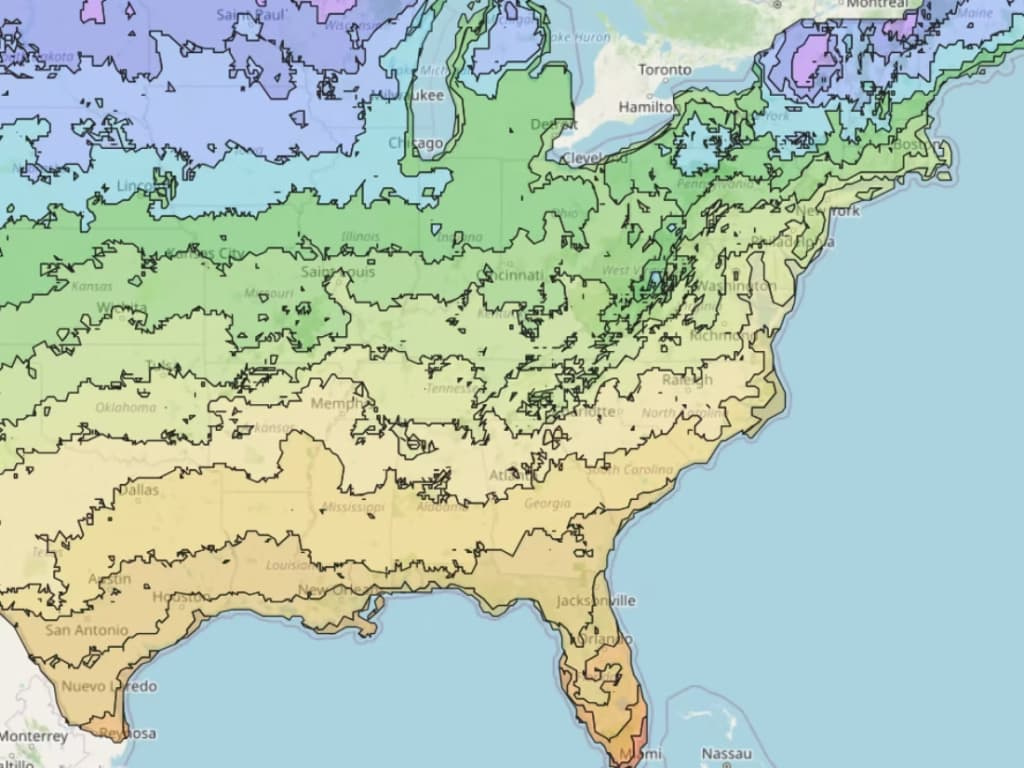
The USDA Plant Hardiness Zone Map is built from a single statistic: the average annual extreme minimum temperature, calculated over thirty years. The current version uses data from 1991 to 2020. Each zone covers a 10°F band, split into a and b halves of 5°F each.
That is genuinely useful information. It answers one question well — will this plant’s tissue survive the coldest night it is likely to face here. What it cannot tell you is anything about July, because no summer temperature is anywhere in the calculation. A zone rating is a survival floor, not a description of your climate.
There is a second map most people have never seen. The American Horticultural Society Plant Heat Zone Map counts something different: the average number of days per year above 86°F. Zone 1 sees fewer than one such day. Zone 12 sees more than 210. That threshold is not arbitrary, and understanding why it sits at 86 explains most of what goes wrong in a hot summer.
What Happens to a Plant Above 86 Degrees
Photosynthesis and respiration run at the same time in every plant. Photosynthesis captures energy; respiration spends it. In comfortable conditions the plant captures far more than it spends, and the surplus goes into roots, new growth, and stored reserves.
Heat flips that balance. As leaf temperature climbs past roughly 86°F, the enzyme that fixes carbon starts making mistakes — it begins grabbing oxygen instead of carbon dioxide, in a wasteful process called photorespiration. The plant burns through stored sugar without producing any. Push higher and cellular proteins begin losing their shape entirely.
Plants have one defense, and it is the same one you have: evaporative cooling. Water moves up from the roots and evaporates out through pores in the leaves, carrying heat away. A well-watered plant can hold its leaves several degrees below the surrounding air.
That defense fails in a specific and predictable way. When soil moisture runs short, or the air is so dry that the plant is losing water faster than roots can supply it, those pores close to prevent collapse. Cooling stops. Leaf temperature spikes. And because the same pores admit carbon dioxide, photosynthesis shuts down at exactly the moment the plant most needs energy to recover. This is why a wilting plant in a heatwave is in more trouble than it looks, and why the damage often shows up days after the heat has passed.
The Part Nobody Talks About Is Night
Daytime highs get the attention. Overnight lows do more of the damage.
After dark there is no photosynthesis, but respiration continues — the plant is still spending. On a cool night it spends slowly and keeps most of the day’s production. On a night that stays above about 70°F, it spends fast, burning through reserves it never had a chance to bank. String a week of those together and the plant runs a carbohydrate deficit it cannot repay.
This is why the humid Southeast is harder on cool-season plants than the arid Southwest, even where daytime highs are similar. Desert nights drop sharply and let plants recover. Southeastern nights do not. Two places can share a hardiness zone, share a summer high, and produce completely different outcomes because of what happens at 3 a.m.
Two Cities, One Zone, Opposite Results
Seattle and Charlotte both sit around USDA zone 8. On paper, a plant rated for zone 8 belongs in both.
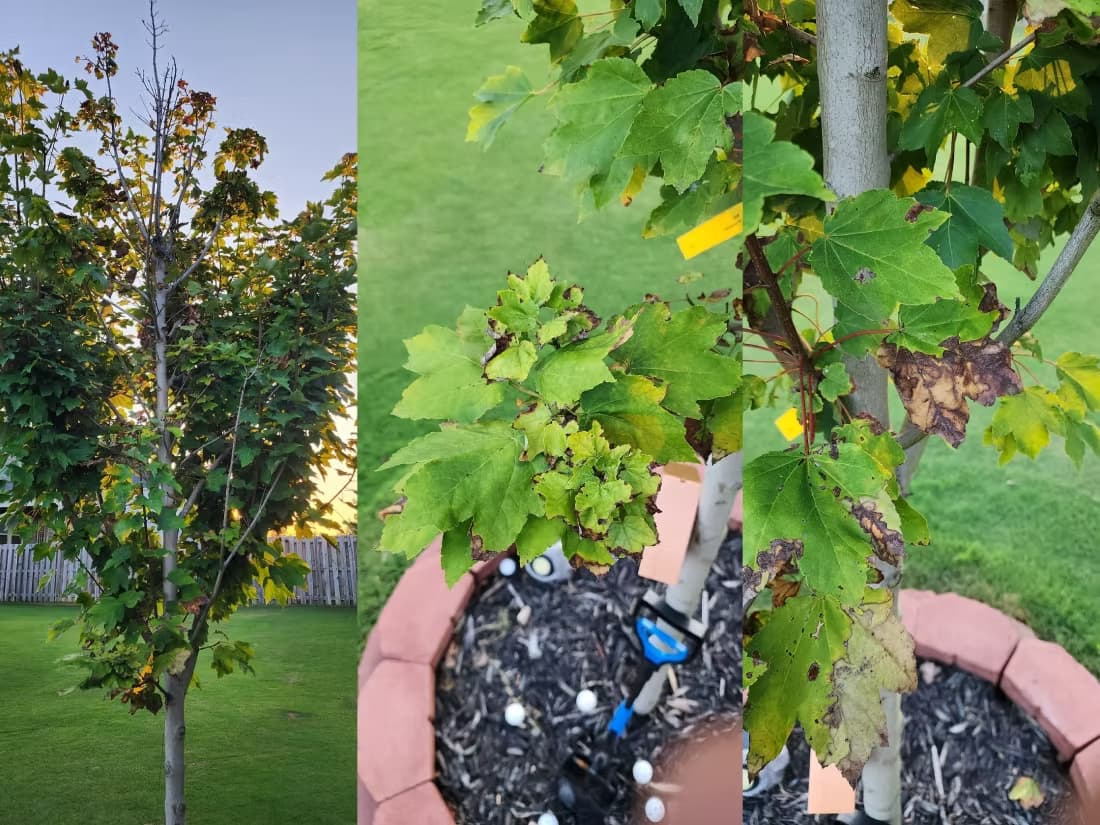
Seattle gets a handful of days above 86°F in a typical year. Charlotte gets somewhere near eighty. A shrub that thrives through a Seattle summer can spend three months of a Charlotte summer running an energy deficit, and it will show as scorched leaf margins, early leaf drop, stalled growth, and eventually decline that gets blamed on disease or bad soil.
Neither city is wrong about the zone. The zone is simply answering a different question than the one you are asking.
The practical problem is that most plant tags carry only the USDA number. Heat ratings exist but are inconsistently printed, so you often have to work it out from where a plant is native and how it is described. A plant repeatedly recommended for the Upper Midwest and rarely for the Gulf Coast is telling you something about its heat tolerance even when nothing on the label says so.
Your Soil Decides How Bad the Heat Gets
Air temperature is what the forecast reports. Root zone temperature is what the plant experiences, and your soil controls it.
Coarse soils heat fastest. Sand and Loamy Sand hold little water, and water is what resists temperature change, so those soils warm quickly and hold that heat. Finer soils holding more moisture warm more slowly and buffer the swing.
Compacted Soil makes everything worse in a way that catches people out. Roots confined to the top two or three inches are living in the hottest, fastest-drying layer of the profile, with no access to the cooler moisture below. The plant behaves as though it is in a drought during a week when the soil a foot down is perfectly moist.
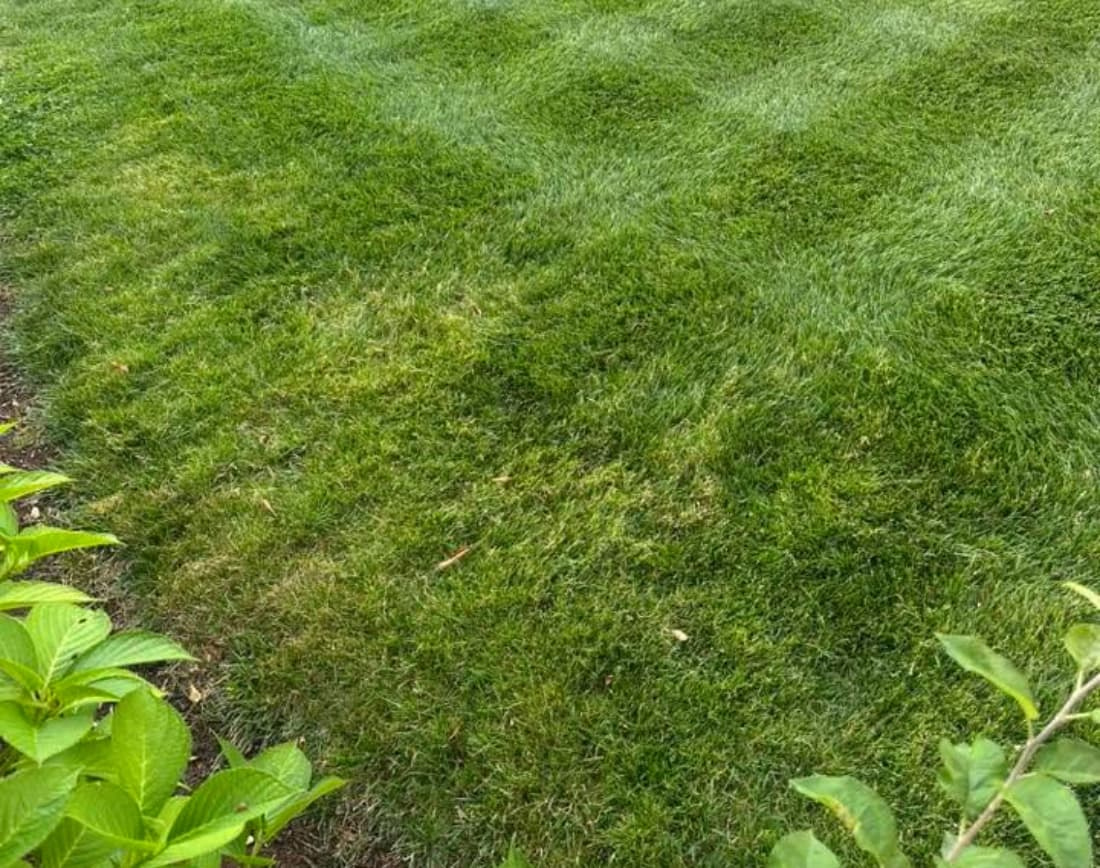
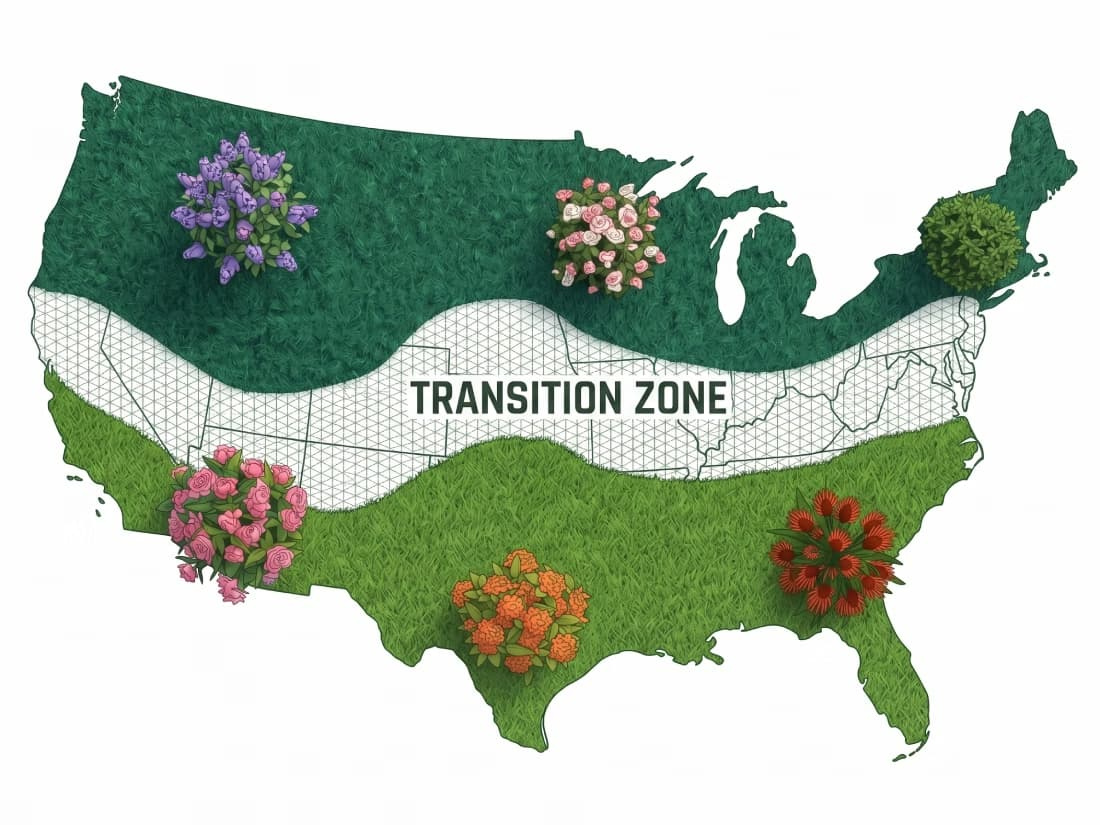
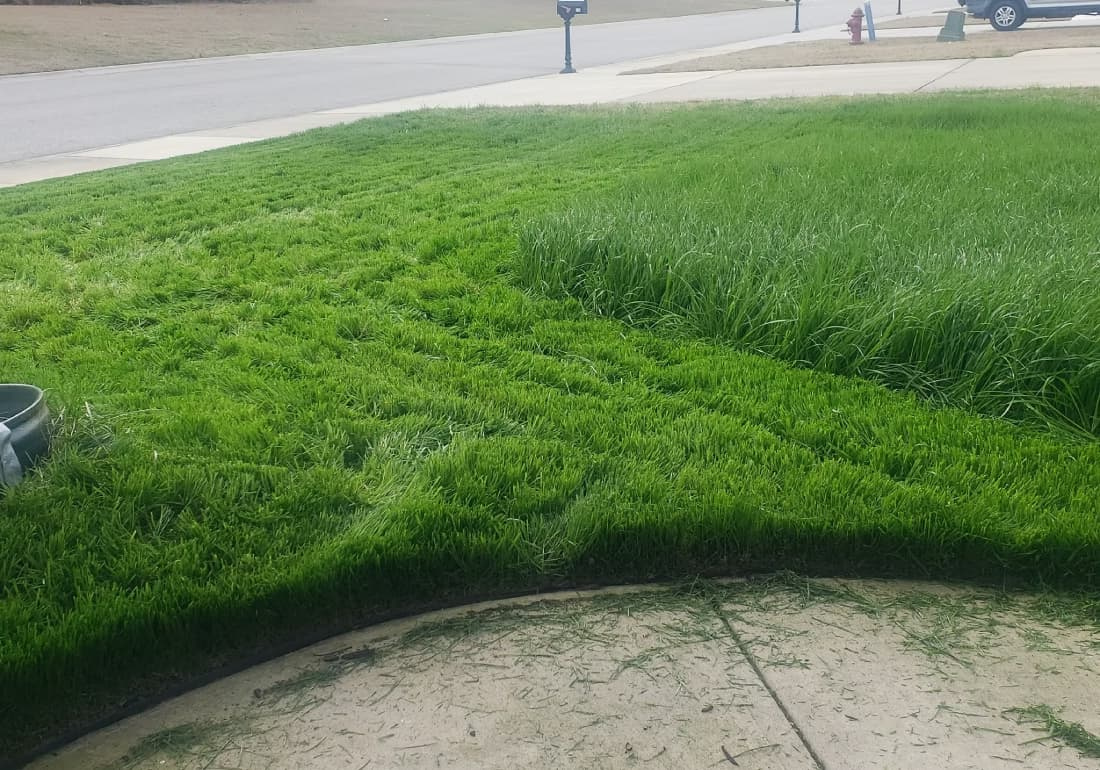
This is also why cool-season lawns struggle in midsummer regardless of watering. Cool-season grasses like Kentucky Bluegrass and Tall Fescue grow shoots best between 60 and 75°F, and grow roots best in soil between 50 and 65°F. Once soil temperature passes about 85°F, root growth effectively stops while the existing roots keep dying back. The lawn is losing root system daily and cannot replace any of it. Warm-season grasses like Bermudagrass and Zoysiagrass are doing their best growing in exactly that range, which is the entire reason the transition zone is difficult.
What Actually Helps, Done Before the Heat Arrives
Water deeply and infrequently, starting in spring. This is the single highest-value habit and it has to be built before you need it. Deep watering drives roots downward toward cooler, more stable moisture. Daily light watering trains them into the top inch, which is the worst place to be in August. You cannot fix this during a heatwave — the roots are already where they are.
Mulch beds 2 to 3 inches deep. Mulch does more for soil temperature than for moisture retention, and both matter. Keep it off stems and trunks.
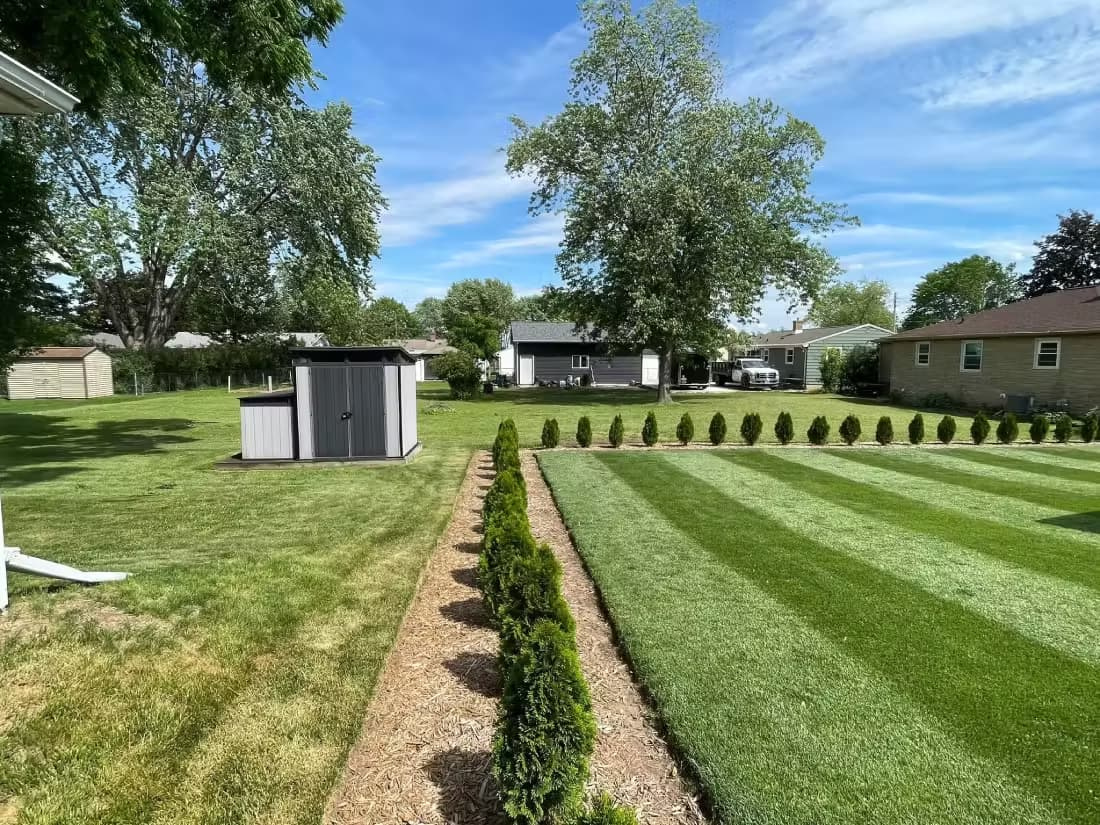
Raise the mower. Going to the top of the recommended range for your grass, usually 3 to 4 inches for cool-season species, does two things at once — more leaf area to feed a plant running an energy deficit, and a canopy that shades the soil surface and lowers root zone temperature.
Site sensitive plants for morning sun. An east-facing position gives full light during the cool part of the day and shade during the worst of it. West and south-facing walls do the opposite, radiating stored heat back at the plant well into the evening.
What Not to Do in the Middle of It
Do not fertilize a heat-stressed lawn with quick-release nitrogen. This is the most common instinct and the most damaging. The plant is already spending more energy than it makes. Nitrogen forces new leaf growth that the failing root system cannot supply with water, and the salts add stress to roots already struggling. Feed cool-season lawns in fall and spring, not in the middle of a July heatwave.
Do not prune during heat stress. Pruning triggers a flush of tender new growth with no heat tolerance at all, and it removes the leaf canopy shading the branches underneath.
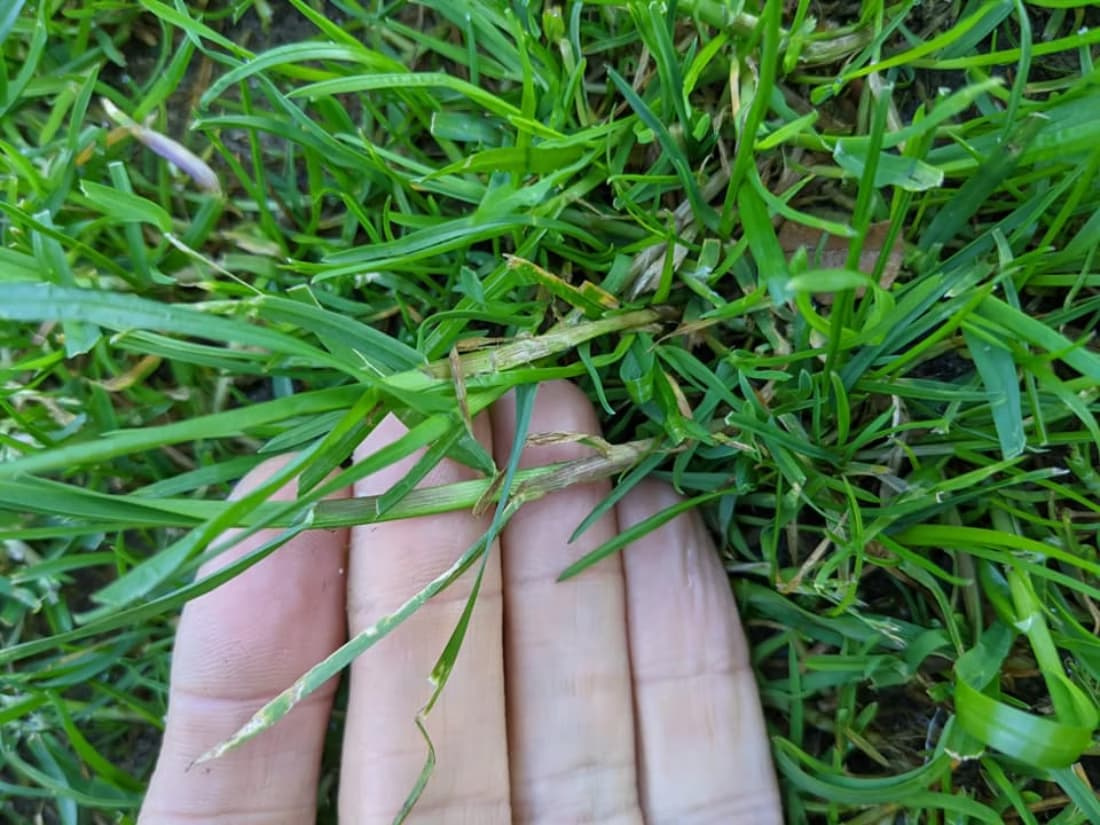
Do not diagnose from the leaves alone. Scorched margins and yellowing look like disease or a nutrient problem, and get treated as one. If the pattern appears during or just after a hot spell, on the west-facing side of a plant, or across the sunniest part of a lawn, heat is the more likely explanation — and treating it as anything else usually makes it worse.
Do not judge a plant in August. Heat-stressed plants often look terrible and recover completely once nights cool. Give anything questionable until fall before deciding it has failed.
Safety & Sensitivity Audit: Protecting Your Home and Environment
Heat is hard on the person doing the work as well as the plants, so keep yard jobs to before 10 a.m. or after 6 p.m., drink water before you feel thirsty, and know the difference between heat exhaustion and heat stroke — heavy sweating with dizziness and cool, clammy skin means stop and cool down, while hot dry skin, confusion, or sweating that has stopped is a medical emergency. Pavement, stone, and artificial turf can burn a dog’s paw pads within seconds, so press the back of your hand against the surface for seven seconds before letting a dog cross it, and if you cannot hold it there, neither can they. Among plants, the shallow-rooted and thin-leaved suffer first — Japanese maple, flowering dogwood, bigleaf hydrangea, azalea and rhododendron — and anything planted within the last two seasons is more vulnerable than an established specimen of the same species.