
Parent Species:
Slender Creeping Red Fescue
The fine fescue bred for salt — ocean spray, winter road salt, or brackish irrigation water.
Is Slender Creeping Red Fescue Right For Your Yard?
Best For:
Tradeoff:
What Makes It Different
Salt, and nothing else. This is the shoreline subspecies — littoralis means “of the shore” — and it holds green leaf tissue at salinity levels that brown out the rest of the group.
The numbers are unusually clean for a turf question. University of Minnesota researchers ran 74 turfgrass cultivars through nutrient-solution culture at rising salinity, up to 24 dS/m. Every slender creeping red cultivar tested kept more than half its tissue green at the top level, with ‘SeaLink’ and ‘Seabreeze GT’ holding the most. Chewings and hard fescue were judged not salt tolerant at all; strong creeping red only moderately so. On Minnesota roadsides, ‘Shoreline’ ranked among the most salt tolerant of 75 cool-season entries.
That is the whole case for this page. On every other axis it is a slightly different flavor of red fescue: rhizomatous like strong creeping red, but with short, weak rhizomes, so it repairs gaps slowly rather than reliably. It is finer in the leaf than strong creeping red, it takes a closer cut, and it holds up to foot traffic noticeably better — 6 of 9 against strong creeping red’s 3.
Who It’s For
Four yards, really. A coastal lot taking spray off the water. The strip along a road, walk or driveway that gets salted every winter and comes back dead every spring. A property watered from a brackish well or reclaimed line. And an effluent-irrigated site where the water carries more salt than municipal supply.
If none of those is your yard, you are on the wrong page. Strong creeping red does the same shade-and-low-input job with real self-repair and far easier sourcing; Chewings is denser in heavy shade. Salt is the only reason to accept this one’s supply problem.
Worth knowing if your problem is salt and shade: Chewings is not salt tolerant, so a coastal shaded lawn should not lean on Chewings alone. Build the shade share out of this and strong creeping red instead.
The Cultivars
| Cultivar | How it’s sold | What it’s good at | Notes |
| Seabreeze GT | The one you can actually buy. Standalone from Twin City Seed — 5 lb around $61, also 25 lb and 50 lb | Tied for the best green-tissue retention at 24 dS/m in the Minnesota trial. Bright green, low spreading habit, good seedling vigor, wide mowing range | Bred by Pure-Seed Testing. Documented as a slender creeping red × Chewings hybrid released as a slender creeping red. See the note on its glyphosate tolerance below the table |
| SeaMist | Blend component — sold inside branded fine fescue mixes rather than alone | The breeder reports germination in water up to 40% as saline as seawater, aimed at effluent-irrigated sites | That germination figure is a breeder claim, not trial data. Not A-LIST approved |
| Shoreline | No current homeowner retail found; appears in research and professional channels | The best independent field record of any cultivar here — among the most salt tolerant of 75 entries on Minnesota roadsides | Frustrating gap: the strongest evidence sits on the cultivar that is hardest to buy |
| SeaLink | No current retail or supplier listing found | Tied with Seabreeze GT for the most green tissue at 24 dS/m | Discontinued, contract-grown, or restricted to sod-producer supply |
| Beudin | No current retail or supplier listing found | — | Named on the roster but with no traceable commercial presence |
| Pennlawn, Dawson, and anything marked VNS | Older lines; still turn up in cheap bags | — | Avoid. Pennlawn is documented as less salt tolerant. Dawson is a caveat rather than a failure — it rates well for salt in older work, but it is superseded genetics with weaker turf quality, so newer lines beat it on everything except price |
One thing about Seabreeze GT before you read the marketing. “GT” means it tolerates low rates of glyphosate — a golf-course tool for spraying out invading grasses without killing the fescue. It is not license to spray weedkiller on your lawn: the tolerance is rate-limited, it does nothing for broadleaf weeds, and it is worthless if the bottle is not actually glyphosate, which is now common. Treat GT as a bonus you never use.
What Changes In Care
Very little. Mowing, feeding and watering follow the type page. Three small differences:
- Salt does not mean maintenance-free at the salt edge. Where de-icing salt piles up, flush the strip with a deep watering in early spring once the ground thaws. The grass tolerates salt; it still does better without a season’s accumulation sitting in the root zone.
- It takes a closer cut than most fine fescues — it is used on some fairways — so you can run the low end of the type page’s 2.5–4 in range if you want a tighter look. You still do not need a reel mower.
- Dethatching is lighter than strong creeping red. Short rhizomes leave less litter, so check the thatch layer rather than working to a fixed cycle.
One agronomic warning that does carry over from the synthesis: this subspecies is rated poor in heat and specifically flagged as wet-summer prone. Salt tolerance does not buy heat tolerance. In a humid transition-zone summer it thins like the rest of the group.
Before You Buy
- Expect to special-order it. This is roughly 2% of the fine fescue retail market. You are either buying Seabreeze GT direct from a specialist seed supplier or buying a branded blend that names a slender creeping red on the label.
- Read the back label, not the front. A bag marketed as “coastal” or “salt tolerant” proves nothing. The analysis panel has to name a slender creeping red cultivar, or list slender creeping red fescue as a species line with a real percentage.
- Do not accept Chewings as a substitute. It is the most commonly stocked fine fescue and it will be suggested to you. It is not salt tolerant — that is a trial finding, not a nuance.
- Skip anything labeled VNS. Variety Not Stated on a salt purchase means you have no idea whether you bought the salt-tolerant subspecies at all.
- Check the seed test date if you want the endophyte insect protection — though this subspecies only sometimes carries endophytes, unlike Chewings, hard and strong creeping red.
- If you are killing the old strip first, read the active-ingredient panel. True glyphosate lets you reseed in 7–14 days; reformulated products can force 28 days, and imazapic far longer.
Deep Dives & Practical Guides
The Hole You Dug Is Killing Your New Plants
A shrub that looked fine all summer and stalled the next year usually didn't fail because of the plant, the weather, or the nursery. It failed because the hole it went into was a container — smooth-walled, water-holding, and impossible to root out of.
Read Article
What You Can Actually Change About Bad Soil
Heavy clay and loose sand feel like permanent sentences, and half of that is true. What your soil is made of will not change. How those particles are arranged will — and that is the half that decides whether anything grows.
Read Article
Why Your Plants Survive Winter and Die in July
Your hardiness zone is built from one number — the coldest night of an average year. It says nothing about the hottest afternoon, which is what actually kills most plants people lose. Here's how to read the other half of the map.
Read Article
Why Poa Annua Keeps Coming Back — and the 3-Year Plan That Finally Ends the Cycle
You've pulled it. You've sprayed it. You've watched the little white seedheads mock you every single spring. And every fall, like clockwork, it's back — in the lawn, in the beds, in the cracks you didn't know you had. Here's the hard truth nobody at the big-box store will tell you: you're not losing because you're doing it wrong — you're losing because you're fighting the wrong enemy on the wrong timeline. Poa annua isn't a one-season problem, and once you understand why, the three-year plan below stops feeling like a chore and starts feeling like a countdown.
Read Article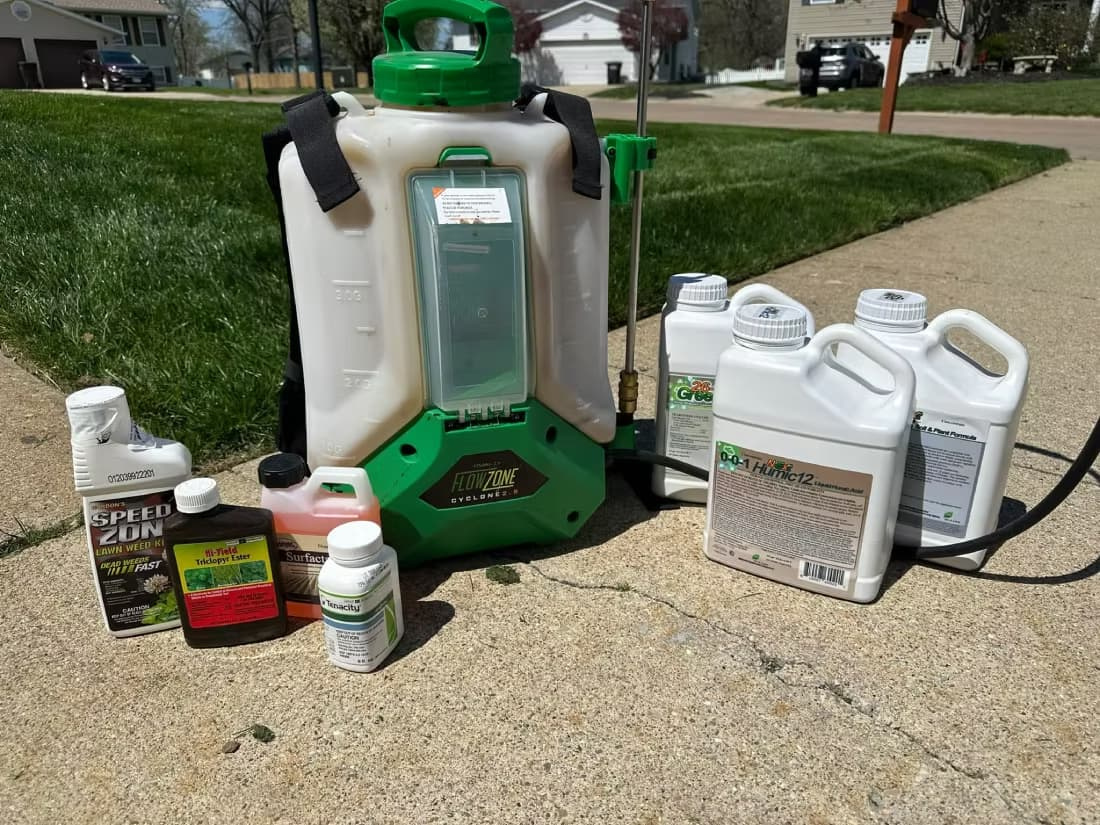
How to Apply Herbicides Correctly in Your Lawn and Garden Beds
Getting real results from a weed product has almost nothing to do with the brand on the bottle and everything to do with matching the method to the moment — the right chemistry, in the right place, at the right time. Learn how to apply herbicides correctly across both your lawn and your garden beds, whether you’re stopping weeds before they sprout or killing the ones already growing, without wasting product or harming the plants you want to keep.
Read Article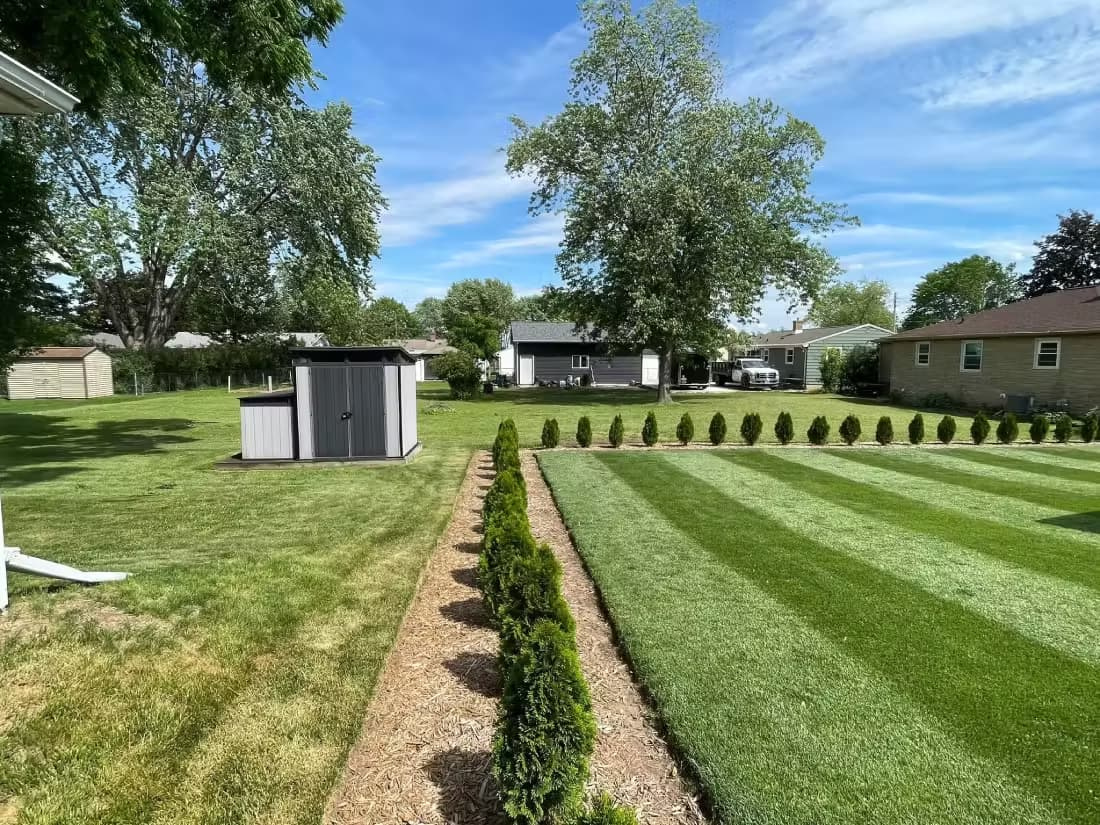
How to Kill Weeds Where Two Lawns Meet Without Harming Your Neighbor’s Grass
Controlling weeds along a shared property line is where good intentions quietly backfire—the season that's safe for your own lawn is often the season the lawn next door is most easily harmed. Learn the seasonal timing collision behind most fence-line damage, and the two habits that prevent it—reading what's actually in the bottle and spraying directed instead of broadcast—so you can clear the weeds without hurting your grass, your neighbor's, or the peace between you.
Read Article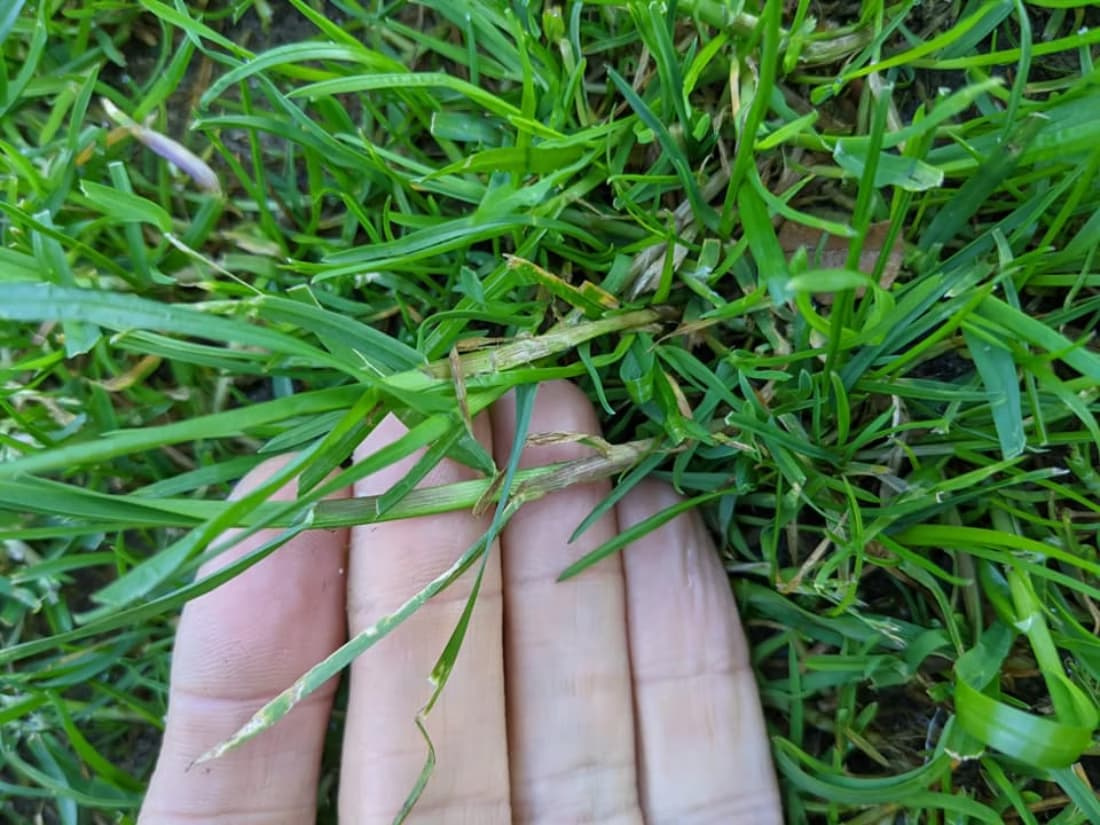
The Truth About One-and-Done Weed Control
Most homeowners lose the fight against weeds not because they work too little, but because they act before they understand. One-and-done weed control is real — but it only works when identification, timing, and the right tool all line up. This guide explains how that sequence works across your lawn and your ornamental beds, and how each weed page in the MFY hub puts it into practice for your specific invader.
Read Article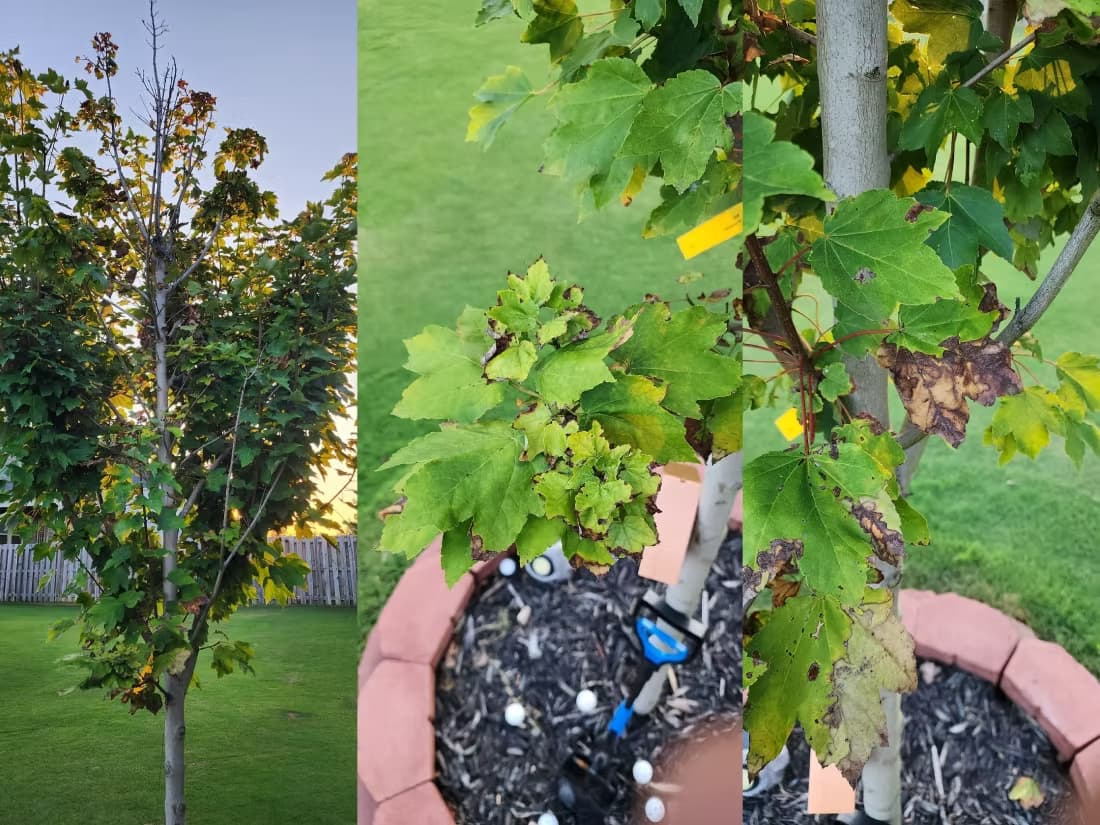
Solving the Mystery of the False Evidence in Your Lawn and Landscape
A brown leaf or a yellowing lawn is rarely what it seems. When symptoms act as decoys, a calm, forensic approach brings clarity to the confusion. Learn how to look past the surface to find the quiet truth of what your plants are truly asking for.
Read Article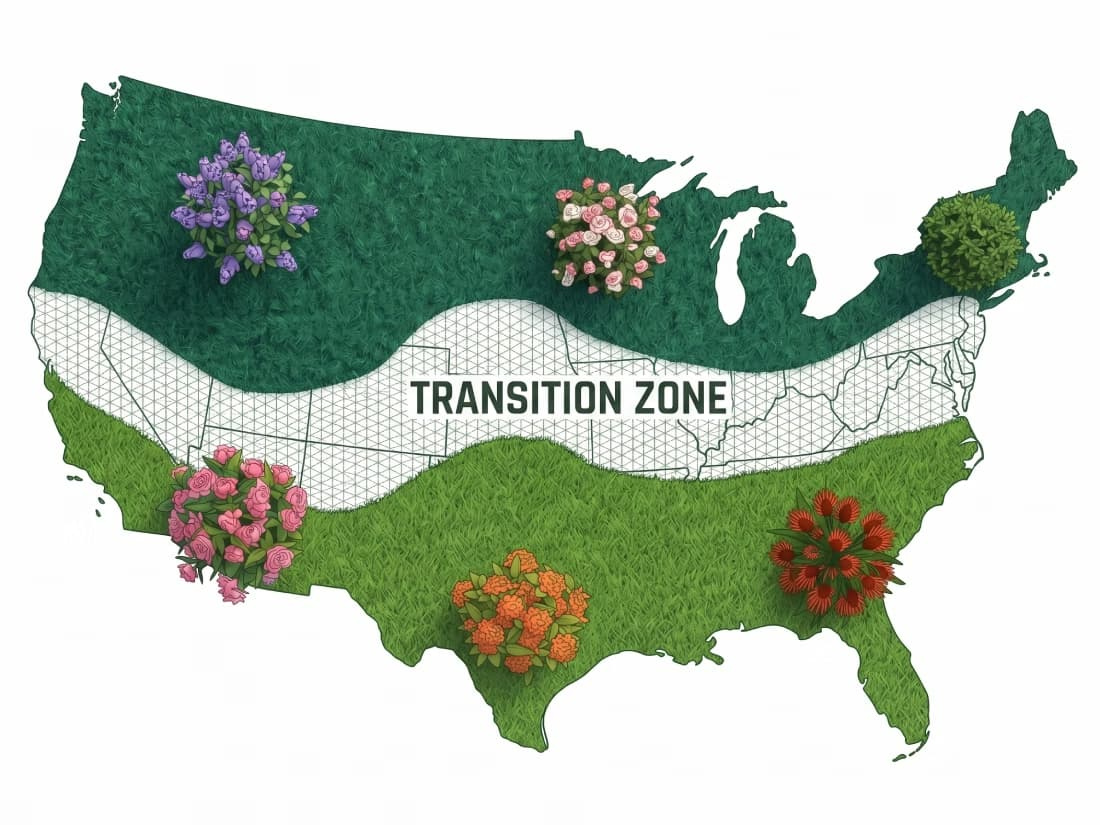
Living in the Middle: The Deep-Dive Guide to Transition Zone Lawns and Landscapes
The Transition Zone is a biological tug-of-war where neither northern nor southern species perfectly adapt. By using resilient "bridge" species and mastering maintenance levers like the Mowing Pivot, you can transform a struggling yard into a healthy landscape.
Read Article
What Your Hardiness Zone Really Means for Your Lawn and Plants
Uncover the foundation of a resilient landscape by mastering the science of hardiness zones. Learn how these climate boundaries are calculated and why understanding your local temperature limits is the first step toward choosing plants that thrive year after year.
Read Article
The One-Third Mowing Rule: A Species-Specific Guide to Mowing Heights
Stop guessing your lawn's health. While the one-third rule is the foundation, every grass species has its own threshold for stress. This guide provides exact 'mow-at' heights, seasonal frequency adjustments, and mower setting tips for over 12 grass types to ensure a professional-grade cut every time.
Read Article
How to Kill Weeds in New Grass Without Killing the Grass
You spent weeks preparing the soil and watering your new seeds, only to see a "carpet of green" that looks more like a weed patch than a lawn. It is frustrating to watch weeds grow twice as fast as your tiny seedlings, leading to a "Panic Phase" where many homeowners make the mistake of spraying too early. Before you reach for the herbicide and risk killing your investment, you need to understand the precise timing required to save your new grass while clearing out the invaders.
Read Article