
Scientific Name: Agrostis stolonifera L. (creeping bentgrass) — accepted synonyms Agrostis palustris Huds., Agrostis alba var. palustris, Agrostis alba var. stolonifera. Also on this page: Agrostis capillaris L. (colonial bentgrass) — synonym Agrostis tenuis Sibth.; and Agrostis canina L. (velvet bentgrass).
Common Names: Bentgrass, bent grass, bent. Creeping bentgrass is also sold or listed as creeping bent, carpet bentgrass, seaside bentgrass, spreading bent, and fiorin. Colonial bentgrass is also called browntop, browntop bent, and common bent. Velvet bentgrass is also called velvet bent. Frequently confused with, and hybridizes with, redtop (Agrostis gigantea).
Bentgrass
The putting-green grass that becomes a lawn problem the moment it stops being mowed like a putting green.
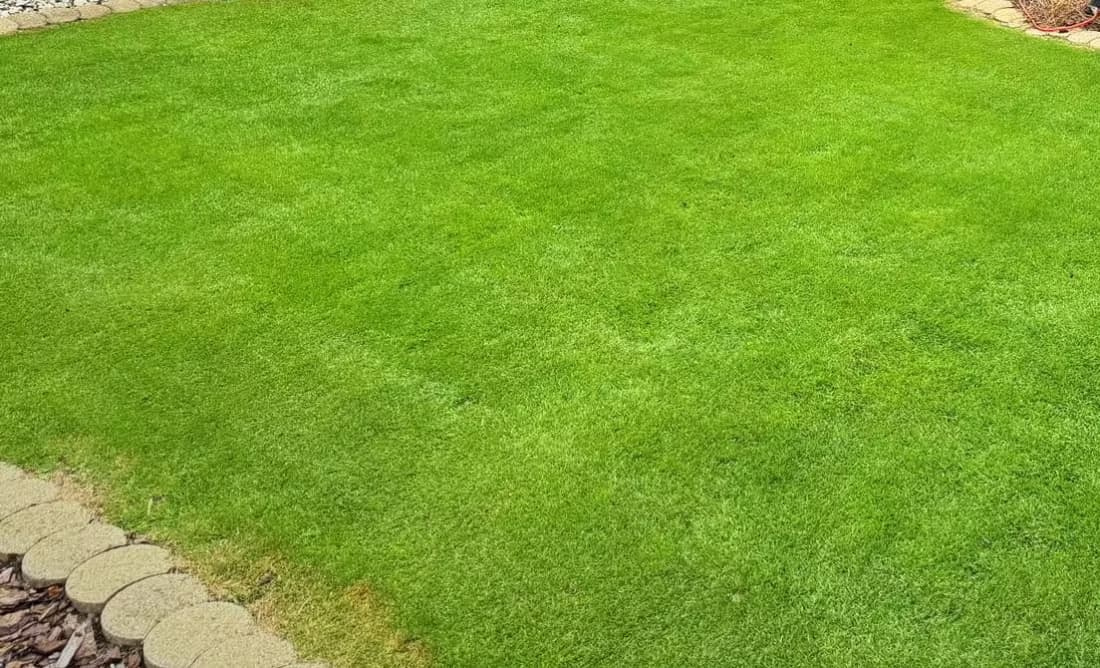
Bentgrass At-a-Glance
Hardiness Zone Min
Zone 3
Water Requirement
Very High
Sun Requirement
Full Sun to Light Shade
Wear Tolerance
Moderate
Establishment Speed
Fast
Labor Intensity
Very High
How Bentgrass Escaped the Golf Course
Bentgrass isn’t an American grass. It came from Europe, and it arrived the way most old turfgrasses did — in a bag, during colonization. For decades that bag was labeled South German mixed bent, and the name is the important part. It wasn’t one grass. It was a mixed lot of colonial, creeping, and velvet bentgrass seed sold together, which is why old golf greens and old properties still carry patchy, mismatched bentgrass populations today. Nobody planted three species on purpose. They just came in the same sack.
Before the 1950s you couldn’t seed a putting green to a known grass at all. Superintendents planted chopped stolons of named clones collected off other greens — Washington, Arlington, Congressional, Cohansey, Toronto — most of them selections made by the USGA Green Section. Every green in the country was somebody’s cutting.
That changed in 1954, at Penn State. H. Burton Musser released Penncross, the first creeping bentgrass bred and sold as seed for putting surfaces, produced as a first-generation cross of three vegetatively propagated clones. It established fast, spread aggressively, and healed from injury quickly, and it made a high-quality bentgrass green something a course could sow instead of sprig. It became the most widely planted creeping bentgrass in the world, and Musser’s student Joseph Duich carried the breeding program on after him.
Here’s the part that matters for your lawn. The traits that made Penncross a landmark are the exact traits that make bentgrass a problem in a yard. Fast establishment, aggressive stolon spread, and rapid recovery from damage are gifts on a green mowed daily at a tenth of an inch. In a lawn mowed weekly at three inches, they describe a weed. Nothing about the grass changed. Only the mowing height did.
There’s a modern chapter too. In the early 2000s a creeping bentgrass engineered to survive glyphosate was field-trialed in central Oregon. In 2003 wind carried seed and pollen outside the control area, and Oregon State researchers tracked what happened next for years: the resistant plants established in irrigation canals and ditches, crossed with wild relatives, and didn’t go away. By 2006 most of the feral bentgrass sampled in that area carried the resistance. It’s confined to specific parts of Oregon and Idaho, so the patch in your yard is almost certainly ordinary bentgrass — but it’s a fair warning about how mobile this species is once it gets loose.
Gallery
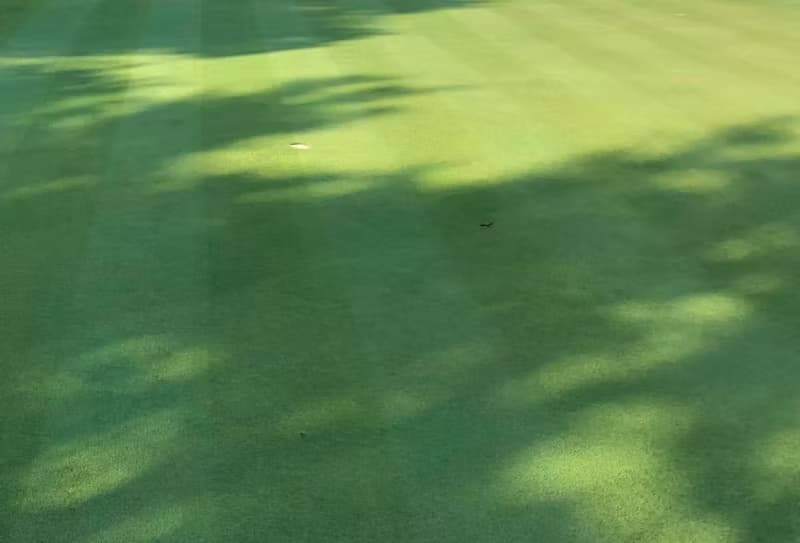
Creeping bentgrass (Agrostis stolonifera) maintained at an ultra-low putting green height of 0.150 inches, demonstrating its tolerance for close reel mowing.
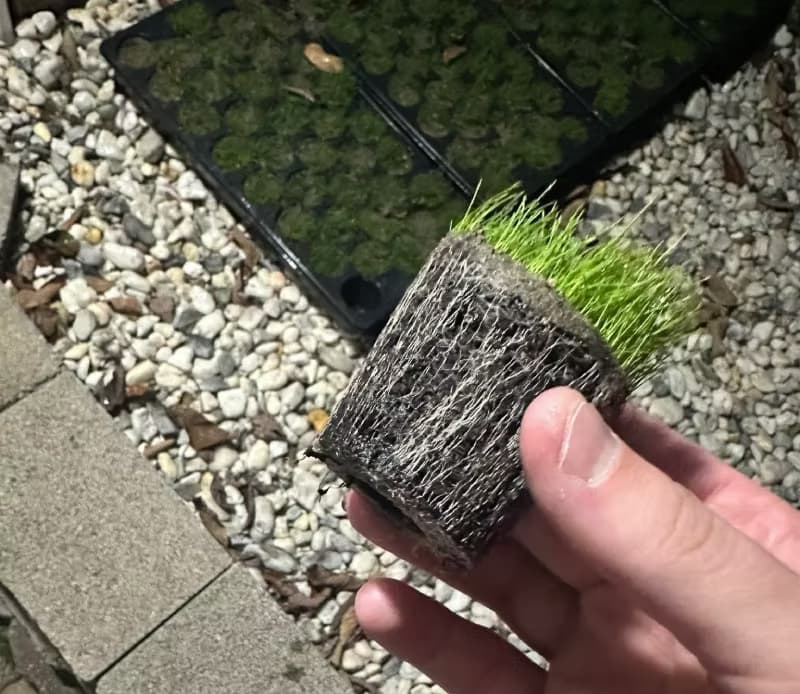
A healthy creeping bentgrass plug showing dense, fibrous root structure prior to field planting or sod establishment.
Telling It Apart
Grasses look alike at arm’s length, so confident identification comes from a few close-up features. Pull a shoot and check these.
Vernation — how the youngest leaf is packed inside the shoot. Bentgrass is rolled: roll the shoot between your fingers and it turns smoothly, like a round straw. Folded grasses feel flat, with distinct edges. That’s the split that settles the most common mistaken identity below.
Ligule — the small membrane where the blade meets the stem. Bentgrass has a tall, prominent membranous ligule, roughly 0.04 to 0.08 inch, rounded or blunt and finely ragged along the top. That tall ligule is one of its most reliable tells, and it’s the single most useful confirming feature under a hand lens.
Blades and runners — leaves are fine, flat, and narrow, well under an eighth of an inch wide in mowed turf, tapering to a sharp point. The upper surface is distinctly ridged with many equal veins and no central midrib, the underside is dull rather than shiny, and the edges feel slightly rough. There are no auricles. And you’ll see the stolons creeping across the soil surface, rooting down as they go.
In the lawn, a bentgrass invasion reads as a distinct circular patch, fine and soft against the coarser grass around it, and off-color — puffy and raised, scalped and browned wherever the mower catches it, and the first spot to go tan in a dry stretch. Color varies by species, so if you want to pin down which of the three you have, see Which Bentgrass You Have.
Two look-alikes cause almost all of the real confusion, and both are easy to rule out.
Rough bluegrass also makes light, shiny, matted patches in moist shade and also creeps by stolons — but its vernation is folded, giving a flat shoot with sharp edges, its leaf tip is boat-shaped with a clear central midrib, and its leaf underside is glossy and shiny. Bentgrass is rolled, sharp-pointed, midrib-free, and dull. That underside — shiny versus dull — is the fastest single check in the whole comparison.
Nimblewill forms similar gray-green mats but is a warm-season grass, so its calendar gives it away: it turns completely brown at the first fall frost and stays an ugly straw color all winter and into late spring, while bentgrass holds its green late and greens up early. Nimblewill’s leaves are also short and stiff, sticking straight out from wiry stems, with a tiny ligule — the exact opposite of bentgrass’s tall one.
Identification Photos
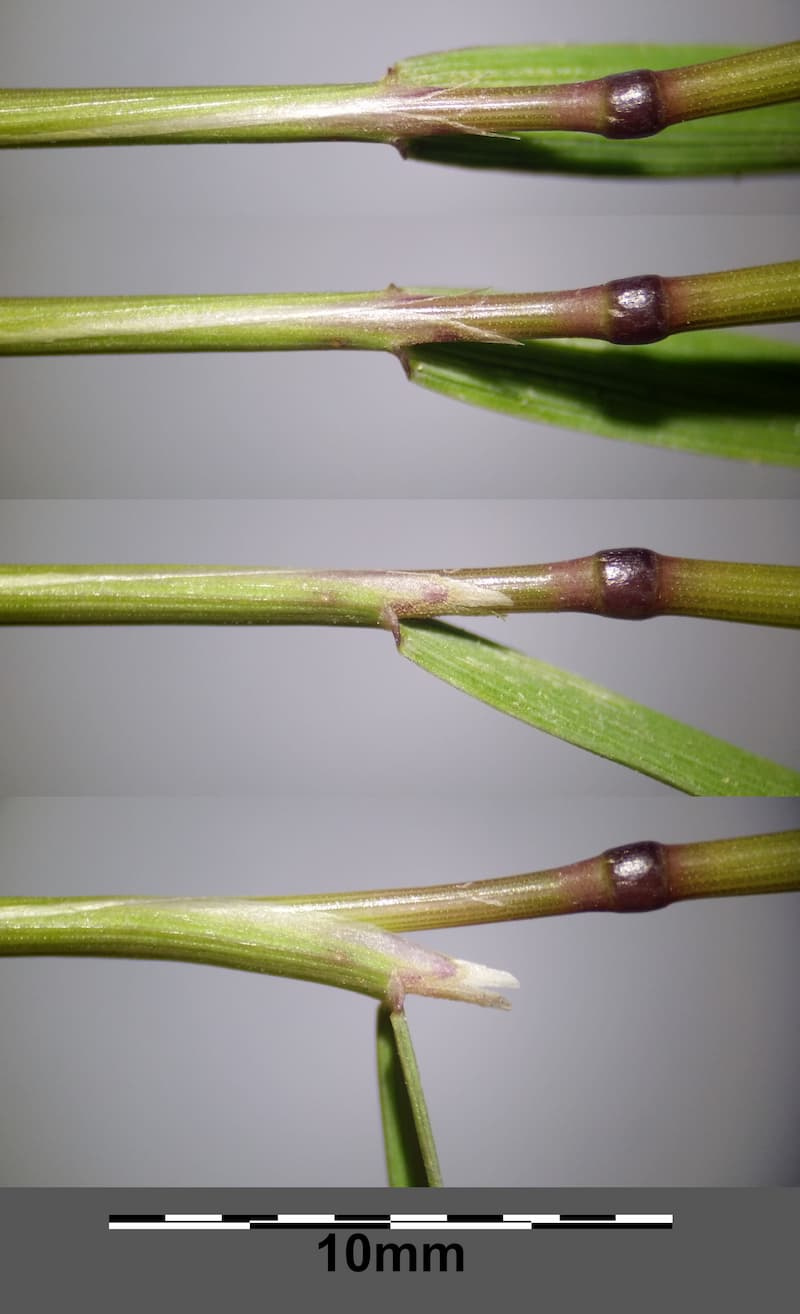
Diagnostic Feature: Stolons. Creeping bentgrass spreads by above-ground runners with dark, swollen nodes. Bunch-type grasses do not have them.
“Agrostis stolonifera sl24” by Stefan.lefnaer is licensed under CC BY-SA 4.0.
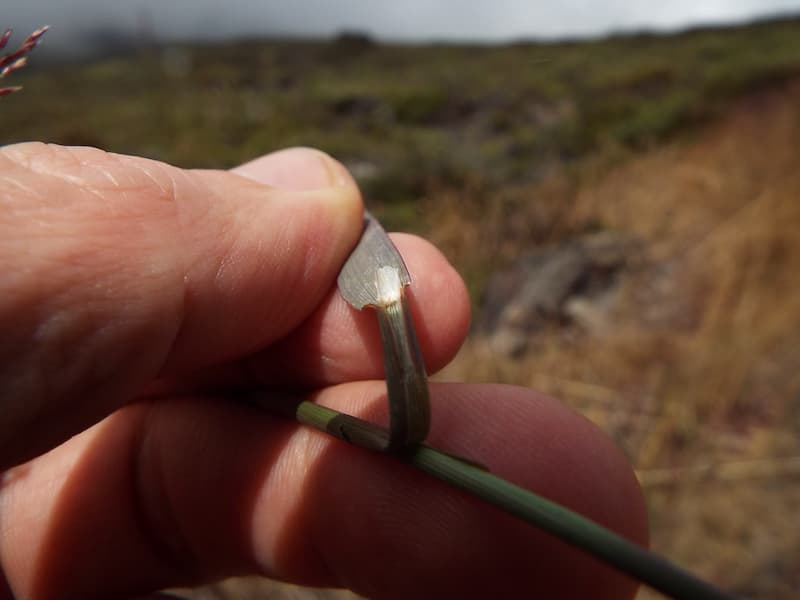
Diagnostic Feature: A long, membranous ligule. Bentgrass has a tall, thin, translucent ligule, longer than the short ligules of bluegrass and the fescues.
“starr-130722-0248-Agrostis_stolonifera-ligule-Front_Country_HNP-Maui” by Starr Environmental is licensed under CC BY 2.0.
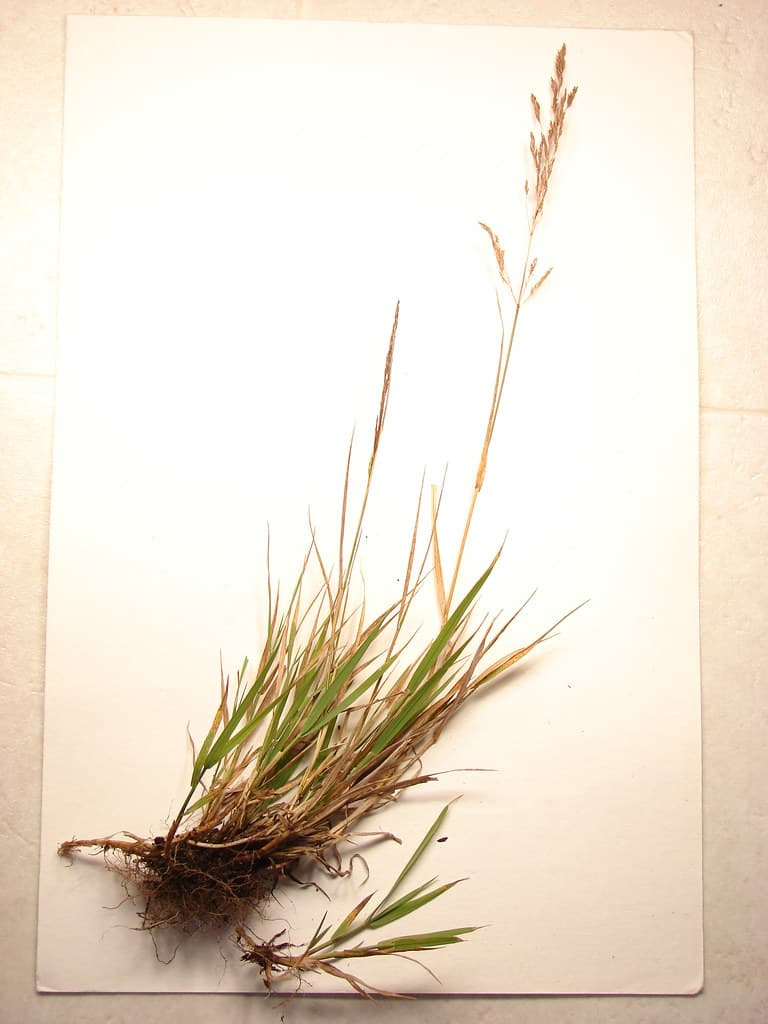
Key Identifier: Runners plus a small, open panicle. A plant sends stolons along the ground and, if left unmown, a slender seedhead of tiny spikelets.
“starr-090130-1425-Agrostis_stolonifera-plant_090130_01-Puu_Nianiau-Maui” by Starr Environmental is licensed under CC BY 2.0.
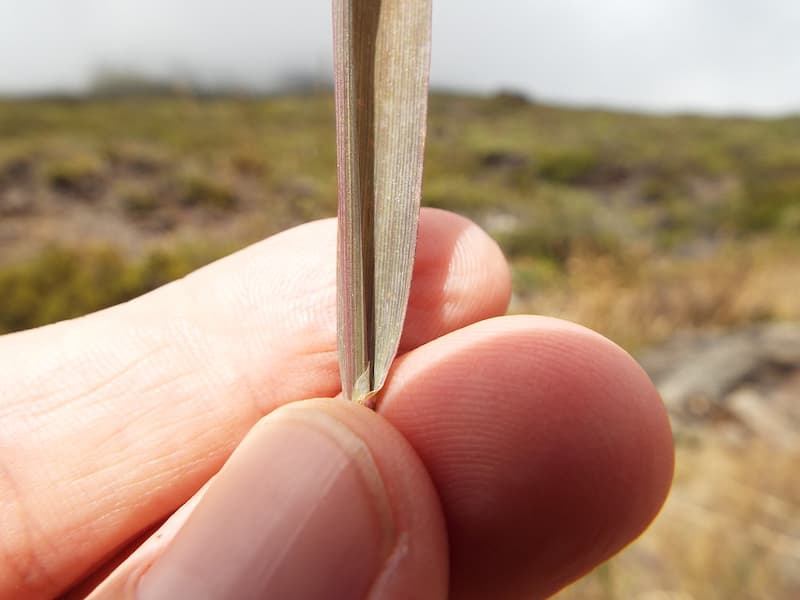
Look For: A very narrow, flat blade tapering to a fine point. The blade alone looks similar to bluegrass, so confirm bentgrass with the ligule and stolons.
“starr-130722-0247-Agrostis_stolonifera-blade-Front_Country_HNP-Maui” by Starr Environmental is licensed under CC BY 2.0.
Is Bentgrass Right For Your Yard?
Advantages:
The finest texture and highest shoot density of any turfgrass grown in North America, which is why it makes the smoothest playing surface there is
Tolerates mowing heights no other grass survives, down under an eighth of an inch
The fastest recovery of any cool-season grass — stolons heal damage in days, which is how it absorbs constant foot traffic and ball marks
Very cold hardy, near the top of the roster
Handles wet ground better than Kentucky bluegrass
Tolerates acidic soil that other lawn grasses struggle on
Establishes quickly from seed
Best If:
- You’re building an actual putting green, bowling green, croquet court, or grass tennis court
- You own a reel mower and will run it several times a week at well under half an inch
- You’ll verticut, brush, and sand-topdress on a schedule rather than when you remember
- You treat a preventative fungicide program as part of the deal rather than an optional extra
- Your summers are genuinely cool — Zones 4 through 6 — and the site is open, sunny, and well drained
- You’ve inherited an existing bentgrass surface, know what it costs to run, and have decided to keep it anyway
Disadvantages:
Needs a reel mower and near-daily mowing to look like anything at all
Scalps down to brown, dead crown tissue under a rotary mower at lawn height
The heaviest thatch producer among cool-season grasses, and that thatch turns water-repellent in dry weather, so the patch browns even under irrigation
The most disease-prone cool-season turfgrass, effectively requiring a preventative fungicide program — dollar spot, pythium blight, snow molds, anthracnose, take-all patch, brown patch, and copper spot all target it
Shallow roots and no safe drought dormancy — it declines rather than sleeping through a dry spell, and it is the first thing in the lawn to go off-color
Poor heat tolerance, declining above about 86°F
Poor shade tolerance
Spreads into neighboring turf, and cannot be removed selectively without a multi-application herbicide program run over a full season or more
A documented environmental weed outside the lawn — USDA-APHIS rates its weed risk potential as high, and it colonizes irrigation canals, ditches, and wet natural areas
Avoid If:
- You want a lawn — which covers almost everyone reading this page
- You mow with a rotary mower, because it will scalp the patch brown every single mow
- You mow above an inch, the height at which the runners start mounding into a cushion instead of forming turf
- You don’t intend to spray fungicides on a schedule
- Your summers sit above the mid-80s for weeks at a stretch
- Your yard is shaded, or the area takes regular foot traffic and stays compacted
- You water deeply and infrequently, or you rely on rainfall alone
- You’re buying seed or sod and bentgrass appears anywhere on the label, including as a fraction of “other crop seed”
Is It Safe for Pets and Kids?
No toxicity to pets, livestock, or people is documented for any Agrostis species. Bentgrass is grazed as forage and has been cut for hay, which is a practical indication of non-toxicity — though that is an absence of reported harm rather than a clean bill of health from a toxicology study. Nothing is published on urine tolerance.
Where It Grows and Where It Fails
Bentgrass is the grass on golf putting greens — that smooth, fast, carpet-perfect surface. It earns that surface with fine leaves, enormous shoot density, and a tolerance for being mowed almost down to the soil. In a home lawn, every one of those traits turns against it. Which makes the growing half of this section shorter than you’d expect, and the failing half unusual, because where bentgrass fails isn’t really a place.
If you’ve landed here because a strange, fine, patchy grass is taking over part of your yard, you’re almost certainly looking at creeping bentgrass — the aggressive, spreading species that shows up as an unwanted invader far more often than the other two. Identifying it, understanding why you don’t want it, and getting it out is what the rest of this page is for.
Bentgrass is a cool-season grass built for cool, humid places with steady soil moisture and mild summers. In the United States it’s naturalized across the northern states and turns up as a lawn invader most often in the Northeast, the Upper Midwest, and the Pacific Northwest, where damp soil and cool air suit it.
Cold isn’t what stops it. This is one of the toughest grasses on this site in winter — it grows in subarctic plant communities in Canada and survives farther north than most lawn grasses will. Heat is what stops it. It grows best somewhere around 59 to 75°F, and once air temperatures sit above about 86°F it goes into what turf scientists call summer decline: it thins, loses color, and starts losing the fight with disease. That’s an ordinary summer afternoon across most of the country, which tells you how narrow its comfort zone really is.
It also likes wet ground. Botanists classify creeping bentgrass as a facultative wetland plant, meaning it usually turns up in wetlands — ditches, canal banks, wet meadows, stream margins. In a lawn that becomes a specific prediction: the low, damp, poorly drained corner is where you’ll find it first.
Its one legitimate home is intensively managed close-cut turf — golf greens, tees, some fairways, plus bowling greens, croquet courts, and grass tennis courts. Nowhere on that list is “home lawn,” and that’s the whole point. Drop it into a normal lawn and it doesn’t merely get shaggy. It changes shape, forming puffy, matted, disease-prone patches that scalp brown the first time a mower passes over them. Where bentgrass fails isn’t a climate. It’s the absence of putting-green maintenance.
There are three species behind the name. Creeping bentgrass is the aggressive spreader and the usual invader; colonial bentgrass is slower and more upright; velvet bentgrass is the finest and densest of the three. Which one you have changes what you’re looking at more than what you should do about it — if you want to pin it down, see Which Bentgrass You Have below.
Getting Established
You don’t establish bentgrass in a home lawn. It establishes itself — and how it does that is most of what you need to know in order to get rid of it.
Creeping bentgrass spreads by stolons, slender green runners that crawl across the surface of the soil. Every runner carries nodes along its length, and wherever a node touches moist ground it roots and sends up new shoots, knitting into a dense mat. One plant becomes a distinct circular patch surprisingly fast. Colonial bentgrass does the same thing more slowly, leaning on short underground stems instead of surface runners.
So how does a grass you never planted end up in your yard? Four routes, and the first is by far the most common.
Contaminated seed. Bentgrass seed is extraordinarily small, and small seed means enormous seed counts. A pound of creeping bentgrass seed holds roughly 6 to 6.5 million seeds. A pound of tall fescue holds about 230,000. Run the arithmetic and the problem jumps out: a bag of tall fescue carrying just half of one percent bentgrass by weight is carrying about 30,000 bentgrass seeds against roughly 229,000 tall fescue seeds. That’s better than one seed in ten. It isn’t a trace contaminant — by seed count it’s a co-seeding, and nothing in the label percentage would warn you. This is the mechanism behind every piece of advice telling you to buy certified seed with a printed purity analysis instead of the cheapest bag on the shelf.
Cheap sod or topsoil, carrying live seed or stolon fragments.
Creeping in from the edges, where a lawn borders a golf course or an older property that once had bentgrass, the stolons literally crossing the property line.
Sitting there all along. It often lives in an older lawn as a small unnoticed passenger for years, then explodes into visible patches the moment stress, injury, or insect damage thins the surrounding turf and hands it the opening.
There’s no seeding rate or blend ratio to give you here, and the absence is the recommendation: bentgrass doesn’t belong in a home lawn seed mix at any percentage. It won’t coexist with upright grasses at lawn mowing height — it grows over them rather than with them.
One warning saves people a lot of grief. Mechanical tools spread it. Dethatching, power-raking, slicing, or tilling through a live bentgrass patch doesn’t kill it. It chops the stolons into dozens of rooted fragments and scatters them across clean parts of the lawn, turning one patch into many. Don’t take a rake or a tiller to bentgrass until it’s dead.
Keeping It Healthy
Keeping bentgrass healthy is entirely possible. It just takes a reel mower, a verticutter, a sand topdresser, and a season-long fungicide program — which is the real answer to the question everyone asks first: can’t I just keep it and mow it nice?
On a golf course, bentgrass is mowed at roughly a tenth to half an inch depending on use, and well under an eighth of an inch on modern greens, with a specialized reel mower, often daily. To stop the runners leaning over and matting, crews verticut it weekly to slice the stolons, brush it upright before mowing, and topdress it with fine sand to bury the thatch as it builds. Nitrogen is kept deliberately modest, usually between 1 and 3 pounds per 1,000 square feet a year, because feeding it hard makes the thatch and the disease worse rather than the turf better. Water is frequent, because the roots are shallow, but carefully controlled to avoid the constant wetness that breeds disease. And all of that sits on top of a preventative, season-long fungicide program.
Now run the same grass through a normal lawn routine: mowed at two and a half to three and a half inches with a rotary mower, watered deeply now and then, fed a couple of times a year. Above about an inch, the runners pile over one another into a spongy, raised cushion. A rotary mower can’t shear that cushion cleanly the way a reel mower does. It grabs the loosely rooted mat and scalps it down to brown, dead crown tissue, leaving torn, frayed scars every single mow.
Meanwhile the patch builds a thick thatch layer that turns water-repellent in dry spells, so it wilts and browns while you’re watering it — the water runs off the thatch instead of soaking through. And the dense, humid mat becomes a near-perfect incubator for the diseases in the next section.
One thing here is genuinely worth acting on, because it’s fixable. Bentgrass tolerates acidic soil better than the grasses you actually want, and extension research shows it gains a real competitive edge on soil running around pH 5.1 to 5.5. If your soil test comes back acidic, that’s part of why the patch is winning. Correcting pH back toward the mid-6s won’t remove bentgrass, but it puts your bluegrass and fescue back on an even footing.
Beyond that, there’s no version of ordinary lawn care that ends well here. The grass is built for a regimen you’re never going to run in your backyard — and that, rather than climate or soil, is why it fails in lawns.
What Goes Wrong
Bentgrass is unusually disease-prone, and without the fungicide program that protects it on a golf course, those diseases move in fast. These are the ones extension flags most.
Dollar spot is one of its most persistent problems — small bleached, straw-colored spots that, at lawn mowing heights, run together into irregular patches one to six inches across, with pale lesions ringed in reddish-brown. It’s worst under long dew periods, and it’s actually encouraged by low nitrogen and drought stress.
Pythium blight hits in hot, humid mid-to-late summer, especially on lush, over-fed turf that stays wet overnight. Blades look greasy, water-soaked, and slimy, with a cottony white film visible in the early morning, and it can kill large areas within days.
Snow molds develop under long winter snow cover. Gray snow mold (Typhula) appears at snowmelt as matted, straw-colored circles up to a couple of feet across — the black, pepper-like survival structures of one form kill the plant outright, while the reddish-brown ones of another usually let it recover. Pink snow mold (Microdochium) makes pinkish-tan patches and doesn’t even need snow, just cold and wet.
Rounding out the list: anthracnose, a stress disease that can rot crowns and stolons black in summer heat; take-all patch, a root-rotting disease that leaves a telltale frog-eye of surviving weeds in the middle of the patch; brown patch, which hits colonial bentgrass especially hard; and copper spot, small salmon-pink spots that velvet bentgrass is very prone to on acidic soil.
Take-all patch is worth one extra sentence, because it runs on soil chemistry you can actually measure. Infection is uncommon at or below pH 6.0 and much more likely at or above pH 7.5, along with light-textured soil, low organic matter, and high moisture. That’s the one bentgrass disease a soil test warns you about ahead of time.
The through-line: every one of these thrives in the puffy, matted, humid patch that home-grown bentgrass becomes. The grass’s failure and its disease load are the same story.
Weeds In This Grass
On every other grass page this section covers the weeds that invade. Here it’s inverted: bentgrass is the weed, and the turf you’re protecting is everything around it. So this is the removal section.
The hard truth first. Because bentgrass is a cool-season grass, it’s a close botanical cousin of the grasses you want — Kentucky bluegrass, the fescues, perennial ryegrass. That kinship means ordinary broadleaf weed killers do nothing to it, and standard grass killers can’t tell it apart from your lawn. There’s no spray-the-weed-spare-the-lawn quick fix. There are two real, extension-backed approaches.
Option 1 — glyphosate spot-treatment and renovation. This is the dependable, kill-everything route, and the right one for isolated patches or dense, spread-out infestations. Spray only when the bentgrass is actively growing — August is ideal — because glyphosate has to move through a living plant to reach the runners and roots; spraying a dormant or drought-stressed patch simply fails. Two details make or break it. First, spray at least a foot past the visible edge of the patch, because young stolons creep out unseen beneath your good grass, and skipping that buffer guarantees the patch grows straight back. Second, plan on two or three sprays, not one — the mother plants die easily but buried nodes resprout, so wait for green regrowth and hit it again. Once it’s fully straw-brown and dead, wait five to seven days after the last spray, then strip out the dead mat, prepare the soil, and reseed with certified seed. Late August into early September is the sweet spot.
A buying note that trips people up: check the active-ingredient panel and make sure it actually says glyphosate. The “Roundup” brand name no longer reliably means glyphosate — several products now sold under it use different active ingredients that won’t kill perennial grass runners. The brand on the front doesn’t tell you what’s in the bottle. The ingredient panel does.
Option 2 — mesotrione (Tenacity), the selective route. Mesotrione can remove creeping bentgrass while sparing some lawns — it’s safe on Kentucky bluegrass and tall fescue, usable with care on perennial ryegrass, and it works by bleaching the bentgrass white before it dies back over two to three weeks. The critical warning: never use it on fine fescue — creeping red, Chewings, or hard — because it kills them. Time it for fall, starting late August or September, and commit to the full program: three to four applications, seven to ten days apart. Anything less and the bentgrass shrugs it off and recovers. It needs a nonionic surfactant in the tank, and for creeping bentgrass specifically, adding ammonium sulfate noticeably improves the kill. Mow the area low first, and after the first spray rake out the dead bleached tissue so later sprays can actually reach the runners underneath. Feed the surrounding lawn with nitrogen afterward so your good grass spreads into the gaps. Mind the label’s seasonal limit and don’t exceed it.
One counterintuitive note from Michigan State, because it reverses the usual advice. For most lawn weeds you raise your mowing height to shade them out. For creeping bentgrass, control is easier if you’ve been mowing lower. So if removal is the plan for this fall, don’t go tall over the summer on the area you intend to treat.
Whichever route you take, set expectations honestly: clearing a heavy bentgrass infestation often takes more than one season of spot-treating and watching for return. It’s a campaign, not an afternoon.
Subtypes
Which Bentgrass You Have
The putting-green grass that shows up uninvited — fine, off-color, and puffy, in a patch that scalps brown every time you mow.
Best For: Anyone watching a fine, soft, off-color patch spread through a cool-season lawn, most often in the Northeast, the Upper Midwest, or the Pacific Northwest. Especially relevant if that patch scalps brown after mowing and is the first spot to go tan in a dry stretch.
Tradeoff: It only looks good mowed under half an inch, nearly every day, with a reel mower and a season-long fungicide program — at lawn height it becomes a puffy, scalped, disease-prone mat.
The Seasonal Care Calendar

Spring (Mar-May)
Early Green-Up Gives It Away
Bentgrass greens up early and holds color late, so spring is the easiest time of year to see it. Look for the green circle in a lawn that hasn’t fully woken up yet — that contrast will never be sharper than it is now.
Mark the patches while you can see them. Flags, a photo from a fixed spot, a rough sketch, whatever works. By August, when the treatment window opens, the patches blend into a green lawn and are genuinely hard to find.
Two things not to do in spring. Don’t dethatch or power-rake through a patch — that chops the stolons into rooted fragments and plants a new patch everywhere the machine traveled. And don’t spray yet. Both glyphosate and mesotrione are less consistent on bentgrass in spring than in late summer, so a spring application usually buys you a setback rather than a kill.
Do one useful thing instead: pull a soil test. If pH is running low, bentgrass has a competitive edge over your bluegrass and fescue, and correcting it helps your lawn grasses push back on their own.
Summer (Jun-Aug)
Disease Weather and Scalping Season
Summer is when bentgrass looks worst, and when everything this page has explained shows up in your yard at once.
Sustained heat above about 86°F pushes it into decline. Long dew periods and warm nights bring dollar spot and pythium blight into the patch first, because the matted, humid canopy is exactly the microclimate those diseases want. The patch scalps brown after every mow. And in a dry stretch it goes tan before anything else in the lawn — the thatch turns water-repellent and sheds the water you’re applying, so the patch wilts while the sprinkler is running.
On the rest of the lawn, raise your mowing height to thicken the turf and shade the soil. But note the exception if removal is your plan: Michigan State reports that creeping bentgrass is easier to control if you’ve been mowing lower, so on the area you intend to treat in August, don’t go tall.
Late summer is the setup for treatment. Keep the patch actively growing and not drought-stressed through August — water it if you have to. Glyphosate only works on a plant that’s moving water and sugars, and a bentgrass patch that has gone dormant from drought will shrug off a spray that should have killed it.
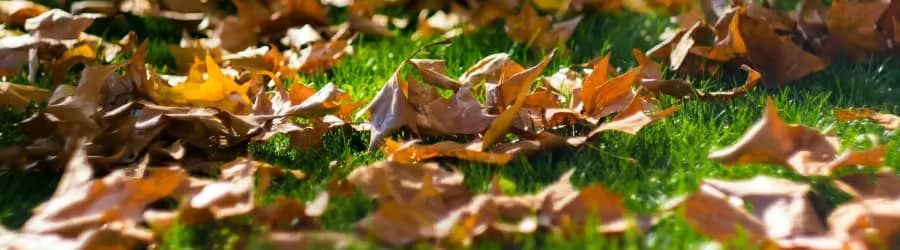
Fall (Sep-Nov)
The Only Removal Window That Works
Fall is the whole ballgame. Both removal routes are timed here, and both fail at other times of year.
Glyphosate route: August is ideal, on actively growing, fully green bentgrass, sprayed at least a foot past the visible patch edge. Repeat two or three times as buried nodes resprout. Wait five to seven days after the final spray, strip out the dead mat, prepare the soil, and reseed late August into early September with certified seed.
Mesotrione route: start late August or September. Three to four applications, seven to ten days apart, with a nonionic surfactant, plus ammonium sulfate for creeping bentgrass specifically. Rake out the bleached dead tissue after the first spray so the later ones can reach the runners underneath. Then feed the surrounding lawn with nitrogen so your good grass moves into the gaps rather than leaving bare soil for the bentgrass to reclaim.
Fall is also when new seed goes down, which makes it the moment the seed bag matters most. Buy certified seed with a printed purity analysis. A cheap uncertified bag is the single most common way bentgrass gets into a lawn nobody planted it in — and that’s a bitter way to lose a renovation you just spent a season on.
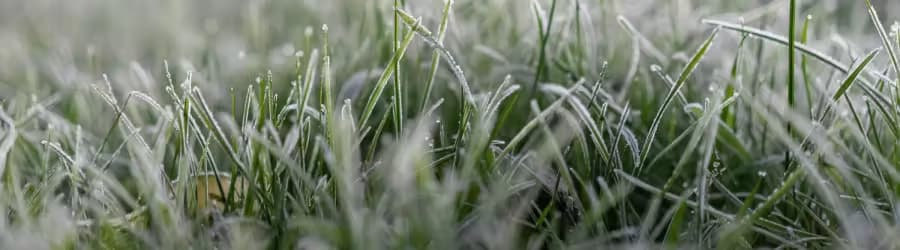
Winter (Dec-Feb)
Snow Mold and Late-Holding Green
Bentgrass holds green later into fall than most lawn grasses and greens up earlier in spring. That’s the tell that separates it from nimblewill, which goes straw-brown at the first frost and stays that way until late spring. If the patch is still green in November, it isn’t nimblewill.
It isn’t evergreen, though. In hard winters bentgrass hardens off and goes off-color like everything else, and some plants turn a distinctive purple, giving a patch a mottled look.
Under long snow cover, gray snow mold shows up at snowmelt as matted, straw-colored circles, and pink snow mold doesn’t even need snow — just cold and wet. In a home lawn neither is worth treating on a bentgrass patch. The patch is coming out anyway.
Winter is planning time. Pull up the photos you took in spring, count the patches, measure roughly how much ground they cover, and decide whether next year is a spot-treatment year or a full renovation of that section of lawn. Deciding in January is much cheaper than deciding in August.
Bentgrass Against the Grasses You Want
Versus rough bluegrass (Poa trivialis). The closest look-alike, and a similar problem — also a patch-forming, stoloniferous invader, also removed with glyphosate or mesotrione on the same fall timing. It leans more toward shade and constant moisture where bentgrass will happily sit in full sun. Separate them on the leaf underside: glossy is rough bluegrass, dull is bentgrass.
Versus nimblewill. Opposite calendar. Nimblewill is warm-season, so it’s brown from first frost until late spring while bentgrass stays green. If you’re unsure in November, wait a week and look again.
Versus annual bluegrass (Poa annua). Lighter green, and it throws seedheads at any mowing height, including heights where nothing else can flower. Different problem, different fix.
Versus Kentucky bluegrass. Bluegrass also spreads, but by underground rhizomes rather than surface runners, so it knits into the lawn instead of mounding on top of it — and it’s perfectly happy at two and a half to three and a half inches. That’s the structural difference in one sentence: same spreading ambition, compatible growth habit.
Versus tall fescue. Coarser leaf, deep roots, real drought resistance, and it tolerates mesotrione, which makes it the easiest lawn to run a selective bentgrass removal in.
Versus fine fescue. This is the comparison that matters most, and it’s the one people miss. If what you actually like about the bentgrass patch is how fine and soft it looks, the grass you want is a fine fescue. Similar delicate texture, low input needs, tolerant of shade and acidic soil, and it survives ordinary mowing with an ordinary mower. You can have the look without the maintenance. One critical caveat: never spray mesotrione on fine fescue — it kills it — so if fine fescue is your surrounding lawn, the bentgrass has to come out with glyphosate and reseeding instead.
Versus perennial ryegrass. Fastest to germinate of the group, which makes it a useful nurse grass in a renovation seeding, though it won’t spread to fill gaps on its own.
Find Your Precision Match
Choosing between species requires balancing your specific soil profile, local micro-climate, and maintenance goals. Use our Turf Match Tool to generate a data-backed recommendation for your specific yard.
Start Your MatchTechnical Specifications
Scientific Name: Agrostis stolonifera L. (creeping bentgrass) — accepted synonyms Agrostis palustris Huds., Agrostis alba var. palustris, Agrostis alba var. stolonifera. Also on this page: Agrostis capillaris L. (colonial bentgrass) — synonym Agrostis tenuis Sibth.; and Agrostis canina L. (velvet bentgrass).
Common Names: Bentgrass, bent grass, bent. Creeping bentgrass is also sold or listed as creeping bent, carpet bentgrass, seaside bentgrass, spreading bent, and fiorin. Colonial bentgrass is also called browntop, browntop bent, and common bent. Velvet bentgrass is also called velvet bent. Frequently confused with, and hybridizes with, redtop (Agrostis gigantea).
Family: Poaceae (grass family), subfamily Pooideae, tribe Poeae — genus Agrostis, subtribe Agrostidinae. Older extension literature places the genus in tribe Agrostideae.
Origin: Introduced. Native to Europe, western Asia, and North Africa, and treated as non-native across North America, although some northern salt-marsh and lakeside populations may be genuinely native (Native Plant Trust Go Botany). It arrived during colonization, largely as a component of South German mixed bentgrass seed imported for golf greens (Oregon State University Turf Program). It is now reported in every state in the continental US.
Season Type: Cool-Season
Growth Habit: Stoloniferous
Growth Rate: Fast
Texture: Very Fine
Root System Depth: Shallow, and shallow in a way that matters. Close mowing directly suppresses rooting depth, so a mowed stand roots far shallower than the same plant does in a wet meadow. No measured average rooting depth has been published for turf-form creeping bentgrass — only the consistent finding that it is shallow, which shows up as a need for frequent light irrigation and first-to-wilt behavior in any dry stretch.
Spread Mechanism Intensity: Aggressive surface spread by stolons. Slender above-ground runners root at every node that touches moist soil, so one plant knits into a distinct circular patch quickly and recovers from injury faster than any other cool-season lawn grass. No rhizomes (NC State TurfFiles: stolons present, rhizomes absent). Colonial bentgrass spreads much more slowly on short rhizomes plus weak stolons. Mechanical damage multiplies spread rather than reducing it — severed stolons root as fragments.
Typical Lifespan & Invasiveness Risk: Long-lived perennial; individual patches persist and expand for decades. Ecological invasiveness outside the lawn is real and documented. USDA-APHIS classifies the weed risk potential of creeping bentgrass as high. It is a facultative wetland species (FACW) that colonizes irrigation canals, ditches, riparian corridors, wet meadows, marshes, and stream and lake margins across the northern US and the Intermountain West, and seed travels in moving water — a shed panicle floating down an irrigation canal moves at roughly 62 feet per minute. The genus outcrosses and hybridizes readily with redtop (Agrostis gigantea) and other Agrostis species, so escaped populations blend into resident ones instead of staying separate. The documented case is the glyphosate-resistant creeping bentgrass that escaped central Oregon field trials in 2003: by 2006, three years after those fields came out of production, 62 percent of feral creeping bentgrass sampled in place was glyphosate-resistant, with resistant plants found up to about 2.9 miles from the nearest production field (Zapiola, Campbell, Butler and Mallory-Smith, Oregon State University).
Hardiness Zone Min: Zone 3
Hardiness Zone Max: Zone 7
Hardiness Zone Notes: Ideal in Zones 4 through 6 — the Northeast, Upper Midwest, and Pacific Northwest, which is exactly where bentgrass turns up in lawns. Zone 7 is a stretch that only holds under golf-course management, and greens survive into Zone 8 only with fans, syringing, and preventative fungicides. Cold is not what limits this grass; it is as winter-hardy as anything on the roster. Heat is. It grows best between about 59 and 75 degrees F, and starts declining once air temperatures sit above roughly 86 degrees F.
Cold Tolerance Rating: Very High
Winter Color Profile: Semi-Evergreen
Climate Cool Humid: Excellent
Climate Cool Arid: Fair
Climate Warm Humid: Poor
Climate Warm Arid: Poor
Climate Transition: Fair
Sun Requirement: Full Sun to Light Shade
Shade Tolerance: Low
Water Requirement: Very High
Drought Survival Strategy: No Safe Dormancy (declines/dies)
Soil Texture Fit:
Sand
Loamy Sand
Sandy Loam
Loam
Silt Loam
Clay Loam
Clay
pH Optimal Min: 5.5
pH Optimal Max: 6.5
pH Stress Max: 7.5
Wet Feet Tolerance: High
Compaction Tolerance: Low
Salinity Tolerance: Moderate
Wear Tolerance: Moderate
Recovery: Very High
Recovery Mechanism: Stolons
Input Intensity: Moderate
Labor Intensity: Very High
Thatch Production: Very High
Annual N Figure: Roughly 1 to 3 lb N per 1,000 sq ft per year under modern programs, with a much wider published band. Putting greens: approximately 1 to 2 lb (USGA Green Section). Fairway and tee height: 2 to 3 lb, the rate Penn State ran its NTEP fairway and tee trial at. Oregon State targets 0.25 to 0.5 lb N per 1,000 sq ft per growing month, which lands in the same place over a season. Michigan State Extension publishes a higher 4 to 8 lb per growing season, reflecting an older high-nitrogen era and the full range of uses. The direction of travel is downward, because feeding bentgrass hard builds thatch and disease rather than quality.
Preferred NPK Ratio: Approximately 6-1-4 N-P2O5-K2O, with sulfur at roughly the same level as potash (Oregon State University Turf Program). Treat as a starting point only; phosphorus and potassium still route through a soil test.
Establishment Methods:
Seed
Sod
Sprigs
Germination Speed: Moderate (7–14 days)
Establishment Speed: Fast
Seeding Rate: New seeding approximately 0.5 to 1 lb per 1,000 sq ft. Penn State seeded its NTEP fairway and tee trial at 1.1 lb per 1,000 sq ft. Interseeding into existing turf runs far lower, roughly 0.1 to 0.25 lb per 1,000 sq ft. The rates look tiny next to other lawn grasses because the seed is tiny — approximately 6 to 6.5 million seeds per pound, against 2.2 million for Kentucky bluegrass and 230,000 for tall fescue. No routine overseeding rate applies, because MFY never recommends establishing this grass.
Improved Cultivar Availability: High
NTEP Note: There is no tipping axis for this grass, and that is the finding. For every other Null-subtype grass on the roster this field carries the one trait that decides which type a homeowner should buy. Bentgrass has no such axis because MFY never recommends it for a home lawn, so there is nothing for the tool to match on. NTEP does run creeping bentgrass trials, but they are evaluated at putting-green and fairway mowing heights under preventative fungicide programs, so nothing in them transfers to a home-lawn decision — a cultivar that wins an NTEP green trial is still a grass a homeowner cannot mow. The one genuinely actionable trait for a homeowner is a negative one and it belongs to the seed bag, not to a cultivar: buy certified seed with a printed purity analysis, because uncertified seed is the most common way bentgrass enters a lawn it was never planted in.
Deep Dives & Practical Guides
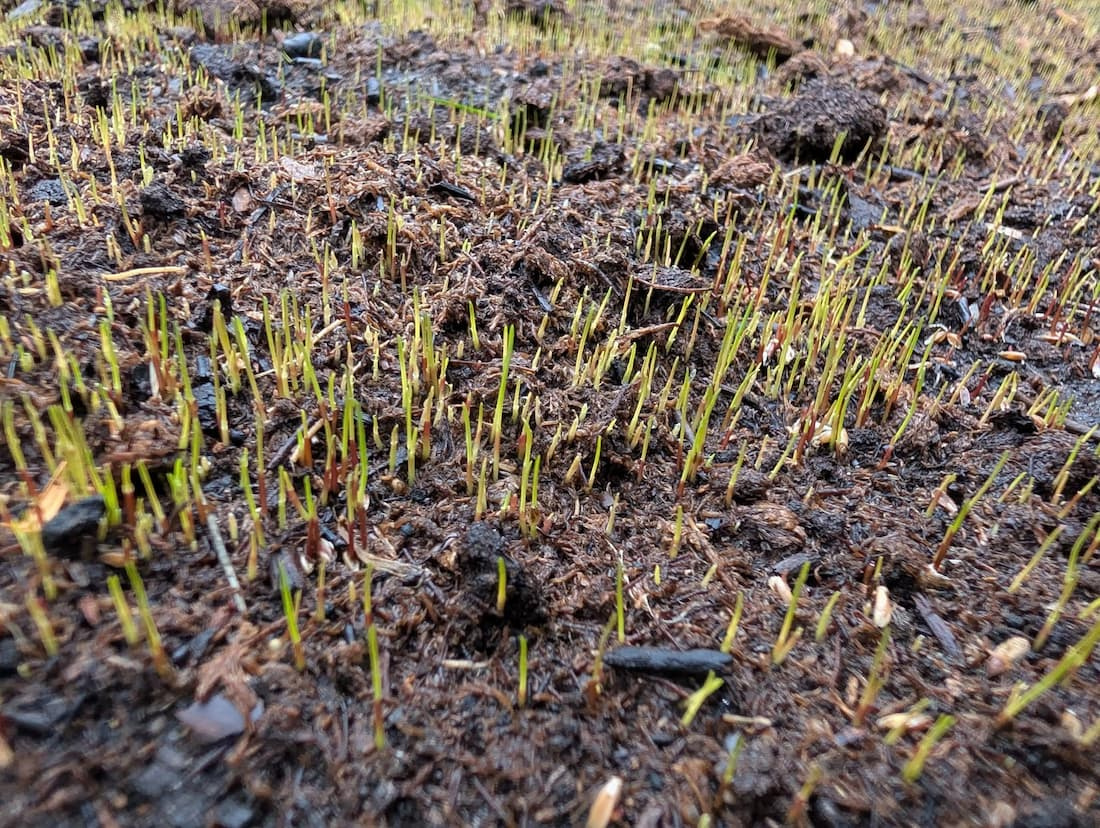
How to Establish a New Lawn From Bare Soil to First Mow
Bare soil doesn't turn into a lawn just because you scattered seed or rolled out sod — it becomes one based on a handful of specific steps done in the right order, matched to your specific grass. This guide walks through soil prep, seeding or planting method, starter fertilizer, watering as the grass grows, and knowing when it's actually safe to mow, for both cool-season and warm-season lawns.
Read Article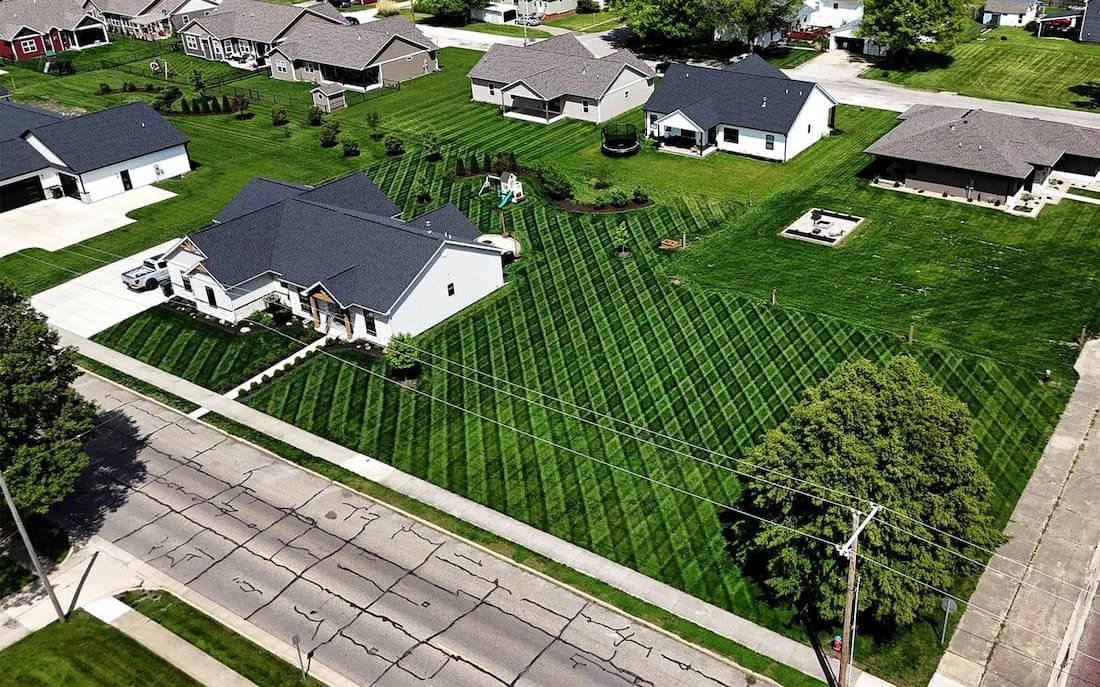
Cool Season vs Warm Season Lawn and Landscape Guide
Your lawn and your flower beds don't follow the same calendar — one runs on a cool-season engine, the other on a warm-season one, and using the wrong playbook on either can do real damage. This guide helps you figure out which system you actually have and how to care for it correctly, plus how the same cool/warm split applies to your ornamental beds.
Read Article
The Hole You Dug Is Killing Your New Plants
A shrub that looked fine all summer and stalled the next year usually didn't fail because of the plant, the weather, or the nursery. It failed because the hole it went into was a container — smooth-walled, water-holding, and impossible to root out of.
Read Article
What You Can Actually Change About Bad Soil
Heavy clay and loose sand feel like permanent sentences, and half of that is true. What your soil is made of will not change. How those particles are arranged will — and that is the half that decides whether anything grows.
Read Article
Why Your Plants Survive Winter and Die in July
Your hardiness zone is built from one number — the coldest night of an average year. It says nothing about the hottest afternoon, which is what actually kills most plants people lose. Here's how to read the other half of the map.
Read Article
Why Poa Annua Keeps Coming Back — and the 3-Year Plan That Finally Ends the Cycle
You've pulled it. You've sprayed it. You've watched the little white seedheads mock you every single spring. And every fall, like clockwork, it's back — in the lawn, in the beds, in the cracks you didn't know you had. Here's the hard truth nobody at the big-box store will tell you: you're not losing because you're doing it wrong — you're losing because you're fighting the wrong enemy on the wrong timeline. Poa annua isn't a one-season problem, and once you understand why, the three-year plan below stops feeling like a chore and starts feeling like a countdown.
Read Article
How to Apply Herbicides Correctly in Your Lawn and Garden Beds
Getting real results from a weed product has almost nothing to do with the brand on the bottle and everything to do with matching the method to the moment — the right chemistry, in the right place, at the right time. Learn how to apply herbicides correctly across both your lawn and your garden beds, whether you’re stopping weeds before they sprout or killing the ones already growing, without wasting product or harming the plants you want to keep.
Read Article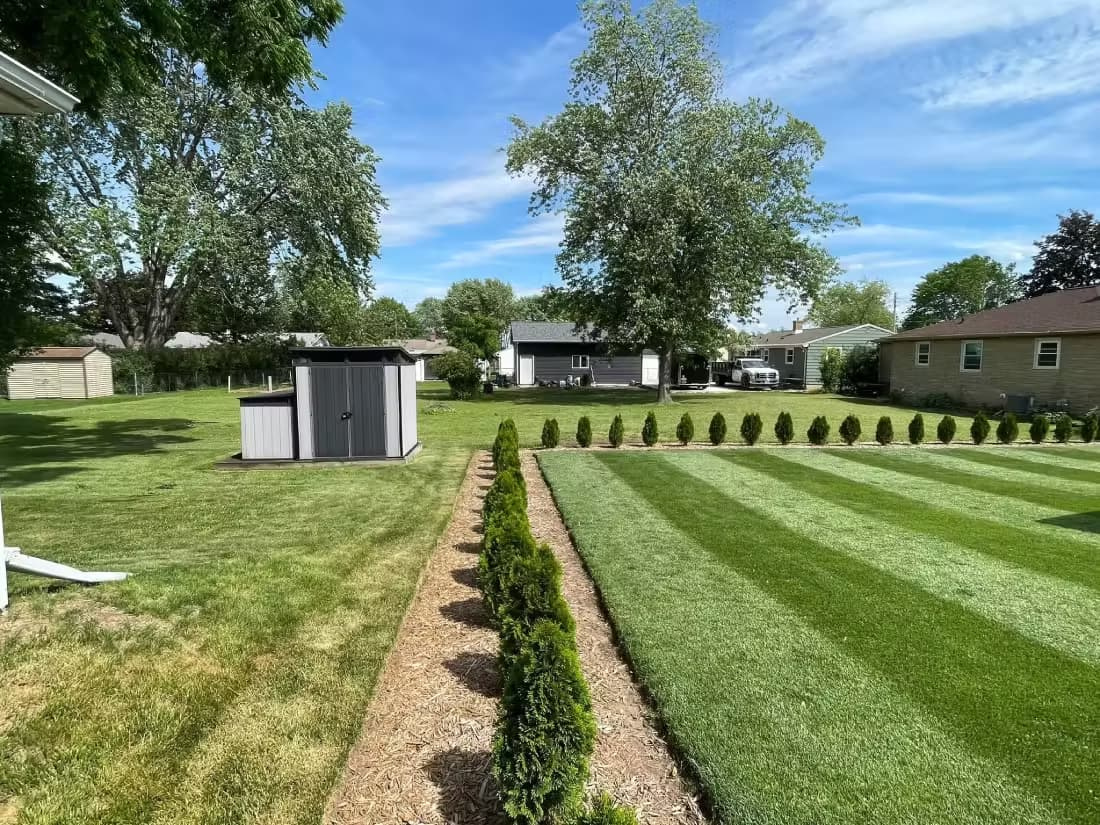
How to Kill Weeds Where Two Lawns Meet Without Harming Your Neighbor’s Grass
Controlling weeds along a shared property line is where good intentions quietly backfire—the season that's safe for your own lawn is often the season the lawn next door is most easily harmed. Learn the seasonal timing collision behind most fence-line damage, and the two habits that prevent it—reading what's actually in the bottle and spraying directed instead of broadcast—so you can clear the weeds without hurting your grass, your neighbor's, or the peace between you.
Read Article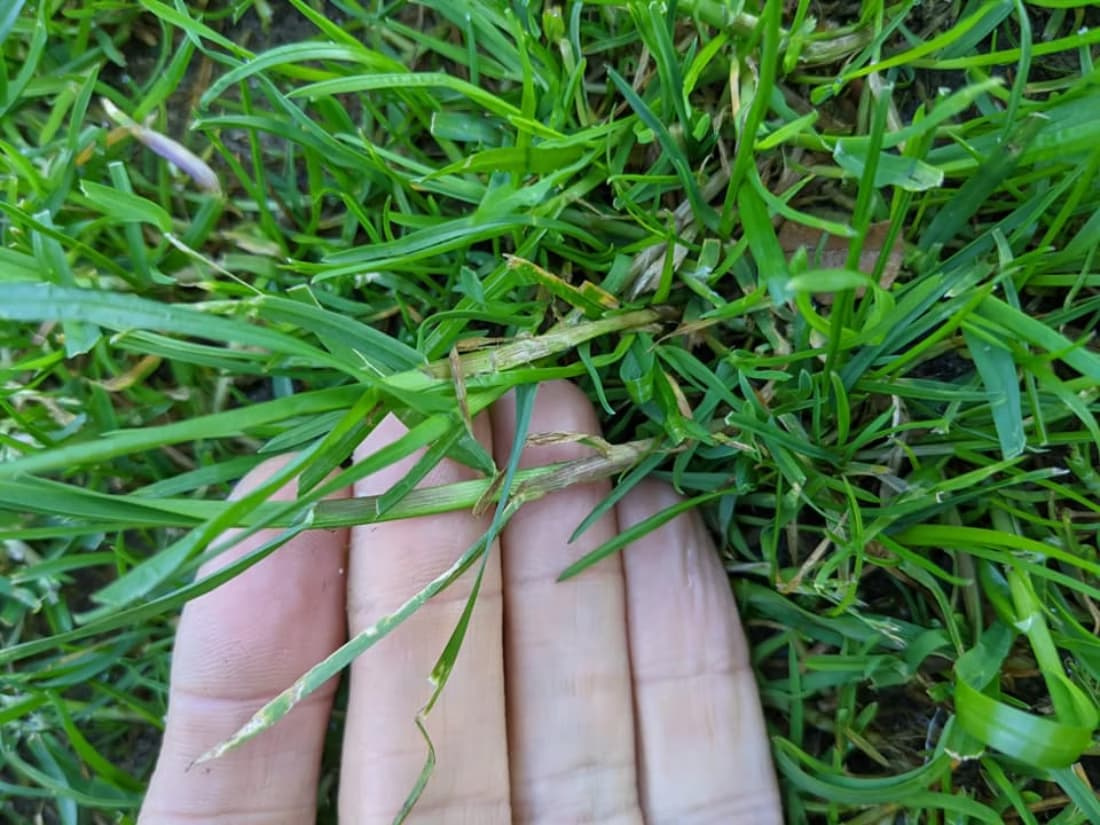
The Truth About One-and-Done Weed Control
Most homeowners lose the fight against weeds not because they work too little, but because they act before they understand. One-and-done weed control is real — but it only works when identification, timing, and the right tool all line up. This guide explains how that sequence works across your lawn and your ornamental beds, and how each weed page in the MFY hub puts it into practice for your specific invader.
Read Article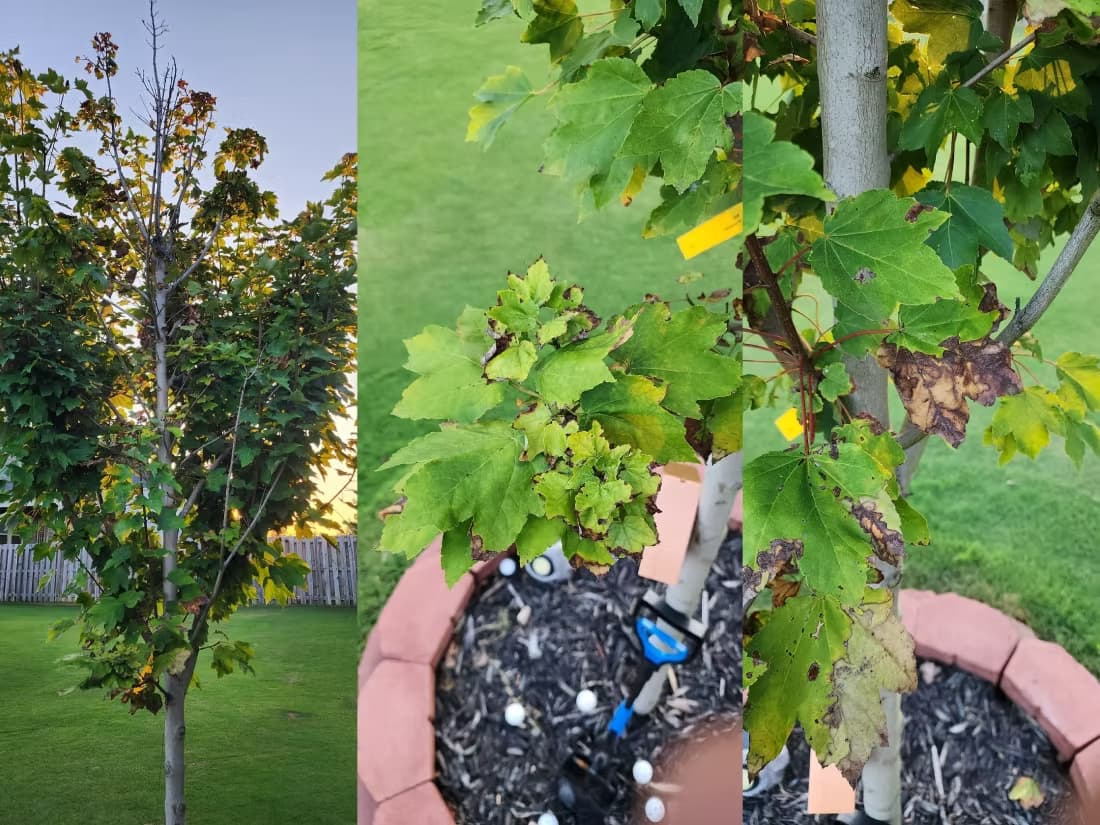
Solving the Mystery of the False Evidence in Your Lawn and Landscape
A brown leaf or a yellowing lawn is rarely what it seems. When symptoms act as decoys, a calm, forensic approach brings clarity to the confusion. Learn how to look past the surface to find the quiet truth of what your plants are truly asking for.
Read Article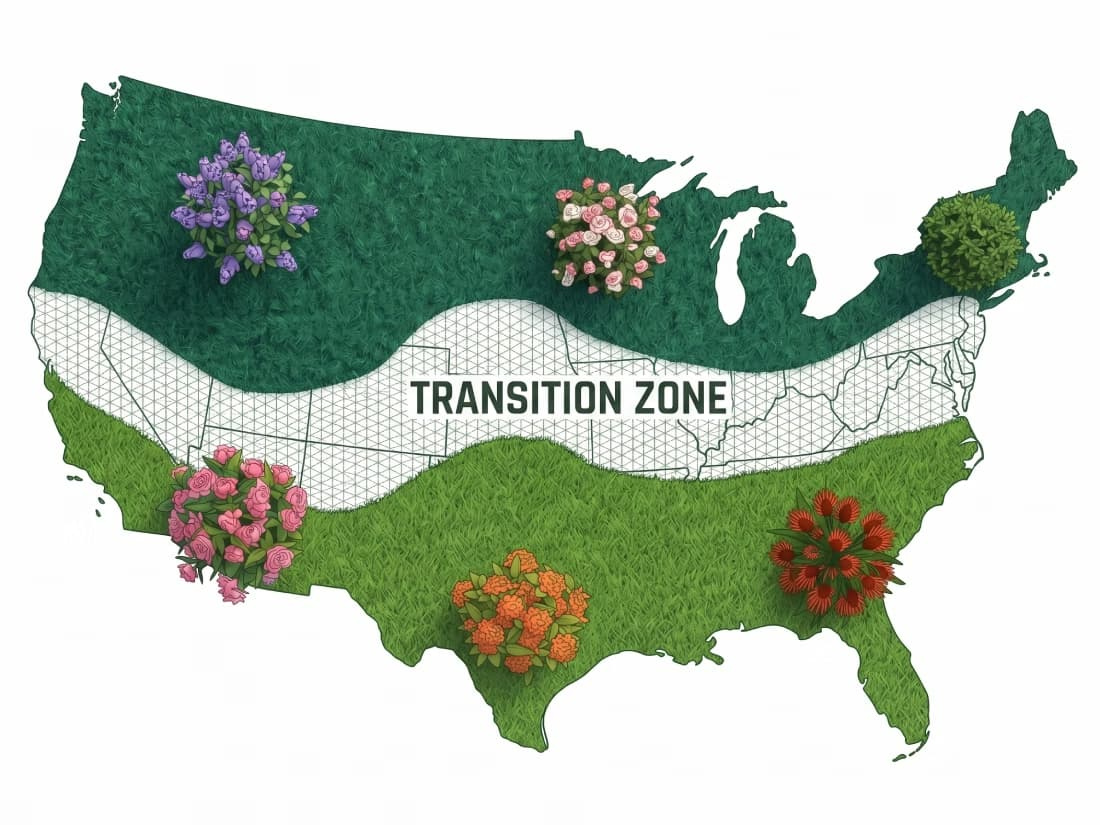
Living in the Middle: The Deep-Dive Guide to Transition Zone Lawns and Landscapes
The Transition Zone is a biological tug-of-war where neither northern nor southern species perfectly adapt. By using resilient "bridge" species and mastering maintenance levers like the Mowing Pivot, you can transform a struggling yard into a healthy landscape.
Read Article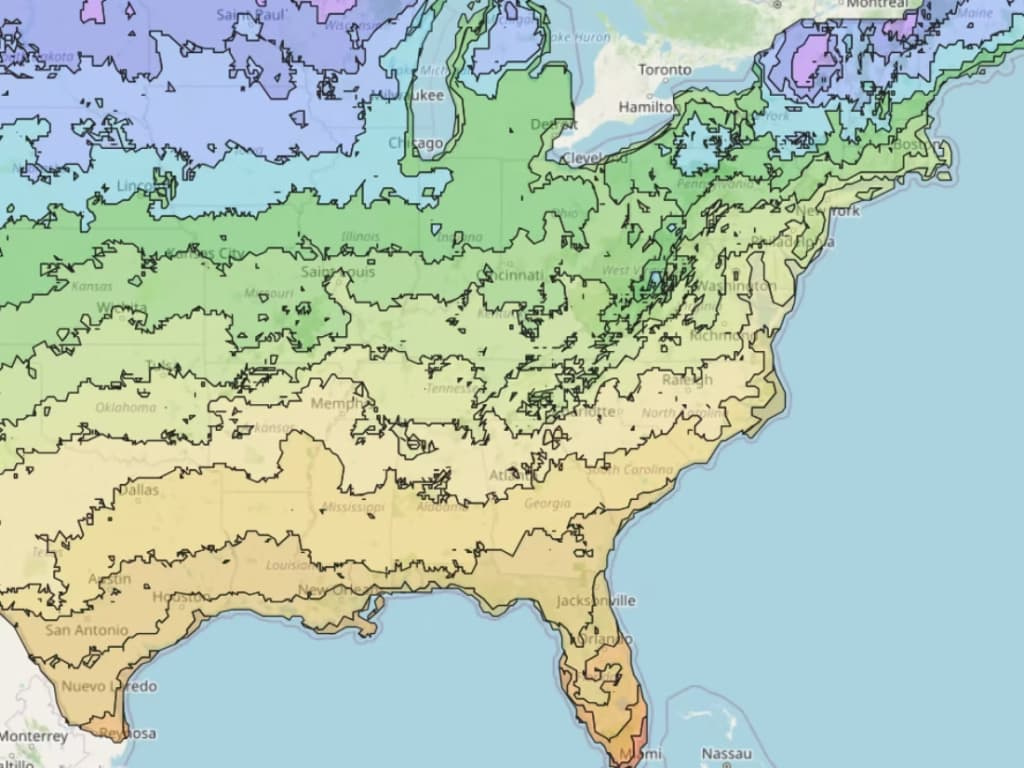
What Your Hardiness Zone Really Means for Your Lawn and Plants
Uncover the foundation of a resilient landscape by mastering the science of hardiness zones. Learn how these climate boundaries are calculated and why understanding your local temperature limits is the first step toward choosing plants that thrive year after year.
Read ArticleFrequently Asked Questions
Our maintenance and establishment guidance is derived from long-term agronomic field studies and turfgrass performance data from top research institutions.
Not with a normal mower, and that’s a mechanical limit rather than a matter of effort. Bentgrass only forms turf below about an inch, and cutting that low cleanly needs a reel mower running several times a week. A rotary mower cannot shear the loose, matted runners — it grabs them and scalps down to brown crown tissue. Even if you solved the mowing, you’d still be signing up for weekly verticutting, sand topdressing, and a season-long preventative fungicide program.
It’s the best grass in the world at one specific job: producing a smooth, fast, closely mown playing surface under intensive daily management. That’s not the same as being a good lawn grass. Judged as a lawn grass it fails on mowing height, thatch, disease, drought, and heat all at once. Best at one thing is not best overall.
No. Broadleaf weed killers do nothing to grasses, and bentgrass is a close botanical cousin of Kentucky bluegrass, tall fescue, and the ryegrasses — so a standard grass killer can’t tell it apart from your lawn. Your two real options are glyphosate with reseeding, or a multi-application mesotrione (Tenacity) program in fall. There is no one-and-done selective spray.
You propagated it. Bentgrass spreads by stolons that root at every node, so a dethatcher, power rake, slicer, or tiller cuts those runners into dozens of rooted fragments and scatters them across clean turf. Every fragment that lands on moist soil becomes a new patch. Never take a machine to bentgrass until it is fully dead and straw-brown.
Most often, out of a seed bag. Bentgrass seed is so small that a pound holds around 6 million seeds, against about 230,000 for tall fescue — so a bag carrying half of one percent bentgrass by weight is carrying better than one bentgrass seed in every ten. It also arrives in cheap sod or topsoil, creeps across a property line from a golf course or an older neighboring lawn, or simply sits unnoticed in an old lawn for years and takes over the moment stress thins the turf around it.
Probably not — this is normal, and it’s why the instructions say to plan on repeat sprays. The mother plants die easily, but nodes buried under the mat survive and resprout. Expect two or three glyphosate applications, or three to four mesotrione applications seven to ten days apart. Also check that you sprayed at least a foot past the visible edge: unseen stolons creeping under your good grass are the usual reason a patch reappears in exactly the same outline.
Almost certainly not. Those populations are confined to specific areas of central and eastern Oregon and neighboring Idaho, where an engineered creeping bentgrass escaped field trials in 2003. If glyphosate did not work on your patch, four far more likely explanations come first: the product was not actually glyphosate (check the active-ingredient panel, because the “Roundup” brand name no longer reliably means glyphosate); the bentgrass was dormant or drought-stressed when you sprayed; you did not spray past the visible edge; or you only sprayed once.
Fair question, and the honest answer is that you want the look, not the grass. Fine fescue gives you a very similar delicate texture and soft feel, tolerates shade and acidic soil, needs little fertilizer, and — crucially — survives being mowed at three inches with the mower you already own. If the texture is what appeals, reseed to fine fescue. Just remember that mesotrione kills fine fescue, so on a fine fescue lawn the bentgrass has to come out with glyphosate and reseeding.
Scientific Authority
This profile is grounded in turfgrass agronomy and soil science. Every recommendation—from irrigation requirements to nutrient management—is verified against agricultural research data to ensure optimal plant health and environmental sustainability in the Transition Zone.
Primary Resources
- NC State Extension TurfFiles: Creeping Bentgrass Profile[cite: 1]
- Michigan State University Extension: Perennial Grass Weed Control in Cool-Season Lawns[cite: 2]
- Michigan State University Extension: Turfgrass Species and Cultivar Selection (E2912)[cite: 3]
- Purdue Extension: Take-All Patch (Turfgrass Disease Profiles, BP-114-W)[cite: 4]
- UMass Amherst Center for Agriculture, Food and the Environment: Soil pH and Liming[cite: 5]
- Oregon State University Turf Program: Creeping Bentgrass Profile[cite: 6]
- Penn State Extension: Evaluation of Bentgrass Cultivars for Golf Course Fairways and Tees[cite: 7]
- Journal of Applied Ecology (Oregon State University): Escape and Establishment of Transgenic Glyphosate-Resistant Creeping Bentgrass in Oregon
- USDA Forest Service FEIS: Agrostis stolonifera Profile
- NC State Extension Gardener Plant Toolbox: Agrostis stolonifera Profile
- Native Plant Trust, Go Botany: Agrostis stolonifera Profile
- University of Tennessee Extension: Turfgrass Establishment: Turfgrass Seed (W160-E)
- USGA Green Section Record: Putting Green Establishment and Creeping Bentgrass Management